双碳

Search documents
国家发展改革委4100万元贷款支持陕西氢能企业发展
Shan Xi Ri Bao· 2025-11-23 00:32
Core Viewpoint - The Shaanxi Hydrogen Industry Development Co., Ltd. has received a loan of 41 million yuan from the National Development and Reform Commission for its Yulin Zero Carbon Industrial Park hydrogen production demonstration project, highlighting strong governmental support for the hydrogen industry under the "dual carbon" policy [1] Group 1: Project Funding and Support - The funding of 41 million yuan is aimed at supporting the capital for the hydrogen production demonstration project at the Yulin Zero Carbon Industrial Park [1] - This funding reflects the national industrial and financial policies' strong backing for the hydrogen industry, facilitating the strategic layout and project implementation by various government levels [1] Group 2: Project Overview and Investment - The Yulin Zero Carbon Industrial Park hydrogen production demonstration project has a total planned investment of approximately 20.5 billion yuan, including supporting renewable energy and energy storage projects [1] - The hydrogen production unit will cover an area of about 300 acres and will be implemented in two phases, with a total investment of approximately 690 million yuan [1] Group 3: Phase One and Production Capacity - The first phase of the project occupies 166 acres with a total investment of about 410 million yuan, featuring six electrolyzers and related facilities, aiming for a hydrogen production capacity of no less than 4,100 standard cubic meters per hour [1] - The project will also test a self-developed solid oxide electrolyzer cell (SOEC) for industrial demonstration, which is expected to produce 3,000 tons of green hydrogen annually, generating an annual output value of 75 million yuan and reducing carbon dioxide emissions by approximately 60,000 tons per year [1] Group 4: Future Plans and Goals - The second phase will optimize low-energy and high-safety hydrogen production processes, with a target completion date in 2028, aiming for an annual production of 100,000 tons of green hydrogen and a reduction of approximately 2 million tons of carbon dioxide emissions [1]
“十五五”新机遇前瞻 财米油盐|秸秆变“黄金”、空气变馒头?生物制造如何激活万亿市场?
Ren Min Wang· 2025-11-22 08:35
Core Viewpoint - The article emphasizes the importance of biomanufacturing as a key emerging industry in China's economic transformation, highlighting its potential for sustainable development and economic benefits [1][3]. Economic Benefits - Biomanufacturing can convert waste into valuable resources and enhance cost efficiency. A newly developed enzymatic technology can convert 100% of nine types of crop straw into various industrial raw materials, reducing the cost of produced pulp by 30% to 40% compared to traditional chemical methods [2]. - The total scale of China's biomanufacturing industry is approaching 1 trillion yuan, with fermentation capacity accounting for over 70% of the global market. By 2030, industries currently contributing one-third of global GDP are expected to be reshaped by synthetic biology applications [2]. Sustainable Development - Biomanufacturing has significant low-carbon attributes, making it a crucial pathway to achieve carbon neutrality goals. Biobased products in the chemical sector can reduce emissions by 50% to 70% compared to petrochemical routes. A 30% substitution rate in the chemical and materials sectors could lead to a cumulative reduction of over 1.5 billion tons of CO2 by 2030 [3]. - Technologies in biomanufacturing can even enable "negative carbon" outcomes, as demonstrated by Shougang Longze, which utilizes steel industry waste gases to produce feed protein and fuel ethanol [3]. Policy Support and Development - The "14th Five-Year Plan" has identified biomanufacturing as a key development direction, with previous policies dating back to 2012 emphasizing the establishment of a biomanufacturing technology system [3]. - Recent initiatives by the Ministry of Industry and Information Technology and the National Development and Reform Commission aim to cultivate biomanufacturing pilot platforms and promote the integration of biotechnological industries [4]. - The collaborative efforts of government, industry, academia, and research will accelerate the commercialization of biomanufacturing innovations, creating new employment and entrepreneurial opportunities [4].
每年全球消耗约50亿吨石油,按照这个速度,石油还能用多久?
Sou Hu Cai Jing· 2025-11-22 05:44
Core Viewpoint - The article discusses the evolving dynamics of oil consumption and production, highlighting that while oil reserves are substantial, the rate of consumption is decreasing due to the rise of renewable energy sources. The predictions of oil depletion are increasingly seen as inaccurate as technology advances and energy transitions occur. Group 1: Oil Consumption and Production Dynamics - Global oil consumption is approximately 5 billion tons annually, equating to about 13.69 million tons per day, enough to fuel 150 million cars for over six months [1] - The notion of oil depletion has been a recurring theme since 1914, yet technological advancements have continually expanded the potential for oil extraction [3][5] - The introduction of hydraulic fracturing technology has significantly reduced extraction costs, allowing the U.S. to transition from a major oil importer to an exporter, increasing global oil availability by 10% [9] - Deep-sea drilling advancements have also contributed to increased oil reserves, with deep-sea oil fields expected to add 5 billion barrels of reserves in 2025 alone [11] Group 2: Shifts in Energy Consumption - The speed of oil consumption is slowing, with predictions indicating that global oil demand will peak by 2030 and subsequently decline [35] - In China, the consumption of refined oil is projected to decrease by 2.4% in 2024, marking the first significant decline, attributed to the rise of new energy vehicles [18] - The industrial sector is also transitioning away from oil, with many factories replacing diesel with electricity and natural gas, leading to a reduction of 50 million tons of oil consumption in the steel industry alone [20] Group 3: Future of Oil in Energy Structure - By 2050, oil's share in the global energy mix is expected to drop from 30% to below 10%, with its primary use shifting towards chemical production rather than as a fuel source [38] - The development of bio-based alternatives for plastics and chemicals may further diminish the role of oil, as advancements in renewable energy technologies continue [40] - The transition to clean energy is anticipated to enhance energy security and reduce environmental pollution, leading to a more sustainable future [46][50]

行业洞察 | 岭上起“金风” ,绿氢逐未来——专访兴安盟经开区管委会主任高天宇
Zhong Guo Jin Rong Xin Xi Wang· 2025-11-22 03:53
Core Viewpoint - Inner Mongolia's Xingan League is emerging as a hub for green hydrogen and methanol production, leveraging its abundant wind energy resources and attracting major companies like China General Nuclear Power Group and Goldwind Technology [2][5]. Group 1: Project Development - The green hydrogen to green methanol project led by Goldwind Technology has garnered significant industry attention even before construction began [5]. - The project is set to commence construction in June 2024, with the first phase expected to be completed by October 2025, which is considered an accelerated timeline for such projects [5][6]. - The project aims to utilize local resources, including corn straw, to produce methanol, enhancing the region's agricultural advantages [7][8]. Group 2: Technological Innovation - The project integrates a technology chain that includes wind power, water electrolysis for hydrogen production, biomass gasification, and methanol synthesis, addressing the instability issues in wind power hydrogen production [9]. - The introduction of a 250,000-ton gasification furnace marks a significant advancement in the industry's scale and industrial production capabilities [9]. Group 3: Economic and Environmental Impact - The project is expected to create job opportunities and stimulate economic growth in the region, aligning with China's dual carbon goals [10]. - The green methanol produced will be utilized by major shipping companies, such as Maersk, for decarbonization efforts in the global shipping industry, showcasing the project's contribution to climate change mitigation [10]. Group 4: Strategic Vision - The Xingan League aims to position itself as a leader in the hydrogen economy by developing a comprehensive industrial ecosystem that includes hydrogen storage, transportation, and utilization [8][10]. - The region's strategy emphasizes vertical integration and resource sharing among enterprises to reduce production costs and foster long-term investment [8].


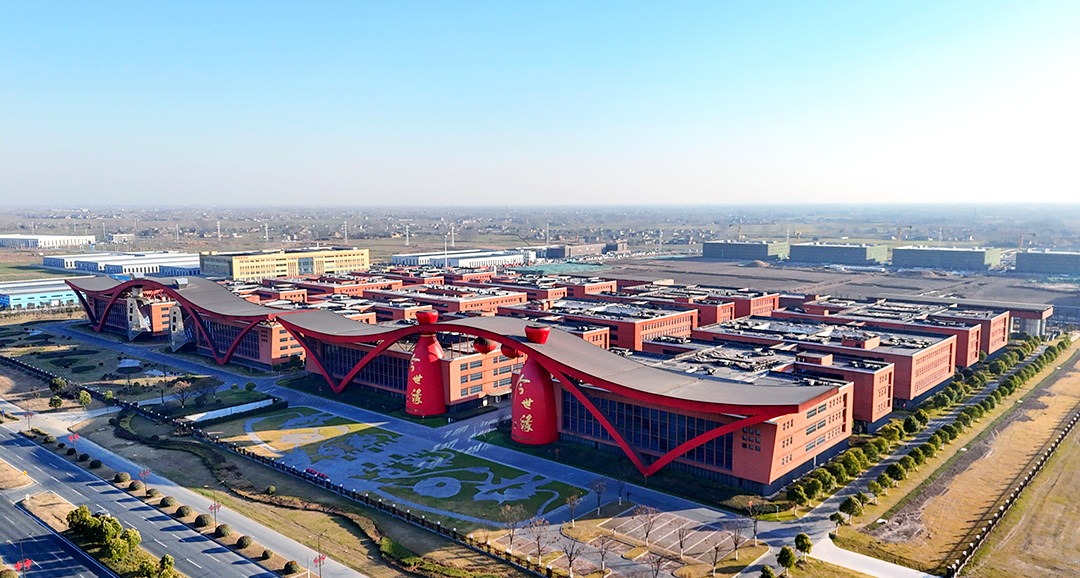
会员资讯|华测认证:江苏今世缘荣获四星“零碳工厂”认证
Xin Lang Cai Jing· 2025-11-22 01:38
新浪财经"酒价内参"重磅上线 知名白酒真实市场价尽在掌握 新浪财经ESG评级中心提供包括资讯、报告、培训、咨询等在内的14项ESG服务,助力上市公司传播ESG理念,提升ESG可持续发展表现。点击 2025年9月30日,江苏今世缘酒业股份有限公司顺利通过华测认证有限公司的审核,依据中国节能协会《零碳工厂评价规范》相关标准,荣获零碳工厂(Ⅰ型)四星级认证。根据规范要求,四星 近年来,江苏今世缘酒业积极响应国家"双碳"战略,将零碳工厂建设视为履行社会责任的重要举措。公司成立了由董事长担任组长、各部门负责人参与的零碳工厂建设专项小组,系统制定了建设 在具体实施层面,今世缘积极构建"源-网-荷-储"一体化模式,推进光伏、储能、充电桩、能碳管理平台及虚拟电厂等项目,采用生物质蒸汽,实现能源结构的绿色转型。同时,公司致力于白酒 此次获评四星级零碳工厂,是今世缘在践行"绿色、健康、生态"理念、探索"碳中和"实践过程中的重要成果,不仅标志着企业自身发展的新里程碑,也为白酒行业的可持续发展贡献了可借鉴的 秘书长:张军涛13552070628 常务副秘书长:王 挺15210302808 零碳项目部部长:汪 琼13810350121 ...

双碳研究 | 欧洲放缓调门:稀土博弈主导权仍在中国
Sou Hu Cai Jing· 2025-11-21 16:35
Core Points - The EU has softened its rhetoric towards China in hopes of extending rare earth export licenses from three months to one year, which increases the likelihood of Chinese exports but does not change the dependency of the supply chain [1][2] - China's export licensing system remains a critical element, retaining the authority to review end-users, approve applications, and suspend shipments for security reasons, particularly regarding "military end-use" [2][3] - The diplomatic shift highlights Europe's vulnerability; without domestic refining capacity, the EU must negotiate for resources, falling short of true supply chain "de-risking" [1][3] Industry Insights - The extension of export licenses is seen as a means to provide supply certainty rather than independence, ensuring production continuity but not security [3][4] - The article emphasizes that describing this situation as a "breakthrough" is overly optimistic, as China has not confirmed the extension, and even with annual licenses, there is no guarantee of export volumes [5][6] - China's dominance in the rare earth supply chain is underscored, controlling over 80% of refining capacity and more than 90% of magnet production, while Europe's own capacity remains in a fragile early stage [5][6] Conclusion - The EU's need to soften its stance to secure temporary relief underscores the fragility of Western supply chains, with China's licensing system defining global rare earth flows rather than market competition [6]

“变革破局 共生共赢——2025中国新能源产业高质量发展论坛”成功召开
Zhong Guo Jing Ying Bao· 2025-11-21 14:38
Core Insights - The Chinese renewable energy industry is transitioning from "scale expansion" to "quality improvement," emphasizing technological innovation, green development, and international cooperation as key drivers for future growth [1][2]. Industry Trends - The current cyclical adjustment in the renewable energy sector is seen as a necessary process for high-quality development, marking a shift from explosive growth to maturity [2]. - The photovoltaic industry exemplifies the challenges faced, particularly regarding the protection of innovation and intellectual property, which is crucial for long-term development [3]. - The low entry barriers and inadequate product value assessment in the photovoltaic sector have led to severe homogenization and price competition [3]. Technological Innovation - Technological innovation is identified as a critical tool for overcoming industry challenges, with a focus on integrating energy storage and new power systems to enhance competitiveness [4]. - The fuel cell vehicle market is expected to narrow the cost gap with traditional fuel vehicles through technological advancements and policy support, aiming for a 15% market penetration by mid-2025 [5]. - Smart manufacturing technologies are injecting new transformative power into the renewable energy sector, with advancements in robotics enhancing operational efficiency [6]. ESG Practices - ESG (Environmental, Social, and Governance) factors are becoming central to high-quality development in the renewable energy industry, with companies seeking to balance long-term sustainability goals with operational objectives [7][8]. - The importance of a comprehensive understanding of ESG issues is emphasized for better engagement with international clients, particularly in supply chain management [9]. Global Strategy - Companies are encouraged to rethink their international strategies, focusing on their unique strengths and avoiding overcrowded markets [10]. - The majority of global photovoltaic components are produced in China, which continues to leverage its technological and cost advantages to meet global energy transition demands [11].

比亚迪、宁德时代诞生汽车产业链企业首批院士
2 1 Shi Ji Jing Ji Bao Dao· 2025-11-21 13:50
Core Insights - The election results for the 2025 Chinese Academy of Sciences and Chinese Academy of Engineering academicians were announced, with key figures from the new energy vehicle industry, including BYD's Lian Yubo and CATL's Wu Kai, being elected [2] - This marks the first time that technical leaders from the new energy vehicle supply chain have been recognized as academicians, breaking the previous trend of academicians coming primarily from universities and research institutions [2] Company Highlights - Wu Kai, as the chief scientist at CATL, has been instrumental in developing core products like the Kirin battery and the Shenzhou supercharging battery, which have set new benchmarks for energy density and charging speed in global power batteries [2] - Lian Yubo's career reflects a cross-disciplinary approach, having transitioned from aircraft manufacturing to leading the development of electric platforms at BYD, making him a key figure in the company's technology output [2][3] - Under Lian Yubo's leadership, BYD launched the world's first dual-mode electric vehicle, the F3DM, which achieved a significant range of 100 kilometers on electric power alone, establishing BYD's dominance in hybrid technology [3] Industry Trends - From 2020 to 2023, BYD's sales of plug-in hybrid vehicles surged from 48,000 to 1.43 million units, marking a growth of approximately 30 times, highlighting the increasing importance of hybrid technology in China's new energy vehicle sector [3][5] - The plug-in hybrid technology route is becoming a core competitive advantage for China's new energy vehicle industry in the global market, with data indicating that plug-in and hybrid models have become new growth points in exports [3][4] - The election of these two corporate academicians underscores the comprehensive technological breakthroughs across the Chinese new energy vehicle supply chain, from core components to vehicle manufacturing, aligning with global automotive industry transformation goals under the "dual carbon" initiative [5]


皖能电力(000543.SZ)拟与战略合作方东方风电成立合资公司
智通财经网· 2025-11-21 13:04
智通财经APP讯,皖能电力(000543.SZ)发布公告,为积极响应国家"双碳"目标,推动公司高质量发展新 能源的战略部署,公司全资子公司安徽省皖能能源交易有限公司(以下简称"交易公司")以现金出资,与 战略合作方东方电气风电股份有限公司(以下简称"东方风电")成立合资公司,实现资源互补、风险共 担。交易公司与东方风电共同成立合资公司,其中交易公司持股51%。东方风电持股49%。 ...

一周碳要闻:工信部出手 风电装备迎规范条件(碳报第172期)
Xin Jing Bao· 2025-11-21 11:32
Policy Developments - The Ministry of Industry and Information Technology (MIIT) is soliciting opinions on the "Wind Power Equipment Industry Norms" to promote sustainable development in the wind power equipment manufacturing sector [3][18] - The newly released national standard for "Recycled Materials in Household Appliances" will take effect on May 1, 2026, aiming to regulate the use of recycled materials and promote green development in the industry [4][18] Carbon Emission Management - The Ministry of Ecology and Environment has announced that the steel, cement, and aluminum industries will complete their first carbon emission quota compliance by the end of this year, marking their entry into a carbon trading compliance mechanism [5][6] - The central government has initiated ecological and environmental protection inspections in major energy companies, signaling a commitment to high-level ecological protection and the green transformation of the energy sector [7][18] Energy Projects - The National Development and Reform Commission has approved five flexible power interconnection projects, with a total investment of 24.4 billion yuan, aimed at enhancing inter-provincial power support capabilities [8][18] - China's first high-pressure natural gas long-distance pipeline pressure recovery power generation project has commenced operation, utilizing excess pressure during gas transmission to generate clean electricity [9][10] - The highest-altitude wind power project in China has been connected to the grid, with a total installed capacity of 60 MW, expected to supply clean energy to approximately 120,000 households annually [11][18] Ecological Initiatives - Major ecological protection and restoration projects in the Tibetan Plateau are projected to add approximately 30 million tons of carbon sinks annually, contributing significantly to the country's carbon neutrality goals [12][13] Market Trends - The "Shan Electric into Anhui" ultra-high voltage project has been completed, expected to deliver over 36 billion kWh of electricity annually, with more than half from renewable sources [15][18] - The Yangtze River Delta region has exceeded its annual electricity interconnection target of 180 billion kWh, reflecting a growing trend in electricity market integration [16][18] Industry Insights - The MIIT's new norms for the wind power equipment industry aim to enhance quality control and innovation, encouraging manufacturers to adopt green and intelligent technologies [3][19] - The wind power sector is showing signs of recovery, with increased prices and improved profit margins expected in the coming years, driven by a reduction in costs and enhanced operational efficiency [22][18]