
产业升级

Search documents
王雪坤:中国超大规模市场重塑全球增长格局
Jing Ji Ri Bao· 2025-12-03 00:01
当今世界正经历百年未有之大变局,经济增长动能不足,不确定性显著上升,全球经济增长面临多 重下行风险。中国市场以无可替代的超大规模和综合竞争优势,展现出稳健的韧性与活力,以系统性优 势为全球企业提供稳定可期的战略机遇与发展空间。 消费市场:规模增量领跑全球,结构升级潜力巨大 投资市场:产业根基深厚稳固,投资空间持续释放 我国投资市场的吸引力建立在完整的产业体系、持续升级的产业结构和显著的投资回报等基础上, 形成了独特的综合竞争优势。 近年来,我国产业链供应链的韧性得到充分验证。中国是全球唯一拥有联合国产业分类中全部工业 门类的国家,完整的产业体系使中国制造业在面对外部冲击时展现出强大韧性。中国制造业总体成本竞 争力强于发达国家,部分高技术领域优势更为明显。以新能源汽车为例,中国已形成从电池材料、电芯 制造到整车组装的完整产业链,产业集群效应显著。 投资领域的多元化是中国市场的突出特色。除了传统的基础设施建设外,产业升级和绿色转型等领 域正形成新的投资增长点。同时,中国城镇化进程仍在稳步推进,2024年我国常住人口城镇化率为 67%,与发达国家80%以上的水平相比仍有较大提升空间,预计将带动超过数十万亿元的投资需 ...
紧紧抓住时间窗口(思想纵横)
Ren Min Ri Bao· 2025-12-02 22:33
Core Viewpoint - The article emphasizes the importance of seizing the "time window" during the 14th Five-Year Plan period to enhance development advantages and address bottlenecks in achieving socialist modernization [1][2][3]. Group 1: Time Window and Development - The "time window" represents a critical moment for achieving breakthroughs in development, where accumulated changes lead to significant transformations [2][3]. - The 14th Five-Year Plan period is seen as a crucial five years that connects past achievements with future goals, requiring a proactive approach to consolidate existing advantages and overcome challenges [1][3]. Group 2: Innovation and Reform - The article highlights the necessity for comprehensive reforms and bold innovations to capitalize on emerging opportunities in new sectors and technologies [3][4]. - Successful examples from cities like Shenzhen and Hefei illustrate how sustained efforts in policy support, funding, and industry layout can lead to significant advancements in innovation and technology [4]. Group 3: Urgency and Action - There is a strong call for a sense of urgency and decisive action to capture opportunities, emphasizing that hesitation can lead to missed chances [4][5]. - The article stresses the importance of maintaining a long-term perspective on opportunities, ensuring that the groundwork is laid for sustainable growth and transformation [4].
上下游企业面对面!40余家品牌现场展示,“村糖会”有了合作新机遇
Sou Hu Cai Jing· 2025-12-02 20:10
聚焦"成都造"特色产品推广,搭建产业链上下游交流合作桥梁,12月2日,"村糖会"产品选品对接会在成都召开。成都市食品工业协会代表,成 工精销、职工普惠、天府通等选品平台及本地特色企业代表等齐聚一堂,搭建起高效沟通桥梁。 红星新闻记者了解到,"村糖会"已成功带动消费近1.8亿元,促成多笔千万级合作签约,成为助推乡村振兴与产业升级的重要力量。本次活动现 场,40余家品牌设置了产品展示品鉴区,供嘉宾体验交流。不少参会企业代表表示,"村糖会"有效促进了公司产品推广,而此次对接活动则让产 业链上下游企业直接面对面交流,让渠道更加畅通。 ▲40余家品牌现场展示品鉴 "村糖会"打造消费新生态 已成功带动消费近1.8亿元 白家阿宽、南台月、蜀道香、文君酒厂……活动现场,40余家品牌带来了最新产品,引起与会者广泛关注,充分展现了"蓉字号"特色产品的品质与魅力。 记者了解到,本次对接会由成都市经信局市新经济委牵头举办,以"产业融合、场景升级、全域联动"为核心抓手,旨在集中展示成都本地特色食品、农产 品、工业精品等产品,提升"成都造"品牌知名度与市场影响力。同时,通过搭建"面对面"交流平台,活动也精准助力企业与销售渠道建立直接联系 ...


券商竞逐另类投资业务机遇 助力科技创新与产业升级
Zheng Quan Ri Bao· 2025-12-02 16:15
Core Viewpoint - The development of alternative investment business by securities firms is a crucial way to serve the real economy and meet the financing needs of technology innovation enterprises [1] Group 1: Business Expansion and Regulatory Approval - The China Securities Regulatory Commission (CSRC) has approved Jinyuan Unified Securities to establish a subsidiary for alternative investment business, focusing on projects in the Growth Enterprise Market, Sci-Tech Innovation Board, and North Exchange [2] - The CSRC requires the securities firm to complete the registration of the subsidiary and strengthen compliance management and risk control [2] Group 2: Investment Focus and Strategy - Securities firms are increasingly focusing on direct equity investments and follow-up investments in projects on the Sci-Tech Innovation Board and Growth Enterprise Market, with a distinctive strategy of "investing early, investing small, and investing in hard technology" [3] - Firms like Guolian Minsheng are targeting hard technology sectors such as semiconductors and biomedicine, while Western Securities focuses on advanced manufacturing, aerospace, and new energy [3] Group 3: Capital Adjustment Trends - Several securities firms are actively increasing their investment in alternative investment subsidiaries, with Guohai Securities planning to increase capital by 500 million yuan and Zhongtai Securities aiming to raise up to 6 billion yuan for alternative investment [4] - Conversely, some firms have announced capital reductions for their alternative investment subsidiaries, such as Dongxing Securities reducing capital by 300 million yuan [4] Group 4: Strategic Insights and Future Directions - The adjustment of capital in alternative investment subsidiaries reflects a strategic differentiation in response to market conditions, with firms increasing capital to enhance strength and reduce capital to optimize resource allocation [5] - Future improvements in alternative investment capabilities should include deepening industry research, strengthening risk management, and enhancing internal collaboration across business lines [5]
关键词读懂“十五五”丨从冰雪经济热,解码供需新循环
Yang Guang Wang· 2025-12-02 12:31
Core Insights - The rise of the ice and snow economy is driven by a dual interaction between new supply and new demand, leading to a dynamic balance that promotes high-quality economic development in China [1][4] Group 1: Market Trends - The ice and snow economy is becoming a new consumption hotspot, with activities like skiing, ice sculpture, and snow fishing gaining popularity [1] - In Harbin, the average daily search volume for the Ice and Snow World increased by nearly 163% since mid-October, indicating a surge in consumer interest [2] - The number of ice and snow-related enterprises in Harbin exceeded 2,300, with a compound annual growth rate of 23.6% over the past three years [2] Group 2: Economic Growth - China's ice and snow industry is projected to grow from 270 billion yuan in 2015 to 980 billion yuan in 2024, with expectations to surpass 1 trillion yuan by 2025 [4] - The participation in ice and snow sports and related consumption is expected to exceed 187.5 billion yuan during the 2024-2025 winter season, reflecting a year-on-year growth of over 25% [4] Group 3: Industry Integration - The "ice and snow +" model is expanding the economic landscape, integrating various sectors such as education, tourism, culture, and agriculture [5][6] - The integration of multiple business formats is enriching the service offerings of the ice and snow economy, transitioning from single sports consumption to a comprehensive experience [6] Group 4: Policy Support - The Chinese government has introduced a series of supportive policies to enhance the development of the ice and snow economy, including a recent directive with 24 measures to stimulate growth across the entire industry chain [7] - The application of new technologies like 5G and AI is driving high-quality development in ice and snow equipment manufacturing, enhancing user experience [7] Group 5: Future Outlook - The ongoing development of various new economic forms, such as the "first release economy" and "silver economy," is expected to further stimulate consumer demand and support the growth of the ice and snow economy [8] - The strategic focus on enhancing supply-demand compatibility aims to unlock the potential of China's vast market, contributing to sustainable economic growth [8]
港股科技,怎么投?
Xin Lang Cai Jing· 2025-12-02 10:37
Core Viewpoint - The Hang Seng Technology Index has experienced a correction, dropping 19.26% since October, but has shown signs of recovery recently with a PE ratio of 23.63x as of December 1, 2025 [1][8]. Summary of Key Points Reasons for Adjustment in Hong Kong Technology Sector - The divergence in expectations regarding the Federal Reserve's interest rate cuts has led to a decline in the probability of a rate cut in December, impacting the liquidity-sensitive growth sector, particularly Hong Kong technology stocks [1][3]. - The ongoing "AI bubble" discussions have heightened concerns over industry valuations, further exacerbating the adjustment in the Hong Kong technology sector [3]. - Geopolitical tensions have increased the geopolitical risk index, coupled with a year-end style shift where more funds are focusing on dividend assets, making Hong Kong technology stocks victims of market risk aversion [3]. Long-term Outlook for Hong Kong Technology - The expectation for a renewed strength in the Federal Reserve's rate cut predictions has risen, with the probability of a December rate cut increasing to 87.4%, which is likely to benefit Hong Kong technology stocks significantly [6][7]. - There is a clear expectation of performance improvement, supported by the release of new models and the latest financial reports, with Alibaba's cloud revenue showing a strong year-on-year growth of 34% and AI-related product revenue achieving triple-digit growth for nine consecutive quarters [6][8]. - Long-term industrial upgrades are seen as irreversible, highlighting the significant long-term allocation value of Hong Kong technology stocks as they represent important new economy enterprises [6][8]. Valuation Perspective - The PE ratio of the Hang Seng Hong Kong Stock Connect Technology Index stands at 26.12x, which is lower than other major global technology indices, indicating substantial upside potential in valuations [8]. Investment Strategy for Hong Kong Technology - The two main indices for Hong Kong technology stocks are the Hang Seng Technology Index and the Hang Seng Hong Kong Stock Connect Technology Theme Index, with the latter having a higher purity in technology by excluding sectors like pharmaceuticals [10]. - The Hang Seng Technology Index is more diversified, covering internet, new energy vehicles, and semiconductors, providing a more balanced sector distribution [10]. - Investment products such as the HuaAn Hang Seng Hong Kong Stock Connect Technology ETF and its related funds are recommended for exposure to Hong Kong technology, especially during the Federal Reserve's rate cut cycle, although dollar-cost averaging may be more suitable for ordinary investors due to current volatility [11].

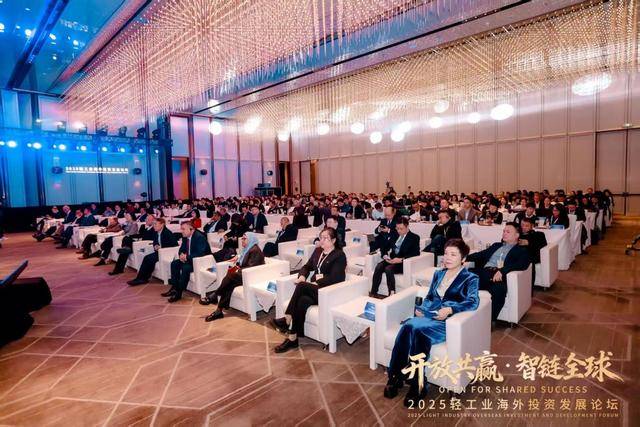
2025轻工业海外投资发展论坛在北京举办
Sou Hu Cai Jing· 2025-12-02 09:41
11月27日,"开放共赢 智链全球——2025轻工业海外投资发展论坛"在北京举行。论坛由中国轻工企业 投资发展协会与消费日报社主办。 中国轻工企业投资发展协会理事长赵爽表示,轻工业是我国具有较强竞争力的优势产业,是满足人民美 好生活需要的主力军。今年1月—9月,规模以上轻工业增加值同比增长6.1%,实现营业收入17.2万亿 元、利润1.04万亿元,同比增长3.1%和3.9%;商品出口6842.5亿美元,占全国出口总额的24.6%,同比 增长0.4%,为经济社会发展和人民美好生活贡献了积极力量。 在主旨演讲环节,苏州大学讲席教授、全球化智库副主任高志凯,围绕"世界秩序的动荡和中国企业的 出海机遇"发表演讲。他表示,产业核心在创新。轻工业必须聚焦品牌、质量与渠道,推动产业升级, 构建融合国内外的"复合循环"新格局。中国企业要树立"平天下"的格局,推动品牌化、智能化、本土化 发展,以创新驱动应对地缘政治挑战,并构建以"中华和平"为愿景的人类命运共同体。 对外经济贸易大学教授王稳则聚焦风险防控,从风险管理角度系统阐述了企业出海面临的各类风险及其 应对策略。他建议企业建立专业的国别风险评估体系,积极运用政策性金融工具, ...
好评中国|聚力前行,为做好经济工作积蓄磅礴力量
Huan Qiu Wang· 2025-12-02 08:58
Group 1 - China's economy is maintaining a stable and progressive development trend, showcasing strong resilience and a bright outlook for the future [1] - In the first three quarters, the GDP grew by 5.2% year-on-year, accelerating by 0.2 and 0.4 percentage points compared to the previous year and the same period last year, respectively [1] - The urban unemployment rate averaged 5.2% in the first three quarters, remaining stable compared to the first half of the year [1] - The scale of foreign trade reached a historical high, with import and export growth rates gradually recovering, and foreign exchange reserves maintained above $3.3 trillion [1] Group 2 - The optimization of China's economic structure and the transition of growth drivers are progressing steadily, with significant advancements in high-quality development [2] - In the first three quarters, the added value of the equipment manufacturing industry and high-tech manufacturing industry accounted for 35.9% and 16.7% respectively, indicating a clear trend of industrial upgrading [2] - Investment in equipment and tools increased by 14% year-on-year, with emerging industries like lithium-ion battery manufacturing and new energy vehicles showing rapid growth [2] Group 3 - China's strong resilience is fundamental to its ability to cope with uncertainties and achieve stable long-term growth [3] - The first three quarters of stable growth laid a solid foundation, while new productive forces are being cultivated to create new growth points [3] - The macro policy space remains ample, providing continuous support for the economy, with positive factors accumulating as indicated by leading indicators and high-frequency data [3]
这支省级并购母基金正式起航 | 科促会母基金分会参会机构一周资讯(11.26-12.2)
母基金研究中心· 2025-12-02 08:37
Group 1 - The establishment of the "China International Science and Technology Promotion Association Mother Fund Branch" aims to enhance the role of mother funds in China's capital market, promoting the flow of social capital to innovative and entrepreneurial enterprises [1] - The Fujian Provincial M&A Fund has been launched with an initial scale of 1.5 billion yuan, focusing on market-oriented and professional investment operations to support enterprise transformation and technological innovation [2] - The Jiangxia Science and Technology Investment Group is exploring advanced paths for constructing industrial ecosystems, leveraging multi-level capital matrices to provide comprehensive funding support for enterprises [3][5][6] Group 2 - The Datai Artificial Intelligence Seed Fund has officially started operations in Shenzhen, with a total scale of 100 million yuan, focusing on seed-stage projects in strategic emerging industries [7][8] - Datai Capital, the fund manager, has over ten years of experience in hard technology investment and aims to provide integrated post-investment management services to early-stage companies [9][10][11] - The visit by Minsheng Bank's Zhengzhou branch to the Henan Investment Holding Group highlights the collaboration between financial institutions and state-owned capital to support high-quality economic development in Henan [12][14] Group 3 - Fujian Jin Investment's recent trip to Beijing aims to strengthen cooperation with central enterprises, promoting high-quality development and integration of cross-strait economies through fund investments [15][18]


平安银行宋卓:透视并购市场“新逻辑”
2 1 Shi Ji Jing Ji Bao Dao· 2025-12-02 07:07
Core Insights - The Chinese M&A market is entering a new phase driven by regulatory innovation and capital empowerment, with a mature ecosystem emerging for mergers and acquisitions [1] - Recent policies such as the new "National Nine Articles," "Sci-Tech Innovation Board Eight Articles," and "M&A Six Articles" have significantly activated the M&A market, leading to a substantial increase in major transactions [2][3] Regulatory Changes - The introduction of the "M&A Six Articles" by the CSRC on September 24, 2024, has notably increased market activity after five years of declining transaction amounts, with a reported 163 major M&A transactions by A-share listed companies by August 31, 2025, representing a 117.30% year-on-year increase [2][3] - The total transaction amount reached 472.448 billion yuan, marking a 172.90% increase year-on-year [2] Market Dynamics - The development logic of the Chinese M&A market has shifted from simple scale expansion to value creation, emphasizing the importance of industrial logic and quality of targets [3][4] - The market has transitioned from a "dualistic" structure, where state-owned enterprises focused on resource integration and scale, to a more rational approach that values deep industry integration and technological advancement [3][4] Role of Financial Institutions - The recent draft of the "Commercial Bank M&A Loan Management Measures" expands the scope of M&A loans, allowing for minority stake acquisitions and increasing the financing ratio for controlling acquisitions from 60% to 70% [5] - This regulatory change aims to enhance the funding capabilities for M&A transactions, particularly for strategic investments that require collaboration across the industrial chain [5][6] Bank Strategies - Ping An Bank has focused on developing a systematic approach to M&A financing, targeting key strategic areas such as state-owned enterprise reform and technological innovation, with nearly 100 billion yuan in M&A loans provided to state-owned enterprises over the past three years [6][7] - The bank has also supported private equity (PE) acquisitions, facilitating connections between domestic and international capital, and has engaged in significant projects such as the acquisition of Yingde Gas, a leading industrial gas producer [6][7] Foreign Investment Trends - There is a notable shift in foreign capital investment in China, with Middle Eastern and European capital increasingly engaging in strategic partnerships and deeper industrial integration rather than merely financial investments [9][10] - This trend reflects a growing recognition of the value of Chinese innovation and technology, with foreign investors actively participating in sectors such as renewable energy, digital infrastructure, and biomedicine [10][11] Conclusion - The evolving landscape of the Chinese M&A market, characterized by regulatory support and strategic foreign investment, presents significant opportunities for value creation and industrial advancement, positioning it as a critical driver of economic growth [1][2][10]
