
美联储货币政策

Search documents
五矿期货文字早评-20250711
Wu Kuang Qi Huo· 2025-07-11 01:51
Report Industry Investment Rating No relevant content provided. Core Viewpoints of the Report - The overall market is influenced by various factors such as macro - policies, trade tariffs, and seasonal characteristics. In the short - term, market sentiment and expectations play a significant role in price fluctuations, while in the long - term, fundamentals like supply and demand, inventory levels, and cost factors are crucial [3][7][25] - Different industries have different outlooks. For example, some industries are expected to be bullish in the medium - to - long - term, while others face challenges and are likely to be bearish or range - bound [9][11][25] Summary According to Relevant Catalogs Macro - Financial Category Index Futures - **Macro News**: The Ministry of Commerce has launched a special campaign against strategic mineral smuggling exports. The US may impose a 50% tariff on imported copper starting from August 1, 2025. China's auto production and sales in the first half of the year exceeded 15 million units, with a year - on - year increase of over 10%. Beijing encourages listed companies to increase dividend rates [2] - **Basis Ratio**: Different basis ratios are provided for IF, IC, IM, and IH contracts in different periods [3] - **Trading Logic**: Overseas, focus on the impact of US tariffs. Domestically, pay attention to the "Central Political Bureau Meeting" in July. With low treasury bond interest rates and high stock - bond yield ratios, funds may flow into high - yield assets. It is recommended to go long on IH or IF index futures related to the economy and IC or IM futures related to "new - quality productivity" [3] - **Trading Strategy**: Unilateral trading suggests buying IF long contracts on dips, and no arbitrage strategy is recommended [4] Treasury Bonds - **Market Quotes**: On Thursday, TL, T, TF, and TS main contracts declined by 0.36%, 0.16%, 0.14%, and 0.04% respectively [5] - **News**: The US may impose a 50% tariff on all Brazilian products from August 1, 2025. China aims to promote high - quality new - type urbanization [5] - **Liquidity**: The central bank conducted 90 billion yuan of 7 - day reverse repurchase operations on Thursday, with a net investment of 32.8 billion yuan [6][7] - **Strategy**: The economy is affected by tariffs, but the PMI in June improved. Exports may face pressure in the future. The capital market is expected to remain relatively loose. Interest rates are expected to decline in the long - term, and it is recommended to go long on dips. The recent strong stock market suppresses the bond market [7] Precious Metals - **Market Quotes**: Shanghai gold and silver, COMEX gold and silver all rose. The US 10 - year treasury bond yield was 4.35%, and the US dollar index was 97.55 [8] - **Market Outlook**: Fed officials have different views on interest rate cuts. The Fed may keep interest rates unchanged in July but turn dovish in its statement and cut interest rates by 25 basis points in September. Focus on long opportunities for silver, while gold may be relatively weak. The reference ranges for Shanghai gold and silver main contracts are provided [9] Non - Ferrous Metals Category Copper - **Market Quotes**: LME copper rose 0.23%, and Shanghai copper main contract closed at 78,590 yuan/ton [11] - **Industry Situation**: LME inventory increased, and domestic refined copper inventory slightly rose. The US copper tariff policy will widen the price gap between US copper and LME/Shanghai copper, and there is a risk of correction for LME and Shanghai copper. The reference price ranges for Shanghai copper and LME copper are provided [11] Aluminum - **Market Quotes**: LME aluminum rose 0.15%, and Shanghai aluminum main contract closed at 20,760 yuan/ton [12] - **Industry Situation**: Domestic aluminum ingot inventory is low, but the supply of aluminum ingots may increase in July, which will resist the upward movement of aluminum prices. The reference price ranges for Shanghai aluminum and LME aluminum are provided [12] Zinc - **Market Quotes**: Shanghai zinc index rose 1.28%, and LME zinc rose. The zinc market shows a high supply expectation, and although the photovoltaic industry boosts market sentiment, the upward space is limited [13] Lead - **Market Quotes**: Shanghai lead index rose 0.34%, and LME lead rose. The lead market shows a strong trend, but the increase of Shanghai lead may be limited due to weak domestic consumption [14] Nickel - **Market Quotes**: Shanghai nickel and LME nickel rose. The main contradiction in the nickel market lies in the stainless - steel demand, which leads to a decline in nickel - iron prices. It is recommended to short on rallies. The reference price ranges for Shanghai nickel and LME nickel are provided [15] Tin - **Market Quotes**: Shanghai tin rose 1.46%. The supply of tin ore is still tight, and the terminal demand is weak. The tin price is expected to fluctuate within a certain range, and the reference price ranges for Shanghai tin and LME tin are provided [16] Lithium Carbonate - **Market Quotes**: The spot index of lithium carbonate rose, and the LC2509 contract declined. The fundamentals of lithium carbonate are weak, with increasing production and inventory. The reference price range for the Guangzhou Futures Exchange's lithium carbonate 2509 contract is provided [17][18] Alumina - **Market Quotes**: The alumina index rose 2.44%. The alumina market has an over - capacity problem. It is recommended to short on rallies. The reference price range for the domestic main contract AO2509 is provided [19] Stainless Steel - **Market Quotes**: The stainless - steel main contract rose. The spot market showed a trend of first decline and then rise. The industry still faces high inventory pressure, and the future market depends on policy implementation and fundamental improvement [20] Cast Aluminum Alloy - **Market Quotes**: The AD2511 contract rose. The cast aluminum alloy market has weak supply and demand in the off - season. The futures price faces upward pressure due to the expected weakening of aluminum prices and large basis differences [21][22] Black Building Materials Category Steel - **Market Quotes**: Rebar and hot - rolled coil prices rose. The market is affected by the rumor of the "Central Urban Work Conference" and the expectation of real - estate policies. The fundamentals show a decrease in supply and demand for rebar and a slight increase in inventory for hot - rolled coil. The market needs to pay attention to policy signals and terminal demand [24][25] Iron Ore - **Market Quotes**: The iron ore main contract rose. The supply of iron ore decreased seasonally, and the demand (hot - metal production) declined. The port inventory decreased, and the steel - mill inventory increased. The iron ore price is expected to be strong in the short - term, and risk control is needed [26][27][28] Glass and Soda Ash - **Glass**: The spot price was stable, and the inventory decreased. The policy expectation pushed up the glass price, and it is recommended to avoid short positions [29] - **Soda Ash**: The spot price rose, and the inventory increased slightly. The demand is still weak, and the market is expected to be bearish in the medium - term [30] Manganese Silicon and Ferrosilicon - **Market Quotes**: Manganese silicon and ferrosilicon prices rose. The market is affected by "anti - involution" rumors. The fundamentals point downward, but the short - term price is driven by sentiment and expectations. It is recommended to wait and see for speculative positions and short on rallies for hedging positions [31][32][33] Industrial Silicon - **Market Quotes**: The industrial silicon futures price rose. The industrial silicon market has over - supply and insufficient demand. The short - term price is affected by market sentiment, and it is recommended to wait and see for investment positions and short on rallies for hedging positions [35][36][37] Energy and Chemicals Category Rubber - **Market Quotes**: NR and RU rose. The market has different views on the rise and fall of rubber prices. The tire - opening rate is relatively high, but the inventory is under pressure. It is recommended to be bullish in the medium - term and use a short - term long - on - dips strategy [39][40][42] Crude Oil - **Market Quotes**: WTI and Brent crude oil declined, while INE crude oil rose. The market is in a multi - empty game between strong reality and weak expectation. It is recommended to wait and see and control risks [43] Methanol - **Market Quotes**: The 09 - contract of methanol rose. The domestic supply decreased, and the demand is in the off - season. The market is in a weak supply - demand situation, and it is recommended to wait and see [44] Urea - **Market Quotes**: The 09 - contract of urea rose. The domestic supply increased slightly, and the demand from compound fertilizers and exports is expected to increase. The price has support below but is restricted by high supply above. It is recommended to go long on dips [45] Styrene - **Market Quotes**: The styrene price rose with the increase of pure - benzene futures. The cost - side supply is abundant, and the demand is in the off - season. The price is expected to follow the cost - side fluctuations [46] PVC - **Market Quotes**: The PVC09 contract rose. The supply is strong, and the demand is weak. The market is mainly focused on inventory reduction, and the price is expected to be under pressure [48] Ethylene Glycol - **Market Quotes**: The EG09 contract rose. The supply increased, and the demand decreased. The inventory is expected to increase, and it is recommended to short on rallies [49] PTA - **Market Quotes**: The PTA09 contract rose. The supply is expected to increase, and the demand is slightly under pressure. It is recommended to go long on dips following PX [50] p - Xylene - **Market Quotes**: The PX09 contract rose. The PX market is expected to reduce inventory in the third quarter. It is recommended to go long on dips following crude oil [51] Polyethylene (PE) - **Market Quotes**: The PE price is expected to be range - bound. The supply is affected by high - maintenance, and the demand is in the off - season [52] Polypropylene (PP) - **Market Quotes**: The PP price is expected to be bearish in July. The supply and demand are both weak in the off - season [53] Agricultural Products Category Live Pigs - **Market Quotes**: The domestic pig price was half - stable and half - falling. The supply may be abundant, and the demand support is limited. The short - term long - position may have space, but the medium - term needs to consider supply delay and hedging pressure [55] Eggs - **Market Quotes**: The egg price was mostly stable with some adjustments. The supply is stable, and the demand is normal. The short - term is recommended to wait and see or use short - term operations, and the medium - term is recommended to short on rallies for post - festival contracts [56] Soybean and Rapeseed Meal - **Market Quotes**: US soybeans were weak, and domestic soybean meal was stable. The supply of soybeans or protein is still excessive. It is recommended to go long on dips at the low - end of the cost range and wait for new supply - side drivers [57][58] Oils and Fats - **Market Quotes**: Domestic palm oil, soybean oil, and rapeseed oil declined. The US biodiesel policy supports the price, but there are still bearish factors. The market is expected to be range - bound [59][60] Sugar - **Market Quotes**: Zhengzhou sugar futures rose. The domestic sugar price may continue to decline due to the expected increase in imports [61] Cotton - **Market Quotes**: Zhengzhou cotton futures rose. The cotton price is expected to be range - bound in the short - term, waiting for new drivers [62][63]
五矿期货贵金属日报-20250711
Wu Kuang Qi Huo· 2025-07-11 01:31
Group 1: Market Performance - The Shanghai gold futures (Au) rose 0.07% to 771.70 yuan/gram, and Shanghai silver futures (Ag) rose 1.45% to 9014.00 yuan/kilogram. COMEX gold rose 0.27% to 3334.70 dollars/ounce, and COMEX silver rose 1.27% to 37.78 dollars/ounce. The US 10-year Treasury yield was reported at 4.35%, and the US dollar index was at 97.55 [2] - The Au(T+D) closed at 769.22 yuan/gram, up 0.83% from the previous trading day. The Ag(T+D) closed at 8899.00 yuan/kilogram, up 0.55%. London gold closed at 3312.60 dollars/ounce, up 0.38%, and London silver closed at 36.81 dollars/ounce, up 0.60%. The SPDR gold ETF holdings were at 948.80 tons, up 0.15%, and the SLV silver ETF holdings were at 14889.93 tons, down 0.51% [4] Group 2: Fed Officials' Statements and Policy Expectations - Multiple Fed officials expressed different views on the monetary policy path. St. Louis Fed President Mousalem's speech was hawkish, while San Francisco Fed President Daly thought there might be two rate cuts this year in the fall. Potential next Fed Chair candidate Waller was dovish, suggesting a rate cut in the July meeting. President Trump pressured the Fed to cut rates quickly [2][3] - Given the US fiscal expansion and high interest - payments, the Fed is likely to keep rates unchanged in the July meeting with a more dovish tone and cut rates by 25 basis points in the September meeting [3] Group 3: Investment Opportunities and Price Ranges - In the context of the expected loosening of the Fed's monetary policy, attention should be paid to the long - position opportunities in silver. Gold may perform relatively weakly due to the gradual realization of the US loose - fiscal expectation. The reference operating range for the main contract of Shanghai gold is 760 - 801 yuan/gram, and for Shanghai silver is 8805 - 9600 yuan/kilogram [3] Group 4: Gold and Silver Data Details - For gold on July 10, 2025, COMEX gold's closing price was 3333.00 dollars/ounce (up 0.32%), volume was 14.84 million lots (down 4.77%), open interest was 43.77 million lots (up 0.62%), and inventory was 1144 tons (down 0.26%). SHFE gold's closing price was 773.30 yuan/gram (up 0.85%), volume was 26.56 million lots (down 39.51%), and open interest was 39.56 million lots (down 0.23%) [6] - For silver on July 10, 2025, COMEX silver's closing price was 37.63 dollars/ounce (up 2.79%), open interest was 16.36 million lots (down 6.33%), and inventory was 15413 tons (down 0.35%). SHFE silver's closing price was 8919.00 yuan/kilogram (up 0.22%), volume was 69.73 million lots (down 24.31%), and open interest was 87.47 million lots (down 0.73%) [6] Group 5: Price and Spread Analysis - On July 10, 2025, the SHFE - COMEX gold spread was 31.1035 yuan/gram (1.34 dollars/ounce), and the SGE - LBMA gold spread was - 0.19 yuan/gram (- 0.80 dollars/ounce). The SHFE - COMEX silver spread was 228.70 yuan/kilogram (0.99 dollars/ounce), and the SGE - LBMA silver spread was 361.25 yuan/kilogram (1.57 dollars/ounce) [47]
初请数据前夜黄金突现异动!机构预警:3320美元或成多空决战点
Sou Hu Cai Jing· 2025-07-10 05:22
Group 1: Gold Price Dynamics - Gold prices showed a rebound after hitting a near two-week low of $3282.61 per ounce, closing at $3313.38 per ounce, indicating significant recovery momentum [1][3] - The increase in gold prices is driven by rising geopolitical risks, trade policy uncertainties, and U.S. fiscal expansion, leading to increased demand for gold as a safe-haven asset [3][4] - The U.S. dollar index remains near a two-week high, exerting short-term pressure on gold, but the decline in the 10-year U.S. Treasury yield to 4.34% partially offsets the impact of a stronger dollar [4][11] Group 2: U.S.-EU Trade Negotiations - The EU is accelerating trade negotiations with the U.S. to avoid tariff increases set by the Trump administration, focusing on reducing auto import tariffs and providing export credits for EU car manufacturers [5][6] - In-depth discussions on auto tariff rates and quotas have taken place, with proposals for providing tariff credits to manufacturers producing and exporting cars in the U.S., which could benefit companies like BMW and Mercedes [6] Group 3: Federal Reserve Policy and Inflation - The Federal Reserve's June meeting minutes indicate a cautious stance, with most policymakers focusing on potential inflation pressures from trade tariffs, maintaining the interest rate range at 4.25%-4.50% [8][9] - Market expectations for a rate cut in July are low, but there is an increasing probability of a first cut in September, with a cumulative cut of 50 basis points by year-end being likely [9] Group 4: U.S. Treasury Market Performance - The U.S. Treasury auction of $390 billion in 10-year notes saw a strong bid-to-cover ratio of 2.61, the highest since April, indicating reduced concerns about "selling U.S. assets" [10] - The decline in the 10-year Treasury yield to 4.34% reflects alleviated worries about fiscal outlook, creating a favorable environment for gold price rebound [11] Group 5: Market Sentiment and Future Outlook - Gold price fluctuations are influenced by trade negotiations, dollar movements, and Federal Reserve policies, with short-term pressures from a stronger dollar and Treasury yield volatility [12] - Investors are advised to monitor initial jobless claims data and Federal Reserve officials' speeches to gauge market sentiment changes [12]


【UNFX课堂】美联储低语与关税杂音下的外汇市场
Sou Hu Cai Jing· 2025-07-09 13:56
Group 1 - The core narrative of the current foreign exchange market has shifted from trade war concerns to fundamental macroeconomic drivers, with the Federal Reserve's monetary policy at the center [1] - Market participants are closely examining the upcoming June FOMC meeting minutes to gauge the internal consensus on dovishness within the Federal Reserve [1][2] - If the minutes confirm a deeper dovish inclination, it would strengthen expectations for rate cuts in the summer, leading to downward pressure on the US dollar [2] Group 2 - The influence of tariff discussions from the Trump administration appears to be diminishing in the current foreign exchange market, with market participants interpreting these threats as negotiation tactics rather than a significant policy shift [2] - Tariffs may create asymmetric impacts in specific regions or asset classes, as seen with the recent surge in copper prices attributed to tariff expectations [2] - The EUR/USD currency pair is currently in a state of stagnation around 1.17, influenced by residual interest rate premiums and ongoing tariff uncertainties in the Eurozone [3] Group 3 - The foreign exchange market is characterized by a search for clarity, which is expected to come from the Federal Reserve's meeting minutes and upcoming CPI data [3] - The Japanese yen is perceived as vulnerable due to geopolitical and targeted tariff risks, while the Mexican peso may benefit indirectly from capital reallocation or safe-haven flows [4]
下任美联储主席,会是谁?
财联社· 2025-07-09 12:48
两位名叫"凯文"的共和党人,目前正成为角逐下任美联储主席的最大热门。 据素有"新美联储通讯社"之称的Nick Timiraos援引知情人士透露,这两位"凯文"分别是:现 任美国国家经济顾问委员会主任凯文·哈塞特和前美联储理事凯文·沃什。 其中,之前呼声还并不算高的哈塞特,如今正逐渐成为美联储下任主席的有力竞争者。他的崛 起甚至已经开始威胁到了凯文·沃什的地位。 沃什曾是该职位的早期热门人选,自从八年前特朗普未选择他而选择鲍威尔以来,沃什一直在 暗暗谋求此位。不过,一些与总统关系密切的人士担心,不属于特朗普核心圈子的沃什,可能 不会轻易支持降息。 Timiraos对此撰文形容称,瑞正在发生的事情似乎具有典型的特朗普风格:让两个雄心勃勃的 男人在一场高风险竞赛中争夺他的认可,这与特朗普曾在真人秀节目《学徒》中推崇的董事会 博弈如出一辙…… 注:红线代表哈塞特当选概率 哈塞特正异军突起? 据知情人士透露,哈塞特在6月份已至少两次与特朗普会面讨论美联储职位的问题。这些讨论 标志着哈塞特的转变,他之前曾告诉盟友自己对此不感兴趣,但现在却表示如果被邀请,他会 接受这份工作。 现年63岁的哈塞特是一位书卷气十足的博士经济学 ...
伦敦金跌破周线支撑 3280美元关口岌岌可危
Jin Tou Wang· 2025-07-09 09:15
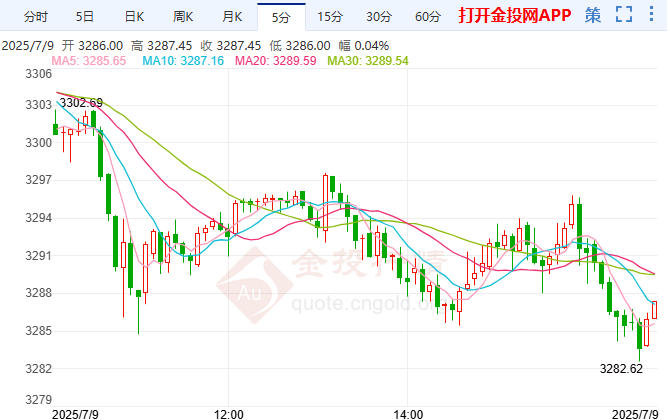
Group 1 - The core viewpoint indicates that gold prices are under pressure due to a decrease in the probability of a Federal Reserve rate cut in July and a strong US dollar index, which is at a two-week high [1][3] - Concerns over trade tariffs have not effectively boosted safe-haven buying for gold, despite the announcement of increased tariffs by Trump starting August 1 [3] - The recent strong non-farm payroll data from the Federal Reserve has led to a decline in short-term rate cut expectations, further impacting gold prices negatively [3] Group 2 - Technical analysis shows that gold prices are currently in a downtrend, with key resistance levels identified at 3311 and 3328, while support levels are noted between 3275 and 3250 [4] - The market is advised to monitor the 3320 area closely, as prices below this level indicate a bearish outlook in the short term [4] - The analysis suggests that gold is experiencing a phase of oscillating declines, with a focus on potential rebounds at resistance levels before further downward movement [4]
巨富金业:贸易乐观情绪升温,金价亚盘急挫跌破3300关口
Sou Hu Cai Jing· 2025-07-09 06:26
Core Viewpoint - The international spot gold price continues to decline, driven by reduced safe-haven demand due to optimistic trade sentiments and a stronger US dollar, with significant market movements observed in recent trading sessions [1][3][4]. Group 1: Market Sentiment and Trade Developments - Optimism in trade negotiations has led to a decrease in safe-haven demand for gold, as the US has postponed tariff implementation on Japan, South Korea, and 14 other countries until August 1, allowing for potential negotiations [3]. - Geopolitical risks have also eased, with the shipping volume in the Strait of Hormuz returning to normal levels, further boosting global risk appetite and diminishing gold's appeal as a safe-haven asset [3]. Group 2: Currency and Economic Indicators - The US dollar index has strengthened, reaching 97.660, which directly pressures gold prices as it increases the opportunity cost of holding non-yielding assets like gold [4]. - Market expectations regarding the Federal Reserve's monetary policy have shifted, with concerns about delayed interest rate cuts growing, particularly after mixed employment data [6]. Group 3: Technical Analysis and Market Dynamics - Gold prices have breached the critical psychological level of $3,300, entering a technical support zone between $3,280 and $3,290, with potential for further declines if this support fails [7]. - The recent net reduction of 12 tons in global gold ETFs indicates that institutional investors are taking profits amid easing trade tensions, contributing to increased market selling pressure [7]. Group 4: Investor Behavior and Market Outlook - Investor sentiment is notably divided, with retail investors buying on dips while institutional investors are establishing short positions in the futures market, indicating a bearish outlook [9]. - The current gold market is at a critical juncture, with trade optimism and a strong dollar exerting short-term pressure, while central bank gold purchases and geopolitical risks provide long-term support [10].
特朗普的《美联储·学徒》真人秀开演,双凯文对决!
Jin Shi Shu Ju· 2025-07-09 03:11
Core Points - Kevin Hassett is emerging as a strong contender for the next Federal Reserve Chair, posing a threat to Kevin Warsh, a former Fed governor [1][3] - The competition for the Fed chairmanship reflects Trump's typical style, with ambitious figures vying for his favor, reminiscent of his reality show "The Apprentice" [2] - Trump's dissatisfaction with current Fed Chair Jerome Powell is driving this competition, as he seeks more aggressive interest rate cuts [3] Group 1: Candidates - Kevin Hassett, 63, has shifted his stance on the Fed, becoming one of Powell's harshest critics, accusing the Fed of making decisions based on partisan interests rather than economic data [4][5] - Kevin Warsh, 55, is attempting to adjust his previously hawkish stance on monetary policy, suggesting that the Fed could cut rates more effectively by reducing its holdings of $6.2 trillion in Treasury and MBS assets [6] - Scott Bessent is in a unique position, having been privately suggested by Trump as a potential Fed Chair, with discussions about him possibly holding both the Treasury and Fed Chair positions [7] Group 2: Economic Context - Analysts note that the government's push for tax cuts without corresponding spending cuts has exacerbated fiscal deficit pressures, leading Trump's team to blame high interest rates on the Fed [3] - Trump's recent strong statements indicate that the new Fed Chair must support interest rate cuts, a more direct demand than during Powell's appointment in 2018 [3] - Bessent's views on the Fed have evolved, as he has publicly criticized Powell for being overly cautious in rate cuts due to past misjudgments on inflation [8]
美联储货币政策、新兴市场货币汇率与去美元化趋势
Sou Hu Cai Jing· 2025-07-09 02:56
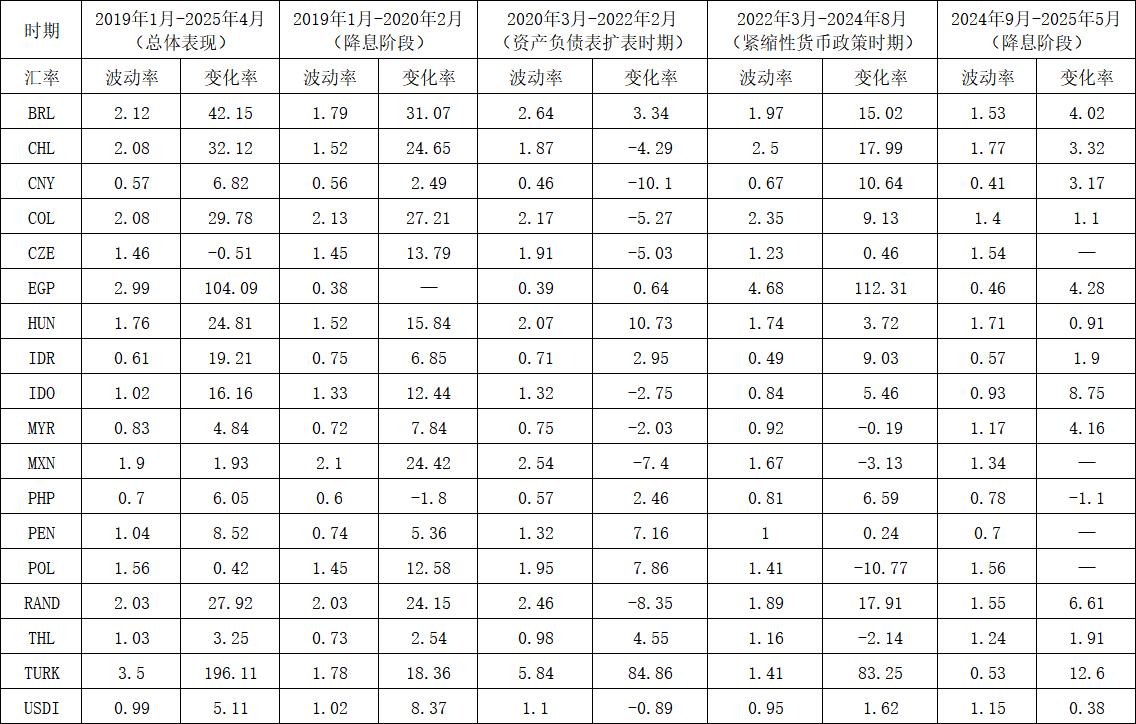
Core Viewpoint - The article analyzes the impact of the Federal Reserve's monetary policy cycle on the exchange rates of major emerging market currencies from January 2019 to April 2025, revealing a shift in the response of these currencies to U.S. monetary policy changes, indicating a departure from the previous trend of general depreciation [1][2][3]. Group 1: Background and Context - The article discusses the historical context of the U.S. dollar's dominance in the international monetary system and the emerging trend of financial multipolarity, with the dollar's share in global official foreign exchange reserves declining from 66% in Q1 2015 to 57.8% by the end of 2024, a drop of 8.2 percentage points [6][12]. - The research highlights the significant events that have challenged the dollar's status, including various financial crises and the U.S. government's increasing fiscal deficits, which have accelerated the trend of de-dollarization [2][12]. Group 2: Methodology and Findings - The study employs a DCC-GARCH model to empirically explore the dynamic relationship between de-dollarization trends and U.S. monetary and fiscal policies, focusing on the response of emerging market currencies to the latest monetary policy cycle of the Federal Reserve [3][11]. - The analysis identifies four distinct phases of the Federal Reserve's monetary policy from January 2019 to May 2025, including periods of easing and tightening, and examines the varying impacts on the exchange rates of 18 selected emerging market currencies [7][10]. Group 3: Exchange Rate Responses - During the first phase of monetary easing, the U.S. dollar index appreciated by 8.37%, with significant gains against currencies from Brazil, Chile, and Colombia, while some currencies like the Egyptian pound depreciated [8][10]. - In the second phase of quantitative easing, the dollar index slightly declined by 0.89%, but the Turkish lira experienced a dramatic depreciation of 84.86%, indicating a divergence in currency responses [10][11]. - The third phase of monetary tightening saw the dollar index rise by 1.62%, with notable appreciation against several emerging market currencies, yet the overall impact did not lead to widespread currency crises as previously observed [10][11]. Group 4: Implications of De-dollarization - The article concludes that the Federal Reserve's monetary policy has increasingly lost its influence over emerging market currencies, with countries like those in South America and Africa showing more vulnerability compared to Asian and European emerging markets, which have demonstrated stronger economic governance [11][18]. - The trend of de-dollarization is further supported by emerging market countries diversifying their reserves away from the dollar, reflecting a growing skepticism towards U.S. monetary policy and its associated risks [11][18].
关注美国国债收益率波动对美国主权信用的影响
Zhong Cheng Xin Guo Ji· 2025-07-08 11:23
Report Industry Investment Rating No relevant content provided. Core Viewpoints of the Report - The significant fluctuations in US Treasury bonds are due to the structural contradictions in the US Treasury market, leading to intensified supply - demand imbalances. The recent upward inflation expectations in the US and the repricing of Fed policies have also driven the re - evaluation of risk premiums [9]. - The US Treasury storm may lead to higher financing costs and uncertainty, inhibiting the expansion momentum of the US economy and restricting the scope of monetary policy. The increased volatility of US Treasuries exacerbates the fragility of the financial system, and the weakening of the safety of US Treasuries potentially impacts the international status of the US dollar and may accelerate the reconstruction of the global monetary and financial order [9]. - The probability of this Treasury bond fluctuation triggering a systemic risk is low, but attention should be paid to the impact of Treasury bond trends on the US sovereign credit level [12]. Summary by Relevant Catalogs 1. Basic Characteristics and Importance of the US Treasury Market - The US Treasury market is the world's largest and most liquid bond market, a core tool for US fiscal policy and the cornerstone of the global financial system. As of the end of Q1 2025, the outstanding balance of US federal government debt exceeded $36.2 trillion, equivalent to about 125% of GDP. The average daily trading volume has exceeded $630 billion [13]. - It is the anchor of the global financial system. The US Treasury yield (e.g., 10 - year) is the "risk - free interest rate" reference for global asset pricing, and US Treasuries are recognized as safe - haven assets [13]. - It is based on the pillar position of the US dollar in the international monetary system. The US dollar accounts for about 59% of global foreign exchange reserves, making US Treasuries an important part of central banks' foreign exchange reserves [13]. - It is crucial for US fiscal sustainability and the stability of the global financial market. The low financing cost of US Treasuries is key to US fiscal sustainability, and the stability of the Treasury market is vital for global economic and financial stability [14]. 2. Reasons for the Upward Movement of US Treasury Yields (1) Rising Fiscal Financing Demand and Continued Long - term Supply Pressure - In Q1 2025, US fiscal financing demand remained high. As of April 1, 2025, the total federal government debt exceeded $36.2 trillion. The CBO predicts that the budget deficit in fiscal year 2025 will exceed $2 trillion again, accounting for nearly 7% of GDP. The Treasury may gradually increase the issuance scale in the second half of 2025 [15][16]. (2) Upward Inflation Expectations and Fed Policy Repricing Driving Risk Premium Re - evaluation - On April 2, 2025, the Trump administration announced a "reciprocal tariff plan", which is expected to significantly increase import prices and exacerbate imported inflation risks. Multiple think - tanks warn that if major economies take reciprocal counter - measures, the US inflation center may rise by 1.5 - 2 percentage points. This may lead to greater uncertainty in the Fed's monetary policy path [18]. (3) Declining Demand for US Treasuries Leading to Insufficient Market Liquidity and Reduced Trading Depth - In recent years, the liquidity of the US Treasury market has declined. In March 2025, the US capital market fluctuated significantly, and investor confidence weakened. In April 2025, the liquidity indicators of the Treasury market continued to deteriorate, and the bid - ask spread of 10 - year and 30 - year Treasuries reached the highest level since the 2020 "flash crash". Market orders dropped by more than 40% [19]. 3. Potential Impacts and Risks of the Upward Movement of US Treasury Yields (1) The US Treasury Storm Increases Financing Costs and Uncertainty, Inhibiting US Economic Expansion and Restricting Monetary Policy Space - Rising yields directly increase the financing costs of the US real economy. In April 2025, the 30 - year mortgage rate exceeded 7.25%, and the residential transaction volume decreased by about 12% month - on - month. The nominal financing rate of mid - investment - grade corporate bonds exceeded 5.8%, and some capital expenditure projects were postponed [21]. (2) Increased Volatility of US Treasuries Exacerbates the Fragility of the Financial System and Amplifies Systemic Financial Risks at Home and Globally - The significant increase in US Treasury yields is causing a wide - scale re - evaluation of the balance sheets of the financial system, increasing the vulnerability of domestic financial institutions and amplifying global financial stability risks through cross - market linkages. In April 2025, emerging market bond ETFs had a net capital outflow of over $4 billion in the first two weeks [23][25]. (3) The Weakening of the Safety of US Treasuries Potentially Impacts the International Status of the US Dollar and May Accelerate the Reconstruction of the Global Order - The US Treasury market's weakening liquidity and increased volatility are eroding the traditional safe - haven perception of US Treasuries. The issue of US fiscal sustainability is becoming more prominent, which is eroding the credit foundation of the US dollar and may accelerate the shift of international reserve asset allocation to a multi - currency system [26]. 4. Future Scenario Analysis of US Treasury Trends (1) Baseline Scenario (60% Probability): Policy Tends to be Restrained, and the Market Restores Limited Stability - The Trump administration shows some policy convergence after market fluctuations, and the Fed maintains its independence and gradually releases easing signals. In the short term, US Treasury yields may remain at a relatively high level, but the sharp upward trend will slow down, and volatility is expected to converge. In the medium term, if policy stability improves and the Fed gradually cuts interest rates, Treasury yields are expected to decline [28][30]. (2) Risk Scenario (30% Probability): Radical Tariff Policies Lead to a Sharp Rebound in Inflation, Policy Re - tightening, and a Significant Increase in US Treasury Risks - If the US imposes comprehensive tariffs and global energy and commodity prices rise, inflation may rise above 3%. The Fed may be forced to postpone interest rate cuts, and the US economy's "stagflation" expectations will be strengthened. Both short - term and long - term Treasury yields face upward pressure [31]. (3) Crisis Scenario (10% Probability): In Extreme Situations, the Trump Administration Continues to Take Radical Policies and Puts Pressure on the Fed, Leading to Monetary Policy Chaos and a Financial Crisis - If the Trump administration promotes high - intensity fiscal expansion and trade protection measures, and the Fed loses its policy independence, it may trigger a liquidity crisis. The 10 - year yield may soar irrationally, and the US financial system may face a serious systemic financial crisis [32].