健康化

Search documents
洽洽2025新品上市发布会落幕
Zhong Zheng Wang· 2025-07-30 01:42
此次新品发布会,洽洽凭借对行业趋势的深刻洞察与技术创新的持续深耕,成功实现了从单一品类到矩 阵式产品生态的全面升级,从风味创新到营养功能的深度升级,从休闲零食到生活方式的场景升级。这 三大突破,映射出洽洽"质造美味坚果,分享快乐时刻"的品牌使命。 中证报中证网讯(王珞)7月29日,洽洽2025新品上市发布会在合肥举行。四百余位来自洽洽全产业链 的合作伙伴齐聚一堂,共同见证洽洽五款创新产品的重磅亮相。整场活动深度融合"自然、健康、快 乐、美味"的品牌策略与"快乐就要洽洽洽"的品牌主张,通过沉浸式产品介绍与场景化产品体验,展现 洽洽从传统休闲食品品牌向多元化健康零食领跑的转型。 公司表示,洽洽带着这份"中国味道"的独特魅力,在全球零食市场中崭露头角——从国内消费者的日常 餐桌,到海外市场的琳琅货架,洽洽正用不断创新的产品,让快乐的品牌印记跨越国界,连接世界。 发布会上,洽洽食品(002557)市场品牌中心负责人姚亚兰回顾洽洽26年来坚守品质、深耕创新的发展 历程。她提到,"洽洽生产的不仅是产品,更是品质与品牌——洽洽允许创新失败,但不允许不创新"。 本次发布的五款新品,是洽洽对行业未来趋势的深刻洞察与精准回应。 ...

食品饮料深度研究:破局与重构:中国软饮行业的发展新纪元
HTSC· 2025-07-24 09:56
Investment Rating - The report maintains an "Overweight" rating for the food and beverage industry [3]. Core Insights - The Chinese soft drink industry is transitioning from a growth phase characterized by new product launches to a more competitive environment focused on existing products, making it challenging to cultivate new billion-dollar brands [16][39]. - The report highlights the emergence of health and functional trends in consumer preferences, which are expected to create new market opportunities for innovative products [5][17]. - The industry is witnessing a shift in growth logic from volume-driven to structural upgrades, emphasizing the need for companies to enhance product innovation and channel management capabilities to succeed [18][19]. Summary by Sections Industry Overview - The soft drink sector in China has a vast potential for nurturing billion-dollar products, with notable examples including Red Bull (23.4 billion), Dongpeng Special Drink (17.6 billion), and Wanglaoji (13.8 billion) [4][20]. - The market size for the soft drink industry reached 691.4 billion yuan in 2024, with a compound annual growth rate (CAGR) of 4.0% from 2014 to 2024 [21]. Market Trends - The report identifies a significant trend towards health and functionality in beverages, with a growing demand for low-sugar and functional drinks [5][17]. - The Japanese soft drink market's history of sugar reduction and functionalization serves as a reference for potential developments in China [17]. Competitive Landscape - The competitive dynamics have intensified, with a notable increase in product and channel homogeneity, making it harder to develop new billion-dollar products [41]. - Major players like Nongfu Spring, Uni-President China, and Master Kong are recommended for their strong market positions and innovative capabilities [8]. Future Outlook - Short-term projections indicate that the cost advantages in the industry will continue, benefiting leading companies [18]. - Long-term success will depend on companies' abilities to innovate products and refine channel strategies to capture emerging consumer demands [19].
破局与重构:中国软饮行业的发展新纪元
HTSC· 2025-07-24 04:08
Investment Rating - The report maintains an "Overweight" rating for the food and beverage sector [7] Core Insights - The Chinese soft drink industry is transitioning from a growth phase characterized by new product launches to a more competitive landscape focused on existing products, with significant challenges in cultivating new billion-dollar products [14][15] - Emerging trends in health and functionality are reshaping consumer preferences, creating opportunities for new product categories such as sugar-free beverages and functional drinks [3][16] - The report emphasizes the importance of product innovation and channel development as key factors for companies to succeed in the evolving market [17][18] Summary by Sections Industry Investment Rating - The food and beverage sector is rated as "Overweight" [7] Industry Overview - The soft drink market in China reached a scale of 6,914 billion yuan in 2024, with a CAGR of 4.0% from 2014 to 2024 [20] - Major billion-dollar products include Red Bull (23.4 billion), Dongpeng Special Drink (17.6 billion), and Wanglaoji (13.8 billion) [15][32] Market Trends - The report identifies a shift towards health and functionality in consumer preferences, with sugar-free and functional beverages gaining traction [3][16] - The health trend began with the introduction of sugar-free drinks in China in 1997, with significant growth noted since 2018 [3][16] Competitive Landscape - The report highlights that the competition in the soft drink industry has intensified, with a focus on product differentiation beyond taste to include packaging, marketing, and functional attributes [18][37] - The market is characterized by a high degree of product and channel homogeneity, making it challenging for new billion-dollar products to emerge [15][37] Investment Recommendations - The report recommends investing in leading companies with strong comprehensive capabilities, such as Nongfu Spring, Uni-President China, and Master Kong [5][9]
可口可乐:“快乐肥宅水” 依然是最稳避风港?
3 6 Ke· 2025-07-23 00:01
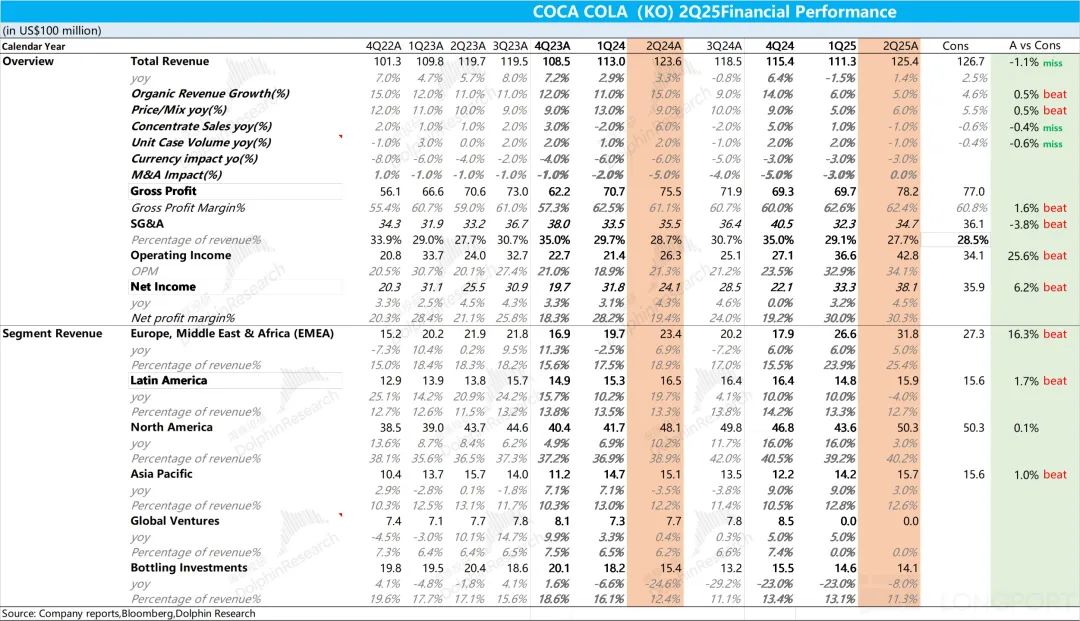
Core Viewpoint - Coca-Cola (KO.US) reported its Q2 2025 earnings, showing a slight miss in revenue expectations but maintaining a stable overall performance despite high base effects from the previous year [2][8]. Revenue Performance - Coca-Cola achieved a total revenue of $12.54 billion in Q2 2025, a year-on-year increase of 1.4%, which was slightly below market expectations [2][7]. - Organic revenue growth was 5%, with a decline in concentrate sales volume by 1% due to high base effects from the previous year [2][7]. - Concentrate prices increased by 6%, driven by a higher proportion of premium products in the mix [2]. Regional Insights - Emerging markets, including China, India, and Latin America, showed higher growth rates compared to mature markets like North America and Western Europe, although the Asia-Pacific region experienced a slowdown [3][4]. - The competitive landscape in China, with the rise of local brands, has impacted Coca-Cola's performance in that market [3]. Product Category Performance - The no-sugar cola segment continued to grow significantly, with a year-on-year increase of 14%, while classic cola saw a decline of 1% [4]. - Other product categories, except for ready-to-drink coffee, experienced declines due to high base effects from the previous year [4]. Profitability Metrics - Coca-Cola's gross profit margin improved by 1.3 percentage points to 62.6%, supported by effective cost management and a shift towards higher-margin products [5][7]. - Operating profit margin saw a substantial increase of 12.8%, indicating enhanced operational efficiency [8]. Future Guidance - The company expects to achieve organic growth of 5%-6% for the full year 2025, consistent with previous forecasts [6]. Strategic Initiatives - Coca-Cola is focusing on targeted strategies for different consumer segments, including increasing the availability of smaller packaging and family packs in discount channels for lower-income consumers, while emphasizing health-oriented products for higher-income groups [9]. - The company plans to expand its distribution network in emerging markets, particularly through non-retail channels, and will introduce localized product innovations to meet regional consumer preferences [9]. Investment Perspective - Coca-Cola's strong brand presence and localized operations provide it with a robust risk resilience, making it an attractive option for investors seeking stable returns [10].


皱叶甘蓝登场,书亦烧仙草的“慢功夫”
Bei Ke Cai Jing· 2025-07-16 12:32
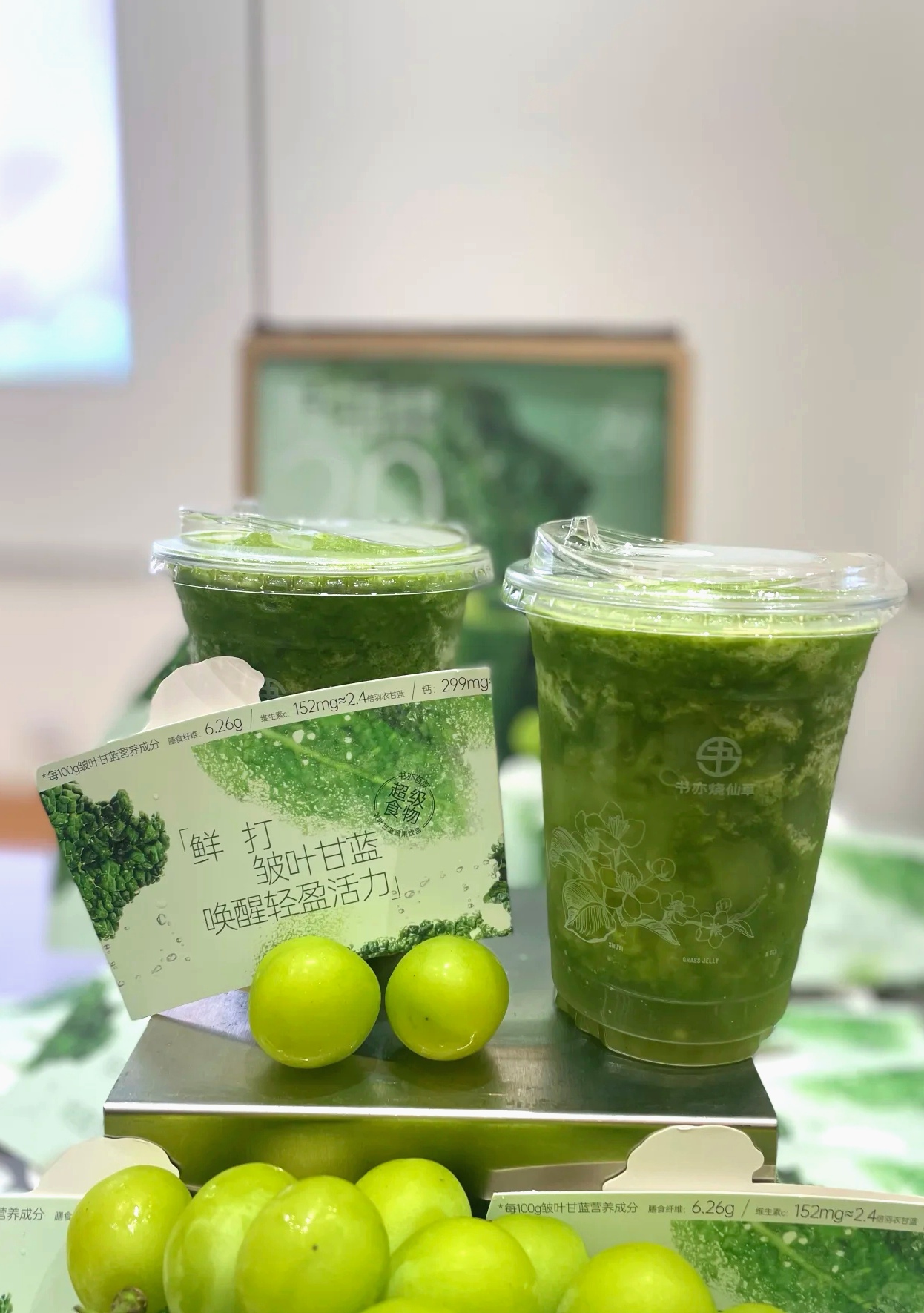
Core Viewpoint - The new tea beverage industry is increasingly focusing on health, with Shuyi Shao Xian Cao differentiating itself by launching a new product featuring curly kale, marking the beginning of a "Curly Kale 2.0" era in tea drinks [1][10]. Group 1: Product Development - Shuyi Shao Xian Cao has introduced a new curly kale beverage, utilizing fresh curly kale and ensuring high-quality logistics and food safety processes to maintain freshness and safety of ingredients [1][9]. - The company is launching four curly kale drinks, including a refreshing "Curly Kale Slimming Cup" and various smoothies, emphasizing the use of high-quality tender leaves for optimal taste [8][10]. - The curly kale is a novel ingredient in the domestic market, primarily cultivated in specific research production bases, and is known for its high nutritional value, including dietary fiber and vitamins [4][8]. Group 2: Market Performance - Despite facing competition, the curly kale drinks achieved impressive sales, with over 200,000 cups sold in the first weekend, consuming 20,000 jin of curly kale, and receiving a 95% customer satisfaction rate [10][11]. - The product's success reflects a growing trend among young consumers who prioritize health and quality in their beverage choices [10][11]. Group 3: Marketing Strategy - Shuyi Shao Xian Cao has appointed Chinese track and field athlete Wu Yanni as a brand ambassador to promote a healthy lifestyle, enhancing the product's appeal to younger consumers [11][12]. - The company is employing innovative marketing strategies, including themed packaging and interactive events, to strengthen health awareness and engage consumers [12][16]. Group 4: Supply Chain and Quality Control - The curly kale is sourced directly from cooperative bases, ensuring daily fresh harvesting and rigorous quality checks, with a focus on food safety through multiple cleaning and preparation processes [9][20]. - The company emphasizes a strong supply chain strategy, leveraging local resources to enhance product quality and maintain competitive advantages in the market [20][24]. Group 5: Long-term Strategy - Shuyi Shao Xian Cao is committed to refining its product offerings through meticulous research and development, focusing on quality and consumer preferences to drive future growth [17][19]. - The company aims to expand its health beverage portfolio while maintaining a stable supply chain and precise operational management to ensure consistent product quality [24].
食品饮料行业主题报告
2025-07-16 06:13
Summary of Conference Call Notes Industry Overview - The report focuses on the food and beverage industry, analyzing new consumer demands, products, and channels [1][2][3]. Key Points and Arguments New Consumer Demands - The emerging consumer base primarily consists of Generation Z (post-1995), characterized by a heightened self-awareness and faster development compared to previous generations [1]. - Government policies aimed at boosting consumption have been introduced, including the "Special Action Plan to Boost Consumption" and "Consumer Service System Benefit Action 2025" [2]. - Consumer behavior is diversifying, with Generation Z and affluent groups showing more optimistic consumption attitudes, while middle-class and rural older consumers exhibit weaker consumption willingness [3]. Changes in Consumption Patterns - There is a notable shift towards value-for-money products, with consumers increasingly prioritizing cost-effectiveness [4]. - The market has identified four potential growth categories: education, food and beverages, health products, and travel, while three risk categories include home appliances, tobacco, and certain consumables [3]. - The health consciousness among consumers is rising, leading to increased demand for health-related products, with the health food market projected to reach 836.2 billion by 2027, reflecting a 42% growth from 2022 [5]. Innovations in Products and Channels - Companies are innovating to meet health demands, introducing products like konjac, seaweed, and quail eggs [6]. - The focus on cost-effectiveness has led to supply chain optimization, reducing intermediaries to lower prices for consumers [7]. - The beverage market is witnessing significant growth in sugar-free teas and plant-based drinks, with growth rates of 19% and 32% respectively [8]. New Sales Channels - The rise of temporary retail channels has transformed the market, with the temporary retail industry expected to grow from 211 billion in 2019 to 1.5 trillion by 2027 [12]. - Membership warehouse stores are gaining traction, with the market size increasing from 20 billion in 2012 to 36.4 billion in 2023 [14]. - Online sales are rapidly growing, with a 56% year-on-year increase in online sales across nine categories, surpassing 120 billion in 2023 [18]. Recommendations and Risks - The report suggests focusing on new products, channels, and consumer demands as key investment themes, maintaining a strong rating for the food and beverage industry [20]. - Specific recommendations include companies like Three Squirrels, Yili, and Qingdao Beer, while highlighting the potential for profitability recovery in dairy and seasoning sectors [21][22]. - Risks include raw material price fluctuations and intensified industry competition [23]. Additional Important Insights - The emotional value of consumption is increasing, with service-related spending rising from 43% in 2020 to 46% in 2024 [5]. - The shift in consumer purchasing habits is leading to a more significant online presence for traditional products, including liquor, which is becoming a focus for major brands [17].





广西味道引爆行业热度 ———品牌实力兜底市场信心
Zhong Guo Shi Pin Wang· 2025-07-14 02:15
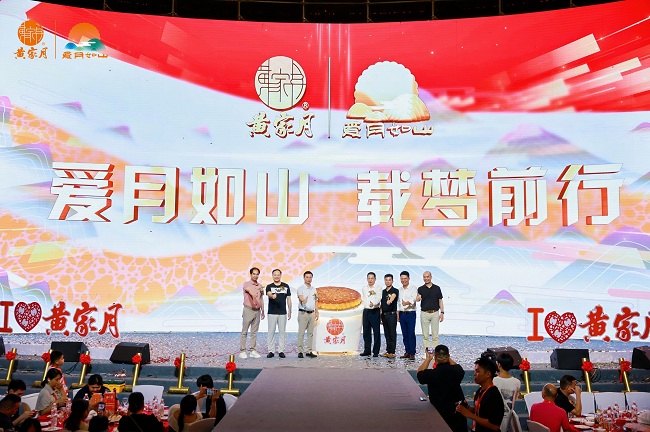
Core Viewpoint - Huangjiayue, a leading mooncake brand in Guangxi, held its 2025 product launch and ordering conference, marking the beginning of the Mid-Autumn Festival campaign with a focus on innovation and health-conscious products [1][11]. Group 1: Event Highlights - The event showcased the "Mooncake King," a 388-pound mooncake that combines regional culture with modern baking technology, attracting significant attention from distributors and industry experts [4]. - Over 30 new products were launched, emphasizing a dual focus on health and youthfulness, including innovative flavors that appeal to younger consumers [7][12]. Group 2: Strategic Insights - The chairman of Huangjiayue highlighted the upcoming "super golden week" during the Mid-Autumn and National Day holidays as a significant market opportunity, predicting a prosperous year for the mooncake industry [11]. - Huangjiayue's journey from a small workshop to a modern production facility with over 100,000 pounds of daily capacity reflects its commitment to quality and innovation [11][12]. Group 3: Market Positioning - The company aims to strengthen its national brand recognition through innovative marketing strategies, including advertising on CCTV and leveraging e-commerce platforms [17]. - Huangjiayue plans to expand its market presence in Southeast Asia and globally, promoting its products as symbols of Chinese cultural exchange and family reunion [18].
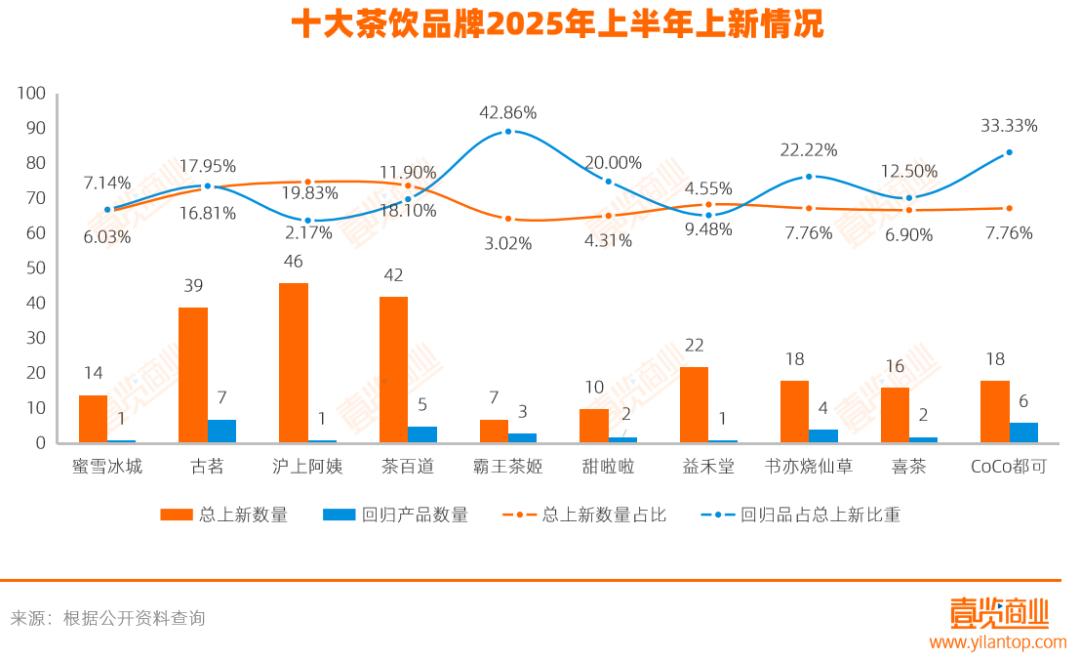
半年上新超200款,10大茶饮品牌今年都在推什么?
3 6 Ke· 2025-07-11 11:14
Core Insights - The tea beverage industry is shifting towards value competition in 2025, focusing on product depth, health trends, emotional marketing, and scene segmentation as key strategies for breaking through market challenges [1][20]. Product Launches - In the first half of 2025, the top 10 tea brands launched a total of 232 new products, averaging 1.3 new products per day, including 32 returning products and 200 true new products [1][4]. - The brand "沪上阿姨" led with 45 new products, while "霸王茶姬" had the least with only 4 new products [1][4]. Seasonal Trends and Consumer Preferences - The peak of new product launches occurred in April with 58 new products, followed by May and June with 42 and 46 new products respectively [4]. - Fruit tea, light milk tea, and milk tea dominated the market, accounting for 77% of new product launches, with fruit tea being particularly favored during warmer months [7][10]. Ingredient Innovations - The use of floral elements in new products was prominent, with 67 new products incorporating floral flavors, particularly jasmine [12][14]. - The trend towards health-focused ingredients is evident, with brands moving from "following trends" to "true health" by upgrading raw materials and enhancing health attributes [11][20]. Regional and Flavor Differentiation - Brands are increasingly emphasizing regional tea varieties and unique flavors, with a notable focus on seasonal characteristics in product offerings [19][20]. - The use of fruits in new products showed significant seasonal variation, with lemon being the most commonly used fruit, appearing in 32 new products [20][21]. Conclusion - The tea beverage industry is evolving with a focus on health and differentiation, as leading brands innovate through high-frequency product launches and diverse ingredient strategies to meet consumer demands [20].
中金2025下半年展望 | 食品饮料:大众食品突破,白酒筑底,板块估值修复有望延续
中金点睛· 2025-07-08 23:34
Core Viewpoint - Consumer demand in the food and beverage sector is stabilizing at a low level, with structural highlights emerging despite overall weak consumer confidence. The sector is expected to improve marginally in the second half of 2025 due to government policies aimed at boosting domestic demand and consumption [1][4]. Group 1: Food and Beverage Sector Overview - The food and beverage sector is anticipated to see a marginal improvement in demand in the second half of 2025, driven by government policies to stimulate consumption and encourage childbirth [1]. - The mass food segment has shown signs of improvement since March 2025, with expectations for continued growth in new consumption trends such as spicy snacks, healthy beverages, and sparkling yellow wine [1][4]. - The liquor sector, particularly baijiu, is experiencing a valuation correction due to macroeconomic factors and policy impacts, with the fundamentals currently at a bottoming stage [1][4]. Group 2: Mass Food Segment - The mass food sector is expected to see stable demand growth, with high-growth sub-sectors like leisure snacks and soft drinks maintaining innovation and high market activity [4][7]. - The leisure snack market is witnessing a shift towards health-oriented and flavorful products, with ingredients like konjac and high-protein snacks gaining popularity [11][17]. - The soft drink sector is experiencing robust growth, particularly in health-related subcategories, with innovations in products like sugar-free tea and electrolyte water [19][27]. Group 3: Channel Trends - The snack retail channel is expanding, with significant growth in discount supermarkets and membership-based stores, indicating a shift in consumer purchasing behavior [8][9]. - E-commerce channels, including short video platforms and community group buying, continue to grow, with notable sales increases during shopping festivals [9][19]. - Traditional supermarkets are undergoing transformations to adapt to changing consumer preferences, with a focus on enhancing product offerings and store formats [9][10]. Group 4: Liquor Sector - The liquor industry is facing a downturn, with demand expected to remain under pressure in the second half of 2025, although leading brands are focusing on long-term value creation [4][52]. - The impact of government regulations on consumption patterns is being monitored, with expectations for gradual recovery in consumer demand for baijiu [53][55]. - The pricing dynamics of leading brands like Moutai are stabilizing after significant fluctuations, indicating a potential for recovery in the market [55][57]. Group 5: Dairy Products - The dairy sector is experiencing a mixed recovery, with some categories like liquid milk and cheese showing signs of improvement, while overall demand remains weak [30][31]. - The cost of raw milk has decreased, which is expected to benefit dairy companies' profit margins in 2025 [31][37]. - Long-term growth opportunities exist in emerging dairy categories and international markets, as companies expand their product lines and distribution channels [46][47]. Group 6: Frozen Foods and Condiments - The frozen food sector is expected to see revenue growth in the second half of 2025 as companies shift focus to consumer channels amid weak restaurant demand [49][50]. - The condiment industry is facing pressure from external demand but is benefiting from lower raw material costs, which may enhance profit margins [51]. - Companies are actively pursuing innovation and market expansion to adapt to changing consumer preferences and competitive pressures [51].




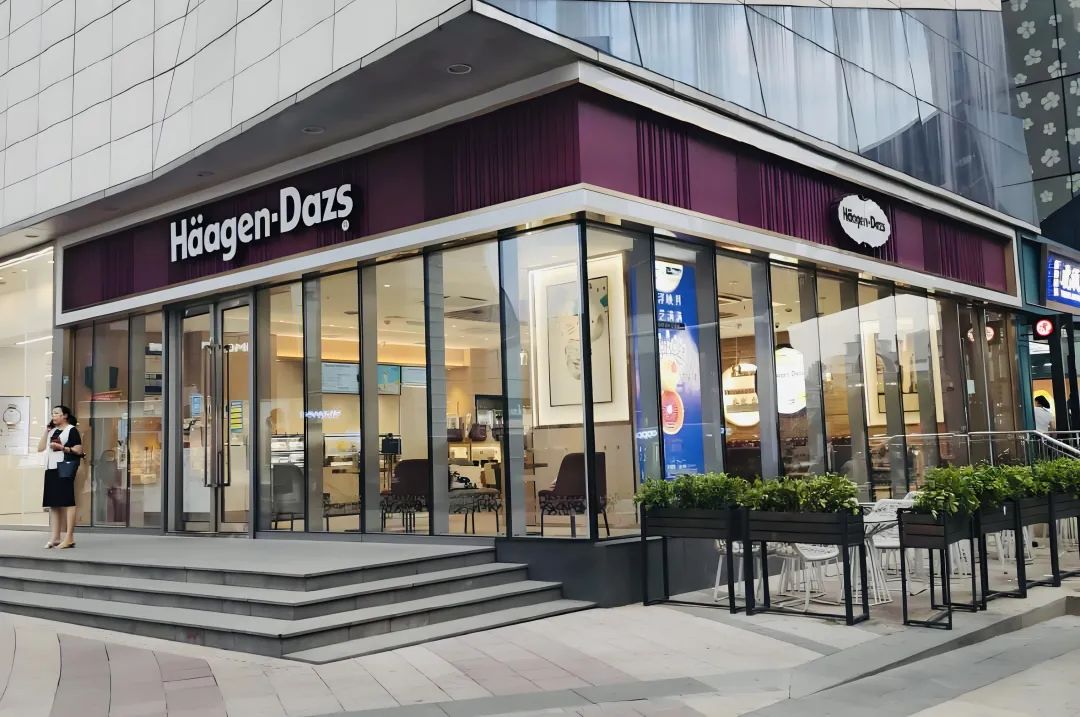
梦龙、哈根达斯们得了星巴克的病
3 6 Ke· 2025-07-08 10:28
Core Viewpoint - The ice cream market is undergoing significant changes, with premium brands like Magnum and Häagen-Dazs facing challenges due to shifting consumer preferences towards affordable options and local brands [1][2][5]. Company Overview - Unilever's ice cream business has been separated and will operate as Magnum Company, planning to go public in Q4 2023 in major cities [1]. - Magnum Company holds a strong market position, with a retail value of €8.3 billion in 2024, showing a 4.5% year-on-year growth [1]. - Häagen-Dazs is struggling in China, with reports of declining revenue and foot traffic, leading to potential store closures [2][4]. Market Dynamics - The ice cream market is experiencing a shift towards lower-priced products, with premium ice creams becoming less popular in retail channels [5][16]. - In China, the average ice cream consumption per person reached 3.1 kg in 2024, indicating significant growth potential despite current market challenges [12][13]. - The competitive landscape is intensifying, with local brands like Yili and Mengniu posing strong challenges to established players [4][16]. Consumer Behavior - Consumers are increasingly price-sensitive, especially in the current economic climate, leading to a decline in high-end ice cream sales [14][15]. - The trend towards affordable ice cream is evident, with over 70% of ice cream orders on platforms like Meituan priced below 3 yuan [16]. - Young consumers aged 18-35 are driving the demand for ice cream, emphasizing the need for innovative flavors and healthier options [19]. Industry Trends - The ice cream industry is evolving to become a year-round product, with brands exploring new consumption scenarios beyond summer [20]. - The competition in the ice cream market is becoming similar to that in the coffee and tea sectors, with price wars and flavor innovations becoming common strategies [21][22]. - Major ice cream brands are experiencing revenue declines, with Yili's ice cream business down 18.41% and Mengniu's down 14.12% in 2024 [22].