存量竞争

Search documents
上半年狂揽8个 “行业第一” 解放年中会亮出成绩单
第一商用车网· 2025-07-27 11:13
Core Viewpoint - The article highlights the achievements and strategic direction of FAW Jiefang in the first half of 2025, emphasizing its leadership in the commercial vehicle market and commitment to innovation and collaboration with partners [3][5][10]. Group 1: Market Performance - In the first half of 2025, FAW Jiefang achieved eight "industry firsts," maintaining its position as the leading brand in the commercial vehicle sector for 14 consecutive years, with a brand value of 1450.29 billion [3]. - The company secured a 23.2% market share in the domestic heavy-duty truck market, 24.6% in the tractor market, and 28.3% in the cargo truck market, all ranking first in the industry [3]. - FAW Jiefang's market share in the new energy heavy-duty truck sector reached 14.5%, with the fastest growth rate in the industry, while its share in the new energy tractor market was 16.3%, also ranking first [3]. Group 2: Strategic Initiatives - FAW Jiefang's Chairman, Li Sheng, emphasized the need for the company to adapt to energy structure transformations and intense market competition, aiming to consolidate its advantages in the heavy-duty truck segment [5]. - The company plans to enhance its overseas exports, which have seen a 61% growth across seven regions, including Southeast Asia and West Africa [5]. - The marketing strategy for the second half of the year includes a focus on maintaining leadership in key segments and expanding in new energy and core markets [10]. Group 3: Product Development - FAW Jiefang is strengthening its core competitiveness by launching 10 new models in the traditional energy sector and 22 new models in the new energy sector, showcasing advancements in its powertrain technology [15]. - The company introduced new products featuring four new self-developed engine assemblies and three new transmission assemblies, enhancing its technological edge [15]. - The exhibition at the conference showcased 13 representative models and six powertrain products, highlighting the company's commitment to innovation in both traditional and new energy vehicles [17][18]. Group 4: Collaboration and Future Outlook - The company called for partners to maintain confidence in the commercial vehicle industry's future and FAW Jiefang's brand development, emphasizing the importance of collaboration [5][8]. - FAW Jiefang aims to achieve high-quality development and successfully complete the "14th Five-Year Plan" by working closely with its commercial partners [18].



中国飞鹤中报业绩预降 | 国产奶粉行业乍暖还寒
Xin Lang Cai Jing· 2025-07-21 01:22
Core Viewpoint - China Feihe's performance forecast reveals significant challenges in the domestic milk powder industry, with expected revenue and net profit declines indicating a broader industry crisis [5][6][8] Company Summary - China Feihe anticipates a revenue of approximately 9.1 to 9.3 billion yuan for the first half of the year, representing a year-on-year decline of 7.87% to 9.86% [5] - The company's net profit is projected to be around 1 to 1.2 billion yuan, down 37.17% to 47.64% year-on-year, marking the lowest performance in five years [5] - Following the announcement, Feihe's stock price dropped over 18% at one point, closing down 17.02%, resulting in a market value loss of nearly 8.8 billion HKD in a single day [5] - To restore market confidence, Feihe announced a share buyback plan of at least 1 billion yuan, aiming to repurchase up to 10% of its total shares [5][6] Industry Summary - The decline in Feihe's performance highlights a systemic issue within the domestic milk powder industry, exacerbated by low birth rates and intense competition [6][12] - The industry is grappling with a price war initiated by various companies offering substantial subsidies to consumers, which has led to revenue declines across the sector [8][10] - High inventory levels remain a significant challenge, with Feihe's inventory valued at 2.154 billion yuan and a turnover period of 114 days, indicating a broader issue of excess stock across the industry [10] - The milk powder market has seen a contraction, with industry scale declining by 5% and 10% in 2022 and 2023, respectively, as a result of falling birth rates [12][14] - Companies are shifting focus towards high-end products, with the high-end market segment holding a 56.4% share of the domestic infant formula market, despite overall market contraction [14][16] Competitive Landscape - The competition is evolving from quantity-based growth to value-based competition, with companies focusing on precise nutritional offerings and technological advancements [16][18] - Major players are investing in adult nutrition products and exploring international markets to mitigate the impact of declining birth rates domestically [18] - The future success of domestic milk powder companies hinges on their ability to innovate and differentiate their products beyond reliance on birth rate fluctuations [18]

“女装一姐”,卖不动了?
3 6 Ke· 2025-07-20 23:46
Core Viewpoint - The fashion brand Dazzle is facing significant challenges, with declining revenues and profits, as well as a loss of market position among urban women's clothing brands, reflecting a broader shift in consumer preferences and fashion trends [3][10][24]. Financial Performance - Dazzle's financial report indicates a decline in both revenue and net profit for the fiscal year 2024, with a continued downward trend into the first quarter of 2025 [3][10]. - The company closed over 100 stores within a year, with its main brand Dazzle experiencing an 18.37% revenue drop, the largest among its four brands [3][10][24]. - The revenue in the East China region, which contributes the most to Dazzle's earnings, fell by 15.16% to 9.62 billion [10]. Market Position and Competition - Dazzle's main brand did not make it to the top sales rankings during major promotional events, while competitors like Moco, Cos, and Edition performed well [3][10][24]. - The brand's image and offerings are perceived as lacking differentiation in a market that has become increasingly segmented and competitive [21][24]. Consumer Behavior and Trends - There is a noticeable shift in consumer preferences, with high heels and luxury handbags losing their appeal, leading to a more casual workplace attire [26]. - Consumers express dissatisfaction with Dazzle's current offerings, citing a lack of appealing designs [10][21]. Marketing and Brand Strategy - Dazzle is attempting to revitalize its brand image through collaborations with popular celebrities and influencers, but this has not translated into increased sales [22][24]. - The brand's marketing expenses have decreased, which may impact its visibility and sales performance [24][25]. Online and Offline Sales Channels - Dazzle's online revenue decreased by 7.31% to 3.68 billion, accounting for 16.60% of total revenue, while offline sales dropped by 17.88% to 18.46 billion, making up 83.40% of total revenue [24][25]. - The total number of Dazzle stores decreased to 890, with the main brand closing the most locations [24].


AI表格再掀战事,大厂争夺“下一代Office”
3 6 Ke· 2025-07-15 12:45
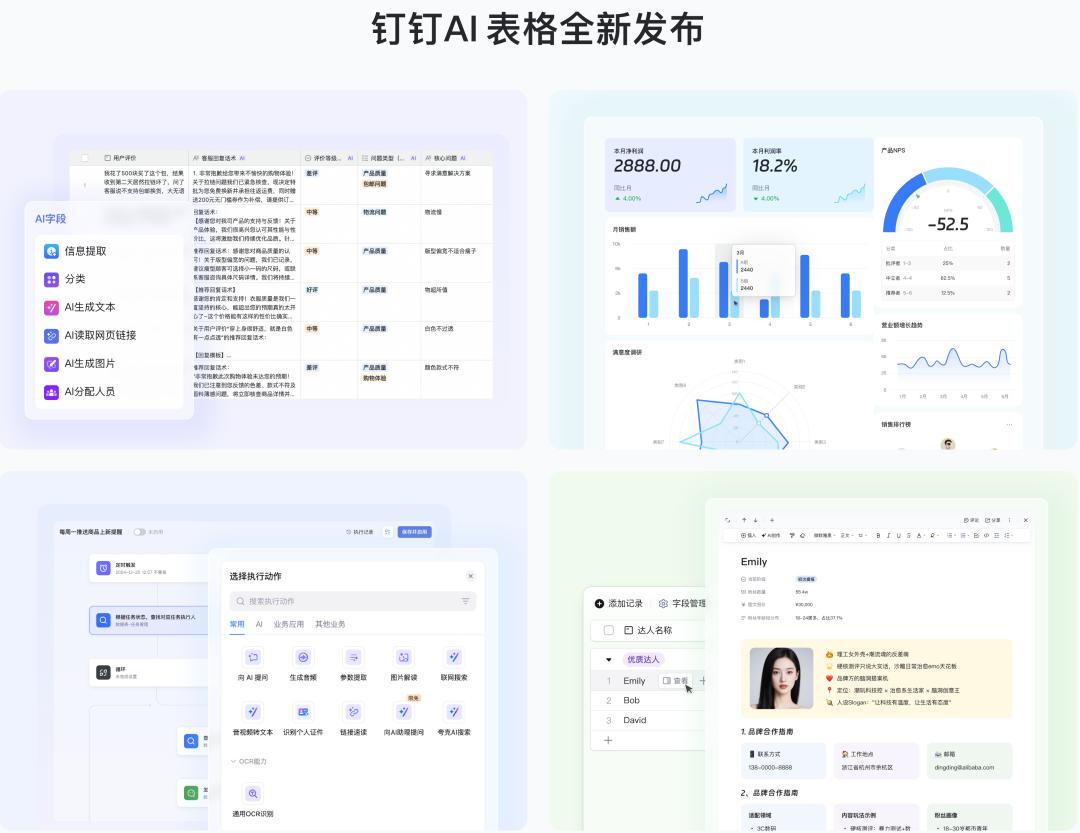
Core Viewpoint - The competition among Tencent, Alibaba, and ByteDance in the B-end collaborative office sector has intensified, particularly with their recent launches of AI-driven spreadsheet tools, indicating a fierce rivalry in the market [1][3][10]. Group 1: AI Spreadsheet Developments - Alibaba's DingTalk launched a new AI spreadsheet on July 8, which integrates AI capabilities into every cell, allowing for enhanced data management and productivity [5][10]. - ByteDance's Feishu introduced a new generation of AI-driven multi-dimensional spreadsheets aimed at maximizing employee potential and improving operational efficiency [5][10]. - Tencent's WeChat Work upgraded its intelligent spreadsheet features, focusing on AI capabilities such as batch tagging and custom fields to simplify business analysis [7][10]. Group 2: Competitive Landscape - The simultaneous focus on AI spreadsheets by these three companies reflects the intense competition in the collaborative office space, with each company striving to avoid falling behind [3][10]. - The competition is not only about technological advancements but also about capturing user mindshare in a saturated market, where all three companies are vying for dominance [15][18]. - As of 2023, DingTalk leads in user scale, followed by WeChat Work and Feishu, highlighting the ongoing battle for user acquisition among these platforms [15][17]. Group 3: Strategic Implications - The push for AI spreadsheets is part of a broader strategy by Alibaba, ByteDance, and Tencent to solidify their positions in the AI-driven B-end market, with each company viewing this as a critical area for future growth [11][12][21]. - The competition extends beyond the B-end to the C-end market, where these companies are also engaged in fierce battles across various sectors, including e-commerce and digital entertainment [22][24]. - The overarching goal for these companies is to expand their business ecosystems and secure a foothold in emerging technologies, particularly AI, which is seen as a key driver for the next decade [26].

存量竞争时代下,民营炼化投资价值有望提升 | 投研报告
Zhong Guo Neng Yuan Wang· 2025-07-15 06:02
Core Viewpoint - The petrochemical industry is expected to experience improved profit margins for refining companies due to a decline in oil prices and enhanced cost optimization, particularly for private refining enterprises like Zhejiang Petrochemical and Hengli Petrochemical [1][2]. Group 1: Industry Outlook - The oil price is projected to decline in the first half of 2025, leading to a decrease in the price center, which will positively impact the price spread of chemical products, especially olefins [1][2]. - The theoretical net profit for Zhejiang Petrochemical is estimated at approximately 53 billion, 107 billion, and 138 billion yuan under oil prices of 80, 70, and 60 USD respectively, while Hengli Petrochemical's theoretical net profit is estimated at 16 billion, 45 billion, and 70 billion yuan under the same conditions [1][2]. - The refining industry is entering a phase of stock competition due to a slowdown in supply-side growth, with the National Development and Reform Commission (NDRC) controlling crude oil processing capacity to remain under 1 billion tons by 2025 [3]. Group 2: Demand and Consumption - The demand for chemical products is expected to maintain a steady but weak recovery, with an average annual growth rate of about 3%-4% for domestic chemical oil demand from 2025 to 2026 [4]. - The consumption of polyethylene is projected to grow at a rate of 1-4% from 2025 to 2030, while the aromatics sector may see a recovery due to downstream capacity expansion [5]. Group 3: Financial Performance and Investment Value - The private refining sector is expected to benefit from cost optimization due to falling coal prices, with estimated reductions in coal costs for Hengli Petrochemical and Zhejiang Petrochemical of approximately 11.74 million and 8.24 million yuan respectively [2]. - The overall debt ratio of companies is expected to decrease by 5%, leading to a financial cost optimization of about 9-12 million yuan [5]. - The long-term investment value of private refining companies is highlighted, as their current valuation is believed to be lower than the intrinsic value of their refining assets [5]. Group 4: Investment Recommendations - The industry is recommended to focus on private refining leaders with significant scale advantages and a diversified product portfolio, such as Hengli Petrochemical and Rongsheng Petrochemical [6].


2025过半,谁在抖快B红疯狂涨粉?
3 6 Ke· 2025-07-04 08:38
Core Insights - The article discusses the shifting dynamics of content and user engagement across four major platforms: Douyin, Xiaohongshu, Kuaishou, and Bilibili in the first half of 2025, highlighting the unique growth stories and trends on each platform [1][3]. Douyin Insights - Douyin's standout figure in early 2025 is "Wei Dongyi," who gained over 20 million followers in just five days after launching his account, leveraging his existing fame as a mathematics professor [3][4]. - The trend in Douyin has shifted from ordinary individuals going viral to established figures and creators leveraging their existing influence to gain followers [7][15]. - Notable accounts that gained over 10 million followers include "Xin Zhong Zhi Cheng" and "Li Weigang," indicating a stable growth pattern among established creators [4][6]. - The platform is seeing a rise in practical and useful content, with creators focusing on real-life skills and knowledge sharing [9][10]. Xiaohongshu Insights - Xiaohongshu's growth is significantly influenced by celebrity accounts, which now make up 21% of the top 100 gaining accounts, a threefold increase from the previous year [16][18]. - Young creators, particularly those born after 2010, are emerging as significant influencers, with accounts like "Xiao Hai Jie" gaining substantial followings [19][21]. - The platform is expanding its content diversity, with practical cooking and lifestyle tips gaining traction, moving away from purely aesthetic content [25][27]. Kuaishou Insights - Kuaishou's top gaining accounts are dominated by brand accounts, with "Libai Official Flagship Store" leading with over 10 million followers, indicating a shift towards commercial content [30][32]. - The platform's "old iron" community remains strong, but new creators are struggling to break through, highlighting a potential stagnation in fresh talent emergence [40]. - Kuaishou is focusing on local market strategies, with predictions that the local service market will exceed 2.5 trillion yuan in 2025, suggesting a robust growth opportunity in lower-tier cities [36][40]. Bilibili Insights - Bilibili's most popular accounts in early 2025 are educational, with "Yi Shu" gaining over 2.28 million followers, reflecting a strong demand for academic content among its predominantly young user base [41][43]. - The platform is seeing a significant presence of gaming content, with 19 gaming accounts in the top 100, indicating a vibrant gaming community [44][46]. - Bilibili's user demographic is increasingly young and oriented towards niche interests, with a focus on anime and gaming culture, differentiating it from other platforms [48][50].

鹿角巷重回北京市场 昔日网红茶饮如何破局重生
Bei Jing Shang Bao· 2025-07-03 14:20
Core Viewpoint - The company, 鹿角巷, is making a comeback in the Beijing market after facing challenges from counterfeit brands, with a focus on differentiating itself in a competitive tea beverage industry that has shifted from growth to "stock competition" [1][6]. Company Overview - 鹿角巷 has reopened its first store in Beijing at 朝阳大悦城, featuring a new yellow and white design, with an average price of 17 yuan per customer, positioning itself in the mid-range of the tea beverage market [2][4]. - The brand's product lineup continues to emphasize its signature brown sugar pearl tea while introducing new items like rainbow crushed ice and special flavored teas, highlighting the use of fresh milk [2][3]. Market Context - The tea beverage market is experiencing a slowdown in growth, transitioning to a phase where competition is more about existing market share rather than expansion, making it crucial for 鹿角巷 to identify its unique advantages [1][6][8]. - The company has faced significant challenges due to counterfeit brands, with reported legal costs reaching 1 billion yuan for brand protection efforts [4][6]. Expansion Strategy - 鹿角巷 is not only targeting the Beijing market but is also planning to expand into other cities, actively seeking exclusive partners for new store openings [5][6]. - The brand aims to optimize its business model and is considering a shift towards smaller store formats to adapt to the changing market dynamics [7][9]. Competitive Landscape - The tea beverage market is becoming increasingly competitive, with many local brands emerging and established brands solidifying their positions, making it essential for 鹿角巷 to establish a distinct brand identity and operational efficiency [7][9]. - Industry experts suggest that 鹿角巷 should focus on creating unique product offerings and optimizing its profitability model while being cautious about the pace of its expansion [9].
超30家银行信用卡分中心“退场”!啥原因
Jin Rong Shi Bao· 2025-07-03 11:18
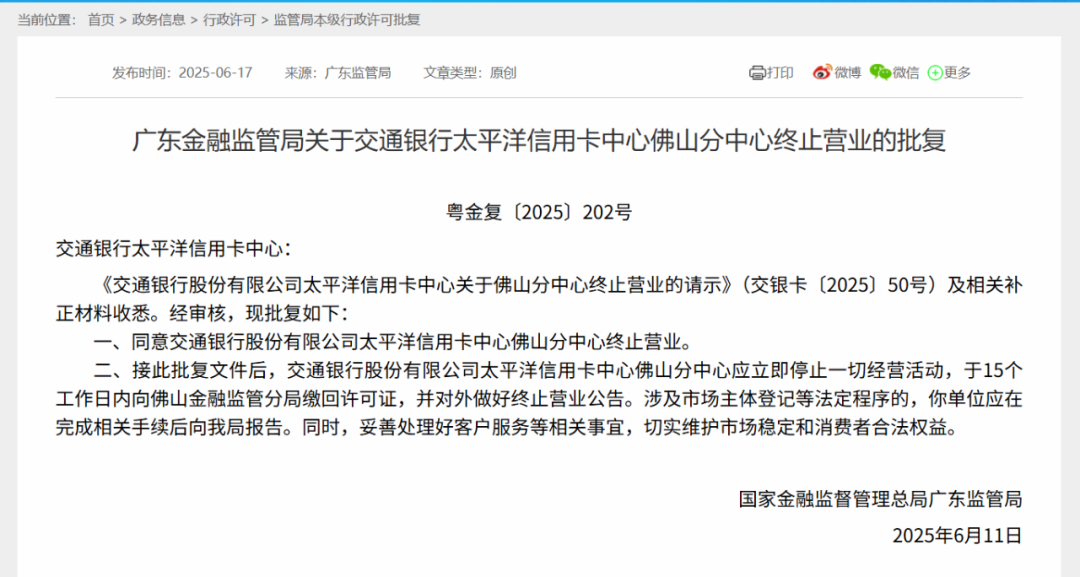
Core Viewpoint - The credit card business of banks has been undergoing significant downsizing this year, with over 30 credit card centers shutting down across various banks [1][7]. Group 1: Bank Actions - The China Banking and Insurance Regulatory Commission has approved the closure of two branches of the Bank of Communications Pacific Credit Card Center [2][5]. - The Bank of Communications has already closed nearly 30 credit card centers this year, with 10 centers shutting down in April alone [7]. - Other banks, such as Minsheng Bank and Guangfa Bank, have also received approvals to terminate several credit card centers [8]. Group 2: Industry Trends - The rapid closure of credit card centers reflects banks' efforts to enhance management efficiency and reduce costs amid narrowing interest margins [8][9]. - The People's Bank of China reported a decline in the total number of credit cards, marking the tenth consecutive quarter of negative growth [9]. - The shift towards local management of credit card operations is seen as a necessary adjustment for banks to adapt to the evolving landscape of credit card services [9].

第二季度消费市场呈现温和复苏态势,主要消费ETF(159672)跟踪指数午后涨幅持续扩大
Sou Hu Cai Jing· 2025-07-01 06:24
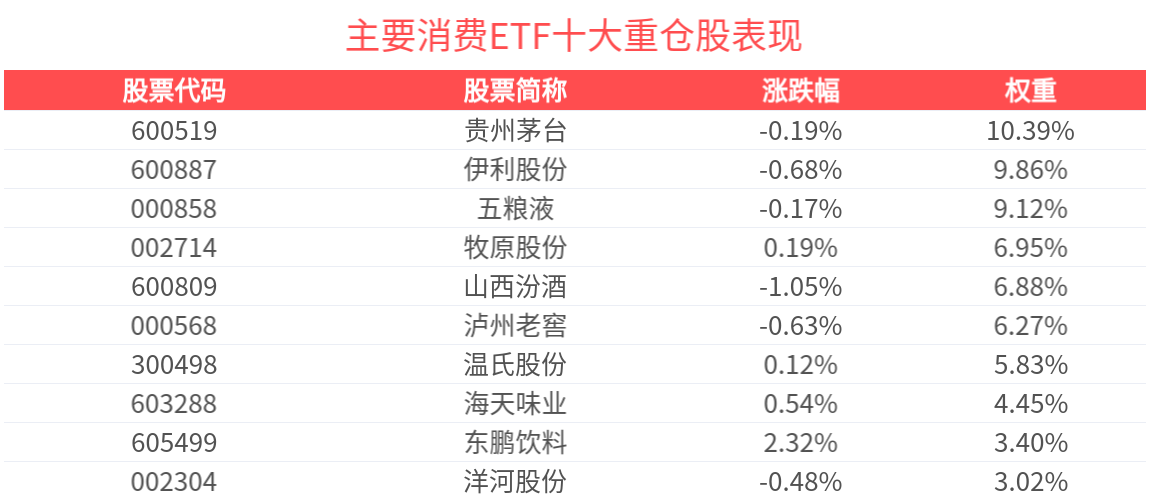
Group 1: Market Overview - The main consumption index (000932) increased by 0.13% as of July 1, 2025, with notable gains from stocks such as New Nuo Wei (300765) up 6.19% and Gree Beverage (605499) up 2.32% [1] - The consumer market showed a moderate recovery in Q2 2025, with a projected year-on-year growth of 6.5% in social retail sales for June [1] - The main consumption ETF (159672) experienced a near 1-week cumulative increase of 0.67% as of June 30, 2025 [1] Group 2: Industry Insights - The Chinese snack market has surpassed 470 billion yuan, entering a phase of stock competition, with food safety and quality control becoming critical for business development [2] - Fluctuations in raw material prices significantly impact the leisure food industry, and companies must adapt pricing strategies to maintain performance [2] - Companies in the leisure food sector need to respond quickly to consumer demand changes through product innovation and process improvements [2] Group 3: ETF Performance - As of June 30, 2025, the main consumption ETF's net value increased by 1.27% over the past year, with a maximum monthly return of 24.35% since inception [2] - The ETF's management fee is 0.50%, and the custody fee is 0.10%, making it one of the lowest in its category [2] - The ETF's maximum drawdown this year was 6.82%, with a relative benchmark drawdown of 0.34% [2] Group 4: Valuation Metrics - The main consumption ETF tracks the main consumption index, which has a current price-to-earnings ratio (PE-TTM) of 18.66, indicating it is at a historical low, below 99.2% of the past year [3] - The top ten weighted stocks in the main consumption index account for 67.93% of the index, with notable companies including Yili (600887) and Kweichow Moutai (600519) [3]
逼着算法学品味,抖音想要第三次突围
晚点LatePost· 2025-06-25 12:39
Core Viewpoint - Douyin has established itself as a leading short video and entertainment content platform in China, but competitors like Xiaohongshu and Bilibili are also experiencing significant growth and user engagement, indicating a challenging competitive landscape for Douyin [3][4][6]. Group 1: Douyin's Market Position - Douyin has over 800 million daily active users, surpassing WeChat in terms of time spent on the platform, and its revenue exceeds Alibaba's Chinese e-commerce by one-third [3][4]. - Despite Douyin's dominance, competitors like Xiaohongshu and Bilibili have also reached over 100 million daily active users and are expected to turn profitable in the coming years [4][6]. - Douyin's management acknowledges that it has not yet differentiated itself significantly from competitors in terms of content quality [4][5]. Group 2: Content Strategy and Challenges - Douyin has faced challenges in attracting high-quality user-generated content (UGC), particularly in the graphic content sector, which has not met expectations [5][9]. - The platform has attempted to replicate Xiaohongshu's success by launching initiatives focused on graphic content, but these efforts have not yielded significant results [7][8]. - Douyin's user demographics are shifting, with a decline in younger users, leading to concerns about its ability to attract and retain high-income and younger audiences [6][7]. Group 3: Algorithm and Content Quality - Douyin is implementing a "quality content" initiative to attract users who have not been engaged, focusing on defining and standardizing what constitutes high-quality content [9][10]. - The platform is adjusting its algorithm to prioritize content that may not have high completion rates but is still valuable to users, indicating a shift towards long-term growth over short-term metrics [11][19]. - Douyin has launched a separate app, Douyin Select, aimed at distributing high-quality mid-length videos, with a goal of increasing its daily active users [11][13]. Group 4: User Engagement and Market Trends - User preferences are evolving from instant gratification to a desire for more meaningful content, prompting Douyin to focus on creating valuable and useful content [17][19]. - The platform's internal research indicates that users are increasingly dissatisfied with low-quality content, which has led to a decline in engagement and even uninstalls [19][20]. - Douyin's strategy reflects a broader industry trend where platforms are recognizing the importance of content quality and user experience in retaining users and driving growth [16][19].