铝代铜

Search documents
金田股份:空调内螺纹铝管产品已实现小批量供货
Zheng Quan Shi Bao Wang· 2025-12-24 07:48
Core Viewpoint - Jintian Co., Ltd. (601609) is actively monitoring developments in the aluminum tube air conditioning sector, with its internal threaded aluminum tube products meeting customer demands and achieving small-scale supply [1] Group 1: Product Development - The company is accelerating the construction of a new production line for household air conditioning aluminum tubes [1] - The performance of household air conditioning internal threaded aluminum tubes is superior to traditional aluminum tubes, making them a better alternative to internal threaded copper tubes [1] Group 2: Market Potential - The product has a higher gross margin and a larger market space [1] - The company has a solid customer base and technical reserves in the aluminum materials business [1] Group 3: Industry Trends - The company is continuously monitoring and following the market demand in the "aluminum replacing copper" sector [1] - Current aluminum products, such as electromagnetic aluminum flat wires and aluminum automotive 3D bent tubes, are in the certification and mass production supply stage [1]

金田股份(601609.SH):公司在铝材业务领域有较好的客户基础及技术储备
Ge Long Hui· 2025-12-24 07:36
Core Viewpoint - The company is actively monitoring developments in the aluminum tube air conditioning sector and has successfully met customer demands with its internal threaded aluminum tube products, which are now in small-scale supply [1] Group 1: Product Development - The company is accelerating the construction of new production lines for household air conditioning aluminum tubes based on downstream customer demand [1] - The performance of household air conditioning internal threaded aluminum tubes is superior to traditional aluminum tubes, making them a better alternative to internal threaded copper tubes [1] Group 2: Market Potential - The product has a higher gross margin and significant market potential [1] - The company has a solid customer base and technical reserves in the aluminum materials business [1] Group 3: Industry Trends - The company is continuously monitoring and following the market demand in the "aluminum replacing copper" sector [1] - Current aluminum products, such as electromagnetic aluminum flat wires and aluminum automotive 3D bent tubes, are in the certification and mass production supply stages [1]
区域性交货压力尚未完全缓解,铜价缺少回调条件
Tong Hui Qi Huo· 2025-12-24 06:41
Group 1: Report Industry Investment Rating - No relevant content provided Group 2: Core View of the Report - Copper futures prices are expected to maintain a high - level oscillation in the next one to two weeks, with a price range of 90,000 - 95,000 yuan/ton. Supply - side inventory accumulation and falling import costs exert downward pressure, while weak demand in the home appliance sector and the trend of aluminum replacing copper dampen buying interest. However, positive macro sentiment, such as policy support from the Ministry of Industry and Information Technology and geopolitical supply - chain risks, supports prices [3][47][48] Group 3: Summary of Each Section 1. Copper Futures Market Data Change Analysis - **Main Contract and Basis**: On December 23, 2025, the SHFE main contract price slightly dropped to 93,890 yuan/ton, a 0.16% decrease from the previous day. The basis generally weakened, with the discount on premium copper widening to - 180 yuan/ton, flat copper to - 230 yuan/ton, and wet - process copper to - 285 yuan/ton. The LME (0 - 3) premium rose to 6.58 US dollars/ton on December 22 [1][41] - **Position and Trading Volume**: LME positions increased by 2,699 lots to 344,790 lots on December 22, 2025. LME inventory increased to 49,543 tons on December 23, SHFE inventory to 158,575 tons, and COMEX inventory also rose, indicating increased supply pressure [1][42] 2. Analysis of Industry Chain Supply - Demand and Inventory Changes - **Supply Side**: The supply side is relatively loose. On December 23, 2025, the 2026 CIF import copper concentrate benchmark price dropped to 85 US dollars/ton, potentially reducing smelting costs. A subsidiary's acquisition of the Raura zinc polymetallic mine in Peru on December 19, 2025, increases medium - to - long - term supply potential. Global projects like the Marathon copper mine are progressing, but with limited short - term impact. LME, SHFE, and COMEX inventories all increased, with a combined weekly increase of about 1.5% [2][43] - **Demand Side**: The demand side is under significant pressure. In November 2025, the production and sales of household air conditioners declined significantly year - on - year (domestic sales - 39.8%, exports - 25.6%) due to the expiration of policy incentives and high - inventory clearance. The discussion of aluminum replacing copper due to soaring copper prices may suppress copper consumption in the air - conditioning field. In refined copper rod exports, processing with imported materials dominates, but general - trade exports decreased by 81.92% year - on - year, showing uneven external demand [2][44] - **Inventory Side**: Inventories are generally accumulating. LME inventory increased to 49,543 tons, SHFE inventory to 158,575 tons, and COMEX inventory also rose. The weakening of premiums and discounts and the increase in inventory indicate a continued pattern of loose supply and demand [2][46] 3. Price Trend Judgment - Copper futures prices are expected to maintain a high - level oscillation in the next one to two weeks. The accumulation of supply - side inventory and the decrease in import costs provide downward pressure, while weak demand in the home appliance sector and the trend of aluminum replacing copper dampen buying interest. However, positive macro sentiment, such as policy support from the Ministry of Industry and Information Technology and geopolitical supply - chain risks, supports prices. The copper price is expected to fluctuate in the range of 90,000 - 95,000 yuan/ton [3][47][48]
现货表现持续低迷,短期铜价大幅走强概率或相对较小
Hua Tai Qi Huo· 2025-12-24 05:12
市场要闻与重要数据 期货行情: 2025-12-23,沪铜主力合约开于 94030元/吨,收于 93930元/吨,较前一交易日收盘-0.41%,昨日夜盘沪铜主力合 约开于 94850元/吨,收于 94890元/吨,较昨日午后收盘上涨1.02%。 现货情况: 据 SMM 讯,昨日SMM电解铜现货报价贴水260至170元/吨,均价贴水215元/吨,较昨日下跌20元。1#电解铜价格 区间为93340-93600元/吨。早盘沪铜主力合约窄幅整理于93610-93800元/吨,尾盘小幅收涨。现货市场表现低迷, 整体转为买方主导。早盘平水铜对次月报价贴水220元/吨左右,好铜贴水170元/吨,随后平水铜贴水扩大至260元/ 吨,好铜相对稳定在180元/吨附近。湿法铜因货源偏紧,价格仍居高位。跨月价差维持在C220-C180元/吨之间。预 计买方还价意愿持续偏低,市场交投清淡,现货升水或将继续下行。 重要资讯汇总: 新能源及有色金属日报 | 2025-12-24 现货表现持续低迷 短期铜价大幅走强概率或相对较小 宏观与地缘方面,经济数据方面,美国第三季度实际GDP初值年化季环比大幅增长4.3%,远超市场预期的增长3.3%, ...
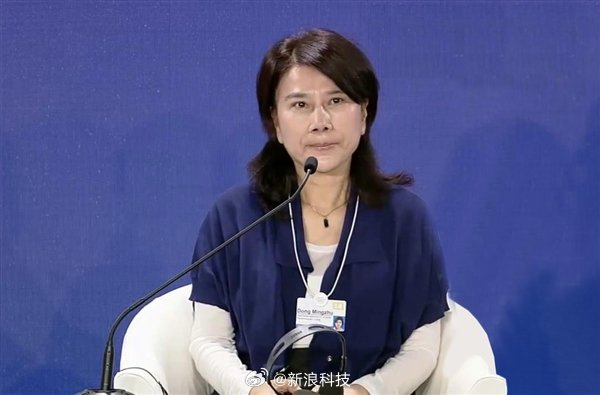
格力称暂无“铝代铜”计划,董明珠曾称“在没有100%的把握前,格力空调绝不使用;此前美的、小米等品牌推动“铝代铜”标准落地引热议
Hang Zhou Ri Bao· 2025-12-24 04:51
Core Viewpoint - The air conditioning industry is actively exploring the use of aluminum as a substitute for copper, but significant technical challenges remain, particularly regarding the performance and reliability of aluminum compared to copper [1][2][3]. Group 1: Company Insights - Gree Electric stated that copper constitutes about 20% of air conditioning costs, and despite aluminum being cheaper, it currently lacks the performance and reliability of copper, leading to no immediate plans for aluminum substitution [1][2]. - Gree's Chairman, Dong Mingzhu, emphasized that while aluminum can technically replace copper, the company will not adopt it until it meets the same technical standards as copper [1][2]. - The rising copper prices, which have exceeded $10,000 per ton, have prompted discussions about aluminum substitution as a cost-reduction strategy in the industry [1][3]. Group 2: Industry Developments - The Chinese home appliance industry is accelerating the development of standards for aluminum substitution, with various companies participating in the formulation of guidelines and standards [2][4]. - A group of leading air conditioning companies, including Haier and Midea, has committed to a self-regulatory agreement to promote responsible communication regarding aluminum heat exchangers [2][4]. - The China Household Electrical Appliances Association has proposed five initiatives to guide the responsible application of aluminum in air conditioning, emphasizing quality assurance and consumer rights [4][5]. Group 3: Technical Challenges - The primary challenges in substituting aluminum for copper include aluminum's inferior thermal conductivity, corrosion resistance, and long-term reliability, which necessitate further technological advancements [2][8]. - The complexity of aluminum welding processes poses additional challenges for manufacturers, requiring enhanced capabilities and skills [2][8]. - Despite the challenges, the industry is making progress in developing aluminum technologies, with some companies achieving breakthroughs in specific applications [7][9]. Group 4: Market Dynamics - China is the largest producer and consumer of air conditioning units, with about 80% of its copper supply imported, while it controls 60% of global aluminum production, making aluminum a more stable resource option [1][8]. - The significant cost pressures from fluctuating copper prices have led the industry to consider aluminum as a viable alternative to maintain competitive pricing [9][10]. - The ongoing technological advancements in aluminum materials aim to enhance their performance, making them a more feasible option for air conditioning applications in the future [9][10].


中孚实业(600595):成本改善释放业绩弹性,高分红凸显长期价值
Shenwan Hongyuan Securities· 2025-12-24 02:11
Investment Rating - The report initiates coverage with an "Accumulate" rating for the company [2][7]. Core Insights - The company is a domestic high-end aluminum alloy new material manufacturer, focusing on aluminum deep processing, supported by a dual industrial chain of coal, electricity, and green hydropower aluminum [6][17]. - The supply of electrolytic aluminum is nearing its capacity ceiling, making it difficult for prices to drop, while demand from new energy vehicles and the power sector is expected to provide growth, offsetting the drag from real estate [6][9]. - Cost pressures from alumina are expected to ease, allowing for significant performance elasticity as new capacities come online and alumina prices decline [6][7]. - The company has launched an employee stock ownership plan and plans to distribute at least 60% of its distributable profits as cash dividends over the next three years, indicating strong confidence in future growth [6][35]. Financial Data and Profit Forecast - Total revenue for 2024 is projected at 22,761 million yuan, with a year-on-year growth rate of 21.1%. The net profit attributable to shareholders is expected to be 704 million yuan, down 39.3% year-on-year [5]. - For 2025, the company anticipates a net profit of 1,833 million yuan, reflecting a significant increase of 160.5% year-on-year, with earnings per share projected at 0.46 yuan [5][6]. - The gross margin is expected to improve from 9.7% in 2024 to 15.1% in 2025, with a return on equity (ROE) forecasted to rise from 4.8% to 11.1% [5][6]. Industry Overview - The domestic electrolytic aluminum capacity is approaching its ceiling, with the built capacity as of November 2025 at 45.24 million tons, indicating a tight supply-demand balance [37]. - The demand for aluminum is shifting towards new energy vehicles and electronic power sectors, which are expected to drive growth despite a slowdown in traditional construction demand [47][49]. - The report highlights that the global aluminum market is experiencing a structural change, with new consumption scenarios emerging, such as lightweighting and the substitution of aluminum for copper and steel [49].

华泰期货:现货表现持续低迷 短期铜价大幅走强概率或相对较小
Xin Lang Cai Jing· 2025-12-24 01:54
热点栏目 自选股 数据中心 行情中心 资金流向 模拟交易 客户端 来源:华泰期货 作者: 师橙 市场要闻与重要数据 期货行情: 2025-12-23,沪铜主力合约开于 94030元/吨,收于 93930元/吨,较前一交易日收盘-0.41%,昨日夜盘沪 铜主力合约开于 94850元/吨,收于 94890元/吨,较昨日午后收盘上涨1.02%。 现货情况: 据 SMM 讯,昨日SMM电解铜现货报价贴水260至170元/吨,均价贴水215元/吨,较昨日下跌20元。1# 电解铜价格区间为93340-93600元/吨。早盘沪铜主力合约窄幅整理于93610-93800元/吨,尾盘小幅收 涨。现货市场表现低迷,整体转为买方主导。早盘平水铜对次月报价贴水220元/吨左右,好铜贴水170 元/吨,随后平水铜贴水扩大至260元/吨,好铜相对稳定在180元/吨附近。湿法铜因货源偏紧,价格仍居 高位。跨月价差维持在C220-C180元/吨之间。预计买方还价意愿持续偏低,市场交投清淡,现货升水或 将继续下行。 重要资讯汇总: 宏观与地缘方面,经济数据方面,美国第三季度实际GDP初值年化季环比大幅增长4.3%,远超市场预 期的增长3.3% ...

格力电器重申暂不采用铝代铜技术,董明珠强调耐久性稳定性未达标
Xin Lang Ke Ji· 2025-12-24 01:22
Core Viewpoint - Gree Electric Appliances has announced that it currently has no plans to replace copper with aluminum in its products, emphasizing that the technology has not yet reached a standard that the company deems acceptable [1] Group 1 - Gree Electric Appliances stated that even if the entire industry shifts to aluminum, the company will not follow suit due to concerns over the durability and stability of aluminum [1] - Chairman Dong Mingzhu expressed that without complete confidence in the material's performance, Gree will not adopt aluminum as a substitute for copper [1] - The company prioritizes quality and reliability, indicating that it will not compromise on standards for the sake of following industry trends [1]
弱美元继续发酵,沪铜再度带动基本金属突破上行
Zhong Xin Qi Huo· 2025-12-24 00:46
Report Industry Investment Rating No specific industry investment rating was provided in the report. Core Viewpoints - In the short - and medium - term, the influence of the weak US dollar and supply concerns dominates again. The reality of weak consumption and relatively loose supply - demand has become a secondary factor. Shanghai copper drives the base metals to break through and rise. Opportunities for going long on copper, aluminum, and tin can be continuously monitored. In the long - term, there are still expectations of potential incremental stimulus policies in China, and there are still supply disruptions for copper, aluminum, and tin. There are expectations of tightening supply - demand, so the price trends of copper, aluminum, and tin are optimistic [1]. - The weakening of the US dollar index causes copper prices to run strongly; the cost support for alumina is weak and prices remain under pressure; aluminum prices fluctuate at high levels due to inventory accumulation; the aluminum alloy market should focus on demand changes and the price fluctuates at high levels; zinc prices fluctuate at high levels with differentiated inventory trends at home and abroad; the rebound space of lead prices is limited due to the decline in the operating rate of lead - acid battery enterprises; nickel prices continue to rise due to the expected policy disturbances in Indonesia; the stainless - steel market is driven up by the rebound of nickel prices; high prices suppress downstream demand, and tin prices fluctuate at high levels [2]. Summary by Related Catalogs 1. Copper - **Information Analysis**: The 2026 copper concentrate long - term processing fee benchmark is 0 dollars/ton and 0 cents/pound. CSPT members will reduce copper ore production capacity by over 10% in 2026. In November 2025, SMM China's electrolytic copper production increased month - on - month and year - on - year. On December 23, the 1 electrolytic copper spot was at a discount to the contract. As of December 22, copper inventory increased. LME plans to set and implement position limits for key and related contracts from July 6, 2026 [6][7]. - **Main Logic**: The loose liquidity supports copper prices. The supply of copper mines is increasingly disrupted, and the expectation of refined copper supply contraction is strengthened. The terminal demand is weak, and inventory accumulates, limiting the upward space for copper prices. The risk of LME copper cornering has temporarily weakened [8]. - **Outlook**: Copper prices are expected to fluctuate strongly [8]. 2. Alumina - **Information Analysis**: On December 23, the spot price of alumina decreased. The alumina warehouse receipt decreased by 6,641 tons [8][9]. - **Main Logic**: The high - cost production capacity has fluctuations, but the supply contraction is insufficient, and the inventory is strongly increasing. The raw material prices are weak, and the cost support is general. The warehouse receipt is in the process of destocking, but there is pressure on the price [9][10]. - **Outlook**: Alumina is expected to fluctuate [10]. 3. Aluminum - **Information Analysis**: On December 23, the average price of SMM AOO aluminum decreased. As of December 22, aluminum ingot and aluminum rod inventories changed. On December 23, the SHFE electrolytic aluminum warehouse receipt increased. In November 2025, China's unforged aluminum and aluminum products exports changed. Some enterprises launched the "aluminum replacing copper" standard implementation, and South32 raised the aluminum ingot premium [11]. - **Main Logic**: The macro - expectation is positive. The domestic supply is high, and the overseas supply may tighten in the long - term. The high aluminum price suppresses demand, and the inventory accumulates [12]. - **Outlook**: In the short - term, aluminum prices are expected to fluctuate strongly. In the medium - term, the price center may rise [12]. 4. Aluminum Alloy - **Information Analysis**: On December 23, the price of Baotai ADC12 remained unchanged, and the spread with AOO aluminum changed. The SHFE registered warehouse receipt remained unchanged. An Indonesian electrolytic aluminum project started production, and in October, China's scrap aluminum imports increased [13]. - **Main Logic**: The cost support is solid. The operating rate is flat, and there is a risk of production reduction. The end - of - year automobile demand may weaken, and the warehouse receipt inventory is high [13]. - **Outlook**: In the short - and medium - term, prices are expected to fluctuate strongly [13]. 5. Zinc - **Information Analysis**: On December 23, the spot premium of zinc in different regions was different. As of December 23, the SMM seven - region zinc ingot inventory increased. In November 2025, China's zinc concentrate imports increased [15]. - **Main Logic**: The macro - outlook is positive. The short - term supply of zinc ore is tight, and the production of zinc ingots has decreased. The domestic consumption is in the off - season, and the demand is average. In the short - term, zinc prices may continue to fluctuate at high levels. In the long - term, zinc prices may decline [16]. - **Outlook**: Zinc prices are expected to fluctuate [16]. 6. Lead - **Information Analysis**: On December 23, the price of waste electric vehicle batteries and SMM1 lead ingots increased. As of December 22, the lead ingot social inventory decreased, and the SHFE lead warehouse receipt decreased. Since December, the implementation of the new national standard for electric bicycles has affected battery consumption, and the operating rate of some enterprises has declined [17]. - **Main Logic**: The spot premium decreased slightly, and the warehouse receipt decreased. The supply decreased due to maintenance, and the demand was mixed, with the operating rate of lead - acid battery enterprises slightly weakening [17]. - **Outlook**: Lead prices are expected to fluctuate [18]. 7. Nickel - **Information Analysis**: On December 23, LME nickel inventory increased, and SHFE nickel warehouse receipt decreased. The price of high - nickel pig iron increased. Indonesia plans to revise the nickel ore pricing formula and reduce the 2026 nickel ore production target [20][21]. - **Main Logic**: The domestic nickel supply decreased in November, but the overall supply pressure still exists. The demand is in the off - season. If Indonesia's production reduction plan is implemented, the supply - demand surplus will decrease [22]. - **Outlook**: Before the policy is implemented, nickel prices may remain strong [22]. 8. Stainless Steel - **Information Analysis**: The stainless steel futures warehouse receipt decreased. On December 23, the spot premium in Foshan was 45 yuan/ton. The price of high - nickel pig iron increased, and Indonesia plans to reduce the 2026 nickel ore production target [23]. - **Main Logic**: The cost of stainless steel is supported, and the production is expected to decline in December. The inventory may accumulate, and the warehouse receipt is at a low level [24][25]. - **Outlook**: Before the Indonesian policy is implemented, stainless - steel prices may remain strong [25]. 9. Tin - **Information Analysis**: On December 23, the LME and SHFE tin warehouse receipts decreased, and the SHFE tin position decreased. The spot price of tin increased [25]. - **Main Logic**: The supply of tin is a concern. The supply from Myanmar and Indonesia has changed, and the African supply is restricted. The demand is expected to increase with the economic and industrial development [26]. - **Outlook**: Tin prices are expected to fluctuate strongly [26]. 10. Market Monitoring - Commodity Index - On December 23, 2025, the comprehensive index, characteristic index, and PPI commodity index of CITIC Futures all increased. The non - ferrous metal index increased by 0.01% on the day, 1.68% in the past 5 days, 5.20% in the past month, and 12.37% since the beginning of the year [154][155].
全球大公司要闻 | 诺和诺德口服减肥药Wegovy获FDA批准
Wind万得· 2025-12-23 22:39
Group 1 - Novo Nordisk's oral weight loss drug Wegovy has received FDA approval, becoming the first oral GLP-1 weight loss medication, set to launch in early January 2026 at a starting cash price of $149 per month, with a clinical weight loss effect of 16.6% and reduced cardiovascular risk [3] - Johnson & Johnson has been ordered by a U.S. jury to pay a record $1.5 billion in damages related to talc powder cancer claims, which the company strongly disputes and plans to appeal, citing a lack of scientific basis for the ruling [3] - Nvidia is restructuring its cloud team by merging its existing cloud business team with engineering and operations departments, shifting focus to meet internal chip demand rather than selling cloud services to external clients [3] - TSMC is reportedly skipping the 4nm process to directly target 2nm technology in response to AI customer demand, accelerating advanced process R&D to seize market opportunities, and is increasing investments in advanced processes to maintain its leading position in global semiconductor manufacturing [3] Group 2 - BYD's sales in Europe surged by 221.8% year-on-year in November, increasing its market share from 0.6% to 2%, while Tesla's sales in Europe declined by 11.8%, with its market share dropping to 2.1%, indicating BYD's growing competitiveness in the European EV market [5] - New World Development, in partnership with a U.S. investor, is acquiring asset management firm Janus Henderson for approximately $7.4 billion, which will enhance its influence in the international asset management market [5] - Zhenyu Technology plans to invest in core components for humanoid robots, increasing R&D and manufacturing efforts, which is expected to benefit from the rapid growth of the global humanoid robot industry [5] - JD.com reported a theft at its warehouse in France, where over 50,000 digital devices were stolen, valued at approximately €37 million, equivalent to about 306 million yuan, although JD stated that the actual loss figures reported were significantly exaggerated [6] - ByteDance's preliminary capital expenditure plan for 2026 is set at 160 billion yuan, an increase from 150 billion yuan this year, with a focus on AI infrastructure, allocating about half of the funds for advanced chip procurement to develop AI models and applications [6] Group 3 - Amazon's autonomous driving company Zoox recalled 332 vehicles in the U.S. due to software issues, while its cloud technology division launched 40,000 agents for AI applications, focusing on practical implementation rather than pursuing AGI [9] - ServiceNow plans to acquire cybersecurity startup Armis for approximately $7.75 billion in cash, with the transaction expected to close in the second half of 2026 [9] - Warner Bros. Discovery is considering a revised acquisition offer from Paramount Sky Dance, with Oracle co-founder Larry Ellison offering personal guarantees for the deal, while the board continues to recommend Netflix's acquisition proposal [9] - EA shareholders approved the sale of $55 billion in equity to Saudi Arabia's Public Investment Fund [9] Group 4 - Samsung Electronics' Harman International is set to acquire ZF Group's ADAS business for €1.5 billion, enhancing its position in the automotive smart driving sector; Samsung SDI is collaborating with KG Mobility to develop advanced battery technology for electric vehicles [11] - SK Hynix is developing AI-specific solid-state drives in partnership with Nvidia and Phison, expecting a tenfold performance improvement over existing products, targeting AI server storage needs [11] - Toyota is recalling over 55,000 vehicles in the U.S. due to potential inverter bolt loosening and contact issues, while denying rumors of collaboration with BYD on plug-in hybrid technology [11] - LG Display has launched a new OLED technology brand, Tandem WOLED/Tandem OLED, and plans to showcase the world's first RGB stripe pixel 4K 240Hz OLED panel at CES 2026, enhancing its competitiveness in the high-end display market [12]