
去美元化

Search documents
渣打:美元将继续飙升
3 6 Ke· 2026-01-22 13:04
渣打银行全球研究主管兼首席分析师罗伯特森(EricRobertson)在1月15日的媒体圆桌会上指出,基于美国经济表现强劲及美联储今年可 能不会降息等预期,美元有望在年内升值5%至8%,这一观点与当前市场主流看法相左。 他认为,市场关于去美元化和抛售美元资产的讨论被过分夸大。 渣打银行亚洲与亚细安外汇研究联合主管迪瓦西(DivyaDevesh)进一步指出,亚洲市场目前正呈现"重新美元化"趋势,亚洲货币在今年 预计整体走弱。 迪瓦西分析,自美联储大幅加息三年半以来,美元相对于大多数亚洲货币保持较高收益,导致出口商更倾向于持有美元而非兑换为本 币,因此即便出口表现强劲,亚洲货币仍难以走强。 此外,尽管人工智能发展有助于区域经济和吸引外国直接投资,却未必对本地货币形成支撑。亚洲散户和机构投资者大幅增持美国科技 股,导致资金外流,给本地货币带来额外压力。同时,机构投资者倾向于对外汇资产进行对冲以锁定收益,若美元走势趋稳,相关对冲 操作的解除也会进一步抑制亚洲货币升值。 不过,人民币可能成为例外。罗伯特森预计,到年底美元兑人民币汇率或降至6.85。人民币仍拥有可观的贸易顺差,利差也在收窄,加 之近期中间价持续释放信号, ...

美股前瞻 | 三大股指期货齐涨,11月PCE数据今夜出炉
智通财经网· 2026-01-22 13:03
Market Overview - US stock index futures are all up, with Dow futures rising by 0.35%, S&P 500 futures up by 0.56%, and Nasdaq futures increasing by 0.83% [1] - European indices also show positive movement, with Germany's DAX up by 1.16%, UK's FTSE 100 up by 0.45%, France's CAC40 up by 1.19%, and the Euro Stoxx 50 up by 1.33% [2] Oil Market - WTI crude oil has decreased by 1.50%, trading at $59.71 per barrel, while Brent crude oil has fallen by 1.41%, priced at $64.32 per barrel [3] Economic Indicators - The market anticipates stable inflation pressures in the US for November, with a 95% probability that the Federal Reserve will maintain interest rates next week. The core PCE price index is expected to rise by 0.2% month-over-month and 2.8% year-over-year, indicating inflation levels significantly above the Fed's 2% target [3] Company News - GE Aerospace reported Q4 earnings that exceeded expectations, with adjusted EPS of $1.57, surpassing the forecast of $1.43, and adjusted revenue of $11.9 billion, exceeding the expected $11.2 billion. The company projects adjusted EPS for 2026 to be between $7.10 and $7.40, indicating confidence in growth [8] - Intel has secured a significant contract with the US Missile Defense Agency for chip supply, with a maximum contract value of $151 billion. The company is expected to release its earnings report soon, with positive sentiment among shareholders regarding its transformation plan [11] - Alibaba's chip subsidiary, Tsinghua Unigroup, is reportedly preparing for an IPO to capitalize on investor interest in AI accelerators, with plans for restructuring to include employee ownership [11] - Anthropic PBC has raised at least $1 billion in its latest funding round, with its revenue run rate doubling since last summer, expected to exceed $9 billion by the end of 2025 [10] - Morgan Stanley and Allen & Company are set to earn significant fees from the Warner Bros. acquisition deal, with each expected to receive $90 million [9]


黄金2026:5000美元关口前,一场静悄悄的多空大博弈
Sou Hu Cai Jing· 2026-01-22 12:34
Core Viewpoint - The gold market is experiencing contrasting predictions for 2026, with some analysts forecasting prices as high as $5,400 per ounce, while others expect prices to decline compared to 2025 [1][9]. Group 1: Market Performance and Trends - In 2025, gold prices exhibited extreme volatility, with a 32.4% rebound from August to October, followed by a nearly 10% decline in late October [3]. - Central banks have been significant buyers of gold, with purchases exceeding 1,000 tons annually from 2022 to 2024, leading to a situation where the value of gold reserves held by central banks surpassed that of U.S. Treasury bonds [3]. Group 2: Key Variables Influencing Gold Prices - The U.S. interest rate policy is identified as the primary factor affecting gold prices in 2026, according to the LBMA [4]. - Market expectations of Federal Reserve interest rate cuts directly influence the opportunity cost of holding gold, making it more attractive during periods of declining rates [5]. - The demand for gold is supported by central bank purchases and the ongoing process of de-dollarization, with predictions suggesting gold prices could reach $6,600 per ounce by 2030 based on long-term GDP growth assumptions [6]. Group 3: Geopolitical and Economic Factors - Geopolitical risks are considered a significant underlying factor supporting gold prices in 2026, as investors tend to increase gold allocations during times of uncertainty [7][8]. - The potential for a "soft landing" in the U.S. economy could reduce gold's appeal as a safe haven, while a slowdown or regional economic crisis would enhance its attractiveness [19]. Group 4: Diverging Market Perspectives - Goldman Sachs maintains a bullish outlook on gold, raising its price target for the end of 2026 to $5,400 per ounce, driven by private sector hedging demand [9]. - In contrast, CITIC Securities predicts weaker gold prices in 2026, suggesting a shift in focus towards industrial metals like copper due to increased capital spending driven by AI advancements [14][15]. Group 5: Risks and Uncertainties - The uncertainty surrounding U.S. monetary policy is viewed as the biggest risk for the gold market in 2026, with analysts suggesting that 2026 may be a year of price consolidation rather than continuous increases [16]. - If the Federal Reserve's rate cuts are slower than expected or if inflation data fluctuates, gold may face significant downward pressure [17]. - The crowded trading positions in the gold market, following a period of continuous price increases, raise the likelihood of technical adjustments [20].

达利欧:黄金暴涨不是巧合,全球央行正加速“去美元化”
智通财经网· 2026-01-22 12:21
Group 1 - The founder of Bridgewater Associates, Ray Dalio, indicates a persistent trend of de-dollarization globally, particularly among central banks [1] - Dalio highlights that the rise in gold prices by 67% is not merely a reflection of precious metal appreciation, but rather a significant increase in purchases by central banks and other investors aiming for currency diversification [1] - He emphasizes the lack of attention on the "capital war" and its impact on market operations, despite the focus on trade wars [1] Group 2 - Dalio comments on the potential consequences of military actions, suggesting they could lead to repercussions in the capital war [2] - The tension in transatlantic relations and threats from President Trump regarding Greenland have intensified discussions about reducing U.S. asset holdings, with Danish pension fund AkademikerPension planning to exit the U.S. Treasury market due to significant credit risks [2] - UBS CEO Sergio Ermotti warns that weaponizing U.S. government debt is a "dangerous gamble" [2]
特朗普“格陵兰TACO”也难降温?金银又飙了!
Ge Long Hui· 2026-01-22 12:13
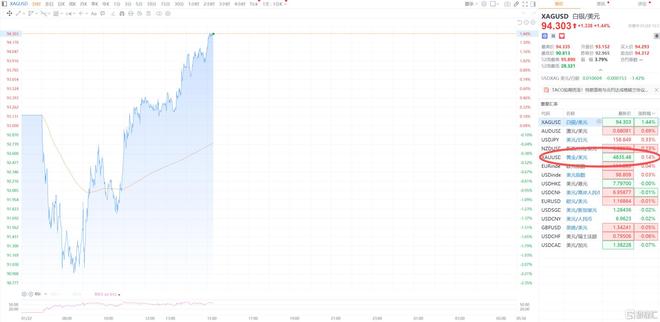
日前,特朗普除了不留情面地"训话"欧洲外,还上演了"格陵兰TACO":不动武,税也不加了。 这引人瞠目的180度大反转后,全球避险情绪降温,金银价格应声走低。 周四亚市早盘,现货黄金一度跌破4800,现货白银最低回落至90美元/盎司附近。 不过午后,金银价格便再度快速拉升。 现货白银日内涨超1.4%,现报94.263美元/盎司;现货黄金也跌幅收窄,目前已经翻红重上4830美元/盎 司上方。 特朗普"格陵兰TACO" 川普"大闹"达沃斯,短暂冷却了金银的火热势头。 譬如,批评加拿大总理卡尼、嘲讽法国总统马克龙;怒骂丹麦忘恩负义,扬言没美国欧洲得说德语甚至 是日语…… 特朗普还主动cue到了欧洲"爸爸梗"。 他称,此前北约一直都"爱"他,还叫他"爸爸",现在要一块领土不过分吧? 一番口嗨后,特朗普突然又上演"格陵兰TACO"。 他180度大反转改口宣布:"不动武夺岛,不对欧洲8国加征关税"。 据称,特朗普与北约秘书长吕特会晤后称,双方已就格陵兰岛及北极安全达成初步协议框架。 其中涉及美国在格陵兰的军事基地、矿产开发优先拒绝权等,但具体细节未公开。 地缘冲突恐慌蔓延之际,全球都在紧盯特朗普达沃斯演讲。 果然,川普的 ...
图说金融:如何看待当前对欧洲养老金抛售美债的担忧?
Zhong Xin Qi Huo· 2026-01-22 11:04
十亿美元 持有美食变动规模(2025/11相较于2024/11) 150.0 =美债持有变动 100. 0 50.0 0.0 -50.0 -100.0 美债坑家结构跟踪 | 高频服装变 | | --- | | 美做灵型 玩家类型 有量占比 利率敏感性 | 图说金融(20260122) 如何看待当前对欧洲养老金抛售美债的担忧? 地缘风险引发不确定性已开始影响部分主权投资者的资产配置决策,点燃投资者对"去美元化"的担忧。 作为美债重要的海外持有方(约占38.9%),欧洲投资者是其市场流动性的关键支撑。在上一轮"去美元化 "交易盛行期间,欧洲非主要的抛售方,反而比利时、法国、挪威等欧洲国家仍持续增持美债。由此来看,当 前这一叙事的风险在于:欧洲投资者若停止增持或减缓增持,即构成结构性压力,主动抛售的影响将更为剧烈 当前,外国官方部门因储备增长放缓与美元信心减弱而需求下降,私人部门也因对冲后利差为负而配置意 愿低迷。目前需求或主要来自博弈美联储降息的交易盘。若劳动力市场保持当前"低速平衡"状态,美联储短 期难转向宽松,叠加地缘不确定性,美债仍处逆风期,10年美债利率运行中枢或在4.2%附近,市场风险需警惕。 风险提示 ...
金银比再破50,意味着什么?
Sou Hu Cai Jing· 2026-01-22 10:45
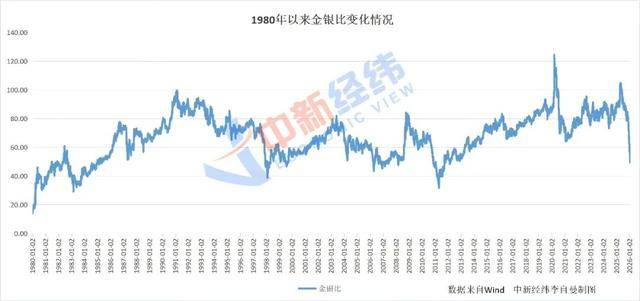
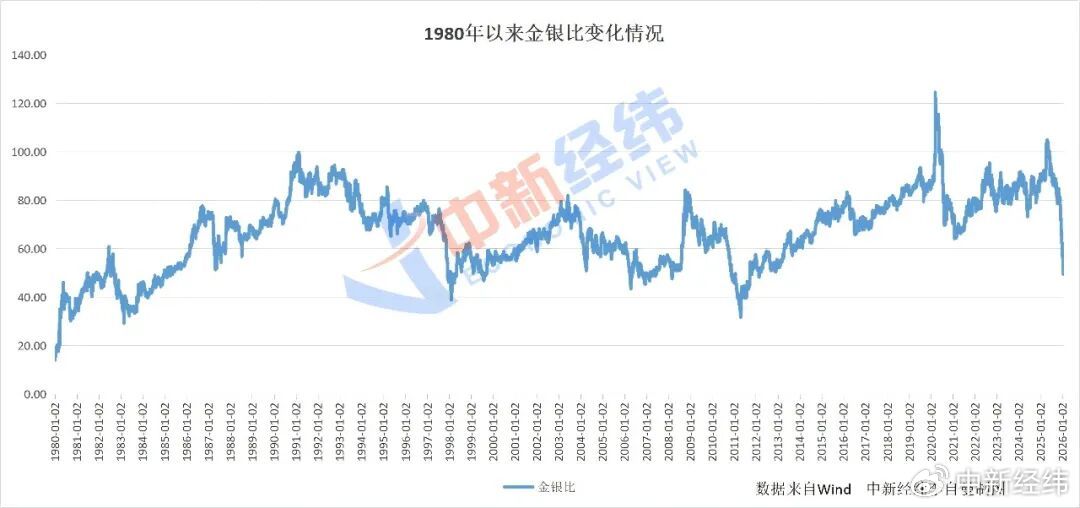
Core Viewpoint - The recent surge in gold and silver prices has led to a significant drop in the gold-silver ratio, which has fallen below 50 for the first time in nearly 14 years, indicating a strong performance of silver relative to gold and signaling potential market shifts [1][4][6]. Group 1: Gold-Silver Ratio Dynamics - The gold-silver ratio measures the relative price strength of gold and silver, calculated as the price of gold divided by the price of silver [1]. - As of January 22, 2026, the gold price reached approximately $4,839.35 per ounce, while silver was priced at about $94.39 per ounce, resulting in a gold-silver ratio of approximately 51.27 [1]. - Historically, the long-term average of the gold-silver ratio has been around 60-70, with significant fluctuations observed over the past century [4]. Group 2: Market Implications of the Ratio Drop - The recent drop below 50 suggests that silver is experiencing a relative strength phase, driven by both industrial demand and speculative investments [6][7]. - Analysts indicate that the current market environment reflects a transition from high-interest rates to a more liquid monetary policy, which has a more pronounced effect on silver prices [6]. - The structural changes in the market, including the increasing industrial demand for silver in sectors like renewable energy and semiconductors, contribute to its independent valuation apart from gold [6][10]. Group 3: Future Outlook and Investment Strategies - Short-term projections suggest that silver may continue to rise, but its growth will be constrained by global liquidity and industrial demand factors [8]. - Investors are advised to approach silver investments cautiously, focusing on low-premium, liquid options such as physical silver bars or silver ETFs, while managing risks associated with price volatility [11][12]. - The current market conditions indicate a potential for silver to act as a strategic asset, with its dual role as an industrial metal and a safe-haven asset becoming more pronounced [10][13].
每日投行/机构观点梳理(2026-01-22)
Jin Shi Shu Ju· 2026-01-22 10:21
Group 1: Gold Price Predictions - Goldman Sachs raised its year-end gold price target to $5,400 per ounce, citing increased demand from private investors and central banks [1] - Central banks are expected to purchase 60 tons of gold monthly, and ETF gold holdings are projected to expand as the Federal Reserve lowers interest rates [1] - Morgan Stanley noted that gold is becoming the biggest challenger to the dollar, with its share in central bank reserves rising from approximately 14% to 25%-28% [2] Group 2: Economic Policies and Market Reactions - Corpay's chief market strategist indicated that Trump's tariff threats led to a "sell America" effect, lowering the dollar's value and increasing prices of safe-haven assets like gold [3] - Angeles Investments' CIO stated that while diversifying assets outside the U.S. is reasonable, there is no intention to abandon U.S. assets due to strong corporate profitability [4] - Citigroup reported that South Korea may introduce a new fiscal stimulus plan worth approximately $68 billion to address economic growth imbalances [5] Group 3: Currency and Interest Rate Outlook - HSBC economists suggested that if the Bank of Japan's governor returns to a cautious stance, the yen may face new downward pressure, potentially leading to inflation concerns [6] - Mitsubishi UFJ noted that there is no urgent reason for the Bank of Japan to raise interest rates again, as the effects of monetary policy changes take time to manifest [7] - Singapore's OCBC Bank indicated that clearer communication from the Bank of Japan regarding wage growth expectations could signal earlier interest rate hikes [8] Group 4: Investment Strategies and Market Trends - CITIC Securities highlighted that the recent rise in the USD/CNY exchange rate may create an ideal buying opportunity for U.S. Treasuries by March [5] - CICC pointed out that the current volatility in U.S. and Japanese bond markets reflects global liquidity fluctuations, suggesting potential systemic risks [6] - CICC also mentioned that the ETF market has ample growth potential, although growth rates may slow this year [7]
金银比再破50,意味着什么?【财说明白】
Xin Lang Cai Jing· 2026-01-22 10:14
Group 1 - The core viewpoint of the article highlights the significant rise in gold and silver prices at the beginning of 2026, with gold increasing by approximately 12% and silver by about 31.52% as of January 22 [1][14] - The gold-silver ratio has recently dropped below 50, reaching a 14-year low, which has garnered widespread market attention [2][14] - The gold-silver ratio is a key indicator that measures the relative price strength of gold and silver, indicating how many ounces of silver are needed to purchase one ounce of gold [2][14] Group 2 - As of January 22, the spot prices were reported at $4,839.353 per ounce for gold and $94.391 per ounce for silver, resulting in a gold-silver ratio of approximately 51.27 [3][15] - Historical data shows that the long-term average for the gold-silver ratio over the past century is between 60 and 70, with significant fluctuations observed [5][17] - The recent drop below 50 in the gold-silver ratio is attributed to a transition in the global monetary environment from high interest rates to a phase of liquidity easing, which has led to a revaluation of precious metals [6][18] Group 3 - The current market dynamics indicate that silver is experiencing a structural shift, driven by actual demand from industries such as renewable energy and semiconductors, making it a strategic metal rather than merely a shadow asset of gold [6][19] - Analysts suggest that the recent decline in the gold-silver ratio reflects a combination of factors, including increased risk appetite and the recovery of silver's valuation after being undervalued for a long time [20][22] - The ongoing supply-demand gap in silver, particularly due to its use in photovoltaic and renewable energy sectors, is expected to provide strong support for silver prices in the medium to long term [22][24] Group 4 - Investment strategies for silver should focus on low-premium, liquid, and non-leveraged products, such as physical silver bars or silver ETFs, to manage risks effectively [11][23] - Investors are advised to monitor key indicators to identify risks in silver investments, including the gold-silver ratio and market liquidity [23][24] - The article emphasizes the importance of risk management and position control in silver investments, especially given the potential for increased price volatility [25]
金价一路狂飙为哪般
Qi Lu Wan Bao· 2026-01-22 09:48
Group 1 - The core driving force behind gold prices surpassing $4,800 per ounce is the ongoing accumulation of gold by global central banks, exemplified by Poland's plan to purchase up to 150 tons of gold, increasing its reserves to 700 tons [1] - China's central bank has increased its gold reserves to 7.415 million ounces as of December 2025, marking the 14th consecutive month of accumulation, indicating a strategic direction towards optimizing international reserve structures and cautiously promoting the internationalization of the Renminbi [1] - Geopolitical risks and macroeconomic uncertainties have acted as catalysts for market movements, with concerns over the independence of the Federal Reserve due to a criminal investigation into its chairman and renewed trade tensions following tariff announcements by the U.S. [1] Group 2 - The recent surge in gold prices is attributed to a combination of rising market risk aversion and long-term structural support factors, with short-term triggers linked to geopolitical events [1] - The expectation of a Federal Reserve interest rate cut cycle and the narrative of long-term "de-dollarization" are contributing to the macroeconomic backdrop supporting gold prices [1] - From a funding perspective, gold ETFs and central bank purchases are providing medium to long-term support, while short-term fluctuations are occurring near key technical levels [2]