自动驾驶

Search documents
港股异动 | 禾赛-W(02525)涨超3% L3车型获工信部准入许可 机构称激光雷达单车数量有望提升
智通财经网· 2026-01-09 02:58
Core Viewpoint - Hesai-W (02525) has shown a significant increase in stock price, rising over 3% and reaching 214.6 HKD, with a trading volume of 58.83 million HKD, indicating positive market sentiment towards the company following its recent developments at CES 2026 [1] Group 1: Company Developments - Hesai-W showcased its latest lidar technology achievements at CES 2026, highlighting its leading mass production and delivery capabilities in the industry [1] - The company is steadily advancing its domestic and international production capacity, with L3 vehicle models receiving approval from the Ministry of Industry and Information Technology, which is expected to increase the number of lidar units per vehicle [1] Group 2: Industry Trends - The emergence of next-generation physical AI applications, such as Robotaxi and robotics, positions lidar as a critical driving force in the industry [1] - Nvidia's CEO unveiled the open-source VLA (Vision-Language-Action) model platform, which is expected to enhance the ecosystem for autonomous driving [1] - With the continuous expansion of Nvidia's autonomous driving ecosystem and the gradual increase in penetration rates for high-level autonomous driving and Robotaxi, there is an anticipated rapid growth in demand for advanced driving-related components, including smart driving chips, lidar, domain controllers, and line control braking/steering systems [1]
小鹏新年首秀 发布多项AI新技术与新车型
Bei Jing Ri Bao Ke Hu Duan· 2026-01-09 02:53
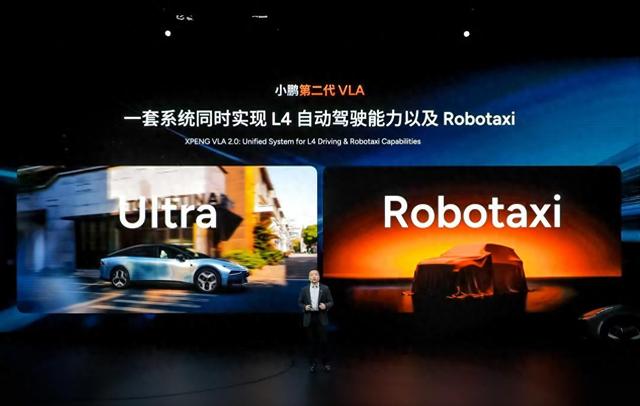
Core Viewpoint - Under the backdrop of policy adjustments, the new energy vehicle industry is accelerating the iteration of AI and autonomous driving technologies, updating models to reshape the competitive landscape [1][3]. Group 1: Policy Changes and Industry Response - Starting January 1, 2026, the purchase tax for new energy vehicles will change from "fully exempt" to "50% reduction," with a maximum tax reduction of 15,000 yuan per vehicle [3]. - In response to policy changes, multiple new energy vehicle companies are actively adapting. For instance, Xiaopeng Motors launched a purchase tax "safety net" or equivalent subsidy plan in October last year to capture part of the market early [3]. Group 2: Technological Innovations - Xiaopeng Motors introduced the second-generation VLA (Visual Language Action) physical world model, which aims to achieve L4 initial capabilities by innovatively omitting the intermediate steps of "visual signal-language translation-action instruction," allowing for direct generation from visual perception to action execution [3][4]. - This architectural innovation significantly enhances system reasoning efficiency, enabling vehicles to perceive and understand the real world more accurately, with the system set to begin initial rollouts in March 2026 [4]. Group 3: Product Launches - Xiaopeng Motors unveiled four new models at its global product launch: the 2026 Xiaopeng P7+, Xiaopeng G7 Super Range Extender, 2026 Xiaopeng G6, and 2026 Xiaopeng G9 [1]. - The 2026 Xiaopeng P7+ features the longest pure electric range among range-extended sedans, with an official starting price of 186,800 yuan. The range-extended version has a CLTC comprehensive range of 1,550 kilometers and a pure electric range of 430 kilometers [4]. - The G7 range-extended version, as Xiaopeng's first range-extended SUV, offers four versions with an official starting price of 195,800 yuan, featuring a CLTC comprehensive range of 1,704 kilometers and a pure electric range of 430 kilometers [5].


英伟达Alpamayo冲击特斯拉FSD地位?大摩:看好特斯拉优势,仍领先竞争对手数年
Ge Long Hui· 2026-01-09 02:35
然而,大摩重申,在自动驾驶方面,特斯拉仍领先竞争对手数年,并点出其垂直整合能力、庞大的数据 优势、规模效应与成本优势。报告强调,英伟达的技术进展并未实质改变该行对特斯拉的基本看法,该 行的基准情境假设是未来十年整个产业将广泛采用相当于特斯拉L2 级以上FSD(全自动辅助驾驶)的技 术。尽管英伟达为车厂提供了一条资本效率较高、迈向先进自动驾驶的入口,但要真正开发并整合完整 的自驾技术堆叠,仍是以年为单位,而非以月计算。 摩根士丹利研报指出,英伟达近期大力推进实体AI布局,正引发市场对传统车厂能否以及多快能缩小 与特斯拉在自动驾驶上的差距提出新疑问。英伟达在消费性电子展(CES)的主题演讲将自动驾驶车与人 形机器人推向舞台中央,其中全新的Alpamayo系统成为最大焦点之一。大摩指出,这套技术堆叠的目 标在于加速原始设备制造商(OEM)迈向可规模化、具推理能力的自动驾驶,有潜力重塑驾驶辅助与自驾 系统的竞争格局。 ...


知行科技涨超5%,为连续第五日上涨
Ge Long Hui· 2026-01-09 02:31
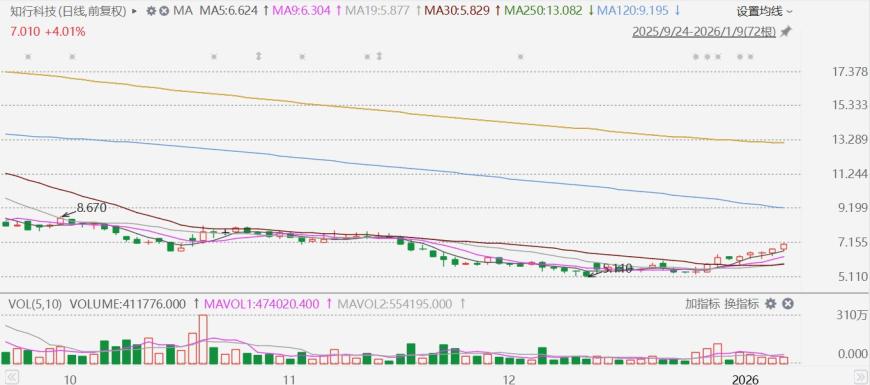
港股频道更多独家策划、专家专栏,免费查阅>> 责任编辑:栎树 消息面上,英伟达在CES 2026展会上推出名为Alpamayo的开源自动驾驶AI模型,黄仁勋称其为"世界上首款能思考、能推理 的自动驾驶汽车AI"。黄仁勋表示,首款搭载英伟达技术的汽车将于第一季度在美国上路,第二季度在欧洲上路,下半年在 亚洲上路。 另外还值得注意的是,美国自动驾驶将迎重大推进:国会即将讨论立法简化监管。美东时间1月13日,美国众议院的一个委 员会将举行听证会,讨论旨在简化无人驾驶车辆部署流程的相关立法。据悉,美国众议院能源与商务委员会下属小组委员 会计划举行听证会,并将审议多项提案草案,其中包括一项旨在将每年投入使用的自动驾驶汽车数量上限提高至90000辆的 提案,以及其他旨在解决汽车制造商对机器人出租车部署障碍的投诉的提案。 1月9日,港股智能驾驶概念股知行科技(1274.HK)盘中拉升涨超5%至7.1港元,为连续第五日上涨。 ...
自动驾驶赛道,中国车企能有哪些突破?
Huan Qiu Wang· 2026-01-09 01:54
Core Insights - The CES 2023 highlights a shift in the automotive industry, with a focus on autonomous driving technology rather than new electric vehicle (EV) models, indicating a significant trend towards automation in the next decade [1][2] - Chinese companies, particularly Baidu's "Luobo Kuaipao," are emerging as strong competitors in the autonomous driving sector, showcasing advanced capabilities compared to their U.S. counterparts [2][3] Group 1: Autonomous Driving Technology - NVIDIA's CEO predicts that autonomous driving will be one of the fastest-growing technology industries in the next ten years, emphasizing its importance in the automotive sector [2] - The comparison between Chinese and U.S. autonomous driving services reveals that Chinese solutions, like "Luobo Kuaipao," are currently operational and effective in complex environments, while U.S. services like Waymo are still in testing phases [2][3] - The Middle East is becoming a key market for autonomous driving, with Chinese companies obtaining licenses for commercial operations, indicating a strategic expansion into regions with favorable regulatory environments [3][4] Group 2: Market Dynamics and Future Trends - The rapid advancements in autonomous driving technology are occurring at an unprecedented pace, with expectations for widespread commercial deployment by 2030 [5] - The future of automotive design may shift towards user-defined customization, leveraging AI to create tailored vehicles, which could redefine the automotive value proposition [6] - The global landscape of autonomous driving is characterized by two main technological routes: L4-level services like "Luobo Kuaipao" and general autonomous driving technologies promoted by companies like Tesla [7] - Despite leading in battery technology, Chinese automakers face challenges in the smart driving domain, which could impact their market valuation compared to companies like Tesla [7]
汽车早餐 | 四部门联合召开动力和储能电池行业座谈会;吉利获L3级自动驾驶道路测试牌照;广汽国际与Grab达成战略合作
Zhong Guo Qi Che Bao Wang· 2026-01-09 01:21
Group 1: Battery Industry - A joint meeting was held by four government departments to discuss the regulation of the power and energy storage battery industry, involving 16 companies including major players like CATL and BYD [2] Group 2: Automotive Industry - The Ministry of Industry and Information Technology is soliciting public opinions on seven proposed mandatory national standards for intelligent connected vehicles, including safety requirements for automatic parking systems [3] - Geely has obtained a Level 3 autonomous driving road test license for its Zeekr 9X model in Hangzhou [9] - Xpeng Motors' CEO predicts that 2026 will mark the true beginning of autonomous driving in China and the U.S., with the company's second-generation VLA achieving Level 4 autonomous driving capabilities [11] - Dongfeng Motor is in discussions to produce passenger vehicles in Turkey, with plans to start production within the year [12] Group 3: Strategic Partnerships and Investments - GAC International has formed a strategic partnership with Grab to collaborate on delivering 20,000 high-performance electric vehicles in Southeast Asia over the next two years [10] - Intramco, a company under Xincheng Capital, has partnered with Leap Motor to supply charging products for its future electric vehicles produced in Europe [14] - Faraday Future aims to achieve positive cash flow and a gross margin of 20% within three years, as announced during its shareholder day event [15] Group 4: Technology and Innovation - Hyundai's stock price surged following the announcement of increased investments in robotics and artificial intelligence, alongside a meeting between its chairman and NVIDIA's CEO [6] - Elon Musk's AI startup xAI completed a $20 billion funding round, exceeding its initial target of $15 billion, with investors including NVIDIA and Cisco [7] Group 5: Economic Cooperation - The Ministry of Commerce is accelerating negotiations for the second phase of the China-South Korea Free Trade Agreement, focusing on enhancing economic cooperation and exploring new areas such as high-end manufacturing and green industries [4] - Guangzhou's government has released a plan to cultivate strategic industries, including artificial intelligence and new energy storage, as part of its advanced manufacturing strategy [5]



驭浪“十四五” 启航“十五五” 汽车供应链企业的新年心声
Zhong Guo Qi Che Bao Wang· 2026-01-09 01:13
Core Insights - The automotive industry is undergoing a significant transformation, with the supply chain demonstrating resilience and evolving from a follower to a leader in electric, intelligent, connected, and low-carbon technologies [2] - The "14th Five-Year Plan" period has seen various companies achieve notable advancements and innovations, setting the stage for the "15th Five-Year Plan" [3][4][5][6][8][9] Achievements and Experiences - Desay SV achieved a compound annual growth rate of 34% in R&D investment over the past five years, establishing 12 global R&D centers and successfully launching multiple innovative technologies [3] - MogoCar released the first deep understanding model, MogoMind, and secured a project for L4 autonomous buses in Singapore, marking international recognition of its technology [4] - Times Intelligent introduced an integrated intelligent chassis, achieving global-leading performance in energy management and safety [5] - Yuanrong Qixing delivered over 200,000 vehicles equipped with its urban NOA system, showcasing its mass production capabilities [6][7] - Pony.ai became one of the few companies to operate fully unmanned L4 Robotaxis, accumulating over 10 million kilometers of safe driving [8] - Baixinniu's L4 autonomous logistics vehicles are operational in over 170 cities, emphasizing the importance of understanding logistics scenarios for sustainable value creation [9] Challenges and Solutions - Desay SV faces challenges in integrating technology and brand value in diverse regional markets, implementing a "2+1+1" international organizational model to address this [10] - MogoCar's main challenge is adapting autonomous vehicles to complex urban environments, which it addresses by enhancing AI capabilities and real-time data integration [11] - Times Intelligent is working to establish trust in its innovative chassis technology amidst a lack of industry maturity [12] - Yuanrong Qixing focuses on the VLA model to handle complex urban scenarios, continuously optimizing its data collection and processing [13] - Pony.ai aims to overcome technical, policy, and market acceptance challenges through technology enhancement and collaboration [14] - Baixinniu has refined its logistics focus to address commercial viability and customer needs, establishing partnerships with major logistics companies [15] Technological Trends - Desay SV is focused on AI technology driving innovation in smart vehicles, anticipating 2025 as the year AI cockpit models will be widely adopted [17] - MogoCar emphasizes the scaling of L4 autonomous driving technology, particularly in public transport [18] - Times Intelligent is concentrating on L3 to L4 autonomous driving technology and integrated control systems [19] - Yuanrong Qixing is advancing the VLA model for enhanced understanding and reasoning in complex driving scenarios [20] - Pony.ai identifies AI as a key driver for industry development, leveraging advancements in integrated circuits and deep learning [21] - Baixinniu is focused on end-to-end architecture and world models for logistics vehicles, aiming for breakthroughs in safety and efficiency [22] Future Development Expectations - Desay SV plans to accelerate international market expansion and enhance user experience through technological innovation [23] - MogoCar aims to deepen AI model capabilities and expand its market presence, starting with Singapore [24] - Times Intelligent seeks to scale its products in passenger vehicles and promote international collaboration [24] - Yuanrong Qixing targets a cumulative delivery of 1 million vehicles by 2026, focusing on mass production of assisted driving [25] - Pony.ai aims for profitability while advancing core technology and industry collaboration [25] - Baixinniu anticipates significant growth in L4 autonomous logistics vehicles, aiming for a global market presence [25] Differentiated Competitive Advantage - Desay SV emphasizes an "open, full-stack, rapid realization" growth model to achieve resilient, high-quality growth [27] - MogoCar focuses on integrating AI capabilities with real-world data to adapt to complex urban scenarios [28] - Times Intelligent aims to build a high-barrier system capability through innovative technologies and a sustainable supply chain [28] - Yuanrong Qixing believes in a long-term, consistent technology roadmap combined with strong engineering and user understanding [29] - Pony.ai prioritizes continuous R&D investment to build a robust technological moat [30] - Baixinniu integrates various supply chain elements to create a comprehensive operational model for sustainable growth [31]
L3上路试点,自动驾驶如何真正跑起来?
Yang Shi Xin Wen· 2026-01-09 01:03
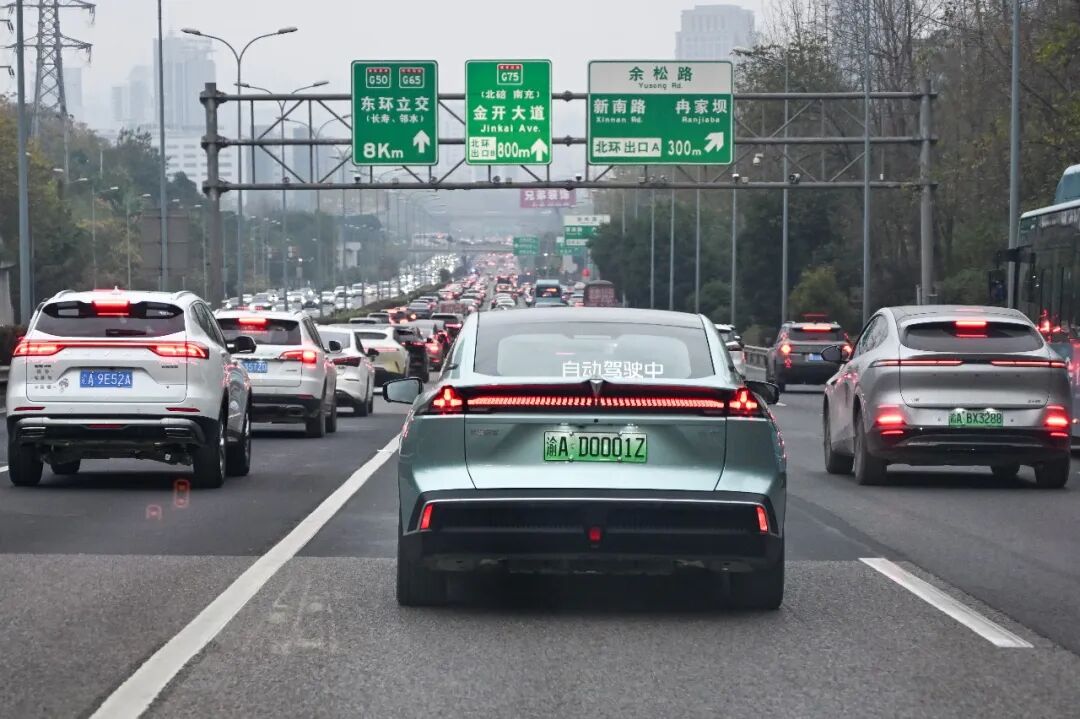
Core Viewpoint - The introduction of L3 level autonomous driving vehicles in Chongqing marks a significant step towards the commercialization of autonomous driving technology in China, with the first official license plate issued to Changan Automobile for its L3 vehicle [1][12]. Group 1: Definition and Classification of L3 Autonomous Driving - L3 level autonomous driving is classified as conditional automation, where the vehicle can drive itself in specific scenarios but requires the driver to take over when prompted by the system [3][5]. - The distinction between L2 and L3 levels lies in the role and responsibility of the driver versus the system, transitioning from "driver assistance" to "system-led" driving [3][5]. Group 2: Differences Between Testing and Pilot Programs - The L3 autonomous driving pilot program in Chongqing and Beijing involves vehicles that are mass-produced and issued formal vehicle licenses, unlike previous road tests that did not issue such licenses [6][7]. - The pilot program aims to transition from technical validation to mass application, focusing on safety and regulatory frameworks [6][7]. Group 3: Features and Performance of L3 Vehicles - The Changan SC7000AAARBEV model, one of the approved vehicles, demonstrated effective handling of various driving situations, including traffic congestion and sudden stops, showcasing its advanced autonomous capabilities [8][9]. - The vehicle is permitted to operate in specific congested areas with a speed limit of 50 km/h, emphasizing safety in complex driving conditions [9][11]. Group 4: Reasons for Chongqing's Leadership in Autonomous Driving - Chongqing's early adoption of supportive policies and regulations for autonomous driving testing has established a conducive environment for the development and application of such technologies [12][14]. - The city's unique geographical features provide a challenging testing ground for autonomous systems, allowing for thorough evaluation under diverse conditions [14][16]. Group 5: Future Considerations for Autonomous Driving in China - The successful implementation of L3 autonomous driving requires parallel advancements in legal regulations, traffic management, and public understanding of the technology [19][20]. - Clear definitions of responsibility in scenarios where human intervention is required are essential for the safe integration of autonomous vehicles into public roads [20][22].

掘金CES 2026:AI全域渗透加速,应用端投资机会将至?
智通财经网· 2026-01-09 00:55
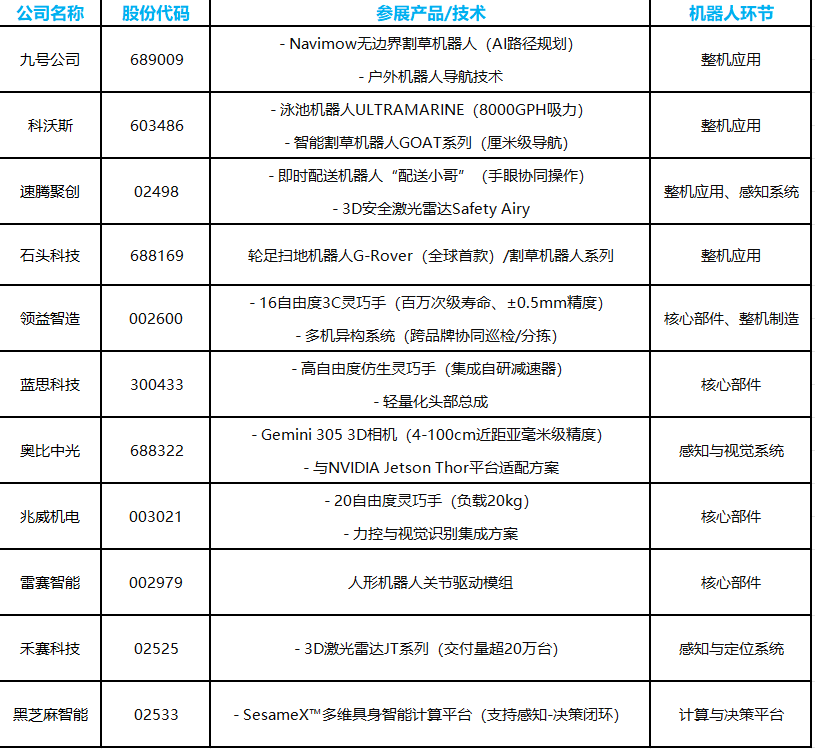
Group 1: CES 2026 Overview - CES 2026, known as the "Spring Festival Gala" of the tech industry, commenced on January 6 in Las Vegas, focusing on "defining the physical boundaries of AI" [1] - The event featured 207 Chinese companies across various cutting-edge fields, including AI, smart wearables, and smart home technologies, showcasing over 120 small and medium-sized tech firms [1] - The technologies presented by leading Chinese companies reflect the country's technological strengths and outline key directions for global industry evolution [1] Group 2: Robotics and AI Technologies - AI and robotics technologies were a major highlight at CES 2026, with global leaders showcasing various robots and core components [2] - NVIDIA's CEO announced that the robotics sector has entered its "ChatGPT moment," introducing world models to enhance robots' understanding of physical properties and spatial relationships [2] - Chinese companies, including Yushu Technology and Fourier, presented a wide range of innovative products, covering industrial applications, daily life, medical assistance, and emergency rescue [2][3] Group 3: Key Exhibitors and Innovations - Notable exhibitors included Ninebot, Ecovacs, and SUTENG, showcasing advanced robotic solutions such as AI path-planning lawn mowers and delivery robots capable of complex tasks [4][5] - Companies like Lingyi Zhi Zao and Zhaowei Electric displayed high-freedom dexterous hands and collaborative systems, indicating significant advancements in robotics [5] - The emergence of a cohesive display of robotics indicates a breakthrough in China's robotics industry, transitioning from fragmented to integrated solutions [5] Group 4: Automotive Innovations - The automotive sector at CES 2026 emphasized the transformation of vehicles into "smart partners" with emotional resonance and autonomous capabilities [6] - NVIDIA introduced the world's first open-source autonomous driving model, aiming to address challenges in extreme weather and construction detours [6] - Chinese automakers, including Great Wall Motors and Geely, showcased innovative models and technologies, highlighting the integration of smart features and collaboration with supply chain partners [6][7] Group 5: Wearable Devices and AI Glasses - Wearable devices, particularly AI glasses, gained significant attention at CES 2026, with over 60% of the showcased products coming from Chinese brands [10][11] - Innovations included independent communication-capable AR glasses and various health monitoring devices, indicating a shift towards mass production and consumer adoption [10][11] - The advancements in display and optical technologies for AI glasses reflect a robust ecosystem supporting the transition from concept to widespread use [12][13] Group 6: Industry Trends and Future Outlook - The CES 2026 event signaled a clear shift in AI's role from mere technology demonstration to deep integration within industry value chains [14] - The trend of AI becoming a physical entity is accelerating, with applications in robotics, smart driving, and wearable devices becoming observable realities [14] - Investors are encouraged to focus on the transition from technology validation to commercial scale, marking a critical window for capturing scene-based opportunities in 2026 [14]



天奥电子(002935.SZ):公司芯片原子钟暂未涉及无人机、自动驾驶等应用场境
Ge Long Hui· 2026-01-09 00:48
Group 1 - The core point of the article is that Tianao Electronics (002935.SZ) has stated that its chip atomic clock is not currently involved in applications such as drones, autonomous driving, robotics, and smart devices [1]