关税政策

Search documents
近7年头一遭,美国遭致命危机!特朗普彻底失算,回旋镖扎回老巢
Sou Hu Cai Jing· 2025-10-20 03:36
Government Shutdown: A Result of Political Struggle - The government shutdown is a consequence of the political standoff between Trump and Congress, with Trump insisting on including tariffs on China in the budget, which Democrats opposed, leading to a failed budget proposal [1][2] - Over 700,000 federal workers were forced to stop working, affecting various sectors including national parks and educational activities, highlighting the severe impact of the budget impasse [1] Tariff Policy: Economic Self-Harm - Trump's belief that increasing tariffs would lead to victory in the trade war has backfired, with U.S. importers and consumers bearing over 90% of the costs of tariffs on Chinese goods [6][8] - The increased costs of imported components have raised production costs for U.S. companies, particularly small businesses, leading to layoffs and halted expansion plans [8] - The "decoupling" supply chain strategy has resulted in supply shortages and rising prices across various consumer goods, contributing to persistent inflation and declining corporate profits [8][10] Political Polarization: A Root Cause of National Division - The ongoing political struggle has transformed the U.S. into a battleground of endless political conflict, with both parties prioritizing power over national interests [12][14] - Trust in the government has plummeted to historic lows, with the public perceiving that both parties are more focused on undermining each other than addressing the needs of ordinary citizens [14] Repercussions: International Image Crisis - Trump's hardline stance on China has inadvertently led to economic turmoil and political chaos within the U.S., undermining its international credibility [15][17] - In contrast, China has continued to advance its global standing through high-quality development and international cooperation, making Trump's policies appear increasingly ineffective [19]


LPG早报-20251020
Yong An Qi Huo· 2025-10-20 02:08
1. Report Industry Investment Rating - No relevant information provided 2. Core Viewpoints of the Report - PG's main contract rose significantly due to macro and geopolitical news disturbances. The basis was -20 (-334), and the November - December spread was 137 (+59). Domestic civil gas prices dropped sharply. The cheapest deliverable was Shandong civil gas at 4200 (-250); East China was at 4345 (-39), and South China was at 4460 (-110). Wanhua added 2300 lots of warrants. The external market prices tumbled; the FEI monthly spread was -10 USD (+5), and the CP monthly spread was -4 USD (+5). The domestic - foreign price difference PG - CP reached 132 (+27); PG - FEI reached 112 (+14). FEI - CP reached 20 (+12.5). The US - Asia arbitrage window closed. The arrival discount of CP propane and butane in South China increased significantly to 78 (+26). Freight rates dropped sharply, with the US Gulf - Japan at 108 (-18) and the Middle East - Far East at 60.5 (-2.5). FEI - MOPJ narrowed but the switching window remained open, at -71 (-12). The profit of PDH to propylene decreased. Inventory pressure was high, and short - term supply pressure was large, but there was support from chemical demand, and the expectation of combustion demand was warming up. The PDH operating rate was 68.76% (-2.12pct), with the second phase of Zhongjing resuming, but Bohua under maintenance and Wanda Tianhong on short - term shutdown; enterprises were expected to gradually increase their loads next week. Although the spot supply pressure was large and the PG basis turned negative after a sharp drop, due to tariff policies and geopolitical disturbances, the futures market might not decline significantly in the short term [1] 3. Summary by Relevant Catalogs 3.1 Daily Data Changes - On 2025/10/17 compared with the previous day, the daily changes were as follows: South China LPG was -40, East China LPG was -24, Shandong LPG was -80, propane CFR South China was -5, propane CIF Japan was -13, CP forecast contract price was -5, Shandong ether - after carbon four was -40, Shandong alkylated oil was -30, and the main basis was -21. On Friday, civil gas prices dropped, with East China at 4345 (-24), Shandong at 4200 (-80), and South China at 4460 (-40). Ether - after carbon four was at 4420 (-40). The lowest delivery location was Shandong, with a basis of -20 (-32), and the November - December spread was 137 (+7). FEI and CP dropped to 469 (-5) and 447 (-5) dollars/ton respectively [1] 3.2 Weekly Views - The PG main contract rose significantly due to macro and geopolitical news. The basis was -20 (-334), and the November - December spread was 137 (+59). Domestic civil gas prices dropped significantly. The cheapest deliverable was Shandong civil gas at 4200 (-250), East China at 4345 (-39), and South China at 4460 (-110). Wanhua added 2300 lots of warrants. External prices dropped significantly; FEI monthly spread was -10 USD (+5), CP monthly spread was -4 USD (+5). The domestic - foreign price differences changed: PG - CP reached 132 (+27), PG - FEI reached 112 (+14), FEI - CP reached 20 (+12.5). The US - Asia arbitrage window closed. CP propane and butane arrival discounts in South China increased significantly to 78 (+26). Freight rates dropped significantly, US Gulf - Japan was 108 (-18), Middle East - Far East was 60.5 (-2.5). FEI - MOPJ narrowed but the switching window was still open at -71 (-12). PDH to propylene profit decreased. Inventory pressure was high, short - term supply pressure was large, but there was support from chemical demand and the expectation of combustion demand was warming up. PDH operating rate was 68.76% (-2.12pct), with the second phase of Zhongjing resuming, but Bohua under maintenance and Wanda Tianhong on short - term shutdown; enterprises were expected to gradually increase their loads next week. Despite large spot supply pressure and a sharp drop in the PG basis turning negative, due to tariff policies and geopolitical disturbances, the futures market might not decline significantly in the short term [1]
刚刚,开盘大涨!
中国基金报· 2025-10-20 02:06
Group 1 - The Nikkei 225 index in Japan has risen by 2.47%, reaching a new historical high [4][3] - The ruling Liberal Democratic Party (LDP) and the Japan Innovation Party have reached a basic agreement to form a coalition government, potentially paving the way for economic stimulus measures [5][6] - Risk appetite has improved due to positive developments in trade relations and regional banks in the U.S. [6] Group 2 - The Seoul Composite Index opened high but fell by 0.52%, closing at 3729.47 [6][7] - Citigroup economists predict that the current interest rate cut cycle in South Korea may be ending, with the Bank of Korea expected to maintain the benchmark rate at 2.5% [8] - Future interest rate cuts are anticipated in November 2026 and May 2027, with a potential final rate of 2% [8] Group 3 - Gold prices have dropped, with spot gold falling below $4230 per ounce, down 0.54% [10] - Platinum futures have decreased by 1.54%, currently priced at $1594.6 per ounce [12] - Palladium futures have also seen a decline of 2.42%, now at $1485.5 per ounce [13] Group 4 - Signals of tariff easing continue, with reports indicating that the Trump administration is quietly relaxing tariff policies and exempting dozens of products from tariffs [14]

电解铝:宏观扰动不改全球短缺格局,铝价仍逢低看多
Yin He Qi Huo· 2025-10-20 01:26
Report Industry Investment Rating No relevant content provided. Core Viewpoints - The global aluminum supply-demand situation remains tight in the medium term, supporting the upward trend of aluminum prices. Short-term view is to buy on dips and be cautious about chasing high prices. For alumina, the price is expected to stay at a low level, and more attention should be paid to further capacity changes [3][99]. Summary by Directory Strategy Outlook - Aluminum - **Derivatives**: Temporarily on the sidelines [3]. - **Macro**: Trump's tariff policy on China has escalated, but there are signs of potential negotiation. The 20th Fourth Plenary Session will study the 15th Five-Year Plan [3]. - **Industry Supply**: Overseas, the first - phase of Indonesia's Juwon project with 250,000 - ton capacity is in production. In China, some projects are expected to start production by the end of the year, while others may face delays [3]. - **Industry Demand**: The average weekly operating rate of domestic aluminum downstream processing leading enterprises is 62.5%, down 1.4 percentage points year - on - year. Different sub - industries show varying degrees of change in operating rates [3][64]. - **Inventory**: After the National Day holiday, aluminum ingot inventories increased seasonally but then decreased due to price adjustments. Overall inventory is expected to remain above 600,000 tons in the short term [3]. - **Trading Logic**: The panic caused by tariffs has improved, and the tight supply - demand situation supports the upward trend of aluminum prices. Short - term strategy is to buy on dips and be cautious about chasing high prices [3]. - **Trading Strategy**: Short - term, maintain the idea of buying on dips and be cautious about chasing high prices; arbitrage and options are temporarily on the sidelines [3]. Strategy Outlook - Alumina - **Logic Analysis**: The oversupply of alumina will become more prominent after the downstream electrolytic aluminum plants complete their stockpiling. Some producers have started minor production cuts, but it will take time to restore the supply - demand balance. The price is expected to stay at a low level [99]. - **Trading Strategy**: - **Unilateral**: Alumina price is expected to stay at a low level, and more attention should be paid to further capacity changes. - **Arbitrage**: Temporarily on the sidelines. - **Options**: Temporarily on the sidelines [100]. LME Market Performance - Includes data on aluminum ingot import and export profits, LME aluminum speculative fund net positions, LME aluminum price trends, overseas mainstream consumption area spot trade premiums, LME aluminum spot premiums and discounts, and LME aluminum inventories [5][7][9]. Domestic and Overseas Aluminum Inventory Performance - Covers aluminum ingot social inventories, aluminum rod social inventories, bonded area aluminum ingot inventories, aluminum ingot and aluminum rod weekly outbound volumes, and LME aluminum inventory seasonal charts [18][19][21]. Spread Situation - Analyzes price differences such as the Shanghai - Guangdong spread, mainstream consumption area basis, and differences between Shandong and East China aluminum prices [23]. Aluminum Primary Processing Product Processing Fees - Discusses processing fees for products like aluminum rods and aluminum plates in different regions, as well as the scrap - refined aluminum price difference [31][33][37]. Recycled Aluminum Alloy Market Situation - Covers waste aluminum production, ADC12 price, recycled aluminum alloy production, and related price differences and inventories [40][45][48]. Electrolytic Aluminum Supply Side - Analyzes China's electrolytic aluminum supply volume, production profit, net import volume, and the expected changes in domestic and overseas electrolytic aluminum production capacity [52][54][58]. Aluminum Processing Operating Rate Situation - The average weekly operating rate of domestic aluminum downstream processing leading enterprises is 62.5%, with different trends in various sub - industries [64]. Photovoltaic Component Production - In October, the expected photovoltaic component production is 51 - 52GW, with domestic production decreasing and overseas production remaining stable [68]. Automobile Sales - In 2025, China's total automobile sales are expected to reach 32.9 million, with significant growth in new energy vehicles, which will drive aluminum consumption [72]. Real Estate Completion - From January to August, the national housing completion area decreased by 17.0% year - on - year, indicating a weak real estate market [74]. Power Investment and Cable Consumption - As of September 2025, the domestic aluminum rod sample production capacity has expanded rapidly. Orders are expected to be saturated in the fourth quarter and next year, and the weekly operating rate in October is expected to remain stable or slightly increase [86]. Home Appliance Production Scheduling - In September 2025, the total production scheduling of three major white - goods decreased by 7.2% year - on - year, and the production scheduling of air conditioners is expected to decline in the future [90]. Export Trends - In August, the total export of aluminum products decreased year - on - year. Although the impact of tariffs has eased, the export volume is expected to decline this year [94]. Aluminum Supply - Demand Balance Outlook - Forecasts the global and Chinese aluminum supply - demand balance from 2018 to 2027, including production, demand, and balance [95]. Alumina - Strategy Outlook - **Raw Material**: Domestic bauxite supply in Shanxi and Henan is restricted by rain, while imported bauxite supply is increasing but the price remains stable [99]. - **Supply**: Some enterprises in Shanxi and Henan have carried out maintenance or production cuts. The national alumina operating capacity has decreased, and the import window has been open [99]. Alumina - Cost and Profit - In September 2025, the average profit of the alumina industry decreased. The profits of enterprises in different regions vary, and some high - cost regions are close to cash - cost losses [105][106]. Alumina - Production Capacity - The operating capacity of alumina has decreased marginally, with some enterprises in Shanxi and Henan adjusting production [110]. Alumina - Overseas Market - The overseas alumina transaction price is decreasing, and the import window remains open. More imported alumina is expected to arrive at ports by the end of the month [114]. Alumina - Futures Inventory - Alumina futures inventories continue to increase, with different inventory changes in various regions [118]. Bauxite - The price of bauxite remains stagnant. Domestic supply is affected by weather, and imported supply is increasing, but the price shows little change [121].
国际金融市场早知道:10月20日
Xin Hua Cai Jing· 2025-10-20 00:03
【资讯导读】 ·美国商会正式对特朗普政府提起诉讼 ·英国央行首席经济学家:未来一年将进一步降息 ·白宫管理和预算办公室主任沃特表示,因"停摆"持续,特朗普政府将再冻结约110亿美元的基础设施项 目资金,主要涉及民主党执政城市。 ·美国商会正式对特朗普政府提起诉讼,指控其近期针对H-1B签证项目设定的高额申请费用"违法且不 当"。这标志着美国最具影响力的商业组织之一首次在法庭上直接挑战特朗普政府的移民与劳动力市场 政策。 ·美国商务部计划宣布将汽车制造商进口零部件关税抵免安排延长五年,此前该条款原定两年后终止。 ·英国央行首席经济学家皮尔表示,如果经济走势符合英国央行的预测,他预计未来一年将进一步降 息。鉴于通胀回落进程缓慢,不应过快降息。 ·韩国总统顾问表示,美韩在贸易谈判中多数议题上取得实质性进展;韩国与美国在亚太经合组织 (APEC)会议前达成贸易协议的可能性更高。 ·日本政府拟于2026年度将签证申请手续费上调至与欧美国家相当的水平。鉴于访日外国游客呈增加之 势,日本政府希望将签证成本上升及物价上涨体现在手续费中。 ·日本政府拟于2026年度将签证申请手续费上调 ·标普将法国长期外币发行人违约评级从"A ...
美联储降息大消息!10月20日,昨日晚间的四大消息全面发酵!
Sou Hu Cai Jing· 2025-10-19 18:04
Group 1: Trade Policy Impact - The U.S. will impose a 25% tariff on imported medium and heavy trucks and parts, and a 10% tariff on imported passenger buses starting November 1, which will significantly increase costs for manufacturers and consumers [1] - For example, a $500,000 heavy truck will incur an additional cost of over $120,000 due to tariffs, impacting exporters and domestic automakers [1] - Although China's share of heavy truck exports to the U.S. is low, major suppliers from Mexico, Japan, and Germany will be more affected, leading to potential disruptions in international supply chains [1] Group 2: Monetary Policy Outlook - Several Federal Reserve officials have expressed openness to interest rate cuts, with the St. Louis Fed President indicating support for a rate cut at the upcoming meeting [2] - The labor market shows signs of weakness, with ADP data falling below expectations, contributing to the likelihood of a rate cut [2] - Inflation remains manageable, and despite the lack of recent non-farm payroll data due to government shutdown, the market's expectation for monetary easing persists [2] Group 3: Market Reactions - The combined effects of tariffs and interest rate cuts may lead to mixed impacts on the stock market, with rate cuts benefiting interest-sensitive sectors like technology and growth companies [4] - Conversely, the tariff policy will increase cost pressures on automotive, industrial manufacturing, and certain transportation sectors, potentially leading to declines in related stocks [4] - Initial market reactions may be cautious due to uncertainty, but optimism surrounding rate cuts could lead to a concentration of funds in rate-sensitive sectors as the market digests the news [4]
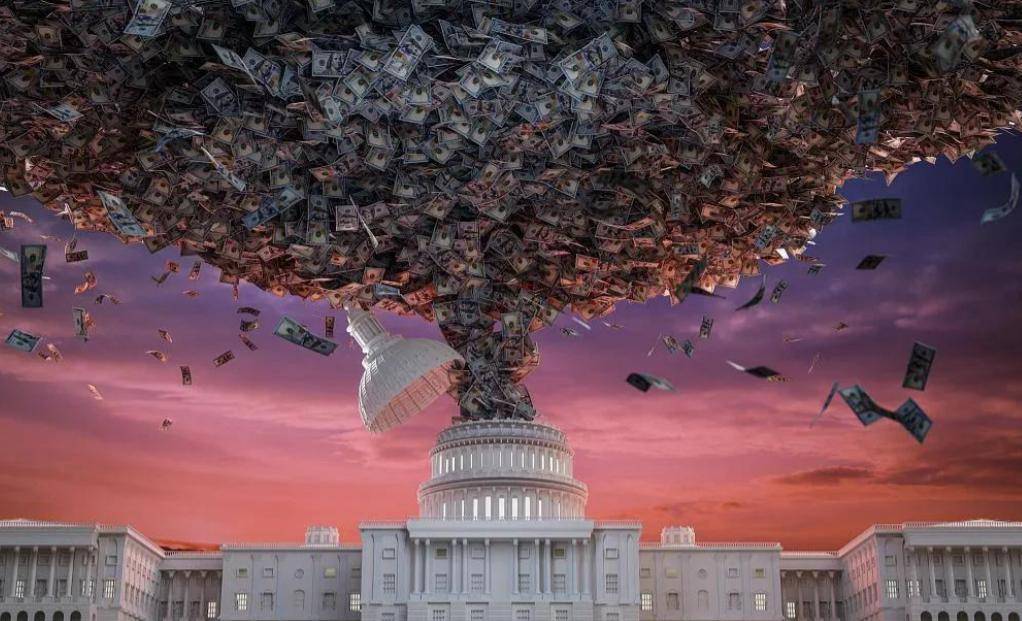
特朗普,关税突发!
中国基金报· 2025-10-19 16:18
中国基金报记者 泰勒 大家好,简单关注一则特朗普关税的消息。 【导读】关税新消息 10月19日晚间,特朗普在最新的采访中,继续释放缓和信号,并且暗示,大门仍敞开着。 此外,据媒体报道,特朗普政府正在低调地 放松多项关税政策 。 知情人士称,在"对等关税"问题上的转向,反映出特朗普团队希望在法院可能推翻其广泛征 税时对冲风险。与此同时,特朗普团队也在扩大依据更成熟法律授权征收关税的做法:即 《1962年贸易扩张法》第232条(Section 232)。特朗普已动用该法为钢铝和汽车关税提 供法律依据,并在本月宣布对重型卡车、医药品和家具征收新一轮关税。 上周五,特朗普依据第232条宣布最新行动:自11月1日起,对卡车及卡车零部件加征25%关 税,对巴士加征10%关税。作为该行动的一部分,特朗普还扩大了为汽车制造商提供的关税 减免计划,允许其申请"抵扣额度",将汽车和卡车零部件关税的部分成本抵扣期限从2027年 延长至2030年。 上月,特朗普通过名为"附件二"的清单,对包括黄金、LED灯以及某些矿物、化工品和金属 制品在内的产品发布了新的豁免。这些产品很多已被或将被纳入第232条关税覆盖范围。 他还预告了未来可能 ...

有色及贵金属周报合集-20251019
Guo Tai Jun An Qi Huo· 2025-10-19 11:51
Report Industry Investment Rating There is no information provided in the content about the report industry investment rating. Core Viewpoints - The copper market is in a state of caution due to the game between supply constraints and trade uncertainties. Macro risks have eased, and the supply shortage logic persists, providing long - term opportunities for bulls. Attention should be paid to the development of trade frictions. [6][10] - For aluminum, it is still testing the 21,000 - yuan level. The market is worried about the escalation of Sino - US trade frictions. In the short - term, the price shows a convergent oscillation. In the long - term, there is a bullish view on the unilateral price, volatility, and smelting profit. [78] - Regarding alumina, it is necessary to focus on whether the bottom has been found below 2,800 yuan. The spot market is weak in the short - term, but it has entered the cost - valuation support test phase. [79] Summary by Directory Copper Industry Trading End - Volatility: The volatility of LME and COMEX copper has increased. COMEX copper price volatility is around 27%, and SHFE copper volatility is around 25%. [16] - Term Spread: The term structure of SHFE copper has flattened, the spot discount of LME copper has narrowed, and the near - end structure of COMEX copper has changed from B to C. [18][22] - Position: The positions of SHFE and international copper have decreased, while the position of COMEX copper has increased. SHFE copper position decreased by 47,700 lots to 530,600 lots. [23] - Capital and Industry Position: The net short position of LME commercial enterprises has decreased, and the net long position of CFTC non - commercial has also decreased slightly. [29] - Spot Premium: The domestic copper spot premium has strengthened, and the bonded - area copper premium has declined. [32][34] - Inventory: The global total copper inventory has increased, with a significant increase in domestic social inventory. [35][37] - Position - to - Inventory Ratio: The position - to - inventory ratio of LME copper has recovered, while that of SHFE copper is at a historically low level. [38] Supply End - Copper Concentrate: The import of copper concentrate has increased year - on - year, the port inventory has decreased, and the processing fee has remained weak. [41] - Recycled Copper: The import and domestic production of recycled copper have increased year - on - year. The scrap - refined copper price difference has narrowed, and the import loss has also decreased. [42][47] - Blister Copper: The import of blister copper has decreased, and the processing fee is at a low level. [51] - Refined Copper: The production and import of refined copper have increased year - on - year, and the spot import loss has narrowed. [54][55] Demand End - Operating Rate: The operating rate of copper product enterprises has rebounded in September, and the operating rate of wire and cable has increased marginally. [58] - Profit: The processing fee of copper rods is at a historically low level, while that of copper tubes has recovered. [60][62] - Raw Material Inventory: The raw material inventory of wire and cable enterprises remains at a low level. [63] - Finished - Product Inventory: The finished - product inventory of copper rods has increased, while that of wire and cable has decreased. [66] Consumption End - Apparent Consumption: The apparent consumption of copper is good, and grid investment is an important support. The grid investment has accelerated, and the cumulative investment from January to August reached 379.6 billion yuan, a year - on - year increase of 14%. [71][73] - Air - Conditioner and New - Energy Vehicle: The production of air - conditioners has resumed growth, and the production of new - energy vehicles is at a historically high level. [74] Aluminum and Alumina Industry Trading End - Term Spread: The spot premium of A00 aluminum and alumina has strengthened, and the near - month spread of SHFE aluminum has narrowed. [82][85] - Volume and Position: The position of SHFE aluminum and alumina main contracts has increased slightly, while the trading volume has decreased slightly. [88] - Position - to - Inventory Ratio: The position - to - inventory ratio of SHFE aluminum and alumina has declined. [93] Inventory End - Bauxite: The port inventory and inventory days of bauxite have increased. The inventory of alumina enterprises has continued to accumulate, the port shipping volume and floating inventory have decreased, and the out - port and in - port volumes have also declined. [98][103][104] - Alumina: The social inventory of alumina has increased, and the price has continued to decline. [79] - Aluminum: The social inventory of aluminum has decreased, and the spot premium has changed from discount to flat or premium. [78]
“进一步退两步”,特朗普制造业回流目标正在被自身关税和移民政策绊倒
Guan Cha Zhe Wang· 2025-10-19 07:35
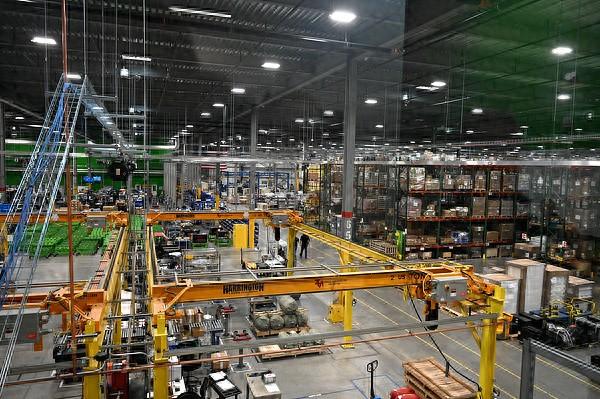
Core Viewpoint - The article discusses the contradictions in the Trump administration's manufacturing repatriation policies, highlighting how tariffs and immigration policies are counterproductive to the goal of bringing manufacturing jobs back to the U.S. [1][2][4] Group 1: Policy Contradictions - Tariffs have increased the costs of raw materials and imported equipment for U.S. manufacturers, making it harder for them to expand [1][7] - New immigration policies may reduce the supply of skilled labor, exacerbating the shortage of workers in the manufacturing sector [1][10] - The administration's budget cuts threaten the subsidies necessary for companies to repatriate jobs, leading to an unstable subsidy environment [1][14] Group 2: Business Reactions - Business leaders express frustration over the lack of clarity in the "America First" policies, making it difficult for them to plan investments [1][7] - Companies like Ford have reported significant cost pressures due to tariffs, which hinder their ability to invest more in the U.S. [7][8] - The uncertainty surrounding tariffs and their potential continuation after the Trump administration creates a paralysis effect, preventing companies from approving repatriation projects [6][7] Group 3: Labor Market Challenges - There are currently over 400,000 manufacturing job vacancies in the U.S., particularly in high-tech fields like semiconductors and robotics [9] - New immigration policies, including increased fees for H-1B visas, may further complicate the ability of companies to hire skilled foreign workers [10][13] - Industry groups warn that the changes in immigration policy could undermine the talent pipeline necessary for rebuilding the manufacturing sector [12][13] Group 4: Funding and Investment Issues - The Trump administration has touted trillions in investment commitments from companies, but internal budget cuts have created uncertainty regarding subsidies that could stimulate further investment [5][14] - The White House has ordered a review of federal funding and loans, injecting additional uncertainty into the investment landscape [14] - The lack of a coherent strategy for funding and tariffs leaves companies confused about how to proceed with their manufacturing plans [14]
中方对美反制后,巴西大豆已经宣布涨价!美国农民反而被坑了
Sou Hu Cai Jing· 2025-10-19 05:32
Core Viewpoint - The article discusses the impact of Trump's tariff policies on American farmers and the subsequent opportunities for Brazilian farmers, highlighting a shift in global agricultural dynamics due to China's retaliatory measures against U.S. tariffs [1][3][17]. Group 1: Impact on American Farmers - American farmers are facing significant challenges due to high tariffs imposed by Trump, leading to a surplus of soybeans that cannot be sold [8][13]. - The tariffs have resulted in a drastic reduction in China's demand for U.S. soybeans, causing financial losses for American farmers who previously relied on exports to China [6][8]. - Farmers express frustration towards Trump's policies, feeling that they have not only suffered economically but also diminished the U.S.'s international standing [13]. Group 2: Opportunities for Brazilian Farmers - Brazilian farmers have benefited from the U.S. tariffs, as they have become the primary suppliers of soybeans to China, capitalizing on the reduced competition from the U.S. [10][11]. - Brazil's agricultural sector has seen a surge in demand, leading to increased soybean prices and a strengthened supply chain due to China's need for soybeans [10][11]. - The cooperation between Brazil and China has deepened, with China not only being a major buyer but also helping Brazil connect with international markets [11]. Group 3: Global Economic Shifts - The article indicates a broader shift in global economic alliances, with countries increasingly choosing to collaborate with China rather than the U.S. to maximize their benefits [13][15]. - Trump's attempts to isolate China by seeking cooperation with other nations have been met with skepticism, as many countries recognize the potential risks of aligning with the U.S. [13][15]. - The dominance of the U.S. in global trade is being challenged, as more nations are opting for partnerships that offer greater advantages, reflecting a changing world order [15][17].