供应链重构

Search documents
谁在为“毛孩子”买单?宠物经济背后的“它消费” | 观产业
高毅资产管理· 2025-07-16 09:30
Core Insights - The rise of the "pet economy" in China is driven by social changes, consumption upgrades, and technological empowerment, with pets increasingly viewed as family members rather than mere tools [2][6][10]. Group 1: Emotional Value Drivers - The demand for emotional companionship is growing, as pets provide significant comfort and reduce stress in modern society [8]. - Factors such as the increase in single-person households, an aging population (over 310 million aged 60 and above), and declining birth rates contribute to the rising need for emotional support from pets [9]. Group 2: Key Influencing Factors - Increased consumer spending power leads to a rise in demand for pets, with a positive correlation between pet industry growth and GDP per capita [10]. - Urbanization accelerates the pet market's development, especially in lower-tier cities where growth potential remains high [11]. - The aging population drives the expansion of the pet market, with older adults increasingly viewing pets as family members and investing in quality pet care [15]. - The single economy presents new growth opportunities for the pet industry, as pets become integral to family life amid low birth rates [17]. - Diverse family structures, including childless couples, elevate the demand for pets as emotional companions [19]. Group 3: Consumer Demographics - The primary consumer base for the pet market consists of individuals born in the 1990s and 2000s, who account for 67.7% of market share and prioritize pet quality and personalized needs [21]. - The elderly population is increasingly investing in pet care, with significant growth in spending on pet food and health management [24]. - First- and second-tier cities dominate the pet ownership landscape, but there is notable growth in pet ownership in lower-tier cities, with a 30% increase in 2023 [26]. Group 4: Market Size and Segmentation - The Chinese pet market surpassed 592.8 billion yuan in 2023 and is projected to reach 811.4 billion yuan by 2025 [30]. - Pet food and medical care are the two largest segments, with pet food accounting for 52.2% of the market, driven by a shift towards higher quality and specialized nutrition [35]. - The pet medical sector holds a 28.5% market share, with increasing demand for specialized care due to the aging pet population [36]. - Pet supplies and services are also growing, with smart pet products expected to reach nearly 7 billion yuan by 2024, reflecting a 13.9% annual growth rate [38]. Group 5: Future Trends - The trend of domestic brand preference is rising, with 32.9% of dog owners and nearly 35% of cat owners favoring local brands by 2024 [41]. - The pet industry is experiencing a dual empowerment of consumption upgrades and technological advancements, with a growing acceptance of high-end services and personalized pet care [44]. - The concept of "pet-friendly" spaces is becoming integral to urban development, with businesses increasingly catering to pet owners [46]. - The "silver economy" and lower-tier markets are emerging as new frontiers for the pet economy [47].


60年跨国物流集团穿越周期,CEO透露……
Sou Hu Cai Jing· 2025-07-10 10:21
Core Insights - EMO Trans Group's strategy is driven by the need to adapt to geopolitical risks and supply chain restructuring, focusing on diversifying markets while maintaining a strong presence in established regions [1][8]. Group 1: Company Overview - Founded in 1965 in Germany, EMO Trans Group has evolved from traditional logistics to a multinational logistics enterprise with operations across Europe, America, Asia, and Australia [6]. - The company operates over 100 offices in 24 countries and collaborates with more than 250 partners across 120 countries, offering services such as sea freight, air freight, customs brokerage, and warehousing [6][9]. - In 2024, EMO Trans Group reported revenues of $5.8 billion, handling 9,600 tons of air freight and 110,000 TEUs of sea freight [6][9]. Group 2: Market Strategy - The company targets countries ranked in the top 40%-50% of GDP, which account for 80%-90% of global trade market share, as a basis for market entry [1][8]. - Recent expansions include acquisitions in Southeast Asia (Thailand, Vietnam) and Eastern Europe (Romania, Poland), with a notable opening of six offices in India in one day [8][9]. Group 3: Operational Resilience - EMO Trans Group operates as a debt-free private enterprise, emphasizing flexibility to adapt to geopolitical changes while maintaining robust operations [9]. - The company plans to diversify its business over the next 10-20 years, focusing on Europe and Latin America as key strategic areas [9]. - Technological advancements are being implemented, including the launch of the CargoWise AI system and plans for a unified global operating system by 2025, enhancing service quality and operational efficiency [9]. Group 4: China Operations - EMO Trans Group has been active in China since the 1990s, with a focus on providing seamless logistics services and maintaining long-term client relationships [10][12]. - The company has adjusted its business model in China, reducing reliance on the U.S. market from over 70% to 46%-51% since 2018, in response to trade regionalization trends [12][15]. - Future plans include expanding service points in cities like Xi'an and Suzhou and diversifying operations through acquisitions, particularly in the rail sector [15].

美国关税政策变了又变,全球航运业和供应链经受何种考验?
Di Yi Cai Jing· 2025-07-09 11:01
Core Viewpoint - The current effective average tariff rate for all imported goods entering the U.S. is approximately 21%, significantly impacting global supply chains and shipping demand [1][4]. Group 1: Tariff and Trade Policy - The U.S. government has extended the "reciprocal tariff" delay until August 1, with President Trump stating that this date will not change [1]. - The imposition of tariffs has led to increased import costs, prompting companies to reconsider their supply chain strategies, with a noticeable trend towards localization and nearshoring [1][4]. - The tariffs are expected to reshape global supply chains, with potential long-term impacts on international shipping demand [1][4]. Group 2: Shipping and Logistics - The number of 20-foot equivalent units (TEUs) passing through the Port of Los Angeles in May was 717,000, a 5% year-on-year decrease, marking the lowest level in two years [1]. - The logistics manager index (LMI) in June rose to 60.7, the highest since September 2022, primarily due to a significant increase in inventory levels [3]. - Global shipping container rates have dropped significantly, with a 5.7% decrease in rates, and the cost for a 40-foot container is now $2,812, down 20% from the peak [3][4]. Group 3: Supply Chain Challenges - The ongoing tariff pressures and high inventory levels suggest that future import volumes may be lower than initially expected [3]. - The uncertainty surrounding trade policies may lead to fluctuations in shipping volumes as companies adjust their strategies [4]. - The rising insurance costs due to geopolitical tensions are further complicating shipping operations, impacting freight rates and consumer costs [5][6]. Group 4: Regional Economic Impact - The new tariffs imposed on imports from 14 countries range from 25% to 40%, which will increase the prices of Southeast Asian exports and affect the region's manufacturing costs [6][7]. - The potential for supply chain shifts may be limited due to the relatively small differences in tariffs across the region, slowing down the transition [6][7]. - Companies may face challenges in implementing nearshoring strategies due to the need for new supplier networks and the complexities of local regulations [7][8].

特朗普宣布医药产品征收200%关税,中国金龙指数逆势涨超2%
Jin Rong Jie· 2025-07-08 23:08
Group 1 - The U.S. government announced a significant trade policy adjustment, imposing tariffs of up to 200% on pharmaceutical products and considering a 50% additional tax on imported copper [1][3] - Companies will have approximately one to one and a half years to adjust to these new tariffs, which primarily target the pharmaceutical sector's reliance on imports [3] - The announcement led to a surge in U.S. copper prices, which spiked over 10%, reaching historical highs in the New York market, reflecting investor concerns about supply chain restructuring [3] Group 2 - In contrast to global market declines, Chinese assets showed strong performance, with the Nasdaq Golden Dragon China Index rising over 2% [4] - Notable gains were observed in various Chinese tech and consumer stocks, with companies like Cloud Mi Technology surging over 53%, and others like iQIYI and Bilibili increasing by over 7% [4] - The strong performance of these companies indicates investor confidence in the Chinese technology and consumer sectors [4]
特朗普宣布自8月1日起对日、韩所有输美产品征收25%关税
高工锂电· 2025-07-08 14:15
Core Viewpoint - The article discusses the escalating costs and risks associated with entering the U.S. market for companies, particularly in the context of new tariffs imposed by the U.S. government on products from Japan and South Korea, which were previously considered safe entry points for Chinese companies [2][5]. Group 1: U.S. Tariff Policy - On July 7, 2025, President Trump announced a 25% tariff on all products imported from Japan and South Korea, citing national security concerns due to trade deficits [2]. - The U.S. administration's strategy of "manufacturing return" continues to impact global supply chains, creating new challenges for companies looking to enter the U.S. market [2][4]. Group 2: Impact on Chinese Lithium Battery Industry - South Korea has become a popular location for Chinese lithium battery material companies to establish production facilities to circumvent U.S.-China trade tensions [3]. - The new tariff policy threatens to disrupt the established logic of using South Korea as a launchpad for entering the U.S. market, as products made in South Korea will also face the 25% tariff when exported to the U.S. [3][5]. - Chinese companies that have invested in South Korea for various stages of the lithium battery supply chain now face uncertainty regarding their export routes to the U.S. [3]. Group 3: Supply Chain Restructuring - The article notes a consensus in the industry that a "new round of supply chain restructuring" has begun, driven by the Inflation Reduction Act (IRA) which requires local production of key minerals and components for tax incentives [5]. - The combination of tariffs on South Korea, Japan, and Vietnam has made these regions less secure for Chinese companies looking to enter the U.S. market, leading to a re-evaluation of their export strategies [5].

海外政策展望:跳出关税看谈判:“7月9日”还重要吗?
Minsheng Securities· 2025-07-07 10:15
Group 1: Trade Negotiation Dynamics - The importance of the July 9 deadline is questioned, as Trump's trade policies have shown inconsistency since February, leading to a focus on short-term market volatility rather than long-term implications[1] - The U.S. has primarily focused on negotiations with major economies like Japan, China, and the EU, aiming for breakthroughs that could influence broader outcomes[2] - Limited progress has been made in negotiations with major economies, leading the U.S. to seek agreements with smaller economies like Vietnam and Cambodia[2] Group 2: Market Reactions and Expectations - The market environment has changed, with U.S. stock indices reaching historical highs, providing Trump with leverage to adopt a more aggressive stance[3] - Potential agreements with countries like the UK and Vietnam are characterized by different approaches: the UK as a close ally with lower tariffs and Vietnam as a dependent economy facing higher tariffs[4] - The U.S. may impose a 40% tariff on goods transiting through Vietnam, reflecting a strategy to control indirect exports from China[5] Group 3: Future Trade Strategies - The U.S. trade paradigm may shift from comprehensive tariffs to focusing on supply chains and international taxation, indicating a broader strategy beyond mere tariff increases[6] - The U.S. aims to collect more revenue from indirect exports while maintaining a flexible approach to direct tariffs on China, potentially targeting a 30% rate[7] - The upcoming negotiations may involve a combination of temporary agreements and ongoing discussions, particularly with larger economies like China, Japan, and the EU[8]
新加坡企业登顶东南亚500强:全球大宗商品巨头,年入1.7万亿元
Sou Hu Cai Jing· 2025-07-06 12:45
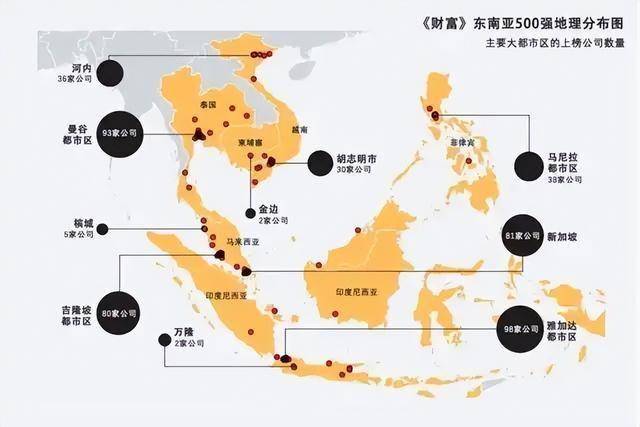
Core Insights - Southeast Asia, with a population of nearly 700 million, is one of the most dynamic regions in global economic development, with a GDP of approximately $3.97 trillion last year, growing by 4.6% year-on-year [1] - The 2025 Southeast Asia 500 list published by Fortune shows that the revenue threshold for inclusion is $349.4 million, with total revenues of listed companies reaching $1.82 trillion, an increase of 1.7% from the previous year [1][3] Industry Overview - The energy sector, including mining, power generation, and transmission, dominates the revenue landscape, accounting for nearly one-third of total revenues. The financial sector is the second-largest, with banks and financial institutions occupying 13 of the top 20 profit positions [3] - The top 10 companies contributed $660 billion in total revenue, with the top five generating $516 billion, representing 28% of the total revenue of the 500 companies [5][9] Company Performance - The largest company, Trafigura Group, achieved revenues of $243.2 billion, making it the only company on the list to surpass the $100 billion mark. It is a leader in the global oil, gas, metals, and commodities trading sector [9][11] - Singapore-based Sea Group, the largest tech company in Southeast Asia, reported revenues of $16.82 billion, a year-on-year increase of 28.8%, and a net profit of $444.3 million, up 173.1% [5][11] - DBS Group Holdings emerged as the most profitable company in Southeast Asia 500, with a net profit of $8.45 billion, followed by OCBC and UOB, all three being Singaporean banks [7][11] Country Distribution - Indonesia leads with the highest number of companies on the list at 109, followed by Thailand with 100, Malaysia with 92, and Singapore with 81. Vietnam has 76, the Philippines 40, and Cambodia 2 [3] - Singaporean companies generated $637.1 billion in revenue, accounting for over one-third of the total, with the top ten companies dominating the revenue share [3]
继越南之后,柬埔寨与美国达成对等49%的关税协议,释放什么信号
Sou Hu Cai Jing· 2025-07-06 09:36
Core Viewpoint - Cambodia has signed a non-reciprocal tariff agreement with the United States, agreeing to implement a 49% import tariff, marking it as the second Southeast Asian country to accept such conditions after Vietnam [1][2]. Economic Impact - In 2022, Cambodia's total exports to the U.S. reached $26.2 billion, accounting for 40% of its overall exports, with textile and apparel products making up 76.8% of this total, supporting 862,000 jobs [2][4]. - The World Bank estimates that failure to complete negotiations by the deadline could lead to a 3.2% decline in GDP and the loss of at least 250,000 jobs [2]. Negotiation Dynamics - The economic vulnerability of Cambodia's export-driven economy forced it to accept unfavorable terms in the tariff agreement, with U.S. pressure enhancing its negotiating leverage [4][6]. - The new tariff regulations effective from August 1 impose punitive tariffs ranging from 10% to 70% on countries that do not reach an agreement [6]. Supply Chain Restructuring - The U.S. aims to reshape supply chain dynamics, with specific clauses requiring traceability of textile raw materials, as 34% of Cambodia's textile inputs come from China [8][10]. - Similar measures have been seen in Vietnam, where the U.S. imposed a 40% additional tariff on transshipped goods [10]. Regional Trade Agreements - The U.S. is pursuing a systematic regional strategy, with Indonesia also negotiating trade agreements that could grant the U.S. control over strategic resources in exchange for tariff reductions on 1,700 products [11]. - The nickel, a key material for electric vehicle batteries, is highlighted as a critical resource in these negotiations [12]. Economic Sovereignty - Although Cambodia has secured a three-year transition period, the market opening requirements of the agreement may undermine its economic sovereignty [14][15]. - The agreement includes joint monitoring mechanisms and data-sharing clauses, effectively creating a control chain over the supply chain [15]. Broader Implications - As more Southeast Asian countries join this network of agreements, the regional industrial collaboration model may undergo fundamental changes, posing challenges and new opportunities for Chinese manufacturing [17][19]. - The current international trade rules are undergoing significant transformations, with Cambodia's agreement highlighting the asymmetry in rule-making power due to economic development disparities [23].

钨合金:钨产业变局中的出海机遇(附20页PPT)
材料汇· 2025-07-01 15:39
Group 1 - The core viewpoint of the article highlights the ongoing competition between China's resource advantages in tungsten and the West's efforts to protect domestic industries, leading to a restructuring of the global supply chain [2][3][6] - The global tungsten industry is characterized by a simultaneous struggle for resource control and technological upgrades, reflecting the broader industrial competition among developed nations [3][7][9] Group 2 - China's tungsten industry policy aims for transformation and upgrading, with a focus on controlling exports and enhancing technological capabilities [10][12][14] - The U.S. seeks to reduce dependency on Chinese tungsten through tariffs and by rebuilding critical industry nodes, facing challenges in cost, technology, and coordination with allies [17][21][23] Group 3 - The overall export volume of tungsten from China is declining, with a shift towards high-value-added products [33][34] - The concentration of tungsten resource flows is high, with differentiated export demands across markets [48][49] Group 4 - The article emphasizes the strategic significance of hard alloy tools in the tungsten industry, with a focus on emerging markets like Russia and ASEAN countries, as well as the impact of geopolitical factors on regional procurement [61][62][71] - The demand for cutting tools, particularly hard alloy tools, is expected to grow due to their essential role in high-end manufacturing sectors [61][62]

全球及中国无菌容器系统动向追踪及前景动态分析报告2025-2031年
Sou Hu Cai Jing· 2025-07-01 04:16
Core Insights - The article discusses the evolution of U.S. tariff policies and their impact on the sterile container system industry, highlighting the urgency for Chinese companies to internationalize due to domestic market saturation and global opportunities [2][3]. Section Summaries 1. U.S. Tariff Policy Evolution and Impact on the Sterile Container System Industry - The article defines sterile container system products and analyzes the core aspects of U.S. tariff policies [2]. - It emphasizes the impact of U.S. tariff adjustments on global supply chains and the necessity for Chinese sterile container system companies to expand internationally [2][3]. - The research aims to analyze policy impacts and summarize corporate strategies while providing future planning recommendations [2]. 2. Industry Impact Assessment - The article outlines optimistic, conservative, and pessimistic scenarios for the global sterile container system industry scale trends from 2024 to 2031 [3][9]. - It discusses the direct effects of tariff policies on Chinese sterile container system companies, including cost pressures and market access challenges [3][4]. 3. Global Market Share of Enterprises - The article presents the market share and rankings of major global sterile container system companies based on revenue and sales from 2022 to 2025, with 2025 being a forecast year [3][11]. - It includes data on sales revenue, market share, and pricing trends for these companies [3][11]. 4. Corporate Response Strategies - The article suggests strategies for companies to shift from export dependence to global capacity layout, including regional production networks and localized technology strategies [4][5]. - It emphasizes the importance of optimizing supply chain resilience and diversifying markets, particularly in emerging markets [4][5]. 5. Future Outlook: Global Industry Restructuring and China's Role - The article provides long-term trend predictions and strategic recommendations for the sterile container system industry [4][5]. 6. Current Global Capacity Distribution - The article forecasts global sterile container system supply and demand from 2020 to 2031, detailing production capacity, output, and utilization rates [6][7]. 7. Market Size and Growth Potential in Key Regions - The article analyzes the sales volume and revenue of the global sterile container system market, comparing data from 2020, 2024, and 2031 [7][8]. 8. Overview of Major Global Manufacturers - The article includes profiles of major manufacturers in the sterile container system market, detailing their production bases, sales regions, and market positions [8][9]. 9. Product Type Scale Analysis - The article categorizes sterile container systems by product type, including plastic, glass, and metal containers, and compares sales revenue and volume forecasts [9][10]. 10. Application Scale Analysis - The article categorizes sterile container systems by application, including hospitals, clinics, and laboratories, and provides sales and revenue forecasts [10][11].