
半导体

Search documents
国联基金董事长王瑶2026年新春贺词:潮涌万象新 蹄疾步稳行
Zhong Guo Ji Jin Bao· 2026-02-17 01:09
Core Viewpoint - The year 2025 is characterized by significant structural opportunities and deepening reforms in China's capital markets, leading to new growth prospects for the fund industry [3][4]. Group 1: A-Share Market Insights - The A-share market in 2025 showcased a clear structural opportunity with a focus on technology, leading to a diverse performance across multiple sectors, including semiconductors, AI, and high-end equipment [3]. - The market dynamics were driven by advancements in AI infrastructure, breakthroughs in chip technology, and the release of humanoid robot production capacity, creating a robust environment for equity investments [3]. Group 2: Bond Market Developments - The bond market in 2025 experienced both opportunities and challenges, with bond ETFs seeing explosive growth, increasing by 3.76 times, and innovative products like Sci-Tech bond ETFs emerging [3]. - The overall volatility in bond funds tested the industry's ability to manage returns and control risks effectively [3]. Group 3: Fund Industry Growth - The diverse performance of the capital markets positively empowered fund companies, leading to a comprehensive recovery in active equity fund performance, with net asset values rebounding significantly [4]. - By the end of 2025, the total scale of the public fund industry reached 37.71 trillion yuan, establishing public funds as a core pillar of wealth management for residents [4]. Group 4: Challenges in the Fund Industry - The deepening fee reform in 2025 posed new challenges for fund companies, necessitating a reevaluation of profit models, cost control, and operational capabilities [5]. - The competitive landscape became increasingly polarized, with leading institutions managing over 40% of the total scale, prompting smaller firms to seek differentiation [5]. Group 5: Company Performance and Strategy - In 2025, the company achieved revenue and net profit growth rates exceeding the industry average, with net profit increasing by over 34% [7]. - The company focused on optimizing product layouts and enhancing strategic initiatives, particularly in index-enhanced and "fixed income+" areas, to better meet diverse allocation needs [6]. Group 6: Future Outlook for 2026 - The year 2026 is designated as a "core competitiveness forging year," with a focus on enhancing research and investment capabilities and optimizing funding sources [8][9]. - The company aims to innovate product offerings, moving from homogenization to specialization, particularly in emerging sectors aligned with national strategic directions [9].


信达澳亚基金总经理方敬新春寄语:策马启新程,笃行向未来
Xin Lang Cai Jing· 2026-02-16 06:35
Core Viewpoint - The company expresses confidence in the Chinese economy and capital markets for 2026, highlighting a commitment to high-quality development and investment opportunities [5][20]. Economic Outlook - China's GDP growth target of 5.0% for 2025 was successfully achieved despite multiple challenges, showcasing economic resilience [5][18]. - The central economic work conference has set the tone for 2026, emphasizing "stability while seeking progress, improving quality and efficiency," along with a continuation of proactive fiscal and moderately loose monetary policies [7][20]. Market Insights - The capital market in 2026 is expected to exhibit reduced volatility and structural differentiation, with regulatory guidance helping to stabilize the market [8][21]. - There is an anticipated concentration of funds towards high-quality assets, with core competitive enterprises and high-growth sectors likely to attract market interest [8][21]. - Key investment themes for 2026 include technology growth, particularly in AI applications and semiconductors, as well as opportunities in cyclical recovery and service consumption driven by economic growth [8][21]. Strategic Focus - The company aims to adhere to a "premium, professional, and differentiated" development strategy, focusing on research and investment, product layout, and risk management [9][22]. - Plans include strengthening the research talent pool and enhancing research depth in core areas such as technology, pharmaceuticals, and new energy [10][23]. - The company will diversify its product offerings, emphasizing "fixed income+" and quantitative "index+" strategies to cater to varying risk preferences and investment needs [11][24]. - A comprehensive risk management system will be established to ensure strict adherence to risk budgets and investment styles, while enhancing client advisory services [12][25]. Conclusion - The company is committed to prioritizing investor interests and maintaining a professional research-driven approach to navigate investment opportunities in 2026 [13][26].

怎么看全球产业格局之变
Sou Hu Cai Jing· 2026-02-16 03:16
Core Insights - The global industrial landscape is undergoing a systematic restructuring driven by unilateralism and protectionism, particularly from the U.S., leading countries to reassess and localize their industrial strategies to mitigate external risks [2][3]. Group 1: Characteristics of Industrial Restructuring - The restructuring is characterized by a shift from global integration to regionalization and a "1+N" multi-point layout, as countries seek to diversify production bases to enhance supply chain resilience. For instance, China's share of U.S. imports decreased from 21.6% in 2017 to 13.4% in 2024, while Mexico and Vietnam saw increases [3]. - The industrial value creation is transitioning from traditional manufacturing to service-oriented and green industries, with high-value services becoming integral to the industrial value chain. China's exports of new energy vehicles, lithium batteries, and photovoltaic products surged from 284.4 billion yuan in 2020 to 1.28 trillion yuan by 2025, a 3.5-fold increase [4]. - The technological innovation landscape is shifting from a unipolar to a multipolar model, with the U.S. leading in AI and high-end semiconductors, while the EU excels in green technology. This has led to a complex competitive environment where countries must invest heavily in independent R&D due to increasing technological barriers [7][12]. Group 2: Organizational and Regulatory Changes - The role of state intervention in industrial organization is becoming more pronounced, with countries employing strategic policies to influence industrial layouts. The U.S. and EU are using subsidies and regulations to shape their industrial ecosystems, leading to a competitive model centered around "chain master" enterprises [8][13]. - The weakening of traditional multilateral frameworks like the WTO is giving rise to a proliferation of regional trade agreements, which often include specific provisions for critical sectors like semiconductors and renewable energy, embedding values and standards into trade rules [8][13]. Group 3: Implications for China - To adapt to these profound changes, China must enhance its resilience and competitiveness by establishing itself as an indispensable hub in the global supply chain, leveraging its vast domestic market to attract high-end production factors [14]. - The focus should be on developing new productive forces and optimizing industrial structures, particularly by integrating productive services into the entire value chain to increase added value and expanding green exports [14][15]. - Strengthening technological advantages through foundational and original innovations is crucial, particularly in key areas like chip design, to overcome technological barriers and establish leadership in international standards [15][16].
中东主权财富基金如何重塑全球私募游戏规则?
Xin Lang Cai Jing· 2026-02-15 12:44
Core Insights - The Saudi Public Investment Fund (PIF) led a consortium to privatize Electronic Arts (EA) in a landmark $55 billion all-cash deal, marking the largest all-cash privatization in history and redefining the perception of sovereign wealth funds (SWFs) as strategic industry leaders rather than passive investors [1][10] - In 2025, the total value of mergers and acquisitions involving sovereign wealth funds surged to $200 billion, a nearly 200% increase from $67 billion in 2024, with Gulf funds like PIF and Mubadala driving nearly half of this value [10] - The shift from financial investors to strategic operators among Middle Eastern LPs is driven by national strategies aimed at diversifying economies away from oil dependency [2][11] Group 1: Transition of Middle Eastern Sovereign Wealth Funds - Traditional roles of sovereign wealth funds as limited partners (LPs) are evolving, with a focus on national strategies such as Saudi Arabia's Vision 2030 and the UAE's industrial diversification agenda [2][11] - Investments are now aligned with national priorities, focusing on technology transfer, industry establishment, talent acquisition, and job creation [2][11] - The strategic shift is evident in their investment behavior, moving from indirect investments to leading transactions, as seen in the EA acquisition and Mubadala's $40 billion acquisition of Aligned Data Centers [3][11] Group 2: Investment Behavior Changes - Middle Eastern funds are increasingly focusing on strategic asset control, seeking core technologies and intellectual property [3][11] - There is a shift from global acquisitions to targeted regional investments, with China becoming a key focus for Middle Eastern capital, highlighted by PIF's plans to establish a Beijing office and a $50 billion memorandum with six Chinese financial institutions [3][11] - The collaboration model has evolved from mere funding to a deeper integration of investment and technology transfer, as exemplified by Saudi firms assisting Chinese companies in establishing joint ventures in Saudi Arabia [3][12] Group 3: Impact on Global Private Equity (PE) Firms - Global PE firms are adapting their fundraising strategies to align with the strategic objectives of Middle Eastern LPs, emphasizing the importance of strategic collaboration over historical performance metrics [14] - Establishing local offices and specialized funds has become essential for PE firms to engage with Middle Eastern LPs, with firms like Hillhouse Capital and CPE Yuanfeng setting up offices in Abu Dhabi [14][15] - The partnership model has shifted towards strategic alliances, as seen in Mubadala's collaboration with KKR to create a long-term capital pool for private credit opportunities in the Asia-Pacific region [15] Group 4: Industry Dynamics and Challenges - The rise of Middle Eastern strategic capital is intensifying the "Matthew effect" in the private equity industry, concentrating funds among top firms like Blackstone and KKR, making it harder for smaller GP firms to gain visibility [7][15] - The competitive landscape for transactions involving strategic assets has changed, with sovereign wealth funds now seen as active bidders or co-investors, often willing to offer higher bids due to their long-term investment horizon [7][15] - Sovereign wealth funds face challenges such as geopolitical concerns and regulatory scrutiny, particularly in markets like the U.S., where foreign investment reviews are becoming more stringent [16] - The transition from passive investors to active acquirers necessitates the development of advanced due diligence and operational capabilities within sovereign wealth funds [16]

【检测服务】2026年度策略:强者恒强的千亿赛道,关注商业航天等新兴产业带来的发展机遇
Soochow Securities· 2026-02-14 10:24
Investment Rating - The report recommends focusing on leading companies in the testing service industry, particularly those with strong capital, management, and research capabilities, such as Huace Testing, Guangdian Measurement, and Sutest [7] Core Insights - The testing service industry is closely related to macroeconomic growth, with significant market space and stable growth. The global testing service market is projected to reach approximately 2.3 trillion RMB by 2024, with a CAGR of about 6% from 2021 to 2024 [4][24] - China's testing service industry is expected to outpace GDP growth, with a projected market size of around 487.6 billion RMB in 2024, reflecting a CAGR of approximately 10.5% from 2015 to 2024 [5][24] - The industry is experiencing a structural shift, with emerging sectors such as AI, new energy vehicles, and commercial aerospace driving new demand for testing services [6][33] Summary by Sections Industry Overview - The testing, inspection, and certification (TIC) industry serves various sectors, including consumer goods, industrial products, and pharmaceuticals, covering all stages from R&D to production and distribution [16] - The demand for testing services is highly correlated with macroeconomic trends, with growth driven by global trade, increasing quality and safety standards, and stricter regulations [20][24] Market Performance - In 2025, the testing service sector in China reported revenues of 30.4 billion RMB, a year-on-year decline of 7%. Excluding companies with high medical testing proportions, the sector saw a 3% growth [5][57] - Leading companies like Huace Testing, Guangdian Measurement, and Sutest outperformed the industry average, with revenue growth rates of 7%, 12%, and 9% respectively in the first three quarters of 2025 [57][62] Emerging Opportunities - New technologies and industries, such as low-altitude economy and semiconductor sectors, are rapidly developing, creating new testing service demands. The investment threshold for laboratories in these areas is significantly higher than traditional sectors [6][33] - The report emphasizes the importance of focusing on leading companies that possess brand, capital, and management advantages to capitalize on these emerging opportunities [6][7] Competitive Landscape - The testing service market in China is characterized by a large number of small and medium-sized enterprises, with over 96% of testing institutions being micro-sized, which poses risks due to their limited capacity to withstand economic fluctuations [50][51] - The report predicts a trend towards consolidation in the industry, with resources increasingly concentrating in leading firms as smaller entities face challenges [50][51]


A股三大股指乙巳蛇年均涨逾25%
Zhong Guo Xin Wen Wang· 2026-02-14 07:50
截至13日收盘,上证指数报4082点,当天跌幅为1.26%;深证成指报14100点,跌幅为1.28%;创业板指 报3275点,跌1.57%。当天沪深两市成交总额约19827亿元人民币,较上一个交易日缩量约1591亿元。 责任编辑:袁浩 板块方面,根据金融数据服务商东方财富的统计,当天船舶制造、航天航空板块逆势走强;其中,船舶 制造板块全天录得3.66%的涨幅,领涨A股所有行业板块。个股方面,亚星锚链、江龙船艇、海兰信当 天股价均涨逾6%。 中新社北京2月13日电 (记者 陈康亮)在农历乙巳蛇年的最后一个交易日,A股三大股指尽管悉数收跌, 但就蛇年全年而言,三大股指累计均涨逾25%。 前海开源基金首席经济学家杨德龙表示,蛇年是A股投资机会较多的一年,很多科技板块有不俗表现, 如半导体、人形机器人、固态电池、商业航天、可控核聚变等。对于即将到来的马年,市场有望延续向 上趋势,科技股预计依然会是领涨板块,因为2026年是"十五五"规划的开局之年,投资者对科技创新板 块的关注热度依然较高,同时其他板块也会有轮动机会。投资者可以考虑更加均衡的配置策略。 就农历蛇年全年表现而言,上证指数累计涨逾25%,深证成指累计涨逾3 ...
众合科技2026年初动态:业绩预告亏损,股份回购完成,新获订单
Jing Ji Guan Cha Wang· 2026-02-14 06:45
Core Viewpoint - The company, Zhonghe Technology, is expected to face significant challenges in 2025, with projected net losses and ongoing strategic developments that may influence market perception and stock performance [2][5]. Financial Performance - The company announced on January 30, 2026, that it anticipates a net profit loss of between 40 million to 60 million yuan for 2025, with the annual report scheduled for release on April 29, 2026. The first quarter report may also be released on the same day, and if it shows a profit, it could support the stock price [2]. Company Status - On January 16, 2026, the company reported a share buyback totaling 84.6157 million yuan, acquiring 10.5274 million shares, which represents 1.56% of the total share capital. The repurchased shares are intended for employee stock ownership plans or equity incentives [3]. Capital Movements - A block trade occurred on February 12, 2026, with a transaction amount of 79.619 million yuan, indicating institutional buying at a price 0.72% above the closing price of that day, reflecting institutional capital movements [4]. Business Developments - The company recently won bids for the Taizhou Railway project worth 430 million yuan and the Chongqing Rail Transit project worth 141 million yuan, totaling 571 million yuan, which may contribute positively to the 2026 performance. Additionally, the company is expanding into emerging sectors such as low-altitude economy and semiconductors [5]. Regulatory Situation - In January 2026, the company received a warning letter from the Zhejiang Securities Regulatory Bureau due to violations in the use of funds raised in 2024. However, the funds have been returned promptly, and the company stated that this incident does not affect normal operations. This event was previously disclosed in the 2024 annual report [6].

中润光学光刻机概念受关注,股价小幅波动
Jing Ji Guan Cha Wang· 2026-02-14 05:27
Group 1 - The core focus of the news revolves around Zhongrun Optical's recent developments in lithography machines, specialized technology, and smart wearable products, highlighting its acquisition of a 51% stake in Dais Optoelectronics, which produces high-end optical components for major clients like ASML [1] - Zhongrun Optical is recognized as a national-level "specialized and innovative" small giant enterprise, possessing technological advantages in machine vision and security lens fields, with its smart wearable products currently in small batch production [1] - The company's business directions align with recent market interests in semiconductors and AI hardware, indicating potential growth opportunities in these sectors [1] Group 2 - In the past week (February 7 to 13, 2026), Zhongrun Optical's stock price fluctuated within a range of 1.64%, with a volatility of 5.62%, showing daily movements including a 1.96% increase on February 9 and a 1.37% decrease on February 10 [2] - On February 13, the trading volume reached 112 million yuan, with a turnover rate of 3.96%, and there was a net inflow of 758,100 yuan from major investors, although there was an overall net outflow trend from major funds over the past five days [2] - The stock price volatility is correlated with the heat in the lithography machine and semiconductor sectors, indicating market sentiment towards these industries [2] Group 3 - Recent institutional ratings show no new positive research reports, with a neutral stance on the number of institutional surveys and favorable ratings, and no clear target price provided [3] - Previous months (October and November 2025) saw some institutions issuing buy recommendations, but there have been no updates in the last week [3]
流金科技发布金流智媒云平台 开启AI应用元年
Xin Lang Cai Jing· 2026-02-14 01:56
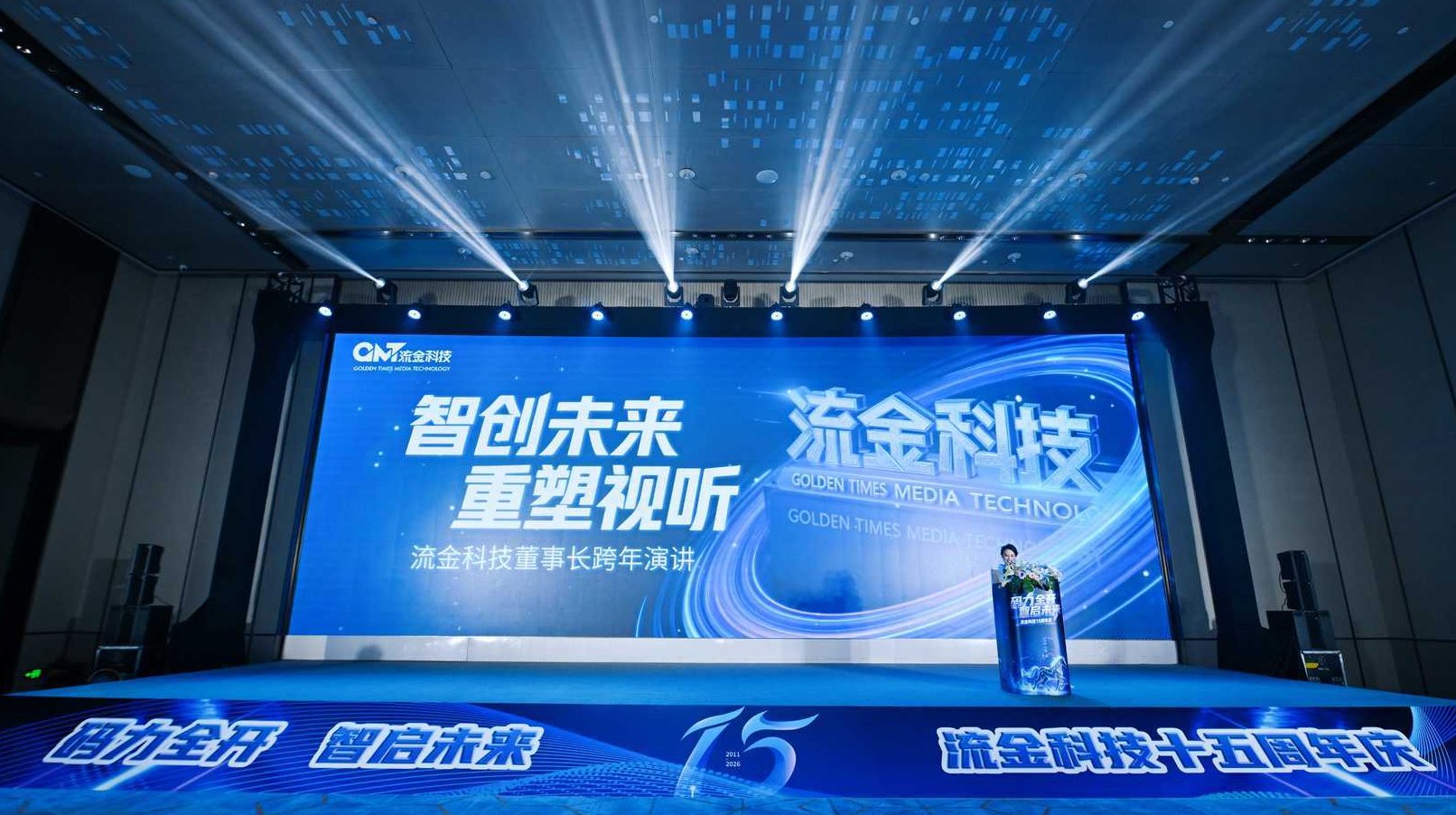
Core Insights - The event celebrated the 15th anniversary of LiuJin Technology and focused on the theme "Full Code Power, Smart Future," discussing trends in AI applications, space computing, and semiconductors [1] Group 1: Event Highlights - The conference featured expert presentations, including a talk by Academician Zhang Xueji on the integration of smart sensing and Brain+ systems, which are pivotal for reshaping healthcare [1][2] - Professor Yu Hong from Shenzhen Polytechnic discussed advancements in next-generation semiconductor technology and its industrialization pathways [2] - Dr. Lv Mingjie presented on space computing and its potential impact on future industrial competition, expanding the imagination of technological development [2] Group 2: Company Developments - LiuJin Technology's Chairman Wang Jian provided an in-depth analysis of the "JinLiu Smart Media Cloud Platform," designed to address industry challenges such as audience fragmentation and complex content distribution [4] - The platform leverages AI technology for content creation and distribution, offering services like global language localization and automated channel packaging [4] - LiuJin Technology signed strategic cooperation agreements with 12 ecosystem partners to build an open and win-win industry development ecosystem [4] Group 3: Product Launches - The company launched three AI-integrated products: JinLiu Smart Broadcasting Agent, Vision Smart Scene Co-Creation Platform, and FireSky Intelligent Companion Machine, marking a significant step in AI application for 2026 [4][6] - The JinLiu Smart Broadcasting Agent utilizes a domestic large model for human-like interaction and automatic broadcasting, applicable in various scenarios including rural digital income and e-commerce [5] - The Vision Smart Scene Co-Creation Platform offers a comprehensive content service system, supporting media organizations and educational institutions in digital content production [5] - The FireSky Intelligent Companion Machine focuses on smart home scenarios, providing video analysis and voice interaction services, catering to modern family needs [6] Group 4: Future Outlook - 2026 marks a pivotal year for LiuJin Technology as it deepens its focus on AI applications, leveraging its technological expertise and ecosystem partnerships to explore new paths in AI technology [6]

亿珑能源股价单日暴跌26.51%,基本面疲弱与资金退潮成主因
Jing Ji Guan Cha Wang· 2026-02-13 22:57
Group 1 - The stock price of Yilong Energy (ELPW.OQ) dropped significantly by 26.51% on February 13, closing at $0.51, with a trading volume of $2.077 million [1] - The company's fundamentals are under pressure, reflected by a negative price-to-earnings ratio (TTM) of -0.06 and a price-to-book ratio of -0.17, indicating a lack of profitability and poor asset quality [1] - The stock experienced extreme volatility from late January to early February, with a range of 823.46%, and the recent decline is attributed to a technical correction following speculative trading [1] Group 2 - The electrical equipment sector overall declined by 0.42%, but Yilong Energy's drop of 26.51% significantly outperformed the S&P index [2] - The company's low market capitalization and trading volume, with only 4.91 million shares outstanding, contribute to amplified price volatility, and recent trading amounts have shrunk to the million-dollar level, exacerbating downward pressure on the stock price [2]