存量竞争

Search documents
中国广电5G用户3370万 能否达成三年5000万目标成疑
Zhong Guo Jing Ying Bao· 2025-06-20 05:59
Core Insights - China Broadcasting Network (China Broadcom) is facing challenges in achieving its target of 50 million mobile users by 2025, with recent data showing a slowdown in 5G user growth [1][4][6] - The company reported a net increase of approximately 950,000 5G users in Q1 2025, a significant decrease compared to previous quarters, indicating a trend of slowing growth [1][2][3] - The overall mobile communication market is entering a saturation phase, affecting all operators, including China Broadcom, which is a new entrant with less competitive advantage compared to the three major operators [3][6] User Growth Analysis - As of March 2025, China Broadcom had 33.7 million 5G users, with a total of 207 million cable TV users [1] - The growth rate of 5G users in Q1 2025 was only 95,000, a decrease of nearly 70% compared to the previous quarter's growth [1][2] - In 2024, China Broadcom had a total user growth of over 12 million, averaging about 1 million new users per month, highlighting the recent slowdown [1][2] Market Position and Competition - In Q1 2025, China Broadcom accounted for 10% of the total new mobile users in China, despite having a smaller user base compared to the three major operators [2] - The overall mobile user growth in China has decreased, with major operators like China Mobile and China Telecom also experiencing significant drops in user acquisition [3][6] - The competitive landscape is shifting towards a focus on differentiated strategies rather than price competition, which may impact China Broadcom's user growth strategy [6] Future Prospects - To meet its target of 50 million users, China Broadcom needs to add approximately 800,000 to 900,000 users in the remaining eight months of 2025, averaging 100,000 new users per month [4][5] - The company has made significant infrastructure investments, including the deployment of over 400,000 4G/5G base stations, which could help capture market share in underserved areas [5] - Collaborations with local governments and content platforms to enhance service offerings may provide additional growth opportunities for China Broadcom [5][6]

越来越多商场,开始被抛弃了
36氪· 2025-06-20 00:33
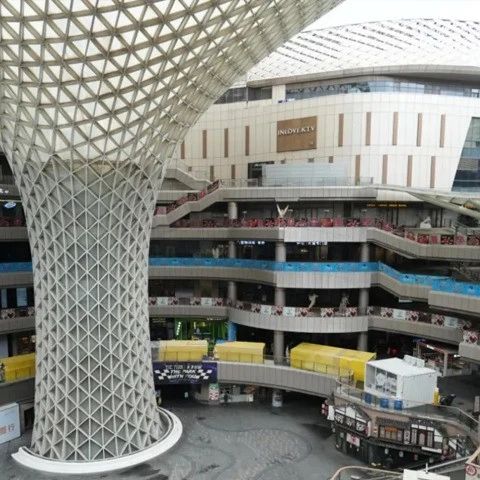
Core Viewpoint - Shanghai is experiencing a significant transformation in its commercial landscape, characterized by an oversupply of shopping centers and a decline in consumer spending, leading to many malls being abandoned or underperforming [3][6][98]. Group 1: Commercial Landscape in Shanghai - Shanghai is surrounded by over 400 shopping centers, with a ratio of one large shopping center for every 80,000 people, compared to Tokyo's one for every 200,000 [3]. - The city is expected to open around 60 new commercial spaces this year, totaling over 3 million square meters, with Minhang leading in new openings [3][6]. - Despite the increase in commercial space, the retail sales growth in Shanghai has been negative, indicating a disconnect between supply and consumer demand [5][6]. Group 2: Decline of Shopping Centers - Many shopping centers in prime locations are closing down, including notable names like Pacific Department Store and Isetan, reflecting a trend of abandonment in the face of oversupply [6][23]. - The Aegean Shopping Center, which opened in 2017, has seen a dramatic decline in foot traffic, with a 90% vacancy rate in its outdoor commercial area [12][22]. - The phenomenon of shopping centers becoming "ghost malls" is evident, with many spaces being sold off or left vacant as consumer preferences shift [6][12][22]. Group 3: Market Dynamics and Trends - The commercial real estate market is undergoing a "new metabolism," with a higher rate of mall closures and a shift towards high-end retail experiences [7][74]. - The Seven Puxian Road market, once bustling, has seen rental prices plummet from 70,000 yuan to 500 yuan per month, indicating a severe decline in demand [47][70]. - Successful transformations are occurring in some areas, where malls that have repositioned themselves towards high-end offerings are thriving, while others continue to struggle [74][75]. Group 4: Corporate Strategies and Asset Sales - Major real estate companies like Wanda are selling off commercial assets to alleviate debt, with Wanda having sold nearly 90 shopping centers since 2017 [79][80]. - Vanke has also engaged in asset sales, including significant stakes in its commercial properties, reflecting a broader trend among real estate firms to divest non-core assets [88][89]. - The trend of selling commercial properties is prevalent among various firms, indicating a shift in focus towards more efficient asset management in a challenging market environment [93][94].


77%受访酒企市场遇冷!当消费者定义价值,白酒业从何雄起?丨封面观酒
Sou Hu Cai Jing· 2025-06-19 11:50
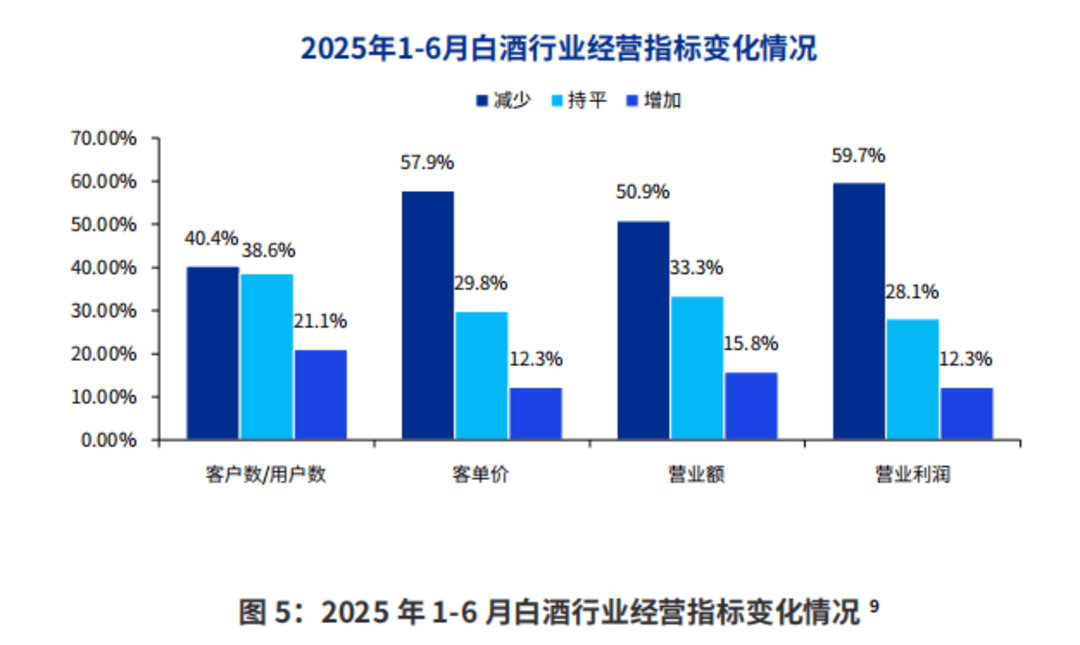
Core Insights - The report highlights a significant shift in the Chinese liquor industry, indicating that the core proposition has transitioned from "enterprise-led" to "consumer-defined value" [1] - The industry is facing challenges such as capacity growth, demand slowdown, and price declines, with a notable shift in consumer preferences towards higher cost-performance alternatives [2][5] Industry Overview - The Chinese liquor industry is currently experiencing a "triple period overlap" characterized by policy adjustments, differentiated consumption structure, and deep adjustments in existing competition [2] - In Q1 2025, the national liquor production was 1.032 million kiloliters, representing a year-on-year decline of 7.2% [2] - 59.7% of enterprises reported a decrease in profits, indicating significant pressure on the industry due to cautious consumer sentiment and rising costs [2] Demand Dynamics - Only 21.1% of enterprises reported an increase in customer numbers, reflecting a consensus on the shrinking consumer base for liquor [5] - Sales during major holidays were disappointing, with 61.5% of distributors and retailers noting a decrease in consumption during the Spring Festival and subsequent days [5] - The report indicates a "旺季不旺" (peak season not prosperous) scenario, with limited demand recovery and weakened consumption scenarios [5] Pricing Trends - The report shows a downward trend in pricing, with the best-performing price ranges being 100-300 RMB, 300-500 RMB, and below 100 RMB [8] - The most significant price inversion occurs in the ranges of 800-1500 RMB, 500-800 RMB, and 300-500 RMB, indicating challenges for products in the mid-range [8] Market Sentiment - 77% of enterprises reported a cooling market, with only 2% perceiving signs of market recovery [13] - The sentiment reflects a persistent pessimism compared to the previous year, where 80% of enterprises felt the market was cooling [13] Strategic Responses - Over 80% of distributors and retailers prioritize cash flow preservation, while 66.7% of liquor producers focus on expanding market share [14][18] - Strategies include concentrating resources on core products, developing new products, and targeting younger demographics [18] Online Sales Growth - From January to May, online liquor sales exceeded 60 million bottles, with total sales surpassing 3 billion RMB [21] - 42.9% of enterprises reported growth in online business, indicating a shift towards digital channels in response to weak traditional sales [21] Long-term Industry Outlook - The report emphasizes the need for a shift in industry expectations, advocating for a focus on value enhancement rather than blind expansion [25] - Recommendations include evolving the manufacturer-distributor relationship into a "value community" and enhancing service experiences in both online and offline channels [25]
看电视的人越来越少?海信视像总裁李炜回应 |《封面》对话
Feng Huang Wang Cai Jing· 2025-06-16 08:31
Core Viewpoint - The television industry is facing new challenges, but Hisense is leveraging technological innovations such as laser display, RGB-Mini LED, and AI models to enhance its market position and target high-end markets [2][3]. Group 1: Market Trends and Consumer Behavior - The global display industry has entered a phase of stock competition, with market size stabilizing and competition shifting from technical parameters to user scenarios and ecosystem value [3]. - Hisense's sales of co-branded products related to the game "Black Myth: Wukong" surged by 56% month-on-month, and transaction volume on JD.com increased by 13% year-on-year, indicating a strong consumer demand for high-quality visual experiences [2][4]. - The shipment of 100-inch televisions has skyrocketed by 400%, reflecting a growing consumer preference for larger screens [2][4]. Group 2: Product Innovation and Strategy - Hisense aims to redefine user interaction with screens through a comprehensive innovation matrix that includes display technology, chips, cloud services, and operating systems [3][6]. - The company has introduced solutions for various scenarios, such as kitchen displays and heads-up displays (HUD) in vehicles, emphasizing the concept of "display everywhere" [6][7]. - Hisense's laser display products are energy-efficient, consuming only about one-third more power than traditional LCD TVs, making them suitable for energy-conscious applications in electric vehicles [8][9]. Group 3: Future Directions - The company is committed to continuous product development and innovation in display technology to meet the evolving needs of consumers across different environments, including home, commercial, and automotive [10].


蜜雪冰城调整加盟政策,空白乡镇市场只招本地人
Nan Fang Nong Cun Bao· 2025-06-13 12:33
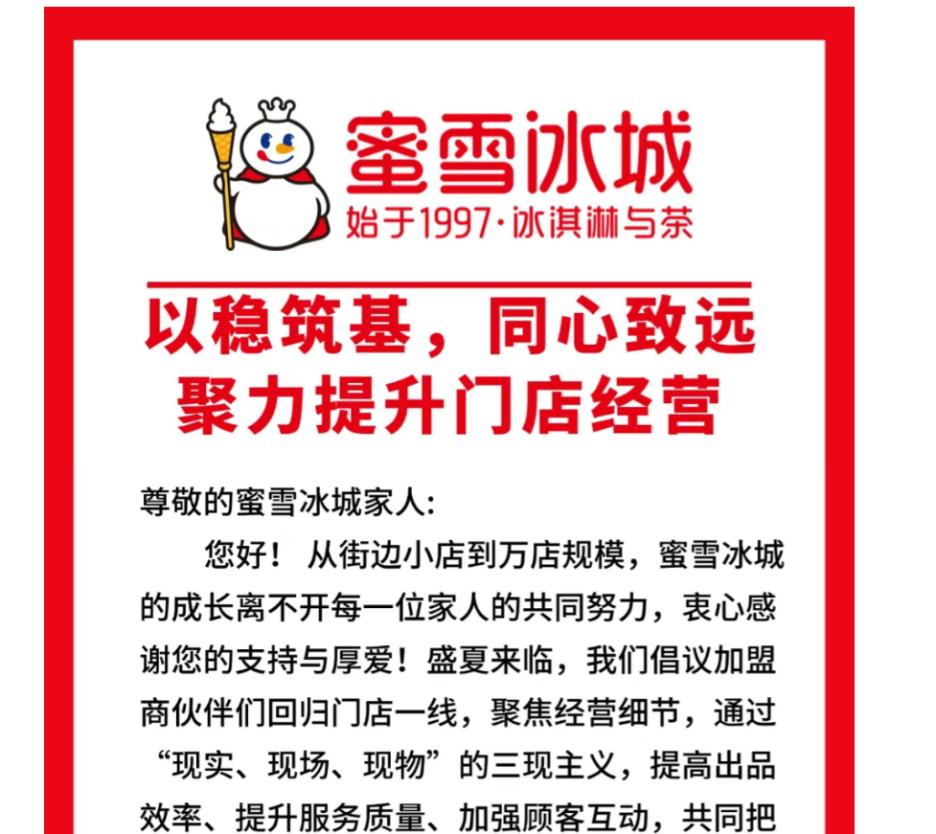
Core Viewpoint - The company has implemented a new franchise policy aimed at enhancing site selection and operational efficiency, particularly focusing on local franchisees in untapped rural markets [2][4][30]. Group 1: Franchise Policy Changes - The new franchise policy prioritizes local residents for opening stores in blank rural markets [4][30]. - The policy encourages franchisees to select high-traffic locations such as tourist attractions, transportation hubs, and service areas along highways [3][26]. - This adjustment aims to address quality control issues arising from remote management by requiring local franchisees [8][30]. Group 2: Market Context and Strategy - The evolution of the franchise policy is closely linked to the industry's cyclical nature, transitioning from rapid expansion to a focus on quality and efficiency [12][20]. - From 2018 to 2023, the company adopted a strategy of "extreme cost performance + rapid market penetration," leading to a surge in store openings in lower-tier cities and rural areas [13][14]. - As market penetration reaches saturation, the company faces a "stock competition" phase, necessitating a shift from quantity to quality in operations [18][20]. Group 3: Performance Metrics - As of December 31, 2024, the company reported over 46,000 global stores, surpassing Starbucks to become the largest beverage chain by store count [21][22]. - More than 37,000 of these stores are located in cities below the second tier, indicating a strong presence in less saturated markets [23][22]. Group 4: Future Outlook - The recent policy change is seen as a proactive measure to combat intensified market competition, optimizing regional layout and reducing operational pressure on franchisees [30][32]. - The company aims to explore new growth opportunities through innovation in site selection, operational efficiency, and supply chain upgrades in a saturated market [35].

蜜雪冰城宣布放缓开店,乡镇市场只招本地人
3 6 Ke· 2025-06-12 06:33
Core Viewpoint - The recent adjustments in the franchise policy of Mixue Ice City aim to optimize store layout, slow down the overall expansion pace, and focus on special channel store development in response to increasing market competition and declining store performance [1][3][11]. Summary by Relevant Sections Franchise Policy Adjustments - Starting from June 11, 2025, Mixue Ice City will implement changes to its franchise policy, including optimizing store layout, adjusting protection ranges, and encouraging franchisees to return to frontline operations [1]. - Existing franchisees with strong performance will receive more opportunities for new store applications, while new franchisees will be restricted from opening stores in blank towns unless they have local residency [1][11]. Market Conditions and Performance Metrics - The industry is entering a phase of stock competition, with a significant slowdown in store growth. In 2024, the total number of brand stores decreased by 16,000, with a growth rate dropping from 32.5% to 11.12% [3]. - As of December 2024, Mixue Ice City had over 41,000 stores, with daily average GMV per store declining from 4,144 yuan in 2021 to 4,127 yuan in 2023, and gross margin for franchise stores decreasing from 32.03% to 30.10% during the same period [3][11]. Strategic Focus Areas - Mixue Ice City is focusing on three main areas to enhance store revenue: encouraging franchisees to return to frontline operations, promoting the establishment of special channel stores, and imposing stricter requirements for new store franchises in blank towns [4][7][11]. - The company has previously implemented a policy requiring franchisees to complete a minimum of 90 hours of in-store presence each month to ensure better service quality [4][5]. Special Channel Development - The emphasis on special channel stores is a response to the competitive landscape, with other brands also focusing on high-traffic areas such as hospitals and schools [7][11]. - The operational challenges of these special channel locations are acknowledged, but they offer higher customer flow stability and profitability once established [11]. Local Market Strategy - The requirement for franchisees to have local residency and manage stores personally in blank towns is aimed at ensuring that operators understand local consumer habits and are committed to long-term operations [11]. - This strategy is designed to improve the survival rate of new stores in low-traffic, high-difficulty markets [11].

京东把补贴战火烧进OTA“老家”
Sou Hu Cai Jing· 2025-06-12 02:30
Core Viewpoint - JD.com is aggressively expanding into the travel and hospitality market, employing strategies similar to its previous entry into the food delivery sector, including high subsidies and talent acquisition from competitors [1][2][19]. Group 1: Business Strategy - JD.com has upgraded its "JD Travel" to "Life Travel," making it a primary feature on its app alongside food delivery and instant retail, indicating a strategic focus on local lifestyle services [1]. - The company is offering significant subsidies for hotel bookings, with reports indicating a per-order subsidy of 30 to 60 yuan, and new users receiving a 140 yuan welcome package [2][19]. - JD.com aims to replicate its food delivery success in the travel sector by emphasizing price transparency and no bundling in ticket sales, with a focus on quality selections [1][2]. Group 2: Market Competition - The competition in the travel market is intensifying, with JD.com directly challenging established OTA platforms like Ctrip and Meituan, leading to a fierce battle for market share [1][19]. - Despite JD.com's price advantages, many hotels remain cautious about joining its platform due to concerns over resource control and system reliability, as past issues with the food delivery system have raised doubts [4][5][21]. - The travel industry is shifting towards a focus on quality, experience, and efficiency, with major players like Ctrip and Meituan enhancing their service ecosystems [21]. Group 3: User Acquisition and Membership - The cost of acquiring new users in the internet platform space has reached over 3,000 yuan, highlighting the competitive landscape for user retention and loyalty [9]. - JD.com is looking to expand its PLUS membership benefits to cover a broader range of lifestyle services, similar to strategies employed by competitors [10][12]. - The company is also focusing on acquiring talent from competitors, notably hiring key figures from Meituan's travel division to strengthen its team [16][17]. Group 4: Financial Performance - JD.com's new business segment, which includes food delivery, has seen a significant increase in operating losses, with the loss rate rising from 13.8% to 23.1% [19]. - The travel sector is viewed as a high-margin opportunity, with Ctrip's gross margin reaching 80.32% and Meituan's travel business operating margin at 38.5% [13][14]. Group 5: Future Outlook - The upcoming summer travel season is expected to be a critical period for JD.com's travel business, with the potential for significant growth if the company can effectively implement its strategies [25].

艾瑞咨询:中国移动互联网行业进入存量竞争深化阶段
智通财经网· 2025-06-10 02:35
Group 1: Mobile Internet Usage - As of the end of Q1, the effective daily usage time per mobile internet user is 268.0 minutes, a year-on-year decrease of 3.9%, with usage frequency at 63.4 times, down 5.1%, indicating a decline in user engagement [2] Group 2: Food Delivery Industry - The food delivery market is experiencing intensified competition with new entrants like JD's delivery service and Meituan's rapid expansion, potentially leading to a new round of industry reshuffling [6] - Ele.me and Meituan dominate the food delivery market share, while Luckin Coffee's app active user base grew by 5.2% year-on-year, leveraging high-frequency consumption scenarios and membership systems to enhance user stickiness [6] Group 3: E-commerce Industry - In Q1 2025, the e-commerce sector's traffic peak nearly matched last November, with effective daily usage time reaching 23.8 minutes and usage frequency at 7.5 times, showing a steady online consumption trend [7] - JD's app led the industry with a year-on-year traffic growth of 3.4%, while other platforms like Taobao and Pinduoduo saw slight reductions in active user numbers, indicating an evolving competitive landscape [7] Group 4: Travel and Transportation Industry - Gaode Map and Baidu Map hold leading positions in the navigation market, with traffic peaks for railway ticketing and travel apps closely linked to the Spring Festival travel season [10] Group 5: Automotive Services Industry - The automotive services sector saw continuous year-on-year traffic growth in Q1, with February reaching 374 million devices, and Autohome's app maintaining an average of over 67 million active devices [14] - Autohome is enhancing content production through AIGC and improving dealer operational efficiency while promoting the "old-for-new" policy through online and offline integration [14] Group 6: Artificial Intelligence Industry - The AI sector is experiencing explosive growth, with monthly independent device numbers increasing by 46.5% year-on-year, transitioning from concept validation to large-scale application [16] - In March, language model apps like DeepSeek and Doubao reached traffic of 105.51 million and 74.09 million devices, respectively, while intelligent companion and image processing apps also saw significant user engagement [16] Group 7: User Growth Trends - In March 2025, the top three apps with over 100 million monthly active users (MAU) in terms of compound growth are Personal Income Tax, WiFi Master Key, and Xianyu [21] - Among the Z generation, the most favored apps are Boss Zhipin, Honor of Kings, and Peace Elite, while the maternal and infant group prefers Meitu Xiuxiu, Xiaohongshu, and Xianyu [21]

2025Q1中国移动互联网流量季度报告
艾瑞咨询· 2025-06-09 09:22
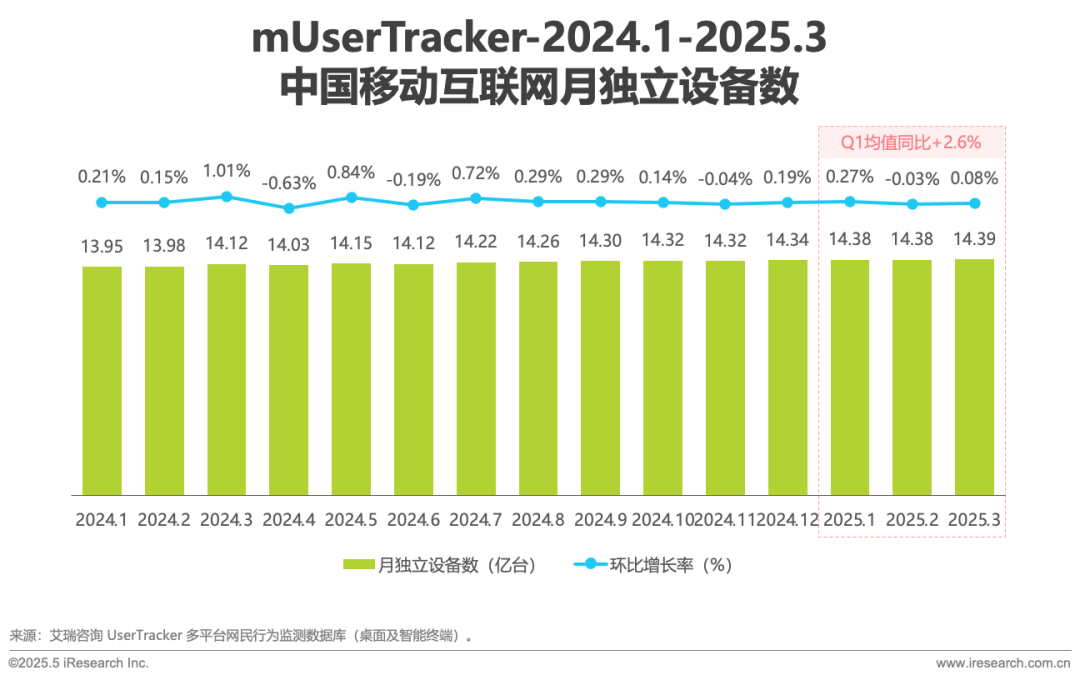
User Changes - In Q1 2025, the average number of monthly independent devices in China's mobile internet increased by 2.6% year-on-year, indicating a stabilization in market demand and a shift towards intensified competition in a saturated market [1][5] - User stickiness continues to decline, with the effective daily usage time per device at 268.0 minutes, down 3.9% year-on-year, and usage frequency at 63.4 times, down 5.1% year-on-year, reflecting a fierce competition for existing users' attention [1][11] Industry Changes - E-commerce sector saw peak traffic of 1.216 billion in Q1, driven by upgraded gifting features in social consumption, with platforms like Taobao and JD introducing new services [2] - The food delivery market is experiencing intense competition with JD's entry and Meituan's expansion, leading to a multi-player competitive landscape [2][26] - The social network sector is expanding, with Xiaohongshu benefiting from internationalization and a surge of users from TikTok [2][67] - The AI sector is leading growth with a 46.5% year-on-year increase in monthly active devices, driven by practical applications in various verticals [2][44] APP Changes - In March 2025, the top three apps with over 100 million monthly active users (MAU) in terms of compound growth were Personal Income Tax, WiFi Master Key, and Xianyu [3][84] - The top three apps favored by Generation Z users were Boss Zhipin, Honor of Kings, and Peace Elite, indicating a trend in user preferences [3][86] Mobile Internet Traffic Trends - Q1 2025 saw a slight increase in mobile internet traffic, with the industry entering a phase of deepened competition in a saturated market [4][5] User Engagement Metrics - The effective daily usage time and frequency of mobile internet users have both declined, indicating a fragmentation of user attention and a heated competition for existing users [11][18] - Entertainment content continues to attract user attention, with short videos accounting for 29.1% of usage time, while communication and information aggregation saw a decline [14] Smart Screen Trends - By Q1 2025, the scale of smart screen terminals reached 339 million, with daily average operating time increasing year-on-year [21] E-commerce Overview - The e-commerce sector's user scale and stickiness are steadily improving, with peak traffic in Q1 approaching last November's levels [32] - JD's app led the industry with a 3.4% year-on-year growth in traffic, while other platforms like Taobao and Pinduoduo experienced slight user scale contractions [35] AI Industry Overview - The AI industry is experiencing explosive growth, with a 46.5% year-on-year increase in monthly active devices, focusing on practical applications in various fields [44][49] Social Network Overview - The social network sector's user scale continues to expand, with Q1 traffic peaking at over 900 million [65] - Weibo and Xiaohongshu lead the industry, with Xiaohongshu experiencing significant growth due to international user influx [67] Video Service Overview - The video service sector saw stable growth in Q1, with significant contributions from aggregated video and game live streaming [71][75]

雀巢、康师傅、伊利、海天等131家快消品上市公司发布年报,63家营收增长,68家营收下滑!
Sou Hu Cai Jing· 2025-06-06 10:07
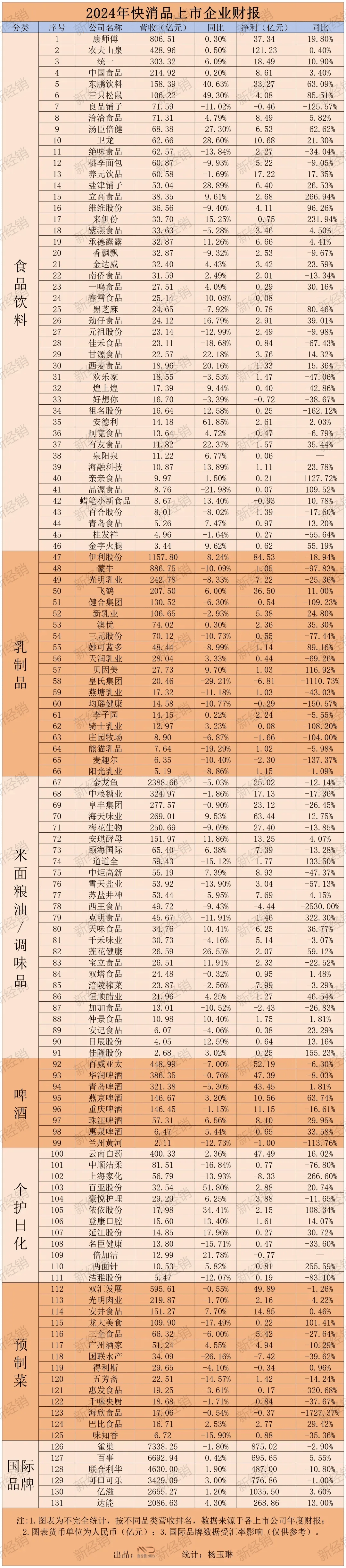
Core Insights - In 2024, China's total retail sales of consumer goods reached 48.79 trillion yuan, growing by 3.5%, marking the first time it fell below the GDP growth rate of 5% [1] - The fast-moving consumer goods (FMCG) industry is transitioning into a phase dominated by "stock competition," focusing on efficiency improvement, brand optimization, and structural adjustments [1] FMCG Company Performance - **Master Kong**: Achieved revenue of 806.51 billion yuan, a slight increase of 0.30%, with net profit rising by 19.80% to 37.34 billion yuan [2][6] - **Nongfu Spring**: Reported revenue of 428.96 billion yuan, up by 0.50%, and net profit of 121.23 billion yuan, a marginal increase of 0.40% [2][6] - **Uni-President**: Generated revenue of 303.32 billion yuan, a growth of 6.09%, with net profit of 18.49 billion yuan, increasing by 10.90% [2][6] - **China Foods**: Recorded revenue of 214.92 billion yuan, up by 0.20%, and net profit of 8.61 billion yuan, a growth of 3.40% [2][6] - **Eastroc Beverage**: Achieved significant growth with revenue of 158.39 billion yuan, up by 40.63%, and net profit of 33.27 billion yuan, increasing by 63.09% [2][6] - **Three Squirrels**: Reported revenue of 106.22 billion yuan, a substantial increase of 49.30%, with net profit rising by 85.51% to 4.08 billion yuan [2][6] Industry Trends - The FMCG sector is experiencing a shift towards efficiency and brand optimization as the era of rapid market growth driven by demographic dividends comes to an end [1] - Companies are adapting to market changes through product innovation, structural optimization, and brand rejuvenation to establish new growth curves and core competitiveness [13] - The beverage segment is seeing strong performance from Nongfu Spring's tea drinks, which have become a major revenue source despite challenges in the bottled water segment [8][13] - The snack segment is witnessing varied performance, with companies like Qinqin Foods achieving profitability through export and OEM manufacturing, while others like Liuyifei face challenges due to strategic adjustments [13] Dairy Industry Performance - **Yili Group**: Maintained its position as Asia's leading dairy company with revenue of 1,157.80 billion yuan, despite a decline of 8.24% [15][16] - **Mengniu Dairy**: Experienced a revenue drop of 10.09% to 886.75 billion yuan, with net profit significantly declining by 97.83% [15][16] - **Bright Dairy**: Reported revenue of 242.78 billion yuan, down by 8.33%, and net profit of 7.22 billion yuan, a decrease of 25.36% [15][16] - The dairy industry is facing challenges with supply-demand imbalances and declining consumer demand, leading to revenue declines for many traditional dairy giants [18]