高股息策略

Search documents
高股息资产逆市爆发,价值ETF(510030)收涨超1%!高股息策略正当时?
Xin Lang Ji Jin· 2025-11-04 12:00
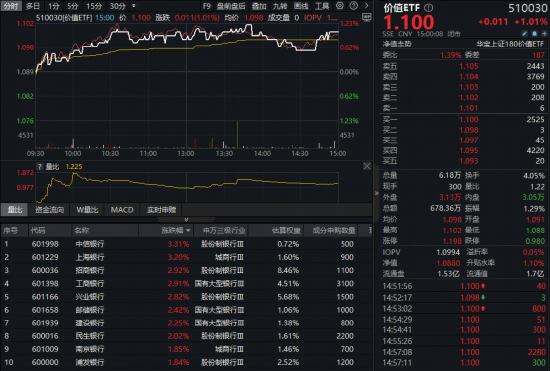
Group 1 - High dividend stocks, particularly in the banking sector, experienced a significant increase on November 4, with the value ETF (510030) rising by 1.01% [1][4] - Major banks such as CITIC Bank and Shanghai Bank saw their shares rise over 3%, while others like China Merchants Bank and Industrial and Commercial Bank of China increased by over 2% [1][4] - The 180 Value Index, which the value ETF tracks, has outperformed major indices like the Shanghai Composite Index and CSI 300 since October, with a cumulative increase of 5.99% compared to 1.99% and -0.47% respectively [1][3] Group 2 - Insurance capital has been increasingly investing in bank stocks, with notable increases in holdings by companies like China Life Insurance and Dajia Life Insurance in various banks [4] - The banking sector is the largest weight in the 180 Value Index, accounting for 47.5% as of the end of October 2025 [5] - Analysts suggest that the fourth quarter of 2025 may be a critical time for investing in dividend stocks, as low valuations and increased demand for quality stocks with high dividend yields are expected [7] Group 3 - The 180 Value Index includes high dividend and low valuation blue-chip stocks, with significant representation from the banking sector, including leading financial institutions [7] - The index is designed to select the top 60 stocks based on value factor scores from the Shanghai 180 Index, emphasizing the defensive attributes of its constituents during volatile market conditions [7]







高利率存款迎来集中到期的时间窗口,此类资产或成新选择
Mei Ri Jing Ji Xin Wen· 2025-11-04 04:33
Core Viewpoint - The article highlights a shift in investment behavior among residents, moving from high-interest deposits to wealth management products due to a declining interest rate environment, which enhances the attractiveness of these products [1] Group 1: Wealth Management Trends - A significant number of residents are reallocating their matured high-interest deposits into wealth management products, leading to a steady growth in the scale of these products [1] - For instance, a certain joint-stock bank reported an 18.8% year-on-year increase in wealth management income for the third quarter of 2025 [1] Group 2: Capital Market Dynamics - With the stabilization and recovery of the capital market, stocks and funds are expected to become primary alternative assets for resident deposits, indicating a potential shift from "single savings" to "diversified wealth management" [1] - The article suggests that dividend-focused investment strategies may gain popularity, with index-based investment tools becoming a new choice for some investors [1] Group 3: Investment Product Performance - Data shows that the Dividend Low Volatility ETF (159547) has a dividend yield of 4.14% over the past 12 months as of November 3 [1] - The ETF also boasts the lowest fee rate in the market, making it potentially more attractive for medium to long-term investors due to the compounding effect of low fees [1]
港股速报|港股微跌开盘 苹果释放利好 果链公司早盘活跃
Mei Ri Jing Ji Xin Wen· 2025-10-31 02:44
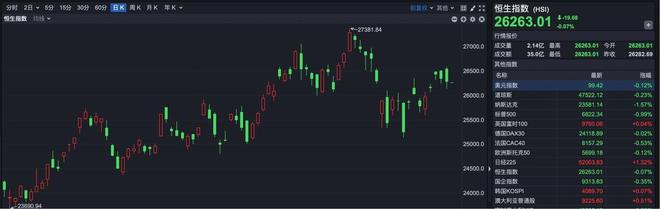
10月31日早盘,港股市场微跌开盘。 截至发稿,恒生指数开盘报26263.01点,下跌19.68点,跌幅0.07%。 | 90 2日 . 89 159 309 609 日本 日K 月K 年K - | ■▼ ■ / : 恒生指数 (HSI) | 26263.01 +0.00 | 型生脂数 相性 · | 0000 | | | | --- | --- | --- | --- | --- | --- | --- | | -27581.84 | 行情报价 | 2.14亿 超高 | 域交播 | 26243.01 今开 | 26263.01 | 27000 0 | | 1211 | 35.0亿 最低 | 20263.01 昨夜 | 26282.69 | | | | | 26500.0 | 名称 | 落哺: | 60 30 | -0.12% | 99.42 | 風兒推動 | | 测验版 | 47522.12 | -0.23% | 0 DOOD | 朗斯达克 | 23581 14 | -1.57% | | 新能500 | 6422.34 | -0.99% | 质固意时100 | 9750.0 | +0.04% | -0.02% ...
非银行业深度报告:低利率环境下,租赁板块为何有望成为高股息策略重要替代?
Minsheng Securities· 2025-10-27 01:22
Core Insights - The leasing industry is expected to benefit from a low interest rate environment, which may drive corporate capital expenditure cycles upward, making it an attractive high dividend strategy [1] - The leasing sector has shown resilience against economic cycles, with stable revenue and profit growth, and a focus on high-quality, undervalued stocks [1][2] Industry Overview - The leasing industry has undergone five cycles since 2005, closely tied to capital expenditure cycles and interest rates, with a notable recovery expected in the coming years [9][10] - The leasing sector's revenue and profit have shown steady growth, with a 9.5% year-on-year increase in operating income and a 9.1% increase in net profit for 2024 [14][18] - Policy support and the "Two Heavy, Two New" initiative are expected to catalyze further growth in the leasing market [18] Industry Characteristics - The leasing industry has a broad investment scope, focusing on heavy assets and high capital expenditure sectors, with a significant portion of credit extended to small and medium enterprises [2][30] - The asset side of leasing companies is increasingly focused on high-growth industries, while the liability side benefits from diversified financing channels [2][30] Investment Value - Leasing companies are characterized by high profitability and low financial leverage, with dividend rates surpassing those of traditional banks since 2020 [2][3] - The leasing sector is positioned as a new focal point for high dividend strategies, with a growing emphasis on asset quality and profitability [3][27] Key Companies - Three main areas of focus include: 1. Aircraft and ship leasing companies, which are expected to benefit from a high demand cycle [3][39] 2. Companies focusing on leasing for small and medium enterprises, such as Jiangsu Jinzhong, which has a unique vendor leasing model [3][2] 3. Traditional leasing companies transitioning to emerging industries, like Yuexiu Capital, which is expanding into renewable energy [3][2] Recommendations - Investment suggestions include Jiangsu Jinzhong and Far East Horizon in financial leasing, and China Aircraft Leasing and China Ship Leasing in specialized equipment leasing [3][3]

主线行情“造神”!公募半年考:指数军团霸榜,黑马基金经理业绩狂飙86%
市值风云· 2025-10-23 10:09
Core Insights - The A-share market in the first half of 2025 is experiencing a volatile pattern influenced by policy and fundamentals, with public fund managers showing significant performance [3][4] - The top fund managers are predominantly managing index funds, with a notable increase in the scale of the HuShen 300 ETF [5][6] Group 1: Fund Management Performance - As of July 1, 2025, the top ten fund managers by management scale are all index fund managers, with Liu Jun from Huatai Baichuan Fund leading at 4120.1 billion yuan [3][6] - Zhang Wei from Huitianfu Fund emerged as a standout performer, with his fund achieving an 86.48% return, significantly outperforming the market [4][21] - The HuShen 300 ETF has seen substantial growth, with its scale surpassing 4000 billion yuan, although it faced a slight decline in late June [7][10] Group 2: Index Fund Dynamics - The HuShen 300 ETF, managed by Liu Jun, has a scale of 3738.6 billion yuan and a one-year performance increase of 46.4% [7][10] - The performance of major index funds is consistent, with returns around 46% to 47% over the past year, reflecting the nature of index funds to track their benchmark closely [14][15] - The top ten weighted stocks in the HuShen 300 index include major companies like Kweichow Moutai and Ningde Times, which collectively account for over 20% of the index [16][17] Group 3: Emerging Fund Managers - New-generation fund managers are showing impressive results, with Zhang Wei achieving a 47.9% return in the first half of 2025 [21][22] - Zhang Lu from Yongying Fund also performed well, with a return of 33.88%, indicating a trend of strong performance among emerging managers [21][22] - The recent performance of these managers suggests a shift in the competitive landscape of fund management, with a focus on sectors like pharmaceuticals and advanced manufacturing [29][36] Group 4: Sector Trends and Opportunities - The pharmaceutical sector is highlighted as a key area for investment, with significant returns driven by the rebound in innovative drug stocks [27][29] - The focus on high-dividend strategies and industry leaders within the HuShen 300 index is expected to drive future growth in ETF scales [17][18] - The performance of funds in the manufacturing sector, particularly those focusing on humanoid robots, has shown remarkable returns, indicating a potential trend for future investments [46][50]

这场盛会,多位大咖发声
中国基金报· 2025-10-22 12:06
Core Viewpoint - The article emphasizes that despite the complex global macro environment, investment opportunities in the Chinese market are becoming increasingly prominent, with a bullish outlook on the A-share market and a focus on technology and high-dividend strategies [2]. Group 1: Market Outlook - The current bull market in A-shares is believed to be in its second phase, driven by fundamental improvements, with the starting point traced back to September 24 of last year [4]. - The bull market is compared to the "5·19行情" of 1999, indicating a similar macro policy-driven initiation during a period of market adjustment [4]. - The market is currently experiencing a phase where technology is the main focus, with value sectors like real estate and liquor showing potential for revaluation [5]. Group 2: Investment Strategies - Investment strategies recommended include focusing on high-quality assets amidst global economic slowdowns and adjusting allocations among stocks, bonds, commodities, and currencies [9]. - Long-term investment areas highlighted include AI, energy, and health economics, particularly where AI intersects with health [12]. - The article suggests maintaining a position in gold as a hedge against market volatility, with expectations of a 5% price increase due to various supporting factors [9][13]. Group 3: Global Context - The article notes a trend of global diversification in investments, with long-term funds from Europe, Latin America, and the Middle East beginning to enter the Chinese market [12]. - The anticipated interest rate cuts by the Federal Reserve are expected to influence global asset allocation, with a projected total of 75 basis points of cuts by the first quarter of next year [12].




连续分红13个月的红利港股ETF(159331)涨超1%,高股息策略隐含回报率引关注
Mei Ri Jing Ji Xin Wen· 2025-10-20 07:22
Group 1 - The attractiveness of high dividend strategies depends on the combination of dividend yield and EPS growth, with an implied return rate of up to 10% if EPS maintains a growth rate of over 5% [1] - High dividend assets in the Hong Kong stock market are benefiting from the expansion of cross-border ETFs and foreign capital inflow, leading to significant improvement in liquidity [1] - Over the next decade, the AH premium rate may gradually approach 100%, enhancing the relative attractiveness of high dividend assets in the Hong Kong stock market as tax systems improve and capital inflows continue [1] Group 2 - The Hong Kong Dividend ETF (159331) tracks the Hong Kong Stock Connect High Dividend Index (930914), which selects 30 securities with continuous dividends, good liquidity, and outstanding dividend yields from the Stock Connect range, focusing on traditional high-dividend sectors such as finance, energy, and industry [1] - Since September 2024, the Hong Kong Dividend ETF (159331) has distributed dividends for 13 consecutive months, indicating a noteworthy trend [1]
医药生物行业跟踪周报:高股息创新中药标的被低估,重点推荐佐力药业、方盛制药等-20251019
Soochow Securities· 2025-10-19 11:55
Investment Rating - The report maintains a rating of "Buy" for the pharmaceutical and biotechnology sector, specifically recommending companies like Zhaoli Pharmaceutical and Fangsheng Pharmaceutical as undervalued high-dividend Chinese medicine stocks [1]. Core Insights - The report highlights that the Chinese medicine sector is characterized by strong cash flow and low debt ratios, making it capable of high dividend payouts. This sector is less affected by international political dynamics, making it a viable defensive strategy in a volatile market [16][17]. - The report ranks sub-sectors in the following order of preference: innovative drugs > research services > CXO > Chinese medicine > medical devices > pharmacies [10][12]. Summary by Sections 1. Significant Excess Returns in Pharmaceutical Stocks - The A-share pharmaceutical index has shown a year-to-date increase of 18.85%, with a weekly decline of 2.48%. The Chinese medicine sector saw a slight increase of 0.38%, while other sectors like medical services and medical devices experienced declines [4][9]. 2. High Dividend Yield in Chinese Medicine Sector - The report emphasizes the attractiveness of high dividend yields in the Chinese medicine sector, with companies like Zhaoli Pharmaceutical expected to have a dividend yield of 4.1% in 2025, and Fangsheng Pharmaceutical at 3.1% [17][18]. 3. R&D Progress and Company Dynamics - Recent developments include the approval of innovative drugs and clinical trials by various companies, indicating ongoing advancements in the sector [4][12]. 4. Industry and Regulatory Insights - The report provides insights into the regulatory landscape affecting the pharmaceutical industry, noting that the impact of tariff wars on the sector is limited [4]. 5. Market Review - The report tracks the performance of various pharmaceutical sub-sectors, noting that the Chinese medicine sector has outperformed others in recent weeks [4][9].


A股市场震荡调整,银行股成资金避风港
Huan Qiu Wang· 2025-10-18 03:48
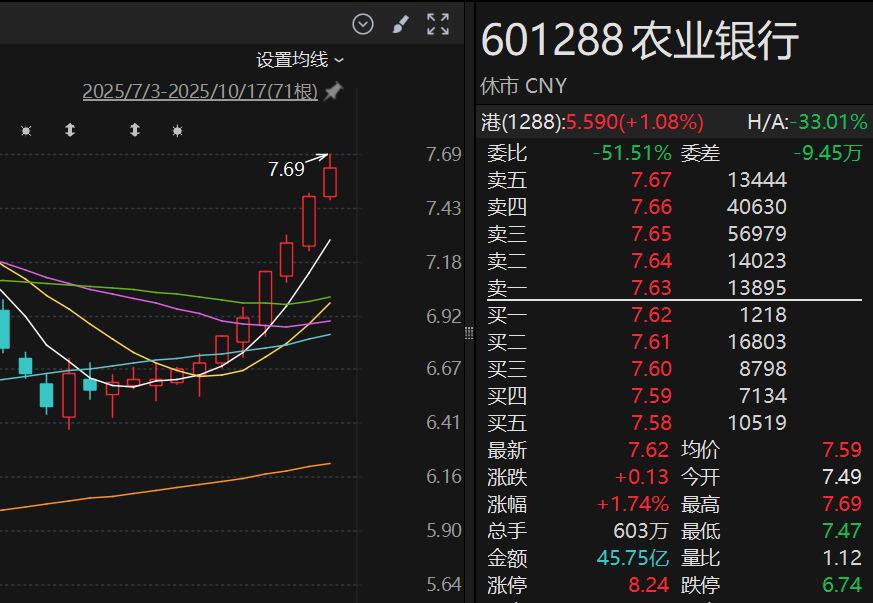
Market Overview - The A-share market is experiencing a volatile adjustment, with major indices retreating due to external market fluctuations. The Shanghai Composite Index failed to break through 3900 points, while the Shenzhen Component Index fell below 13000 points, and the ChiNext Index dropped below 3000 points, marking a new low for the past month [1] - Market trading activity has decreased, with total market turnover ending a streak of 40 consecutive trading days above 2 trillion yuan [1] Sector Performance - In the context of overall market pressure, the banking sector has emerged as a "safe haven" for funds, attracting a net inflow of 12.3 billion yuan, leading all industries [1] - Other sectors such as transportation, steel, and pharmaceuticals also received capital inflows, while sectors like electronics, telecommunications, and computers saw significant capital outflows, each exceeding 7.5 billion yuan [1] Banking Sector Insights - The banking sector has shown resilience, with the sector index rising for seven consecutive days, approaching historical highs. Agricultural Bank of China has recorded an unprecedented "eleven consecutive days of gains," setting a new historical price record [2] - The median dividend yield for the banking sector reached 4.01%, with some banks like Zhangjiagang Bank and Changsha Bank exceeding 6%. Even with rising stock prices, Agricultural Bank maintains a dividend yield of 3.27%, significantly higher than typical wealth management product returns [3] - Valuation metrics indicate that the banking sector's dynamic price-to-earnings ratio is generally below 10 times, with a median price-to-book ratio of only 0.61, reflecting a high margin of safety [3] Market Outlook - Analysts suggest that the current market is in a structural adjustment phase, with funds shifting from high-valuation sectors to undervalued, high-dividend assets. If market volume does not recover effectively, indices may continue to exhibit a range-bound oscillation pattern [3] - The "14th Five-Year Plan" is expected to serve as a significant guiding principle for future market trends, with areas such as digital technology, space economy, and healthcare being highlighted for long-term investment opportunities [3]

高股息资产在市场震荡期中更显防御优势,国企红利ETF(159515)红盘上扬
Xin Lang Cai Jing· 2025-10-15 02:40
Core Insights - The China State-Owned Enterprises Dividend Index (000824) has shown a positive trend, with a 0.30% increase as of October 15, 2025, reflecting a shift in investment logic from offshore markets dominated by foreign capital to onshore markets led by domestic capital [1] - High dividend strategies, particularly those involving quality central enterprises, are becoming a core pillar for stabilizing market valuation systems due to their robust profitability and consistent dividend payouts [1] - Dividend investment is viewed as a long-term allocation strategy that transcends style rotations in the A-share market, offering stable cash flow and value appreciation opportunities [1] Index Performance - The China State-Owned Enterprises Dividend Index comprises 100 listed companies selected for their high cash dividend yields and stable dividends, representing the overall performance of high dividend yield securities among state-owned enterprises [2] - As of September 30, 2025, the top ten weighted stocks in the index include COSCO Shipping Holdings (601919), Jizhong Energy (000937), and Lu'an Environmental Energy (601699), with the top ten stocks accounting for 17.15% of the index [2] Stock Performance - Notable stock performances include: - COSCO Shipping Holdings (601919) decreased by 1.01% with a weight of 2.36% - Jizhong Energy (000937) decreased by 0.16% with a weight of 2.00% - Nanjing Steel (600282) increased by 2.62% with a weight of 1.23% [3]