避险情绪

Search documents
黄金回调机会备受关注,降息预期为核心变量
Sou Hu Cai Jing· 2025-07-09 03:48
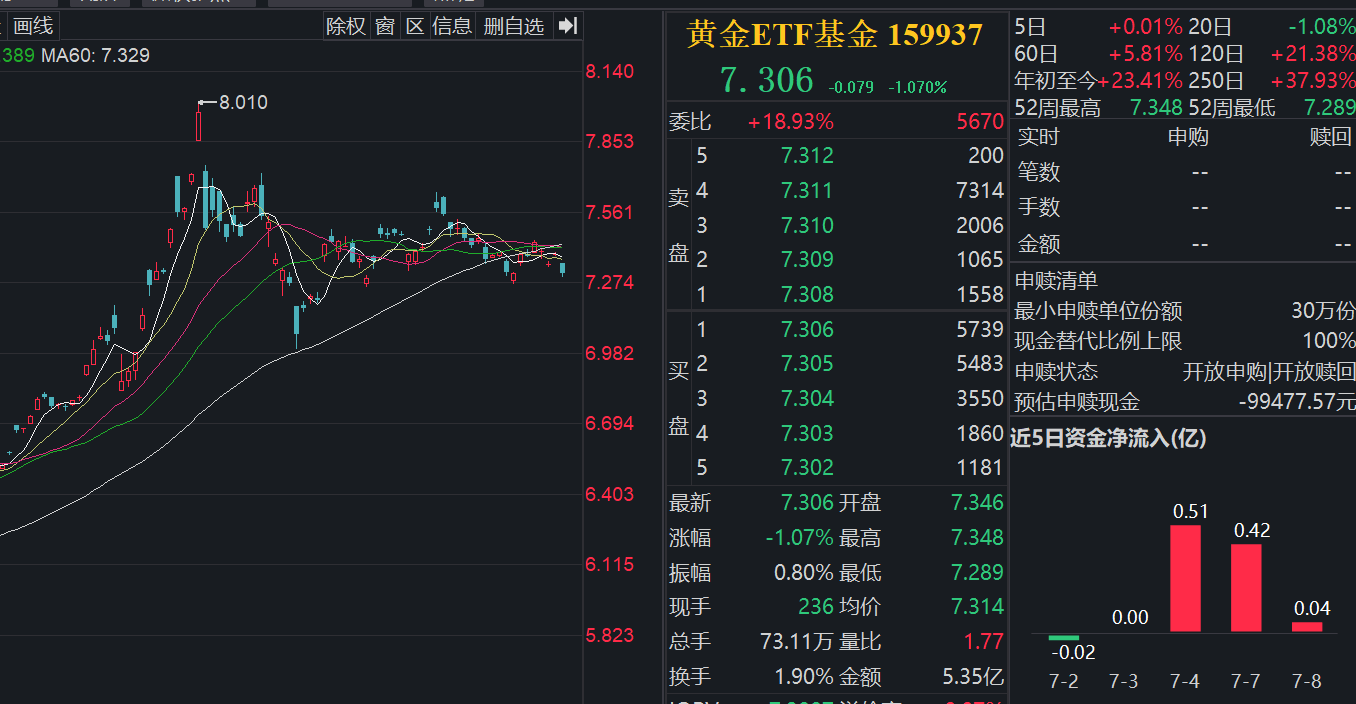
Core Viewpoint - The international gold market is experiencing fluctuations, with gold prices testing resistance levels and showing potential for further declines due to a rebound in the US dollar index and changing Federal Reserve interest rate expectations [2][6][10]. Group 1: Market Dynamics - As of July 9, international spot gold has fallen below $3,300 per ounce, currently trading at $3,287.75 per ounce, down 0.39% [1]. - The COMEX gold is trading at $3,299 per ounce, reflecting a decrease of 0.54% [1]. - The recent fluctuations in gold prices are influenced by the Federal Reserve's interest rate expectations, which have shifted due to recent employment data and economic policies [6][7]. Group 2: Economic Indicators - The US non-farm payroll data for June showed an increase of 147,000 jobs, surpassing expectations, while the unemployment rate decreased from 4.2% to 4.1% [7]. - The "Great Beautiful" fiscal plan signed by President Trump is expected to increase the federal deficit by $3.4 trillion over the next decade, which may have short-term positive effects on the economy but could exacerbate long-term debt burdens [7][9]. Group 3: Geopolitical Factors - Ongoing trade negotiations and tariff agreements between the US and countries like Vietnam and Cambodia are contributing to market uncertainty, which may support gold prices as a hedge against currency risk [8][9]. - The uncertainty surrounding trade policies and their potential impact on the economy remains a significant factor influencing gold's appeal as a safe-haven asset [2][8]. Group 4: Investment Opportunities - Gold ETFs and related funds are highlighted as accessible investment vehicles, offering low costs and diverse trading options, which may attract investors looking to hedge against economic volatility [11]. - The long-term value of gold as a hedge against inflation and economic downturns is emphasized, suggesting that investors may consider regular investments in gold ETFs [11].

央行“八连增”黄金 有观点认为依然具备配置价值
Shen Zhen Shang Bao· 2025-07-08 18:14
Group 1 - The recent rebound in gold prices is influenced by three main factors: dovish signals from the Federal Reserve, renewed trade tensions, and increased gold purchases by the People's Bank of China [1] - The Federal Reserve is expected to start cutting interest rates as early as September, with a total of two rate cuts anticipated by the end of the year [1] - The People's Bank of China has increased its gold reserves for eight consecutive months, with a notable addition of 70,000 ounces in June, bringing total reserves to 73.9 million ounces [1] Group 2 - China's central bank's strategy of increasing gold reserves is seen as a response to external financial shocks and aims to optimize the structure of foreign exchange reserves [2] - Gold is viewed as a non-sovereign credit reserve asset that can effectively hedge against risks associated with single currencies like the US dollar, especially in the context of trade wars and economic uncertainty [2] - Despite the continuous increase in gold reserves, China's holdings still lag behind those of developed economies, indicating potential for further accumulation of gold [2]
A股大涨!原因找到了
Zhong Guo Ji Jin Bao· 2025-07-08 12:31
Market Performance - The Shanghai Composite Index approached the 3500-point mark, with the ChiNext Index rising over 2.4%, indicating strong performance in the small and mid-cap sectors [1] - Fund companies attribute the market surge primarily to risk aversion, suggesting that future breakthroughs depend on sustained market sentiment [1][4] Policy and Economic Factors - The market's strength is linked to policy expectations and active trading sentiment, particularly in light of the "anti-involution" policies [2] - The State Development and Reform Commission's notice on promoting large-capacity charging facilities is expected to catalyze the photovoltaic industry, with solar equipment stocks rising nearly 7% [2][3] Sector Performance - Industrial Fulian (601138) projected a net profit increase of 36.84% to 39.12% for the first half of 2025, with AI server revenue growing over 60%, boosting related sectors [3] - The photovoltaic sector saw significant rebounds due to the renewed focus on "anti-involution" policies, while the power sector experienced a correction after previous gains [3] Market Outlook - The market is expected to experience rapid rotation in July, driven by small-cap performance and strong earnings expectations in technology sectors [4] - The decline in trade uncertainties is seen as a driving factor for the recent stock market uptrend, with policy expectations likely to bolster market confidence [4] Investment Strategies - Investment strategies should focus on a "barbell strategy," emphasizing offensive sectors like technology and defense, while also considering defensive sectors such as banking and precious metals [6] - There is a strong emphasis on identifying opportunities in new technologies and industries, including solid-state batteries, digital currencies, and AI applications [6] Economic Indicators - Recent PMI data indicates continued improvement in manufacturing activity, although expectations for production and operations remain uncertain, highlighting the need for proactive policy measures [5] - Upcoming major meetings in July are anticipated to provide critical policy direction that could positively impact market sentiment [5][6]

避险情绪持续升温!黄金能否趁势上攻?当下行情如何应对?顺姐正在实时分析中,点击观看
news flash· 2025-07-08 12:13
实时黄金订单流分析 避险情绪持续升温!黄金能否趁势上攻?当下行情如何应对?顺姐正在实时分析中,点击观看 相关链接 ...
特朗普升级贸易战 黄金维持区间震荡
Jin Tou Wang· 2025-07-08 03:50
特朗普还宣布对马来西亚征收25%的关税,老挝和缅甸则将面临40%的关税。其他被征收关税的国家包 括印度尼西亚(32%)、孟加拉国(35%)以及泰国和柬埔寨(36%)。 美国Axios新闻网称,美国总统特朗普周一发出关税信,对主要盟友征收25%的关税。 Axios指出,经过数月的威胁,特朗普突然再次升级贸易战。对于那些渴望确定性、经历了一段相对平 静时期的企业来说,此举可能会再次打破这种平衡。这也给基本上已经进入后关税时代的金融市场注入 了新的风险。 【技术分析】 黄金日线周一收阳,十字星后很可能就会破位日线布林中轨的压制,那么,多头就能形成单边走势,到 时候就难以形成调整了,上方就可以看到3400,3430高点,因此,黄金的多头表现很明确,但在日线还 差一个布林中轨的破位。H4中期的技术形态低位三连阳,布林收口,站稳在布林中轨之上是绝对的强 势,金价继续上涨上方就看3365附近,3365是上周的高点,这个点位破位布林拉开,本周就有可能形成 大涨空间看到3400,3430。所以,周一,周二,周三黄金行情还是看涨,但要等待调整做多,看涨先关 注3365的得失。 周二(7月8日)亚洲时段,现货黄金维持窄幅震荡,目前 ...
宁证期货今日早评-20250708
Ning Zheng Qi Huo· 2025-07-08 02:41
今 日 早 评 重点品种: 【短评-原油】欧佩克+的八个产油国在8月3日继续举行会 议,以审查市场状况、合规情况和补偿事宜。依据列表,8月份 沙特阿拉伯原油日产量可以达到975.6万桶;俄罗斯原油日产量 可以达到934.4万桶。伊拉克原油日产量可以达到417.1万桶, 阿联酋原油日产量可以达到327.2万桶;科威特原油日产量可以 达到251.8万桶;哈萨克斯坦原油日产量可以达到153.2万桶。 评:OPEC+维持增产的立场不变。短期原油低库存,消费旺季, 成品油开工和加工利润尚可。中期重点关注6-8月期间OPEC+实 际产量落实情况。短期震荡,中期等待沽空时机成熟。适度提 防地缘演化。 【短评-黄金】美国总统特朗普接连在社媒上公布其对多个 国家发出的关税信函,截至目前,其已对14个国家发出最新的 关税税率威胁。其中日本、韩国、哈萨克斯坦、马来西亚和突 尼斯面临25%的关税税率,南非、波斯尼亚税率为30%,印尼税 率为32%,孟加拉国和塞尔维亚为35%,泰国和柬埔寨税率为 36%,老挝和缅甸税率为40%。上述关税将于8月1日生效。评: 关税扰动再起,避险情绪对贵金属或有一定支撑,但是本次关 税扰动或较弱,市场关 ...
今天金价最新行情来了,现在卖黄金合适吗?
Sou Hu Cai Jing· 2025-07-08 01:23
不同销售渠道的金价差异巨大,投资者需仔细甄别。 银行金条:民生银行、农业银行、平安银行等机构今日金条报价分别为790.45元/克、790.30元/克和788.20元/克,普遍高于大盘价约18元/克。 这主要是因为 银行金条包含品牌溢价、正规回购渠道及制作工艺等隐性成本,适合追求长期储值或送礼的投资者。但若以投资获利为目的,则需仔细权衡溢价是否合理。 黄金投资指南:2025年7月6日金价波动分析及投资策略 今日金价剧烈波动,国际金价更是创下近三个月新高,引发市场热议。许多投资者纷纷询问:是时候出手黄金了吗?本文将深入分析今日金价走势,并结合 不同渠道的金价差异,为您的投资决策提供参考。 国际金价飙升,创近三月新高 国际金价今日表现抢眼,纽约期金价格暴涨至3347.35美元/盎司,单日涨幅高达4.45%;伦敦现货金更是突破至3336.93美元/盎司,单日涨幅惊人地达到 11.06%,创下近三个月最大单日涨幅。 这波强劲上涨主要源于美联储降息预期升温以及美元走弱,导致全球资金涌入黄金市场寻求避险,从而推高了国际 金价。 换算成人民币,国际金价约为768.73元/克,较昨日上涨2.55%。 对于现货黄金及纸黄金投资者 ...

黄金今日行情走势要点分析(2025.7.8)
Sou Hu Cai Jing· 2025-07-08 01:02
Fundamental Analysis - Trump's tariff policy has triggered increased demand for safe-haven assets, leading to a significant drop in U.S. stock markets and a subsequent rebound in gold prices [3] - The People's Bank of China has continued to increase its gold reserves for the eighth consecutive month, indicating a strategic emphasis on gold as a long-term asset [3] - Market expectations for the Federal Reserve's interest rate decisions are closely monitored, with a 95% probability of maintaining rates in July and a 60% chance of a rate cut in September, influenced by inflation concerns [3] Technical Analysis - On the daily chart, gold showed a rebound after a dip, indicating relative strength and potential for further upward movement if it breaks through resistance at 3365/3366 [4] - The four-hour chart suggests that gold is in a corrective phase, with the potential for a third wave of upward movement if it holds above the support level of 3296 [6] - Key support levels to watch include 3321 and 3315, while resistance levels are identified at 3365/3366 and 3374 [6]

研究所晨会观点精萃-20250708
Dong Hai Qi Huo· 2025-07-08 00:30
1. Report Industry Investment Ratings - Stocks: Short - term shock, biased towards strong operation, short - term cautious long [2][3] - Treasury bonds: Short - term high - level shock, cautious observation [2] - Commodities: - Black: Short - term low - level shock rebound, short - term cautious long [2] - Non - ferrous: Short - term shock correction, short - term cautious observation [2] - Energy and chemicals: Short - term shock, cautious observation [2] - Precious metals: Short - term high - level shock, cautious long [2] 2. Core Views of the Report - Overseas, the US has postponed the "reciprocal" tariff effective date and imposed new tariffs on some countries, increasing short - term tariff risks and cooling global risk appetite. Domestically, the June PMI data continued to rise, economic growth accelerated, and policies helped boost domestic risk appetite. Different asset classes have different trends and investment suggestions [2]. 3. Summary by Relevant Catalogs 3.1 Macro - finance - Overseas: The US postponed the "reciprocal" tariff effective date from July 9th to August 1st, sent letters to 14 countries about new tariffs (25% on Japan and South Korea), increasing short - term tariff risks, the US dollar index rebounded, and global risk appetite cooled [2]. - Domestic: China's June PMI data continued to rise, economic growth accelerated; domestic consumption policy stimulus increased, and the 6th meeting of the Central Financial and Economic Commission emphasized "anti - involution", which helped boost domestic risk appetite. The short - term recovery of foreign markets, RMB appreciation, and continued warming of domestic market sentiment led to an increase in domestic risk appetite [2]. - Asset performance: Stocks short - term shock, biased towards strong; treasury bonds short - term high - level shock; black commodities short - term low - level shock rebound; non - ferrous short - term shock correction; energy and chemicals short - term shock; precious metals short - term high - level shock [2]. 3.2 Stocks - Driven by sectors such as CSSC, power, and cross - border payment, the domestic stock market rose slightly. China's June PMI data continued to rise, and policies helped boost domestic risk appetite. The current trading logic focuses on domestic incremental stimulus policies and trade negotiation progress. Short - term macro - upward drivers weakened. Short - term cautious long [3]. 3.3 Precious metals - Trump's tariff announcements increased market risk - aversion sentiment, but the strengthening US dollar and better - than - expected non - farm payrolls data, as well as the Fed's cautious attitude, put pressure on precious metals. The "Big Beautiful Act" provides long - term support for gold. Tariff disturbances will be the main short - term influencing factor, and gold volatility is expected to rise [4]. 3.4 Black metals 3.4.1 Steel - The domestic steel spot and futures markets declined slightly, and trading volume remained low. The focus shifted to tariff negotiations. Vietnam imposed anti - dumping tariffs on Chinese hot - rolled steel, and the off - season affected demand. Supply - side production decreased, but finished product output increased slightly. Cost support was strong. Short - term range - bound thinking [5][7]. 3.4.2 Iron ore - Iron ore spot and futures prices declined slightly. Iron production decreased, indicating the effect of production - restriction policies. After the end - of - quarter shipment peak, shipping volume decreased, and arrival volume increased slightly. If iron production continues to decline, ore prices may fall [7]. 3.4.3 Silicon manganese/silicon iron - Spot prices were flat. Demand for ferroalloys was okay due to the increase in steel output, but there was a possibility of a decline in finished product output. Manganese ore prices rose. The market was expected to be range - bound in the short term [8]. 3.4.4 Soda ash - The main contract price was weak. Affected by the signal of "anti - involution" from the Central Financial and Economic Commission, there were concerns about production capacity withdrawal in the glass industry, which initially drove up the price, but then it fell due to the weak supply - demand situation. Supply decreased due to equipment maintenance, demand increased slightly, and profit decreased. In the long run, supply remained loose, and it was not advisable to go long [9]. 3.4.5 Glass - The main contract price was weak. Affected by the "anti - involution" policy, there were expectations of production cuts in the glass industry, which drove up the price. Supply increased slightly, demand was weak, and profit was at a low level. Production - cut expectations on the supply side were expected to support prices [10]. 3.5 Non - ferrous and new energy 3.5.1 Copper - The market may fluctuate as the July 9th deadline approaches. The clarity of trade tariffs may help the market rise. China's refined copper production increased in 2025, and inventory was at a medium - low level due to high demand [11]. 3.5.2 Aluminum - The price of Shanghai aluminum fell due to tariff concerns. LME inventory increased, and domestic inventory also increased slightly [11]. 3.5.3 Aluminum alloy - Entered the off - season, demand was weak, but tight scrap aluminum supply supported prices. Short - term shock, biased towards strong, but limited upside [11]. 3.5.4 Tin - Supply increased as the combined operating rate in Yunnan and Jiangxi rebounded. Demand was weak in most sectors, and inventory increased. Short - term shock, but high - tariff risks,复产 expectations, and weakening demand would limit the upside in the medium term [12]. 3.5.5 Lithium carbonate - The main contract price fluctuated slightly. Supply faced a contradiction between strong expectations and weak reality. Cost support was strong. Viewed as shock, biased towards strong [13]. 3.5.6 Industrial silicon - The main contract price was stable, and the spot price rebounded. Total production decreased due to reduced furnace - opening in the north. Benefited from the "anti - involution" theme, shock, biased towards strong [13]. 3.5.7 Polysilicon - The main contract price was strong, especially in the far - month contracts. Benefited from the "anti - involution" theme, expected to be strong, with high price elasticity [13][14]. 3.6 Energy and chemicals 3.6.1 Crude oil - Strong demand offset concerns about OPEC+ production increase and US tariffs. Short - term shock [15]. 3.6.2 Asphalt - Oil prices were low, asphalt prices were in shock. Shipping volume decreased, factory inventory decreased slowly, and social inventory increased slightly. Followed crude oil at a high level [15]. 3.6.3 PX - After the decline in crude oil premium, the PX price weakened, and the PXN spread narrowed. PTA production recovery would support PX, and the weakening trend might slow down [15]. 3.6.4 PTA - Spot liquidity improved, inventory increased, and the basis and 9 - 1 spread weakened. Downstream operating rates continued to decline, and PTA prices had room to fall [16]. 3.6.5 Ethylene glycol - Port inventory decreased, supply pressure weakened, but downstream demand limited further inventory reduction. Short - term bottom - building, followed the polyester sector weakly [16]. 3.6.6 Short - fiber - Crude oil price decline drove down short - fiber prices. It followed the polyester sector, with weak terminal orders and high inventory. It would be in a weak shock pattern in the medium term [16]. 3.6.7 Methanol - Domestic maintenance and reduced arrivals provided short - term support, but international production recovery and expected downstream maintenance led to a poor supply - demand outlook. It rebounded slightly under policy influence, with limited upside [16]. 3.6.8 PP - Production - restriction and new capacity coexisted, supply pressure eased slightly. Downstream demand was in the off - season, and oil prices were weak. Prices were expected to fall further [17]. 3.6.9 LLDPE - Equipment maintenance increased, but production was still high year - on - year. Downstream demand was in the off - season, and inventory was expected to increase. Prices were under pressure [17]. 3.7 Agricultural products 3.7.1 Palm oil - As of July 4, 2025, domestic palm oil inventory decreased slightly. Malaysian palm oil production decreased in June, exports increased, and inventory was expected to decrease. Concerns about the US EPA hearing [19]. 3.7.2 Corn - Imported corn auctions and new wheat substitution increased supply, and futures prices were expected to weaken. However, it was difficult for futures to trade at a discount. The expected import volume was not expected to affect the new - season market, but there were concerns about pests and diseases [19][21]. 3.7.3 US soybeans - The price of CBOT soybeans fell. The planting area was determined, and weather in the 7 - 8 key growth period was crucial. The current growing environment was good, but the risk of tariff implementation increased export uncertainty [20]. 3.7.4 Soybean and rapeseed meal - Soybean inventory decreased, and soybean meal inventory increased. Oil mills had high operating rates, and supply was abundant. The supply pressure in the 09 contract period was difficult to relieve, but short - term stability in US soybeans provided some support [20]. 3.7.5 Soybean and rapeseed oil - Soybean oil production decreased, rapeseed oil inventory decreased slightly. Rapeseed oil was supported by policies and the international market, and soybean oil inventory increased. They lacked an independent market and were affected by palm oil [20]. 3.7.6 Pigs - Leading enterprises had low willingness to increase sales volume and reduce weight. Supply in July was expected to decrease due to the impact of piglet diarrhea in spring. There was a weak supply - demand situation, and the expected profit in the 8 - 9 peak season was low. Second - fattening was cautious, and the concentrated supply at the end of July and August would limit price increases [21].
实物黄金7月5日最新报价:买金还是再等等?
Sou Hu Cai Jing· 2025-07-07 03:30
Core Insights - The recent surge in gold prices has led consumers to deliberate on whether to purchase gold, particularly for jewelry or investment purposes [1] - The current gold price is influenced by international market trends, interest rate expectations, and heightened risk aversion [4] Price Trends - Major gold retailers like Chow Tai Fook and Luk Fook are quoting prices between 1003-1005 yuan per gram, an increase of 5-7 yuan from previous prices [4] - China Gold's price is lower at 969 yuan per gram, allowing for significant savings when purchasing larger quantities [4] Price Differentiation - The price of jewelry gold is significantly higher than investment gold due to factors like craftsmanship, brand premium, and operational costs [5] - For example, a 10-gram gold chain from Chow Tai Fook costs approximately 10,050 yuan, while an equivalent investment gold bar costs around 7,850 yuan, highlighting a price difference of 2,200 yuan [5] Purchasing Strategies - For investment purposes, it is advisable to choose investment gold bars or wholesale gold, which have lower premiums and are closer to international gold prices [6] - For personal use or collection, consumers should compare prices across different brands to find the best deal [8] - For savings or appreciation, it is recommended to wait for a slight correction in international gold prices or to use a dollar-cost averaging strategy to mitigate investment risks [8] Timing for Purchase - Concerns about buying at a peak are valid, but high price levels do not necessarily indicate an imminent drop [9] - Gold investment should focus on long-term value preservation rather than short-term speculation [9] - If there is a pressing need and funds can be held long-term, short-term price fluctuations may be less impactful [9] Conclusion - The ongoing rise in gold prices necessitates careful consideration in purchasing decisions [10] - Consumers should align their gold product choices and timing with their specific needs to avoid unnecessary losses and achieve investment goals [10]