大模型

Search documents
云天励飞:深圳市噜咔博士科技有限公司是云天励飞公司全资子公司
Zheng Quan Ri Bao· 2025-12-24 11:43
Core Viewpoint - Yuntian Lifei's subsidiary, Luka Doctor Technology, is set to launch its first product, Luka Doctor AI Learning Machine, by the end of 2024, utilizing its self-developed multimodal large model, "Yun Tian Shu" [2] Group 1 - The AI Learning Machine integrates multimodal recognition technology to create a "shoot-recognize-popularize" closed loop, targeting children with contextual knowledge interaction [2] - The product has already won multiple awards, including the "2025 German Red Dot Design Award" and "Shenzhen Handicraft" [2] - In late October 2025, Luka Doctor will release a second product, AI Pet Dog, which simulates real feeding scenarios to cultivate children's sense of responsibility [2] Group 2 - The company plans to adopt a multi-dimensional growth strategy for its consumer-level scenarios, focusing on brand IP development and a comprehensive marketing system [2] - It aims to empower new consumer electronics like AI glasses with core technologies and explore a "hardware + subscription content/service" model [2] - Future plans include expanding into overseas markets and developing multilingual versions of products and services [2]


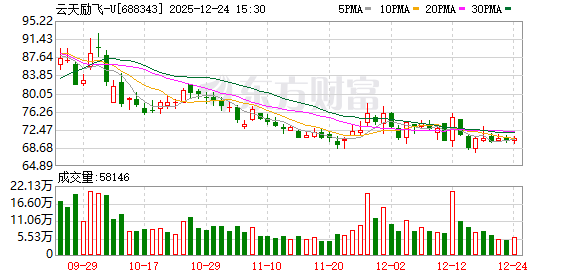
一边亏一边冲!智谱MiniMax抢IPO,大模型赚钱难为何还扎堆上市?
Sou Hu Cai Jing· 2025-12-24 08:21
Core Viewpoint - The competition between Zhipu and MiniMax for IPO in Hong Kong reflects a shift in the large model industry from a technical race to a capital test, with both companies aiming to become the first in the market and capitalize on the financial benefits [3][13]. Group 1: Company Performance - Zhipu's revenue is projected to grow from 57.4 million in 2022 to 312.4 million in 2024, representing a compound annual growth rate (CAGR) of 130%, with expectations to double again by 2025 [5]. - The company has a strong backing from prestigious investors, including Hillhouse, Sequoia, Tencent, Alibaba, and Meituan, enhancing its market position [5]. - Zhipu is transitioning from a "heavy asset" model to a "light asset" model, moving towards a Model as a Service (MaaS) approach, which is expected to drive exponential growth [7]. Group 2: Competitive Landscape - MiniMax, another competitor in the same space, is also preparing for its IPO, expected to be listed in January 2026, creating a competitive race for market leadership [9]. - The competition is likened to a "tortoise and hare" scenario, emphasizing the urgency and stakes involved in the IPO process [9]. Group 3: Challenges and Risks - The high cost of computing power is a significant concern, with over 70% of research and development expenses allocated to GPU services, limiting funds for technological upgrades and talent acquisition [11]. - Global supply chain issues for high-end chips and U.S. sanctions pose risks to model iteration and development, impacting the company's operational capabilities [11]. - Despite rapid revenue growth, Zhipu is facing substantial losses, projected at 2.958 billion in 2024 and 2.358 billion in the first half of 2025, with research expenses exceeding eight times the revenue during the same period [11].
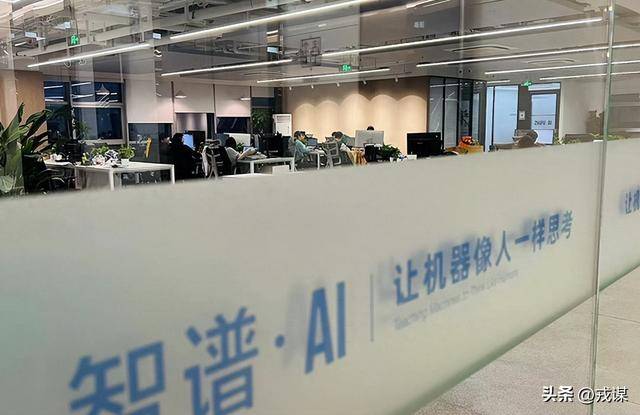
AI战场缺一个腾讯系
Tai Mei Ti A P P· 2025-12-24 08:02
Core Insights - Tencent is shifting its strategy in the AI market from a defensive to an offensive approach, particularly in the large model sector, following the hiring of former OpenAI scientist Yao Shunyu [1][2] - The company is restructuring its AI departments to enhance its capabilities and attract top talent, indicating a strong focus on improving its AI infrastructure and applications [1][2][11] Group 1: Talent Acquisition and Organizational Changes - Yao Shunyu's appointment as the head of AI Infra and chief AI scientist is notable for his youth and the high-level reporting structure, which is uncommon in Tencent's technical hierarchy [1] - Tencent has accelerated its talent acquisition efforts in AI, with notable hires such as Feng Jia, who previously led the visual team at ByteDance [2] - The restructuring includes the establishment of new departments like AI Infra and Data Computing Platform, aiming to consolidate AI efforts under a unified management [11] Group 2: Competitive Landscape and Market Position - Tencent's competitors, including ByteDance and Alibaba, are rapidly advancing in AI applications, while Tencent's progress appears slower, particularly in user-facing applications [2][3] - The company acknowledges that it does not currently have a leading model in the market, with various models excelling in different scenarios, indicating a competitive but fragmented landscape [8][9] - Despite a significant advertising push for its AI product "Yuanbao," Tencent has struggled to maintain a leading position in user engagement compared to competitors like ByteDance's "Doubao" [10][12] Group 3: Strategic Focus and Future Directions - Tencent's strategy appears to be one of cautious optimism, focusing on gradual improvements in model capabilities and user engagement rather than aggressive market capture [8][11] - The company is exploring partnerships to enhance its AI ecosystem, leveraging WeChat as a strategic entry point to integrate various services and applications [5][6] - There is a pressing need for Tencent to integrate its models, applications, and use cases effectively to remain competitive in the evolving AI landscape [7][16]

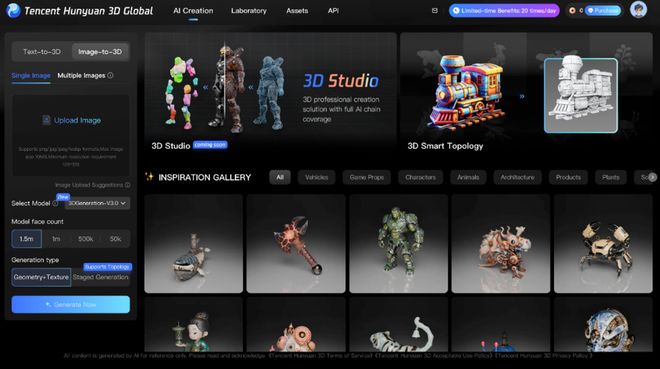
华创证券:大模型发展催化GPU需求 多家国产AI智算芯片加速追赶
智通财经网· 2025-12-24 06:16
Group 1 - The core viewpoint is that AI investment has achieved a closed loop, prompting overseas companies to increase their AI-related investments, with domestic GPU manufacturers catching up to international standards [1] - The demand for GPUs is catalyzed by the development of large models, as GPUs are more suitable for parallel computing tasks compared to CPUs, making them essential for AI training and inference [1] - The evolution of large language models follows the Scaling Law, indicating that their capabilities heavily rely on massive computing power, which will continue to drive AI applications [1] Group 2 - Major overseas companies, particularly in North America, are significantly increasing their AI investments, with Nvidia maintaining a dominant position in the global market [2] - Nvidia's GPU products have shown remarkable performance improvements, with the GB200 achieving training performance four times that of the H100 and inference performance thirty times that of the H100 [2] - The commercial viability of AI investments is being realized as large model users transition to paying customers, as evidenced by Google's token usage growth [2] Group 3 - The U.S. has expanded export restrictions on high-end GPUs, which has led to increased support for domestic computing power industries in China [3] - Several domestic companies, such as Cambricon and Haiguang Information, are launching AI computing chip products and are gradually catching up to international standards [3] - The profitability of domestic GPU companies varies, with Haiguang Information achieving profitability in 2021, while others like Moore Threads and Muxi are still in the early stages of commercialization [3]


算力芯片行业深度研究报告:算力革命叠浪起,国产 GPU 奋楫笃行
Huachuang Securities· 2025-12-24 05:32
Investment Rating - The report maintains a "Recommended" investment rating for the computing chip industry, particularly focusing on domestic GPU manufacturers [2]. Core Insights - The report emphasizes that the development of large models follows the "Scaling Law," indicating a rigid expansion of computing power demand. This is supported by quantifiable data on AI application deployment and computing consumption, establishing a commercial link where "computing power is production material" [6]. - The GPU industry is characterized by a concentrated market structure, with major players like NVIDIA dominating the landscape. The report highlights the ongoing strategic partnerships between cloud giants and NVIDIA, reinforcing the latter's core position in AI infrastructure [6][7]. - The report analyzes the domestic GPU manufacturers' response to U.S. export restrictions, detailing their technological advancements and market strategies. Companies like Cambricon, Haiguang Information, Moore Threads, and Muxi are highlighted for their efforts to catch up with international standards [6][7]. Summary by Sections 1. GPU's Role in AI - GPUs excel in parallel computing, making them suitable for AI acceleration. The architecture of GPUs allows for simultaneous processing of vast amounts of data, significantly reducing training times for AI models [11][12]. - The GPU industry value chain is primarily concentrated in the midstream, where AI chip demand drives market growth. The report notes that the global GPU market is expected to reach 1,051.54 billion yuan by 2024, with a significant portion attributed to AI computing GPUs [24][29]. 2. Global AI Investment Trends - Major global tech companies are increasing their investments in AI, with NVIDIA maintaining a dominant position. The report cites that NVIDIA holds a 98% market share in the data center GPU segment, underscoring its competitive edge [21][35]. - The report indicates that the AI investment cycle is achieving a closed loop, with companies like Google and Microsoft ramping up their capital expenditures significantly to support AI infrastructure [46][50]. 3. Domestic GPU Development - The report discusses the urgency for domestic GPU manufacturers to achieve self-sufficiency in light of U.S. export controls. Companies are making strides in product development and market entry, with varying degrees of commercial success [6][7]. - The report highlights the financial trajectories of domestic firms, noting that Haiguang Information achieved profitability in 2021, while Cambricon is expected to reach profitability by Q4 2024 [6][7]. 4. Market Projections - The report forecasts that the global GPU market will grow to 3,611.97 billion yuan by 2029, with China's share increasing from 15.6% in 2024 to 37.8% by 2029. AI computing GPUs are projected to be the core growth driver [24][29]. - The report anticipates that the demand for data center GPUs will continue to surge, with a projected market size of 663.92 billion yuan by 2029, reflecting a compound annual growth rate of 70.1% [29][31].
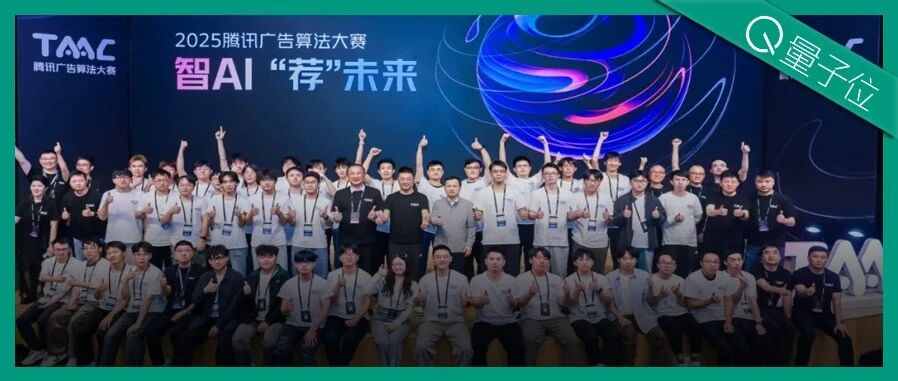
现场围观腾讯广告算法大赛,我都想入职了
量子位· 2025-12-24 05:14
Core Insights - The article discusses Tencent's algorithm competition, highlighting its significance in attracting talent and providing practical experience in cutting-edge AI technologies [1][28][43] Group 1: Competition Overview - The competition offered substantial rewards, including a total prize pool of 3.8 million yuan, with the champion receiving 2 million yuan and all participants gaining access to valuable resources like computing power [32][34] - The competition attracted over 8,400 students and 2,800 teams from nearly 30 countries, showcasing its global reach and influence [34] Group 2: Technical Focus - The competition's theme, "full-modal generative recommendation," addresses advanced challenges in advertising and recommendation systems, emphasizing the integration of various data types such as text, images, and videos [5][11] - Participants faced real-world challenges, including data noise, alignment issues, and the need for efficient modeling of user behavior over long sequences [13][41] Group 3: Talent Acquisition Strategy - Tencent's approach to the competition serves as a recruitment strategy, allowing the company to identify and engage with top talent in a practical setting rather than traditional recruitment methods [39][42] - The competition's structure inherently filters candidates, ensuring that only those capable of handling complex data and modeling challenges progress to the final stages [40][41] Group 4: Industry Context - The competition reflects Tencent's established AI technology framework, which has been validated through real business applications, indicating the company's commitment to innovation and talent development [29][30] - The article notes the competitive landscape for talent in the AI sector, with companies like Tencent offering attractive employment packages and support programs to attract young professionals [44][46]
刷完英伟达今年所有的项目后,我们推荐这几个......
自动驾驶之心· 2025-12-24 03:29
Core Insights - NVIDIA has become a focal point in the AI landscape, achieving a market valuation of $5 trillion, an elevenfold increase over three years, marking it as the first company to reach this milestone [2] - The company has transitioned from a graphics chip manufacturer to a leading AI infrastructure provider, with significant advancements in various AI domains, including autonomous driving and embodied intelligence [2] Group 1: Technological Developments - The Cosmos series, initiated in January, has produced foundational models like Cosmos-Transfer1, Cosmos-Reason1, and Cosmos-Predict2.5, which support downstream applications in autonomous driving and embodied intelligence [5] - The Nemotron series aims to create a "digital brain" for the agent-based AI era, providing efficient models and tools for enterprises to build specialized AI systems [5] - The Isaac Lab project offers a GPU-accelerated simulation framework for multi-modal robot learning, addressing challenges in data scarcity and the simulation-to-reality gap [6] Group 2: Key Projects and Papers - The Nemotron Nano V2 VL model, a 12 billion parameter visual language model, achieves state-of-the-art performance in document understanding and long video reasoning tasks while maintaining text reasoning capabilities [12] - The Alpamayo-R1 project introduces a visual-language-action model that integrates causal reasoning and trajectory planning to enhance decision-making in complex driving scenarios [13] - The Cosmos-Predict2.5 model unifies text, image, and video generation capabilities, significantly improving video quality and consistency for physical AI tasks [17] Group 3: Performance Metrics - The Nemotron Nano V2 VL model has shown superior performance across 45 multi-modal benchmark tests, particularly in document understanding and long video question-answering tasks [12] - The Alpamayo-R1 model demonstrated a 12% increase in planning accuracy and a 35% reduction in derailment rates in challenging scenarios compared to baseline models [16] - The Cosmos-Reason1 model has achieved over a 10% performance improvement in physical reasoning tasks after fine-tuning, showcasing its capability in understanding physical laws [33]

港股最大优势是便宜?两大因素或提振港股!自带哑铃策略的——香港大盘30ETF(520560)近20日狂揽1.35亿元
Xin Lang Cai Jing· 2025-12-24 03:28
Group 1 - The core viewpoint of the article highlights the increasing interest in Hong Kong stocks, driven by their valuation advantages and strong corporate governance [3][10] - The Hong Kong market is currently at a low valuation, with major companies focusing on shareholder returns through dividends and buybacks, indicating a robust governance structure [10][11] - The Hong Kong market features a number of scarce industry leaders with lower prices and higher dividend rates, enhancing their investment appeal [10][11] Group 2 - The adjusted cost-performance ratio of Hong Kong stocks is more favorable, with opportunities in both technology and dividend sectors [11] - In the technology sector, attention is drawn to internet companies focusing on large model developments, where leading firms are establishing competitive barriers through funding and data advantages [11] - In the dividend sector, bank stocks are highlighted for their low valuations and stable dividend returns, attracting long-term institutional investors [11][12] Group 3 - Two factors are expected to further boost the Hong Kong market: the U.S. interest rate cut cycle, which may lead to a global capital influx, and the continued appreciation of the RMB, increasing the attractiveness of RMB-denominated assets [12] - The company Guangfa Securities recommends a "barbell strategy" for investment, suggesting a long-term allocation to stable value assets while maintaining exposure to growth assets in the Hong Kong market [12] - The Hong Kong Large Cap 30 ETF (520560) is presented as a suitable tool for long-term investment, combining high-growth technology stocks and stable dividend-paying stocks [5][12]




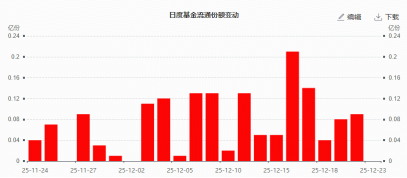
ETF盘中资讯|港股最大优势是便宜?两大因素或提振港股!自带哑铃策略的——香港大盘30ETF(520560)近20日狂揽1.35亿元
Jin Rong Jie· 2025-12-24 03:28
Core Viewpoint - The Hong Kong market is experiencing increased investment interest due to its attractive valuation and strong corporate governance, with a focus on the "technology + dividend" strategy through the Hong Kong Large Cap 30 ETF (520560) [1][3]. Group 1: Market Performance - The Hong Kong Large Cap 30 ETF (520560) has seen a recent decline of 0.11% but has attracted 135 million yuan in the last 20 days, reaching a record high of 810 million yuan as of December 22 [1]. - Key stocks in the ETF include SMIC, which rose over 3%, and other notable companies like Nongfu Spring, BYD, and CNOOC, which increased by more than 1% [1]. Group 2: Investment Logic - The core logic for investing in Hong Kong stocks lies in their significant valuation advantages and high-quality corporate governance, with many large companies focusing on shareholder returns through dividends and buybacks [3]. - The current low valuation of Hong Kong stocks, along with a number of scarce industry leaders, enhances their investment appeal, particularly due to higher dividend rates [3]. Group 3: Sector Opportunities - In the technology sector, there is a focus on internet companies with a strong presence in the large model field, where leading firms are establishing competitive barriers through funding and data advantages [4]. - In the dividend sector, bank stocks are highlighted for their low valuations and stable dividend returns, attracting long-term institutional investors [4]. Group 4: Future Outlook - Two factors are expected to further boost the Hong Kong market: the potential for a U.S. interest rate cut, which may lead to a global capital influx, and the continued appreciation of the renminbi, increasing the attractiveness of renminbi-denominated assets [4]. - The recommended investment strategy is a "barbell strategy," combining stable value assets with growth-oriented assets in the Hong Kong market [4]. Group 5: ETF Composition - The Hong Kong Large Cap 30 ETF comprises 30 major Hong Kong-listed Chinese stocks, including Alibaba and Tencent for high-growth technology exposure, as well as stable dividend payers like China Construction Bank and Ping An Insurance [5].
豆包手机声量登顶,豆包家电缘何锦衣夜行?
3 6 Ke· 2025-12-24 03:13
Core Insights - Doubao Mobile's "AI Custody" feature has become a phenomenon in the market, showcasing the practical application of AI terminals [1] - The device can simulate human-like finger movements to complete complex tasks across multiple applications, significantly enhancing user convenience [2] - Despite the popularity of Doubao Mobile, the AI home appliance sector remains relatively stagnant, raising questions about the disparity between mobile and home appliance AI adoption [3][4] Industry Analysis - The AI home appliance market is facing challenges due to hardware compatibility issues, as many appliances are not designed for advanced AI interactions [6] - The practical application of AI in home appliances is limited by the need for effective user demand matching and value communication [7] - The commercial monetization of AI home appliances is indirect, with current revenue models primarily focused on hardware sales rather than AI service monetization [11] Company Strategies - Major players like Midea and TCL are investing heavily in AI technology, with Midea integrating its "Meiyan" model into various appliances, while TCL focuses on enhancing user interaction through AI [12][13] - Emerging brands like Tineco are innovating in specific segments, such as cleaning appliances, by combining improved hardware design with proprietary AI models [14][16] - The industry is moving towards a more interconnected AI ecosystem, with companies exploring cross-platform and cross-device integration to enhance user experience [18][20] Cost and Market Dynamics - The introduction of AI technology in home appliances significantly increases hardware costs, which poses a barrier to widespread adoption [21][23] - Companies are exploring strategies to balance the high costs of AI integration with the need for practical, user-friendly applications [24] - The future of AI home appliances hinges on achieving cost-effective solutions, establishing industry standards, and effectively communicating the value of AI features to consumers [25]