加息

Search documents
日本央行行长频频透露加息倾向 日债收益率连攀新高
Xin Lang Cai Jing· 2026-01-05 10:27
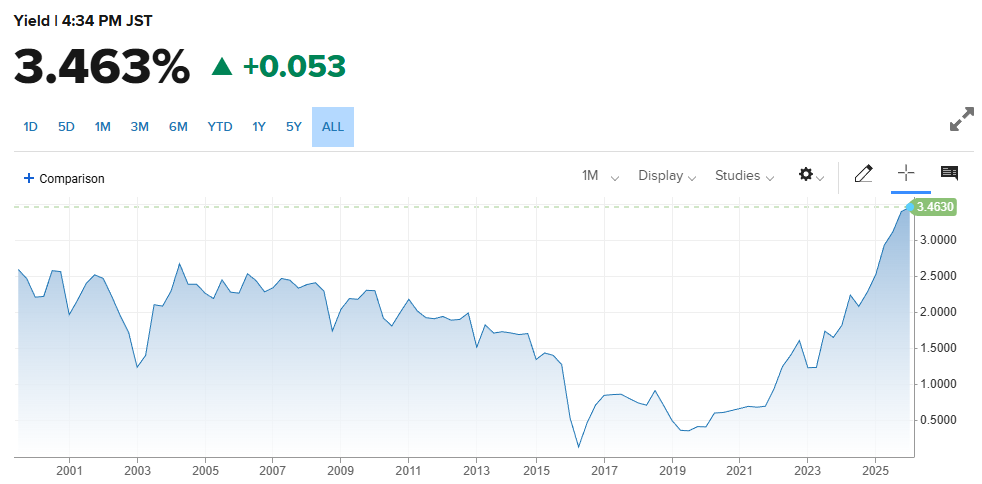
Group 1 - The Bank of Japan, led by Governor Kazuo Ueda, has indicated a renewed intention to raise interest rates, increasing pressure on Japanese government bonds, with yields reaching their highest levels since 1999 [1] - Ueda emphasized that timely adjustments to monetary easing policies are necessary to achieve stable inflation targets and promote long-term economic growth [1] - The recent increase of 25 basis points to a benchmark rate of 0.75% marks the end of nearly three decades of ultra-low interest rates in Japan, reflecting reduced risks to inflation and growth [1] Group 2 - The Japanese bond market reacted sharply, with the 10-year bond yield rising over 5 basis points to 2.125%, a new high since 1999, and the 30-year yield increasing nearly 6 basis points to a historical peak [2] - The yield on the 10-year bond has surged by 25 basis points in the past month and nearly 100 basis points over the past year, driven by rising interest rate expectations and a record-high government budget proposal [2] - Both the Bank of Japan and the government have expressed concern over bond yield volatility, with Ueda stating that significant fluctuations in long-term rates could lead to increased government bond purchases [2]

海外宏观周报:美联储、日本央行公布偏鹰会议纪要-20260105
Dong Fang Jin Cheng· 2026-01-05 09:02
Group 1: Federal Reserve Insights - The Federal Reserve's December meeting minutes indicate a division among officials regarding future policy paths, with a cautious signal for potential rate cuts if inflation aligns with expectations[3] - A majority of officials support further rate cuts if inflation trends downward, while some advocate for a pause to observe more data[7] - The U.S. labor market remains resilient, with initial jobless claims falling to 199,000, below the expected 218,000, indicating a strong labor market[9] Group 2: Bank of Japan Developments - The Bank of Japan's December meeting minutes suggest that several members believe actual interest rates remain very low, hinting at future rate hikes[8] - The benchmark interest rate was raised to 0.75%, the highest in 30 years, with expectations for further increases approximately every six months[8] Group 3: Market Reactions - Following the Fed's hawkish minutes and strong employment data, the 10-year U.S. Treasury yield rose by 5 basis points to 4.19%[4] - The Japanese bond market was closed for the New Year holiday, while European bond markets experienced overall declines[28]
植田和男新年首讲“放鹰”:日本央行加息进程将持续推进
Zhi Tong Cai Jing· 2026-01-05 06:50
Core Viewpoint - The Governor of the Bank of Japan, Kazuo Ueda, emphasized the intention to continue raising the benchmark interest rate in response to economic recovery and inflation trends [1] Group 1: Interest Rate Policy - The Bank of Japan raised the benchmark interest rate to 0.75% on December 19, marking the highest level since 1995 [1] - Ueda indicated that timely adjustments to monetary easing policies are essential for achieving stable inflation targets and promoting long-term economic growth [1] - Market expectations suggest that the next rate hike may occur around mid-year, although some analysts warn that the risk of an earlier increase is rising due to a weak yen [1] Group 2: Economic Indicators - The yield on Japan's 10-year government bonds has reached its highest level since 1999, driven by market expectations of further rate hikes [1] - Ueda noted a positive cycle between moderate wage growth and inflation, which is expected to be maintained [1] - Japan's core inflation has remained above the central bank's 2% target for over three and a half years, leading to increased pressure on households due to rising living costs [2] Group 3: Currency Impact - The yen was trading around 157.18 against the dollar, having previously hit a two-week low of 157.25, with the exchange rate approaching a critical threshold of 160 [1] - The weak yen is contributing to higher import costs, exacerbating inflationary pressures in the economy [2]
生产者物价指数(PPI)对汇率有什么影响
Jin Tou Wang· 2026-01-05 04:09
Core Viewpoint - The Producer Price Index (PPI) serves as a leading indicator for the Consumer Price Index (CPI), influencing currency exchange rates through its impact on inflation and monetary policy [1]. Group 1: Transmission Mechanisms - Positive Transmission: Rising PPI indicates increased production costs, leading to higher CPI, prompting potential interest rate hikes by the central bank, which can strengthen the domestic currency [1]. - Blocked Transmission: If PPI rises but CPI remains stable due to competitive market pressures, the central bank may not need to raise rates, resulting in a lack of significant currency movement [2]. - Negative Transmission: Continuous negative PPI growth suggests economic contraction, leading to potential interest rate cuts and depreciation of the domestic currency [3]. Group 2: PPI Structure Analysis - Input-driven PPI Increase: If PPI rises due to higher import prices of commodities, it may worsen trade balances and not lead to currency appreciation, potentially causing depreciation [4]. - Demand-driven PPI Increase: A rise in PPI due to strong domestic demand can lead to higher CPI, increasing the likelihood of interest rate hikes and strengthening the domestic currency [5]. Group 3: Key Influencing Variables - Market Reaction to PPI: The foreign exchange market's response to PPI data is primarily based on the deviation of actual values from market expectations rather than the data's absolute changes [6]. - Significant Positive Deviation: A much higher-than-expected PPI can heighten inflation and interest rate hike expectations, leading to a rapid appreciation of the domestic currency [6]. - Significant Negative Deviation: A much lower-than-expected PPI can alleviate inflation concerns, potentially leading to interest rate cuts and a weakening of the domestic currency [7]. Group 4: Long-term Implications of PPI and CPI Divergence - Persistent PPI above CPI: This scenario can squeeze corporate profits, suppressing investment and income growth, which may hinder long-term economic growth [10]. - Persistent PPI below CPI: This situation can expand corporate profits but may create inflationary pressures, requiring the central bank to balance growth and inflation [10]. Group 5: Summary of PPI's Impact on Currency - Short-term Impact: The effect of PPI on currency is influenced by the deviation from expectations, with unexpected increases in demand-driven PPI likely to strengthen the currency, while input-driven increases or lower-than-expected PPI may suppress it [11]. - Long-term Impact: The transmission of PPI to CPI is crucial; smooth transmission leading to policy adjustments can result in currency fluctuations, while blocked transmission diminishes PPI's influence on currency [11].
日本央行加息节奏谨慎 美元/日元处上涨趋势
Jin Tou Wang· 2026-01-04 03:21
Core Viewpoint - The USD/JPY exchange rate has been on an upward trend for four consecutive days, closing up 0.15% at 156.8700, primarily due to the cautious pace of monetary policy tightening by the Bank of Japan, leading to a weaker yen against the dollar [1] Group 1: Monetary Policy and Economic Indicators - The Bank of Japan raised the key interest rate from 0.50% to 0.75% in December, marking the second rate hike of the year aimed at curbing inflation [1] - The cautious approach to rate hikes and the lack of a clear timeline for future increases have disappointed the market, contributing to the yen's depreciation [1] Group 2: Market Reactions and Technical Analysis - The USD/JPY exchange rate initiated a new upward trend above the 156.20 level, breaking through the key resistance at 156.50, and successfully entered an upward range [1] - A temporary pullback occurred below 156.70, testing the 23.6% Fibonacci retracement level of the upward wave from 155.74 to 156.99, but it quickly stabilized and formed a bullish flag pattern [2] - Key support levels are identified at 156.35 and the 50% Fibonacci retracement level, with a significant risk of bearish selling if the rate falls below the 100-period simple moving average [2] - Short-term resistance is noted around 156.70, with a primary resistance level at 157.00; if the price holds above 157.00, it may further target 157.50 and potentially 158.00 [2]
实际利率过低或推动紧缩步伐加快!小摩押注日本央行明年4月再加息
Zhi Tong Cai Jing· 2025-12-31 07:56
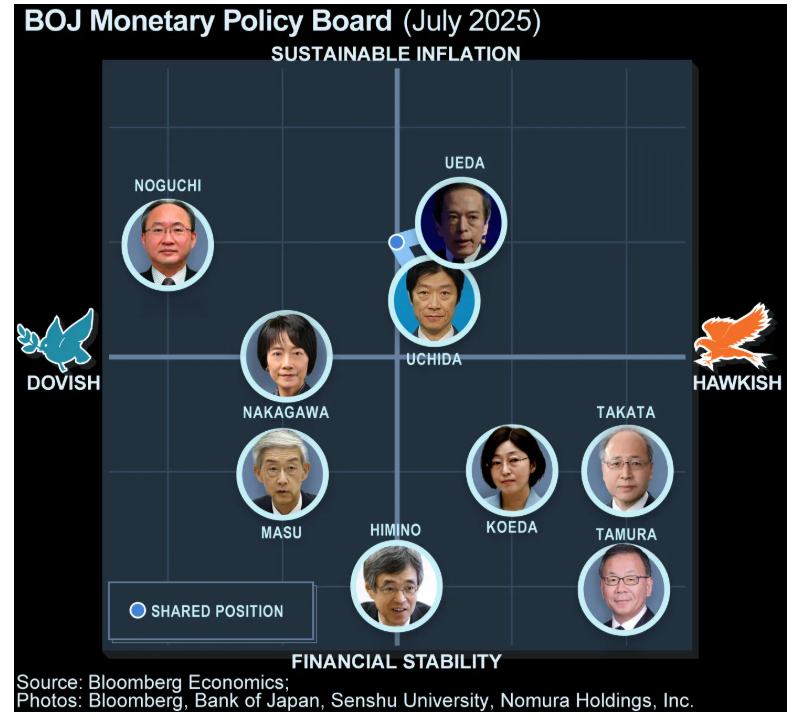
Core Viewpoint - The Bank of Japan (BOJ) is facing internal concerns regarding the prolonged maintenance of significantly negative real interest rates, with indications of potential further interest rate hikes, although there is no consensus on the timing or pace of these hikes [1][2][3] Group 1: Monetary Policy Concerns - Many members of the BOJ's monetary policy committee expressed worries about the current financial conditions being too loose relative to economic fundamentals, suggesting that delaying further rate hikes could pose significant risks [2] - There is a general consensus among members that the current real policy rate in Japan is the lowest globally, raising concerns about potential macroeconomic imbalances and sustainable economic growth [2] - The BOJ is considering a basic scenario of raising rates every six months, but there is also a possibility of acting sooner based on market conditions [1][3] Group 2: Rate Adjustment Strategy - The BOJ members are divided on the approach to adjusting monetary easing, with some advocating for rate hikes every few months, while others prefer a more gradual approach based on economic activity and market conditions [2][3] - The ambiguity surrounding the pace of policy adjustments extends to the views on neutral interest rates, with members acknowledging the difficulty in pre-determining these levels [3] - Concerns have been raised about the volatility in Japan's bond and foreign exchange markets due to delayed policy adjustments, with members noting that the depreciation of the yen and rising long-term bond yields reflect the low policy rate relative to inflation [3]
日本央行加息未完待续
Bei Jing Shang Bao· 2025-12-29 15:50
Core Viewpoint - The Bank of Japan (BOJ) has raised its benchmark interest rate to a 30-year high, with some members of the monetary policy committee advocating for further rate hikes in the coming year, while also emphasizing the need to monitor economic conditions and government fiscal policies [1][3][5]. Group 1: Interest Rate Adjustments - On December 19, the BOJ decided to raise the policy rate by 25 basis points from 0.5% to 0.75%, marking the highest interest rate level in 30 years [3]. - The BOJ's policy statement indicated that as long as the economic growth outlook remains stable, there is room for further rate increases [3]. - A committee member expressed that Japan's actual policy rate is currently at the lowest level globally and suggested that the BOJ should continue to raise rates periodically to prevent rapid tightening in the future [3][5]. Group 2: Economic Conditions - The BOJ is facing pressure to consider Japan's economic situation and the fiscal policies of Prime Minister Fumio Kishida's government alongside inflation [5]. - Japan's real GDP contracted by 2.3% year-on-year in the third quarter, exceeding the predicted decline of 2%, primarily due to decreased corporate investment amid uncertainties from U.S. tariff policies [5]. - Analysts noted that simple monetary tightening may not be sufficient to strengthen the yen, as Japan's economy faces significant structural challenges [7][9]. Group 3: Inflation and Wage Growth - BOJ Governor Kazuo Ueda stated that Japan is steadily approaching the 2% price stability target, with a positive cycle of wage growth forming [4]. - Ueda emphasized that if future economic and price trends align with the BOJ's expectations, monetary policy will continue to adjust accordingly [4]. - The BOJ's cautious approach to rate hikes reflects a balance between addressing inflation and supporting economic growth [5][8]. Group 4: Currency and Trade Balance - Concerns about the depreciation of the yen were raised, with the currency nearing the 160 mark against the dollar, which previously triggered intervention by Japanese authorities [6]. - Japan has experienced trade deficits for four consecutive years, with a projected deficit of 5.2 trillion yen for the fiscal year 2024 [8]. - The service balance is also under pressure, with a significant digital trade deficit, indicating ongoing challenges for the yen's value [7][9].

日央行摘要暗示再次加息银价震荡
Jin Tou Wang· 2025-12-29 06:33
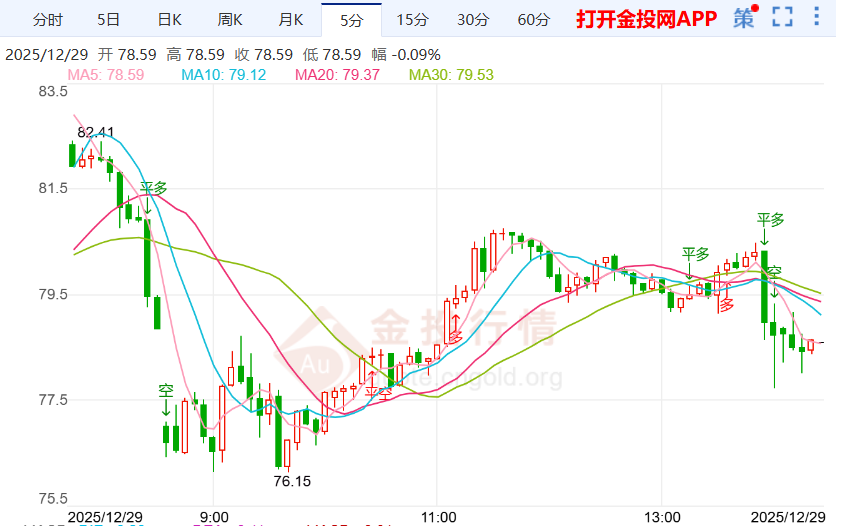
Group 1 - The international silver price is currently trading below $79.11, having opened at $81.33 and is reported at $78.58, down 0.68% [1] - The highest price reached today was $83.62, while the lowest was $76.14, indicating a short-term volatile trading pattern [1] Group 2 - Members of the Bank of Japan indicated that Japan's real interest rates remain very low, suggesting potential further interest rate hikes [3] - A summary of the recent meeting revealed that the policy rate is still at one of the lowest levels globally, with a significant distance from neutral rate levels [3] - Investors are awaiting the release of the U.S. November pending home sales data, although its impact may be limited due to low liquidity [3] Group 3 - Silver prices experienced volatility in early trading, reaching a historical high before rebounding due to negative signals from the relative strength index [4] - The market is currently dominated by a bullish trend, with trading lines and trend lines running parallel, reinforcing the stability of the upward movement [4]
日本央行会议纪要暗示加息远未结束:实际利率“全球最低档”
智通财经网· 2025-12-29 02:03
Group 1 - The Bank of Japan's monetary policy committee members indicated that Japan's real interest rates remain very low, suggesting potential future rate hikes [1][2] - The benchmark interest rate was raised to 0.75%, the highest level in 30 years, during the recent monetary policy meeting [1] - Economists expect another rate hike approximately six months from now, with a terminal rate projected at 1.5% [1] Group 2 - The minutes from the monetary policy meeting reveal that the current policy rate has not yet reached a neutral level, with one member stating there is still a considerable distance to go [2] - The neutral interest rate is estimated to be between 1% and 2.5%, but precise definitions remain elusive [2] Group 3 - Concerns over the weakening yen were noted among committee members, which may have influenced the recent policy decisions [4] - The yen has recently weakened to its lowest level in about ten months, with the USD/JPY exchange rate approaching the critical level of 160 [4] Group 4 - The Japanese government, led by Prime Minister Sanna Takashi, is cautious about the recent rate hike, emphasizing the need to monitor future developments in corporate investment and profits [4] - The government is implementing a substantial fiscal stimulus plan, which is expected to further increase long-term bond yields [5][6]
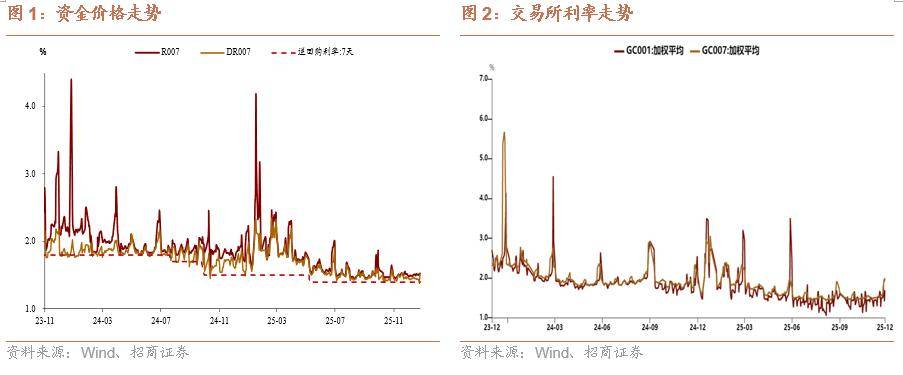
招商宏观 | 静极思动
Sou Hu Cai Jing· 2025-12-29 00:35
Domestic Insights - High-frequency data indicates that effective demand has been insufficient since Q4 2025, continuously squeezing corporate profit margins, leading to a significant reduction in the marginal effect of "price for volume" [2][12] - In November, the profit growth rate of industrial enterprises remained in negative territory, with a decline of 7.6 percentage points compared to the previous month [2][14] - The appreciation of the RMB may be nearing its peak, driven by concentrated settlement demand near year-end, but the central bank may begin to intentionally control the extent of appreciation [2][12] - A break of the 7 mark in the central parity requires an increase in corporate hedging rates and the proportion of cross-border RMB settlements, with expectations for a favorable timing in mid to late 2026 [2][12] Overseas Insights - Following the Bank of Japan's monetary policy meeting, Governor Ueda stated that they are steadily approaching the 2% inflation target and will continue to raise interest rates, maintaining a gradual tightening pace [2][13] - The U.S. Q3 GDP growth rate exceeded expectations at 4.3%, with over half of this growth attributed to personal consumption expenditures, while government investment has rebounded [2][13] - The high mortgage rates have a delayed transmission effect on the real estate market but are expected to significantly impact current consumption [2][13] Asset Market Insights - The A-share equity market continues its allocation trend, but short-term volatility may increase, especially with external disturbances expected after the New Year [3][12] - The USD/JPY exchange rate remains above 155, and any intervention by the Bank of Japan or a cooling of Fed rate cut expectations could cause temporary disturbances to domestic equity assets [3][12] Monetary Liquidity Tracking - The central bank's flexible operations have resulted in a tight balance in the funding environment, with a net injection of 652 billion yuan from various operations [4][12] - The average weekly rate for DR001 decreased by 0.950 basis points to 1.2633%, while DR007 increased by 0.330 basis points to 1.4464% [5][16] Government Bonds - The supply pressure of government bonds has significantly decreased, with a maturity repayment scale of 2,948.57 billion yuan, and the planned issuance for the upcoming week is 26 billion yuan, a substantial drop from the previous week [6][17] Interbank Certificates of Deposit - The weighted issuance rate for interbank certificates of deposit was 1.6394%, down 1.46 basis points from the previous week, while the secondary market saw slight increases in rates for various maturities [7][18] Major Asset Performance - Domestic long-term and short-term government bond yields showed a divergence, with short-term yields declining significantly [8][34] - Gold prices surged, while oil prices experienced fluctuations [11][34]