
新消费

Search documents
港股开盘 | 恒指低开0.07% AI应用概念回暖 智谱等涨超3%
智通财经网· 2026-01-20 01:37
Group 1 - The Hang Seng Index opened down 0.07% and the Hang Seng Tech Index fell 0.22%, with AI application concepts showing a rebound while tech stocks like Baidu Group declined over 2% [1] Group 2 - Huatai Securities believes that the core factors driving the market rebound in the first quarter remain unchanged, including overall loose financial conditions, foreign capital inflow, upward revisions of profit expectations, and the attractiveness of Hong Kong stocks [2] - Tianfeng Securities indicates that the short-term rebound of Hong Kong stocks is supported by valuation recovery and improved sentiment, but the upward potential may be constrained by high overseas interest rates and limited rate cut expectations [2] - Guojin Securities expects that with the acceleration of domestic economic recovery and the shift towards loose monetary policy in major overseas economies, the valuation advantage of Hong Kong stocks will become more pronounced [2] Group 3 - Industrial Securities recommends prioritizing leading internet companies in the Chinese AI sector, anticipating a resonance of buying from both domestic and foreign investors [3] - The report suggests focusing on dividend assets in a low-interest-rate environment, highlighting opportunities in insurance, banking, energy, property management, and public utilities [3] - New consumption trends are emphasized, with three main lines of focus: traditional service-oriented consumption transformation, Z-generation consumption trends, and high-end consumption [3]
港股早评:三大指数低开,科技股弱势,AI应用概念股活跃,中国中免开涨2.8%
Ge Long Hui A P P· 2026-01-20 01:29
Core Viewpoint - The article highlights the impact of tariff fears and geopolitical tensions on global markets, leading to a decline in European stocks and a slight drop in Hong Kong indices [1] Group 1: Market Performance - US markets were closed overnight, while European stocks experienced significant declines [1] - Hong Kong's three major indices opened slightly lower, with the Hang Seng Index down 0.07%, the National Index down 0.16%, and the Hang Seng Tech Index down 0.22% [1] Group 2: Company Performance - Major technology stocks showed weakness, with Baidu falling over 2%, and Tencent and Xiaomi both declining more than 1.2% [1] - AI application concept stocks saw renewed activity, with Zhihui rising 3.6% [1] - New consumption concept stocks collectively increased, with Pop Mart rising over 5%, and Hu Shang Ayi and China Duty Free both up 2% and 2.8% respectively [1] - Real estate stocks mostly declined, with Country Garden down 4.6% and heavy machinery stock China National Heavy Duty Truck Group falling nearly 5% [1]

港股开盘:恒指微跌0.07%、科指跌0.22%,科网股、石油股下挫,黄金股普涨,AI应用概念股回暖
Jin Rong Jie· 2026-01-20 01:28
Market Overview - The Hong Kong stock market opened slightly lower on January 20, with the Hang Seng Index down 0.07% at 26,544.9 points, the Tech Index down 0.22% at 5,737.11 points, the National Enterprises Index down 0.16% at 9,119.42 points, and the Red Chip Index down 0.21% at 4,133.76 points [1] - Major tech stocks experienced declines, with Alibaba down 0.37%, Tencent down 1.48%, JD.com down 0.09%, Xiaomi down 1.26%, Meituan down 0.2%, Kuaishou down 0.26%, and Bilibili down 0.91% [1] - Oil stocks opened lower, with Shanghai Petrochemical falling over 4%, while real estate stocks continued to decline, with Country Garden down over 4% [1] - Gold stocks saw a general increase, with Zijin Mining rising over 1%, and AI application stocks showed some recovery, with MINIMAX-WP and Zhiyu rising over 3% [1] - New consumption concept stocks collectively rose, with Pop Mart increasing over 5%, and Hu Shang Ayi and China Duty Free rising by 2% and 2.8% respectively [1] Company News - China Taiping (00966.HK) expects a net profit increase of approximately 215% to 225% in 2025, compared to 8.432 billion HKD in the previous year [2] - TCL Electronics (01070.HK) anticipates an adjusted net profit of approximately 2.33 billion to 2.57 billion HKD in 2025, representing a growth of about 45% to 60% [2] - Jihong Co. (02603.HK) projects a net profit of approximately 273 million to 291 million HKD in 2025, with a year-on-year growth of 50% to 60% due to the recovery of the packaging business and significant growth in cross-border e-commerce [2] - Guolian Minsheng (01456.HK) expects a net profit of 2.008 billion RMB in 2025, a year-on-year increase of around 406% [2] - China Railway (00390.HK) reported a new contract amount of 1,165.98 billion RMB in Q4 2025, with a cumulative new contract amount of 2,750.9 billion RMB, reflecting a year-on-year growth of 1.3% [2] Additional Company Developments - Shenzhen Holdings (00604.HK) anticipates a total contract sales amount of approximately 13.311 billion RMB in 2025, a decrease of 21.55% year-on-year [3] - SF Holding (06936.HK) reported a total revenue of 27.339 billion RMB in December from its express logistics, supply chain, and international businesses, marking a year-on-year growth of 3.41% [4] - China Ruyi (00136.HK) plans to invest approximately 14.2 million USD in AIsphere to explore innovative applications of AI technology in film, streaming, and gaming content production and operations [4] - Baide International (02668.HK) has signed a memorandum of understanding with potential sellers regarding the possible acquisition of part or all of a target company's equity [5] - Yanda Pharmaceutical (00512.HK) has had its new drug application for the innovative radiolabeled drug TLX591-CDx accepted by the Chinese drug regulatory authority [7] Institutional Insights - Huatai Securities indicates that the core factors driving the market rebound in Q1 have not fundamentally changed, suggesting continued opportunities for investment in Hong Kong stocks [8] - CICC notes that gold prices may stabilize more than silver, with short-term adjustments potentially providing investment opportunities [9] - Huayuan Securities highlights that geopolitical changes are reshaping global oil trade flows, which may support freight rates in the short term [9] - Zhongtai Securities anticipates that the late Spring Festival may lead to differentiated travel patterns, boosting market demand, particularly in the aviation sector [9]
恒生活数科荣膺“2025年度金融产品创新赋能消费优秀案例”
Sou Hu Wang· 2026-01-19 09:16
Group 1 - The core viewpoint of the article emphasizes the importance of consumption as the primary driver of economic growth, contributing 52% to the economic growth in 2025, which is a 5 percentage point increase from the previous year [4][5] - The article highlights the recognition of Hengsheng Life Technology as an excellent case in financial product innovation that empowers consumption, showcasing its achievements in the consumer finance sector [3][8] - The article discusses the rise of new consumption patterns, such as Z-generation consumption and single economy, which are rapidly emerging in the market and providing effective countermeasures against the decline of traditional consumption [4][5] Group 2 - The article outlines the government's initiatives to boost consumption, including the implementation of the "Special Action Plan to Boost Consumption," which focuses on enhancing digital consumption and quality e-commerce [5][10] - Hengsheng Life Technology is leveraging technology and financial services to address consumer needs, particularly in smart retail and green travel, thereby enhancing the quality of life for residents [10][11] - The company has achieved significant market penetration, serving over 70 million users and facilitating transactions exceeding 75 billion yuan, demonstrating its strong operational capabilities and growth potential [11][12]


消费论坛交流反馈——食品饮料行业周报(20260112-20260118):传统消费龙头探寻新路,成效初显
Huachuang Securities· 2026-01-19 07:25
Investment Rating - The report maintains a "Recommendation" rating for the food and beverage industry, indicating an expected increase in the industry index exceeding the benchmark index by more than 5% in the next 3-6 months [26]. Core Insights - The traditional consumer leaders in the food and beverage sector are exploring new paths, with initial positive results observed. The report highlights the acceleration of white liquor clearance and the catalyzing effect of the peak season for mass-market products [1][13]. - The liquor industry is currently at the bottom of its cycle, with expectations for sales to stabilize over the next three years. The report notes a significant price drop in high-end whiskey (approximately 50%) and a smaller decline in brandy (10-20%) due to decreased demand and a return to reasonable pricing [10]. - In the mass-market segment, companies are actively adjusting strategies, leading to improved performance. Notable companies include Xianle Health, which is leveraging overseas expansion and AI to drive growth, and West Wheat, which is enhancing its competitive advantage through channel expansion [11][12]. Summary by Sections 1. Meeting Feedback: Liquor at Cycle Bottom, Mass-Market Highlights - Liquor is at a cyclical low, with future sales expected to stabilize. The domestic brandy market remains stable, dominated by three major brands [10]. - The mass-market segment shows a divergence in demand, with companies like Xianle and West Wheat continuing to grow, while traditional companies are adjusting to improve performance [11]. 2. Investment Recommendations: Strengthening White Liquor Bottom, Catalyzing Mass-Market Peak Season - The report recommends Moutai and emphasizes the importance of Gujing, anticipating a recovery in demand as the Spring Festival approaches. The report suggests that companies are transitioning from passive responses to proactive adjustments [13]. - In the mass-market segment, the report highlights Anqi as a key recommendation, along with opportunities in restaurant supply chains and snack sectors as the Spring Festival approaches [13].
消费论坛交流反馈——食品饮料行业周报(20260112-20260118):传统消费龙头探寻新路,成效初显-20260119
Huachuang Securities· 2026-01-19 05:43
Investment Rating - The report maintains a "Recommendation" rating for the food and beverage industry, indicating an expected increase in the industry index exceeding the benchmark index by more than 5% in the next 3-6 months [26]. Core Insights - The traditional consumer leaders in the food and beverage sector are exploring new paths, with initial positive results observed. The report highlights the acceleration of white liquor clearance and the catalyzing effect of the peak season for mass-market products [1][13]. - The report discusses the current state of the liquor market, indicating that the洋酒 (foreign liquor) sector is at the bottom of its cycle, with expectations for sales to stabilize over the next three years. The decline in high-end whiskey prices has been approximately 50%, while brandy prices have decreased by 10-20% [10]. - In the mass-market segment, companies are actively adjusting their strategies, leading to improved performance. Notable companies include仙乐健康 (Xianle Health),西麦 (Ximai), and妙可蓝多 (Miaokelando), which are leveraging new channels and product innovations to drive growth [11][12]. Summary by Sections 1. Meeting Feedback -洋酒 is currently at the bottom of its cycle, with future sales expected to stabilize. The decline in sales is attributed to decreased demand and a return to reasonable pricing after previous high valuations [10]. - In the mass-market segment, there is a divergence in demand, with companies making adjustments that are starting to yield results. Growth is seen in functional foods and cheese products, while traditional sectors are still facing challenges [11]. 2. Investment Recommendations - For white liquor, the report recommends focusing on茅台 (Moutai) and古井 (Gu Jing), anticipating a recovery in demand as the Spring Festival approaches. The report suggests that the market is transitioning from passive responses to proactive adjustments, with a clearer outlook as the year progresses [13]. - In the mass-market segment,重点推荐安琪 (Anqi) and selected opportunities in餐供 (restaurant supply) such as安井 (Anjing) and巴比 (Babi). The report emphasizes the potential for growth in overseas markets and the importance of cost management [13].
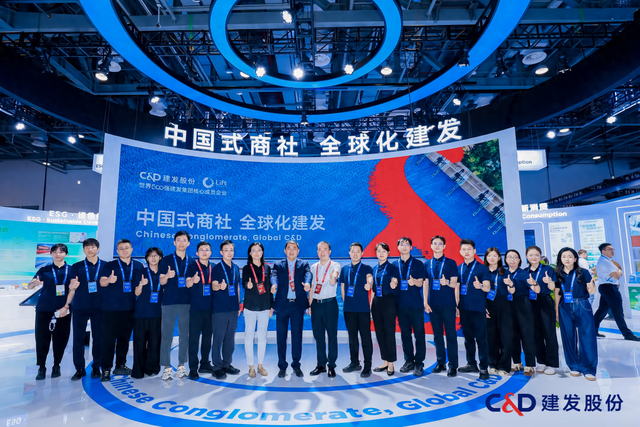
建发股份发布新五年战略发展规划,致力于成为国际领先供应链运营商
Xin Lang Cai Jing· 2026-01-19 03:16
Core Viewpoint - Jianfa Co., Ltd. has officially released its supply chain operation business strategic plan for 2026-2030, aiming to become an internationally leading supply chain operator amidst global economic uncertainties [1] Strategic Goals - The company will focus on three strategic goals over the next five years: enhancing economic efficiency, improving market position, and expanding overseas scale [1] Core Competencies - Jianfa will strengthen five core competencies: specialization, internationalization, digital intelligence, foresight, and resource capability to lay a solid foundation for high-quality development [3] Specialized Operations - The company will continue to deepen its specialized operating model, strengthen core categories, and enhance the value of industry chain services through differentiated management [3] International Expansion - Jianfa aims to replicate its business model overseas, focusing on resource acquisition in regions like South America, Africa, and Central Asia, while also tapping into high-demand markets in developed countries [3] Digital Intelligence - The company plans to upgrade its operations through digital intelligence, utilizing user demand and technological innovation to create a comprehensive digital platform for decision-making and risk management [3] Foresight and Resource Optimization - Jianfa will enhance its strategic planning and industry research capabilities, optimizing resource allocation and integrating key logistics and industry resources to improve supply chain security and stability [5] Innovation and Growth - The company will cultivate a second growth curve by leveraging its existing resources and exploring new segments such as "new consumption" and "artificial intelligence," aiming for long-term growth [6] Key Development Phase - The next five years are critical for Jianfa as it transitions from being "domestically excellent" to "internationally leading," focusing on professional operations, international expansion, and innovation-driven growth [7]

港股开盘 | 恒指低开0.76% 贵金属板块走强 紫金矿业等涨超1%
Zhi Tong Cai Jing· 2026-01-19 01:48
Group 1 - The Hang Seng Index opened down 0.76% and the Hang Seng Tech Index fell 0.77%, with strong performance in the precious metals sector, particularly Zijin Mining and China Silver Group, both rising over 1%, while tech stocks like Alibaba dropped over 2% [1] - Tianfeng Securities believes that the Hong Kong stock market has a rebound basis supported by valuation repair and sentiment improvement in the short term, but the upward elasticity and sustainability are constrained by multiple factors due to high overseas interest rates and limited rate cut expectations [1] - China Merchants Securities notes that the lagging performance of Hong Kong stocks compared to A-shares is primarily due to overseas liquidity dynamics, with the US unemployment rate dropping to 4.4%, supporting a 95.6% probability of the Federal Reserve pausing rate cuts in January [1] Group 2 - Huatai Securities indicates that after a month of pessimistic consolidation, the Hong Kong stock market sentiment index has officially entered a panic zone, historically leading to a significantly increased probability of price increases in the following month [2] - Industrial Securities recommends prioritizing leading internet companies in the Chinese AI sector, expecting a resonance of buying from both domestic and foreign capital [2] - The report suggests focusing on dividend assets in a low-interest-rate environment, highlighting opportunities in insurance, banking, energy, property management, and public utilities [2]

一周新消费NO.344|泡泡玛特x荣耀打造MOLLY20周年限定礼盒;歌手G.E.M.邓紫棋正式成为Jordan品牌全球合作伙伴
新消费智库· 2026-01-18 13:03
New Consumption Highlights - San Yuan launched "Beijing Yogurt" with four flavors, emphasizing natural ingredients and high protein content [5][3] - "Happy Monkey" supermarket introduced a new pomegranate jasmine green tea drink, highlighting its quality ingredients and natural flavors [8] - Haidilao and Coca-Cola collaborated to create the "Charming Hot Pot" meal set, featuring popular dishes paired with Coca-Cola [6][12] - Oreo released a new "Double Layer Cheesecake" at Sam's Club, designed for social gatherings and celebrations [11][8] - "Mango Snow Ice City" launched a new banana series, including banana milk and banana latte, with promotional offers [11][30] - Lemon Republic and Tmall Supermarket introduced "Cloud Top Lemon," featuring high juice content and natural flavors [11][30] Industry Events - Deckers Brands announced the closure of two niche outdoor footwear brands, Ahnu and Koolaburra, by Q3 of the 2026 fiscal year [13] - a2 became the first official dairy partner of the Australian Open, launching limited edition gift boxes [14] - SF Express and Jitu announced a strategic mutual shareholding agreement, with an investment amount of HKD 8.3 billion [15] - JD Health and Heliang deepened their cooperation to innovate health management models [15] Investment and Financing Movements - Danish biotech company Bactolife secured over €30 million (approximately RMB 244 million) in Series B financing [21] - McCormick & Company acquired a 25% stake in its Mexican subsidiary for $750 million (approximately RMB 5.238 billion) [22] - L Catterton acquired a majority stake in American cheese brand Good Culture, with the deal valued at over $500 million [24] - Lemon tea brand Linli completed a multi-million A round financing, with a valuation close to RMB 1 billion [24] New Product Launches - Tea Xiaokai launched a new light sparkling osmanthus pear fermented yogurt drink, targeting health-conscious consumers [28] - Starbucks China introduced a new truffle chocolate flavor series, including truffle chocolate lattes [34] - Kudi Coffee established a new company in Suzhou with a registered capital of $160 million, expanding its operational scope [32]



上海衡复诞生1.5公里“新消费亿元街区”
Xin Lang Cai Jing· 2026-01-17 23:39
Core Viewpoint - The event "From Seoul to Shanghai: A Two-Way Journey of K-FASHION" gathered nearly 40 South Korean companies, highlighting the interest in expanding into the Chinese market and collaborating with local designers to promote Chinese brands in South Korea [1] Group 1: Event Overview - The event took place at the Hengfu Art Center, coinciding with South Korean President Yoon Suk-yeol's recent visit to Shanghai [1] - Korean brand representatives expressed particular interest in the business environment of Xuhui District, aiming to establish a presence in Shanghai [1] Group 2: Business Environment - Xuhui District is a significant hub for multinational company headquarters, hosting 175 foreign-funded headquarters and R&D centers [1] - Notable South Korean brands in the area include F&F, Hankook Tire, Hanwha Commercial, and Samsung's Shanghai branch [1] Group 3: Market Expansion - A number of Korean fashion brands have recently entered Xuhui, with notable stores like wiggle wiggle, Rockfish, and MUSINSA [1] - The upcoming "New Six Hundred YOUNG" mall in Xujiahui will feature brands such as MUSINSA and SMTOWN [1] Group 4: Economic Impact - The Wukang Road-Anfu Road fashion district, approximately 1.5 kilometers long, hosts over 200 unique merchants and has contributed over 100 million yuan to the annual economy, recognized as a "new consumption billion-yuan street" [1] - The district is characterized by a strong "first-store matrix," including flagship stores like Adidas and LE LABO's first street-side store in mainland China [1]