
硬科技

Search documents
快讯|2026年港股IPO市场火热开局,募资额有望突破3000亿港元
Sou Hu Cai Jing· 2026-01-29 05:56
Group 1 - The Hong Kong IPO market remains active in January 2026, with 12 companies listed and total fundraising reaching HKD 34.747 billion, a year-on-year increase of 480.87% [1] - There are over 300 companies in the queue for listing on the Hong Kong Stock Exchange, providing ample resources for sustained market activity [1] Group 2 - The companies listed at the beginning of 2026 are primarily focused on hard technology sectors such as semiconductors, AI, and biomedicine, including domestic GPU company Birun Technology and AI model company Zhipu [2] - The participation rate of international long-term capital in Hong Kong IPO projects has surged from approximately 10%-15% in early 2024 to 85%-90% currently, with significant involvement from Middle Eastern sovereign wealth funds and European family offices [2] - Market institutions predict that the fundraising scale for Hong Kong IPOs in 2026 may exceed HKD 300 billion, with a market characteristic of "large at both ends and differentiated in the middle," favoring large projects and industry leaders for funding support [2]

2025年末上市公司市值中位数同比提升近三成 百亿元以上市值公司新增427家
Sou Hu Cai Jing· 2026-01-29 05:38
Core Insights - By the end of 2025, the median market capitalization of listed companies in China is expected to increase by nearly 30% year-on-year, reaching 6.508 billion yuan [1] - The number of companies with a market capitalization exceeding 100 billion yuan has increased by 427, while companies valued below 20 million yuan have decreased by 379 [1] Group 1: Market Overview - As of December 31, 2025, there are 5,477 listed companies in China's domestic stock market, with 2,302 on the Shanghai Stock Exchange, 2,887 on the Shenzhen Stock Exchange, and 288 on the Beijing Stock Exchange [4] - In 2025, 116 new companies were listed, raising a total of 134.141 billion yuan, with 78 of these from the ChiNext, STAR Market, and Beijing Stock Exchange [4] - The number of state-controlled listed companies accounts for 27%, while privately-controlled companies make up 63% [4] Group 2: Sector Performance - The manufacturing sector remains dominant with 3,743 listed companies, showing a net increase of 91 companies, particularly in electrical, electronic, and communication equipment, as well as specialized and general transportation equipment [4] - The real estate sector saw a net decrease of 6 companies, and the wholesale and retail sector decreased by 4 companies [4] Group 3: Market Capitalization Trends - The total market capitalization of domestic listed companies is approaching 109 trillion yuan, marking the highest point in the last five years [5] - The market capitalization share of hard technology industries, such as optical modules and chips, has further increased, with companies like Zhongji Xuchuang and Cambrian entering the top ten in terms of market capitalization among privately-controlled companies, both seeing over 100% growth in market value during the year [5] - In 2025, 20 A+H share companies were added, and over a hundred domestic companies listed in Hong Kong and the United States [5]
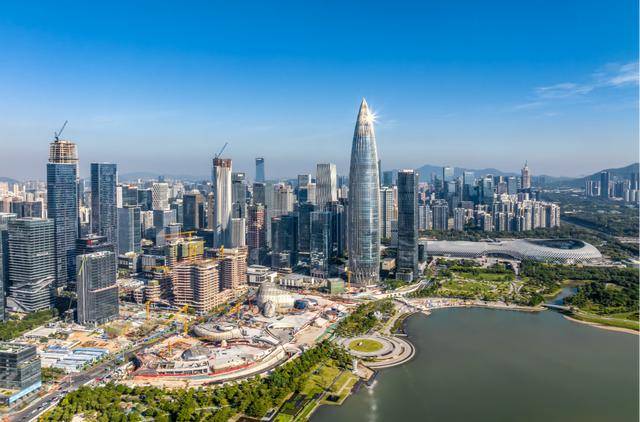
舒迅:南山沃土育 “芯片尖兵”,硬科技与万亿城区双向奔赴 —— 专访灵明光子 CFO,揭秘硬科技企业的 “南山成长加速度”
Sou Hu Cai Jing· 2026-01-29 03:42
Core Insights - Lingming Photon has evolved from a small team focused on SPAD chip technology to a leading global supplier in the SPAD chip sector, exemplifying the symbiotic relationship between the company and the thriving economy of Nanshan District, Shenzhen [1][3] Company Growth and Regional Development - The growth of Lingming Photon is closely tied to the GDP surpassing one trillion in Nanshan, with the company describing its role as both a builder and beneficiary of this economic landscape, akin to a "double helix" of mutual achievement [3] - Initially a startup focused on technology exploration, Lingming Photon has transitioned to an industry leader, supported by comprehensive resources from the Nanshan region [3][4] - The company has made significant technological advancements, including the launch of China's first solid-state LiDAR receiver chip in 2023, marking a pivotal leap from "0 to 1" in technology [4] Supportive Ecosystem - The Nanshan region provides a "triple support" system comprising talent policies, industry policies, and an integrated industrial chain, which collectively enhance the company's capabilities [4][5] - Talent policies in Shenzhen and Nanshan attract top researchers from prestigious institutions, ensuring the company has access to critical intellectual resources [4] - Industry policies offer financial relief through subsidies for research and development, alleviating the financial burden during the startup phase [4] - The local industrial ecosystem facilitates rapid application of technology, creating a closed loop from technology to product to market [4][5] Talent Attraction and Retention - Talent is identified as a core competitive advantage for hard-tech companies, with Nanshan's housing policies significantly improving the retention rates of overseas talent [5] - The region's appeal extends beyond financial incentives, encompassing a supportive environment for innovation and a high quality of life, which encourages talent to settle and thrive [5] Collaborative Innovation Network - Nanshan's innovation ecosystem fosters collaboration across the industry, academia, and research, creating a robust network that supports the growth of individual enterprises [6] - The local government actively facilitates resource exchange and collaborative development, providing platforms for companies to showcase their strengths and connect with potential partners [6] Strategic Recommendations - Lingming Photon aims to deepen its focus on core technologies while leveraging the regional industrial ecosystem to maintain its industry leadership [7] - The company suggests enhancing talent services by improving international education and healthcare resources to ensure top talent can thrive in Nanshan [7] - It also recommends increasing support for key segments of the smart sensor industry to attract more innovation resources, thereby promoting sustainable growth in the region [7]
多维资本走进第十年:做全球化时代的「跨体系产业架构师」
3 6 Ke· 2026-01-29 02:28
Core Insights - The article discusses the evolution of the Chinese primary market over the past decade, highlighting a shift from a "gold rush" mentality to a focus on deep industry engagement, with 2016 marking a pivotal turning point [3][4] - The company, Multi-Dimensional Capital, was founded by Cao Fangning in 2016, emphasizing cross-border mergers and acquisitions (M&A) rather than following the trend of quick returns in the internet sector [4][5] - Multi-Dimensional Capital has positioned itself as a unique player in the financial advisory (FA) industry, focusing on complex transactions and deep industry understanding, especially in the context of rising geopolitical tensions and the emergence of hard technology [5][6] Company Overview - Multi-Dimensional Capital has completed over 300 transactions with a total transaction volume of 55 billion RMB by 2025, serving more than 500 companies and managing seven specialized investment funds [7] - The firm has expanded its service areas to include artificial intelligence, embodied intelligence, new materials, renewable energy, semiconductors, and aerospace, forming an integrated service system centered on technology trend judgment, industry structure understanding, and capital solution design [7][8] Industry Dynamics - The FA industry is undergoing a significant transformation, with traditional models of quick project turnover becoming obsolete as the complexity of transactions increases [19][20] - Multi-Dimensional Capital's approach emphasizes understanding the underlying logic and constraints of different investment systems, allowing it to effectively "translate" between various stakeholders [18][19] - The firm aims to redefine its role from a mere transaction facilitator to a long-term partner that helps companies navigate the complexities of the global market and achieve sustainable growth [29][30] Future Outlook - Looking ahead, Multi-Dimensional Capital aspires to become a core infrastructure player in China's hard technology sector, providing comprehensive support throughout the lifecycle of innovation, from early-stage incubation to market entry and potential mergers or acquisitions [28][29] - The company plans to deepen its involvement in the early stages of projects, collaborating closely with entrepreneurs and scientists to address critical challenges and facilitate the transition from prototype to industrial product [29][30]

未知机构:当下为什么要重点配置航空发动机赛道206127-20260129
未知机构· 2026-01-29 01:45
Summary of Conference Call on Aviation Engine Sector Industry Overview - The discussion focused on the aviation engine sector, highlighting its recent surge in market performance driven by strategic initiatives outlined in the group's annual work meeting [1][2][3]. Core Points and Arguments - **Strategic Tasks**: The group has set three strategic tasks: accelerating the independent research and development of aviation engines, achieving technological self-reliance, and building a strong aerospace nation. Additionally, five pillar industries have been established [1][2][10]. - **Technological Breakthroughs**: The breakthrough in commercial aviation engine technology is seen as a fundamental catalyst for the sector's growth, marking 2026 as a pivotal year for the commercial aviation engine supply chain [2][10]. - **Investment Focus**: The capital market is shifting its focus towards hard technology, with aviation engines being a prime example due to their high technical barriers. This sector is viewed as a critical area for investment, especially in the context of domestic aerospace manufacturing advancements [2][4][10]. - **Domestic Manufacturing**: The domestic aviation manufacturing industry has made significant progress, particularly in military aircraft. However, challenges remain in the commercial aircraft sector, especially regarding supply chain self-sufficiency, with aviation engines being a key component [4][12]. - **Investment Value**: The aviation engine sector is highlighted as a valuable investment opportunity, with recommended companies including航发科技 (Aero Engine Corporation of China), 航发动力 (Aero Engine Power), and 航发控制 (Aero Engine Control). The progress of the 长江1000A model is expected to lead to a revaluation of the entire supply chain [2][6][9]. Additional Important Insights - **Market Dynamics**: The aviation engine sector is characterized by high technical barriers and a broad market space, making it an attractive investment focus. The domestic military aircraft sector has achieved self-sufficiency, while the commercial aircraft sector faces challenges in supply chain control [4][12]. - **Comparison with Commercial Space**: The commercial space sector has seen less institutional investment due to unclear fundamentals and a lack of substantial assets. In contrast, the aviation engine sector presents clear technological inflection points and significant market potential, making it a more compelling investment opportunity [5][11]. - **Long-term Investment Logic**: The aviation engine sector is recognized for its long-term investment value, with a diverse range of core companies and a substantial market capacity, allowing for strategic investment in high-barrier and valuable targets [13].
稀有金属、半导体设备成为开年热门赛道!稀有金属ETF(159608)、港股通科技ETF(159262)、半导体设备ETF广发(560780)近20日强势吸金
Ge Long Hui· 2026-01-29 00:26
Group 1 - International gold prices have surpassed $5,200, leading to a surge in the rare metals sector, with the Rare Metals ETF (159608) seeing a net inflow of 4.076 billion yuan over the past 20 days [1] - The Rare Metals ETF tracks the CSI Rare Metals Index, which excludes industrial metals affected by macroeconomic cycles and focuses on energy metals and strategic minor metals such as rare earths, lithium, cobalt, tungsten, and molybdenum [1] - A new wave of price increases in the global chip sector has been reported, with Samsung and SK Hynix significantly raising prices for LPDDR memory used in iPhones, with Samsung's prices up over 80% and SK Hynix's nearly 100% [1] Group 2 - The Hong Kong stock market's Hua Hong Semiconductor has risen over 5.6%, reaching a new historical high, while the Hong Kong Stock Connect Technology ETF (159262) has seen a net inflow of 871 million yuan over the past 20 days [1] - The Hong Kong Stock Connect Technology ETF covers "hard technology" sectors such as AI and semiconductors, with major holdings including Alibaba, Tencent, Xiaomi, Meituan, and SMIC, indicating a high technology purity [1] - The Semiconductor Equipment ETF (Guangfa, 560780) has experienced a net inflow of 2.583 billion yuan over the past 20 days, closely tracking the CSI Semiconductor Materials and Equipment Theme Index [2]
去年末上市公司市值中位数同比提升近三成 百亿元以上市值公司新增427家
Zhong Guo Zheng Quan Bao· 2026-01-28 23:58
Group 1 - In 2025, the number of companies with a market capitalization exceeding 1 trillion yuan increased by 1, while those exceeding 100 billion yuan increased by 427, and companies with a market capitalization below 20 million yuan decreased by 379 [1] - By the end of 2025, the median market capitalization of listed companies reached 6.508 billion yuan, reflecting a nearly 30% year-on-year increase [1] - The total number of listed companies in the domestic stock market reached 5,477, with 2,302 on the Shanghai Stock Exchange, 2,887 on the Shenzhen Stock Exchange, and 288 on the Beijing Stock Exchange [1] Group 2 - The proportion of state-controlled listed companies is 27%, while privately controlled companies account for 63%, with manufacturing companies dominating at 3,743 [2] - In 2025, the manufacturing sector saw a net increase of 91 companies, primarily in the electrical, electronic, and communication sectors, while the real estate sector saw a net decrease of 6 companies [2] - By the end of 2025, the total market capitalization of domestic listed companies approached 109 trillion yuan, marking the highest point in the last five years [2]


2025年A股上市公司总市值近109万亿元
Shang Hai Zheng Quan Bao· 2026-01-28 23:58
2025年A股上市公司总市值近109万亿元 光模块、芯片等硬科技产业市值占比进一步提升 上市公司区域分布呈现较强的集聚效应。江苏、浙江、北京、广东、上海位列公司数量前五,合计占比 过半。其中:江苏上市公司722家,总市值超8.84万亿元;浙江上市公司606家,总市值约7.51万亿元; 北京481家,总市值接近24万亿元。江苏、浙江、广东2025年新增上市公司家数位列全国前三,分别为 25家、12家和12家。 2025年全年共有116家公司上市,31家公司退市,市场"入口"和"出口"机制运行顺畅。12月当月新增上 市公司18家,其中科创板7家、创业板5家、北交所3家,资本市场服务科技创新和中小企业的功能持续 增强。 2025年,全市场首次公开发行(IPO)募资总额1341.41亿元,其中科创板、创业板合计募资占比显著。12 月当月IPO募资314.11亿元,主要为制造业和科学研究类企业。 2025年,A+H股公司新增20家,百余家境内公司赴港、赴美上市。截至2025年末,境外主要市场中国 概念上市公司共计1863家,较上年增加105家。腾讯控股、阿里巴巴、宁德时代等企业在全球市场中市 值位居前列,展现中国企业国 ...
鲲鹏资本子基金群累计投资已超1200亿元
Nan Fang Du Shi Bao· 2026-01-28 23:10
"深圳国资基金矩阵三年行动计划发布仪式暨粤港澳大湾区创业投资引导基金入驻仪式"日前在深圳前海 5号楼举行。活动由深圳市国资委主办,前海管理局协办、深创投承办,市国资委、市委金融办、市发 展改革委、前海管理局及28家市属国企、被投上市企业代表参会,共同推动国有资本赋能科技创新与粤 港澳大湾区高质量发展。此次活动是落实国家、省、市战略部署,以科技金融活水浇灌新质生产力沃土 的具体实践。 大湾区创投引导基金 正式落地前海 深创投、鲲鹏资本作为市属国企代表,分别介绍落实举措。自成立以来,深创投始终坚持"投早、投 小、投长期、投硬科技"导向,已将86%的资金投向初创期和成长期企业。据介绍,深创投将持续加大 对早期科技企业的投入力度,重点布局前沿科技和关键核心领域;鲲鹏资本子基金群累计投资已超1200 亿元,覆盖项目近1900个,将进一步强化产业链上下游整合与资源协同。被投上市企业越疆科技董事长 通过视频分享、市场总监现场发言,生动展现了在国资基金支持下,企业从技术研发到产业化落地的成 长历程,印证了国有资本赋能科技创新企业发展的实效。 活动最后,8家市属国企负责人签署深圳国资基金矩阵任务书,将深圳国资基金矩阵三年行动计 ...
招商局创投:坚守央企CVC初心 锚定硬科技赛道
Zhong Guo Zheng Quan Bao· 2026-01-28 22:03
● 本报记者 张兴旺 招商局创投于2015年成立,总部位于深圳蛇口。从2人初创到五六十人战队,从50亿元初始资本到逾180 亿元资产规模,从躬身入局到央企CVC(企业风险投资)标杆之一,招商局创投紧扣招商局集团"第三 次创业"脉搏,走出一条"服务集团传统产业转型升级、服务集团战略性新兴产业培育"的独特之路。成 立十年有余,招商局创投投出联易融科技、工业富联(601138)、黑芝麻(000716)智能、滴普科技、 智谱等上市企业。 日前,招商局创投总经理卢振威在接受中国证券报记者专访时表示,招商局创投作为战略投资者,着眼 长远,坚持做耐心资本,投早、投小、投长期、投硬科技。坚守初心,持续深耕,方能静待产业价值开 花结果。 初心如磐 筑牢早期投资基石 时间回溯至2015年12月,招商局集团已在公路、港口、物流等诸多传统产业领域树立领先优势,并在科 技创新领域发力。在此背景下,招商局创投应势而生。 "我们的初心和使命清晰且坚定:一是服务集团传统产业的转型升级,二是服务集团战略性新兴产业的 培育。"卢振威说,奋进十年有余,招商局创投始终沿着既定航向笃定前行。 创业初期,招商局创投面临诸多挑战。团队最初仅有2人,成立后 ...