第二增长曲线

Search documents
汇绿生态控股公司在马来西亚买地 拟用于光模块项目建设基地
Jing Ji Guan Cha Bao· 2025-11-07 01:51
Core Viewpoint - Huilv Ecology (001267) is making significant strides in its overseas optical module project, with recent developments including a land purchase in Malaysia for project construction [1][2]. Group 1: Project Developments - Huilv Ecology's subsidiary, Junheng Technology (Malaysia) Co., Ltd., signed a purchase agreement to acquire industrial land in Penang, Malaysia, for 24 million MYR (approximately 40.99 million RMB) [1]. - The acquired land spans a total area of 7,844.3 square meters, designated for the optical module project [1]. Group 2: Investment and Strategic Expansion - The company plans to establish a subsidiary in Singapore with Wuhan Junheng Technology Co., Ltd., with a total investment of 200 million RMB, where Huilv Ecology will hold a 70% stake [2]. - The Singapore subsidiary aims to fully fund a Malaysian subsidiary, which will serve as an overseas production base for optical communication products, including research, development, and sales [2]. - Huilv Ecology is diversifying into the optical module sector to create a "second growth curve" for its business, marking a strategic shift from its traditional focus on ecological environment construction [2]. Group 3: Market Response - On November 6, Huilv Ecology's stock closed at a limit-up price of 18.93 RMB per share, indicating positive market sentiment regarding the company's recent developments [3].
进博会药械企业竞速“健康消费”:开辟第二增长曲线,带动产业链升级
Di Yi Cai Jing· 2025-11-06 13:13
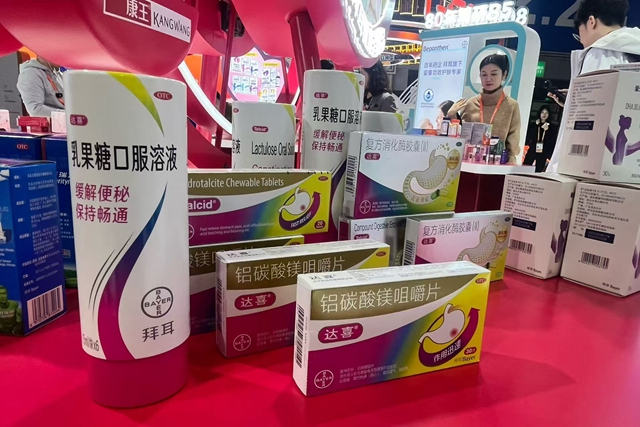
Core Insights - The article highlights the shift of pharmaceutical and medical device companies towards the "health consumption" sector, aiming to create a second growth curve alongside their traditional medical-grade products [1][2]. Industry Trends - The 8th China International Import Expo showcases a variety of high-end products and technologies, with a focus on health consumption as a growing market segment [1]. - According to the China Consumer Association, the total revenue of China's health industry is projected to reach 9 trillion yuan in 2024, indicating rapid market expansion [1]. Company Strategies - Bayer has introduced several health consumption products at the expo, emphasizing the importance of non-prescription product innovation for future growth due to lower regulatory hurdles and faster market entry [2][4]. - Philips is also expanding into the health consumption sector, showcasing products developed through clinical insights and advanced technology, such as the Diamond AI toothbrush [4]. Product Innovations - BD Medical presented its "Enjoy Silver Hair" health living pavilion, featuring innovative products aimed at elderly care, including wearable devices and specialized solutions for community and home management [5]. Supply Chain Impact - The entry of pharmaceutical companies into the health consumption market is expected to enhance the entire industry chain, driving improvements in quality, efficiency, and specialization [6][7]. - This shift will compel suppliers to upgrade standards and inject professional technical capabilities, benefiting upstream, midstream, and downstream sectors of the health consumption industry [7].


最年轻的仅24岁,全国上市公司有78名“90后”董事长
Sou Hu Cai Jing· 2025-11-06 01:55
Core Insights - A new generation of "post-90s" chairpersons is emerging in the A-share market, with Lin Xiaoqing, born in 1996, being a notable example as she was re-elected as chairperson of Chengdu Road and Bridge [1][2] - As of now, there are 78 listed companies in the A-share market led by "post-90s" chairpersons, with the youngest being only 24 years old [2] Group 1: Demographics and Distribution - The 78 "post-90s" chairpersons are spread across 23 provinces in China, with Guangdong, Zhejiang, and Jiangsu having the highest numbers at 14, 11, and 7 respectively [5] - These young leaders are primarily taking over family businesses, but some have entered the board through capital operations or entrepreneurial success [2] Group 2: Industry and Innovation - The companies led by these young chairpersons span various sectors, including pharmaceuticals, electronics, machinery, power equipment, media, and agriculture [5] - Many of these firms are involved in high-growth areas such as new energy, semiconductors, and intelligent manufacturing, indicating a shift towards innovation [5] Group 3: R&D and Compensation - A common characteristic among these "post-90s" chairpersons is a strong focus on research and development (R&D) and employee incentives, driven by the pressures of transformation and competition [8] - In the third quarter, 9 out of the 78 companies reported R&D expenditures exceeding 100 million yuan, with Wentai Technology leading at 1.598 billion yuan [8] - Over 60% of these young leaders hold master's degrees or higher, with nearly half having studied abroad, showcasing a strong educational background [8] Group 4: Challenges and Balancing Act - Young chairpersons face challenges such as lack of experience, difficulties in resource integration, and internal resistance within family businesses [9] - Finding a balance between maintaining established practices and pursuing innovation is a critical hurdle for these leaders [9]


宏川智慧2025年第三季度报告网上说明会问答实录
Quan Jing Wang· 2025-11-06 01:16
Core Viewpoint - The company is focusing on enhancing its operational strategies and exploring new business opportunities to counteract the challenges faced in its core warehousing business due to macroeconomic factors. Group 1: Business Strategy and Development - The company is expanding into emerging services such as smart customer service and logistics chain management, although these currently account for less than 3% of revenue [1] - Future strategic direction includes transitioning from traditional energy and chemical services to renewable energy and green chemical services [1] - The company aims to leverage its extensive national warehousing network and flexible operational strategies to ensure steady business growth despite market fluctuations [1] Group 2: Financial Performance and Shareholder Concerns - The company acknowledges recent performance declines due to macroeconomic impacts and industry demand fluctuations, leading to a cautious approach in future acquisitions and business expansions [2] - There is a commitment to consider cash dividend policies that balance performance growth with investor returns, while maintaining a stable cash flow [2] - The company is aware of shareholder concerns regarding stock price declines and is focused on improving operational efficiency and service offerings to enhance competitiveness [2] Group 3: Market Position and Competition - The company does not see competition with national strategic oil reserve bases, as it primarily serves domestic and international petrochemical producers and traders [2] - The decline in gross margin is attributed to reduced industry demand and high fixed costs, rather than direct price competition within the sector [2] - The company has obtained designated delivery warehouse qualifications for several chemical products, which is expected to enhance customer trust and improve overall profitability [2]

伊利前三季度营收 905.64 亿元,扣非净利首超百亿
Jing Ji Guan Cha Bao· 2025-11-04 10:51
Core Insights - Yili Group reported a total revenue of 90.564 billion yuan for the first three quarters, marking a year-on-year growth of 1.71%, while the net profit attributable to shareholders exceeded 10 billion yuan for the first time, reaching 10.103 billion yuan, a year-on-year increase of 18.73% [1] - The company announced a mid-term dividend plan, proposing a total cash dividend of 3.036 billion yuan, continuing its trend of high shareholder returns with a cumulative dividend payout of 58.566 billion yuan since its listing [1][6] Revenue Breakdown - Liquid milk remains the cornerstone of Yili's business, generating revenue of 54.939 billion yuan, maintaining a stable market share and position [2] - The milk powder segment showed significant growth, with revenue reaching 24.261 billion yuan, a historical high and a year-on-year increase of 13.74%, capturing 18.1% of the infant formula market share [3] - The ice cream segment also performed well, with revenue of 9.428 billion yuan, reflecting a year-on-year growth of 13% [3] Innovation and Product Development - Yili's cheese business focused on innovation, introducing new crispy cheese products and exploring new usage scenarios for cheese spreads, aiming for double-digit growth across milk powder, cheese, and ice cream segments [4] - The company is enhancing brand value through innovative consumer engagement strategies, including collaborations with global IPs and extending health services into new consumer scenarios [5][6] Marketing Strategy - Yili is building a "versatile Yili" brand image through various marketing campaigns that resonate with consumers' emotions and lifestyles, aiming to be a trusted provider of healthy food [6] - The company emphasizes its commitment to shareholder returns, with a target dividend payout ratio of no less than 70% in the coming years [6]

“六个核桃”不好卖,养元饮品前三季度营利双降
Shen Zhen Shang Bao· 2025-11-03 04:09
Core Viewpoint - Yangyuan Beverage's Q3 2025 report shows a decline in overall revenue and net profit, indicating ongoing challenges in its core product, "Six Walnuts," while the company is exploring new growth avenues through investments in the semiconductor industry [1][5][6]. Financial Performance Summary - The company's total revenue for Q3 2025 was 3.91 billion yuan, a year-on-year decrease of 7.64% [1][2]. - The net profit attributable to shareholders was 1.12 billion yuan, down 8.95% year-on-year [1][2]. - The net profit excluding non-recurring items was 959 million yuan, a slight decrease of 0.81% [1][2]. - The net cash flow from operating activities was -165 million yuan [1][2]. Q3 Performance Highlights - In Q3 2025, the company reported a revenue of 1.44 billion yuan, an increase of 11.88% year-on-year [3][4]. - The net profit attributable to shareholders for Q3 was 375 million yuan, up 88.20% year-on-year [3][4]. - The net profit excluding non-recurring items for Q3 was 332 million yuan, an increase of 72.52% [3][4]. - The improvement in Q3 performance was attributed to reduced losses from joint ventures and increased sales revenue compared to the previous year [3][4]. Product and Market Insights - "Six Walnuts" remains the core product, contributing 88% to 98% of total revenue historically [4]. - However, since 2016, sales of "Six Walnuts" have been declining, with a significant drop in sales volume from 856,800 tons in 2018 to 565,300 tons in 2024, a decrease of 34% [5]. - The company faces competition from other plant-based beverages like coconut water and oat milk, which are gaining popularity among younger consumers [5]. Strategic Initiatives - The company is exploring a "second growth curve" through investments, including a recent 1.6 billion yuan investment in Yangtze Memory Technologies, a leading semiconductor company [6][7]. - This investment represents nearly 93% of the company's net profit for 2024 and is aimed at diversifying revenue sources [6][7]. - The semiconductor industry is characterized by rapid technological changes and significant capital requirements, presenting potential risks for the company [6].


格局生变!五粮液被泸州老窖、山西汾酒“反超”
Sou Hu Cai Jing· 2025-11-02 11:12
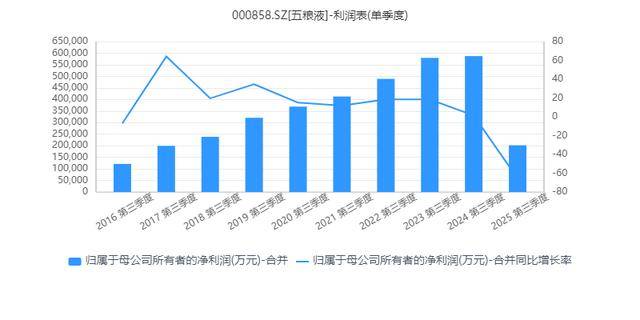
Core Viewpoint - The performance of Wuliangye (000858.SZ) has significantly declined in Q3 2025, with a net profit drop of 66%, leading to a shift in the competitive landscape among top liquor companies in China [1][3]. Financial Performance - In the first three quarters of 2025, Wuliangye reported revenue of 60.945 billion yuan, a year-on-year decrease of 10.26%, and a net profit of 21.511 billion yuan, down 13.72% [1][3]. - For Q3 alone, Wuliangye's revenue fell by 52.66% to 8.174 billion yuan, and net profit dropped by 65.62% to 2.019 billion yuan [1][3][4]. Industry Context - The decline in Wuliangye's performance is attributed to a deep adjustment period in the liquor industry and insufficient recovery in effective demand [3][6]. - Among major listed liquor companies, only Kweichow Moutai experienced slight growth, while Wuliangye's decline was more pronounced compared to Shanxi Fenjiu and Luzhou Laojiao [3][6]. Competitive Landscape - In Q3, Shanxi Fenjiu surpassed Wuliangye in revenue, achieving 8.960 billion yuan, while Wuliangye ranked third [3][4]. - In terms of net profit, Wuliangye ranked fourth with 2.019 billion yuan, trailing behind Luzhou Laojiao's 3.099 billion yuan and Shanxi Fenjiu's 2.899 billion yuan [4]. Market Predictions - A report from GF Securities predicted a 30% decline in Wuliangye's Q3 revenue and a 45% drop in net profit, which sparked significant market attention [5]. - The same report suggested a potential shift in industry positions between Wuliangye and Luzhou Laojiao, intensifying discussions about changes in the competitive landscape among leading liquor companies [5]. Long-term Outlook - Despite short-term performance pressures, analysts believe that Wuliangye's long-term value remains intact, with growth opportunities in low-alcohol products, international expansion, and cultural IP development [6].


熊猫乳品(300898):椰品旺季放量 成本控制收效良好
Xin Lang Cai Jing· 2025-11-02 06:44
Core Insights - Panda Dairy reported a total revenue of 586 million yuan for Q1-Q3 2025, a 3% increase year-on-year, while net profit decreased by 8% to 72 million yuan [1] - In Q3 2025, total revenue reached 233 million yuan, marking a 12% increase year-on-year, with net profit slightly decreasing by 1% to 30 million yuan [1] Financial Performance - Q3 2025 gross margin decreased by 3 percentage points to 26.16%, primarily due to fluctuations in milk powder and fresh milk prices [2] - The sales and management expense ratios decreased by 0.4 percentage points and 1 percentage point to 3.75% and 4.50%, respectively, while net profit margin decreased by 2 percentage points to 12.70% [2] Business Segments - The condensed milk business remained stable, with the company pre-stocking milk powder and benefiting from a decline in sugar prices, ensuring stable product gross margins [3] - The cream cheese business showed slight growth, with collaborations to develop cheese snack products enhancing the consumer end layout [3] - The coconut product business experienced a significant increase in customer orders, with raw material prices entering a downward trend, and the expected production capacity from the Hainan plant alleviating capacity pressure [3] Profit Forecast - The company is expected to consolidate its condensed milk base and continue developing a second growth curve, optimizing retail channel construction [4] - EPS forecasts for 2025-2027 have been adjusted to 0.79, 0.92, and 1.06 yuan, with corresponding PE ratios of 33, 29, and 25 times [4]

五粮液第三季度营收低于汾酒
YOUNG财经 漾财经· 2025-11-02 06:00
Core Viewpoint - Wuliangye's third-quarter performance in 2025 showed a significant decline, with revenue and net profit dropping sharply, raising concerns among investors about the company's future prospects [3][6]. Financial Performance Summary - In the third quarter, Wuliangye reported revenue of 8.174 billion yuan, a year-on-year decrease of 52.66% [4]. - The net profit attributable to shareholders was 2.019 billion yuan, down 65.62% year-on-year [4]. - For the first three quarters, total revenue reached 60.945 billion yuan, a decline of 10.26%, while net profit was 21.511 billion yuan, down 13.72% [4]. - Basic and diluted earnings per share were both 0.520 yuan, reflecting a decrease of 65.63% [4]. - The weighted average return on equity fell to 1.43%, a decrease of 2.97 percentage points [4]. Industry Context - The decline in Wuliangye's performance is part of a broader trend in the liquor industry, with most companies reporting lower earnings, except for Guizhou Moutai, which showed a slight increase [10]. - Comparatively, Wuliangye's decline in net profit was more severe than that of Shanxi Fenjiu and Luzhou Laojiao [10]. Market Reactions and Predictions - Investor sentiment has turned negative, with many expressing confusion and concern over the stock's future trajectory following the disappointing results [6]. - Prior to the earnings release, Guotai Junan Securities had predicted a 30% decline in revenue and a 45% drop in net profit for Wuliangye, which sparked discussions in the market [11]. Strategic Adjustments - Wuliangye attributed its poor performance to the deep adjustment period in the liquor industry and insufficient recovery in effective demand, alongside increased investments to adapt to market changes [4]. - The company is actively seeking new growth avenues, including a low-alcohol strategy targeting younger consumers, international expansion, and cultural marketing upgrades [12]. - Wuliangye plans to distribute a cash dividend of 25.78 yuan per 10 shares, totaling 10.007 billion yuan, indicating a commitment to returning value to shareholders despite current challenges [12].

顺丰控股(002352):25Q3归母净利润同比-8.5%;战略投入致短期利润波动 调整回购彰显经营信心
Xin Lang Cai Jing· 2025-11-01 00:40
Core Insights - The company reported a decline in net profit for Q3 2025, with a year-on-year decrease of 8.5%, while total revenue increased by 8.2% to 784.0 billion yuan [1][2] - The company aims to maintain stable net profit growth for the full year 2025, despite short-term profit pressures [4] Financial Performance - For the first three quarters of 2025, the company achieved a total revenue of 225.26 billion yuan, up 8.9% year-on-year, with a net profit of 8.31 billion yuan, reflecting a 9.1% increase [1] - The net cash flow from operating activities for the first three quarters was 19.42 billion yuan, down 13.9% year-on-year, indicating a still robust cash flow position [2] - The gross profit for Q3 2025 was 9.79 billion yuan, a decrease of 4.4% year-on-year, with a net profit margin of 3.3%, down 0.6 percentage points [2][3] Operational Highlights - The company experienced a strong growth in total parcel volume, reaching 4.31 billion parcels in Q3, a year-on-year increase of 33.4%, leading to a market share of 8.7%, up 1.3 percentage points [3] - The express logistics business showed a solid revenue growth of 14.4% year-on-year, while international business revenue declined by 5.3% due to falling sea freight prices [3] - The core international express and cross-border e-commerce logistics business saw a revenue increase of 27% year-on-year, indicating strong competitiveness in the market [3] Strategic Initiatives - The company announced an adjustment to its share repurchase plan, increasing the total repurchase amount from a range of 0.5 to 1 billion yuan to a range of 1.5 to 3 billion yuan, reflecting management's confidence in future performance [4] - The company is focusing on structural upgrades in its operational network and enhancing its strategic capabilities in industry and international markets to strengthen customer loyalty and build a differentiated logistics service ecosystem [4] Profit Forecast - The company expects to achieve net profits of 10.91 billion yuan, 12.65 billion yuan, and 14.48 billion yuan for the years 2025 to 2027, with corresponding price-to-earnings ratios of 18.6, 16.1, and 14.0 times [5]