
货币政策正常化

Search documents
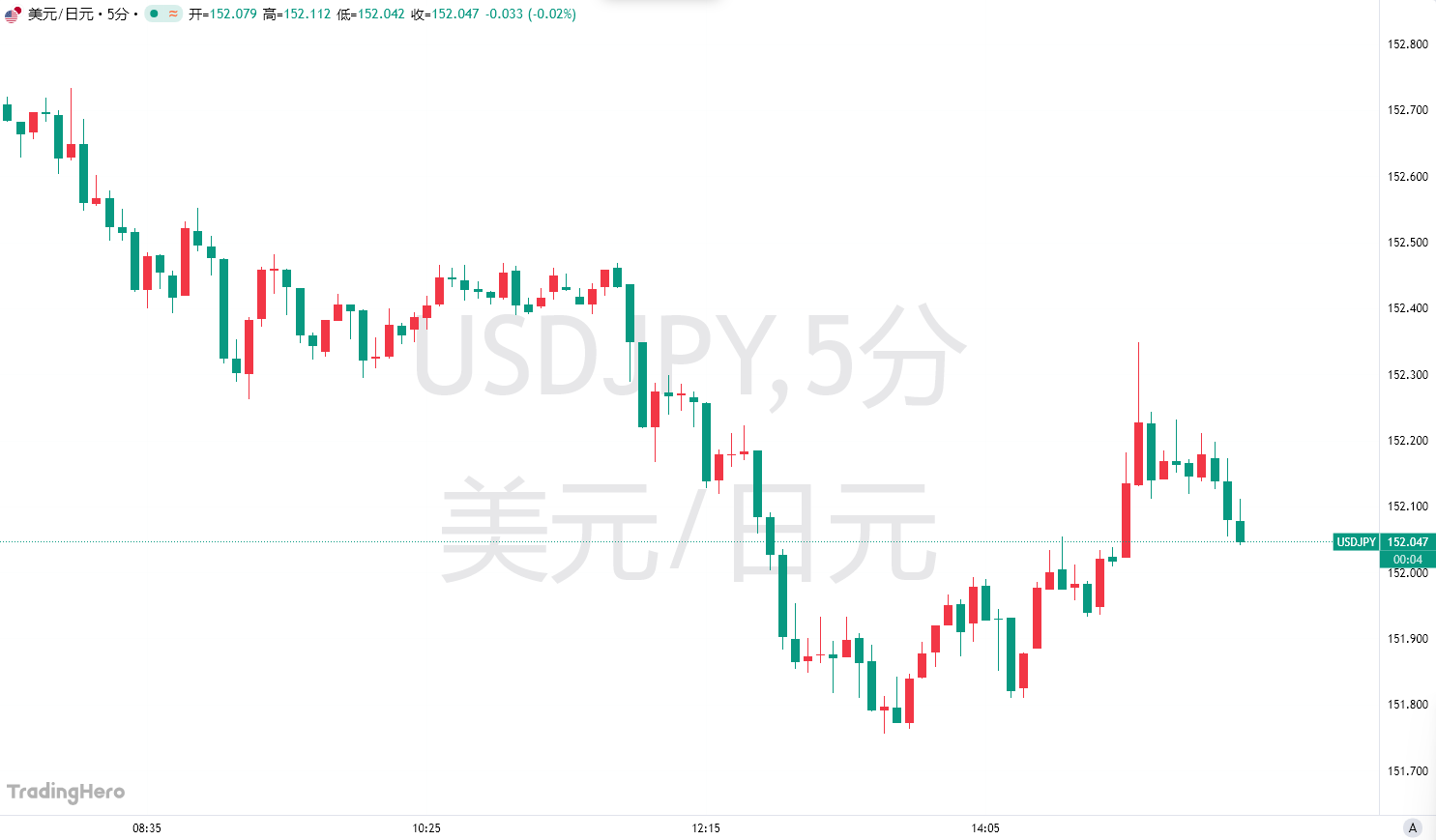
日元跌跌不休,美财长再度敲打日本央行,“要求”尽快加息
Jin Shi Shu Ju· 2025-10-28 08:05
Core Viewpoint - The U.S. Treasury Secretary Janet Yellen urged Japan to adopt a "robust monetary policy" in light of Japan's slow pace of interest rate hikes, which has implications for currency stability and inflation expectations [1][3]. Group 1: U.S. and Japan Monetary Policy - Yellen emphasized the importance of formulating and communicating a robust monetary policy to stabilize inflation expectations and prevent excessive currency fluctuations [3]. - The meeting between Yellen and Japan's Finance Minister Shunichi Suzuki did not directly address Japan's monetary policy, indicating a nuanced diplomatic approach [4]. - Japan's central bank has raised interest rates twice since January but maintains borrowing costs at 0.5%, reflecting a cautious approach to monetary tightening [5]. Group 2: Economic Implications - Critics argue that the slow pace of interest rate hikes has led to a weaker yen, increasing import costs and overall inflation, which has become a political challenge for Japan [6]. - Japan's core inflation rate has exceeded the central bank's 2% target for over three years, raising concerns among policymakers about potential second-round price effects [7]. - The Japanese government appears optimistic about the benefits of a weaker yen, complicating the monetary policy landscape [7]. Group 3: Market Expectations and Predictions - Analysts suggest that Washington may be pursuing a weaker dollar policy to boost U.S. exports, thereby pressuring Japan to allow the yen to appreciate against the dollar [8]. - Market consensus indicates that the Bank of Japan's next interest rate hike may occur in December 2023 or January 2024, with a gradual approach to increasing rates [8]. - Goldman Sachs analysts predict that as Japan normalizes its monetary policy, the yen could appreciate to around 100 against the dollar over the next decade, reversing a long-term depreciation trend [8][9].

高盛:随着货币政策逐渐正常化,预计未来十年日元兑美元将回升至100!新首相高市早苗领导下,日本重新转向“安倍经济学”的势头“可能会温和得多
Sou Hu Cai Jing· 2025-10-28 04:37
Core Insights - Goldman Sachs indicates that the phenomenon of the Japanese yen being "undervalued" will gradually diminish over the next decade as monetary policy normalizes [1] - The report suggests that the yen-to-dollar exchange rate may return to around 100, which is not as extreme as it seems compared to the forward pricing of 115-120 [1] - The new Prime Minister, Sanna Takashi, is expected to lead Japan back to "Abenomics," but the momentum may be more moderate due to political unpopularity of inflation [1] - Despite significant deviations of the dollar/yen exchange rate from fair value over the years, it is expected to revert to GSDEER fair value over time [1]


多数经济学家预计日央行四季度将加息,日元贬值与通胀压力成关键推力
Sou Hu Cai Jing· 2025-10-22 07:15
Core Viewpoint - A recent survey indicates that the majority of economists expect the Bank of Japan to raise policy interest rates in the fourth quarter, driven primarily by inflationary pressures from the continued depreciation of the yen [1] Group 1: Economic Expectations - 60% of the 35 surveyed economists anticipate that the Bank of Japan will increase interest rates in the current quarter (October to December) [1] - Among the respondents, 46% believe the rate hike will occur in January 2026, 31% expect it in December, and 14% predict it will happen in October [1] - Approximately 96% of economists forecast that by the end of March 2026, the Bank of Japan will raise rates by at least 25 basis points, increasing the short-term policy rate from the current 0.50% to 0.75% [1] Group 2: Political Influence - New Prime Minister Sanna Takashi advocates for active fiscal policies, which may exert influence on the central bank, but the market generally believes this will not significantly delay the normalization of monetary policy [1]
多数经济学家预计日央行四季度将加息 日元贬值与通胀压力成关键推力
Xin Hua Cai Jing· 2025-10-22 06:23
Group 1 - A recent survey indicates that the majority of economists expect the Bank of Japan to raise policy interest rates in the fourth quarter, driven by inflationary pressures from the continued depreciation of the yen [1][2] - Among 35 surveyed economists, 60% anticipate an interest rate hike within this quarter, with 46% predicting it will occur in January 2026, 31% in December, and 14% in October [1] - Approximately 96% of economists forecast that by the end of March 2026, the Bank of Japan will raise rates by at least 25 basis points, increasing the short-term policy rate from the current 0.50% to 0.75% [1] Group 2 - The weak yen is significantly raising import costs, becoming a key consideration for the Bank of Japan's shift towards tightening monetary policy [2] - Although domestic political changes and global economic uncertainties may affect decision-making, Japan's inflation remains above the central bank's 2% target, providing a basis for policy adjustments [2] - Continuous wage growth further supports the rationale for potential policy changes [2]
刚刚,集体跳水!
中国基金报· 2025-10-22 01:46
Market Overview - Japanese stock market opened lower, with the Nikkei 225 index dropping over 1% to 48,807.89, down 508.17 points or 1.03% [4][5] - SoftBank Group's stock fell more than 9%, marking its largest decline since August 2020 [5][6] - Japanese automotive stocks, including Toyota, Mazda, and Honda, saw gains of over 3% [6][7] Political Developments - Fumio Kishida was elected as Japan's 104th Prime Minister, becoming the first female Prime Minister in Japan's history. She is known for advocating expansionary fiscal policies and increased defense spending [7][8] Trade and Economic Data - Japan's exports increased for the first time in five months, rising by 4.2% year-on-year in September, driven by semiconductor and electronic component shipments. However, exports to the U.S. fell by 13.3% [8] - Japan recorded a trade deficit of 314 billion yen (approximately 2.1 billion USD) in September, with imports rising by 3.3% [8] Monetary Policy Outlook - Market expectations suggest that the Bank of Korea will maintain its policy rate unchanged for the third consecutive time, as policymakers await the impact of new real estate measures [10] - The pressure for normalization of Japan's monetary policy remains, with the CPI exceeding the 2% target for 37 consecutive months [8] Precious Metals Market - Gold and silver experienced significant declines, with gold briefly falling below $4,010 per ounce before rebounding, reflecting a drop of 1.82% [12][14] - The precious metals market is undergoing a broad liquidation due to profit-taking and reduced safe-haven flows, although long-term support remains due to macroeconomic factors [12][15]

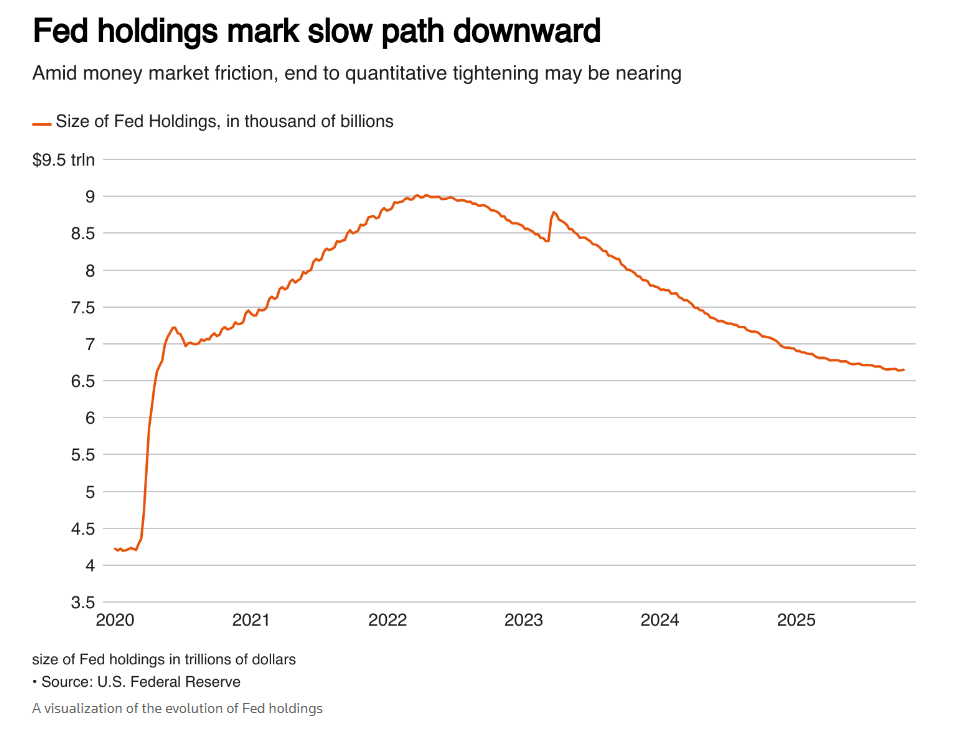
“钱紧”信号频发 华尔街笃定美联储本月释放缩表终结信号
智通财经网· 2025-10-21 00:27
Core Viewpoint - Multiple Wall Street analysts predict that the Federal Reserve may announce the end of its years-long balance sheet reduction plan at the upcoming meeting at the end of October [1][2][3] Group 1: Federal Reserve's Policy Shift - The anticipated policy shift is driven by recent market volatility, with several financial institutions unexpectedly utilizing the Fed's standing repo facility, leading to increases in key short-term borrowing rates [2][3] - Analysts believe that terminating the quantitative tightening (QT) policy could help ensure the smooth operation of monetary policy [1][2] - The Fed's core interest rate target, the federal funds rate, has been consistently rising within the 4%-4.25% target range [2] Group 2: Background of QT - The QT plan was initially designed to withdraw liquidity injected during the COVID-19 pandemic, where the Fed purchased large amounts of U.S. Treasuries and mortgage-backed securities to stabilize the economy [3][6] - The Fed's total asset holdings peaked at $9 trillion in the summer of 2022, more than doubling from previous levels, and have since been reduced to $6.6 trillion through a specific scale of bond maturities not being reinvested [3][6] Group 3: Market Conditions and Challenges - The Fed aims to maintain sufficient liquidity in the financial system to effectively manage short-term interest rates and respond to normal market fluctuations [6] - There are challenges in determining how much liquidity removal could lead to uncontrolled market volatility, making it difficult for Wall Street to predict the timing of QT's termination [6] - Current market volatility is driven by multiple factors, including tax payment dates and increased short-term Treasury issuance, with the ongoing QT process being a significant contributor [6]
中国外汇投资研究院:日本央行迎来新挑战
Xin Hua Cai Jing· 2025-10-17 08:29
Group 1 - The core viewpoint is that if Kishi Sanae is elected as Prime Minister, she may reshape Japan's economic policy direction, focusing on fiscal stimulus rather than monetary tightening to control inflation [1][2] - Kishi's policy framework consists of three pillars: enhancing national crisis management through investment, implementing expansionary fiscal policies while avoiding new government bond issuance, and clarifying the government's responsibility for monetary policy while allowing the Bank of Japan autonomy in tool selection [1] - Kishi has adopted a more cautious stance in her campaign, avoiding past statements on cutting consumption tax or opposing interest rate hikes, indicating a shift in policy approach [1] Group 2 - Kishi's potential election poses new challenges for the Bank of Japan, as she expressed concerns about rising interest rates impacting corporate investment and young people's mortgage burdens, which may act as a resistance to rate hikes [2] - If the yen continues to weaken under "Sanae Economics" or if the stock market rises, the timing for interest rate hikes could be advanced to December, despite potential political and fiscal uncertainties [2] - Kishi's victory is likely to lead to a sustained weakness of the yen, which may cause the Bank of Japan to adopt a wait-and-see approach even if economic data supports a more hawkish stance [2]
每日机构分析:10月16日
Xin Hua Cai Jing· 2025-10-16 09:54
Group 1: Japan's Economic Outlook - SMBC Nikko Securities economists indicate that despite comments from Bank of Japan policy committee member Naoki Tamura suggesting a tightening stance, the market's view that immediate rate hikes are very difficult is unlikely to change. The uncertainty in Japan's political landscape poses a key challenge to current monetary policy [1] - The market is particularly concerned about the smooth communication between the government and the Bank of Japan, with these worries becoming increasingly prominent [1] Group 2: Thailand's Banking Sector - Fitch Ratings analysts predict that by 2026, the asset quality of Thailand's banking sector may remain weak but stable. Thai banks are actively reducing exposure to high-risk assets and have sufficient capacity to write off impaired loans, enhancing their resilience against non-performing asset pressures [1] - Despite overall economic growth being weak, a sustained low unemployment rate and a declining interest rate environment will help alleviate repayment pressures on borrowers, supporting loan repayments [1] - Thai banks' pre-provision operating profits are expected to remain strong enough to allow for additional loan loss provisions if necessary, thereby cushioning potential asset quality deterioration [1] Group 3: Australia's Monetary Policy Challenges - The Reserve Bank of Australia is increasingly caught in a dilemma, with price stability and full employment pulling in opposite directions. Inflation may exceed expectations while the labor market is weaker than anticipated, complicating policy decisions [2] - KPMG analysts suggest that the Reserve Bank of Australia should consider lowering interest rates at the upcoming meeting to a more stimulative level to support business investment and household spending, thereby bolstering the weak labor market [2] - HSBC analysis indicates that AI appears to be exerting downward pressure on hiring activities, with Australian businesses potentially accelerating cost-cutting measures amid an economic slowdown, increasing the number of at-risk positions [2] Group 4: U.S. Federal Reserve's Policy Outlook - Barclays Bank notes that Powell's comments suggest the FOMC is closer to ending the balance sheet reduction than previously indicated by recent officials. The forecast for the end of the Fed's balance sheet reduction has been significantly advanced from Q1 2026 to December 2024 [2] - TD Securities expects the Fed to announce the end of balance sheet reduction at the October 29 policy meeting, significantly earlier than previously anticipated, with the balance sheet potentially restarting expansion by 2026 due to year-end liquidity pressures [2] Group 5: Global Interest Rate Trends - Goldman Sachs has revised its forecast for the end of the Fed's balance sheet reduction from March 2026 to February 2026, expecting an official announcement in January 2026 [3] - Evercore ISI analysts state that the Fed's Beige Book reinforces the view that the economic outlook has not changed significantly since the September Fed meeting, with signs of economic growth slowing and weak labor demand solidifying expectations for further rate cuts [3] - Citigroup economists highlight that the proposed $350 billion U.S. investment fund agreement by South Korea is expected to be finalized soon, with market expectations shifting significantly regarding the agreement's prospects [4] Group 6: Singapore's Real Estate Market - Citigroup analysts indicate that Singapore's private residential market is expected to see a significant rebound in October after a sharp decline in September, where developer sales fell to only 255 units, an 88% drop from over 2,100 units in August due to a severe shortage of new supply [5]
Fed's Collins: Prudent to normalize policy a bit further
Youtube· 2025-10-14 20:22
Core Viewpoint - Boston Fed President Susan Collins emphasizes the need for further normalization of monetary policy while maintaining a mildly restrictive stance despite potential rate cuts [1][2]. Economic Outlook - Collins identifies inflation as primarily influenced by tariffs and expresses confidence in solid growth despite challenges posed by these tariffs and uncertainty [2]. - There are concerns regarding a broad-based slowdown in hiring, which raises risks of a significant drop in labor demand and has been accompanied by notable declines in job gains and a rise in unemployment [2]. Market Expectations - The market has fully priced in two rate cuts following dovish comments from the Fed Chair regarding the outlook for interest rates and the balance sheet [3]. - There is currently a 51% probability of a third continuous rate cut anticipated in January, indicating fluctuating market sentiment on this issue [3].

日本执政联盟破裂新首相或“难产” 日央行或推迟加息
2 1 Shi Ji Jing Ji Bao Dao· 2025-10-14 15:03
Market Overview - The Japanese stock market experienced significant declines, with the Nikkei 225 index falling by 2.58% and the Topix index dropping by 1.99% as of October 14 [1][2] - The decline was primarily driven by political instability following the announcement of the Komeito party's withdrawal from the ruling coalition with the Liberal Democratic Party, raising concerns about the potential inability of the new LDP president, Sanae Takaichi, to assume the role of Prime Minister [1][2] Currency and Bond Market - The Japanese yen showed volatility, initially declining but later rising due to increased demand for safe-haven assets, although it has depreciated by 2.79% against the US dollar for the month [1][3] - Japanese long-term government bond yields continued to rise, indicating investor disinterest in Japanese bonds, with the 20-year bond yield increasing by 0.15% and the 30-year bond yield rising by 0.81% [3][4] Political Impact on Financial Markets - The political uncertainty in Japan is expected to continue affecting the stock market, with potential for further declines if the political deadlock persists and external negative factors arise [3][6] - Analysts suggest that if political stability is restored and global risk appetite improves, the Japanese stock market may stabilize and rebound [3][6] Government Debt Concerns - Concerns regarding Japan's fiscal sustainability are heightened, with government debt exceeding 260% of GDP, leading to fears of increased bond issuance and potential fiscal deterioration [4][5] - The market anticipates that if the new government opts for fiscal stimulus measures, it could further increase the supply of government bonds, necessitating higher yields as compensation [4][5] Interest Rate Outlook - The likelihood of a rate hike by the Bank of Japan has diminished significantly, with current expectations for an increase in October at only 10%, down from 63% earlier in the month [6] - The political instability may lead the Bank of Japan to adopt a cautious approach regarding monetary policy, delaying any potential rate hikes until the political landscape stabilizes [6]