
产能出清

Search documents
多晶硅:政策预期再度发酵,向上突破阻力位
Guo Tou Qi Huo· 2025-09-05 13:03
Report Industry Investment Rating - Not provided Core Viewpoint - Polysilicon is currently in an emotion-driven market dominated by policy expectations. The main polysilicon contract price has broken through the previous resistance level of 55,000 yuan/ton. Short-term sentiment may continue to ferment with increased volatility. Investors should control their positions and wait for new policy details [9]. Summary by Related Content Price Movement - On September 5th, the polysilicon futures broke through the upper limit of the 55,000 yuan/ton range. The core logic revolves around "anti-involution", and the market's expectation of capacity clearance has fermented again. The main contract closed above 56,700 yuan/ton [2]. - In terms of spot prices, the price of polysilicon N-type re-feeding material rose from 35,000 yuan/ton to 47,000 yuan/ton in July, and then to 49,000 yuan/ton at the end of August. As of early September, it broke through 50,000 yuan/ton, ranging from 49,200 - 54,000 yuan/ton [2]. - From early July to early September, the price of polysilicon re-feeding material increased from 34,000 yuan/ton to 51,500 yuan/ton (+51%), and the price of N-type 210mm silicon wafers increased from 1.22 yuan/piece to 1.6 yuan/piece (+31%) [4]. Production and Supply - In July, the monthly polysilicon output exceeded the 90,000 - 100,000 tons range of the first half of the year. In August, the output reached 131,000 tons, a 23% month-on-month increase. The output in September is expected to be in the range of 125,000 - 130,000 tons [6]. - Although there are expectations of production restrictions in the market, the actual monthly production reduction by enterprises remains to be seen due to annual production plans and rising prices. Capacity clearance news has a greater impact on market sentiment as it can directly reverse the current supply - demand imbalance [6]. Policy Factor - On August 1st, the Ministry of Industry and Information Technology launched a special energy - saving inspection of polysilicon, requiring results to be reported by September 30th. This may provide guidance on energy consumption standards for subsequent capacity clearance, and the market is currently in a "policy vacuum period" [9].
合盛硅业(603260):主营产品景气承压,静待产业链回暖
Huaan Securities· 2025-09-05 06:40
Investment Rating - The investment rating for the company is "Buy" (maintained) [1] Core Views - The company's main products are under pressure, and it is waiting for a recovery in the industry chain [1] - In the first half of 2025, the company reported a revenue of 9.776 billion yuan, a year-on-year decrease of 26.34%, and a net profit attributable to shareholders of -397 million yuan, a decline of 140.60% year-on-year [4][5] - The second quarter saw a revenue of 4.548 billion yuan, with a year-on-year and quarter-on-quarter decrease of 42.11% and 13.02%, respectively [4] - The company experienced a significant drop in sales volume and prices for its main products, including industrial silicon, silicone rubber, and silicone oil [5] - The report indicates that the company is expected to benefit from potential price recovery as the industry undergoes restructuring and capacity consolidation [6] Financial Summary - The company is projected to achieve net profits attributable to shareholders of 2.014 billion, 2.840 billion, and 3.773 billion yuan for the years 2025, 2026, and 2027, respectively, with corresponding P/E ratios of 30.06X, 21.31X, and 16.04X [7] - Key financial indicators for 2025E include revenue of 28.709 billion yuan, a year-on-year growth of 7.6%, and a net profit margin of 7.0% [10] - The gross profit margin is expected to be 18.8% in 2025, with a projected return on equity (ROE) of 5.8% [10]

碳酸锂数据日报-20250903
Guo Mao Qi Huo· 2025-09-03 07:08
Group 1: Report Industry Investment Rating - No relevant content provided Group 2: Core View of the Report - The fundamentals have limited support for futures prices, and it is expected to be mainly weak in a volatile manner [3] Group 3: Summary by Related Catalogs Lithium Compounds - SMM battery - grade lithium carbonate average price is 77,500 yuan, down 850 yuan; SMM industrial - grade lithium carbonate average price is 75,200 yuan, down 850 yuan [1] Futures Contracts - Carbonate lithium 2509 closed at 73,280 yuan, down 3.98%; carbonate lithium 2510 down 4.37%; carbonate lithium 2511 down 4.3%; carbonate lithium 2512 down 3.97%; carbonate lithium 2601 down 3.79% [1] Lithium Ore - Lithium spodumene concentrate (CIF China) is 887 yuan, down 11 yuan; lithium mica (Li20: 1.5% - 2.0%) is 1205 yuan, down 25 yuan; lithium mica (Li20: 2.0% - 2.5%) is 1920 yuan, down 30 yuan; phospho - lithium - aluminum stone (Li20: 6% - 7%) is 6365 yuan; phospho - lithium - aluminum stone (Li20: 7% - 8%) is 7390 yuan, down 85 yuan [1][2] Cathode Materials - Lithium iron phosphate (power type) average price is 34,600 yuan, down 205 yuan; ternary material 811 (polycrystalline/power type) is 145,900 yuan; ternary material 523 (single - crystal/power type) is 118,900 yuan; ternary material 613 (single - crystal/power type) is 123,925 yuan [2] Price Spreads - The price spread between battery - grade and industrial - grade lithium carbonate is 2300 yuan; the spread between battery - grade lithium carbonate and the main contract is 4880 yuan, up 2090 yuan; the spread between the near - month and the first - continuous contract is 40 yuan, up 60 yuan; the spread between the near - month and the second - continuous contract is 20 yuan, down 100 yuan [2] Inventory - Total inventory (weekly, tons) is 141,136 tons, down 407 tons; smelter inventory (weekly, tons) is 43,336 tons, down 3510 tons; downstream inventory (weekly, tons) is 52,800 tons, up 1293 tons; other inventory (weekly, tons) is 45,000 tons, up 1810 tons; registered warehouse receipts (daily, tons) is 32,007 tons, up 810 tons [2] Profit Estimation - The cash cost of purchasing lithium spodumene concentrate externally is 76,333 yuan; the profit of purchasing lithium spodumene concentrate externally is 50 yuan; the cash cost of purchasing lithium mica concentrate externally is 80,138 yuan; the profit of purchasing lithium mica concentrate externally is - 5811 yuan [3] Industry Events - A meeting on the lithium iron phosphate material branch council was held to discuss solutions to over - capacity and low - carbon transformation paths [3] - With the successful renewal of the xy safety license, the production of Jiangxi mica mines has been further reduced; downstream battery manufacturers' production schedules in September have increased, but downstream returns have weakened the transmission of increased demand [3]
石化化工行业“反内卷”相关政策措施有望出台 | 投研报告
Zhong Guo Neng Yuan Wang· 2025-09-02 02:40
Core Viewpoint - The petrochemical industry is facing significant "involution" competition, leading to a decline in profit margins, with the industry's operating income profit margin dropping from 8.03% in 2021 to 4.85% in 2024, and remaining low in the first half of 2025 [2] Oil Price Trends - In August, international crude oil prices showed volatility, with Brent crude settling from $69.7 per barrel at the beginning of the month to $68.1 per barrel at the end, and WTI crude dropping from $67.3 per barrel to $64.2 per barrel [4] - The supply side is influenced by OPEC+ production increases and a decline in U.S. shale oil rig counts, while weak global economic recovery suppresses long-term demand expectations [4] - Short-term support comes from seasonal fuel consumption and a temporary decrease in U.S. crude oil inventories [4] Industry Competition and Policy - The petrochemical industry is experiencing severe competition characterized by low-quality and homogeneous products, resulting in a profit squeeze due to over-investment and capacity oversupply [2][3] - The central government has initiated comprehensive rectification measures to address these issues, including promoting self-discipline, enhancing innovation, and eliminating non-compliant capacities based on energy efficiency and environmental standards [2][3] Chemical Industry Performance - As of August 29, the China Chemical Products Price Index (CCPI) reported 4009 points, a 7.48% decrease from January 2's 4333 points, indicating a slight decline in major chemical product prices [5] - The manufacturing PMI for July was 49.3%, down 0.4 percentage points from the previous month, indicating a slowdown in market demand [5] Sector-Specific Insights - **Refining and Petrochemicals**: China's refining capacity exceeds 1 billion tons/year, but utilization rates have dropped to around 70%, indicating structural oversupply [6] - **Ethylene**: The domestic ethylene market faces a supply gap, with a projected net import of 214.5 million tons in 2024, highlighting the competitive advantage of low-cost production methods [7] - **Potash Fertilizer**: Recommended investment in YK International, which has significant potash resources and is expanding production capacity [8] - **Fluorochemicals**: The market for refrigerants is expected to see price increases due to structural changes and demand growth in liquid cooling technologies [9] Investment Recommendations - The investment portfolio includes YK International, China Petroleum, Baofeng Energy, Juhua Co., and Satellite Chemical, focusing on sectors with improving supply-demand dynamics and unique resource attributes [10]
碳酸锂数据日报-20250901
Guo Mao Qi Huo· 2025-09-01 07:48
Report Industry Investment Rating - No information provided Core View of the Report - With the smooth renewal of the xy safety license, the production of Jiangxi mica mines has been further reduced due to disturbances. On the demand side, the production schedule of downstream battery manufacturers in September has increased, providing some support for prices. However, downstream returns have weakened the transmission of increased demand. Overall, the fundamentals provide limited support for futures prices, and prices are expected to be mainly volatile and weak [3] Summary by Relevant Catalogs Lithium Compound Prices - The average price of SMM battery - grade lithium carbonate is 79,650 yuan, down 350 yuan; the average price of SMM industrial - grade lithium carbonate is 77,350 yuan, down 350 yuan [1] Futures Contract Prices - The closing price of lithium carbonate 2509 is 77,000 yuan, down 0.16%; the closing price of lithium carbonate 2510 is up 0.26%; the closing price of lithium carbonate 2511 is 77,180 yuan, up 0.39%; the closing price of lithium carbonate 2512 is 76,920 yuan, up 0.65%; the closing price of lithium carbonate 2601 is 76,640 yuan, up 0.66% [1] Lithium Ore Prices - The price of lithium spodumene concentrate (CIF China) is 894 US dollars, up 5 US dollars; the price of lithium mica (Li20: 1.5% - 2.0%) is 1,250 yuan, up 45 yuan; the price of lithium mica (Li20: 2.0% - 2.5%) is 1,975 yuan, up 60 yuan; the price of phospho - lithium - aluminum stone (Li20: 6% - 7%) is 6,550 yuan, up 175 yuan; the price of phospho - lithium - aluminum stone (Li20: 7% - 8%) is 7,650 yuan, up 150 yuan [1][2] Positive Electrode Material Prices - The average price of lithium iron phosphate (power type) is 35,115 yuan, down 90 yuan; the average price of ternary material 811 (polycrystalline/power type) is 145,900 yuan; the average price of ternary material 523 (single - crystal/power type) is 119,100 yuan; the average price of ternary material 613 (single - crystal/power type) is 123,925 yuan [2] Price Spreads - The price spread between electric carbon and industrial carbon is 2,300 yuan/ton; the price spread between electric carbon and the main contract is 2,470 yuan, up 610 yuan; the price spread between the near - month and the first - continuous contract is - 240 yuan, down 140 yuan; the price spread between the near - month and the second - continuous contract is - 180 yuan, down 180 yuan [2] Inventory - The total inventory (weekly, tons) is 141,136 tons, down 4,070 tons; the inventory of smelters (weekly, tons) is 43,336 tons; the inventory of downstream enterprises (weekly, tons) is 52,800 tons, up 1,293 tons; the inventory of others (weekly, tons) is 45,000 tons, up 1,810 tons; the registered warehouse receipts (daily, tons) is 29,887 tons, up 930 tons [2] Profit Estimation - The cash cost of purchasing lithium spodumene concentrate is 76,733 yuan, and the profit is 1,779 yuan; the cash cost of purchasing lithium mica concentrate is 81,407 yuan, and the profit is - 4,973 yuan [3] Industry Event - A meeting of the Lithium Iron Phosphate Material Branch Council was held on August 22, with 13 participants including industry association officials and representatives from 10 lithium iron phosphate industry chain enterprises. The meeting discussed solutions to industry over - capacity and low - carbon transformation paths [3]
成都汇阳投资关于氨纶落后产能出清进行时,龙头企业有望受益
Zhong Jin Zai Xian· 2025-08-29 04:44
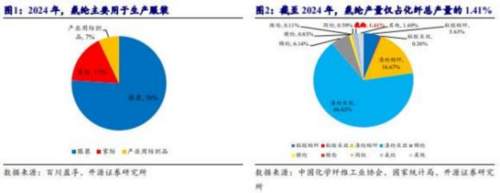
Core Viewpoint - The demand for spandex is expected to grow due to increased penetration in downstream applications and trends in functional consumption, particularly in the textile and apparel sectors [1][4]. Industry Overview - In 2024, 76% of spandex will be used for clothing production, with an apparent consumption volume of 1.0269 million tons, reflecting a compound annual growth rate (CAGR) of 9.21% from 2020 to 2024, significantly higher than other mainstream synthetic fibers [1]. - The sales of clothing, footwear, and textiles in China are projected to grow year-on-year from 2023 to 2024, with a cumulative sales increase of 3.10% in the first half of 2025 [1]. - The emergence of trendy items like yoga and sun-protective clothing since 2020 has notably boosted overall spandex demand [1]. Supply and Demand Dynamics - The spandex industry is currently facing severe overcapacity, with new production capacity of 135,000 tons in 2024, representing a year-on-year growth rate of 10.88% [3]. - The average gross profit margin for spandex was reported at -5,217 yuan/ton as of August 13, 2025, indicating continuous losses for over two years [3]. - Inventory levels are at historical highs, impacting operational willingness among companies and leading to a decline in overall industry operating rates compared to the same period in 2024 [3]. Market Outlook - The ongoing capacity clearance in the spandex industry may improve the supply-demand balance, with leading companies likely to benefit first [4]. - Major spandex producers like Huafeng Chemical and Xinxiang Chemical Fiber have a significant cost advantage, with unit costs of 22,406 yuan/ton and 25,263 yuan/ton, respectively, compared to the industry average of 29,711 yuan/ton [6]. - Despite the current low industry sentiment, leading companies are expected to maintain positive gross margins of 13.66% and 0.30% in 2024 [6]. Company Performance - Huafeng Chemical reported Q2 2025 revenue of 5.823 billion yuan, a year-on-year decline of 17.84%, with a net profit of 479 million yuan, down 42.61% [8]. - Xinxiang Chemical Fiber achieved Q2 2025 revenue of 1.828 billion yuan, a year-on-year increase of 16.74%, with a net profit of 89.2582 million yuan, up 1581.12% [11]. - Taihe New Materials reported a net profit of 92.2925 million yuan in Q2 2025, reflecting a year-on-year growth of 16.15% [9].


《特殊商品》日报-20250829
Guang Fa Qi Huo· 2025-08-29 02:44
Group 1: Report Industry Investment Ratings - No industry investment ratings are provided in the reports. Group 2: Core Views Rubber Industry - New rubber listing is slow, overseas ship arrivals are few, inventory may continue to decline, fundamentals remain strong, and there is still upward potential. The 01 contract range is expected to be between 15,000 - 16,500. Pay attention to the raw material supply during the peak production period in the main producing areas. If the raw material supply is smooth, consider short - selling at high prices [1]. Industrial Silicon Industry - The cost of industrial silicon is rising, and there are news of capacity clearance. In August, supply and demand both increased, maintaining a tight balance. In the long - term, if some capacity is cleared, supply pressure will decrease. It is recommended to buy on dips, but be aware of the pressure from inventory and warehouse receipts [2]. Polysilicon Industry - In August, polysilicon supply and demand both increased, but the supply growth rate was higher, still facing inventory accumulation pressure. Future warehouse receipts are expected to increase. The price will mainly fluctuate at a high level, with the lower limit of the price range rising to 47,000 yuan/ton and the upper limit between 58,000 - 60,000 yuan/ton. It is recommended to buy on dips, and consider short - selling by buying put options at high prices when volatility is low [4]. Log Industry - The current main contract is the 2511 contract, and the market value fluctuates around the delivery cost and receiving value. The fundamentals are expected to improve marginally. The demand remains firm, and the inventory continues to decline. It is recommended to consider buying the 2601 contract on dips [5]. Glass and Soda Ash Industry - **Soda Ash**: The market is in a weak and volatile state. There is no growth expectation for demand, and the inventory may be further pressured. It is recommended to hold short positions [6]. - **Glass**: The market is also in a weak and volatile state. The market has a negative feedback loop, with the near - term 09 contract facing weak reality and the far - term 01 contract facing weak expectations. High - level short positions can be closed for profit and wait for new driving factors [6]. Group 3: Summary by Directory Rubber Industry Spot Prices and Basis - Yunnan state - owned whole - grade rubber (SCRWF) in Shanghai remained at 14,900 yuan/ton. The basis of whole - milk rubber (switched to the 2509 contract) decreased by 21.51% to - 1045 yuan/ton. Thai standard mixed rubber increased by 1.02% to 14,850 yuan/ton [1]. Inter - monthly Spreads - The 9 - 1 spread decreased by 3.14% to - 982 yuan/ton, the 1 - 5 spread decreased by 5.88% to - 90 yuan/ton, and the 5 - 9 spread increased by 3.37% to 1075 yuan/ton [1]. Fundamental Data - In June, Thailand's production increased by 44.23% to 392,600 tons, Indonesia's production decreased by 12.03% to 176,200 tons, India's production increased by 30.82% to 62,400 tons, and China's production increased by 6.8 tons to 103,200 tons. The weekly开工率 of semi - steel tires decreased by 0.36% to 72.77%, and that of all - steel tires decreased by 0.92% to 63.84%. In July, domestic tire production decreased by 8.16% to 94.364 million, tire exports increased by 10.51% to 66.65 million, and natural rubber imports increased by 2.47% to 474,800 tons [1]. Inventory Changes - Bonded area inventory decreased by 0.50% to 616,731 tons, and the warehouse futures inventory of natural rubber on the SHFE decreased by 3.47% to 44,857 tons [1]. Industrial Silicon Industry Spot Prices and Basis - The price of East China oxygen - passed S15530 industrial silicon decreased by 0.54% to 9,250 yuan/ton, and the basis decreased by 12.26% [2]. Inter - monthly Spreads - The 2509 - 2510 spread decreased by 40.00% to - 35 yuan/ton, the 2510 - 2511 spread increased by 33.33% to - 10 yuan/ton [2]. Fundamental Data - National industrial silicon production increased by 3.23% to 338,300 tons, Xinjiang's production decreased by 15.21% to 150,300 tons, Yunnan's production increased by 153.86% to 41,200 tons, and Sichuan's production increased by 31.05% to 48,500 tons. The national开工率 increased by 2.47% to 52.61%. Organic silicon DMC production decreased by 4.54% to 199,800 tons, polysilicon production increased by 5.10% to 101,000 tons, and industrial silicon exports increased by 8.32% to 74,000 tons [2]. Inventory Changes - Xinjiang's inventory decreased by 0.83% to 119,100 tons, Yunnan's factory inventory decreased by 0.94% to 31,600 tons, and social inventory decreased by 0.37% to 541,000 tons [2]. Polysilicon Industry Spot Prices and Basis - The average price of N - type re - feed material and N - type granular silicon remained unchanged at 49,000 yuan/ton and 46,000 yuan/ton respectively. The N - type material basis decreased by 314.52% to - 665 yuan/ton [4]. Futures Prices and Inter - monthly Spreads - The main contract price increased by 2.00% to 49,665 yuan/ton. The spread between the current month and the first - continuous contract decreased by 180.00% to - 80 yuan/ton [4]. Fundamental Data - Weekly polysilicon production increased by 6.53% to 31,000 tons, and monthly polysilicon production increased by 5.10% to 101,000 tons. Monthly polysilicon imports increased by 47.48% to 120 tons, exports decreased by 3.92% to 210 tons, and net exports decreased by 32.44% to 100 tons [4]. Inventory Changes - Polysilicon inventory decreased by 14.46% to 213,000 tons, and silicon wafer inventory increased by 3.68% to 180,500 GW [4]. Log Industry Futures and Spot Prices - The log 2509 contract decreased by 0.25% to 790 yuan/cubic meter, the 2511 contract increased by 0.86% to 821.5 yuan/cubic meter, and the 2601 contract increased by 1.03% to 836.5 yuan/cubic meter. The prices of main benchmark delivery spot products remained unchanged [5]. Import Cost Calculation - The RMB - US dollar exchange rate decreased to 7.149, and the import theoretical cost decreased to 814.95 yuan/cubic meter [5]. Monthly Data - Port shipments decreased by 1.51% to 1.733 million cubic meters, and the number of ships from New Zealand to China, Japan, and South Korea decreased by 11.32% to 47 [5]. Inventory and Demand - As of August 22, the national coniferous log inventory was 3.05 million cubic meters, and the daily average log delivery volume was 64,500 cubic meters [5]. Glass and Soda Ash Industry Glass - related Prices and Spreads - North China, East China, Central China, and South China glass quotes remained unchanged. The glass 2509 contract decreased by 1.52% to 970 yuan/ton [6]. Soda Ash - related Prices and Spreads - North China, East China, Central China, and Northwest soda ash quotes remained unchanged. The soda ash 2505 contract increased by 0.29% to 1379 yuan/ton, and the 2509 contract decreased by 0.29% to 1187 yuan/ton [6]. Supply - Soda ash开工率 decreased by 6.79% to 82.47%, and weekly soda ash production decreased by 6.79% to 719,000 tons. The daily melting volume of float glass and photovoltaic glass remained unchanged [6]. Inventory - Glass factory inventory decreased by 1.64% to 62,566,000 heavy boxes, soda ash factory inventory decreased by 2.26% to 1.8675 million tons, and soda ash delivery warehouse inventory increased by 0.89% to 500,700 tons [6]. Real Estate Data - The year - on - year growth rate of new construction area increased by 0.09% to - 0.09%, the construction area decreased by 2.43% to 0.05%, the completion area decreased by 0.03% to - 0.22%, and the sales area decreased by 6.50% to - 6.55% [6].
奥特维,净利同比降近六成
3 6 Ke· 2025-08-27 03:03
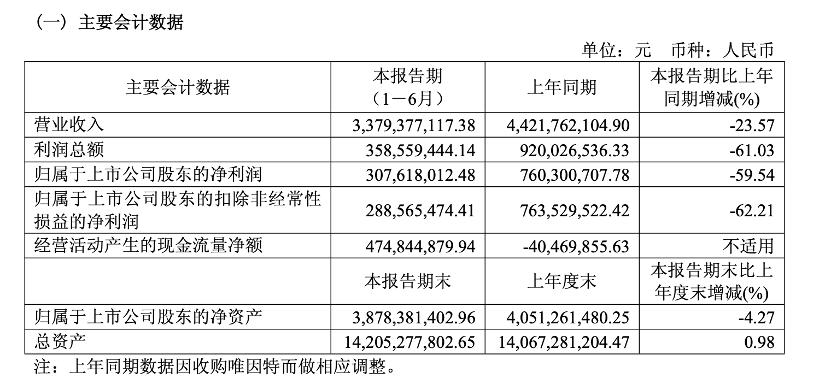
Core Viewpoint - The company reported a significant decline in revenue and profit for the first half of 2025, primarily due to the ongoing downturn in the photovoltaic industry and challenges faced by downstream customers [1][2][3] Financial Performance - The company achieved operating revenue of 3.38 billion yuan, a year-on-year decrease of 23.57% [2] - The net profit attributable to shareholders was 308 million yuan, down 59.54% compared to the previous year [2] - The net profit after deducting non-recurring gains and losses was 289 million yuan, a decline of 62.21% year-on-year [2] - The total profit for the period was 359 million yuan, reflecting a 61.03% decrease from the same period last year [2] - The net cash flow from operating activities was 475 million yuan, a significant improvement from a negative 40 million yuan in the previous year [3] Business Segments - Revenue from photovoltaic equipment reached 2.67 billion yuan, accounting for 78.87% of total revenue, with core products maintaining a competitive edge in the market [3] - Revenue from lithium battery equipment was 176 million yuan, representing 5.20% of total revenue [3] - The company had a backlog of orders amounting to 10.57 billion yuan, a decrease of 26.32% year-on-year, primarily due to a decline in photovoltaic industry orders [3] Market and Product Development - The company is expanding into overseas markets to mitigate the impact of declining orders in the photovoltaic sector [5] - Domestic revenue was 2.59 billion yuan, making up 76.56% of total revenue, while international revenue was 792 million yuan, accounting for 23.44% [5] - The company has invested 363 million yuan in a high-end intelligent equipment smart factory project, with a completion progress of 35.16% [5] Intellectual Property and R&D - As of June 30, 2025, the company held a total of 2,361 authorized intellectual property rights, including 313 invention patents [4] - The company's products are primarily used in the photovoltaic, lithium battery, and semiconductor industries [4] Stock Performance - As of August 25, 2025, the company's stock price was 39.96 yuan per share, with a total market capitalization of 12.595 billion yuan [6]

石化板块走高 机构圈出这些机会
Di Yi Cai Jing· 2025-08-26 06:38
Group 1 - The petrochemical sector is experiencing an upward trend, with companies like Compton, Tongkun Co., and Xin Fengming leading the gains [1] - Everbright Securities highlights that despite geopolitical uncertainties, the medium to long-term oil supply and demand dynamics remain favorable, maintaining a positive outlook on "three major oil companies" and the oil service sector [1] - The recovery of the macro economy is boosting chemical demand, and long-term capacity elimination in chemical products is beneficial for leading enterprises, with a positive outlook on large refining, coal chemical, and ethylene profitability [1] Group 2 - Minsheng Securities notes the emergence of "anti-involution" policies in the petrochemical industry, recommending a focus on industry leaders with strong performance stability and consistent high dividends [1] - Oil prices are expected to have a floor, leading to high earnings certainty for oil companies, combined with high dividend characteristics, which may enhance valuations; attention is advised on companies with sustained production growth and low cost [1] - Domestic policies encourage oil and gas reserve increases and production, suggesting a focus on companies in the growth phase of production [1]

奥特维:上半年净利润同比下降59.54% 拟每10股派5元
Zheng Quan Shi Bao Wang· 2025-08-25 09:16
Core Viewpoint - The company reported a significant decline in both revenue and net profit for the first half of 2025, primarily due to the ongoing downturn in the photovoltaic industry and challenges faced by downstream customers [1] Financial Performance - The company achieved an operating revenue of 3.379 billion yuan, representing a year-on-year decrease of 23.57% [1] - The net profit attributable to shareholders was 308 million yuan, down 59.54% year-on-year [1] - Basic earnings per share were reported at 0.98 yuan [1] Dividend Distribution - The company plans to distribute a cash dividend of 5 yuan (including tax) for every 10 shares to all shareholders [1] Industry Context - The decline in performance is attributed to the persistent low demand in the photovoltaic industry, with ongoing capacity adjustments and extended acceptance periods for products [1]