
关税战

Search documents
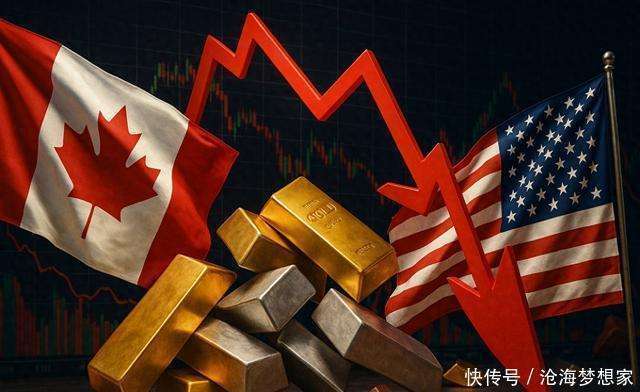
美国对加拿大加征关税,出口骤降27%,无奈之下只能向中国求助?
Sou Hu Cai Jing· 2025-11-04 10:46
Core Viewpoint - The relationship between Canada and the U.S. has become strained, with Canada facing economic pressures and shifting its stance towards China despite previous alignment with U.S. policies [1][3][5]. Group 1: Economic Pressures on Canada - Canada has been significantly impacted by U.S. tariffs, with its tariffs reaching 39%, the highest among allies, leading to a 27% drop in exports [7][8]. - The agricultural sector in Canada, particularly in the western provinces, has suffered due to China's retaliatory tariffs on Canadian products like canola and pork [3][7]. - The Oxford Economics forecast indicates that if tariff policies remain unchanged, Canada's oil and automotive industries could face severe impacts, with over 1 million jobs at risk in Ontario alone [7]. Group 2: Shift in Canada's Foreign Policy - Recently, Canada has begun to soften its stance towards China, with officials expressing a desire to strengthen cooperation and reduce tariffs on certain Chinese products [5][9]. - The Canadian government aims to diversify its trade and reduce reliance on the U.S. market, targeting a doubling of exports to non-U.S. markets over the next decade [9][10]. - Despite these intentions, Canada's efforts to establish deeper ties with China face challenges due to historical dependencies and U.S. pressures [12]. Group 3: U.S.-Canada Relations - The U.S. administration under Trump has been unyielding, refusing to ease tariffs and criticizing Canada for its attempts to negotiate [8][12]. - Canada's advertising campaign in the U.S. aimed at ending the tariff war backfired, leading to increased tensions and a halt in negotiations [8]. - The ongoing economic conflict has left Canada in a precarious position, struggling to balance its historical ties with the U.S. while seeking new partnerships [12].

11月3日上期所沪金期货仓单较上一日持平
Jin Tou Wang· 2025-11-03 09:08
Group 1 - The total amount of gold futures in the Shanghai Futures Exchange is 87,816 kilograms, with no change from the previous day [1][2] - On November 3, gold futures opened at 924.60 CNY per gram, reaching a high of 927.28 CNY and a low of 911.18 CNY, closing at 922.58 CNY with a 0.47% increase [1] - Trading volume for the day was 341,261 contracts, with open interest decreasing by 5,518 contracts to 151,373 contracts [1] Group 2 - The Federal Reserve's interest rate cut in October has positively impacted the market, alongside progress in US-China trade negotiations, leading to a decrease in market risk aversion [2] - The US has decided to cancel the 10% tariff on Chinese goods, while the 24% retaliatory tariff will remain suspended for another year, with China adjusting its countermeasures accordingly [2] - Both parties have agreed to extend certain tariff exclusion measures, indicating ongoing negotiations in the trade relationship [2]
翻脸不认人?美国财长:如果中国重新限制稀土,美国重启关税战
Sou Hu Cai Jing· 2025-11-03 07:10
Group 1 - The U.S. has returned to the tariff status prior to April 2, 2023, and China has suspended its stricter rare earth export controls in response to U.S. actions in tariffs and technology sanctions [1][7] - U.S. Treasury Secretary Bessent has threatened to restart the tariff war if China re-imposes restrictions on rare earth exports, indicating U.S. concerns over its reliance on Chinese materials [3][8] - The U.S. has limited tools left to contain China, primarily focusing on sanctions against high-tech companies and tariffs, with previous tariff actions proving ineffective [10] Group 2 - The U.S. has a history of disregarding agreements and international commitments, often prioritizing its own interests over global cooperation [5] - The U.S. seeks to control international organizations to serve its interests, reflecting a skewed worldview that overestimates its global influence [5] - Recent agreements between the U.S. and China highlight the ongoing strategic competition, particularly in the rare earth sector, which is critical for technology and defense industries [8][10]

美国关税战告一段落,欧日印加遭到华盛顿压榨,美国才是赢家?
Sou Hu Cai Jing· 2025-11-02 18:14
Core Viewpoint - The recent trade war initiated by the U.S. against China has temporarily paused, but the impact on other countries, particularly India, has been severe, with significant economic consequences resulting from increased tariffs [1][2]. Group 1: Impact on India - The U.S. imposed tariffs on India that reached as high as 50%, marking the highest tariff increase globally [1]. - The trade war has led to a massive capital outflow from India, amounting to $17 billion [3]. - Foreign direct investment (FDI) in India has plummeted by over 90% compared to the same period last year, indicating a drastic decline in investment confidence [3].
美国对华滥征的关税归零,印度人一觉睡醒,发现自己成关税战主力
Sou Hu Cai Jing· 2025-11-02 08:43
Core Viewpoint - The article discusses the impact of the US-China trade tensions on India, highlighting how India has become a significant target of US tariffs, ultimately revealing its vulnerabilities in the global trade landscape [1][22]. Group 1: US Tariff Policy - The US initially imposed high tariffs on China, with rates reaching up to 145%, which led to retaliatory measures from China, causing significant economic strain in the US [5][6]. - The US faced severe economic consequences, including a $4 trillion loss in stock market value and a 21% bankruptcy rate among farmers due to the trade war [5][6]. - The US Treasury Secretary indicated that the threat of 100% tariffs was no longer viable, leading to a reduction of 91% in additional tariffs as the US sought to ease the economic burden [8] Group 2: India's Economic Challenges - India, initially hoping to benefit from the US-China trade conflict, found itself facing a 50% tariff on its exports to the US, the highest among all trade partners [10][12]. - The imposition of tariffs severely impacted India's key export sectors, particularly pharmaceuticals, textiles, and agriculture, leading to a 22% drop in exports in August and an 18% decline in September [17][19]. - The textile industry in Tamil Nadu saw over 200 factories shut down, resulting in mass unemployment, while the overall inflation rate in India surged to 6.8%, significantly above the central bank's target [19][20]. Group 3: Global Trade Dynamics - India's attempts to position itself as a key player in the global supply chain were undermined by its inadequate infrastructure and incomplete industrial chain, which were exposed during the tariff crisis [20][22]. - The article suggests that India's ambitions are not matched by its current capabilities, making it vulnerable to being used as a pawn in the broader geopolitical landscape [15][22]. - The situation illustrates the broader chaos in global trade, with India emerging as a "naked swimmer" in the face of US trade protectionism [22].
美国突然撤掉对我们高关税,印度人一觉睡醒,发现自己成关税战主力
Sou Hu Cai Jing· 2025-11-01 19:10
Core Viewpoint - The U.S. has quietly removed the 10% tariff on fentanyl from China, signaling a shift in trade pressure from China to India, which now faces a 50% punitive tariff on its goods without any transition period or exemptions [1][3][5]. Group 1: U.S.-China Trade Dynamics - The U.S. has paused plans for a 100% tariff increase on Chinese goods, indicating a potential thaw in U.S.-China trade relations [8][11]. - The recent U.S.-China meeting in San Francisco suggests that both countries have reached an understanding to avoid escalating tariffs against each other [11][20]. Group 2: Impact on India - India has become the new target of U.S. trade pressure, with no prior warning or negotiation space provided by the U.S. government [5][11]. - The punitive tariffs imposed on Indian goods cover a wide range of products, leaving Indian exporters unprepared [11][13]. - Indian media reports indicate rising tensions in U.S.-India trade relations, with uncertainty about the limits of this tension [7][13]. Group 3: India's Strategic Position - India's position in the global trade landscape is precarious, as it lacks strong countermeasures against U.S. tariffs compared to China [14][18]. - The sentiment in India reflects a realization that it may have been overestimating its importance in the global supply chain [23][27]. - The lack of manufacturing capability in India compared to China limits its negotiating power in trade discussions [23][27]. Group 4: Global Supply Chain Implications - Following the U.S.-China rapprochement, foreign companies are reconsidering their plans to shift orders to India, favoring China instead due to its superior supply chain integration capabilities [27]. - The situation highlights that the most significant costs in global trade dynamics may ultimately fall on India, which had hoped to benefit from the U.S.-China tensions [27].
关税战大逆转,美国取消10%芬太尼税,特朗普为啥怂了?
Sou Hu Cai Jing· 2025-11-01 11:10
Core Points - The U.S. has decided to cancel the 10% tariff on Chinese goods related to fentanyl and will suspend the previously planned 24% reciprocal tariff for one year, indicating a shift in trade negotiations [1][3][5] - The tariff increase had previously raised the average tariff rate on Chinese goods to 55%, highlighting the significant impact of these tariffs on trade dynamics [1] - Both the U.S. and China have made concessions, with China resuming purchases of U.S. soybeans and suspending rare earth export controls, which are crucial for U.S. high-tech industries [3][7] U.S. Economic Context - The high tariffs have been unsustainable for the U.S. economy, leading to inflation, rising prices, and increased costs for businesses, which in turn affects employment and consumer spending [5] - Trump's declining approval ratings are linked to the economic pressures faced by ordinary Americans due to these tariffs [5] Strategic Implications - The negotiations reflect a broader need for both countries to stabilize their economies amid external pressures, with the U.S. facing inflation and China experiencing slowing foreign trade growth [7] - The ongoing trade war is characterized as a long-term strategic competition, emphasizing the importance of strengthening national capabilities to withstand external pressures [11][13]
政府关门或将结束——全球经济观察第18期【陈兴团队•财通宏观】
陈兴宏观研究· 2025-11-01 08:35
Global Asset Price Performance - US Treasury yields increased, with the 10-year yield rising by 9 basis points. Major global stock markets saw gains, with the S&P 500, Dow Jones, and Nasdaq increasing by 0.7%, 0.8%, and 2.2% respectively. In the commodity market, WTI and Brent crude oil prices fell by 2% and 1.5%, while gold prices dropped by 2.7%. The US dollar index strengthened by 0.8% [2][3]. Major Central Bank Monetary Policies - The Federal Reserve decided to lower the benchmark interest rate by 25 basis points during the October meeting, with plans to end balance sheet reduction by December. There were internal disagreements, with two members opposing the rate cut. Fed Chair Powell indicated that further rate cuts are not guaranteed, citing concerns over missing key economic data due to the government shutdown and worries about inflation stabilization. The European Central Bank maintained its interest rates, stating that inflation remains close to the 2% target [4][5][6]. US Economic Dynamics - The US government shutdown continues, with the Senate rejecting a temporary funding bill, leading to estimated economic losses of $7 billion to $14 billion. There are hopes among some Republicans for former President Trump to intervene. Meanwhile, the US and China have extended a truce in their trade war, with the US canceling a 10% tariff on Chinese goods and suspending other tariffs for a year. Additionally, a trade agreement was reached between the US and South Korea [9][10]. Economic Dynamics in Other Regions - The Eurozone's GDP grew by 0.4% in Q3, but overall performance remains weak due to sluggish consumption and industrial capacity issues. The unemployment rate in the Eurozone is at 6.3%, with youth unemployment rising. The US and Japan announced a $550 billion investment plan focusing on energy, AI, and critical minerals. Tokyo's core CPI rose to 2.8%, exceeding the Bank of Japan's 2% target due to rising utility prices. Israel has resumed airstrikes on Gaza in response to attacks from Hamas [16][17][18].


特朗普不是不想对中国征收100%关税,而是不敢对中国征收100%关税,因为特朗普明白对中国征收100%关税,中国必定第一时间对等反制
Sou Hu Cai Jing· 2025-10-31 13:51
Core Viewpoint - The article discusses the implications of potential 100% tariffs on Chinese imports proposed by Trump, highlighting the significant risks and challenges for the U.S. economy while suggesting that such threats are more political posturing than actionable policy [1][3][10]. Trade Relations - The U.S.-China bilateral trade volume reached $575 billion in 2023, indicating that imposing 100% tariffs would severely disrupt U.S. supply chains [3]. - In 2023, China's exports to ASEAN surpassed those to the U.S. for the first time, reaching approximately $550 billion, showcasing China's diversification in trade relationships [7]. Economic Impact - The Federal Reserve reported that U.S. manufacturing jobs have only increased by less than 4% compared to pre-pandemic levels, raising concerns about the capacity to support a decoupled market [5]. - Previous tariffs have already cost American households an average of $1,300 annually, and a 100% tariff could exacerbate inflation significantly [5]. Strategic Positioning - China has been preparing for potential decoupling since 2020, with strategies such as rare earth export management and expanding trade with regions like the Middle East and Africa [3][7]. - China's domestic chip import volume has been declining since 2022, with a domestic replacement rate reaching 45%, indicating a shift towards self-sufficiency [9]. Political Dynamics - Trump's rhetoric about tariffs appears to be more about electoral strategy than genuine intent, as the economic repercussions would likely harm his voter base [5][9]. - The article suggests that U.S. politicians are focused on electoral gains while Chinese companies prioritize survival and operational continuity [9].
罗志恒:中美吉隆坡经贸磋商——谈成什么?还剩什么?未来如何?
Sou Hu Cai Jing· 2025-10-31 05:19
Core Points - The meeting between the leaders of China and the U.S. in Busan on October 30 focused on enhancing economic and trade cooperation, marking a new phase in U.S.-China economic relations [1][2] - The recent negotiations resulted in a series of mutually beneficial arrangements, temporarily easing tensions and indicating a shift from cautious responses to strategic interactions [1][8] Summary of Key Issues A. Outcomes of the Kuala Lumpur Economic Negotiations 1. The U.S. agreed to cancel the 10% "fentanyl tariff" on Chinese goods [3] 2. The U.S. will continue to suspend the 24% reciprocal tariffs for one year and extend certain tariff exclusion measures [3] 3. The U.S. will pause the implementation of the 50% export control rule for one year [3] 4. The U.S. will suspend the 301 investigation measures against China's maritime, logistics, and shipbuilding industries for one year [3] B. China's Corresponding Adjustments 1. China will adjust its countermeasures against the U.S. "fentanyl tariff" [4] 2. China will continue to suspend the 24% counter-tariffs for one year and extend certain tariff exclusion measures [4] 3. China will pause the implementation of new export control measures related to rare earths for one year [4] 4. China will also suspend its countermeasures against the U.S. regarding port service fees for one year [4] C. Unresolved Issues 1. The U.S. retains a 10% tariff on Chinese goods, despite reducing some tariffs [6] 2. The average tariff rate on U.S. imports from China remains high, with estimates around 30% [7] 3. The U.S. continues to impose restrictions on high-tech industries, including semiconductors and electric vehicles [7] D. Dynamics of U.S.-China Economic Competition 1. The trade conflict resembles a repeated prisoner's dilemma, where both sides benefit from cooperation but suffer from conflict [8] 2. The U.S. has shown weaknesses in its strategy, particularly in agriculture and rare earths, which are critical to its economy [10] 3. The ongoing negotiations are expected to be long-term and challenging, with both sides needing to strengthen their negotiating positions [11][12]