智能化

Search documents
研判2026!中国汽车线束行业产业链、产量、需求量、市场规模、竞争格局、发展趋势:在汽车电动化、智能化趋势下,行业迎来供需两端增长的黄金期[图]
Chan Ye Xin Xi Wang· 2026-02-27 01:13
Core Viewpoint - The automotive wiring harness industry is experiencing stable growth driven by increasing demand for advanced automotive features and the ongoing trend of electrification and intelligence in vehicles [1][10]. Industry Overview - Automotive wiring harnesses are essential components that facilitate energy transfer and signal transmission within vehicles, categorized into main harnesses and small harnesses based on their functions [3][7]. - The industry is supported by a stable supply of raw materials, particularly copper, which is crucial for high-voltage harnesses due to its excellent conductivity [6][10]. Market Demand and Supply - The demand for automotive wiring harnesses is driven by the growing consumer need for advanced safety and comfort features, such as automatic emergency braking and voice recognition systems [1][10]. - By 2025, the production of automotive wiring harnesses in China is projected to reach 3.025 billion sets, with a year-on-year increase of 2.5%, while demand is expected to hit 2.414 billion sets, up 3.5% [10]. Market Size and Growth - The market size of the automotive wiring harness industry in China is anticipated to reach 139.19 billion yuan by 2025, reflecting a year-on-year growth of 4.2% [10]. - The demand for wiring harnesses in the new energy vehicle sector is expected to grow significantly, with the market size projected to reach 81.785 billion yuan by 2025, a year-on-year increase of 27.0% [11]. Competitive Landscape - The global automotive wiring harness market is dominated by major players from Japan and Europe, while Chinese companies are gradually entering the supply chain, particularly in the new energy vehicle segment [12]. - Key domestic companies include Luxshare Precision, Huagong Electric, and Yongding Co., which are gaining recognition for their capabilities in manufacturing and supplying wiring harnesses [12][13]. Development Trends - The industry is moving towards high-voltage and high-frequency transmission to meet the demands of electric and intelligent vehicles [15]. - There is a strong emphasis on lightweight materials to reduce vehicle weight and improve fuel efficiency, as automotive wiring harnesses contribute significantly to overall vehicle weight [16]. - Automation in production processes is expected to increase, enhancing efficiency and capacity in wiring harness manufacturing [18].






陈春花:智能化不是技术升级,而是管理方式的转变
Jing Ji Guan Cha Bao· 2026-02-27 01:02
(原标题:陈春花:智能化不是技术升级,而是管理方式的转变) 当组织规模持续扩大、业务版图不断延伸,单纯依靠流程规范与系统支撑,已经不足以应对复杂性增长 带来的管理压力。 数字化解决的是"如何更快更稳地做对事",而智能化要回答的是"如何在不确定中持续做出更优判断"。 因此,数字化与智能化不应被视为技术部门的课题,而应成为组织管理方式的一次根本性转变。 随着AI的深入发展,我们对智能化的基本判断是:让机器承担确定性工作,让人专注于不确定性判 断。 一、夯实数字底座,是智能化的前提 智能化不是从算法开始,而是从数据开始。 没有一致口径、可追溯、可复用的数据基础,任何智能化尝试都只能停留在演示层面。 组织智能化建设将首先聚焦于: 当数据成为组织的公共资产,而不是部门的私有资源,智能化才具备生长的土壤。 二、用智能化重构工作方式,而不是叠加工具 四、在边界清晰的前提下稳步探索前沿应用 管理者对前沿技术保持开放,但也保持审慎。 智能化的真正价值,不在于"多用了一个系统",而在于是否改变了工作的重心。 管理者需要优先在以下场景中推进智能化应用: · 将历史数据与业务行为关联,为经营分析提供更具前瞻性的参考。 通过智能化手段 ...
“智”护能源大动脉——国家能源集团新朔铁路数智化运煤记
Ke Ji Ri Bao· 2026-02-27 00:47
Core Viewpoint - The news highlights the advancements in technology and automation within the coal transportation sector, particularly focusing on the New Shuo Railway's efforts to enhance operational efficiency and safety through smart systems and robotics. Group 1: Technological Advancements - The introduction of an auxiliary driving system allows for automatic speed adjustments based on track conditions, reducing the physical strain on drivers and enhancing focus on safety [1]. - Wireless multiple-unit control technology enables two locomotives to work in tandem, significantly increasing the transport capacity of heavy freight trains [2]. - The implementation of robotic systems in maintenance operations has reduced the time required for inspections from several hours to just 105 minutes, while also increasing fault detection rates by 30% [2]. Group 2: Future Developments - The New Shuo Railway is committed to furthering its digital and intelligent transformation, moving from isolated technological improvements to a more integrated system approach [3]. - The company plans to expand the breadth and depth of technological applications to ensure the reliability of energy supply through advanced smart solutions [3].
伯特利:系列点评十三拟收购豫北转向控股权,智能电动齐驱-20260227
Guolian Minsheng Securities· 2026-02-27 00:25
Investment Rating - The report maintains a "Buy" rating for the company [3] Core Insights - The company plans to acquire a 50.9727% stake in Yubei Steering, which will enhance its competitiveness in the steering business. The acquisition is valued at no more than 2.2 billion yuan, with a maximum payment of 1.121 billion yuan. If Yubei Steering's audited net assets fall below 930 million yuan by the end of 2025, the valuation will be adjusted accordingly [9] - Yubei Steering is expected to generate 3.179 billion yuan in revenue and a net profit of 151 million yuan in 2025, with a net profit margin of 4.75%. This acquisition is projected to bring nearly four times the revenue increment to the company's steering business, improving its technical capabilities, revenue scale, market share, and profitability [9] - The company is actively expanding its smart and electric vehicle technologies, becoming the first domestic supplier to mass-produce line control braking systems and electric parking brakes (EPB). It has 109 projects in research for line control braking systems and 181 for electric systems as of the first three quarters of 2025 [9] - The company is also advancing its global footprint, with a production base in Mexico and plans for a facility in Morocco starting in 2024 [9] - The company is positioned as a leader in the line control chassis sector and is making strides in humanoid robotics, with several subsidiaries and investments in this area [9] Financial Projections - Revenue is projected to grow from 9.937 billion yuan in 2024 to 18.76 billion yuan in 2027, with growth rates of 33.0%, 24.2%, 22.6%, and 23.9% respectively [3][10] - Net profit attributable to shareholders is expected to increase from 1.209 billion yuan in 2024 to 2.005 billion yuan in 2027, with growth rates of 35.6%, 9.1%, 22.2%, and 24.3% respectively [3][10] - Earnings per share (EPS) is forecasted to rise from 1.99 yuan in 2024 to 3.31 yuan in 2027, with corresponding price-to-earnings (PE) ratios of 27, 25, 20, and 16 [3][10]

苏州伟创电气科技股份有限公司 2025年度业绩快报公告
Zhong Guo Zheng Quan Bao - Zhong Zheng Wang· 2026-02-26 22:44
Financial Performance - The company achieved an operating revenue of 1,946.20 million yuan, representing an 18.66% increase compared to the same period last year [1] - The net profit attributable to the parent company was 268.36 million yuan, up by 9.52% year-on-year [1] - The net profit attributable to the parent company after deducting non-recurring gains and losses was 254.85 million yuan, reflecting a 6.37% increase from the previous year [1] - Basic earnings per share were 1.27 yuan, which is a 9.48% increase compared to the same period last year [1] Financial Position - As of the end of the reporting period, the total assets amounted to 3,802.24 million yuan, a growth of 23.69% from the beginning of the year [2] - The equity attributable to the parent company was 2,355.08 million yuan, increasing by 12.55% since the start of the year [2] - The net asset per share attributable to the parent company was 11.00 yuan, which is an 11.11% increase from the beginning of the year [2] Industry Context and Strategic Initiatives - The industrial automation industry is maintaining resilience and is accelerating its upgrade towards digitalization, intelligence, and flexibility, with overall demand remaining robust [3] - The company is closely following industry trends and is committed to advancing its "one core and two new" strategy, focusing on industrial automation while expanding into robotics and green energy sectors [3] - The company is leveraging raised funds to enhance digital production line construction, effectively releasing production capacity and improving efficiency and quality control [3] - The operational measures taken have led to stable growth in both operating revenue and net profit attributable to the parent company, with continuous improvement in operational quality [3]

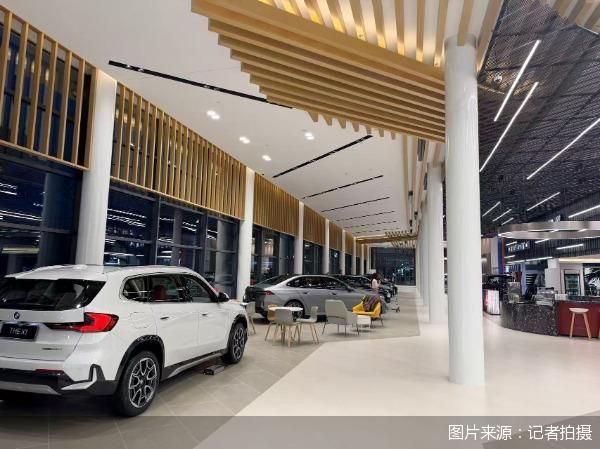
牵手宁德时代 宝马“补课”电动化
Bei Jing Shang Bao· 2026-02-26 16:47
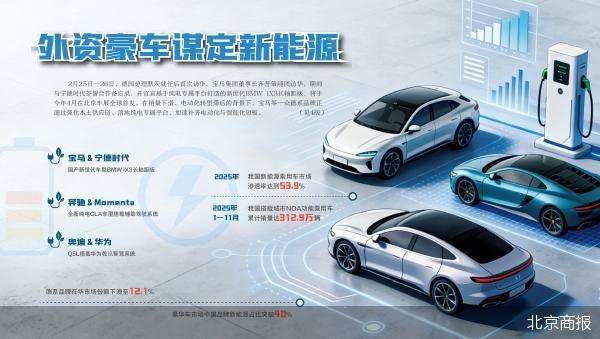
Core Insights - German Chancellor Merz's first visit to China after taking office included a delegation from BMW, which signed a cooperation memorandum with CATL to enhance the local supply chain and accelerate the electric transformation of the company [1][3] - BMW announced the global debut of the new generation BMW iX3 long-wheelbase version at the Beijing Auto Show in April, aiming to strengthen its position in the Chinese luxury car market [1][3] Group 1: Market Performance - BMW and MINI brands experienced a 12.5% decline in sales in China, totaling 625,000 units in 2025, which is a drop of approximately 200,000 units from the peak in 2023 [5] - The performance of BMW's previous iX3 model, based on the "oil-to-electric" platform, was underwhelming, with significant price reductions and low sales figures, including only 14 units sold in January 2026 [4][5] Group 2: Product Development - The upcoming new generation BMW iX3 will be built on the Neue Klasse platform, independent of the fuel vehicle platform, featuring an 800V fast charging system and a sixth-generation eDrive system [4] - The new model will utilize a jointly developed cylindrical battery with CATL, boasting a 20% increase in energy density and a 30% improvement in range [4] Group 3: Competitive Landscape - The market share of German brands in China has decreased to 12.1%, with domestic brands capturing over 40% of the luxury electric vehicle market, challenging the dominance of German manufacturers [8] - BMW's electric models primarily offer basic L2-level driver assistance, while Chinese brands are advancing towards L3-level autonomous driving capabilities, increasing competitive pressure on BMW [7][8] Group 4: Strategic Adjustments - BMW has initiated price reductions in early 2026, with the i7 M70L electric model seeing a price cut of 301,000 yuan, and some fuel models also experiencing around a 12% reduction [6] - The company aims to enhance its competitiveness in the electric vehicle sector by deepening collaboration with local firms and responding to market demands through localized innovation [8][9]


宝马在华加码电动化
Bei Jing Ri Bao Ke Hu Duan· 2026-02-26 16:32
Core Insights - BMW is accelerating its electrification efforts in the Chinese market, highlighted by the signing of a cooperation memorandum with CATL to enhance battery supply chain collaboration and reduce carbon footprints [3][9] - The new generation BMW iX3 long-wheelbase version, based on a dedicated electric platform, is set to debut at the Beijing Auto Show in April, aiming to improve BMW's competitive position in the electric vehicle market [2][4] - BMW's sales in China have faced significant pressure, with a reported 12.5% year-on-year decline in 2025, bringing sales down to 625,000 units, a level comparable to seven years ago [6][8] Group 1: Market Strategy and Product Development - BMW's new generation iX3 will utilize the Neue Klasse platform, independent of the previous fuel vehicle platform, featuring an 800V fast-charging system and a new eDrive system [4][9] - The new model is expected to enhance energy density by 20% and improve range by 30% through collaboration with CATL [4] - To clear inventory for the new model, BMW has initiated significant price reductions, including a 30.1 million yuan cut for the i7 M70L [6][8] Group 2: Competitive Landscape - The market share of German brands in China has declined to 12.1%, with domestic brands capturing over 40% of the luxury electric vehicle market, indicating a shift in consumer preferences [8] - BMW's electric vehicle sales in China accounted for only 11.8% of its total sales in 2025, with most models being conversions from fuel vehicles [7][8] - The competitive pressure is exacerbated by advancements in smart driving technologies from local brands, which are gaining traction in the market [7][9] Group 3: Localization and Innovation - BMW's collaboration with CATL aims to strengthen its competitive edge in the electric vehicle supply chain and enhance its responsiveness to the local market [3][9] - The company is urged to accelerate localization efforts and leverage digital tools to optimize service efficiency and stabilize its market position [8][9] - Industry experts emphasize the need for BMW to align more closely with local market demands and innovate in product offerings to regain its competitive advantage [9]
伯特利(603596):系列点评十三:拟收购豫北转向控股权,智能电动齐驱
Guolian Minsheng Securities· 2026-02-26 15:13
Investment Rating - The report maintains a "Buy" rating for the company [3] Core Insights - The company plans to acquire 50.9727% of Yubei Steering, which will enhance its competitiveness in the steering business. The acquisition is valued at no more than 2.2 billion yuan, with a maximum payment of 1.121 billion yuan. If Yubei Steering's audited net assets fall below 930 million yuan by the end of 2025, the valuation will be adjusted accordingly [9] - The company is actively expanding its smart and electric vehicle technologies, becoming the first domestic supplier to mass-produce line-controlled braking systems and achieving significant project advancements in both smart and electric vehicle sectors [9] - The company is also progressing in its robotics business, establishing subsidiaries focused on humanoid robots and related technologies, indicating a strategic diversification into high-growth areas [9] Financial Forecasts - Projected revenue for 2024 is 9.937 billion yuan, with a growth rate of 33.0%. By 2027, revenue is expected to reach 18.76 billion yuan, with a growth rate of 23.9% [3][10] - The net profit attributable to shareholders is forecasted to be 1.209 billion yuan in 2024, growing to 2.005 billion yuan by 2027, reflecting a compound annual growth rate of 24.3% [3][10] - Earnings per share (EPS) is expected to increase from 1.99 yuan in 2024 to 3.31 yuan in 2027, with corresponding price-to-earnings (PE) ratios decreasing from 27 to 16 over the same period [3][10]
伯特利丨拟收购豫北转向控股权 智能电动齐驱【国联民生汽车 崔琰团队】
汽车琰究· 2026-02-26 15:12
Core Viewpoint - The company plans to acquire a 50.9727% stake in Yubei Steering, becoming its controlling shareholder, which is expected to enhance its competitiveness in the steering business [2][3]. Group 1: Acquisition and Business Impact - The acquisition of Yubei Steering is valued at no more than 2.2 billion yuan, with a maximum payment of 1.121 billion yuan. There is a commitment to adjust the valuation if Yubei Steering's audited net assets fall below 930 million yuan by the end of 2025 [3]. - Yubei Steering's main business includes automotive steering systems and mechatronic components, with projected revenue of 3.179 billion yuan and a net profit of 151 million yuan by 2025. This acquisition is expected to provide nearly a fourfold increase in the company's steering business revenue [3]. - The acquisition is anticipated to improve the company's technical capabilities, revenue scale, market share, and profitability in the automotive steering sector, thereby enriching its product line in automotive safety systems [3]. Group 2: Strategic Developments - The company is actively expanding its smart and electric vehicle technologies, becoming the first domestic supplier to mass-produce line control braking systems. It has 109 projects under research as of the first three quarters of 2025 [3]. - The company is also the first in China to achieve mass production of EPB (Electronic Parking Brake) systems, with 181 projects in research as of the first three quarters of 2025, and plans to expand production capacity to alleviate bottlenecks [3]. - The company has established a production base in Mexico, with a project to produce 4 million lightweight components annually, and is planning a base in Morocco to further its globalization efforts [3]. Group 3: Financial Projections - The company has adjusted its revenue forecasts for 2025-2027 to 12.345 billion yuan, 15.14 billion yuan, and 18.76 billion yuan, respectively, with net profits projected at 1.319 billion yuan, 1.612 billion yuan, and 2.005 billion yuan [5][6]. - The earnings per share (EPS) are expected to be 2.17 yuan, 2.66 yuan, and 3.31 yuan for the years 2025, 2026, and 2027, respectively, with corresponding price-to-earnings (PE) ratios of 25, 20, and 16 [5][6].

签约宁德时代、4月首发纯电平台iX3 宝马在华加码电动化
Bei Jing Shang Bao· 2026-02-26 14:36
Core Viewpoint - BMW is accelerating its electrification efforts in the Chinese market by collaborating with local companies and launching new electric models to regain its competitive edge in the luxury car segment amid declining sales and increased competition from domestic brands [2][3][6]. Group 1: Strategic Collaborations and Product Launches - BMW's chairman, Oliver Zipse, visited China with German Chancellor Olaf Scholz and signed a memorandum of understanding with CATL to enhance battery supply chain collaboration and reduce carbon footprints [2][3]. - The new generation BMW iX3 long-wheelbase version, designed on a dedicated electric platform, is set to make its global debut at the Beijing Auto Show in April [2][3][4]. - The first batch of new generation domestic test vehicles has already rolled off the production line in Shenyang [3]. Group 2: Market Performance and Sales Challenges - BMW and MINI brands experienced a 12.5% decline in sales in China, totaling 625,000 units in 2025, which is a drop of approximately 200,000 units from the peak in 2023 [6]. - The previous model of BMW iX3, based on an "oil-to-electric" platform, had poor market performance, leading to significant price reductions of nearly 40% from its original price [4][6]. - In early 2026, BMW initiated price cuts for luxury vehicles, including a reduction of 301,000 yuan for the i7 M70L model, with some fuel models seeing around a 12% decrease [6]. Group 3: Competitive Landscape and Industry Trends - The market share of German brands in China has declined to 12.1%, with domestic brands capturing over 40% of the luxury electric vehicle market [8]. - In 2025, the penetration rate of new energy passenger vehicles in China reached 53.9%, while BMW's electric vehicle sales accounted for only 11.8% of its total sales in the Chinese market [7][8]. - BMW's electric models primarily offer basic L2-level driver assistance, lacking advanced features like city NOA, which are increasingly available in domestic competitors' vehicles [7]. Group 4: Future Directions and Recommendations - Industry experts suggest that BMW should enhance its localization efforts and respond to market demands by developing products tailored to Chinese consumers [8][9]. - The collaboration with CATL aims to strengthen BMW's competitive position in the battery supply chain and align with global carbon neutrality trends [9]. - To avoid overlapping prices between old and new models, BMW is advised to clear inventory through price reductions before launching new products [8].