
结构性行情

Search documents
杨德龙:政策利好叠加资金推动 本轮慢牛长牛行情行稳致远
Xin Lang Ji Jin· 2025-09-24 11:26
Group 1 - The A-share market has experienced significant changes over the past year, with total market capitalization increasing from 68 trillion to 104 trillion, surpassing the 100 trillion mark [1] - The bull market was initiated by the "924" policy, leading to a rapid rise in the Shanghai Composite Index, which increased by nearly 1000 points within a few trading days [1] - The second wave of the bull market began in late June, driven by sectors such as chips, semiconductors, AI, and innovative pharmaceuticals, further solidifying the bull market trend [1][2] Group 2 - The technology sector has become the new market leader, with the total market capitalization of the electronics industry surpassing that of the banking sector [2] - Over a thousand stocks have doubled in value, primarily in industries like machinery, electronics, and biomedicine, indicating a strong performance in the tech sector [2] - The shift of household savings from real estate to the stock market, along with increased foreign investment, has fueled the liquidity-driven bull market [2] Group 3 - Technology innovation is now a core national strategy, with the market capitalization of technology companies exceeding 25% of the A-share market [3] - The number of technology firms among the top 50 companies has increased from 18 to 24, highlighting the growing importance of tech companies in the market [3] - Financial resources are increasingly directed towards technology sectors, particularly in areas benefiting from domestic substitution policies [3] Group 4 - The channels for long-term capital entering the market are expanding, with various types of long-term funds holding approximately 21.4 trillion in A-shares, a 32% increase since the end of the 13th Five-Year Plan [4] - Regulatory efforts are being made to accelerate the entry of long-term capital, which is expected to favor stable cash flow and high dividend yield companies [4] Group 5 - Financial support for the real economy has intensified, with banks and insurance companies providing 170 trillion in new funds over five years, particularly for high-end manufacturing [5] - Companies with core technologies aligned with new productive forces are likely to receive more resource support, benefiting sectors like high-end equipment and new energy vehicles [5] Group 6 - The capital market is expected to continue its bull market trajectory, with a significant increase in the proportion of technology companies among newly listed firms [6] - The market has seen a notable increase in companies returning value to investors, with total distributions reaching 10.6 trillion over the past five years, an increase of over 80% compared to the previous period [6] Group 7 - Regulatory bodies are actively improving mechanisms for capital formation and long-term capital entry, enhancing market resilience and risk management [7] - The annualized volatility of the Shanghai Composite Index has decreased from 19% to 15.9%, indicating improved market stability [7]
774只,翻倍!
Zhong Guo Ji Jin Bao· 2025-09-24 02:15
Group 1 - The A-share market has entered a bull market since September 24, 2024, with major indices significantly rising, such as the North Exchange 50 Index increasing by 158.01% [1] - The average daily trading volume in the market surged from less than 500 billion to over 2 trillion [1] - 13 mutual funds have seen a net value growth rate exceeding 200%, while 774 funds have surpassed 100% [1][2] Group 2 - The performance of equity mixed funds has rebounded, with the index rising by 57.88% since September 24, 2024 [2] - Notable funds include Debon Xinxing Value Mixed Fund, which achieved a net value growth of 280.31% [2] - The strong performance is attributed to the robust market rally and the significant returns from technology stocks [2] Group 3 - Key factors driving the market's rise include ongoing stock market reforms, improved policy expectations, and breakthroughs in various sectors such as innovative drugs and robotics [3] - The market's risk appetite has notably increased, with more retail investors entering the market since June [6][7] Group 4 - The A-share market has shown significant improvement in valuation, liquidity, and investor structure, with the overall valuation rising from 15.63 times to 22.16 times [6] - The market is expected to maintain a "slow bull" trend, supported by continuous policy backing and structural upgrades in industries [7] Group 5 - Investment opportunities are seen in sectors like AI, innovative drugs, and electric new energy, driven by supportive industrial policies and technological breakthroughs [8][9] - The focus on sectors such as AI computing, electric new energy, and innovative pharmaceuticals is expected to yield significant returns [9][10]

774只,翻倍!
中国基金报· 2025-09-24 02:12
Core Viewpoint - The "9·24" market rally has marked a significant turning point for the A-share market, leading to a bull market characterized by substantial index gains and a resurgence in public fund performance [2][12]. Market Performance - Since the "9·24" rally began, the North Securities 50 Index has risen by 158.01%, while the Sci-Tech 50 Index and the ChiNext Index have both more than doubled, increasing by 118.85% and 103.50% respectively [2]. - The average daily trading volume in the market surged from less than 500 billion to over 2 trillion [2][12]. Fund Performance - A total of 13 funds have achieved a net value growth rate exceeding 200%, and 774 funds have surpassed 100% growth since the rally began [2][5]. - The Wind data indicates that the mixed equity fund index has increased by 57.88% since September 24, 2024 [4]. Key Fund Performers - The top-performing fund, Debon Xinxing Value Mixed Fund, recorded a net value growth of 280.31% [5][6]. - Other notable funds with over 200% growth include China Europe Digital Economy Fund (266.27%) and CITIC Construction Investment North Exchange Selection Fund (263.38%) [5][6]. Market Drivers - The market's significant rise is attributed to three main factors: ongoing stock market reforms, improved policy expectations, and milestone events in various sectors such as innovative pharmaceuticals and robotics [7]. - The core drivers of the A-share market's rise include supportive policies, rapid breakthroughs in technology industries, and a notable increase in market risk appetite [7][12]. Structural Market Changes - The A-share market has seen substantial improvements in valuation, liquidity, and investor structure since the "9·24" rally [12]. - The average valuation (PE-TTM) of the Wind All A Index has risen from 15.63 times to 22.16 times [12]. Future Outlook - The "9·24" rally is viewed as a critical turning point, with expectations for a sustained "slow bull" market trend supported by continuous policy support and structural upgrades in industries [13]. - Investment opportunities are anticipated in sectors such as AI, innovative pharmaceuticals, and electric power, driven by industry policy support and technological breakthroughs [15][16].


华泰柏瑞基金谭弘翔:宽基指数在结构性行情中发挥分散优势
Zhong Zheng Wang· 2025-09-23 14:34
Core Viewpoint - The performance of broad-based indices may lag behind specific thematic indices during structural market trends, but over a longer period, broad indices can demonstrate the advantages of diversified investment strategies [1] Group 1 - In cases of structural market trends, individual sectors may outperform broad indices [1] - Long-term holding of broad indices can help investors avoid missing out on returns during thematic rotations and stabilize their investment mindset [1] - The ability to maintain investments in broad indices may prevent transaction losses and support more sustainable returns [1]
A500ETF基金(512050)成交额超37亿,居同类第一,机构称市场向好趋势未改
Xin Lang Cai Jing· 2025-09-23 05:36
Group 1 - The A500 index components show mixed performance, with Changchuan Technology leading at 20.00% increase, followed by Terui De at 12.77% and Lianang Micro at 10.00%, while Guangxun Technology leads the decline [1] - The A500 ETF fund has an active trading environment, with a turnover rate of 23.5% and a transaction volume of 3.72 billion yuan, ranking first in average daily trading volume among comparable funds at 5.14 billion yuan over the past month [1][2] - The top ten weighted stocks in the A500 index account for 19.83% of the index, including Kweichow Moutai, CATL, Ping An, and others [2] Group 2 - Dongguan Securities indicates that the market has strong mid-term upward momentum, with a positive outlook for capital market liquidity and a potential shift of household deposits to equity markets [2] - The upcoming 20th Central Committee's Fourth Plenary Session is expected to further enhance market risk appetite, despite short-term volatility [2] - Key sectors to focus on include TMT, public utilities, and non-ferrous metals [2]
中加基金固收周报︱市场持续震荡向上
Xin Lang Ji Jin· 2025-09-19 08:59
Market Review - A-shares major indices rose last week, with trading volume slightly decreasing amidst divergence [1] - Among 31 Shenwan first-level industries, electronics, real estate, and agriculture showed relatively strong performance [1] Macro Data Analysis - August CPI decreased by 0.4% year-on-year, compared to a previous value of 0.0%; month-on-month remained at 0.0% [3] - PPI decreased by 2.9% year-on-year, improving from a previous decline of 3.6%; month-on-month remained at 0.0% [3] - The decline in CPI was attributed to a high base from the previous year and low food price increases [3] - PPI showed signs of improvement due to the effectiveness of anti-involution policies, with significant price increases in coal processing and black metal industries [3] Stock Market Strategy Outlook - The market experienced wide fluctuations last week, with high levels of market liquidity and margin financing, although there was a slight decrease [5] - Since August, the market has shown characteristics of a structural bull market, particularly in technology sectors [5] - Current market movements are characterized by low trading volumes, indicating limited downward pressure [5] - Despite some fundamental pressures, the overall liquidity and sentiment environment remains supportive of thematic opportunities [5] Industry Insights - Defensive dividend sectors should maintain a low allocation, while observing extreme market developments [6] - Focus on sectors with catalysts, such as anti-involution related industries and real estate chain rebound stocks [6] - In offensive sectors, technology remains a key focus, with strong performance expected in autonomous control, solid-state, energy storage, and robotics [6] - Consumer sectors are anticipated to benefit from policy support and increased market activity, particularly in construction and chemical industries [6]
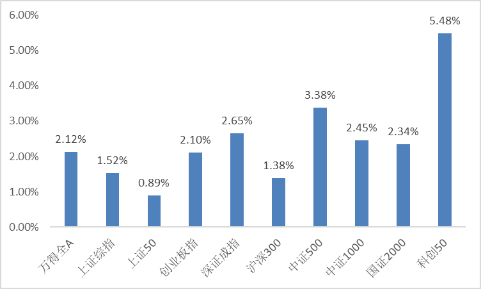
三大指数冲高回落A股成交额再次突破3万亿元
Zhong Guo Zheng Quan Bao· 2025-09-18 20:24
Core Viewpoint - The recent interest rate cut by the Federal Reserve is expected to boost risk appetite in the A-share and Hong Kong markets, leading to a recovery in foreign capital inflows and structural investment opportunities in sectors like technology and low-volatility dividends [1][2][4]. Group 1: Market Overview - On September 18, A-shares experienced a decline, with all three major indices falling over 1%, while the trading volume reached 3.17 trillion yuan, marking a significant increase since August 28 [1]. - Analysts suggest that the Federal Reserve's rate cut will improve liquidity expectations in emerging markets, benefiting both A-shares and Hong Kong stocks [1][2]. Group 2: Liquidity Environment - The Federal Reserve lowered the federal funds rate by 25 basis points to a range of 4.00% to 4.25%, marking its first rate cut since December 2024 [1]. - The rate cut is expected to enhance global liquidity, increasing investor willingness to allocate to equity assets, particularly in emerging markets [1][2]. Group 3: Investment Opportunities - Analysts highlight that A-shares may experience a structural market driven by low-volatility dividends and technology growth, with potential for a simultaneous rise in both stock and bond markets [3][4]. - The current market sentiment is improving, with A-shares and Hong Kong stocks showing unique advantages that may attract international capital [2][4]. Group 4: Sector Focus - Key sectors to watch include technology growth, low-volatility dividends, and industries benefiting from policy support, such as renewable energy and electric vehicles [5]. - The technology sector, particularly in areas like robotics and energy storage, is expected to present significant investment opportunities [5].
亚商投顾熊舞:今日市场全天冲高回落,三大指数午后集体跳水
Sou Hu Cai Jing· 2025-09-18 08:44
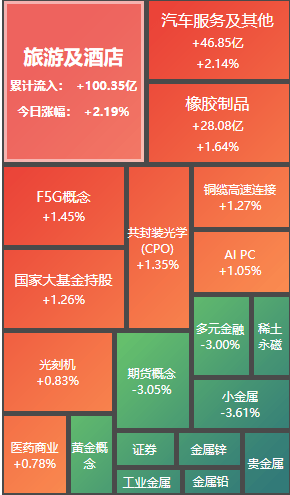
Market Overview - The Shanghai Composite Index closed down 1.15%, with a trading volume of 1.37 trillion, an increase of 360 billion from the previous trading day [2] - The Shenzhen Component Index fell 1.06%, with a trading volume of 1.77 trillion, up 400 billion from the previous day [2] Technical Analysis - The Shanghai Composite Index initially rose due to interest rate cuts but experienced a significant drop in the afternoon, indicating selling pressure [3] - A divergence signal appeared on the 30-minute chart, with over 4,000 stocks declining, suggesting a decrease in profitability [3] - The Shenzhen Component Index did not maintain its previous upward momentum, indicating increased selling pressure and a lack of strong new market leaders [3] Market Sentiment - Approximately 1,027 stocks rose while around 4,350 stocks fell, reflecting a poor market performance [4] - Only about 72 stocks hit the daily limit up, while 2 non-ST stocks hit the daily limit down, indicating a sharp decline in short-term sentiment [5] Major Events - The Federal Reserve cut the federal funds rate by 25 basis points, marking its first rate cut since 2025 [6] Summary - The market experienced significant fluctuations, with the technology sector initially leading the indices higher before a sharp decline in the afternoon [7] - The overall market sentiment cooled rapidly, with over 4,300 stocks declining, despite some sectors like semiconductors and robotics showing strength [7] - The financial sector's underperformance during the index's attempts to rise contributed to the overall market's volatility [8] Sector Highlights - The market showed a general downtrend, but the automotive services and tourism hotel sectors performed well [9] - The tourism and hotel sectors benefited from government policies aimed at expanding service consumption and the upcoming "super golden week" holiday, with a 45% year-on-year increase in cross-province travel orders reported by Ctrip [11]
加仓看涨
第一财经· 2025-09-17 11:00
Core Viewpoint - The market shows a clear divergence between technology stocks leading the gains and cyclical stocks undergoing adjustments, indicating a structural market trend with potential for increased short-term volatility [4][5][7]. Market Performance - The two markets recorded a trading volume of 1.38 trillion yuan, an increase of 1.15% from the previous day, reflecting strong market liquidity and active capital flow [5]. - A total of 2,504 stocks rose, with a notable ratio of 30 stocks hitting the daily limit up, highlighting a positive market sentiment [4]. Sector Analysis - Technology sectors such as photolithography machines, diversified finance, wind power equipment, consumer electronics, and humanoid robots saw significant gains, while sectors like precious metals, tourism, pork, and prepared dishes experienced declines [4]. - Institutional investors are shifting strategies, moving away from defensive sectors like non-ferrous metals and coal towards technology stocks, indicating a clear "abandoning cyclical, attacking technology" trend [7]. Investor Sentiment - Retail investors are increasingly using leverage to participate in the market, with a notable rise in trading activity in small and mid-cap technology stocks, reflecting a strong enthusiasm for policy-driven themes [7]. - The sentiment among retail investors is high, with 75.85% indicating a bullish outlook [8]. Positioning - As of September 17, 34.27% of investors increased their positions, while 17.18% reduced their holdings, with 48.55% remaining neutral [12].

股市呈结构性?情,债市?端偏谨慎
Zhong Xin Qi Huo· 2025-09-16 06:53
1. Report Industry Investment Rating No relevant content provided. 2. Core View of the Report - The stock market shows a structural trend, with a suggestion to hold IM long positions in stock index futures, maintain short - volatility strategies in stock index options, and be cautious about the long - end of the bond market in bond futures [3][4][5]. 3. Summary by Related Catalogs 3.1 Market Views Stock Index Futures - **View**: Structural trend, with a suggestion to observe more and act less. Yesterday, the A - share market showed a structural trend, with the total A - share index basically flat and trading volume dropping to around 2.3 trillion. The new energy and automotive sectors led the gains, while communications, banking, and defense were relatively weak. In the short - term, the outlook is positive due to signs of institutional capital entry, improved market confidence, and positive speculation sentiment. It is recommended to continue holding IM long positions [3][9]. - **Data**: IF, IH, IC, IM's current - month contract basis points were - 5.26, - 0.22, - 23.16, - 46.97 respectively, with month - on - month changes of - 6.46, - 0.28, - 15.41, - 16.89 points. The spreads between current - month and next - month contracts were 8.0, - 0.4, 64.0, 67.6 points respectively, with month - on - month changes of 1.8, 0.0, 13.2, 0.8 points. The total positions of IF, IH, IC, IM changed by - 11030, - 1517, - 18126, - 15462 lots respectively [9]. Stock Index Options - **View**: During the adjustment, there is differentiation, and it is recommended to maintain short - volatility strategies. The market is in an adjustment phase with internal differentiation. From the perspective of sentiment indicators, the put - to - call ratio in the ChiNext and STAR Market is high, while dividend - related products like 50ETF are far from their previous highs. In terms of volatility, the Shanghai 50 and CSI 300 were volatile, while other products rose slightly. It is recommended to continue short - volatility strategies such as covered calls and straddles [4][9]. - **Data**: The trading volume of the options market was 890.2 million yuan, a 28.81% decrease from the previous trading day [9]. Bond Futures - **View**: Be cautious about the long - end of the bond market. Yesterday, the central bank conducted a 600 - billion - yuan 6 - month outright reverse repurchase operation, with a net open - market injection of 8.85 billion yuan. However, during the tax - payment period, inter - bank market interest rates rose slightly. The August consumption and fixed - asset investment growth data were lower than expected, which is positive for the bond market, but the long - end is still affected by policy expectations and risk appetite. In the short - term, the central bank will support the short - end, and there may be long - end arbitrage and curve - steepening opportunities [5][10][11]. - **Data**: The trading volumes of T, TF, TS, TL's current - quarter contracts were 94600, 54025, 24122, 111024 lots respectively, with 1 - day changes of - 9200, - 17431, - 10117, - 39156 lots. The positions were 211649, 117782, 66544, 141755 lots respectively, with 1 - day changes of 3776, - 952, 1400, - 554 lots. The spreads between current - quarter and next - quarter contracts, cross - product spreads, and basis points also had corresponding changes [10]. 3.2 Economic Calendar - It lists economic data announcements for the current week, including China's August social consumer goods retail sales year - on - year rate, industrial added - value year - on - year rate, Eurozone's September ZEW economic sentiment index, US August retail sales month - on - month rate, and other data [12]. 3.3 Important Information and News Tracking - The State Administration of Foreign Exchange issued a notice on deepening the reform of cross - border investment and financing foreign exchange management, including canceling pre - investment fee registration, simplifying re - investment registration, and expanding cross - border financing convenience [13]. 3.4 Derivatives Market Monitoring - The report mentions monitoring data for stock index futures, stock index options, and bond futures, but specific data details are not fully provided [14][18][30].