
去美元化

Search documents
【2026年汇市展望】以“韧性”穿越风暴 新加坡元“避风港”属性亮眼
Xin Hua Cai Jing· 2026-01-12 09:46
Core Viewpoint - In 2025, the Singapore dollar (SGD) demonstrated resilience amidst global financial market turbulence, characterized by a strong dollar, geopolitical shifts, and divergent monetary policies. The SGD is expected to continue serving as a "stabilizer" in the global currency market in 2026, despite anticipated economic slowdowns and monetary easing conditions [1]. Exchange Rate Dynamics - The SGD exhibited a "weak to strong" trend against the USD in 2025, reflecting both the dollar's cyclical effects and Singapore's economic resilience. The year can be divided into three phases: 1. In Q1, the SGD faced pressure due to trade concerns and failed Fed rate cut expectations, with the USD/SGD reaching a high of 1.3751 on January 13. The SGD only depreciated by about 2.3%, outperforming other Asian currencies [2]. 2. In Q2, the SGD rebounded sharply as US trade policies were less aggressive than expected and local economic data exceeded forecasts, with the SGD/USD dropping to a low of 1.2698 by July 1, marking a ten-year high [2]. 3. In the second half, particularly Q4, the SGD became a preferred safe haven amid rising geopolitical risks, ending the year with a cumulative appreciation of approximately 6.14% against the USD [3]. Economic Performance - Singapore's economy outperformed initial pessimistic forecasts in 2025, achieving a GDP growth of 4.8%, significantly above the predicted range of 1% to 3% and higher than the 4.4% growth in 2024. The fourth quarter saw a robust growth rate of 5.7% [4]. - Inflation concerns were effectively managed, with core inflation rates dropping to a range of 0.5% to 1%, aided by declining import costs and government subsidies in healthcare and transportation [4]. Monetary Policy Adjustments - The Monetary Authority of Singapore (MAS) implemented its first policy shift in five years in 2025, slightly lowering the slope of the nominal effective exchange rate policy in January and April, signaling a transition from "anti-inflation" to "growth preservation" [5]. - MAS's communication strategy was successful, maintaining market confidence in the SGD as a "hard currency" while allowing for flexibility in monetary policy adjustments based on economic data [5]. Outlook for 2026 - The SGD is expected to experience a "stable yet rising" trend with reduced volatility in 2026, influenced by complex variables beyond just Fed interest rate changes. The anticipated depreciation of the USD due to continued Fed rate cuts could enhance the SGD's attractiveness [6]. - Geopolitical factors and Singapore's strong fiscal position will continue to attract safe-haven investments, with the government’s robust budget and substantial reserves providing a buffer against external shocks [7]. - The Ministry of Trade and Industry forecasts a return to normal growth rates for Singapore's GDP in 2026, estimating growth between 1% and 3%, with inflation projected to remain manageable [8]. Recommendations for Businesses and Investors - For import-oriented companies, the SGD's appreciation may lower dollar-denominated procurement costs, suggesting an increase in spot foreign exchange purchases. Export-oriented firms should be cautious of profit erosion due to SGD appreciation and consider using derivatives to hedge against currency fluctuations [9]. - Investors are encouraged to view SGD assets as a defensive holding in the context of global de-dollarization, especially as US Treasury yields decline, enhancing the relative attractiveness of Singaporean assets [9].
黄金白银期货价格再创新高
Di Yi Cai Jing· 2026-01-12 09:38
据CCTV国际时讯,受地缘政治高度不确定影响,美国纽约商品交易所黄金和白银期货价格1月11日上 涨,2月黄金期货价格一度突破每盎司4600美元,白银期价一度也在每盎司84美元高位附近波动,均创 历史新高。市场分析认为,作为重要避险资产,国际金价上涨受到地缘政治形势影响。观察人士认为, 美国政府强权行径将加速各国"去美元化",对国际金价形成较强支撑。与此同时,由于白银市场供应持 续紧张,国际银价再度反弹。分析显示,当前白银供应短缺很难在短期内得到缓解。在这种环境下,市 场预期白银价格将继续保持上涨势头。 ...
国际金价一度突破4600美元大关 后市怎么走?
Zheng Quan Shi Bao Wang· 2026-01-12 09:33
美国降息预期升温叠加地缘风险加剧等因素推动下,1月12日国际贵金属价格大涨,金银价格盘中均刷新 历史高点。 外盘方面,COMEX黄金期货主力合约盘中涨逾2%,最高触及4612.7美元/盎司;COMEX白银期货主力合 约盘中涨逾6%,最高触及84.57美元/盎司。 卓创资讯贵金属分析师黄加奇也分析,本次行情上涨的驱动力主要来自两方面。一方面,特朗普就降息 力度问题再度向美联储现任主席鲍威尔施压,且财长贝森特预计,特朗普将在1月19日—23日举行的达沃 斯论坛前后就下任美联储主席人选做出决定,此外12月非农数据不及预期,交易者对后续降息路径偏鸽 定价。 另一方面,地缘碎片化影响持续发酵,伊朗近期因物价上涨,社会不稳定因素上升,美国考虑干涉伊朗 方案,而同时美国与丹麦、委内瑞拉之间就关键资源和领土问题存有争端,特朗普对国际法的表态也使 得地缘局势前景不确定性上升,市场避险需求支撑贵金属溢价。 黄加奇认为,目前黄金、白银均位于历史高位,且短期急涨幅度较大,技术形态上方阻力有所加大,且 短期需要关注彭博大宗商品指数再平衡对贵金属的权重削减和芝商所上调黄金、白银保证金比例可能造 成的利空影响。但长期来看,美联储降息周期尚 ...

【黄金期货收评】沪金短期存回调风险 沪金冲高1026元
Jin Tou Wang· 2026-01-12 09:30
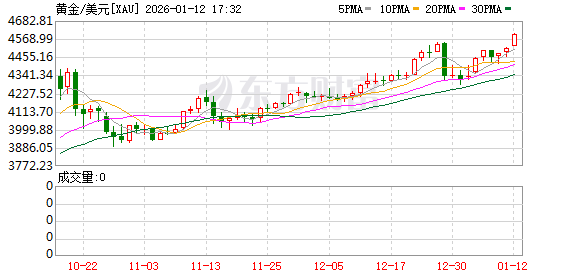
欧元区通胀放缓,进一步降息预期不强,欧美利差预期收缩。 特朗普总统发动对委内瑞拉大规模军事行动、重启格陵兰岛获取计划、提高美国2027财年军费等,带来 地缘局势紧张,冲击西方阵营内部团结,短期避险情绪推高美元,中期则加速去美元化。 【黄金期货最新行情】 | 1月12日 | 收盘价(元/克) | 当日涨跌幅 | 成交量(手) | 持仓量(手) | | --- | --- | --- | --- | --- | | 沪金主力 | 1026.28 | 2.57% | 238327 | 116450 | 打开APP,查看更多高清行情>> 【基本面消息】 数据显示,1月12日上海黄金现货价格报价1023.32元/克,相较于期货主力价格(1026.28元/克)贴水 2.96元/克。 美国制造业前景疲软依旧,订单不足,就业继续萎缩,但服务业超预期扩张,国内外订单大增,就业重 新扩张;就业人数弱增长,岗位空缺数下降,失业者重返劳动力市场难度较大,但失业率意外下降,形 成数据上的背离,降息预期不增反减;美国财长贝森特希望降低利率,表示利率是驱动未来经济增长的 关键因素。 因此短期来看美联储降息预期不强、美国经济增长向好、欧美关 ...
黄金站上4600美元 追?等?还是撤?
Sou Hu Cai Jing· 2026-01-12 09:21
Core Viewpoint - The recent surge in gold prices, surpassing $4600 per ounce, is driven by multiple factors including geopolitical tensions, a crisis of trust in the Federal Reserve, and a weakening dollar, leading to increased global risk aversion [2][3][4] Group 1: Factors Driving Gold Prices - The U.S. Department of Justice's criminal investigation into Federal Reserve Chairman Jerome Powell has reignited concerns over political interference in the Fed's independence, contributing to a decline in the dollar index and U.S. stock futures, which in turn supports higher gold and silver prices [3] - Ongoing U.S. military interventions, particularly in Venezuela, have heightened geopolitical risks, further bolstering market demand for safe-haven assets like gold [3][4] - The accumulation of fiscal risks in the U.S., with national debt nearing $40 trillion and a fiscal deficit rate of 6.8%, has diminished the attractiveness of dollar-denominated assets, making gold a preferred choice for both institutions and retail investors [3] Group 2: Central Bank Gold Purchases - Central banks globally are increasingly viewing gold as a strategic asset, with expectations of net purchases exceeding 1000 tons by 2025, reflecting a shift towards "de-dollarization" [4] - The strategic accumulation of gold by central banks is expected to continue, with UBS predicting purchases to rise to 950 tons in 2026, indicating a long-term trend in gold's role as a stabilizing asset on national balance sheets [4] Group 3: Investor Sentiment and Strategies - Ordinary investors are experiencing a divide in sentiment regarding gold prices, with a surge in gold account openings alongside reports of individuals facing losses from recent price fluctuations [6][7] - Investment strategies vary, with recommendations for those looking to "chase" gold to use idle funds and adopt a phased buying approach, while those opting to "wait" should set specific price triggers for entry [7] - For those considering "withdrawal," it is advised to lock in profits or exit if gold is misperceived as a short-term speculative tool [7] Group 4: Long-term Investment Perspective - The current gold price level serves as a reflection of individual attitudes towards risk and uncertainty, emphasizing the importance of a clear investment framework rather than merely speculating on price peaks [8] - Investors are encouraged to focus on building resilient portfolios that can withstand market volatility, rather than seeking quick gains, highlighting the significance of long-term holding strategies [8]

黄金、白银爆了,双双创新高!国内金饰价格涨至1429元
Mei Ri Jing Ji Xin Wen· 2026-01-12 08:40
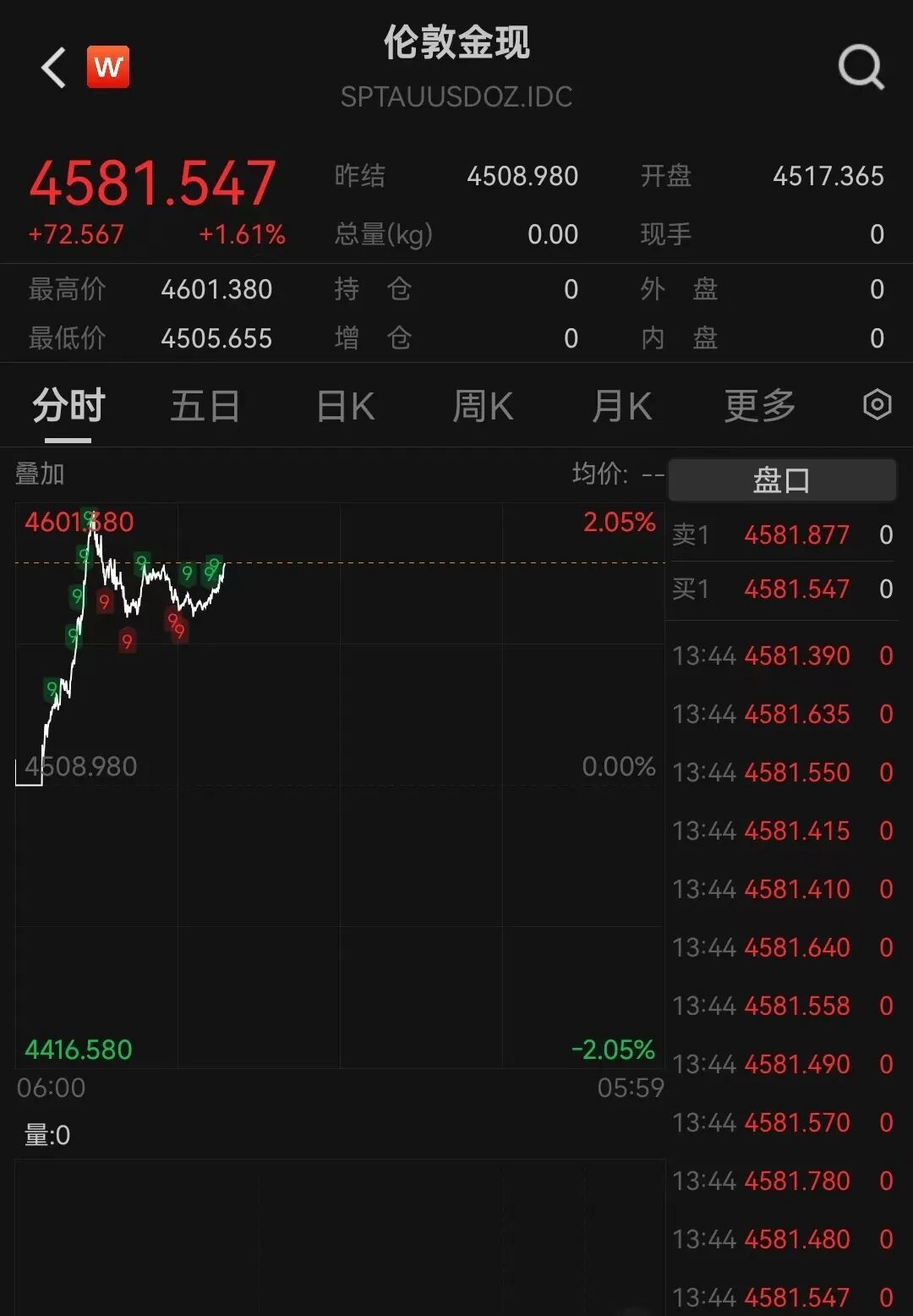
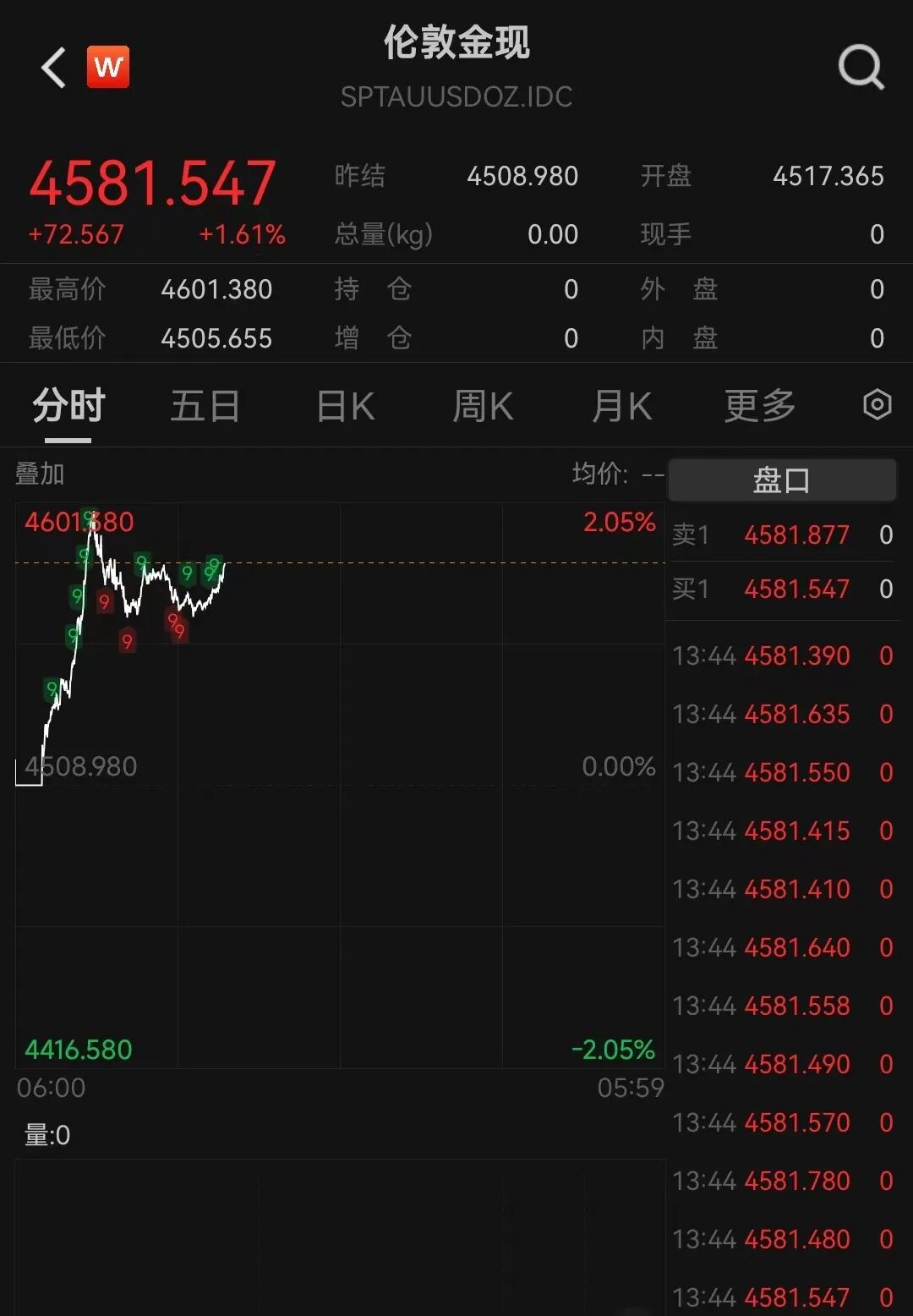
Group 1: Gold Market Dynamics - On January 11, gold futures prices on the New York Mercantile Exchange reached a historic high, surpassing $4,612 per ounce, driven by geopolitical uncertainties [1] - Spot gold prices also surged, breaking the $4,600 mark for the first time, before retreating to $4,581.547 per ounce [1] - Domestic gold jewelry prices have increased, with several brands quoting over 1,400 yuan per gram, reflecting a rise of 20 yuan per gram compared to the previous day [4] Group 2: Silver Market Trends - Silver prices in London reached over $84 per ounce, marking a more than 5.5% increase and setting a new historical high [5] - The volatility in silver prices has been significant, with a single-day increase of nearly 8% and a two-day cumulative rise exceeding 14% [11] - Analysts from Goldman Sachs predict that silver will continue to experience higher volatility compared to gold due to the lack of demand support from global central bank reserves [14] Group 3: Geopolitical Influences - U.S. geopolitical actions, including potential military interventions in Iran and Venezuela, are contributing to increased market volatility and investor interest in precious metals as safe-haven assets [8][9] - The recent U.S. military actions have heightened geopolitical tensions, leading to a surge in demand for gold and silver as investors seek to hedge against uncertainty [9] Group 4: Market Adjustments and Predictions - The Bloomberg Commodity Index has undergone annual rebalancing, resulting in a significant reduction in the weight of precious metals, which may trigger passive selling pressure [16] - The Chicago Mercantile Exchange has raised margin requirements for trading precious metals, including a 28.6% increase for silver, which typically curbs speculative trading [16] - Despite short-term downward pressures, multiple financial institutions expect that precious metals will have upward price potential throughout the year [18]
华安基金:伦敦金价站上4600美元历史新高
Xin Lang Cai Jing· 2026-01-12 08:33
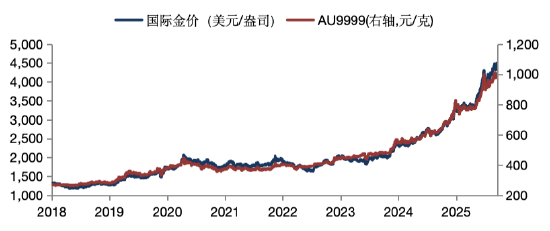
Group 1: Gold Market Overview - Gold prices experienced a strong increase last week, with London spot gold closing at $4,509 per ounce (up 4.1% week-on-week) and domestic AU9999 gold at 1,003 yuan per gram (up 3.1% week-on-week) [1][7] - On January 12, London gold prices briefly surpassed $4,600 per ounce, marking a historical high, with domestic AU9999 gold also reaching a new peak [1][7] - The rise in gold prices is attributed to increasing geopolitical tensions, including ongoing issues in Venezuela and potential U.S. military actions against Iran, which may drive safe-haven investments into gold [1][7] Group 2: Central Bank Actions - The People's Bank of China has increased its gold reserves for the 14th consecutive month, with reserves reaching 74.15 million ounces as of the end of December 2025, up by 30,000 ounces from November [2][8] - This trend reflects a broader strategy among central banks to diversify foreign exchange reserves amid a weakening dollar credit system [2][8] Group 3: U.S. Economic Indicators - U.S. unemployment rate and non-farm payrolls for December were both below expectations, with the actual unemployment rate at 4.4% compared to the expected 4.5% [2][8] - The decline in unemployment is primarily due to reduced labor supply rather than increased demand, indicating a cooling labor market [2][8] - Market expectations suggest that the Federal Reserve will not lower interest rates this month, with potential rate cuts anticipated in June and September [2][8] Group 4: Future Outlook - The Federal Reserve is expected to remain in a rate-cutting cycle, and if a dovish chair is appointed, the pace of rate cuts may accelerate, which could be favorable for gold [2][8] - The combination of loose monetary policy and fiscal measures in the U.S., along with ongoing credit risks associated with U.S. debt, supports the continued trend of central banks purchasing gold [2][8] - Global demand for gold ETFs is also on the rise, enhancing the investment value of gold through 2026 [2][8] Group 5: Upcoming Signals - Key signals to watch for the upcoming week regarding gold ETFs include the U.S. December CPI and changes in geopolitical situations [3][9]
黄金、白银爆了,双双创新高,国内金饰价格涨至1429元!地缘政治风险加剧,专家:美国政府强权行径将加速各国“去美元化”
Mei Ri Jing Ji Xin Wen· 2026-01-12 08:19
每经编辑|陈柯名 潘海福 | | | 受国际金价带动,国内黄金饰品价格也普遍上涨,多个品牌足金报价突破1400元/克。其中,周生生、老庙报价1429元/克,周大福、周大生报价1426元/ 克,六福珠宝报价1424元/克,较昨日普遍上涨了20元/克。 | 实物黄金 单位元/克 | | | | --- | --- | --- | | 間大福 | 周六格 間六福 | 間生生 周生生 | | 1426.00 | 1411.00 | 1429.00 | | 金条价格 1251.00 | 金条价格 1306.00 | 金条价格 1254.00 | | 周大芝 間大生 | (ml 潮宗基 | 六福珠宝 | | 1426.00 | 1426.00 | 1424.00 | | 铂金价格 933.00 | 铂金价格 933.00 | 金条价格 1249.00 | | 一家花 | 我用直令 | 中国商会 | | 1428.00 | 1429.00 | 1023.60 | | 足金价格 1428.00 | 金条价格 1384.00 | 零售价 1039.60 | 此外,伦敦现货白银站上84美元/盎司,涨幅超5.5%,突破两周前高点, ...
STARTRADER星迈:国际油价金银同步大涨 背后原因何在?
Sou Hu Cai Jing· 2026-01-12 07:26
Core Viewpoint - Recent significant fluctuations in the international commodity market have led to a synchronized increase in oil and precious metal prices, driven by geopolitical risks, expectations of a weaker dollar, and adjustments in supply-demand dynamics [1][3][4] Geopolitical Risks - The escalation of geopolitical risks, particularly the U.S. military actions in Venezuela, has raised concerns about the stability of global energy supply chains, prompting investors to reassess the uncertainty surrounding oil supply and triggering a rebound in oil prices [3] - The changing global security environment has increased demand for safe-haven assets, with gold and silver becoming preferred choices for investors [3] Dollar Weakness - The weakening of the U.S. dollar index, exacerbated by concerns over the independence of the Federal Reserve following investigations into its chairman, has provided support for dollar-denominated oil and precious metal prices [3] - Historical data indicates a significant negative correlation between the dollar and commodities, with a weaker dollar reducing holding costs and attracting global capital to increase positions in commodities [3] Supply-Demand Dynamics - Structural adjustments in supply-demand dynamics are reinforcing the upward trend in prices, with OPEC+ deciding to maintain production cuts until early 2026, alleviating concerns about oversupply in the oil market [4] - In the precious metals market, continued purchases by global central banks, with a reported net purchase of 45 tons in November 2025, have bolstered demand, contributing to a solid foundation for rising gold and silver prices [4] Differentiated Price Drivers - The logic behind price increases varies between commodities, with oil prices primarily driven by short-term geopolitical risks, while gold and silver are more influenced by concerns over monetary credibility and the ongoing "de-dollarization" process [4] - Fund flows indicate this differentiation, with the oil market seeing short-term speculative inflows, while the precious metals market is characterized by a combined increase in holdings from both institutions and retail investors, evidenced by significant growth in gold ETF and physical gold bar sales [4]
全球经济2025年闪耀板块与2026年主要风险
Guo Ji Jin Rong Bao· 2026-01-12 07:21
Global Economic Outlook - The global economy is projected to grow by 3.2% in 2025, with developed economies at 1.6% and emerging markets at 4.2% [1] - The year 2025 is expected to showcase several sectors that significantly exceed market expectations [1] Capital Market Dynamics - The evolution of global capital markets in 2025 is influenced by three core drivers: a shift in monetary policy towards interest rate cuts, escalating geopolitical tensions, and asset revaluation and reallocation [3] - Global mergers and acquisitions (M&A) are anticipated to reach $4.5 trillion in 2025, a nearly 50% increase from 2024, marking the second-highest level on record [4] - The M&A landscape will focus on strategically driven "super deals," with 68 transactions exceeding $10 billion, including significant deals in the streaming and railway sectors [4] International Trade Trends - Despite facing challenges from U.S. unilateral tariff policies and trade protectionism, global trade is expected to grow by approximately 7% in 2025, reaching a record $35 trillion [6] - The global value chain trade remains robust, accounting for about 46% of global trade, with a shift towards resilience, sustainability, and inclusivity [6] Future Economic Drivers - Artificial Intelligence (AI) and green transition are projected to shape global economic growth trajectories in 2026, with AI expected to contribute trillions to global GDP [10] - The green industry is transitioning from policy-driven to market-driven, with significant investments anticipated in clean energy and green technologies [10] Risks and Uncertainties - The global economy faces numerous risks, including trade policies and geopolitical tensions, which could disrupt recovery processes [11] - High levels of debt in various countries, particularly in the U.S., may constrain fiscal policy and impact market confidence in dollar assets [11]