估值修复

Search documents
野村:2026年食品饮料策略 - 继续找寻细分高成长赛道和渠道
野村· 2025-12-24 12:57
Investment Rating - The report suggests a focus on individual stocks rather than the overall industry, indicating potential for high individual stock appreciation despite overall industry pressure [2][3]. Core Insights - Consumer confidence is gradually recovering, with strong growth in consumer-close channels such as convenience stores and membership stores, which saw a year-on-year increase of 4.9% [1][9]. - The food and beverage sector is currently undervalued, with cost stability expected to support corporate profitability as raw material costs are anticipated to remain flat or decrease next year [1][2]. - The alcoholic beverage segment is under pressure, particularly the baijiu industry, which is facing clearing and restrictions, while beer remains stable and the competition in yellow wine is changing significantly [1][6]. Summary by Sections B2B and B2C Business - B2B business in new retail channels and restaurant recovery is relatively weak, but significant changes are observed in C-end offline channels [4]. - C-end consumer confidence is gradually recovering, with stronger growth dynamics in consumer-close channels [4]. Industry Performance - The demand for alcoholic beverages is under pressure, with baijiu production declining and prices in a downward trend, although recent company price control has led to a rebound [5][6]. - The snack sector is experiencing rapid growth, while baking and cooked food operations are under pressure. Brands like Wancheng and Weilong are responsive to channel changes, leading to sustained growth [5][6]. Consumer Confidence and Economic Impact - The consumer confidence index has steadily improved, rising from 87.5 to 89.4 from January to October 2025, indicating a positive trend in consumer spending [12]. - Despite overall industry pressures, there are many growth opportunities in specific segments such as pre-processed foods and snacks, with products like electrolyte water and sugar-free tea continuing to grow rapidly [13]. Valuation and Investment Recommendations - The valuation of food and beverage companies is currently at historical lows, with many companies offering attractive dividend yields, such as Chongqing Beer exceeding 3% [15][16]. - The report recommends focusing on leading brands in specific segments, including top brands like Dongpeng Beverage and Nongfu Spring, as well as snack brands like Wancheng Group and Yanjinpuzi, and pre-processed food companies like Sanquan Foods and Anjui Foods [16].
黑色产业链日报-20251224
Dong Ya Qi Huo· 2025-12-24 10:03
1. Report Industry Investment Rating No relevant content provided. 2. Core Views - Steel prices are supported by cost at the bottom but suppressed by weakening demand and possible tightening of steel export expectations, maintaining a volatile trend [3] - Iron ore shipments remain high, with non-mainstream mines as the main source of growth, exerting significant supply pressure and capping price upside. However, iron ore also has upward drivers, and is expected to trade within a range with limited upside after valuation repair [21] - As terminal winter storage approaches, the coking coal inventory structure is expected to improve, and the downside of the coking coal futures may be limited due to the relatively high basis. After the third round of coke price cuts, the cost of dry quenched coke warehouse receipts is about 1700 - 1720, and the driving force for coke valuation repair may weaken temporarily [31] - The fundamentals of ferroalloys are weak in both supply and demand, with limited upside potential. The demand for ferroalloys is gradually weakening as downstream hot metal production continues to decline. Ferroalloys may follow steel price movements, and while the upside is limited, the downside is also supported by cost [48] - With the increasing expectation of new soda ash production capacity, the expectation of oversupply is intensifying, and the futures price is breaking through the cost. The rigid demand for soda ash is expected to weaken further as glass cold repairs accelerate. High inventories in the upstream and midstream restrict the price [65] - From December to before the Spring Festival, there are still some glass production lines waiting to undergo cold repairs, which may affect far - month pricing and market expectations. The near - month 01 contract will follow the reality (delivery logic) and be mainly driven by warehouse receipt games, which may become clearer in late December. Currently, the high inventory in the glass midstream needs to be digested, and there is still pressure on the spot market [89] 3. Summary by Related Catalogs Steel - **Futures Prices**: On December 24, 2025, the closing prices of rebar 01, 05, and 10 contracts were 3121, 3136, and 3173 respectively; the closing prices of hot - rolled coil 01, 05, and 10 contracts were 3287, 3285, and 3301 respectively [4] - **Spot Prices**: On December 24, 2025, the aggregated rebar prices in China, Shanghai, Beijing, and other regions were 3327, 3320, 3130, etc. respectively; the aggregated hot - rolled coil prices in Shanghai, Lecong, and other regions were 3270, 3260, etc. respectively [8][10] - **Price Spreads**: On December 24, 2025, the 01 - 05 month spreads of rebar and hot - rolled coil were - 15 and 2 respectively; the 05 - 10 month spreads were - 37 and - 16 respectively; the 10 - 01 month spreads were 52 and 14 respectively. The 01, 05, and 10 contract spreads between hot - rolled coil and rebar were 166, 149, and 128 respectively [4][15] Iron Ore - **Futures Prices**: On December 24, 2025, the closing prices of 01, 05, and 09 iron ore contracts were 798, 779.5, and 758 respectively; the 01, 05, and 09 contract bases were - 6.5, 11.5, and 33.5 respectively [22] - **Spot Prices**: On December 24, 2025, the prices of Rizhao PB powder, Rizhao Carajás fines, and Rizhao Super Special were 787, 867, and 669 respectively [22] - **Fundamentals**: As of December 19, 2025, the daily average hot metal production was 226.55, the 45 - port inventory was 15512.63, and the 247 - steel mill inventory was 8723.95 [25] Coal and Coke - **Futures Price Spreads**: On December 24, 2025, the 09 - 01, 05 - 09, and 01 - 05 spreads of coking coal were 165, - 80, and - 85 respectively; the 09 - 01, 05 - 09, and 01 - 05 spreads of coke were 219, - 74.5, and - 144.5 respectively [34] - **Spot Prices**: On December 24, 2025, the ex - factory price of Anze low - sulfur coking coal was 1600, and the ex - factory price of Jinzhong quasi - first - grade wet coke was 1330 [37] Ferroalloys - **Silicon Iron**: On December 24, 2025, the silicon iron basis in Ningxia was - 76, the 01 - 05 spread was - 80, and the spot price in Ningxia was 5330 [49] - **Silicon Manganese**: On December 24, 2025, the silicon manganese basis in Inner Mongolia was 88, the 01 - 05 spread was - 70, and the spot price in Inner Mongolia was 5570 [50] Soda Ash - **Futures Prices**: On December 24, 2025, the closing prices of 05, 09, and 01 soda ash contracts were 1184, 1241, and 1117 respectively; the 5 - 9, 9 - 1, and 1 - 5 month spreads were - 57, 124, and - 67 respectively [66] - **Spot Prices**: On December 24, 2025, the heavy - soda market prices in North China, South China, and other regions were 1300, 1400, etc. respectively; the light - soda market prices in North China, South China, and other regions were 1250, 1350, etc. respectively [66] Glass - **Futures Prices**: On December 24, 2025, the closing prices of 05, 09, and 01 glass contracts were 1048, 1145, and 941 respectively; the 5 - 9, 9 - 1, and 1 - 5 month spreads were - 97, 204, and - 107 respectively [90] - **Spot Sales**: From December 15 - 19, 2025, the sales - to - production ratios in Shahe, Hubei, East China, and South China regions showed different trends [91]
单日狂飙1050元!白银“杀疯了”,涨幅碾压黄金成新宠
Xin Lang Cai Jing· 2025-12-24 05:26
Core Viewpoint - The recent surge in silver prices is attributed to a combination of macroeconomic factors, industrial demand, and valuation corrections, positioning silver as a strong investment option beyond just being a "shadow" of gold [1][5]. Group 1: Silver's Performance - On December 24, silver prices surged by 1,050 yuan per kilogram, averaging 17,405 yuan per kilogram, with a significant increase of 6.84% [1]. - International silver prices reached 72.189 USD per ounce, marking a 1.03% increase and hitting a historical high of 72.701 USD per ounce [1]. - Year-to-date, silver has seen a cumulative increase of 150%, significantly outperforming gold's 72% rise [1]. Group 2: Drivers of Silver's Surge - The surge in silver is driven by three main factors: macroeconomic uncertainty, industrial demand, and valuation recovery [1]. - Global economic uncertainties and rising inflation expectations have increased the demand for silver as a dual-purpose asset, serving both as an inflation hedge and an industrial metal [2]. - Industrial demand for silver is growing, particularly in the photovoltaic sector, where each gigawatt of solar capacity requires approximately 10 tons of silver, and in electronics, where silver is essential for components in 5G devices and electric vehicles [2]. Group 3: Valuation Metrics - The gold-silver ratio has improved from 104:1 to 64:1, indicating that silver has become relatively cheaper compared to gold, attracting more investment [3]. - Historically, when the gold-silver ratio falls below 50:1, silver prices tend to peak, suggesting that there is still room for growth at the current ratio of 64:1 [3]. Group 4: Investment Considerations - While the recent price surge may attract investors, silver's volatility is notably higher than that of gold, with potential for significant price drops [4]. - Silver's liquidity is somewhat lower than gold, which may affect the speed of transactions and lead to price discrepancies in large trades [4]. - Long-term prospects for silver remain strong, supported by ongoing growth in the photovoltaic and electronics industries, which underpin its industrial demand [4]. Conclusion - The current rise in silver prices reflects a genuine reassessment of its industrial value and safe-haven attributes, marking a significant shift in market perception [5].


中国中铁(00390):报表优化,资源板块发力推动估值修复
Shenwan Hongyuan Securities· 2025-12-23 15:23
Investment Rating - The report initiates coverage with an "Outperform" rating for China Railway Group Limited (00390) [1][7] Core Insights - The report highlights that the company's valuation is expected to recover due to the optimization of financial statements and the performance of its resource segment [6][18] - It emphasizes the improvement in new contract signings and the robust backlog of orders, ensuring stable long-term growth [6][16] - The resource segment is noted for enhancing profitability and cyclicality resistance, with significant reserves of copper, cobalt, and molybdenum [6][25] - The report points out the attractive dividend yield of H-shares compared to A-shares, indicating a clear discount in valuation [6][33] Financial Data and Profit Forecast - Revenue projections for 2023 to 2027 are as follows: - 2023: 1,263.41 billion RMB - 2024: 1,160.31 billion RMB - 2025E: 1,156.73 billion RMB - 2026E: 1,164.20 billion RMB - 2027E: 1,179.18 billion RMB - The expected growth rates are: - 2023: +9.45% - 2024: -8.16% - 2025E: -0.31% - 2026E: +0.65% - 2027E: +1.29% [5][36] - Net profit attributable to ordinary shareholders is forecasted as follows: - 2023: 33.48 billion RMB - 2024: 27.89 billion RMB - 2025E: 25.16 billion RMB - 2026E: 24.95 billion RMB - 2027E: 25.85 billion RMB [5][36] Order and Contract Insights - The company has signed new contracts amounting to 2.73 trillion RMB in 2021, 3.03 trillion RMB in 2022, 3.10 trillion RMB in 2023, 2.72 trillion RMB in 2024, and 1.58 trillion RMB in 2025 (Q1-Q3), with a year-on-year growth of +4.7%, +11.1%, +2.2%, -12.4%, and +3.7% respectively [6][16] - As of Q3 2025, the company has a backlog of contracts worth 7.54 trillion RMB, ensuring stable revenue for the upcoming years [6][16] Resource Segment Performance - The resource utilization segment's revenue from 2021 to 2025 (Q1-Q3) is as follows: - 2021: 5.96 billion RMB - 2022: 7.50 billion RMB - 2023: 8.37 billion RMB - 2024: 8.16 billion RMB - 2025 (Q1-Q3): 6.22 billion RMB - The segment's gross margin is reported at 59.45% for 2025 (Q1-Q3) [6][25] Valuation and Market Comparison - The report suggests a target market capitalization of 999 billion RMB for 2026, translating to 1,102 billion HKD, indicating a potential upside of 16.6% from the current market cap of 945 billion HKD [6][41] - The report compares the company's valuation with peers, noting that the average PE for comparable companies is 4.2X for 2025 and 4.0X for 2026 [6][41]

嘉实基金:新质动能重塑央国企价值 市值管理开启成长新篇章
Zhong Zheng Wang· 2025-12-23 13:16
Core Viewpoint - Central state-owned enterprises (SOEs) are playing a crucial role in the modernization of the national economy, focusing on technological innovation and capital market management to enhance their intrinsic value and shareholder returns [1][2]. Group 1: Value Creation - Since the start of the 14th Five-Year Plan, the overall strength of central SOEs has significantly improved, with total assets increasing from less than 70 trillion yuan to over 90 trillion yuan, and total profits rising from 1.9 trillion yuan to 2.6 trillion yuan, reflecting annual growth rates of 7.3% and 8.3% respectively [1]. - The operating income profit margin has improved from 6.2% to 6.7%, with indicators such as return on state-owned capital and return on net assets also showing continuous improvement, indicating a significant enhancement in value creation capabilities [1]. Group 2: Technological Innovation and Industry Integration - Central SOEs have invested over 1 trillion yuan in R&D for three consecutive years, actively participating in national major technology projects and forming strong collaborative innovation networks [2]. - The transformation of central SOEs is accelerating, with a focus on intelligent, green, and high-end development, leading to an average annual investment growth rate exceeding 20% in strategic emerging industries [2]. Group 3: Market Valuation and Future Outlook - Despite the significant increase in market capitalization, central SOEs are still valued relatively low historically, with the China Securities Central Enterprises Index (000926) having a price-to-earnings ratio of 12.30 and the Central Enterprises Innovation Index (000861) at 14.76 [3]. - Approximately 260 central SOEs are trading below net asset value, representing about 59% of the total number of such companies in the A-share market, indicating substantial potential for valuation recovery [3]. - The company anticipates that high-quality central SOEs will continue to enhance their value creation and operational capabilities, transitioning from a "theme-driven" investment logic to a "value-led" approach, thereby optimizing resource allocation in the capital market [3]. Group 4: Investment Opportunities - To assist investors in seizing opportunities in central SOEs, the company has been optimizing its product offerings, including ETFs that cater to diverse investment needs in technology innovation, digital economy, and new energy sectors [4].
涨疯了,有人8天赚了3倍
3 6 Ke· 2025-12-23 10:06
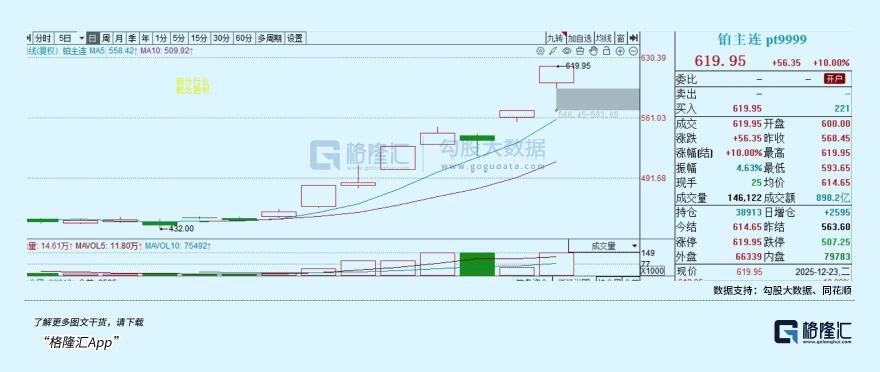
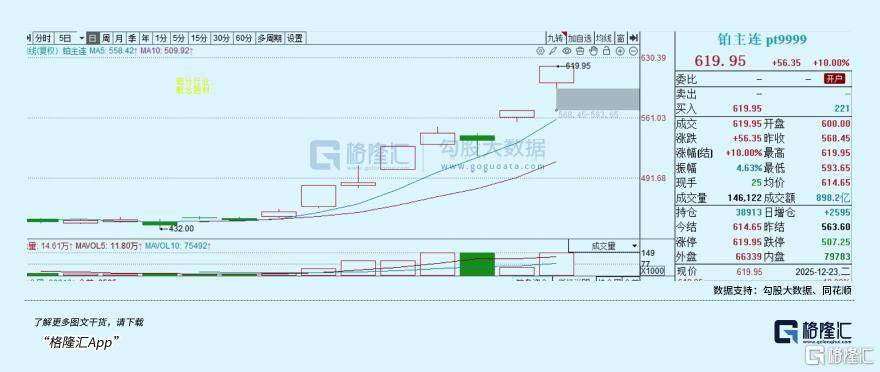
这一轮暴涨并非偶然,而是成本上升、供应短缺、政策扰动与新兴需求爆发等多重因素共振的结果。 供需双重利好 近期期货铂、钯涨势凌厉,12月以来持续爆发。广期所铂期货累计涨幅超40%,钯期货达43%,在昨日双双涨停后,今日铂 期货继续涨停,钯期货大涨5%。 众所周知,期货交易一般自带约8倍到10倍杠杆,投资者仅需少量保证金即可控制大额合约。若价格几天涨40%,按杠杆效应 计算,炒作资金实际收益达320%至400%,相当于本金翻3倍到4倍,收益被大幅放大。 在供应端,全球铂供应呈现出显著的"寡头垄断"特征,生产集中度极高,且高度依赖南非与俄罗斯两大资源国。 从产量分布来看,铂金全球矿山产量约176吨,加上回收量后总供应量为218吨。南非贡献了全球70%的产量,俄罗斯占比 12%,其余产量分散于少数国家。前五大生产商(英帕拉博业28.1%、十八页净水公司20.6%、英美铂业19.5%等)合计市场 份额高达89%,行业集中度远超多数大宗商品。 这种高度集中的供应格局,使得铂市场对单一国家或企业的扰动极为敏感。南非的电力短缺问题长期困扰矿山生产,近年来 频繁的限电导致矿山开工率不足,产量稳定性大打折扣;俄乌冲突持续影响俄罗 ...
涨疯了!有人8天赚了3倍!
Sou Hu Cai Jing· 2025-12-23 09:12
近期期货铂、钯涨势凌厉,12月以来持续爆发。广期所铂期货累计涨幅超40%,钯期货达43%,在昨日双双涨停后,今日铂 期货继续涨停,钯期货大涨5%。 众所周知,期货交易一般自带约8倍到10倍杠杆,投资者仅需少量保证金即可控制大额合约。若价格几天涨40%,按杠杆效应 计算,炒作资金实际收益达320%至400%,相当于本金翻3倍到4倍,收益被大幅放大。 这一轮暴涨并非偶然,而是成本上升、供应短缺、政策扰动与新兴需求爆发等多重因素共振的结果。 这种高度集中的供应格局,使得铂市场对单一国家或企业的扰动极为敏感。南非的电力短缺问题长期困扰矿山生产,近年来 频繁的限电导致矿山开工率不足,产量稳定性大打折扣;俄乌冲突持续影响俄罗斯铂钯出口,西方制裁导致部分供应链中 断,进一步收紧全球供应。 此外,全球新矿山勘探与开发进度缓慢,优质资源储量减少,叠加开采难度加大、环保成本上升等因素,未来3-5年内铂钯矿 山产能难以实现大幅增长,供应端增长潜力受限。 01 供需双重利好 在供应端,全球铂供应呈现出显著的"寡头垄断"特征,生产集中度极高,且高度依赖南非与俄罗斯两大资源国。 从产量分布来看,铂金全球矿山产量约176吨,加上回收量后总 ...
华创证券:维持吉利汽车(00175)“强推”评级 目标价27.01港元
智通财经网· 2025-12-23 09:08
Core Viewpoint - Geely Automobile's net profit forecasts for 2025-2027 have been raised due to recent sales performance and the privatization of Zeekr, with a target price of HKD 27.01, indicating a potential upside of 60% [1] Group 1: Privatization Impact - The completion of Zeekr's privatization allows Geely to fully own Zeekr and Lynk & Co, expected to increase net profit by CNY 2-3 billion in 2026 [2] - The integration of Geely, Galaxy, Lynk & Co, and Zeekr is anticipated to enhance operational efficiency through synergies [2] Group 2: New Model Launches - Geely continues to launch competitive new models, maintaining a strong product cycle with high hit rates, including the Galaxy A7 and Galaxy Star models, achieving monthly sales of over 15,000 and 10,000 units respectively [3] - The company plans to introduce 1-2 new models each quarter, sustaining the strong new product cycle into the next year [3] Group 3: Sales and Profit Growth - In November, Geely achieved sales of 310,000 units, a year-on-year increase of 24%, with projected sales of 3.06 million, 3.7 million, and 3.99 million units for 2025-2027, reflecting growth rates of 40%, 21%, and 8% respectively [4] - The introduction of mid-to-high-end models is expected to significantly improve the product mix, leading to higher average selling prices (ASP) and gross margins, with net profit forecasts of CNY 18.6 billion, CNY 26.3 billion, and CNY 31.6 billion for 2025-2027 [4] Group 4: Valuation and Market Position - Geely is considered one of the top picks for the upcoming recovery in the automotive sector, with a low valuation and strong growth potential, trading at PE ratios of 8.8 and 6.3 for 2025-2026 [5] - The current pessimistic market sentiment is seen as an opportunity for investment, as the company's fundamentals are expected to diverge positively from its valuation [5]

金信期货日刊-20251223
Jin Xin Qi Huo· 2025-12-23 00:47
Report Summary - **Industry Investment Rating**: Not provided - **Core Viewpoint**: The report is bullish on the coking coal main contract and provides technical analysis and trading suggestions for multiple futures products Reasons for Bullish on Coking Coal Main Contract - Valuation has reached a low level with a cumulative decline of over 20% in December, hitting a new low for the year, and the current price is below the Mongolian coal import cost line, with significant valuation repair space [3] - Policy support from six - department documents and "Qiushi" magazine, which is expected to improve industry order and boost market sentiment [3] - Approaching restocking demand as steel mills' coking coal inventory is 12% lower than in previous years, and there will be a pre - Spring Festival winter storage restocking window [3] - Supply is tightening marginally as some coal mines have limited production after completing annual capacity tasks, and Mongolian coal port clearance is affected by winter weather [3] - Market sentiment is being repaired, with short - selling funds flowing out and a strong technical rebound momentum [3] Technical Analysis of Various Futures Stock Index Futures - The 15 - minute cycle continues an upward - trending oscillation. It is recommended to buy on dips rather than chase the rise [6] Gold - After a period of sideways oscillation, there are signs of an upward movement, and going long can be attempted [11] Iron Ore - With the commissioning of the Simandou project, supply is expected to be more abundant. Demand from domestic sectors is weak except for exports. It is recommended to trade within a wide - range oscillation, selling high and buying low [12][13] Glass - The daily - line level has consecutive negative closes, and a bearish - leaning oscillation view is recommended [15][16] Methanol - Freight rates have increased significantly, increasing the arrival cost in sales areas. Demand is increasing due to a new olefin project. The market in sales areas is strong due to multiple positive factors [18] Pulp - With domestic policies boosting domestic demand, overseas pulp mills reducing production, and the elimination of backward papermaking capacity, the demand for commercial pulp is expected to improve. An oscillatory trend is expected [21]
品牌工程指数上周收报1969.01点
Zhong Guo Zheng Quan Bao· 2025-12-21 20:12
Group 1 - The market experienced fluctuations last week, with the China Securities Xinhua National Brand Engineering Index closing at 1969.01 points, reflecting a decline of 1.15% [1] - Consumer stocks showed strong performance, with Angel Yeast rising by 9.32%, Wangfujing by 9.07%, and several others like Three Squirrels and Yilong Food increasing by over 7% [1] - The overall market sentiment is expected to remain stable as the year-end approaches, with broad indices likely to experience fluctuations [2][3] Group 2 - Since 2025, Zhongji Xuchuang has seen a remarkable increase of 365.21%, leading the gains, followed by Sunshine Power at 127.44% [2] - The market exhibits clear structural characteristics, with expectations for a gradual recovery in corporate earnings next year, transitioning from valuation recovery to performance-driven growth [2] - The technology sector remains a priority for investment, with ongoing catalysts expected to sustain high-level fluctuations in the market [3]