
新型政策性金融工具

Search documents
LPR连续五个月“按兵不动”,年内降准降息仍可期
2 1 Shi Ji Jing Ji Bao Dao· 2025-10-20 11:24
根据最新报价,1年期LPR为3.0%,5年期以上LPR为3.5%,两个期限品种的LPR报价均是连续5个月保 持不变。在东方金诚首席宏观分析师王青看来,10月两个期限品种的LPR报价保持不变,符合市场预 期。 娄飞鹏认为,LPR连续第5个月保持不变,一方面是我国经济持续恢复,另一方面,商业银行融资成本 上行,同业存单到期收益率上行。同时,银行净息差本身已经处于低位并且仍然面临下行压力,报价行 主动压缩加点、下调LPR的动力显著不足。再者是贷款利率已处历史低位,政策观察期延续,暂无迫切 的进一步降息需求。 10月15日,央行发布前三季度金融数据表现相对良好,贷款利率持续保持低位水平。9月份企业新发放 贷款(本外币)加权平均利率约为3.1%,比上年同期低约40个基点;个人住房新发放贷款(本外币)加权 平均利率约为3.1%,比上年同期低约25个基点。此时,降低LPR报价或许并非当务之急。 21世纪经济报道记者 边万莉 10月LPR报价依然不变,维持了今年5月以来的利率水平。中国人民银行授权全国银行间同业拆借中心 公布,2025年10月20日贷款市场报价利率(LPR)为:1年期LPR为3.0%,5年期以上LPR为3.5 ...
建材、建筑及基建公募REITs周报(10月11日-10月17日):资金端“加码”发力,扩投资稳增长信号明显-20251020
EBSCN· 2025-10-20 07:29
Investment Rating - Non-metallic building materials: Buy (Maintain) [3] - Construction and engineering: Overweight (Maintain) [3] Core Views - The funding side is intensifying efforts to support infrastructure investment growth, with a significant increase in fiscal spending expected in 2025. Infrastructure investment growth has shown a decline since Q2, with a year-on-year growth rate of 5.4% from January to August, down 2.5 percentage points from the same period last year. To expand effective investment and promote steady economic growth, China has increased funding efforts since the end of September [1][2] - Major projects are intensively starting across multiple regions, entering a construction sprint in Q4. For instance, in Xinjiang, 70 major projects commenced, and 56 were completed, while in Anhui, 587 projects with a total investment of 332.38 billion yuan were mobilized [2] - The report suggests focusing on new materials and infrastructure real estate chains, highlighting companies such as China Jushi, Guoen Co., Puyang Huicheng, and China State Construction [2] Summary by Sections Funding Initiatives - The National Development and Reform Commission is actively promoting new policy financial tools, with a total scale of 500 billion yuan aimed at supplementing project capital. This initiative is expected to drive 2.5 trillion yuan in investment [5] - The Ministry of Finance has allocated 500 billion yuan from local government debt limits to support local financial capacity and project construction [5] - The early issuance of new local government debt limits for 2026 is expected to support key projects and infrastructure investment [5] Market Dynamics - The report indicates that the construction sector is entering a peak period, with various regions ramping up project construction as weather conditions improve [2] - The investment outlook remains positive, with a focus on sectors that are expected to benefit from increased government spending and infrastructure development [2]
信用债周策略20251020:长久期城投有哪些机会
Minsheng Securities· 2025-10-20 05:55
Group 1 - The report highlights opportunities in long-term urban investment bonds, particularly in regions supported by new policy financial tools, which are expected to enhance local economic development and project financing [2][9][12] - Specific regions such as Wenzhou Yongjia County, Nanning, and Changji Prefecture are identified as key areas for investment due to their potential to stabilize employment and attract bank loans and social capital [2][23] - The report emphasizes the importance of addressing hidden debts and overdue payments in local governments, particularly in cities like Jilin City, which are expected to receive special bonds for project construction [2][24] Group 2 - The report notes that during the 14th Five-Year Plan period, certain areas are expected to become focal points for national strategic industries, including logistics hubs and computing power centers, which will receive significant government support [3][10][19] - Cities such as Xining, Qingyang, and Karamay are highlighted for their potential to form industrial clusters and attract investment in long-term bonds due to their strategic importance in future industries [3][25] - The widening credit spreads for urban investment bonds with maturities over five years are noted, suggesting a potential investment opportunity in specific bonds from regions mentioned [3][25] Group 3 - The report discusses the recent recovery in the bond market, with a general decline in yields, particularly in credit bonds, which have seen a more significant drop compared to government bonds [4][5] - It suggests that short- to medium-term credit bonds may offer better value as safe-haven assets in the current uncertain market environment [4][5] - The report recommends focusing on high-grade urban investment bonds as core assets, particularly those with a maturity of 2 years or less, while also considering opportunities in the primary market [5][4]
国开新型政策性金融工具投放近1900亿元
Xin Hua Wang· 2025-10-20 03:40
Core Points - The establishment of the new policy financial tool by the National Development Bank aims to support economic recovery and investment in key sectors [1][2] - A total of 271.1 billion yuan was initially invested, with 1,893.5 billion yuan already disbursed by October 17, expected to drive a total project investment of 28 trillion yuan [1] - The financial tool focuses on supplementing project capital, particularly in major economic provinces and sectors like digital economy and artificial intelligence [1] Investment Distribution - As of October 17, 1,465.8 billion yuan (77.4%) has been allocated to 12 major economic provinces [1] - 545.2 billion yuan (28.8%) has been directed towards private investment and participation [1] - 710.5 billion yuan (37.5%) has been invested in projects related to digital economy, artificial intelligence, and consumption [1] Future Plans - The National Development Bank plans to ensure precise investment, maintain compliance, and manage risks effectively while accelerating project reviews and funding disbursement [2] - The goal is to achieve high standards, quality, and efficiency in the deployment of the new financial tool [2]
2025年9月财政数据点评:财政进入年末集中发力期
CMS· 2025-10-18 12:13
Revenue Insights - In September, general public budget revenue increased by 2.6% year-on-year, up from 2.0% in August[7] - Tax revenue saw a significant rise of 8.7% in September compared to 3.4% in August, while non-tax revenue dropped to -11.4% from -3.8%[7][9] Expenditure Trends - General public budget expenditure grew by 3.1% in September, improving from 0.8% in August[12] - Infrastructure-related expenditure showed a rebound, with energy-saving and environmental protection spending growing by 22.6% year-on-year, although down from 29.8% in August[13] Government Fund Dynamics - Government fund revenue increased by 5.6% in September, recovering from -5.7% in August, while local government fund revenue rose by 5.9% from -0.2%[18] - Government fund expenditure in September was up by 0.4%, a decrease from 19.8% in August, indicating a slower growth rate due to last year's high base[18] Fiscal Policy Outlook - The fiscal spending pace is expected to accelerate in Q4, with a focus on infrastructure projects and easing spending bottlenecks[22] - As of mid-October, new policy financial tools have been deployed exceeding 100 billion yuan, indicating a proactive fiscal stance[22]
【广发宏观吴棋滢】如何看9月财政数据及5000亿结存限额的增量政策
郭磊宏观茶座· 2025-10-18 06:17
Core Viewpoint - The article highlights the gradual recovery of fiscal revenue in the first three quarters, with a notable increase in tax revenue driven by emerging industries and a vibrant capital market, while non-tax revenue shows a decline in growth dependence [1][5][12]. Fiscal Revenue - Fiscal revenue increased sequentially, with a year-on-year decline of 1.1% in Q1, a growth of 0.6% in Q2, and a growth of 2.5% in Q3 [1][5]. - Tax revenue showed steady growth, while non-tax revenue growth has receded, indicating a reduced reliance on non-tax income [1][5]. - Key contributors to revenue growth include strong performance in emerging industries, high-end manufacturing, and a buoyant capital market leading to increased personal and corporate income taxes [1][5][6]. Fiscal Expenditure - Public fiscal expenditure in September grew by 3.1% year-on-year, up from 0.8% in the previous month [2][14]. - The expenditure structure shows significant increases in social security and employment spending (10%), environmental spending (8.8%), and technology spending (6.5%) [2][14]. - Infrastructure-related spending has been lower, particularly in agriculture, community affairs, and transportation, but is expected to rebound in Q4 due to new policy financial tools [2][14]. Government Fund Budget - Government fund budget revenue decreased by 0.5% year-on-year in the first three quarters, but showed a recovery of 5.6% in September [3][19]. - The expenditure from bond funds has increased significantly, with a year-on-year growth of 23.9%, indicating strong support for fiscal spending [3][19]. Central Government Support - The central government allocated an additional 500 billion yuan to local governments, reflecting a proactive adjustment in fiscal policy amid slowing infrastructure growth [4][21]. - This allocation aims to support local governments in managing existing debts and funding eligible projects, indicating a focus on infrastructure investment recovery in Q4 [4][21].


多地发动四季度投资攻势,专家乐观全年经济|记者观察
Di Yi Cai Jing Zi Xun· 2025-10-17 09:32
Group 1: Fixed Asset Investment Trends - In the first eight months of the year, national fixed asset investment (excluding rural households) increased by 0.5% year-on-year, with a month-on-month decline of 0.20% in August [2] - Among 31 provinces, 19 reported positive growth in fixed asset investment, with the highest growth rates in western regions such as Tibet (17.1%), Xinjiang (9.1%), and Ningxia (7.1%) [2] - Shenzhen's fixed asset investment decreased by 15.7% year-on-year from January to August, with real estate development investment down by 21.6% [1] Group 2: Major Project Initiatives - Various regions have accelerated major project launches, with significant investments in water conservancy, new energy, and smart manufacturing, totaling over 100 billion yuan [2] - In September, multiple provinces held major project groundbreaking events, including 70 projects in Xinjiang and 587 projects in Anhui, with total investments of 3323.8 billion yuan [2][3] - Shenzhen has planned 828 major projects with a total investment of approximately 3.2 trillion yuan by 2025, with an annual planned investment of 333.71 billion yuan [1] Group 3: Policy Support and Financial Tools - The introduction of a new 500 billion yuan policy financial tool is expected to stimulate 2 to 5 trillion yuan in infrastructure investment, focusing on new infrastructure and consumer infrastructure [4] - The National Development and Reform Commission has allocated 800 billion yuan to support 1459 "two重" projects, covering various sectors including ecological restoration and major transportation infrastructure [4] - The government is encouraging localities to expedite project construction to enhance effective investment and promote stable economic development [3] Group 4: Economic Outlook and Employment Impact - Major project construction is anticipated to quickly boost related industries such as building materials and logistics, creating numerous job opportunities and significantly contributing to overall economic growth [5] - Experts express optimism for the fourth quarter and the entire year, citing stable market sales and import-export activities alongside improving fixed asset investment conditions [5]
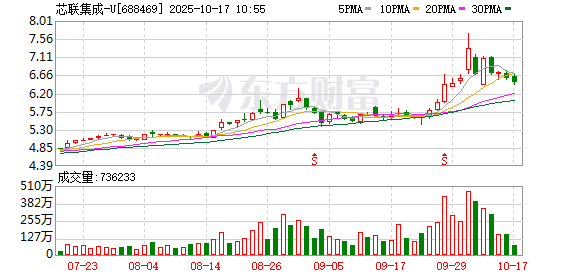
18亿元!688469“尝鲜” 新型政策性金融工具
Shang Hai Zheng Quan Bao· 2025-10-17 02:54
Core Viewpoint - ChipLink Integrated (芯联集成) plans to increase capital by 1.8 billion yuan to its subsidiary ChipLink Pioneer (芯联先锋) to support the ongoing implementation of the "Phase III 12-inch integrated circuit analog mixed-signal chip manufacturing project" [2][5] Group 1: Capital Increase and Financial Tools - The capital increase will ensure that ChipLink Integrated maintains a controlling stake of at least 50.85% in ChipLink Pioneer after the investment [2] - The company intends to apply for a policy financial tool from the National Development Bank, not exceeding 1.8 billion yuan, with a term of 5 years [5] - The funds from the new policy financial tool will be injected as equity capital into ChipLink Pioneer for the aforementioned project, with ChipLink Yuezhou (芯联越州) providing joint liability guarantees [5] Group 2: Strategic Importance and Market Outlook - ChipLink Integrated and its subsidiary are recognized as national high-tech enterprises, and the chips produced will support various strategic emerging industries such as artificial intelligence, the Internet of Things, and new energy vehicles [10] - The capital increase aligns with the company's strategic development plan and market outlook for power module applications, leveraging the new policy financial tool to reduce overall financing costs [10] - The company reported a revenue of 3.495 billion yuan for the first half of 2025, a year-on-year increase of 21.38%, and a net profit attributable to shareholders of -170 million yuan, a year-on-year increase of 63.82% [11]


芯联集成电路制造股份有限公司 关于拟申请新型政策性金融工具事项及全资子公司为公司担保的公告
Zhong Guo Zheng Quan Bao - Zhong Zheng Wang· 2025-10-17 00:49
Group 1 - The company plans to apply for a new policy financial tool from the National Development Bank, with a maximum amount of RMB 1.8 billion [2][3] - The company's wholly-owned subsidiary, Xilinx Yuezhou, will provide a joint liability guarantee for this financial tool [2][3] - The application for the financial tool does not require approval from the company's shareholders' meeting [2][4] Group 2 - The financial tool will be used to inject equity capital into Xilinx Pioneer for the ongoing implementation of the "Phase III 12-inch integrated circuit analog mixed chip manufacturing project" [3][4] - The project aligns with national policies supporting strategic emerging industries such as artificial intelligence, IoT, and new energy vehicles [2][3] Group 3 - The company intends to increase capital by RMB 1.8 billion into its subsidiary Xilinx Pioneer, which will enhance the project's sustainability [7][18] - After the capital increase, Xilinx Pioneer's registered capital will not be less than RMB 1,329,244.16 million, and the company will maintain at least a 50.85% stake [7][18] Group 4 - The funding source for the capital increase will be the new policy financial tool, which offers long-term funding at low interest rates, effectively reducing the company's overall financing costs [18] - This capital increase is expected to strengthen the company's control over its subsidiary and support long-term development strategies [18][19] Group 5 - The company will hold a performance briefing on October 28, 2025, to discuss its third-quarter results and engage with investors [22][23] - The meeting will be conducted online, allowing investors to submit questions in advance [23][26]
三季度GDP增速或为4.8%,政策适时加力必要性上升
Di Yi Cai Jing· 2025-10-16 13:06
Economic Growth and Forecasts - China's GDP growth in the first half of the year was 5.3%, exceeding expectations, with the third-quarter growth forecasted at 4.8% [1][2] - The International Monetary Fund (IMF) maintains its 4.8% growth forecast for China for the year, despite global economic challenges [2] - Economic activity is expected to continue a moderate growth trend into the fourth quarter, with a full-year GDP growth forecast also at 4.8% [1][2] Industrial Production and Investment - Industrial production showed resilience in September, with a manufacturing PMI of 49.8%, indicating slight improvement [3] - Fixed asset investment growth is predicted to slow to 0% in September, reflecting ongoing economic pressures [6] - Excavator sales, a key indicator of economic activity, surged by 25.4% in September, suggesting continued support for infrastructure investment [7] Consumer Spending Trends - Retail sales growth for September is projected to decline to 3.0%, influenced by policy changes and economic conditions [5][4] - The automotive sector remains a significant contributor to consumer spending, with production and sales showing strong year-on-year growth [6] Policy Measures and Economic Support - The necessity for timely policy adjustments has increased, with expectations for targeted fiscal and monetary measures to support economic stability [8][9] - New policy tools totaling 500 billion yuan have been introduced to bolster investment in key sectors such as digital economy and green transformation [10] - The government is expected to enhance fiscal support for infrastructure and technology sectors in the fourth quarter [10]