AI商业化

Search documents
暴涨147%,"AI应用第一股"滴普科技点燃港交所
阿尔法工场研究院· 2025-10-29 00:02
Core Viewpoint - Despite the capital market's enthusiasm, Deepexi Technology faces three major challenges in transitioning from "super subscription king" to mature commercialization [2] Group 1: Financial Performance and Market Position - Deepexi Technology was listed on the Hong Kong Stock Exchange on October 28, becoming the first "enterprise-level large model AI application" stock, with a subscription rate of 7569 times, raising approximately 7.1 billion HKD [6][10] - The company's revenue has shown significant growth, increasing from 100 million RMB in 2022 to 1.29 billion RMB in 2023, and projected to reach 2.43 billion RMB in 2024, representing an 88% year-on-year growth [19] - The gross margin improved from 29.4% in 2022 to 55% in the first half of 2025, driven by the high value-added nature of its FastAGI business [19][16] Group 2: Business Model and Technology - Deepexi Technology focuses on enterprise-level AI applications, providing "data governance + intelligent decision-making" services across various industries such as manufacturing, retail, and healthcare [10][24] - The company has developed two major technology foundations: FastData Foil for data integration and Deepexi enterprise-level large model platform for creating high-precision AI agents [12][13] - The product lines include FastData for data intelligence solutions and FastAGI for AI digital workers, with FastAGI accounting for 55.3% of revenue in the first half of 2025 [14][16] Group 3: Competitive Landscape and Challenges - The market for enterprise AI is becoming increasingly competitive, with players like Fourth Paradigm, Yitu Technology, and SenseTime accelerating their enterprise AI strategies [4] - Deepexi's ability to replicate successful case studies will be crucial for its future valuation stability [5] - The company is still in a high-investment phase, with net losses of 6.55 billion RMB, 5.03 billion RMB, and 12.55 billion RMB over the past three years, indicating challenges in achieving positive cash flow [20]


沪指盘中突破4000点! 券商:信号意义巨大
Mei Ri Jing Ji Xin Wen· 2025-10-28 13:56
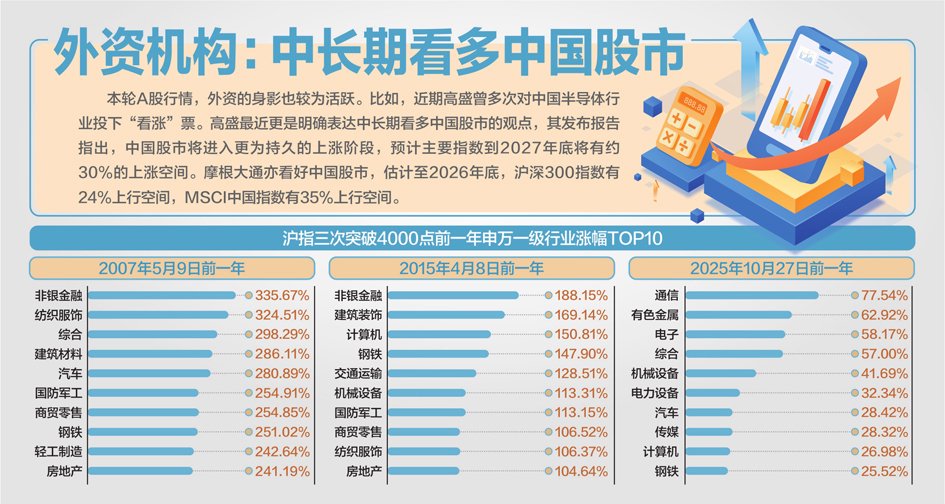
Core Viewpoint - The Shanghai Composite Index (SSE) has broken the 4000-point mark for the first time in a decade, signaling a significant shift in market confidence and the effectiveness of policy reforms [1][3]. Market Performance - The SSE reached 4000 points on October 28, marking its third historical breakthrough of this level, with a slight decline to 3988.22 points by the end of the day [2][3]. - The current market trend is characterized as a "slow bull" market, driven primarily by technology and strategic confidence, with increasing interest from overseas investors [2][3]. Economic and Policy Insights - Analysts suggest that the recent market movements are not primarily driven by corporate earnings improvements but rather by a shift in market narratives and long-term policy reforms [3][4]. - The transition from short-term policy stimulus to a focus on long-term growth and stability is seen as a key factor in enhancing market risk appetite [3][4]. Historical Context - Historically, the SSE has only spent limited time above 4000 points, with previous instances occurring in 2007 and 2015 [7][8]. - The past two bull markets saw the SSE maintain a strong upward trend for several months after breaking the 4000-point barrier, indicating potential for sustained growth [8]. Future Market Outlook - Analysts express optimism about the SSE's potential to remain above 4000 points, with expectations of further upward movement, although some anticipate short-term fluctuations [5][6][9]. - The current bull market is expected to continue, with a focus on technology sectors such as AI, semiconductors, and advanced manufacturing as key growth areas [12][13][14]. Foreign Investment Sentiment - Foreign investors are increasingly optimistic about the Chinese stock market, with firms like Goldman Sachs and Morgan Stanley projecting significant growth potential [16][17]. - The interest from foreign investors is shifting towards technology and sectors benefiting from China's economic transformation, indicating a broader acceptance of Chinese assets [16][17].
值得买(300785):公司信息更新报告:AI商业化成效初显,深化AI战略合作助力成长
KAIYUAN SECURITIES· 2025-10-27 06:11
Investment Rating - The investment rating for the company is "Buy" (maintained) [1] Core Views - The report emphasizes the optimization and upgrading of the business structure, highlighting the potential for growth through comprehensive AI strategies. The company is expected to benefit from the ongoing commercialization of AI, with Q4 events like "Double 11" and national subsidies likely to aid in performance recovery. The earnings forecasts for 2025-2027 remain unchanged, with projected revenues of 1.37 billion, 1.58 billion, and 1.82 billion yuan, and net profits of 90 million, 110 million, and 130 million yuan respectively [4][5][6] Financial Summary - For Q1-Q3 2025, the company reported revenue of 810 million yuan (down 20% year-on-year), primarily due to strategic contraction of low-margin businesses and business upgrades. The net profit attributable to the parent company was 13 million yuan (up 253% year-on-year), mainly due to the recognition of significant deferred income tax credits. In Q3, revenue was 220 million yuan (down 24% year-on-year), with a net profit of 800,000 yuan (up 120% year-on-year) [4][5] - The company confirmed AI-related revenue of 132 million yuan, marking the official start of AI commercialization. The consumption of tokens from third-party large model APIs reached 10.84 billion in September, a 47% increase from June, while the output of the Haina MCP Server exceeded 20.87 million, a 154% increase from June [5] - The financial projections indicate a revenue decline of 10.1% in 2025, followed by growth of 15.5% and 15.2% in 2026 and 2027 respectively. The gross margin is expected to improve from 48.4% in 2023 to 52.9% in 2027, while the net profit margin is projected to rise from 5.2% to 7.1% over the same period [8][10][11]

AI的下一站:从技术破壁到产业共融
3 6 Ke· 2025-10-23 11:08
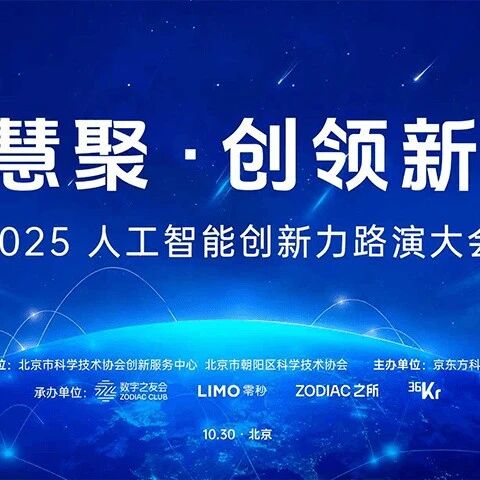
Core Insights - The global AI industry is at a critical turning point, with China's core AI industry scale exceeding 1.3 trillion yuan, representing a growth of approximately 28% compared to 2024, shifting competition from "technical parameter comparison" to "scene landing efficiency" [1] - The AI industry is facing new challenges, including how to effectively integrate AI with the real economy, overcome computing power bottlenecks, and unlock the value of data through hardware [1] - The "AI Hui Ju · Chuang Ling Xin Ju" 2025 AI Innovation Roadshow Conference aims to explore deep integration within the AI industry, featuring prominent figures from industry, investment, and academia [1] Industry Trends - The conference is expected to serve as an "annual testing ground for technology commercialization," emphasizing the importance of practical application scenarios for AI technology [2] - Advances in machine vision and the development of multi-modal sensing technologies, such as the stretchable multi-modal flexible electronic skin by Tujian Technology, are crucial for enabling robots to interact with the physical world [2] - The integration of perception, imagination, and execution is essential for the successful deployment of intelligent systems, as demonstrated by HyperBrain EAI system and Cloud Brocade Micro's focus on AI brain development [2] Material and Technology Innovations - Galliant Future Semiconductor focuses on fourth-generation semiconductor materials, specifically gallium oxide, breaking through foreign restrictions and laying the foundation for high-efficiency power devices [3] - New Research Smart Materials is leveraging "AI for Science" to reconstruct material research logic, significantly shortening development cycles, which is vital for industry upgrades [3] - The future winners in the industry will be those who can integrate sensing, control, materials, and knowledge into real industrial ecosystems, as highlighted by the role of BOE Technology Group in fostering a strong industrial ecosystem [3] Ecosystem Development - The AI closed-door roadshow held on October 30 in Beijing is a deep exploration of the industrial ecosystem, focusing on how AI can transition from laboratories to production lines across various sectors [4] - Discussions will not only cover algorithm performance but also the alignment of supply chains, the rigidity of application scenarios, and the sustainability of business models [5] - The next phase for AI is characterized by co-creation and collaboration, aiming to develop a comprehensive blueprint for industry implementation following technological breakthroughs [5]
AI的下一站:从技术破壁到产业共融
36氪· 2025-10-23 10:39
Core Insights - The article discusses the transition of the AI industry towards practical applications, emphasizing the importance of hardware, computing power, and real-world scenarios in driving AI commercialization [2][3] - The Chinese AI core industry has surpassed 1.3 trillion yuan, reflecting a growth of approximately 28% compared to 2024, indicating a shift from technical competition to efficiency in real-world applications [2] - The upcoming "AI Hui Ju · Chuang Ling Xin Ju" event aims to explore deep integration within the AI industry, featuring prominent figures from investment, industry, and academia [2][3] Group 1: AI Technology and Applications - The first step in AI application is perception, with advancements in machine vision and multi-modal sensing becoming crucial for intelligent systems to understand the physical world [4] - Innovations like the "stretchable multi-modal flexible electronic skin" developed by Tu Jian Technology enable robots to not only "see" but also "touch" and "sense," enhancing physical interaction capabilities [4] - The integration of perception, imagination, and execution is essential for robots to perform non-standard tasks, exemplified by HyperBrain EAI system from Haibolian [5] Group 2: Material and Knowledge Breakthroughs - Long-term AI development relies on breakthroughs in foundational materials and the construction of knowledge systems, with companies like Gai Chuang Future focusing on fourth-generation semiconductor materials [6] - New Research Materials aims to shorten R&D cycles through an "AI for Science" approach, driving industry upgrades from the ground up [6] - The trend indicates that mere technological breakthroughs are insufficient; future winners will be those who can integrate sensing, control, materials, and knowledge into real industry ecosystems [6] Group 3: Industry Ecosystem and Collaboration - The event emphasizes the need for collaboration within the industry ecosystem to create sustainable business barriers, with companies' technological value heavily dependent on their integration within the supply chain [8] - The AI closed-door roadshow on October 30 in Beijing will explore how AI transitions from laboratories to production lines across various sectors, focusing on supply chain matching and sustainable business models [8] - The future of AI is seen as one of co-creation and integration, with expectations for a collaborative effort to develop a new blueprint for industry implementation [9][10]
OpenAI秘密项目曝出,百名投行精英密训AI,华尔街最贵苦力要失业了?
3 6 Ke· 2025-10-22 12:56
Core Insights - OpenAI's secret project "Mercury" aims to recruit over 100 former investment bankers to train financial models, intending to replace repetitive tasks performed by junior bankers, marking a significant step towards commercialization and profitability amid high computing costs [1][19][22] Recruitment and Project Structure - The "Mercury" project is an outsourcing initiative that hires top talent from prestigious investment banks and business schools, offering participants a high hourly wage of $150 [7][8] - The recruitment process involves an AI interview, an industry knowledge test, and a modeling skills assessment, minimizing human involvement in the selection process [8][9] Impact on the Banking Industry - The project is seen as both a positive and negative development for junior bankers; while it alleviates them from tedious tasks, it raises concerns about job losses in entry-level positions [3][7] - There is a growing anxiety about AI-induced unemployment, with predictions that up to 50% of entry-level office jobs could be eliminated in the next five years, potentially increasing unemployment rates to 10%-20% [7][19] Financial Model Training - Participants in the "Mercury" project are tasked with writing prompts and training financial models for various transactions, including restructurings and IPOs, contributing high-quality data to OpenAI's systems [9][10] - The iterative process involves submitting models for review and making adjustments based on feedback until they are integrated into OpenAI's framework [10] Broader Implications for Talent Development - Concerns are raised about the potential loss of foundational experiences for junior bankers, as the elimination of basic tasks may hinder their professional growth and understanding of the industry [11][16] - Industry veterans emphasize the importance of these foundational tasks in developing essential skills and confidence needed for higher-level responsibilities [16][18] OpenAI's Commercial Strategy - "Mercury" is part of OpenAI's broader strategy to achieve profitability, which includes various initiatives like paid subscriptions and partnerships [19][21] - The company is investing heavily in cloud computing, with projected expenditures of approximately $7 billion in 2024 and cumulative investments exceeding $400 billion in its Stargate initiative [22] Knowledge Automation Revolution - The "Mercury" project signifies a shift towards the democratization of expert knowledge through AI, suggesting that knowledge will become more accessible and less of a scarce resource in the AI era [22][23]

瑞银坚定唱多中国科技股,列为全球股票中最具信心投资标的
Zhi Tong Cai Jing· 2025-10-21 14:08
Core Viewpoint - UBS has upgraded the rating of Chinese stocks to "attractive" and technology stocks to "most attractive," citing them as the most confident investment targets globally [1][2]. Group 1: Technology Sector Insights - Chinese technology stocks are seen as the most confident investment targets globally, supported by two main factors: clear AI commercialization trends and strong growth prospects from leading tech companies, along with significant progress in domestic chip production [2][3]. - Major Chinese tech companies are expected to increase capital expenditures by 55% by 2025 to meet the surging demand for AI, with AI user penetration in China showing significant growth, reaching 645 million users as of August, a year-on-year increase of over 60% [3][4]. Group 2: Market Dynamics - The technology sector is entering a multi-year growth cycle driven by technological breakthroughs, strong policy support, and domestic production, with projected earnings growth of 37% by 2026, making it the fastest-growing stock sector globally [4][5]. - Historical analysis indicates that Chinese bull markets are typically driven by liquidity and valuation expansion, with the current market trend following a similar pattern, suggesting a more sustainable and robust upward movement [5][6]. Group 3: Liquidity and Investment Trends - Domestic investors have net bought $50 billion in Hong Kong stocks through the Stock Connect this year, the highest level since the mechanism's launch, indicating strong liquidity in the market [6][7]. - Local institutional investors are likely to shift funds from bonds to stocks due to declining yields on 10-year government bonds, which could support continued market growth [6][7]. Group 4: Policy Support - The macroeconomic environment remains stable, with expectations for targeted policy support rather than large-scale fiscal stimulus, focusing on technology and advanced manufacturing sectors [8][9]. - Upcoming policies are expected to prioritize innovation and high-quality growth, with specific measures aimed at supporting AI commercialization and chip production, reflecting the government's commitment to these sectors [8][9].



互联网行业AI商业化双主线:云基建护航场景应用共振
HTSC· 2025-10-19 07:03
Investment Rating - Maintain "Buy" rating for key companies in the AI and cloud infrastructure sectors [8] Core Insights - The report emphasizes two main investment lines: cloud infrastructure service providers benefiting from downstream demand and application scenario commercialization, particularly in advertising and vertical applications [17][19] - The rapid growth in token usage for AI models indicates a strong demand for AI applications, with significant increases in daily token calls for major platforms [18][26] - The report highlights the cost advantages of domestic AI models compared to international counterparts, with prices approximately 50% lower, facilitating broader market penetration [31][35] Summary by Sections Investment Rating - The report maintains a "Buy" rating for several key companies, including Alibaba, Baidu, Tencent, Kuaishou, and others, indicating strong growth potential in the AI and cloud sectors [11] Cloud Infrastructure - Cloud infrastructure is identified as the foundational layer for AI applications, with major players like Alibaba, Baidu, and Tencent developing comprehensive capabilities to support AI development [19][42] - The report notes that the cost of cloud computing is significantly lower than building in-house capabilities, enhancing the attractiveness of cloud services for AI development [19] AI Application Commercialization - The commercialization of AI in advertising is highlighted, with AI technologies improving efficiency and effectiveness in ad campaigns, leading to increased ROI for advertisers [20][21] - Vertical applications of AI are also expanding, with significant advancements in sectors such as video generation, recruitment, and office automation, showcasing the versatility and market potential of AI technologies [21][24] Market Dynamics - The report contrasts the focus on large model technology with the importance of application scenarios for AI commercialization, suggesting that companies with strong scene-based applications will have a competitive edge [22][25] - The increasing integration of AI into industry workflows is expected to drive demand for customized B-end services, which are seen as critical for differentiation in the market [23][24]
老登股的黄昏还是黎明?
雪球· 2025-10-17 04:23
Group 1: Core Views - The divergence between Hang Seng Tech stocks (e.g., Tencent, Alibaba) and "Old Economy Stocks" (e.g., China Shenhua, Midea Group) is becoming more pronounced, with tech stocks benefiting from accelerated AI commercialization and valuation recovery expectations, while old economy stocks rely on low valuations and stable cash flows [3][4]. Group 2: Hang Seng Tech Stocks (Tencent, Alibaba) - **Tencent:** - Social ecosystem monopoly with over 1.3 billion monthly active users on WeChat, creating a closed loop of "payment-content-mini programs-games," enhancing monetization capabilities [4]. - AI technology implementation with a threefold increase in the accuracy of the mixed Yuan model 3.0, reducing computing costs and empowering game development and industrial design [5]. - Stable cash flow from gaming business, supporting long-term investments in AI research and ecosystem expansion [6]. - **Alibaba:** - Synergy between cloud and e-commerce, with Alibaba Cloud's AI revenue growing for eight consecutive quarters, capturing 47% of China's public cloud market [7]. - Globalization strategy with cross-border e-commerce accounting for 12% of revenue, benefiting from reduced tariffs and partnerships to mitigate chip supply uncertainties [7]. - Technical and capital advantages through a multi-chip strategy, reinforcing computing infrastructure and optimizing e-commerce efficiency [7]. - **Future Trends:** - Accelerated AI commercialization will drive revenue growth in advertising, gaming, and industrial sectors, with significant profit elasticity [8]. - Valuation recovery potential with current P/E ratios for Tencent and Alibaba at approximately 25x and 19x, respectively, supported by earnings growth [8]. - Continuous inflow of funds from Hong Kong Stock Connect, with net purchases exceeding 30 billion HKD in Q3, alongside expectations of liquidity easing from the Federal Reserve [8]. Group 3: "Old Economy Stocks" (China Shenhua, Midea Group) - **China Shenhua:** - Resource endowment and cost control as a coal industry leader, benefiting from rigid demand during the energy transition [9]. - High dividend yield exceeding 5%, providing stable returns during economic downturns, attracting conservative investors [9]. - Despite pressure from renewable energy, coal remains a "ballast" in the power structure in the short term [11]. - **Midea Group:** - Supply chain and brand advantages with a leading global market share in home appliances, particularly over 30% in air conditioning [12]. - Globalization through the acquisition of KUKA (industrial robots), with over 40% of revenue from overseas, diversifying market risks [13]. - Stable cash flow from the strong demand for home appliances, enhanced by buybacks and dividends [14]. - **Future Trends:** - Growth bottlenecks in the home appliance industry, with expected growth of 5%-8% by 2025, requiring Midea to rely on high-end products and overseas markets [15]. - Valuation at historical lows with P/E ratios of approximately 15x for China Shenhua and 13x for Midea Group, but earnings growth may not support significant valuation increases [15]. - Policy risks in the coal industry due to carbon neutrality goals, alongside challenges in the home appliance sector from raw material price fluctuations and weak consumer demand [15]. Group 4: Market Performance and Investment Recommendations - Tech stocks are more likely to outperform the market due to stronger growth momentum from AI commercialization and globalization strategies [16]. - Valuation recovery potential for the Hang Seng Tech Index, currently at a P/E of about 24x, significantly lower than international peers [16]. - Traditional stocks are suitable for defensive positioning, offering low valuations and high dividend yields, appealing to risk-averse investors [17].



B端18个月、C端3个月,谁能跨越AI创业的生死线?
创业邦· 2025-10-11 10:11
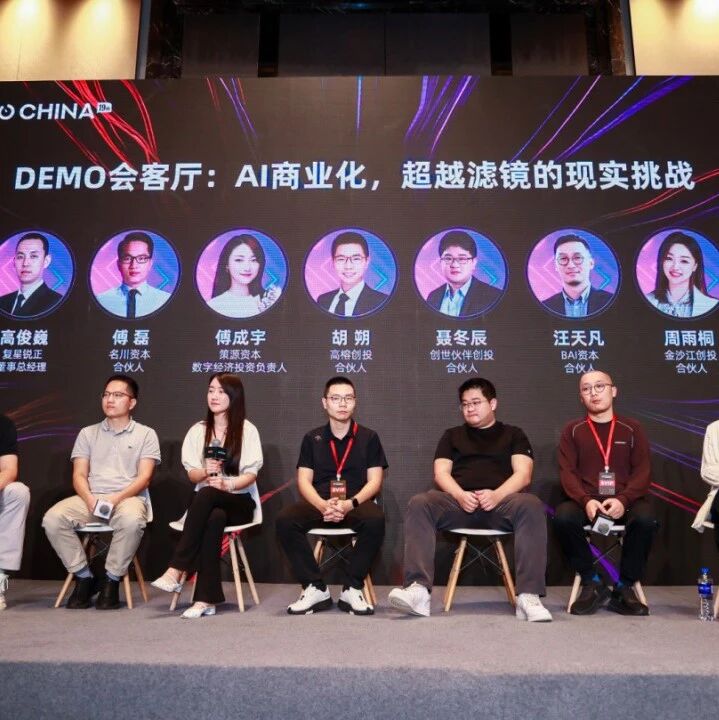
在创业邦2025(第十九届)DEMO CHINA大会现场,复星锐正董事总经理高俊巍、名川资本合伙人傅磊、策源资本数字经济投 资负责人傅成宇、高榕创投合伙人胡朔、创世伙伴创投合伙人聂冬辰、BAI资本合伙人汪天凡、金沙江创投合伙人周雨桐,围绕 的AI商业化展开了深度对话。 以下是各位嘉宾的对话实录,由创业邦整理。 AI 商业化是必答题 而非选择题 当AI技术从"概念热炒"走向"落地攻坚",商业化成为检验赛道价值与项目成色的关键标尺。百模大战、AI Agent崛起、AI应用元 年……近几年,市场对AI的期待逐渐从"技术奇观"转向"价值创造"。能否赚钱、多久能赚钱、能赚多大规模的钱,成为创投圈聚 焦的核心问题。 高俊巍 : 2022年我们见证了AI技术的爆发,2023年经历 "百模大战" 后的收敛,2025年被不少人视为AI应用元年。想问各 位,AI商业化的元年是否同步到来?现在是否是商业化落地的最佳时机?观察项目时,"明确的商业化效果" 是否已成为必备条 件? 周雨桐 : 从数据看,今年AI领域的token消耗量、B端与C端应用收入均呈陡峭增长,增速超移动互联网早期,商业化价值非常 清晰。对我们而言,商业化潜力是观 ...