资产配置

Search documents
回应投资策略、利润“反差” 中国平安高管释放关键信号
Xin Jing Bao· 2025-08-28 11:35
Core Insights - China Ping An reported its 2025 interim results, showing a revenue of 500.76 billion RMB and an operating profit of 77.732 billion RMB, a year-on-year increase of 3.7%, while net profit attributable to shareholders decreased by 8.8% to 68.047 billion RMB [1] Group 1: Financial Performance - The company declared an interim dividend of 0.95 RMB per share, reflecting a 2.2% increase year-on-year [1] - The decline in net profit is attributed to three key factors, including a 3.4 billion RMB impairment from the consolidation of Ping An Good Doctor, a decrease in the valuation of convertible bonds, and 67% of stock investments classified under Other Comprehensive Income, which does not impact the profit statement [5] Group 2: Investment Strategy - Insurance capital is increasingly being allocated to low-volatility, high-dividend stocks, with Ping An Life being a major player in the recent wave of insurance capital acquisitions [2] - The company has increased its equity holdings from 7.6% at the end of last year to 10.5% by June 30 this year, with a total investment portfolio exceeding 6.2 trillion RMB, reflecting an 8.2% growth since the beginning of the year [3] - Ping An is focusing on sectors with new productive forces and high dividend yields for future equity investments, indicating confidence in the Chinese market's valuation levels [3][4] Group 3: Diversification and Risk Management - The company has initiated gold investment as a new tool for diversification and risk hedging, aligning with regulatory encouragement for insurance companies to explore gold investments [2] - Ping An's investment strategy adheres to the "three Cs" principle: reliable operations, expected growth, and sustainable dividends, which guides long-term investment decisions [4]

关于秋季市场,券商最新展望
Zheng Quan Shi Bao· 2025-08-28 11:08
Group 1 - The overall sentiment among brokerages is optimistic regarding the continuation of policies and improvement in liquidity for Chinese assets [1][3] - The domestic fiscal policy has exceeded expectations this year, leading to improved liquidity for residents, government, and markets, with a focus on maintaining diverse and steady growth policies [3] - The current market is experiencing a recovery in valuation and sentiment, with a shift in focus towards whether corporate performance can follow suit [3][4] Group 2 - There is a notable inflow of trading funds into the market, reaching the highest activity level since 2016, with expectations for further increases in foreign investment in A-shares [6] - The net inflow of funds into A-shares this year is approximately 2.1% of the free float market value, indicating a slight net inflow status [6] - Analysts suggest that household funds are gradually shifting from bank wealth management products to non-bank financial products and capital markets, indicating a potential increase in stock market participation [6] Group 3 - The Chinese capital market is entering a new phase, with a shift from being a follower to a leader in the economy, emphasizing the importance of optimizing resource allocation in the technology sector [8] - The technology sector is expected to be a core asset for both domestic and foreign investments in the Hong Kong market, with a focus on internet, software, new consumption, and innovative pharmaceuticals [9] - Analysts recommend paying attention to physical assets and capital goods that will benefit from the recovery of overseas manufacturing and the expected bottoming of capital returns [9]

关于秋季市场,券商最新展望!
券商中国· 2025-08-28 10:25
Core Viewpoint - The article highlights a generally optimistic outlook for the Chinese market, driven by improved liquidity and supportive fiscal policies, with a focus on the long-term revaluation of Chinese assets [1][4][5]. Group 1: Market Outlook - Multiple brokerages are optimistic about the continuation of policies and improvement in liquidity, indicating a positive trend for Chinese assets [1]. - The chief macroeconomic analyst at Huatai Securities, Yi Han, notes that the fiscal policy has exceeded expectations this year, leading to improved liquidity for residents, government, and markets [4]. - The chief strategist at Guojin Securities, Miao Yiling, describes the upcoming autumn outlook for the Chinese market as a "dawn," suggesting a stabilization and recovery in domestic manufacturing capital returns [5]. Group 2: Liquidity and Capital Flow - Liquidity is a central topic, with trading funds continuing to flow into the market, reaching the highest activity levels since 2016 [7]. - As of August 20, the net inflow of funds into A-shares accounted for approximately 2.1% of the free float market value, indicating a slight net inflow [7]. - Analysts suggest that household funds are gradually shifting from bank wealth management products to non-bank financial products and capital markets, indicating a potential increase in stock market investments [7]. Group 3: Investment Focus - Analysts recommend focusing on the technology sector, which is expected to become a structural feature of the market, similar to the Nasdaq [9]. - The Hong Kong market is seen as having advantages in sectors such as internet, software, new consumption, and innovative pharmaceuticals, which are currently experiencing positive trends [9]. - There is a suggestion to remain cautious of potential market volatility while maintaining a focus on key investment themes, particularly in physical assets and capital goods that benefit from the recovery of overseas manufacturing [9].

华夏基金徐猛:利率下行周期,居民资产配置应向权益资产倾斜
Sou Hu Cai Jing· 2025-08-28 08:45
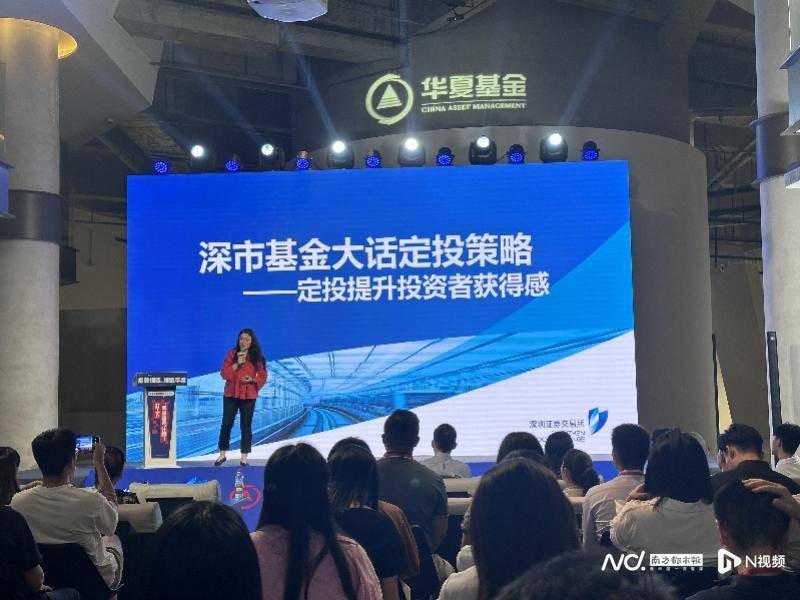
Group 1 - The meeting held by Huaxia Fund, Shenzhen Stock Exchange, and Tencent focused on index investment strategies, highlighting the latest breakthroughs in China's ETF market regarding scale expansion, product innovation, and investor education [1] - The Shenzhen Stock Exchange emphasized that regular investment (Ding Tou) significantly enhances investors' profit experience and acceptance, indicating a strong foundation for investor education [4] - The exchange plans to launch an "ETF Ding Tou Case Exhibition" to vividly showcase the advantages and application environments of ETF regular investment, promoting rational, value, and long-term investment concepts [4] Group 2 - Huaxia Fund's executive highlighted that in the current environment of declining risk-free interest rates, traditional deposit assets are becoming less effective for value appreciation, suggesting a shift towards equity assets [5] - The current domestic policy encourages long-term investment, with institutional investors like insurance funds increasing their market participation, driven by advancements in AI technology [9] - The low-interest-rate environment necessitates a shift in investment strategies, with index investment being a suitable approach for ordinary investors due to its risk diversification and lower management costs [10][14] Group 3 - The number of ETFs in China has surpassed 1,200, with a total scale exceeding 5 trillion yuan, marking the arrival of the era of universal index investment [15] - China has become the largest ETF market in Asia, surpassing Japan, and is increasingly influential in the global ETF landscape [15] - Huaxia Fund aims to enhance investor satisfaction in index investment by focusing on innovation and collaboration with ETF ecosystem partners to support the high-quality development of the capital market [15]
高波动、低利率时代,机构共议多元化挖掘收益
2 1 Shi Ji Jing Ji Bao Dao· 2025-08-28 06:11
Group 1: Conference Overview - The "2025 Asset Management Conference" was held in Shanghai, focusing on diverse asset allocation strategies in a low-interest-rate environment [1][3] - Experts from various asset management firms discussed key topics such as asset allocation strategies, stock and bond market trends, and the outlook for gold and dollar assets [3] Group 2: Low-Interest Rate Environment - The low-interest-rate environment has fundamentally altered investors' risk preferences and behavior, with the ten-year government bond yield fluctuating between 1.6% and 1.9% [4][5] - The policy support for the capital market since September 2022 has been significant, with long-term funds entering the market, enhancing market confidence [4][5] Group 3: Asset Allocation Strategies - The concept of "asset scarcity" has emerged as a major challenge, prompting innovative strategies such as "seeking returns internally" and "seeking returns externally" [7] - The focus on high-dividend assets reflects the demand for stable returns amid the ongoing asset scarcity [9] Group 4: Equity Market Insights - The equity market is characterized by structural differentiation, with technology and manufacturing sectors gaining attention [9][10] - High-dividend companies are expected to perform steadily, even if their overall returns may not be as impressive in the near term [10] Group 5: Gold and Dollar Dynamics - Gold remains a focal point for discussion, driven by long-term factors such as the weakening status of the dollar and central banks' increasing gold reserves [11][12] - The "fixed income + dollar" and "fixed income + gold" strategies have gained popularity, but caution is advised due to potential risks associated with currency exposure and market volatility [12]

博时基金宏观策略部王橹舟:下半年关注两大资产配置主线
2 1 Shi Ji Jing Ji Bao Dao· 2025-08-28 03:39
Group 1: Market Outlook and Strategies - The current stock market shows a recovery in risk appetite, but fundamental pressures maintain a range-bound pattern, with overall trends positive but subject to periodic corrections and sector rotations [2] - The driving forces behind market movements are primarily capital flows and policy expectations, with sustainability dependent on corporate earnings and overall demand improvements [2] - The "barbell strategy" remains relevant, with adjustments suggested for both sides based on risk-reward considerations and trend analysis [2] Group 2: Asset Allocation Insights - In a low-interest-rate environment, the focus should be on emerging market equities and gold or short-term U.S. Treasuries as key asset allocation themes [1] - The importance of low-correlation strategies is emphasized, as single strategies struggle to manage drawdowns effectively; integrating various strategies can enhance overall portfolio Sharpe ratios [1][4] - The shift in bond market strategy from "yield-driven" to "portfolio optimization" is noted, with an emphasis on maintaining liquidity and managing duration to reduce volatility [6] Group 3: Risk Management Approaches - The risk of losses can be managed through both preemptive and reactive measures, with a focus on strategic asset allocation and tactical short-term signals to mitigate "missing out" risks [5] - The bond market faces multiple pressures, including capital diversion to equities and inflation expectations, necessitating a defensive approach with a focus on short to medium-term credit bonds [6]

有30万存款的人,还在傻傻存定期?银行职工说漏:这样存利息过万
Sou Hu Cai Jing· 2025-08-28 03:35
Core Viewpoint - The article emphasizes the importance of exploring various investment options beyond traditional fixed deposits to enhance wealth growth, especially in a low-interest-rate environment [1][14]. Group 1: Current State of Fixed Deposits - As of 2025, the total balance of residents' deposits in China reached 128.5 trillion yuan, with approximately 46% in fixed deposits, indicating a significant amount of capital earning low returns [2]. - The average annual interest rate for fixed deposits among major banks was reported at 2.65% in the first quarter of 2025, while alternative investment avenues could yield annualized returns of 3.8% to 4.2% with similar risk levels [2][4]. Group 2: Alternative Investment Options - **Large Time Deposits**: These offer higher interest rates compared to traditional fixed deposits, with three-year rates ranging from 3.0% to 3.45%, potentially yielding 27,900 to 31,050 yuan in interest for a 300,000 yuan deposit [5]. - **Structured Deposits**: These combine traditional deposits with financial derivatives, offering an average annualized return of 3.8% as of mid-2025, but with variable returns based on market indicators [6]. - **Smart Deposits**: A new product type that provides flexibility and competitive returns, with average annualized rates around 2.8% to 3.2%, allowing for partial withdrawals while maintaining higher interest on unwithdrawn amounts [6]. - **Bank Wealth Management Products**: These are categorized by risk levels, with low-risk products yielding average annualized returns of 3.6% to 4.2%, significantly higher than fixed deposits [7]. - **Money Market Funds**: These offer good liquidity and lower risk, with average returns around 2.7% as of July 2025, suitable for those needing frequent access to funds [7]. Group 3: Wealth Management Strategies - A diversified investment approach is recommended, such as allocating 10% to smart deposits, 15% to low-risk wealth management products, and 5% to money market funds, which could yield a total return of approximately 34,500 yuan over three years, outperforming fixed deposits by about 9,750 yuan [8]. - Continuous learning and adjustment of investment strategies are crucial as financial markets evolve and personal circumstances change [15].

七夕稳稳爱丨第一只红利ETF怎么选?看这三大硬核逻辑
申万宏源证券上海北京西路营业部· 2025-08-28 02:52
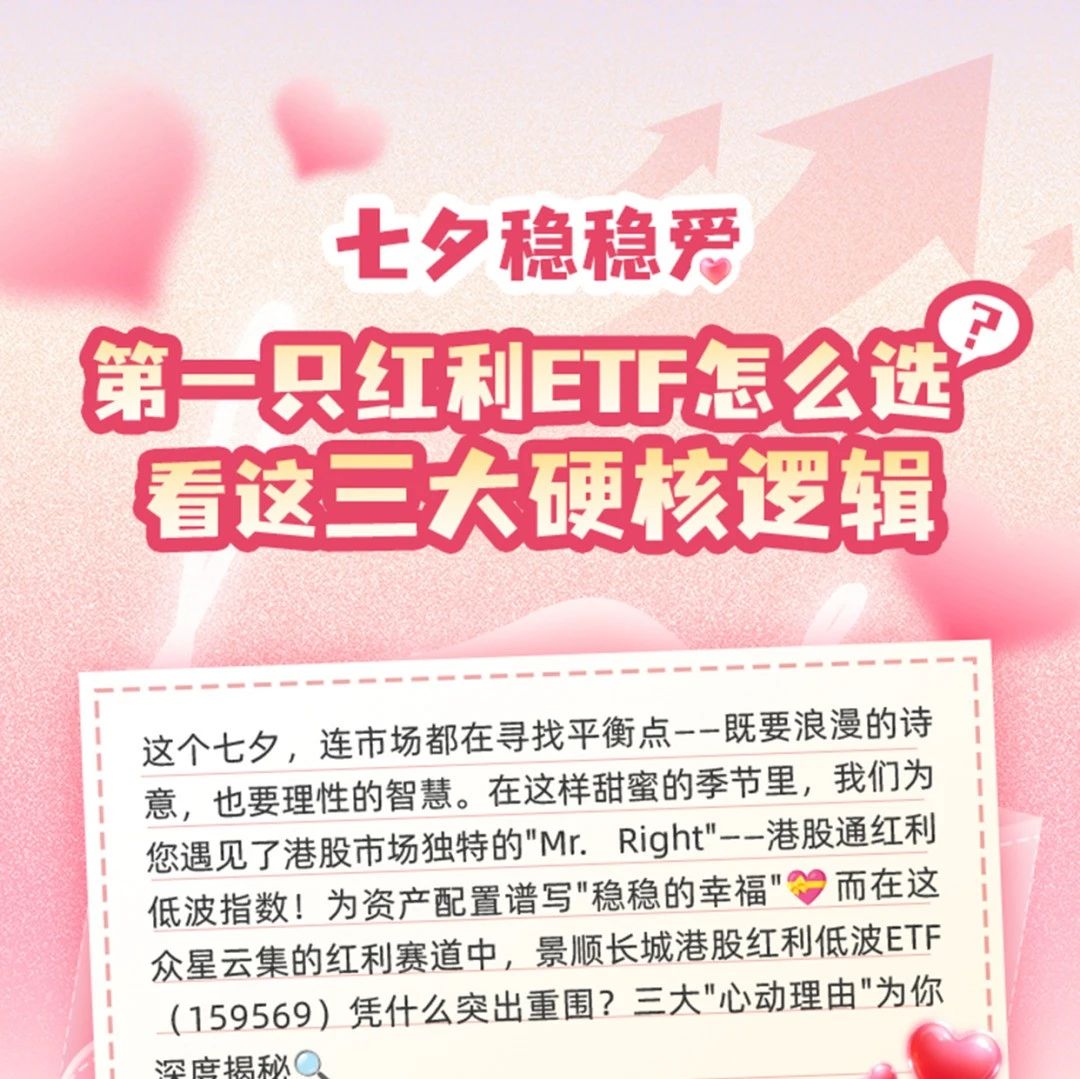
Core Viewpoint - The article emphasizes the attractiveness of the Hong Kong Stock Connect Dividend Low Volatility Index, highlighting its high dividend yield, low volatility, and favorable valuation as a stable investment option in the current market environment [2][13]. Group 1: Dividend Yield and Selection Mechanism - The Hong Kong Stock Connect Dividend Low Volatility Index utilizes a three-year average dividend yield as a core selection criterion, targeting large-cap stocks with a minimum yield of 6%, resulting in a weighted average dividend yield of 6.07% as of July 2025, which is the highest among dividend indices [3][4]. - The index ranks above the Hang Seng High Dividend Index (4.8%) and the A-share Dividend Index (5.2%) in terms of dividend yield [3]. Group 2: Low Volatility and Defensive Strategy - The index features a low annualized volatility of 2.97%, which is 31% lower than the Hang Seng Dividend Index (4.3%), providing a defensive shield against market fluctuations [6]. - During significant market downturns, the ETF associated with this index experienced an average drawdown of only 2.1%, compared to a 5.8% drawdown for the CSI 300 Index [6]. Group 3: Valuation and Sector Allocation - As of Q2 2025, the index's price-to-book (PB) ratio stands at 0.63, indicating a valuation in the lowest 10% historically and nearly 50% lower than similar A-share dividend products [8]. - The index has a high concentration in three sectors: banking (32%), coal (18%), and transportation (14%), which are known for their high dividends and strong defensive characteristics [9]. Group 4: Performance and Policy Support - The index has demonstrated strong performance, with a 10.96% excess return over the Hang Seng Total Return Index in the past three months and a two-year annualized return of 30%, ranking it among the top three in the Hong Kong dividend product category [10]. - Approximately 75% of the index's holdings are in state-owned enterprises, benefiting from recent policy incentives aimed at improving market valuations for high-dividend assets, with 12 companies initiating buyback plans totaling over HKD 20 billion [13].
增强组合抗风险能力 “固收+”差异化策略拉开身位
Zhong Guo Zheng Quan Bao· 2025-08-27 22:02
Core Viewpoint - The performance of "fixed income +" products has significantly diverged in the second half of the year, with those leaning towards equities and convertible bonds showing notable gains, while those focused on pure bonds have lagged behind [1][3][4] Group 1: Performance of "Fixed Income +" Products - "Fixed income +" products with higher equity and convertible bond allocations have seen substantial performance increases, with some funds achieving returns over 20% since the second half of the year [2][4] - Specific funds such as Huashang Shuangyi A and Jinying Yuanfeng A reported returns of 24.71% and around 20% respectively, with high equity allocations exceeding 40% [2][4] - Conversely, funds primarily invested in pure bonds, like Fangzheng Fubang Hongyuan A, have underperformed, with long-duration bonds leading to negative returns since July [3][4] Group 2: Market Trends and Strategies - The current market environment, characterized by a strong equity market and weak bond market, has led to a higher acceptance of "fixed income +" products, particularly those with convertible bonds [4][5] - Fund managers are advised to dynamically adjust the allocation of the "+" component based on market trends and risk preferences, enhancing the risk-adjusted returns of the portfolio [6][7] - The focus on multi-asset strategies and the exploration of various "fixed income +" investment strategies have become prevalent in the public fund industry [7][8] Group 3: Asset Allocation Insights - Successful "fixed income +" funds have shown a tendency to overweight sectors such as metals, military, TMT, and healthcare, while underweighting cyclical and financial sectors [4][5] - The strategy of using convertible bonds has proven effective, with funds capturing significant gains from high-performing stocks [2][4] - The importance of dynamic asset valuation and the ability to hedge against market fluctuations are emphasized for optimizing returns in "fixed income +" portfolios [6][8]
公募REITs大派“红包” 高股息属性凸显配置价值
Shang Hai Zheng Quan Bao· 2025-08-27 18:45
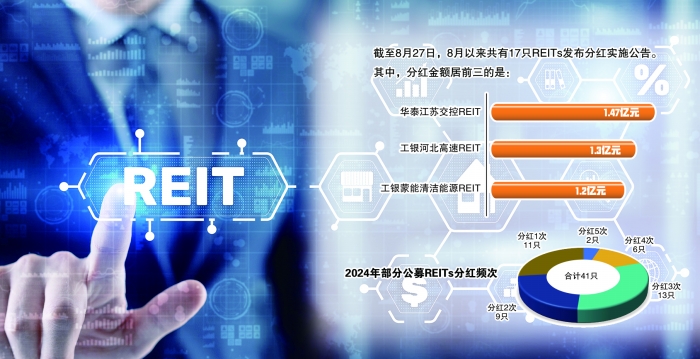
Core Viewpoint - Public REITs are gaining attention from investors due to their high cash dividend distribution and low volatility in dividends, providing a strong supplement to high-yield assets in the market [2][4]. Summary by Sections Dividend Announcements - As of August 27, 17 public REITs have announced dividend distributions in August, with a total payout exceeding 767 million yuan. Notable distributions include 130 million yuan from Industrial Bank's North Highway REIT and 120 million yuan from Industrial Bank's Mengneng Clean Energy REIT [2][3]. - Three additional REITs are set to distribute dividends in September, with the Huatai Jiangsu Expressway REIT expected to distribute 147 million yuan [2]. Dividend Rates - The dividend rates for certain REITs are notably high, with Industrial Bank's Mengneng Clean Energy REIT at 11.24%, Huatai Jiangsu Expressway REIT at 8.18%, and Guotai Junan Jinan Energy Heating REIT at 5.13% [3]. Frequency of Dividends - Many public REITs are generous with their distributions, often conducting multiple dividend payouts within a year. For instance, several REITs have already executed their second dividend distribution this year since August [3][4]. - The Huatai China Communications REIT has distributed dividends 13 times since its establishment in April 2022, with its second distribution occurring in August [4]. Market Appeal and Asset Allocation - The high dividend yield of public REITs is increasingly recognized by investors for its positive role in asset allocation. Research indicates that public REITs can achieve a distribution ratio exceeding 90%, with many exceeding 97% [4]. - The overall scale of public REITs in public fund of funds (FOF) has reached 196 million yuan by the end of the second quarter, nearly doubling from the previous year [5]. - Incorporating public REITs into investment portfolios can reduce volatility, and as the REIT market expands, it is expected to attract more capital [5].