人工智能(AI)

Search documents
业绩超预期!9月股价飙涨40%!AI需求给力,美光上季营收劲增46%,本季指引碾压预期再创新高
美股IPO· 2025-09-23 23:07
Core Viewpoint - Micron Technology reported a strong performance in Q4, with EPS doubling and exceeding analyst expectations by 6%, while also raising guidance for the upcoming quarter significantly. The demand for High Bandwidth Memory (HBM) reached a record high, indicating robust growth driven by AI demand [1][3][15]. Financial Performance - Q4 revenue was approximately $11.32 billion, a year-over-year increase of 46%, surpassing analyst expectations of $11.15 billion and the company's guidance of $11 billion to $11.3 billion [6]. - Q4 adjusted EPS was $3.03, a 156.8% increase year-over-year, exceeding analyst expectations of $2.86 and the company's guidance of $2.78 to $2.92 [6][15]. - Adjusted operating income for Q4 was $3.955 billion, up 126.6% year-over-year, also surpassing analyst expectations of $3.723 billion [7]. Business Segments - DRAM revenue in Q4 was $9 billion, accounting for approximately 79% of total revenue, with a quarter-over-quarter increase of 27% [7]. - NAND revenue in Q4 was $2.3 billion, making up about 20% of total revenue, with a quarter-over-quarter increase of 5% [8]. Guidance for Upcoming Quarter - For Q1, revenue is expected to be $12.5 billion, with a range of $12.2 billion to $12.8 billion, exceeding analyst expectations of $11.9 billion [10][17]. - Adjusted EPS for Q1 is projected at $3.75, with a range of $3.60 to $3.90, significantly higher than analyst expectations of $3.05 [11][18]. - The gross margin for Q1 is expected to be 51.5%, with a range of 50.5% to 52.5% [12]. Market Outlook - Micron anticipates continued tight supply in the DRAM market and an improving NAND market through 2026, with a compound annual growth rate for industry demand expected to reach around 15% [18]. - The company has raised its growth forecast for global DRAM and NAND demand for the current year, expecting DRAM Bit demand growth to exceed 15% and NAND Bit demand growth between 10% and 15% [18]. HBM Demand and Client Expansion - The number of HBM clients has expanded to six, with expectations that all HBM products for 2026 will be sold out in the coming months [19]. - Micron is actively discussing specifications and supply volumes for HBM4 products, which are expected to offer higher bandwidth and lower power consumption compared to previous generations [19].



估值警钟敲响!鲍威尔重磅发声
Wind万得· 2025-09-23 22:30
Market Overview - After a continuous rise, the US stock market adjusted following Federal Reserve Chairman Jerome Powell's speech, leading to investor caution regarding the sustainability of the AI hype [1][3] - The S&P 500 index fell by 0.55% to 6656.92 points, while the Nasdaq Composite index dropped nearly 1% to 22,573.47 points, primarily driven by sell-offs in AI-related stocks like Nvidia, Oracle, and Amazon [1][2] Federal Reserve Insights - Powell indicated that asset prices are at "high levels," raising concerns about overvaluation, which contributed to the decline in major stock indices [2][3] - Prior to Powell's remarks, the S&P 500 and Nasdaq had reached new highs, but the Fed's signal of high valuations led to a shift in capital flows as some investors opted to take profits [3] Nvidia and OpenAI Investment - Nvidia's stock fell by 2.8% after a previous surge due to its announcement of a potential $100 billion investment in OpenAI, with investors questioning the feasibility and risks of this investment [3] - Analysts noted that Nvidia might be the only significant financier for OpenAI, raising concerns about the sustainability of OpenAI's expansion plans [3][4] AI Sector Performance - Oracle's stock, which had risen over 50% in the past three months due to optimism about its AI cloud services, saw a decline of 4.4% on the same day [5] - The Nasdaq index's performance indicates that the leading role of AI stocks is facing challenges as investment logic shifts from speculation to fundamentals [5] Economic Outlook and Risks - The Russell 2000 index reached a new high, suggesting some investors remain optimistic about the economic outlook despite the poor performance of large tech stocks [5] - The market is closely monitoring potential risks related to the US federal government's funding issues, with concerns about a government shutdown affecting economic data and market confidence [6] Gold Market Dynamics - Gold prices reached new highs, driven by expectations of further interest rate cuts by the Federal Reserve and increased demand for safe-haven assets amid global uncertainties [8][10] - The price of gold briefly surpassed $3800 per ounce, reflecting strong investment demand and concerns over the Fed's independence amid political pressures [8][10]


Micron Technology(MU) - 2025 Q4 - Earnings Call Transcript
2025-09-23 21:30
Financial Data and Key Metrics Changes - Micron Technology achieved record revenue of $37.4 billion in fiscal 2025, a nearly 50% increase year-over-year, with gross margins expanding by 17 percentage points to 41% [4][20] - Fiscal Q4 revenue was $11.3 billion, up 22% sequentially and 46% year-over-year, marking a quarterly record [20] - Earnings per share (EPS) reached $8.29, reflecting a 538% increase compared to the prior year [20] Business Line Data and Key Metrics Changes - DRAM revenue in fiscal Q4 was a record $9 billion, up 69% year-over-year, representing 79% of total revenue [20] - NAND revenue for fiscal Q4 was $2.3 billion, down 5% year-over-year but up 5% sequentially [21] - The Cloud Memory Business Unit (CMBU) generated $4.5 billion, accounting for 40% of total revenue, with gross margins of 59% [22] Market Data and Key Metrics Changes - Data center business reached a record 56% of total company revenue in fiscal 2025, with gross margins of 52% [10] - The total server units in calendar 2025 are expected to grow approximately 10%, up from previous mid-single-digit growth expectations [9] - Smartphone unit shipment expectations remain unchanged at low single-digit percentage growth in calendar 2025, with an increasing mix of AI-ready smartphones [16] Company Strategy and Development Direction - Micron is positioned to benefit significantly from AI-driven demand, with a focus on advanced technologies like HBM and 1-gamma DRAM [5][29] - The company plans to continue investing in its manufacturing capabilities, including a new high-volume fab in Idaho and expansion in Japan and Singapore [8][9] - Micron aims to leverage its leadership in advanced technologies to maximize ROI and enhance product mix and profitability [5][10] Management's Comments on Operating Environment and Future Outlook - Management expressed confidence in strong demand across various end markets, including data centers, traditional servers, and AI applications [10][49] - The company anticipates continued tightness in DRAM supply and improving conditions in the NAND market [18][19] - Fiscal Q1 guidance reflects expectations for record revenue and EPS, with gross margins projected to strengthen [28] Other Important Information - Micron invested $13.8 billion in capital expenditures in fiscal 2025, with expectations for higher spending in fiscal 2026 [19] - The company achieved a significant increase in productivity through AI applications, with improvements in design and manufacturing processes [6] Q&A Session Summary Question: Guidance on revenue split between DRAM and NAND - Management indicated that the first quarter will have a heavier DRAM mix than NAND, with expectations for a 580 basis points sequential margin expansion driven by pricing and strong execution [32] Question: Update on HBM total addressable market (TAM) - Management reiterated the expectation for HBM TAM to reach $100 billion by 2030, with HBM bit CAGR expected to outgrow DRAM CAGR [36] Question: Transition from HBM3E to HBM4 - HBM4 production is expected to ramp in line with customer demand, with first shipments anticipated in the second quarter of 2026 [40] Question: DRAM demand sustainability - Management noted strong demand across AI applications, traditional servers, and smartphones, contributing to a healthy demand-supply environment [49] Question: CapEx breakdown for fiscal 2026 - Management stated that the majority of fiscal 2026 CapEx will be for DRAM-related construction and equipment, with a net CapEx guidance of around $18 billion [51]
美联储降息、避险及投资需求 新一轮贵金属狂潮来临?
Sou Hu Cai Jing· 2025-09-23 16:36
Group 1: Gold Market Insights - Gold prices reached $3,790 per ounce, marking a 1.19% daily increase and over 44% rise year-to-date, driven by expectations of further interest rate cuts by the Federal Reserve [1] - Citigroup's strategists predict that the bullish trend in gold and silver will extend into copper and aluminum by 2026, supported by declining real interest rates and a weaker dollar [1][7] - The recent surge in gold prices is attributed to strong market expectations for significant interest rate cuts by the Federal Reserve, despite Chairman Powell's cautious stance [1][2] Group 2: Silver Market Dynamics - COMEX silver prices rose to $44.51 per ounce, with a year-to-date increase of approximately 50%, while Shanghai silver futures also hit a near 13-year high [4] - The increase in silver prices is supported by both its financial attributes as a precious metal and its industrial applications, particularly in electronics and renewable energy [5][6] - Analysts suggest that the silver market is more volatile than gold, making it more susceptible to sharp price fluctuations, which could impact industrial demand [6] Group 3: Broader Precious Metals Outlook - The bullish sentiment for gold and silver is expected to extend to other precious metals like copper and aluminum, with forecasts indicating significant price increases in the coming years [7][8] - Factors driving the rise in precious metal prices include a weak dollar, concerns over U.S. economic growth, and increased demand from emerging industries [7][8] - UBS highlights a supply-demand gap in copper, predicting a price target of $11,000 per ton by 2026 due to limited supply growth and increasing demand [8]

半年狂赚85亿,千亿龙头企业赴港上市,剑指全球AI供应链
Sou Hu Cai Jing· 2025-09-23 14:01
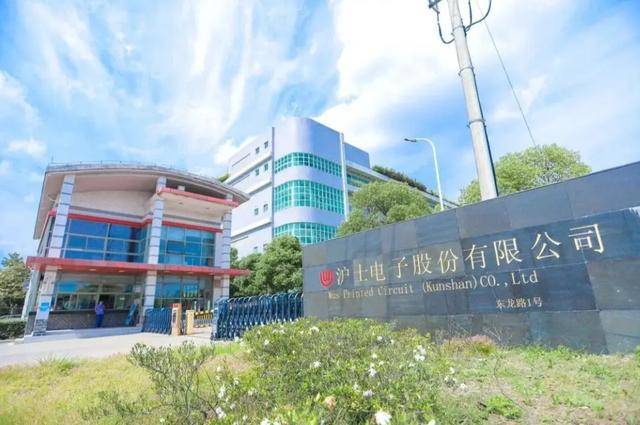
Core Viewpoint - Huadian Co., a leading PCB manufacturer with a market value exceeding 150 billion, has announced its intention to list in Hong Kong, raising questions about the motivations behind this strategic move [1]. Company Overview - Founded in 1991 by Wu Ligan, Huadian Co. started as a small factory in Kunshan, China, and has grown into a significant player in the global PCB industry over the past three decades [3]. - The company went public in 2010, becoming the first listed Taiwanese enterprise in Kunshan, and has strategically focused on high-growth areas such as communication base station boards and high-end server PCBs [5]. Financial Performance - For the first half of 2025, Huadian Co. reported revenues nearing 8.5 billion, a year-on-year increase of over 56%, with net profits reaching 1.68 billion, reflecting a nearly 50% growth [5]. - The enterprise communications market segment saw revenue growth exceeding 70%, with AI server-related products contributing nearly 25% of this growth, while products for high-speed network switches experienced a staggering growth rate of 161% [5]. Leadership and Governance - The company is currently led by the Wu family, with Wu Ligan's wife, Chen Meifang, and their two sons, Wu Chuanbin and Wu Chuanlin, managing the operations, ensuring a stable transition of leadership [6][9]. - Chen Meifang, a graduate of National Taiwan University, has been instrumental in the company's technical decisions and has taken on the role of chairperson following her husband's retirement [6]. Industry Context - Huadian Co. is positioned in a rapidly growing yet competitive PCB market, with China accounting for over 50% of global PCB production, particularly in the high-end sector [11]. - The global demand for AI servers is projected to exceed 2 million units by 2025, which is expected to drive a 30% increase in high-end PCB demand [11]. Competitive Landscape - The PCB industry is witnessing aggressive expansion, with competitors like Shennan Circuits and Simmtech ramping up production, leading to potential oversupply and price competition [13]. - Geopolitical factors are influencing production strategies, with many companies relocating capacity to Southeast Asia, including Huadian Co.'s operations in Thailand [13][15]. Strategic Rationale for Hong Kong Listing - The decision to list in Hong Kong is seen as a strategic move to secure international capital and support global expansion amid rising competition and geopolitical uncertainties [15]. - The company aims to leverage its listing to enhance its capabilities in navigating the evolving landscape of the AI-driven market while addressing potential risks associated with international trade policies [15].
海外专家:警惕独立运营的中央银行
Sou Hu Cai Jing· 2025-09-23 12:53
Core Viewpoint - The independence of central banks is being questioned as they increasingly serve powerful financial interests, leading to slow and uneven economic growth [1][2]. Group 1: Central Bank Independence - Central banks were established to shape financial environments and achieve national economic goals, but they are often influenced by strong financial interests, particularly in smaller, open developing countries [2]. - The shift towards central bank independence has led to a focus on inflation targeting, equating financial stability with price stability, which can exacerbate economic contraction during inflationary periods [2][4]. Group 2: Economic Inequality - The policies of central banks, particularly through interest rate hikes to combat inflation, have disproportionately affected low-income families, leading to increased unemployment and reduced income levels [4][6]. - The negative impacts of rising interest rates have not been offset by any positive effects, as banks benefit from higher interest income while the broader population suffers [4][6]. Group 3: Quantitative Easing - Quantitative easing (QE) emerged as a response to the limitations of traditional monetary policy, aiming to stimulate the economy by purchasing financial assets [5][6]. - QE has led to increased asset prices, benefiting wealthier individuals and exacerbating wealth inequality, as the richest segments of society see their asset values rise significantly [7][8].

经合组织上调今年全球经济增长预期,但警告美国关税冲击尚未完全显现
Jin Shi Shu Ju· 2025-09-23 12:40
Group 1 - OECD reports that global economic growth is more resilient than expected, supported by AI investments in the US economy [2] - The full impact of US tariffs has yet to be realized, with companies currently absorbing shocks by reducing profit margins and utilizing inventory [2] - The effective tariff rate on US goods imports rose to 19.5% by the end of August, the highest level since the Great Depression [2] Group 2 - OECD raises global economic growth forecast for 2025 from 2.9% to 3.2%, while maintaining a 2.9% forecast for 2026 [3] - The short-term boost from inventory accumulation is fading, and high tariffs are expected to hinder investment and trade growth [3] - Specific forecasts include a slowdown in US growth to 1.8% in 2025 and 1.5% in 2026, despite AI investment and fiscal support [3] Group 3 - Most major central banks are expected to lower interest rates or maintain accommodative policies in the coming year, provided inflation pressures ease [4] - The Federal Reserve may further cut rates if the labor market weakens, with a 90% probability of a 25 basis point cut in October [4] - The Bank of Japan is expected to gradually exit its ultra-loose monetary policy, while other central banks like the Reserve Bank of Australia and the Bank of England are anticipated to lower rates [4]
美公布六代机视频,网友:PPT
中国能源报· 2025-09-23 12:14
Core Viewpoint - The U.S. Air Force has announced the construction of the first F-47 fighter jet, expected to make its maiden flight in 2028, amidst concerns over its high cost and the implications for military spending [3][5]. Group 1: F-47 Fighter Jet Announcement - The first F-47 fighter jet has begun construction by Boeing, with a target for its first flight in 2028 [3][5]. - The U.S. Air Force plans to procure at least 185 F-47 jets, which are intended to replace the F-22 Raptor [5][6]. - The estimated cost per F-47 jet is projected to be around $300 million, significantly higher than the F-22's cost of approximately $143 million [5][6]. Group 2: Historical Context and Project Challenges - The Next Generation Air Dominance (NGAD) fighter jet project, which includes the F-47, has been under research since 2007, with formal concept studies starting in 2010 [6]. - The project has faced criticism regarding its high costs and technological innovation, leading to a suspension announcement in May 2024 [6]. - Concerns have been raised about the financial burden of the F-47, B-21 stealth bomber, and the naval version of the sixth-generation fighter, F/A-XX, on the Pentagon's budget [6].


英伟达决定芯片巨头命运
半导体芯闻· 2025-09-23 10:38
如果您希望可以时常见面,欢迎标星收藏哦~ 来源:内容来自半导体芯闻综合。 英伟达与OpenAI于22日(当地时间)达成巨额交易,预计英伟达对韩国内存半导体行业的影响将 进一步扩大。三星电子和SK海力士围绕英伟达下一代人工智能(AI)平台Vera Rubin的HBM4供 应展开的竞争预计将加剧。 预计这项投资将增强英伟达在整个AI基础设施市场的影响力,并缩小快速增长的定制AI半导体 (ASIC)市场的规模。谷歌和亚马逊网络服务等大型科技公司在开发自己的ASIC的同时,计划减 少英伟达图形处理器(GPU)的使用,并扩大其AI半导体的使用。然而,由于OpenAI决定直接购 买英伟达GPU来构建数据中心,与英伟达GPU相比,ASIC的使用量预计将减少。 因此,全球内存公司之间对HBM4供应的竞争预计将更加激烈。与此同时,三星电子、SK海力士 和美光等能够生产HBM的内存公司越来越期望,随着ASIC市场的扩张,它们能够实现供应商多元 化,摆脱对Nvidia的依赖。然而,Nvidia构建强大护城河的重要性再次凸显。 *免责声明:文章内容系作者个人观点,半导体芯闻转载仅为了传达一种不同的观点,不代表半导体芯闻对该 观点赞同 ...

光芯片,成为关键
半导体芯闻· 2025-09-23 10:38
Core Insights - The article discusses the escalating arms race in artificial intelligence (AI) computing capabilities, highlighting a significant wave of global infrastructure investment. However, the AI industry faces a fundamental barrier in data movement between processors due to the limitations of existing copper interconnect technologies, which cannot effectively scale to meet the demands of next-generation AI requiring millions of processors. In this context, photonic chip startups Celestial AI and OpenLight are emerging to provide faster and more energy-efficient solutions to meet the needs of hyperscaler clients like Amazon, Microsoft, and Google [1]. Group 1: Celestial AI Developments - Celestial AI has secured $255 million in investments from TSMC's VentureTech Alliance and Samsung's Catalyst Fund, bringing its total funding to $520 million. The company plans to use this funding to strengthen its supply chain and deepen partnerships with foundries, including TSMC [2]. - Celestial AI expects to begin selling its first chips by mid to late 2026, focusing on server "scale-up" networks that account for 85% of data center traffic. The company anticipates that its scale-up sales will surpass copper-based Ethernet scale-out switches starting in 2025 [5]. - The core technology of Celestial AI, Photonic Fabric, offers optical interconnects from chip-to-chip and server-to-server, significantly outperforming Nvidia's NVLink in terms of power consumption. Celestial AI is positioning its Optical Memory Interface Bridge (OMIB) as an alternative to NVLink [5][7]. Group 2: OpenLight Developments - OpenLight raised $34 million in funding from investors including Juniper Networks and Lam Research. The company plans to use this capital to expand its process design kit (PDK) for active and passive photonic components, with production expected to begin for its first customers by the end of 2025 [4][11]. - OpenLight's competitive advantage lies in its use of indium phosphide technology, which allows for the integration of lasers onto chips. The company has demonstrated a 400 Gbps modulator with low power consumption of approximately 1.5 microjoules per bit [11]. - OpenLight provides a library of components (PDK) to enable customers to design their own chips, collaborating with ASE Holdings' subsidiary, Siliconware Precision Industries [14]. Group 3: Competitive Landscape - The photonic chip sector is becoming increasingly competitive, with players like Ayar Labs, Lightmatter, and Huawei entering the market. Huawei aims to challenge Nvidia's NVLink market with its new SuperPod cluster, which plans to connect up to 15,488 Ascend NPUs by 2026 [15]. - Lightmatter announced the Passage M1000 platform, which offers a total optical bandwidth of 114 Tbps, and is collaborating with GlobalFoundries and Amkor to begin production based on this platform [17][18]. - Quantum computing startup PsiQuantum is also manufacturing photonic chips using standard 45nm silicon nitride processes at GlobalFoundries [21].