摩尔定律

Search documents
美国芯片,凭啥领先?
半导体行业观察· 2025-06-30 01:52
Core Viewpoint - The article emphasizes the critical importance of the United States maintaining its leadership in the semiconductor technology sector for economic and national security reasons. It highlights the need for increased federal investment in semiconductor research and development to address competitive gaps and ensure innovation in key industries such as AI, high-performance computing, and defense [1][2][3]. Group 1: Federal Investment and Research Projects - The CHIPS R&D projects represent a significant investment of $540 billion aimed at enhancing domestic semiconductor manufacturing capacity and innovation [3]. - The federal government, through the Semiconductor Research Office (CRDO), is implementing a comprehensive strategy to ensure cutting-edge semiconductor technologies are developed and manufactured in the U.S. [2][3]. - The CRDO projects are designed to democratize access to innovation assets, which would otherwise be unattainable without public funding [2][3]. Group 2: Importance of Semiconductor Research - Ongoing semiconductor research projects are expected to address innovation challenges and drive advancements across the computing stack [5]. - The National Advanced Packaging Manufacturing Program (NAPMP) has allocated $300 million for its first R&D funding project, focusing on materials and substrates [18]. - The NAPMP aims to strengthen domestic semiconductor advanced testing, assembly, and packaging capabilities [17]. Group 3: Advanced Packaging Technology - Advanced packaging technology is crucial for enhancing the performance of AI and high-performance computing chips, allowing for more efficient designs and manufacturing processes [15][17]. - The U.S. currently holds only 4% of the global packaging supply chain, highlighting the need for strategic development in this area [17]. - The NAPMP is coordinating with other initiatives to invest in semiconductor and AI ecosystems, emphasizing the importance of advanced packaging innovation [17]. Group 4: Collaboration and Innovation - The NSTC aims to establish long-term R&D resources for the U.S. semiconductor ecosystem, facilitating collaboration among industry players, startups, and academia [22][23]. - The NSTC is developing three major facilities to support large-scale commercialization and prototyping efforts, including the EUV Accelerator and Design Collaboration Facility [48][52]. - The SMART USA initiative focuses on advancing digital twin technology to optimize semiconductor manufacturing processes and reduce costs significantly [30][33]. Group 5: Measurement and Precision - The CHIPS metrology project is investing in enhancing the industry's ability to perform critical measurements for process verification and failure analysis [36]. - Accurate measurement capabilities are essential for maintaining high standards in semiconductor manufacturing, especially as feature sizes decrease [36]. Group 6: Future Directions - The article concludes that the ongoing federal research projects must adapt to evolving innovation landscapes to maintain U.S. competitiveness in the semiconductor sector [38][39]. - Continuous collaboration with industry partners is essential to ensure these projects fulfill their promise of driving semiconductor innovation in the U.S. [40].


新材料投资:国际形式严峻,国产半导体材料行业如何发展(附35页PPT)
材料汇· 2025-06-26 15:26
点击 最 下方 关注《材料汇》 , 点击"❤"和" "并分享 添加 小编微信 ,寻 志同道合 的你 正文 珍惜有限 创造无限 1.1 半导体产业在全球经济中发挥关键作用,计算和存储、汽车、无线通信是主要增量 图表1:全球半导体产业链的倒金字塔结构 年产值 娱乐、软件、网络、电商、传媒、大数据等数字经济产业, 几十万亿美元 电子系统 万亿美元 千亿美元 材料(1%) 500亿美元+ 封装(5%) EDA 190亿美元+ n *括号内百分数表示2024年YoY 资料来源:ESD Al l iance,SEM , Yol e,TrendForce,Wind,弗若斯特沙利文,江 苏半导体行业协会,五矿证券研究所 图表2:全球半导体市场规模周期性波动上升(亿美元) 2021-2030 - 10000 2021-2030 CAGR 7% 8000 智诗西献 -5% 育线电 960 消费电子 -10% 工业电力 1310 ~10% 6000 1470 上 -20% 12 370 4000 线遇信 200 25% 6 1720 2000 3610 -25% 计算和存储 2240 0 2025E 2030E 1990年 199 ...
半导体材料系列报告之一:国际形式严峻,国产半导体材料行业如何发展
Minmetals Securities· 2025-06-26 11:10
Investment Rating - The report rates the semiconductor materials industry as "Positive" [2] Core Insights - The semiconductor materials market is experiencing new opportunities due to the continuous replacement of new materials and architectures driven by technological advancements [11] - The domestic semiconductor materials industry is facing challenges but is supported by national policies aimed at achieving self-sufficiency in the semiconductor supply chain [12][14] Summary by Sections Semiconductor Technology Development Trends - The continuous miniaturization of processes has led to the emergence of new materials and architectures, such as High-K dielectrics and FinFET structures, enhancing gate control capabilities [14] - Advanced packaging is seeing increased demand due to the limitations of Moore's Law and the rise of artificial intelligence, driving the market for IC substrates and encapsulation materials [14][75] - The third-generation semiconductors, including silicon carbide (SiC) and gallium nitride (GaN), are creating significant market opportunities in sectors like electric vehicles and 5G [14] International Situation and National Policies - The global semiconductor market is influenced by economic cycles and technological advancements, with a projected CAGR of 7% from 2021 to 2030 [17] - The Chinese government is implementing long-term plans and funding initiatives to support the semiconductor industry, aiming for a significant increase in domestic production capabilities [106][107] - The establishment of the National Big Fund aims to enhance investment in the semiconductor industry, focusing on critical areas such as equipment and materials [112] Geopolitical Context - The semiconductor industry is navigating a challenging geopolitical landscape, with increasing restrictions from the U.S. impacting China's semiconductor supply chain [98][102] - The report highlights the importance of domestic substitution in semiconductor manufacturing, emphasizing the need for increased localization of critical materials and equipment [122]
芯片,最新路线图
半导体芯闻· 2025-06-26 10:13
Core Viewpoint - IMEC's semiconductor roadmap predicts the evolution of chip manufacturing processes and technologies until 2039, highlighting significant advancements and challenges in the semiconductor industry [1][3]. Group 1: Chip Process Node Naming and Evolution - Current chip process nodes like 7nm, 5nm, and 3nm have become mainstream, but these numbers no longer correspond to physical dimensions, evolving into a conventional naming convention [6][9]. - The transition from planar transistors to FinFET architecture has shifted the focus from size reduction to architectural innovation and density optimization for performance improvements [7][10]. - The roadmap indicates a shift from FinFET to NanoSheet architecture as the industry moves towards the N2 process node, with NanoSheet offering better control over leakage currents and improved performance [20][21]. Group 2: Advanced Technologies and Innovations - High NA EUV lithography technology is transitioning from 0.33 NA to 0.55 NA, enabling the production of chips with smaller feature sizes and supporting the NanoSheet architecture [27][29]. - Back-side power technology is introduced to reduce crosstalk and improve data integrity, expected to enhance performance by reducing power consumption by 30% while increasing computational speed by 20% at the A10 node [34][35]. - ForkSheet transistors are emerging as a strong candidate for 1nm technology nodes, allowing for higher integration density and improved performance through a unique gate structure [36][40]. Group 3: Future Directions and Challenges - CFET technology is anticipated to dominate the semiconductor landscape, with its introduction expected around the A7 node, promising significant density and performance improvements [41][43]. - Hyper NA EUV technology is being developed to meet the extreme precision requirements of CFET manufacturing, pushing the limits of semiconductor fabrication [46][48]. - 2DFET technology, utilizing two-dimensional materials, is projected to replace CFET by 2039, offering simplified manufacturing processes and enhanced performance [52][54].

AI正重塑整个研发文明
Hu Xiu· 2025-06-24 06:17
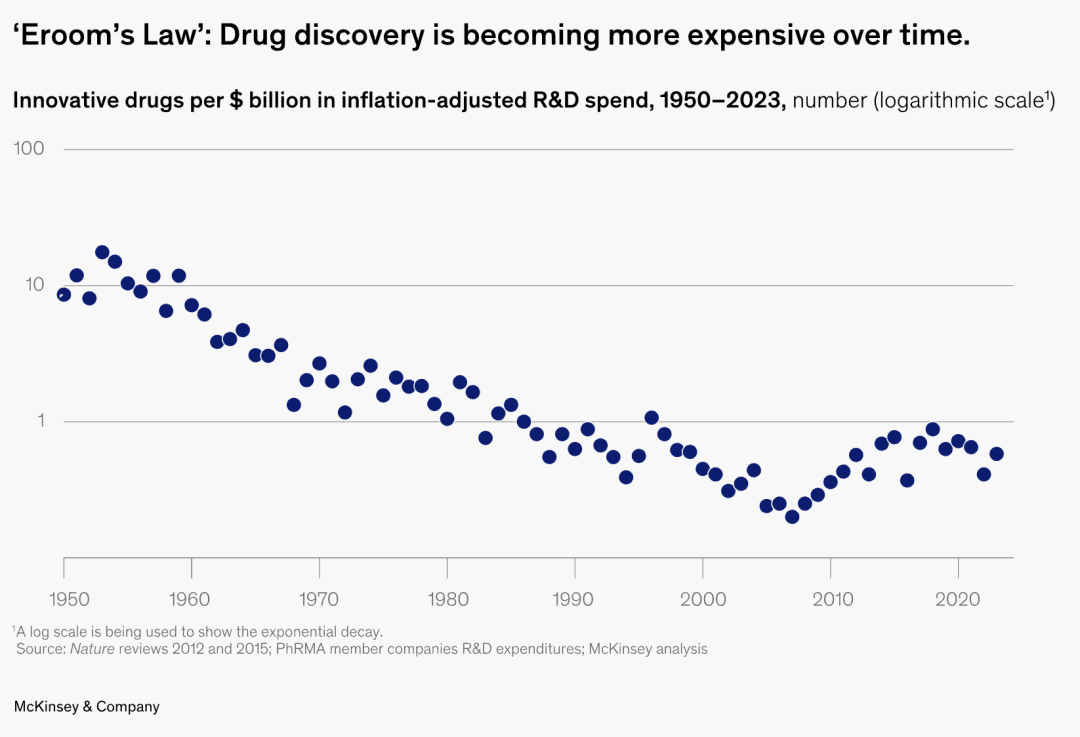
Core Insights - The article posits that while we are in an era of unprecedented technological prosperity, innovation is becoming increasingly difficult to achieve, with AI potentially serving as the key to overcoming this bottleneck [1][8]. Group 1: Innovation Challenges - The cost and difficulty of innovation have escalated globally, affecting various industries [3][5]. - R&D spending in the chip industry is projected to be 18 times higher than in the 1970s by 2024, while the pharmaceutical industry has seen an 80-fold decrease in the number of new drugs developed per $1 billion invested over decades [4][5]. - The overall productivity of R&D in U.S. companies has been declining since the 1950s, a trend observed globally [5][8]. Group 2: AI as a New Pathway - AI is positioned as a transformative force that can propose "questions humans would not think of" and "paths humans would not choose" in the innovation process [11][17]. - AI's ability to generate numerous design candidates and explore unconsidered paths is highlighted, with examples from various fields such as protein synthesis and retail space design [15][16]. Group 3: Revolutionizing Validation - The validation phase of R&D, often the most time-consuming, can be expedited through AI, which can simulate and predict outcomes much faster than traditional methods [19][24]. - AI models, known as surrogate models or digital twins, can replicate complex physical processes with minimal computational resources, significantly reducing the time and cost of validation [26][30]. Group 4: AI's Role in Knowledge Integration - AI is redefining the management of implicit knowledge within organizations, enabling the aggregation of insights from various sources, including social media and internal communications [40][41]. - The ability of AI to process vast amounts of data allows for the identification of trends and user needs that may not be immediately apparent to human researchers [42][44]. Group 5: Industry-Specific Applications - In software and gaming, AI is automating code generation and content creation, significantly reducing development time [54][55]. - In life sciences, AI is being utilized to identify molecular targets and predict protein structures, enhancing drug discovery processes [57][60]. - In materials science, AI accelerates the discovery of new materials by predicting properties without physical experiments [62][63]. - In aerospace and complex manufacturing, AI integrates multi-disciplinary engineering processes, improving design accuracy and efficiency [66][67]. - In consumer goods, AI analyzes consumer feedback to inform product development, reducing the risk of market failure [70][71]. Group 6: Future of Innovation - The article concludes that AI is not just a tool but a collaborative partner in the innovation process, transforming R&D into a co-creative ecosystem rather than a linear workflow [74][80]. - The potential for AI to reverse the decline in innovation rates could significantly impact economic growth and societal well-being in the future [81][82].
不惑中兴,而今迈步从头越
财富FORTUNE· 2025-06-23 12:51
Core Viewpoint - The article highlights the evolution of ZTE Corporation from its inception to becoming a major player in the telecommunications industry, emphasizing its commitment to independent research and development, and its strategic pivot towards AI technology as a core component of its future growth [1][2][46]. Group 1: Historical Development - In 1985, ZTE was established as a joint venture in Shenzhen, initially struggling with low-profit assembly orders, leading to a shift towards independent R&D [1]. - By 1989, ZTE developed its first digital switching system with independent intellectual property rights, marking a significant technological milestone [1]. - Over the past 40 years, ZTE has transformed from a small assembly workshop into the second-largest telecommunications equipment manufacturer in China, achieving revenues exceeding 121.3 billion yuan in 2024 [1][2]. Group 2: AI Strategy - ZTE has identified "full-domain AI" as a crucial part of its development strategy, integrating AI technology with ICT infrastructure to enhance operational efficiency and drive growth [11][14]. - The company has committed significant resources to AI, with a focus on developing comprehensive AI solutions that encompass cloud, network, edge, and terminal technologies [14][16]. - ZTE's investment in R&D reached 24.03 billion yuan in 2024, accounting for approximately 20% of its revenue, with a total R&D expenditure of 117.07 billion yuan over six years [20][22]. Group 3: Manufacturing and Innovation - ZTE operates its own manufacturing facilities, such as the Nanjing smart factory, which has achieved a 41% increase in total output value and a 29% reduction in carbon emissions through smart manufacturing practices [39][40]. - The Nanjing factory is recognized as China's first five-star 5G factory, showcasing the integration of 5G technology in manufacturing processes [35][36]. - ZTE's manufacturing strategy emphasizes automation and smart technology, aiming for a significant portion of its production to operate in "dark factory" mode, where minimal human intervention is required [40][42]. Group 4: Future Outlook - ZTE aims to leverage AI to redefine user experiences in mobile technology, with a focus on creating AI-enabled smartphones that enhance user interaction and functionality [24][27]. - The company is positioned to capitalize on the growing demand for AI applications across various industries, aligning with national initiatives to promote technological innovation [13][46]. - ZTE's long-term vision includes a commitment to sustainable growth through continuous investment in technology and innovation, contributing to the broader goal of national technological advancement [46].

先进封装:100页PPT详解传统工艺升级&先进封装技术
材料汇· 2025-06-20 15:14
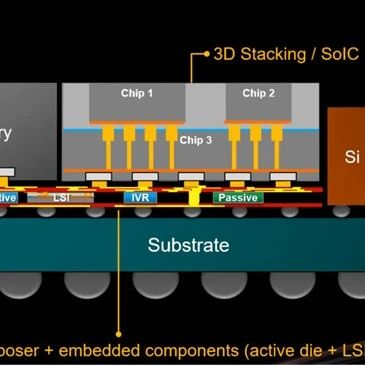
Core Viewpoint - The demand for advanced packaging continues to grow, driven primarily by AI-related applications [3][30]. Group 1: Advanced Packaging Demand - The advanced packaging market is expected to grow from $39 billion in 2023 to $80 billion by 2029, with a compound annual growth rate (CAGR) of 12.7% [12]. - The 2.5D/3D packaging segment is projected to grow at a CAGR of 20.9% over the next five years, becoming a key driver for market expansion [12]. - Advanced packaging shipments are anticipated to rise from 70.9 billion units in 2023 to 97.6 billion units by 2029, with a CAGR of 5.5% [15]. Group 2: Technology and Equipment - Four main advanced packaging technologies—FC, WLP, 2.5D, and 3D—are facilitating the evolution of packaging technology [5][7]. - The global advanced packaging equipment market is expected to reach $3.1 billion in 2024, marking a historical high [5]. - The demand for etching, thin film deposition, and plating equipment is rapidly increasing due to advancements in packaging technology [5]. Group 3: Market Dynamics - The semiconductor industry is experiencing a downturn in 2023, impacting the advanced packaging market, which saw a year-on-year decline of 3.5% [12]. - The recovery in specific end markets and the ongoing application of advanced packaging technology are expected to sustain healthy growth in the coming years [15]. - AI applications are driving long-term growth in semiconductor revenues, with the AI-related semiconductor market projected to grow at a CAGR of 28.9% from 2024 to 2033 [27]. Group 4: Investment Opportunities - Companies such as ASMPT, North Huachuang, and Zhongwei Company are recommended for investment due to their breakthroughs in niche areas of the domestic equipment market [5]. - Major packaging projects are underway or planned, with total investments amounting to approximately $100 billion [29].
原集微完成数千万元种子轮及Pre-天使轮融资:深耕二维半导体技术
IPO早知道· 2025-06-20 01:45
Core Viewpoint - The article discusses the establishment and development of Yuanjiwei Technology, a company founded by Professor Bao Wenzhong from Fudan University's Microelectronics Institute, focusing on the commercialization of two-dimensional semiconductor materials to overcome the limitations of traditional silicon-based chips [2][5]. Group 1: Company Overview - Yuanjiwei Technology was founded in 2025, leveraging over a decade of research in the semiconductor field by Professor Bao Wenzhong [5]. - The company aims to develop atomic-level chips and heterogeneous integration technologies, focusing on ultra-low power consumption, edge computing, high-sensitivity sensing, and radiation-resistant chips [5]. - The team consists of over 10 senior professors/researchers and more than 20 national-level leading talents, with extensive experience in two-dimensional semiconductor wafer integration processes and device fabrication [5][7]. Group 2: Funding and Investment - Yuanjiwei has recently completed several million yuan in seed and pre-A round financing, with investments from Zhongke Chuangxing, Fuyong Investment, and other institutions [2]. - The funding will be used to accelerate the company's industrialization efforts [2]. Group 3: Technological Advancements - Two-dimensional semiconductor materials are recognized as key materials for extending Moore's Law, offering advantages such as reduced leakage current, controlled power consumption, fewer processing steps, and lower manufacturing costs compared to three-dimensional materials [3][5]. - Yuanjiwei has developed the world's first 32-bit RISC-V architecture microprocessor based on two-dimensional semiconductor materials, marking a significant breakthrough in China's two-dimensional semiconductor chip field [5][7]. - The company is advancing through a pathway of "laboratory validation - pilot line - mass production," integrating with existing silicon-based manufacturing lines to transition technology from the lab to industrial application [5]. Group 4: Industry Collaboration and Future Prospects - The project team collaborates closely with industry leaders and research centers, establishing partnerships to deepen the development of two-dimensional integration processes [7]. - Yuanjiwei is positioned to lead in the commercialization of two-dimensional semiconductor applications, with expectations for rapid validation and iteration in advanced processes [6][7].

通胀是因为钱印太多,那通缩是钱不够吗?
Hu Xiu· 2025-06-19 13:18
Group 1 - Inflation leads to early consumption, creating an "inflation spiral" where rising prices stimulate further consumption [3][5] - In a deflationary environment, delaying consumption is beneficial, resulting in a "deflation spiral" that exacerbates deflation [4][13] - Borrowing is advantageous in inflationary conditions, as the real value of debt decreases, encouraging more borrowing and increasing money circulation [10][11] Group 2 - The impact of inflation and deflation on housing prices illustrates the risks associated with borrowing; a significant drop in property value can lead to substantial losses [11][12] - CPI statistics may exaggerate inflation during periods of consumption upgrades, while deflation may not be fully captured due to quality degradation in products [16][20] - Technological advancements generally exert a deflationary effect, while stagnation in technology can lead to inflationary pressures [21][30] Group 3 - The "Amazon effect" in the U.S. retail sector demonstrates how e-commerce can suppress inflation through lower prices and increased efficiency [27] - China's manufacturing advantages stem from a combination of efficient supply chains, infrastructure, and cost control, contributing to a deflationary environment [28][29] - Economic balance is maintained through the interplay of financial mechanisms creating inflation and technological advancements fostering deflation [34][35]
台积电市占:直逼75%
半导体行业观察· 2025-06-19 00:50
Core Insights - TSMC is projected to increase its foundry market share from 70% in 2025 to 75% in 2026, driven by strong demand for 2nm and 3nm wafers from major clients like Nvidia, AMD, and Apple [2][12] - The AI data center market is rapidly expanding, with TSMC holding nearly 100% market share in logic semiconductors for AI data centers, producing chips for major companies like Microsoft, Amazon, and Google [3][4] - TSMC's advanced process and packaging technologies are critical for meeting the growing demands of AI applications, with plans to enhance production capacity in the U.S. [6][12] Market Share and Financial Strength - TSMC's foundry market share is expected to reach 67% by Q4 2024, a 10% increase from early 2023, while Samsung holds 11% [12] - TSMC's market capitalization is close to $1 trillion, indicating a strong financial position, which is attractive to clients in the AI sector [13] Technological Leadership - TSMC is the only foundry capable of producing advanced AI data center chips, with a focus on maintaining high yield rates and production capacity [8][20] - The company has been developing multi-chip substrate packaging for several years, enhancing its ability to meet complex product demands [10] Future Outlook - TSMC is expected to dominate the advanced packaging market, with estimates suggesting it will hold 90% of the CoWoS capacity by 2026 [12] - The demand for AI accelerators is projected to grow significantly, with the total addressable market for data center AI accelerators expected to exceed $500 billion by 2028 [15] Competitive Landscape - Major cloud service providers are increasingly designing their own AI accelerators, but they remain heavily reliant on TSMC for production [16][18] - TSMC's management strength and operational efficiency are key competitive advantages, allowing it to handle complex technical challenges across multiple fabs [14][20]