
新型政策性金融工具

Search documents
2025年9月金融数据点评:企业直接融资支撑社融
Ping An Securities· 2025-10-16 09:54
Group 1: Financial Growth Metrics - Social financing (社融) stock increased by 8.7% year-on-year, a slight decrease of 0.1 percentage points from the previous month[5] - Loan stock grew by 6.6% year-on-year, down 0.2 percentage points from the previous month[5] - M1 increased by 7.2% year-on-year, up 1.2 percentage points from the previous month[5] - M2 rose by 8.4% year-on-year, down 0.4 percentage points from the previous month[5] Group 2: Support for Social Financing - Three main supports for social financing data include: new policy financial tools, ongoing personal consumption loan interest subsidies, and early issuance of debt limits for 2026[5] - Corporate bond net financing, non-financial corporate domestic stock financing, and discounted bills increased by 203.1 billion, 37.2 billion, and 192.3 billion yuan respectively year-on-year[5] - Government bond financing contributed 3.87 percentage points to social financing growth, a decrease of 0.12 percentage points from the previous month[5] Group 3: Loan Structure and Rates - Corporate short-term loans increased by 250 billion yuan year-on-year, reaching 710 billion yuan in September[5] - The weighted average interest rate for newly issued corporate loans was approximately 3.1%, unchanged from the previous month and down 40 basis points year-on-year[5] - The balance of inclusive small and micro loans reached 36.09 trillion yuan, growing by 12.2% year-on-year, an increase of 0.4 percentage points from the previous month[5]
多地积极布局 新型政策性金融工具加速落地
Sou Hu Cai Jing· 2025-10-16 06:02
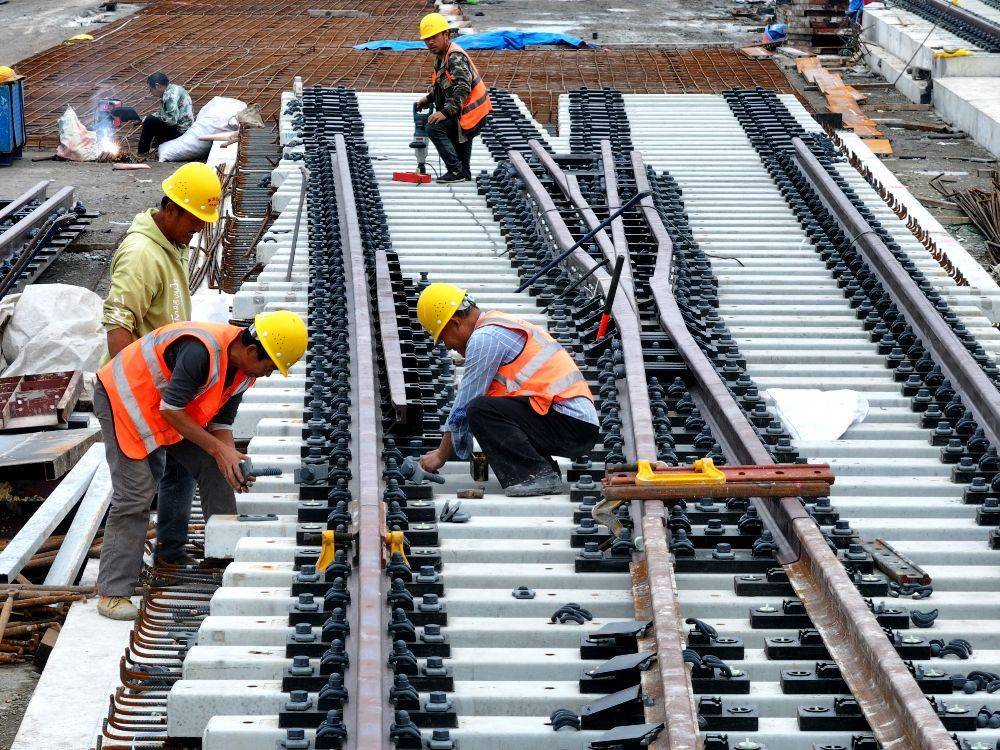
Core Viewpoint - The National Development and Reform Commission (NDRC) of China announced the establishment of a new type of policy financial tool with a total scale of 500 billion yuan, aimed at supporting capital for projects in technology innovation, consumption expansion, and stabilizing foreign trade to promote stable and healthy economic development [1][2] Group 1: Policy Financial Tools - The new policy financial tools are designed to support major national strategic projects and are characterized by their "quasi-fiscal" nature, involving policy banks issuing financial bonds to raise funds [2] - The tools will focus on injecting capital into projects, addressing funding bottlenecks caused by tight local finances, and facilitating the implementation of significant projects [2][9] Group 2: Investment and Economic Impact - The new financial tools are expected to leverage significant investment, with estimates suggesting that the 500 billion yuan could mobilize approximately 2.75 trillion yuan in new social financing and potentially drive 1.5 trillion to 2 trillion yuan in fixed asset investment [11] - The tools are projected to have a multiplier effect on infrastructure investment, with previous similar tools showing a multiplier of about 3.5 times [11] Group 3: Regional Implementation - Various regions, including Jiangsu, Guangdong, and Zhejiang, have already begun deploying the new policy financial tools, with specific projects receiving funding such as the Wuxi-Yixing intercity rail project and urban renewal initiatives [6][7][8] - The funding will support both traditional infrastructure and emerging sectors like digital economy and artificial intelligence, reflecting a balanced approach to economic growth and structural adjustment [4][9] Group 4: Broader Economic Context - The establishment of these tools aligns with the broader policy goals set forth in the 14th Five-Year Plan, emphasizing the importance of expanding domestic demand and fostering technological innovation [10] - The NDRC has previously allocated significant funds for construction projects, with 800 billion yuan for "two heavy" construction projects and 735 billion yuan in central budget investments already distributed this year [3]

华泰证券:9月社融总量增长平稳,结构更趋平衡
Xin Lang Cai Jing· 2025-10-15 23:41
Core Viewpoint - The report from Huatai Securities indicates a slight slowdown in the year-on-year growth rate of social financing in September, primarily due to a lower net issuance of government bonds compared to a high base last year, while signs of stabilization in financing demand from households and enterprises are emerging [1] Group 1: Social Financing Trends - The year-on-year growth rate of social financing has slightly slowed down in September, attributed to a decrease in net issuance of government bonds [1] - Financing demand from households and enterprises is showing signs of stabilization at low levels [1] Group 2: Monetary Supply Indicators - The M2 year-on-year growth rate remains stable under high base conditions, while M1 growth has accelerated, indicating further improvement in liquidity [1] Group 3: Future Outlook - The introduction of new policy financial instruments is expected to stimulate loan demand, which will help support the growth rate of social financing in the fourth quarter [1] - The net issuance of government bonds in September was significantly lower year-on-year due to a shift in fiscal financing timing, with an expected net issuance of around 2.4 trillion yuan in the fourth quarter, which may represent a year-on-year decrease of 1.7 trillion yuan [1] - The acceleration of new policy financial instruments is anticipated to boost corporate loan demand, providing some support for the growth rate of social financing in the fourth quarter [1]

【固收】信贷的“形”与“势”——2025年10月15日利率债观察(张旭)
光大证券研究· 2025-10-15 23:06
Group 1 - The core viewpoint of the article emphasizes the current state and future potential of credit growth in China, particularly highlighting the data from September 2025 as indicative of both the present "form" and the future "momentum" of credit expansion [4][5]. - In September 2025, new RMB loans increased by 700 billion yuan, marking a significant rise compared to the previous month, indicating a positive trend in credit growth [4][5]. - The article suggests that the credit growth in September is a result of financial institutions adjusting their lending strategies, which could have been even higher if they had fully opened up credit issuance [5][6]. Group 2 - The anticipated credit growth for the fourth quarter is supported by the introduction of 500 billion yuan in new policy financial tools, which are expected to stimulate credit demand [6]. - The article notes that certain months this year experienced negative year-on-year credit growth due to the impact of local government debt replacement, but the fourth quarter is likely to show improvement compared to the third quarter [6][7]. - The overall economic indicators, such as M1 growth at 7.2% and a manufacturing PMI of 49.8%, reflect a positive trend in the economy, further supporting the notion of improving credit conditions [7]. Group 3 - The stock market has shown a significant upward trend since May, with the Shanghai Composite Index reaching 3912.21 points, indicating increased investor confidence in economic growth [7]. - The article concludes that the financial support for the real economy has strengthened, and there is optimism regarding potential future monetary policy actions, such as the central bank restarting open market operations [7].

信贷的形与势:2025年10月15日利率债观察
EBSCN· 2025-10-15 14:20
Report Summary 1) Report Industry Investment Rating No investment rating for the industry is provided in the report. 2) Core Viewpoints - The new RMB loan data in September 2025 reflects both the "form" and "trend" of current credit growth. The credit growth in September was "holding back", and the credit growth in the fourth quarter is "accumulating strength". The overall situation of credit and the economy is improving [1][2][3]. - The improvement in the "trend" is not only reflected in credit data but also in other monetary - financial and economic operation data, indicating that the economic situation is gradually getting better [3]. 3) Summary of Related Sections Credit's "Form" and "Trend" - **Form**: In September 2025, it was the second consecutive month of month - on - month increase in credit, and the increase widened from 64 billion yuan in the previous month to 70 billion yuan. The year - on - year decrease also narrowed compared to the previous month [1]. - **Trend**: - **September's credit "holding back"**: The rise in the 3M national - share transfer discount rate at the end of September shows that if financial institutions had not restricted credit, the credit data would have been higher [2]. - **Fourth - quarter credit "accumulating strength"**: The 50 billion yuan of new policy - based financial instruments started to be put into use at the end of September, which will boost credit demand. The impact of implicit debt replacement on credit growth in the fourth quarter of this year is weaker than that in the same period last year, so the year - on - year credit growth in the fourth quarter is likely to improve compared to the third quarter [3]. Other Data Indicating the Positive "Trend" - **Monetary - financial data**: In late September, M1 increased by 7.2% year - on - year, with the growth rate rising for five consecutive months [3]. - **Economic operation data**: In September, the manufacturing PMI was 49.8%, rising for the second consecutive month; the PPI year - on - year growth rate was - 2.3%, also rising for the second consecutive month and increasing by 1.3 percentage points from the annual low in July [3]. Stock Market and Economic Outlook Since May, the Shanghai Composite Index has been rising, reaching 3912.21 points at the close on the day of the report. The economic situation is improving, and investors' expectations and confidence have changed significantly [4].

今年1.3万亿元超长期特别国债发行收官,财政支出或将“赶进度”
Zheng Quan Shi Bao· 2025-10-15 03:52
Group 1 - The Ministry of Finance successfully issued 40 billion yuan of 20-year ultra-long-term special bonds, completing the issuance of 1.3 trillion yuan for the year [1] - In 2023, the issuance of ultra-long-term special bonds increased by 300 billion yuan compared to last year, with 800 billion yuan allocated to support 1,459 "dual heavy" construction projects [1] - An additional 500 billion yuan of ultra-long-term special bond funds is being used to support the implementation of "two new" policies, with 8,400 projects in various sectors benefiting [1] Group 2 - The last batch of 69 billion yuan for consumer product replacement subsidies was allocated before the National Day and Mid-Autumn Festival holidays, aiming to boost consumption in the fourth quarter [2] - As of October 14, over 670 billion yuan of new local government general bonds and over 3.7 trillion yuan of new local government special bonds have been issued, accounting for over 80% of the annual quota [2] - Despite a slowdown in government bond issuance in the fourth quarter, fiscal spending will still focus on key areas, with public budget expenditure reaching about 60% of the initial budget forecast [2] Group 3 - The Minister of Finance emphasized that fiscal policy has room for maneuver, indicating that there is still ample space for future fiscal policy actions [3] - Market institutions generally believe that the necessity for further expansionary fiscal policies within the year is not strong, suggesting a continuation of the current positive fiscal stance [3] - New policy financial tools are seen as having a "quasi-fiscal" nature, effectively supplementing capital for major projects and leveraging social investment [3]
今年1.3万亿元超长期特别国债发行收官,财政支出或将“赶进度”
证券时报· 2025-10-15 03:37
Group 1 - The issuance of 20-year ultra-long special government bonds has been successfully completed, totaling 1.3 trillion yuan for the year, with 400 billion yuan issued in the latest round [1] - The funds from the ultra-long special government bonds have supported 1,459 "two重" construction projects, including major infrastructure and innovative financing models [1] - An additional 5 trillion yuan in ultra-long special government bond funds is allocated to support "two new" policies, with 8,400 projects in industrial and energy sectors benefiting, leading to over 1 trillion yuan in total investment [1] Group 2 - The last batch of 690 billion yuan for consumer goods replacement subsidies was issued before the National Day and Mid-Autumn Festival holidays, aiming to boost fourth-quarter consumption [2] - As of October 14, new local government bonds issued exceeded 670 billion yuan, and special bonds surpassed 3.7 trillion yuan, accounting for over 80% of the annual quota [2] - Despite a slowdown in government bond issuance in the fourth quarter, fiscal spending is expected to accelerate to meet budgetary needs, with public budget expenditure reaching 60% of the initial forecast [2] Group 3 - The Minister of Finance emphasized that fiscal policy still has room for maneuver, indicating that further expansionary fiscal policies may not be necessary this year [3] - New policy financial tools have been implemented at the local level, which are expected to play a stabilizing role in supporting major projects and attracting social investment [3] - Adjustments to the fiscal deficit rate are being made cautiously, with new policy financial tools acting as "quasi-fiscal" instruments [3]

中信期货晨报:国内商品期市收盘多数下跌,非金属建材跌幅居前-20251015
Zhong Xin Qi Huo· 2025-10-15 01:54
Report Summary 1. Market Overview - Domestic commodity futures markets closed mostly lower, with non-metallic building materials leading the decline [1] 2. Asset Performance 2.1 Equity Index Futures - CSI 300 futures: Current price 4507.2, daily decline of 1.21%, weekly decline of 1.85%, monthly decline of 2.40%, quarterly decline of 2.40%, and annual increase of 14.95% [2] - SSE 50 futures: Current price 2958.4, daily decline of 0.11%, weekly decline of 0.58%, monthly decline of 1.02%, quarterly decline of 1.02%, and annual increase of 10.47% [2] - CSI 500 futures: Current price 7010, daily decline of 3.06%, weekly decline of 3.52%, monthly decline of 3.85%, quarterly decline of 3.85%, and annual increase of 23.13% [2] - CSI 1000 futures: Current price 7145.8, daily decline of 2.19%, weekly decline of 2.65%, monthly decline of 3.52%, quarterly decline of 3.52%, and annual increase of 22.18% [2] 2.2 Bond Futures - 2-year treasury bond futures: Current price 102.38, daily increase of 0.01%, weekly increase of 0.03%, monthly increase of 0.01%, quarterly increase of 0.01%, and annual decline of 0.57% [2] - 5-year treasury bond futures: Current price 105.78, daily increase of 0.09%, weekly increase of 0.12%, monthly increase of 0.14%, quarterly increase of 0.14%, and annual decline of 0.72% [2] - 10-year treasury bond futures: Current price 108.17, daily increase of 0.10%, weekly increase of 0.18%, monthly increase of 0.30%, quarterly increase of 0.30%, and annual decline of 0.69% [2] - 30-year treasury bond futures: Current price 114.76, daily increase of 0.28%, weekly increase of 0.69%, monthly increase of 0.76%, quarterly increase of 0.76%, and annual decline of 3.43% [2] 2.3 Foreign Exchange - US Dollar Index: Current price 99.26, daily unchanged, weekly increase of 0.44%, monthly increase of 1.47%, quarterly increase of 1.47%, and annual decline of 8.50% [2] - EUR/USD: Current price 1.157, daily unchanged, weekly decline of 53 pips, monthly decline of 164 pips, quarterly decline of 164 pips, and annual increase of 1217 pips [2] - USD/JPY: Current price 152.31, daily unchanged, weekly increase of 0.76%, monthly increase of 2.96%, quarterly increase of 2.96%, and annual decline of 3.11% [2] - USD mid-price: Current price 7.1021, daily increase of 14 pips, weekly decline of 27 pips, monthly decline of 34 pips, quarterly decline of 34 pips, and annual decline of 863 pips [2] 2.4 Interest Rates - 7-day interbank pledged repo rate: Current rate 1.46%, daily unchanged, weekly increase of 9 bp, monthly increase of 1 bp, quarterly increase of 1 bp, and annual decline of 29 bp [2] - 10Y Chinese treasury bond yield: Current rate 1.84%, daily increase of 1.8 bp, weekly decline of 0.8 bp, monthly decline of 2.2 bp, quarterly decline of 2.2 bp, and annual increase of 0.2 bp [2] - 10Y US treasury bond yield: Current rate 4.05%, daily decline of 9 bp, weekly unchanged, monthly increase of 0.01 bp, quarterly decline of 11 bp, and annual decline of 50 bp [2] - US 10Y-2Y yield spread: Current spread 0.53%, daily decline of 1 bp, quarterly increase of 0.03 bp, quarterly decline of 3 bp, and annual increase of 20 bp [2] - 10Y breakeven inflation rate: Current rate 2.3%, daily decline of 4 bp, monthly unchanged, quarterly decline of 0.05 bp, quarterly decline of 6 bp, and annual decline of 1 bp [2] 2.5 Metals - Gold: Current price 938.98, daily increase of 1.23%, monthly increase of 7.39%, quarterly increase of 7.39%, and annual increase of 52.04% [2] - Silver: Current price 11533, daily increase of 0.02%, monthly increase of 5.63%, quarterly increase of 5.63%, and annual increase of 54.39% [2] - Copper: Current price 84410, daily decline of 0.83%, monthly increase of 1.56%, quarterly increase of 1.56%, and annual increase of 14.42% [2] - Aluminum: Current price 20860, daily decline of 0.12%, monthly increase of 0.87%, quarterly increase of 0.87%, and annual increase of 5.46% [2] - Alumina: Current price 2805, daily decline of 0.53%, monthly decline of 2.20%, quarterly decline of 2.20%, and annual decline of 41.53% [2] - Zinc: Current price 22220, daily decline of 0.16%, monthly increase of 1.81%, quarterly increase of 1.81%, and annual decline of 12.73% [2] - Lead: Current price 120830, daily decline of 0.48%, monthly decline of 0.06%, quarterly decline of 0.06%, and annual decline of 3.14% [2] - Nickel: Current price 280430, daily decline of 0.60%, monthly increase of 1.95%, quarterly increase of 1.95%, and annual increase of 14.53% [2] - Stainless steel: Current price 8520, daily decline of 3.24%, monthly decline of 1.39%, quarterly decline of 1.39%, and annual decline of 22.44% [2] - Tin: Current price 280430, daily decline of 0.60%, monthly increase of 1.95%, quarterly increase of 1.95%, and annual increase of 14.53% [2] - Lithium carbonate: Current price 72680, daily increase of 0.55%, monthly decline of 0.16%, quarterly decline of 0.16%, and annual decline of 5.73% [2] - Industrial silicon: Current price 8520, daily decline of 3.24%, monthly decline of 1.39%, quarterly decline of 1.39%, and annual decline of 22.44% [2] - Rebar: Current price 3061, daily decline of 0.71%, monthly decline of 0.36%, quarterly decline of 0.36%, and annual decline of 7.49% [2] - Hot-rolled coil: Current price 3241, daily decline of 0.61%, monthly decline of 0.37%, quarterly decline of 0.37%, and annual decline of 5.18% [2] - Iron ore: Current price 782, daily decline of 2.80%, monthly increase of 0.19%, quarterly increase of 0.19%, and annual increase of 0.39% [2] - Coke: Current price 1654.5, daily increase of 0.73%, monthly increase of 1.94%, quarterly increase of 1.84%, and annual decline of 8.69% [2] - Coking coal: Current price 1153.5, daily increase of 0.65%, monthly increase of 2.44%, quarterly increase of 2.44%, and annual decline of 0.60% [2] - Ferrosilicon: Current price 5378, daily decline of 0.52%, monthly decline of 2.11%, quarterly decline of 2.11%, and annual decline of 14.03% [2] - Manganese silicon: Current price 5738, daily decline of 0.14%, monthly decline of 0.35%, quarterly decline of 0.35%, and annual decline of 5.78% [2] - Glass: Current price 1138, daily decline of 3.48%, monthly decline of 5.95%, quarterly decline of 5.95%, and annual decline of 14.24% [2] - Soda ash: Current price 1234, daily decline of 1.04%, monthly decline of 1.67%, quarterly decline of 1.67%, and annual decline of 13.89% [2] 2.6 Energy and Chemicals - Crude oil: Current price 448.6, daily decline of 1.12%, monthly decline of 6.48%, quarterly decline of 6.48%, and annual decline of 19.88% [2] - Fuel oil: Current price 2700, daily decline of 1.35%, monthly decline of 2.82%, quarterly decline of 5.82%, and annual decline of 18.82% [2] - Low-sulfur fuel oil: Current price 3203, daily decline of 0.90%, monthly decline of 6.13%, quarterly decline of 6.13%, and annual decline of 20.02% [2] - Asphalt: Current price 3290, daily decline of 0.36%, monthly decline of 3.91%, quarterly decline of 3.91%, and annual decline of 10.82% [2] - Methanol: Current price 2274, daily decline of 2.90%, monthly decline of 2.32%, quarterly decline of 2.32%, and annual decline of 15.87% [2] - PX: Current price 6338, daily decline of 1.43%, monthly decline of 3.35%, quarterly decline of 3.35%, and annual decline of 9.35% [2] - PTA: Current price 4440, daily decline of 1.55%, monthly decline of 3.35%, quarterly decline of 3.35%, and annual decline of 9.24% [2] - Urea: Current price 1597, daily decline of 0.81%, monthly decline of 4.37%, quarterly decline of 4.37%, and annual decline of 6.44% [2] - Short fiber: Current price 6060, daily decline of 1.17%, monthly decline of 2.82%, quarterly decline of 2.82%, and annual decline of 11.22% [2] - Styrene: Current price 6544, daily decline of 2.18%, monthly decline of 4.26%, quarterly decline of 4.26%, and annual decline of 19.19% [2] - Ethylene glycol: Current price 4061, daily decline of 1.22%, monthly decline of 3.47%, quarterly decline of 3.47%, and annual decline of 16.20% [2] - PP: Current price 6602, daily decline of 1.36%, monthly decline of 3.65%, quarterly decline of 3.65%, and annual decline of 11.70% [2] - PVC: Current price 4692, daily decline of 0.61%, monthly decline of 3.04%, quarterly decline of 3.04%, and annual decline of 11.30% [2] - Caustic soda: Current price 2428, daily decline of 1.46%, monthly decline of 4.07%, quarterly decline of 4.07%, and annual decline of 16.48% [2] - Rubber: Current price 14845, daily decline of 0.64%, monthly decline of 1.23%, quarterly decline of 1.23%, and annual decline of 16.69% [2] - 20 rubber: Current price 106611, daily decline of 0.42%, monthly decline of 0.91%, quarterly decline of 0.91%, and annual decline of 19.61% [2] - Pulp: Current price 4846, daily increase of 0.08%, monthly increase of 0.25%, quarterly increase of 0.25%, and annual decline of 18.47% [2] 2.7 Agriculture - Soybean meal: Current price 2902, daily decline of 1.02%, monthly decline of 0.89%, quarterly decline of 0.89%, and annual increase of 7.64% [2] - Soybean oil: Current price 8240, daily decline of 0.34%, monthly increase of 1.23%, quarterly increase of 1.23%, and annual increase of 6.85% [2] - Palm oil: Current price 9330, daily decline of 0.36%, monthly increase of 1.11%, quarterly increase of 1.11%, and annual increase of 7.64% [2] - Rapeseed oil: Current price 8664, daily decline of 0.63%, monthly decline of 0.85%, quarterly decline of 0.85%, and annual decline of 2.57% [2] - Rapeseed meal: Current price 2348, daily decline of 1.84%, monthly decline of 3.02%, quarterly decline of 3.02%, and annual decline of 2.57% [2] - Cotton: Current price 13265, daily decline of 0.26%, monthly increase of 0.38%, quarterly increase of 0.38%, and annual decline of 1.70% [2] - Sugar: Current price 5397, daily decline of 1.33%, monthly decline of 1.75%, quarterly decline of 1.75%, and annual decline of 9.46% [2] - Live pigs: Current price 11450, daily increase of 2.92%, monthly decline of 7.32%, quarterly decline of 7.32%, and annual decline of 10.55% [2] - Eggs: Current price 2852, daily increase of 1.57%, monthly decline of 6.12%, quarterly decline of 6.12%, and annual decline of 15.62% [2] - Red dates: Current price 11110, daily decline of 0.18%, monthly increase of 2.68%, quarterly increase of 2.68%, and annual increase of 20.63% [2] - Apples: Current price 8664, daily increase of 0.30%, monthly increase of 0.55%, quarterly increase of 0.55%, and annual increase of 22.37% [2] - Peanuts: Current price 7864, daily decline of 0.48%, monthly increase of 1.29%, quarterly increase of 1.29%, and annual decline of 0.81% [2] - Corn: Current price 2093, daily increase of 0.05%, monthly decline of 2.33%, quarterly decline of 2.33%, and annual decline of 6.10% [2] 3. Macro Analysis 3.1 Overseas Macro - Focus on new tariff threats from Trump and marginal changes in the US government shutdown [5] - There is a risk of further escalation of conflicts before the APEC meeting at the end of October [5] - If the US government shutdown exceeds 30 days, it will weaken the "bad news is good news" logic and push up the recession risk [5] 3.2 Domestic Macro - China will gradually enter the period of focusing on the "15th Five-Year Plan" and tracking incremental policies [5] - The 4th Plenary Session of the 20th CPC Central Committee will be held from October
总理主持召开专家和企业家座谈会 哪些信息值得关注
Di Yi Cai Jing· 2025-10-15 01:01
Group 1: Economic Policy and Measures - The Chinese government emphasizes the need for counter-cyclical adjustments and the continuous implementation of macroeconomic policies to enhance development momentum [1][3] - There is an expectation for new incremental measures in Q4, focusing on fiscal stimulus, interest rate cuts, and stronger support for the real estate market [1][3] - The government aims to expand domestic demand and improve the effectiveness of consumption and investment measures to stimulate market vitality [4][5] Group 2: Domestic Demand and Investment - Domestic demand remains crucial for stabilizing growth, with recent data showing a decline in retail sales growth to 3.4% year-on-year in August, the lowest for the year [4] - The issuance of long-term special bonds totaling 1.3 trillion yuan aims to support significant projects and enhance fiscal spending [4] - New policy financial tools totaling 500 billion yuan are introduced to supplement project capital, focusing on key sectors like digital economy and green transformation [5] Group 3: External Trade and Investment - The government is committed to stabilizing foreign trade and investment, with a total import and export value of 33.61 trillion yuan in the first three quarters, reflecting a 4% year-on-year increase [5] - In September, the monthly trade value reached 4.04 trillion yuan, marking an 8% year-on-year growth, the highest monthly growth rate of the year [5] Group 4: Industry Competition and Governance - The government is taking steps to address irrational competition in various industries, promoting cooperation among businesses and enhancing the innovation ecosystem [6][7] - Recent statistics indicate improvements in industry profits and prices, with raw material manufacturing profits rising by 22.1% year-on-year from January to August [7]
总理主持召开专家和企业家座谈会,哪些信息值得关注
Di Yi Cai Jing Zi Xun· 2025-10-15 00:47
Core Economic Policy - The Chinese government emphasizes the need for counter-cyclical adjustments and the continuous implementation of macroeconomic policies to enhance development momentum [1][3] - There is an expectation for new incremental measures in Q4, focusing on fiscal stimulus, interest rate cuts, and stronger support for the real estate market [1][3] Domestic Demand Expansion - Expanding domestic demand remains crucial for stabilizing growth, with efforts to enhance consumer spending and effective investment [4] - Recent data shows a decline in domestic demand indicators, with retail sales growth at 3.4% in August, the lowest this year [4] - The issuance of 400 billion yuan in long-term special bonds aims to support key projects and stimulate domestic demand [4] Foreign Trade and Investment - The government aims to stabilize foreign trade and investment by diversifying markets and enhancing overseas service systems [5] - In the first three quarters, China's total goods trade reached 33.61 trillion yuan, with a year-on-year growth of 4% [5] - September saw a significant increase in trade value, reaching 4.04 trillion yuan, marking the highest monthly growth rate this year [5] Industry Competition Governance - The government is focused on creating a favorable industrial ecosystem by addressing irrational competition and promoting cooperation among businesses [6] - Recent initiatives include the release of industry-specific growth plans to strengthen governance and regulate competition [6] - The National Development and Reform Commission has issued guidelines to maintain fair market pricing and competition [6] Industry Performance Improvement - Recent statistics indicate improvements in industry profits and pricing, with raw material manufacturing profits rising by 22.1% year-on-year from January to August [7] - The steel industry has returned to profitability, and the Producer Price Index (PPI) has shown signs of stabilization [7]