杠铃策略

Search documents
大盘成长风格复苏?关注创业板50ETF(159375)
Sou Hu Cai Jing· 2025-07-22 01:16
Group 1 - The core viewpoint indicates that the large-cap growth style has significantly outperformed small-cap growth, challenging the long-standing barbell strategy of large-cap value and small-cap growth in the A-share market [1] - There is a noticeable shift in market fund allocation, driven by expectations of "anti-involution" policies and the transition from old to new economic drivers [1] - The Ministry of Industry and Information Technology is set to introduce a new growth stabilization plan for ten key industries, including steel and non-ferrous metals, aimed at structural adjustment and phasing out outdated capacity [1] Group 2 - The current valuation of the ChiNext Index is at a historically low percentile, presenting a clear valuation advantage compared to other mainstream broad-based indices [2] - The forecasted net profit growth rate for the ChiNext Index in 2025 is 39.12%, significantly higher than the overall A-share growth rate of 16.54% [2] - The traditional barbell strategy may face challenges from low-valuation large-cap growth represented by the ChiNext Index, suggesting investment opportunities in ChiNext 50 ETF and Sci-Tech Innovation ETF [2]

ETF日报:创业板指目前市盈率历史分位数较低,相对其他主流宽基指数具备明显的估值优势,可关注创业板50ETF
Xin Lang Ji Jin· 2025-07-21 12:12
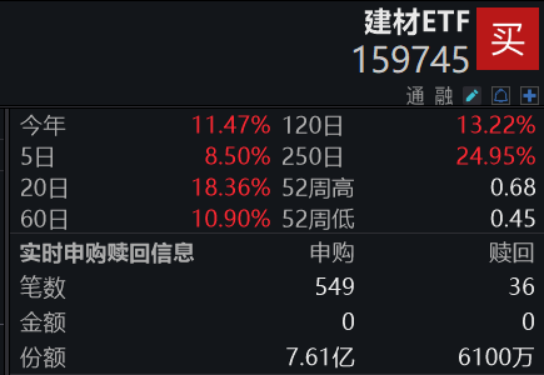
Market Overview - A-shares opened higher and continued to rise, with the Shanghai Composite Index closing at 3559.79 points, up 0.72%, and the Shenzhen Component Index closing at 11007.49 points, up 0.86% [1] - The market saw significant trading volume, with the Shanghai index and ChiNext reaching new highs for the year [1] - Infrastructure stocks surged, particularly in cement and building materials, while agricultural banks and cross-border payment sectors faced adjustments [1] Policy and Economic Drivers - Positive news such as the commencement of "super projects" and intensified "anti-involution" policies bolstered market confidence [1] - The Ministry of Industry and Information Technology announced that a new round of growth stabilization plans for ten key industries, including steel and non-ferrous metals, is forthcoming [1][6] - The "anti-involution" policies are expected to support structural adjustments and the elimination of outdated production capacity [6] Investment Strategy - The market is witnessing a shift in investor sentiment, with a marginal turn in capital allocation as doubts about "deflation trades" arise [1] - The traditional barbell strategy of large-cap value and small-cap growth is facing challenges, with large-cap growth represented by the ChiNext index showing significant valuation advantages [2] - Investors are encouraged to consider opportunities in the ChiNext 50 ETF (159375) and the Sci-Tech Innovation ETF (588360) [2] Sector Performance - The construction materials ETF (159745) saw a strong performance, closing at a limit-up after a significant net subscription of nearly 700 million shares [4] - The commencement of the Yarlung Tsangpo River downstream hydropower project, with a total investment of approximately 1.2 trillion yuan, is expected to boost demand for steel, cement, and other construction materials [4] - The cyclical sectors, including construction materials, infrastructure, and steel, are anticipated to benefit directly from the implementation of "super projects" [9] Market Sentiment and Future Outlook - The current market conditions resemble those of 2015, where proactive policies may break the negative feedback loop between PPI and CPI, positively impacting economic expectations [7] - The valuation logic for cyclical sectors is shifting from "weak expectations - weak reality" to "strong expectations - weak reality," indicating a clearer bottoming out [9] - The technology sector in the Hong Kong market is also showing strength, with the Hang Seng Technology Index up 25.01%, outperforming many broad-based indices [3]

纳瓦尔的“谎言”
3 6 Ke· 2025-07-21 07:56
Core Insights - The article critiques Naval Ravikant's philosophy of wealth creation, arguing that it oversimplifies the complex nature of success by ignoring critical factors such as luck, structural advantages, and historical contingencies [1][42][46] - It highlights that Ravikant's success story is not solely a product of personal effort but is deeply intertwined with favorable circumstances, including his educational background and the timing of his ventures in the tech industry [4][11][36] Group 1: Background and Education - Naval Ravikant was born in New Delhi, India, in 1974 and immigrated to the U.S. at the age of 9, receiving a quality education that set the stage for his future success [3][4] - His educational journey included attending the prestigious Stuyvesant High School and later Dartmouth College, where he majored in computer science and economics [3][4] Group 2: Timing and Environment - Ravikant's entrepreneurial journey coincided with the explosive growth of the internet and technology sectors in the late 1990s and early 2000s, providing him with unique opportunities [5][6][8] - He co-founded Epinions in 1999, securing $45 million in venture capital during the internet bubble, which allowed him to build a network in Silicon Valley [8][9] Group 3: Investment Philosophy - The venture capital industry operates on a power law distribution, where a small number of successful investments yield the majority of returns, emphasizing the role of luck in achieving significant success [12][14][16] - A study indicated that less than 1% of early-stage investments on a particular platform achieved returns exceeding 22 times the initial investment, underscoring the unpredictable nature of venture capital [14][15] Group 4: Meritocracy and Social Capital - The article critiques the notion of meritocracy, arguing that success is not purely based on individual merit but is influenced by social systems that favor those with existing advantages [17][18][26] - It references Pierre Bourdieu's theory, which posits that social inequality is perpetuated through cultural and social capital, not just economic means [26][31] Group 5: Critique of Ravikant's Philosophy - Ravikant's philosophy promotes the idea that anyone can achieve great success through personal effort, which the article argues is a myth that overlooks systemic inequalities [17][41][46] - The article suggests that Ravikant's emphasis on personal responsibility can lead to a lack of empathy for those who struggle, reinforcing a harmful narrative about success and failure [19][23][46] Group 6: Conclusion and Broader Implications - The article concludes that a mature understanding of success should acknowledge both personal effort and the significant role of luck and environmental factors [46][47] - It advocates for a balanced perspective that recognizes the complexities of success, urging individuals to prepare for opportunities while understanding the randomness of fortune [40][46]
牛市信号?“通缩交易”代表杠铃策略首度被质疑
Hua Er Jie Jian Wen· 2025-07-21 01:04
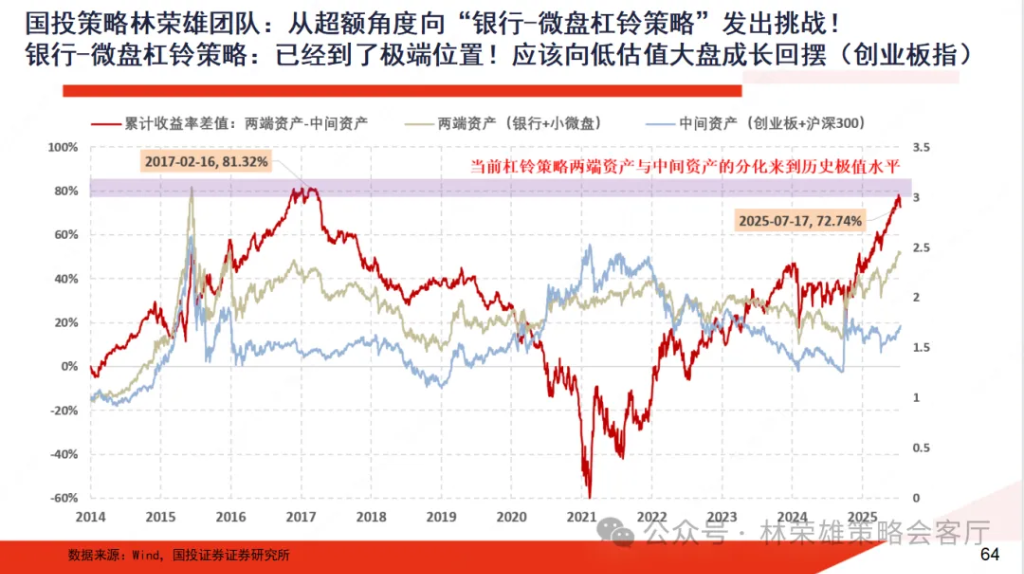
Core Viewpoint - The long-standing barbell strategy in the A-share market, which combines large-cap value/dividend stocks with small-cap growth/micro-cap stocks, is facing challenges as investment institutions question the core logic of this "deflation trade" [1][2] Group 1: Market Trends - Large-cap growth style has significantly outperformed small-cap growth, indicating a marginal shift in market fund allocation [1][4] - The average dividend yield of bank stocks has decreased from approximately 4.5% at the beginning of the year to around 3.8%, marking the lowest premium over the 10-year government bond yield since April 2021 [5] - The current yield spread between dividend assets and growth assets has reached historical extremes, similar to levels seen in early 2017 [2][4] Group 2: Economic Policy and Structural Changes - Expectations for "anti-involution" policies and new momentum transitions are rising, with the Ministry of Industry and Information Technology indicating that new growth stabilization plans for key industries will be introduced [1][9] - The market is beginning to recognize a potential narrative shift in the Chinese economy from real estate to manufacturing [1][9] Group 3: Valuation and Performance - The valuation of the ChiNext Index is currently at a price-to-earnings ratio of 33.89, which is significantly lower than other mainstream indices, suggesting a valuation advantage [6] - Active public funds are starting to replenish low-position core holdings, leading to increased inflows into large-cap growth sectors [6][8] Group 4: Historical Comparisons - The current market asset price trajectory shows high similarity to the patterns observed in 2009 and 2014, characterized by "social financing recovery + proactive bank credit expansion + stock-bond fund reallocation" [12][13] - If the scenario of sustained liquidity support through proactive credit creation is accurate, the second half of 2014 may serve as an important comparison point for future market behavior [13]
策略定期报告:首次向杠铃超额发起挑战
Guotou Securities· 2025-07-20 12:32
Group 1 - The report highlights that the current market structure favors low-valuation large-cap growth stocks, particularly represented by the ChiNext Index, which is expected to continue outperforming in the third quarter of this year [2][5][60] - The ChiNext Index currently has a PE ratio of 33.89, placing it in the 23.82% percentile over the past decade, indicating a relative valuation advantage compared to other major indices [2][67] - The report notes that the banking sector has significantly contributed to the overall market performance, with the Shanghai Composite Index rising from 3347 points at the beginning of the year to around 3534 points, largely driven by strong bank performance [1][33] Group 2 - The report discusses the historical divergence in returns between the bank-microcap "barbell strategy" and mid-cap growth assets, indicating that the current divergence is at historical extremes [3][62] - It emphasizes that the banking sector's dividend yield remains attractive, but the relative appeal has diminished as the yield compared to long-term bond rates has decreased to its lowest level since April 2021 [3][40] - The report suggests that the ongoing "supply-side reform" and the emergence of new economic drivers such as AI, innovative pharmaceuticals, and new energy vehicles are creating favorable conditions for mid-cap growth stocks to regain their performance [3][60][73] Group 3 - The report indicates that the current market environment is characterized by a strong liquidity backdrop, which is expected to benefit large-cap growth stocks as funds flow from banks to non-banking sectors and eventually to technology and undervalued large-cap growth stocks [4][51] - It highlights that the recent changes in quantitative trading regulations are likely to impact high-frequency trading strategies, potentially leading to a more stable market environment in the long term [21][27] - The report notes that the active equity funds have shown strong performance this year, significantly outperforming the broader market indices, indicating a shift in investor sentiment towards growth-oriented sectors [59][60]
红利+小微盘的杠铃,举不动了怎么办?
雪球· 2025-07-18 08:00
Core Viewpoint - The article discusses the "barbell strategy" of combining dividend stocks and small-cap stocks, which has gained popularity in recent years, but warns of its potential weaknesses as more investors adopt it [2][3]. Summary by Sections Barbell Strategy Overview - The barbell strategy consists of dividend assets and small-cap stocks, which have significantly outperformed in the past [2]. - A recent report by Lin Rongxiong from Guotou Securities suggests that the barbell strategy may become ineffective, drawing parallels with the four phases of the Japanese stock market [3][4]. Historical Performance Analysis - The basic barbell strategy, using the CSI Dividend Index and CSI 2000 Index with a 50% allocation each, has shown an excess return of approximately 2.5 percentage points since 2016, but has not consistently outperformed during bull markets [5][7]. - The enhanced version of the barbell strategy, which assumes a 5% excess return from small-cap stocks, has increased annualized excess returns to nearly 5 percentage points, yet still underperformed in certain years [8][11]. Dividend Strategy Insights - The CSI Dividend Index has a geometric average return of 6.86%, significantly better than the overall market, driven by a disciplined "reverse investment" mechanism that helps investors avoid emotional trading [22][23]. - The appeal of the dividend strategy lies in its ability to provide stable returns and act as a defensive measure during market downturns [38]. Small-Cap Strategy Insights - The small-cap factor has historically been viewed as a source of excess returns, but recent studies suggest that its performance may be more of a temporary anomaly rather than a consistent advantage [25][28]. - The true value of small-cap stocks lies in their potential for generating alpha through quantitative strategies, rather than relying solely on beta [33][37]. Conclusion - The barbell strategy is characterized as a balanced approach, with dividends providing stability and small-caps offering growth potential through alpha generation [38][39]. - Accepting the strategy's occasional underperformance is essential for long-term asset appreciation and maintaining a calm investment approach [39].

守一份分红,得一份从容:全市场代表性红利指数盘点
天天基金网· 2025-07-16 11:36
Core Viewpoint - The article emphasizes the increasing interest of investors in dividend strategies as a response to market volatility and low interest rates, highlighting the importance of companies that generate consistent cash flow and share it with shareholders [2][26]. Group 1: Dividend Strategy - Dividend is a method for companies to return earnings to shareholders, typically in cash or stock, with a focus on high dividend yield as a core selection strategy [4][6]. - The appeal of dividend strategies lies in their dual nature: providing stable cash flow akin to bonds and potential capital appreciation through market undervaluation [6][30]. - The high dividend strategy, represented by the CSI Dividend Low Volatility Index, has outperformed the Wind All A Index 77% of the time from 2013 to the present [6][7]. Group 2: Mainstream Dividend Indices - There are three main types of dividend indices: traditional dividend strategies focusing on high dividend yield, enhanced dividend strategies incorporating additional factors, and Hong Kong dividend strategies benefiting from unique market conditions [8][10][12]. - Traditional dividend strategies emphasize high dividend yield from mature industries, while enhanced strategies aim for richer return characteristics by adding factors like low volatility and high ROE [10][11]. - Hong Kong dividend strategies leverage lower valuations and higher yields, presenting unique investment opportunities despite potential currency risks and dividend taxes [12][15]. Group 3: Configuration Logic - Dividend assets are increasingly seen as advantageous in the current market environment, providing a stable investment option amid economic transitions [20][26]. - The article discusses the "barbell strategy," where dividend funds can complement small-cap growth investments, balancing high-risk and low-volatility assets [22][23]. - As the risk-free interest rate declines, traditional fixed-income assets lose appeal, making high-dividend blue-chip stocks more attractive for long-term investors [29][30].

美股债券投资指南:收益与风险的动态平衡
Sou Hu Cai Jing· 2025-07-15 11:08
Core Viewpoint - The U.S. bond market is becoming a crucial asset allocation choice for investors to manage stock market volatility, especially as the Federal Reserve's interest rate hike cycle approaches its end [1] Group 1: Market Structure and Characteristics - The multi-tiered market structure meets diverse needs, with U.S. Treasuries serving as the risk-free rate benchmark, influencing global asset pricing [3] - Investment-grade corporate bonds offer a credit premium of 150-250 basis points over Treasuries, while high-yield bonds provide an 8%-12% coupon to compensate for default risk [3] - Inflation-protected securities (TIPS) and convertible bonds are emerging as new tools to combat volatility, with TIPS linked to the CPI index [3] Group 2: Risks and Challenges - Interest rate risk is a core challenge, as bond prices move inversely to yields; a 1% increase in the 10-year Treasury yield could lead to a price drop of over 10% for long-term bonds [3] - The yield curve is currently deeply inverted, indicating recession risks while providing a window for positioning in medium to long-term bonds [3] - Credit risk requires dynamic assessment, with default rates for investment-grade bonds typically below 0.5%, while high-yield bonds can see rates of 5%-8% during economic downturns [5] Group 3: Currency and Liquidity Considerations - Currency fluctuations significantly impact cross-border returns, with a 14% appreciation of the dollar in 2022 leading to negative real returns for RMB-denominated holdings of U.S. Treasuries [5] - Daily trading volume for Treasuries exceeds $600 billion, with minimal bid-ask spreads, while high-yield corporate bonds may face 2%-5% price spread losses [5] - Retail investors are advised to use bond ETFs to mitigate liquidity shocks associated with individual bonds [5] Group 4: Strategic Recommendations - Current strategies for U.S. Treasury allocation should focus on a threefold balance: employing a barbell strategy with short-term and ultra-long-term Treasuries to address interest rate uncertainty [7] - Credit risk exposure should be limited to 20% of the portfolio, prioritizing corporate bonds with cash flow coverage ratios exceeding three times [7] - For holdings exceeding one year, hedging tools are recommended to manage currency risk, especially during periods of anticipated shifts in Federal Reserve policy [7]

帮主郑重:比特币冲12万,这波涨势能撑住吗?
Sou Hu Cai Jing· 2025-07-14 05:44
Group 1 - Bitcoin has reached a new high of $120,000, driven by institutional investors and favorable policies [3][4] - BlackRock's Bitcoin ETF (IBIT) has over $76 billion in assets under management, attracting $1.2 billion in just two weeks [3] - Over 350,000 Bitcoins, accounting for 17% of the market's circulating supply, are held by more than 260 institutions and public companies [3] Group 2 - The market's bullish trend is contingent on three key factors: potential interest rate cuts by the Federal Reserve, the specifics of regulatory legislation, and the sustainability of corporate Bitcoin purchases [4][5][6] - The market anticipates two interest rate cuts in the second half of the year, but a rebound in CPI data could alter this outlook [4] - In Q2, global corporations purchased 159,000 Bitcoins, marking a record high for a single quarter, but the continuation of this trend is uncertain [6] Group 3 - The potential passage of the GENIUS and CLARITY Acts could provide clearer regulatory frameworks for stablecoins, which may enhance market confidence [3][5] - The current market sentiment is characterized by a "greed" index at 71, indicating potential for a market correction [8] - A "barbell strategy" is recommended for balancing risk and reward, involving investments in Bitcoin ETFs and gold ETFs or short-term government bonds [9]

杠铃策略加持下的大众公用(600635.SH/01635.HK):构建多元和稳健的组合
Ge Long Hui· 2025-07-14 03:16
Group 1 - The core viewpoint of the articles highlights the recognition of Dazhong Public Utility in the ESG field, with the company winning multiple awards, including the "ESG Excellent Leader" and "ESG Environmentally Friendly Excellent Enterprise" [1][5] - Dazhong Public Utility's strong ESG practices create a competitive barrier, leveraging its operations in gas, environmental protection, and venture capital to build a sustainable investment potential [5][6] - The awards received by Dazhong Public Utility validate its robust green operational capabilities in urban gas and wastewater treatment, emphasizing energy efficiency and pollution reduction [6][7] Group 2 - The ESG compliance capability has become a critical competitive advantage for public utility companies, especially under stringent "dual carbon" policies, allowing Dazhong Public Utility to avoid potential risks associated with environmental regulations [7][10] - The company’s monopolistic position in its service areas ensures stable demand for its services, with its gas supply business benefiting from the ongoing transition from coal to natural gas [10][11] - Dazhong Public Utility operates nine wastewater treatment plants with a total capacity of 46.5 tons per day, and is actively enhancing its facilities to meet the highest environmental standards [11][12] Group 3 - The current market environment favors a "barbell strategy," where investors seek stable, high cash flow assets alongside high-growth potential investments, making public utility stocks attractive [9][12] - Dazhong Public Utility's strong cash generation ability is reflected in its high dividend payout ratio, making it appealing to long-term institutional investors [12][18] - The company’s financial venture business is positioned to benefit from supportive policies aimed at promoting technological innovation and entrepreneurship, enhancing its growth prospects [13][14] Group 4 - Dazhong Public Utility's business model integrates stable public utility operations with growth-oriented venture capital activities, aiming to improve overall capital returns [16][18] - The narrowing AH share price gap indicates potential valuation recovery for Dazhong Public Utility, with its H-shares currently offering relative valuation advantages [18]