
绿色经济

Search documents
新华指数・博鳌发布|担当时代使命 共创未来新篇——展望“十五五”新机遇
Xin Hua Cai Jing· 2025-12-09 01:17
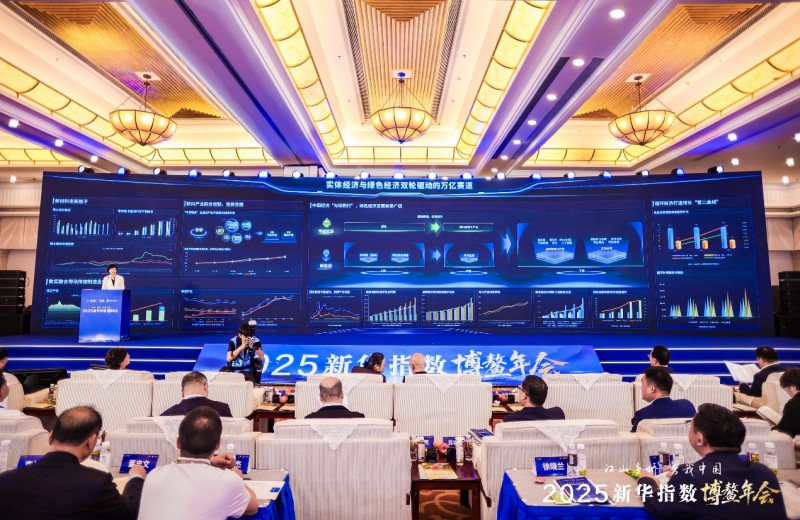
Core Insights - The article emphasizes the importance of indices as tools for understanding trends and unlocking opportunities in the context of China's economic development and modernization efforts [2][3]. Economic Growth and Development - China's manufacturing investment continues to grow, contributing to the establishment of a modern industrial system, with equipment manufacturing playing a crucial role [2][3]. - The "China Innovation Index" shows consistent improvement, reflecting the country's commitment to high-quality development [2][3]. Emerging Industries and Green Economy - The green economy is increasingly prominent, with one-third of electricity in China now sourced from renewable energy, supporting emerging industries like artificial intelligence [5]. - Inner Mongolia's modern energy economy development index is projected to grow by 24.21% year-on-year in 2024, while the new energy high-quality development index is expected to rise by 11.37% [5]. New Consumption Trends - The report identifies five key opportunity sectors focused on human-centered economic trends: cultural consumption, health consumption, silver economy, beauty economy, and pet economy [6][9]. - The cultural industry, particularly digital culture, is projected to contribute nearly 5% to GDP by 2024, highlighting its role as a significant economic growth engine [8]. Silver Economy and Health Consumption - The silver economy is expanding rapidly, with an annual growth rate of 15.27% since 2022, driven by the aging population and new business models [9]. - Health consumption trends are transforming traditional products into popular items, with innovations in functional foods and traditional remedies gaining traction [9]. Market Dynamics and Data Utilization - The establishment of a unified national market is crucial for high-quality development, with data elements playing a key role in addressing existing market inefficiencies [11]. - Price indices are acting as vital indicators for market operations, helping to stabilize and guide various agricultural sectors [13]. Cultural and Brand Development - Indices serve as digital representations of regional brand value, linking cultural heritage with modern economic opportunities [16]. - Cities are leveraging unique cultural identities to enhance their market competitiveness and global presence, exemplified by initiatives in places like Yan'an and Shaanxi [16][17].

筹划重大资产重组,不停牌!拟收购“小巨人”
Zhong Guo Zheng Quan Bao· 2025-12-09 00:03
Company News - Weidi Co., Ltd. plans to acquire control of Jiu Xing Precision by purchasing 51% of the shares from its current shareholders, which is expected to constitute a major asset restructuring. The acquisition will allow Weidi to gain at least 51% voting rights in Jiu Xing Precision, making it a subsidiary [6][7] - Jiu Xing Precision specializes in the research, production, and sales of precision metal components, primarily serving the mid-to-high-end home appliance sector. It is recognized as a "little giant" enterprise in the national specialized and innovative category [7] - Yili Co., Ltd. announced a cash dividend distribution plan for the first half of 2025, proposing a distribution of 0.48 yuan per share, totaling 3.036 billion yuan, with the record date set for December 16, 2025 [8] - Suhao Fashion plans to conduct an asset swap with its controlling shareholder, involving the acquisition of a 54% stake in Jiangsu Suhao Zhongjia Fashion Co., Ltd. and the divestment of its 100% stake in Jiangsu Shuntian Chemical Storage Co., Ltd. [8] - China Shipbuilding announced a cooperation agreement for a new shipbuilding project involving 87 vessels, with a total value of approximately 50 billion yuan, primarily settled in cross-border RMB [8] - Tailong Pharmaceutical will change its controlling shareholder to Jiang Pharmaceutical Group, with the stock resuming trading on December 9 [8] - Ruixin Microelectronics reported a net profit of approximately 780 million yuan for the first three quarters of 2025 and plans to distribute a cash dividend of 0.30 yuan per share, totaling 126 million yuan [8] - China Metallurgical Group plans to sell its 100% stake in China Metallurgical Real Estate and related debts for approximately 60.7 billion yuan [9] - HeFu China reported significant stock price fluctuations, with a cumulative increase of 336.83% from October 28 to December 8, raising concerns about potential overvaluation [9] Economic Indicators - According to the General Administration of Customs, China's total goods trade value reached 41.21 trillion yuan in the first 11 months of 2025, a year-on-year increase of 3.6%. Exports were 24.46 trillion yuan, up 6.2%, while imports were 16.75 trillion yuan, up 0.2%. In November alone, trade value was 3.9 trillion yuan, growing by 4.1% [2]





中金:适度加力,增减并行——12月政治局会议点评
中金点睛· 2025-12-08 23:37
中金研究 中共中央政治局12月8日召开会议,分析研究2026年经济工作[1]。会议强调明年经济工作要坚持"稳中求进、提质增效"的总基调,"实施更加积极有为 的宏观政策,持续扩大内需、优化供给",并将"内需主导,建设强大国内市场"放在八大任务第一条。我们认为在国内供求矛盾比较突出、外围环境仍 有挑战的背景下,明年总量政策或将适度加力,财政货币也可能加大协同以提升治理效能。我们认为结构方面的政策可能"增减"并行,既做加法,也 做减法,以改善政策效率,既提振需求,也改善供给,以实现合理增长。 点击小程序查看报告原文 供求失衡现象仍然比较突出。 一方面,金融周期下行调整,资源配置优化,供给能力得到增强,绿色经济和人工智能产业规模效应显现、出口在贸易摩 擦下持续展现韧性都是供给端竞争力提升的体现。另一方面,周期和结构调整带来需求不足,金融周期下行调整通过明斯基的财富效应以及费雪债务-低 通胀等效应制约国内需求。结构优化与技术进步导致劳动密度和劳动需求下降、就业不充分。继4月政治局会议[2]后,本次会议再次提出更好"统筹国内 经济工作和国际经贸斗争",并将"坚持内需主导,建设强大国内市场"放在八大任务第一条。这与"十五五 ...

109次提到产业,广东“十五五”规划抢占8大新风口
2 1 Shi Ji Jing Ji Bao Dao· 2025-12-08 13:21
Core Insights - The Guangdong "14th Five-Year Plan" emphasizes the importance of industrial development, mentioning "industry" 109 times, and introduces eight new economic sectors for future growth [1] - The plan aims to create a modern industrial system with a focus on "technology and industry mutually reinforcing" and "building a modern industrial system" [1] Group 1: New Economic Sectors - The eight new economic sectors include low-altitude economy, smart economy, primary economy, bay area economy, green economy, cultural economy, sports economy, and silver economy, which are designed to foster international competitiveness [1] - The low-altitude economy is highlighted as the first sector, focusing on low-cost, high-frequency, and reliable low-altitude flights, with a goal to develop infrastructure and a smart network system across the province [2] - The smart economy emphasizes the integration of data, computing power, and large models to innovate smart terminal products and promote AI applications, aiming to create a new model of human-machine collaboration [3] Group 2: Strategic Actions - The plan outlines specific actions for modernizing the industrial system, including nurturing emerging industries and future industries, and implementing innovation projects [4] - Key industries targeted for development include new energy, new materials, commercial aerospace, and low-altitude economy, with a focus on strengthening sectors like new energy vehicles, integrated circuits, and medical devices [4] - The plan also aims to explore new economic growth points in quantum technology, biomanufacturing, hydrogen energy, and brain-machine interfaces, while promoting the development of specialized small and medium enterprises [5]
154万吨露天铜矿花落盛达资源 “白银龙头”迎爆发式增长态势
Zheng Quan Shi Bao Wang· 2025-12-08 12:23
Core Viewpoint - The acquisition of a 60% stake in Yichun Jinshi Mining Co., Ltd. by Shengda Resources highlights a strategic move to enhance its copper resource portfolio, particularly in the context of China's high dependence on imported copper resources, which stands at over 80% [1][2]. Group 1: Acquisition Details - Shengda Resources announced the acquisition of a 60% stake in Yichun Jinshi Mining, with the core asset being the 460 Gaodi project in Heilongjiang Province, which has a proven copper metal amount of 1.54 million tons [1][2]. - The 460 Gaodi project is identified as a large porphyry-type deposit, with an estimated total ore volume of 1 billion tons, equivalent to 3.9 million tons of copper [2]. Group 2: Strategic Importance - The acquisition is part of Shengda Resources' strategy to strengthen its position in the domestic copper resource supply chain, especially given the global tightening of copper supply and increasing uncertainties in overseas copper mining [2][4]. - The project is expected to have significant economic benefits due to its large resource scale and favorable mining conditions, indicating potential for low-cost large-scale development [2][3]. Group 3: Future Growth Potential - This acquisition aligns with Shengda Resources' "Silver Leader, Gold and Copper Wings" strategy, enhancing its resource base in copper, silver, and gold, which is crucial for future growth [3]. - The company is also focusing on expanding its silver and gold production through other projects, which will contribute to long-term sustainability and profitability [3]. Group 4: Industry Context - Copper is increasingly recognized as a critical material in the global energy transition, with demand projected to grow by over 40% by 2040 according to the International Energy Agency [4]. - The current rise in copper prices is supported by strong supply-demand fundamentals, positioning copper as a vital resource in the context of the energy transition and technological advancements [4].

金观平:有能力实现全年经济社会发展目标
Jing Ji Ri Bao· 2025-12-08 02:08
岁末将至,中国经济书写的答卷愈发清晰。面对严峻复杂的国际环境和艰巨繁重的国内改革发展稳定任 务,以习近平同志为核心的党中央总揽全局、科学决策,各地区各部门凝心聚力、真抓实干,中国经济 顶住压力延续稳中有进发展态势。我们有能力、有条件、有信心实现全年经济社会发展预期目标。 更要看到,中国经济长期向好的基本趋势没有改变,中国特色社会主义制度优势、超大规模市场优势、 完整产业体系优势、丰富人才资源优势更加彰显。无论未来遇到什么样的挑战,我国都有能力有信心保 持经济航船行稳致远。 当前,外部环境不稳定不确定因素较多,国内有效需求不足、部分企业经营困难等问题尚需着力破解。 实现全年预期目标有基础有支撑,但仍需付出艰苦努力。年终岁尾,各项工作任务进入冲刺阶段,要围 绕实现全年经济发展预期目标,提高政策实施的精准性和有效性,确保实现"十四五"圆满收官和"十五 五"良好开局。(本文来源:经济日报 作者:金观平) 稳的基础继续夯实。经济增长稳中有进,前三季度,我国国内生产总值同比增长5.2%,对于我国这样 的超大体量经济体而言,这样的增长既是量的积累更有质的支撑。就业形势总体稳定,10月份全国城镇 调查失业率为5.1%,比上月 ...
有能力实现全年经济社会发展目标
Jing Ji Ri Bao· 2025-12-08 00:04
稳,来之不易;进,弥足珍贵。在各种风险挑战交织的背景下,中国经济能够保持总体平稳、稳中 有进的发展态势,得益于党中央对经济工作规律的深刻把握和宏观调控的精准有力,也离不开全国上下 齐心协力共同奋斗,这是我们实现全年目标最坚实的依托。 更要看到,中国经济长期向好的基本趋势没有改变,中国特色社会主义制度优势、超大规模市场优 势、完整产业体系优势、丰富人才资源优势更加彰显。无论未来遇到什么样的挑战,我国都有能力有信 心保持经济航船行稳致远。 当前,外部环境不稳定不确定因素较多,国内有效需求不足、部分企业经营困难等问题尚需着力破 解。实现全年预期目标有基础有支撑,但仍需付出艰苦努力。年终岁尾,各项工作任务进入冲刺阶段, 要围绕实现全年经济发展预期目标,提高政策实施的精准性和有效性,确保实现"十四五"圆满收官 和"十五五"良好开局。(本文来源:经济日报 作者:金观平) 岁末将至,中国经济书写的答卷愈发清晰。面对严峻复杂的国际环境和艰巨繁重的国内改革发展稳 定任务,以习近平同志为核心的党中央总揽全局、科学决策,各地区各部门凝心聚力、真抓实干,中国 经济顶住压力延续稳中有进发展态势。我们有能力、有条件、有信心实现全年经济社 ...
中信建投:铜、铝、黄金中长期配置逻辑清晰 关注投资三大主线
智通财经网· 2025-12-07 23:43
Core Viewpoint - The report from CITIC Securities highlights the increasing investment value of strategic mineral resources due to heightened global macroeconomic and geopolitical uncertainties, emphasizing the clear long-term allocation logic for copper, aluminum, and gold based on current supply-demand dynamics, policy directions, and industry trends [1] Group 1: Copper - Supply-side constraints are intensifying, with global copper supply disruptions occurring frequently, such as Codelco's significant price increase for long-term contracts and accidents at major mines tightening supply [2] - Structural growth in demand is driven by the green economy and AI infrastructure, with increasing copper demand from solar, wind, and electric vehicle sectors, supported by traditional demand resilience from aging infrastructure [2] - Positive macro and policy factors include rising probabilities of interest rate cuts by the Federal Reserve, a weaker dollar alleviating pressure on copper prices, and domestic policies promoting industry upgrades and limiting new capacity [2] Group 2: Aluminum - Supply constraints are reinforced by a domestic production cap of 45 million tons per year and risks from overseas production, such as potential reductions in French and Icelandic aluminum plants due to high energy costs [2] - Demand is driven by explosive growth in the new energy sector, with increased aluminum usage in electric vehicles and photovoltaic applications, alongside resilient traditional demand from grid investments [2] - Policy and liquidity factors are favorable, with government plans targeting a 30% clean energy usage by 2027 and an increase in recycled aluminum production, alongside enhanced financial attributes for aluminum prices due to expected interest rate cuts [2] Group 3: Gold - The financial attributes of gold are strengthening, with over 80% probability of interest rate cuts by the Federal Reserve and a decline in the dollar index, enhancing gold's appeal as a hedge against risks and inflation [3] - Positive policy and funding conditions include new tax policies favoring investment-grade gold products and ongoing purchases by the central bank, which has increased its gold reserves to 7.409 million ounces [3] - The demand for gold is bolstered by its scarcity and the ongoing geopolitical tensions, which elevate risk-averse sentiments among investors [3]

奥地利中资企业营商环境调查报告2024-奥地利中资企业协会
Sou Hu Cai Jing· 2025-12-07 18:33
Core Insights - The report titled "Austria's Business Environment Survey for Chinese Enterprises 2024" highlights that 80% of surveyed Chinese companies view Austria's business environment positively, citing advantages such as strategic location, strong industrial foundation, and comprehensive policy support [1][12][55]. Group 1: Business Environment Overview - 80% of surveyed Chinese enterprises rated Austria's business environment as "good" [12]. - Key advantages include Austria's strategic location as a gateway to Central and Eastern Europe, a solid industrial base in high-end manufacturing and green technology, and favorable policies for foreign investment [1][2]. - The report indicates that nearly half of the surveyed companies expect to achieve profitability in 2024 and plan to expand their operations in Austria [2][12]. Group 2: Cooperation Opportunities - By the end of 2024, bilateral investments between China and Austria are projected to exceed $3.6 billion, with over 40 Chinese companies operating in Austria and more than 600 Austrian companies investing in China [2]. - Opportunities for cooperation are concentrated in three main areas: green economy, digital economy, and advanced manufacturing [2]. - The green economy sector is particularly promising due to Austria's 2040 carbon neutrality goal, which creates demand for hydrogen infrastructure and energy-efficient building renovations [2]. Group 3: Challenges Faced - The report identifies four main challenges: regulatory hurdles, high operational costs, labor shortages, and lengthy processes for business registration [2][3]. - Regulatory challenges include a lowered threshold for foreign investment approval in sensitive sectors and stringent environmental assessments that can take 6-9 months [2]. - High operational costs are exacerbated by an average monthly wage of €2,906 and significant social security contributions of 37.65% [2]. Group 4: Recommendations for Improvement - The report suggests four key actions for Chinese enterprises: prioritize entry strategies through mergers and acquisitions, enhance compliance management, optimize operational structures, and leverage official resources for local support [3]. - Companies are encouraged to familiarize themselves with local regulations to mitigate policy risks and utilize Austria's tax treaties to reduce costs [3]. Group 5: Future Outlook - Despite challenges, the overall sentiment remains optimistic, with 53.3% of surveyed companies expressing a positive outlook for Austria's future business environment [12][55]. - The report emphasizes the importance of addressing compliance, cost, and talent challenges to fully leverage Austria's strategic advantages for Chinese enterprises [3].

马克龙访华的深意
Guo Ji Jin Rong Bao· 2025-12-06 13:34
Group 1 - Macron's visit to China is significant, marking a crucial moment for Sino-French relations and EU-China interactions amid global instability [2][10] - The visit includes a delegation of over 80 members, highlighting France's emphasis on strengthening bilateral ties across various sectors, including economy, technology, and culture [6][7] - Key discussions during the visit focus on global governance, climate cooperation, nuclear energy, agriculture, and geopolitical issues such as the Ukraine crisis [2][12] Group 2 - France aims to enhance investment and innovation cooperation with China, recognizing China's advanced technologies and potential for collaboration [13][14] - The two countries are set to sign multiple cooperation agreements in areas like nuclear energy, agriculture, and education, reflecting a commitment to deepening practical cooperation [4][14] - The visit is seen as an opportunity for French companies to explore new market opportunities in China, especially ahead of China's upcoming 14th Five-Year Plan [13][14]