贸易政策

Search documents
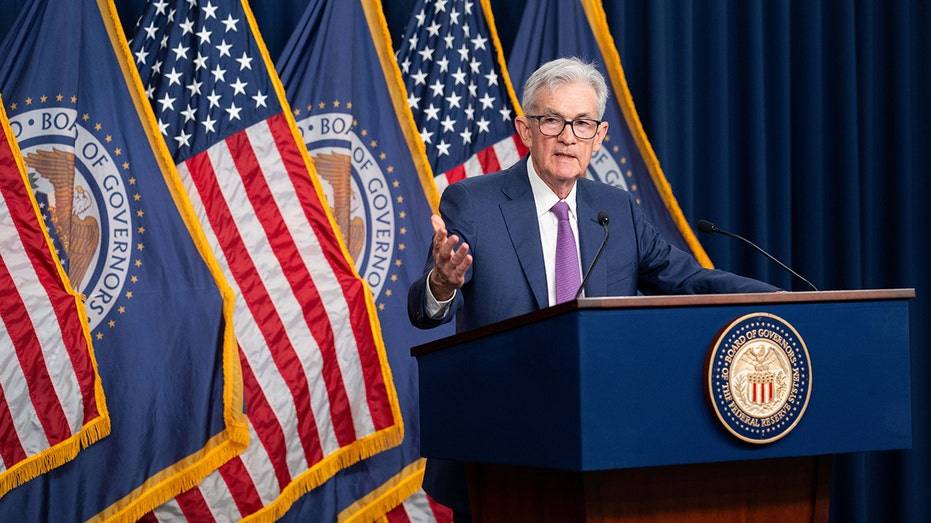
尽管特朗普施加压力,美联储仍连续第五次会议维持关键利率稳定
Sou Hu Cai Jing· 2025-07-30 20:36
Core Viewpoint - The Federal Reserve decided to maintain the benchmark interest rate unchanged amid uncertainties in inflation and the labor market, while continuing to monitor economic indicators [1][2]. Group 1: Federal Reserve's Decision - The Federal Reserve kept the federal funds rate in the range of 4.25% to 4.5%, unchanged after all five policy meetings this year [1]. - The Federal Open Market Committee (FOMC) voted 9 to 2 to maintain the rate, with two members dissenting in favor of a 25 basis point cut [1]. Group 2: Economic Indicators - Recent indicators suggest that economic activity growth slowed in the first half of the year, with a low unemployment rate and a solid labor market [1]. - The second quarter GDP growth rate was reported at 3%, following a contraction of 0.5% in the first quarter, leading to an estimated growth rate of approximately 1.2% for the first half of 2025 [2]. Group 3: Inflation and Trade Policy - Inflation remains elevated compared to the Federal Reserve's long-term target of 2%, despite a decline from the 2022 peak [2]. - The impact of government policy changes, including higher tariffs, on economic activity and inflation is still uncertain, with potential short-term and long-term effects [2][3]. Group 4: Labor Market and Housing - The labor market is described as being in a balanced state, consistent with maximum employment [2]. - The housing market is experiencing a slowdown due to high mortgage rates and supply constraints, with a long-term housing shortage persisting [5][6]. Group 5: Independence of the Federal Reserve - The Federal Reserve emphasizes the importance of maintaining its independence from political pressures, which allows for data-driven decision-making [7].

Ternium(TX) - 2025 Q2 - Earnings Call Transcript
2025-07-30 13:32
Financial Data and Key Metrics Changes - Adjusted EBITDA increased by 25% in the second quarter, primarily driven by stronger realized steel prices in Mexico, partially offset by a slight increase in cost per ton [14] - Net income for the second quarter amounted to $259 million, including a $40 million provision adjustment related to ongoing litigation [15] - Adjusted net income, excluding the provision, was $299 million, supported by better operational performance and favorable deferred tax results due to a 7.5% revaluation of the Mexican peso [15] Business Line Data and Key Metrics Changes - Shipments in the steel segment declined primarily in Mexico and the U.S., partially mitigated by higher volumes in the southern region [16] - Iron ore shipments rose quarter over quarter driven by increased production levels, although net sales remained broadly unchanged due to lower realized prices [18] Market Data and Key Metrics Changes - The Mexican market is experiencing a cautious business environment, with government measures contributing to a decrease in steel imports, creating a more level playing field [6][8] - The Brazilian steel market faces significant challenges due to a surge of unfair imported steel, particularly from China, undermining local competitiveness [8] - Argentina saw a significant increase in shipments during the second quarter, driven by seasonal factors and a recovering macroeconomic environment [9] Company Strategy and Development Direction - The company is focused on reducing costs to strengthen competitiveness, with ongoing initiatives aimed at optimizing production processes and supply chains [10][11] - The expansion project in Pesqueria is a cornerstone of the company's growth strategy, with expectations of increased shipments in Mexico [8][10] - The company is committed to sustainable industrial development, as highlighted in their sustainable report [11] Management's Comments on Operating Environment and Future Outlook - The operating environment remains uncertain and volatile, with expectations of a sequential improvement in the third quarter, particularly in Mexico [4][5] - Management is optimistic about ongoing negotiations between the U.S. and Mexico leading to mutually beneficial agreements [7] - The company anticipates a mixed performance across key markets, with growth expected in Mexico and steady shipments in Argentina, while Brazil continues to face headwinds [17] Other Important Information - Cash from operations totaled $1 billion in the second quarter, aided by a significant reduction in working capital [19] - The company’s net cash position decreased primarily due to elevated capital expenditures and dividend distributions, but remains solid at $1 billion [20] Q&A Session Summary Question: Can you elaborate on the state of steel supply in Mexico? - Management indicated that recent trade measures have led to lower imports, and they expect to gain market share due to these developments [22][23][25] Question: What is the outlook for cost reduction initiatives? - Management expects a total of $300 million in cost efficiency improvements for the year, with various initiatives contributing to this target [29][61] Question: What is the expected improvement in EBITDA? - Management anticipates reaching an average EBITDA margin closer to 15% by the fourth quarter, supported by cost reduction measures [40][41] Question: What is the status of the CSN litigation? - The litigation remains pending, with an appeal filed and awaiting a decision from the Supreme Court of Justice in Brazil [50][52] Question: What are the plans for capital allocation and dividends? - The company plans to sustain dividend payments while managing significant capital expenditures, with a peak expected this quarter [71][75]

IMF:大幅调高中国今年经济增速预期
天天基金网· 2025-07-30 05:12
Core Viewpoint - The International Monetary Fund (IMF) describes the global economic situation as "maintaining fragile resilience amid ongoing uncertainty," with projected growth rates for 2025 and 2026 slightly increased compared to previous forecasts [1][3]. Economic Growth Projections - The IMF forecasts global economic growth rates of 3.0% in 2025 and 3.1% in 2026, reflecting an increase of 0.2 and 0.1 percentage points respectively from earlier predictions [1]. - Emerging markets and developing economies are expected to grow at rates of 4.1% and 4.0% in 2025 and 2026, with China's growth rate for 2025 adjusted up by 0.8 percentage points to 4.8% [7]. Inflation Expectations - Global inflation is projected to decline, with rates expected to reach 4.2% in 2025 and 3.6% in 2026, although significant disparities exist among different economies [1][10]. - The IMF anticipates that U.S. inflation will remain above the 2% target level, while inflation in the Eurozone is expected to be more moderate [10]. Trade Volume Adjustments - The IMF has raised its 2025 global trade volume forecast by 0.9 percentage points but lowered the 2026 forecast by 0.6 percentage points, citing increased uncertainty in trade policies [4]. - A weaker dollar is expected to amplify tariff impacts rather than mitigate them, with U.S. fiscal policies potentially offsetting some negative effects on the current account balance [4][5]. Fiscal Vulnerabilities - The IMF warns of increasing global fiscal vulnerabilities, with some economies, including Brazil, France, and the U.S., projected to face significant fiscal deficits amid historically high public debt levels [5]. - Concerns over fiscal sustainability may lead to increased term premiums, particularly in the U.S., tightening global financial conditions and potentially causing market volatility [5].

IMF:大幅调高中国今年经济增速预期
第一财经· 2025-07-30 02:34
Core Viewpoint - The International Monetary Fund (IMF) describes the global economic situation as "fragile resilience amid ongoing uncertainty," with projected growth rates for 2025 and 2026 slightly increased compared to previous forecasts [1][4]. Economic Growth Projections - The IMF forecasts global economic growth rates of 3.0% for 2025 and 3.1% for 2026, which are increases of 0.2 and 0.1 percentage points from the April WEO predictions [1][4]. - Advanced economies are expected to grow at 1.5% in 2025 and 1.6% in 2026, while the United States is projected to grow at 1.9% in 2025 and 2.0% in 2026 [2][8]. - Emerging market and developing economies are projected to grow at 4.1% in 2025 and 4.0% in 2026, with China's growth rate adjusted to 4.8% for 2025 and 4.2% for 2026 [7][8]. Inflation Expectations - The IMF anticipates global inflation rates to decline to 4.2% in 2025 and 3.6% in 2026, with significant disparities among different economies [1][10]. - U.S. inflation is expected to remain above the 2% target level, while inflation in the Eurozone is projected to be more moderate [10][12]. Trade Volume and Policy Implications - The IMF has raised its 2025 global trade volume forecast by 0.9 percentage points but lowered the 2026 forecast by 0.6 percentage points due to increased trade policy uncertainty [5]. - The organization emphasizes the need for global policies to ease tensions, maintain price and financial stability, and implement necessary structural reforms to restore confidence and sustainability [1][4].

美国专家:特朗普政府关税政策可能给全球经济造成2万亿美元损失
Sou Hu Cai Jing· 2025-07-30 00:50
Group 1 - The strong trade policies of the Trump administration are predicted to cause over $2 trillion in losses to the global economy by 2027 [1] - Current U.S. tariff levels have reached their highest point since the 1930s, being six times higher than at the beginning of Trump's presidency [3] - The impact of protectionist policies is complex, affecting various global manufacturers, including the automotive industry in Japan, textile factories in Vietnam, and U.S. agricultural workers [3] Group 2 - While some losses may be compensated through the restructuring of production chains over time, this process will take time and may reduce U.S. influence over production and logistics [4] - The restructuring is likely to be oriented towards minimizing U.S. impact, suggesting that while aiming to "Make America Great Again," the Trump administration may be setting up long-term economic challenges for the U.S. [4]

Nucor(NUE) - 2025 Q2 - Earnings Call Transcript
2025-07-29 15:02
Financial Data and Key Metrics Changes - Nucor generated EBITDA of approximately $1.3 billion and earned $2.6 per diluted share in the second quarter, representing a significant improvement over the first quarter results driven by higher average selling prices in the steel mill segment [6][16] - Year-to-date adjusted earnings were $782 million or $3.37 per share, with second quarter results including pre-operating and startup costs of approximately $136 million or $0.45 per share [16][17] - Total capital return to shareholders for the first half of the year reached $758 million, with $329 million returned in the second quarter through dividends and buybacks [6][21] Business Line Data and Key Metrics Changes - The steel mills segment generated pre-tax earnings of $843 million, more than triple that of the prior quarter, driven by higher average selling prices, particularly in sheet and plate operations [17][19] - The steel products segment saw pre-tax earnings of $392 million, a 28% increase over the prior quarter, with stable realized pricing and higher volumes contributing to the best earnings quarter since 2024 [11][19] - The raw materials segment realized pre-tax earnings of approximately $57 million for the quarter, an increase of approximately 95% over the first quarter [20] Market Data and Key Metrics Changes - The steel mills backlog at the end of the second quarter was up nearly 30% compared to the same time last year, indicating solid and steady booking rates [17] - The sheet backlog at the end of the second quarter was 15% higher than the same time last year, reflecting strong demand [18] - Nucor's bar shipments were 13% higher in the first half of the year, while plate shipments to the bridge market hit a record in the second quarter, rising 35% for 2025 [24] Company Strategy and Development Direction - Nucor is focused on executing its growth strategy and creating value for shareholders, customers, and communities while maintaining a strong safety record [5][10] - The company is well-positioned to support growth in steel-intensive projects and promote reshoring of vital manufacturing, leveraging its diverse capabilities in the North American steel market [15][27] - Nucor anticipates domestic steel demand will be higher in 2025 compared to 2024, with confidence in capturing a healthy share of that demand [26] Management's Comments on Operating Environment and Future Outlook - Management described the pricing environment as broadly stable, with expectations of modest margin compression in the steel mill segment despite resilient backlogs and stable demand [18][26] - The company is optimistic about the impact of recent trade policies and tariffs, which are expected to curb unfairly traded imports and protect national security [12][14] - Management highlighted strong demand drivers in technology, infrastructure, energy, and data centers, which are expected to continue driving demand for steel and steel products [22][24][25] Other Important Information - Nucor's credit ratings are the highest among North American steel producers, with a total debt to capital ratio of approximately 24% and cash of approximately $2.5 billion [21] - The company is on track to deploy approximately $3 billion in capital expenditures for the year, with significant progress on several important capital projects [7][10] Q&A Session Summary Question: Can you break down the margin compression in the steel products segment? - Management indicated that the margin compression is not due to weak demand drivers but rather a lag effect from orders taken in late Q4 and early Q1, with recent price increases announced [29][33] Question: What are the biggest opportunities to displace imports in the second half of the year? - Management noted that opportunities exist across various product lines, with an 85% utilization rate across the steel mill segment and a focus on meeting demand where it exists [37][39] Question: Can you speak to the pre-operating startup costs and outlook for new assets? - Management expects pre-operating startup costs to be in the range of $140 million to $150 million per quarter for the back half of the year, with significant contributions to EBITDA anticipated as new assets ramp up [48][49] Question: What is driving the expected margin compression in the steel mills segment? - Management highlighted the impact of tariffs on raw materials and a lag effect in pricing as key drivers of the expected margin compression [56][105] Question: Have you seen any tariff-led costs in Q2? - Management confirmed that there were no tariff-led costs observed in Q2 [71] Question: What is the outlook for working capital in H2? - Management indicated that a large working capital build in H1 set up a constructive pivot for free cash flow in the second half of the year [79][80]

美日贸易协议只是“止痛药”?日本承认:衰退风险仍未解除!
Jin Shi Shu Ju· 2025-07-29 09:31
Group 1 - Japan's recent trade agreement with the U.S. has reduced tariffs on goods, including automobiles, from 25% to 15%, alleviating some trade policy uncertainty [2] - The Japanese government maintains its overall assessment that the economy is recovering at a "moderate pace," despite the impact of U.S. tariffs on certain sectors [2] - A government official noted that since April, the export prices of cars to the U.S. have significantly decreased due to the implemented tariffs, although there have been no notable changes in export volume, manufacturing price index, or employment [2] - The government has downgraded its assessment of exports for the first time in a year, reflecting a slowdown in semiconductor manufacturing equipment exports [2][3] Group 2 - The government has revised its wording regarding domestic corporate goods prices, indicating that the growth rate is currently "slowing," compared to the previous assessment of "gradually rising" [3] - For private consumption, which accounts for over half of Japan's economy, the government maintains its view that it is "recovering" [4]
关税乐观情绪降温,越南股市大跌4%,欧股反弹,美元创月内新高,欧元跌至五周低点
Hua Er Jie Jian Wen· 2025-07-29 07:52
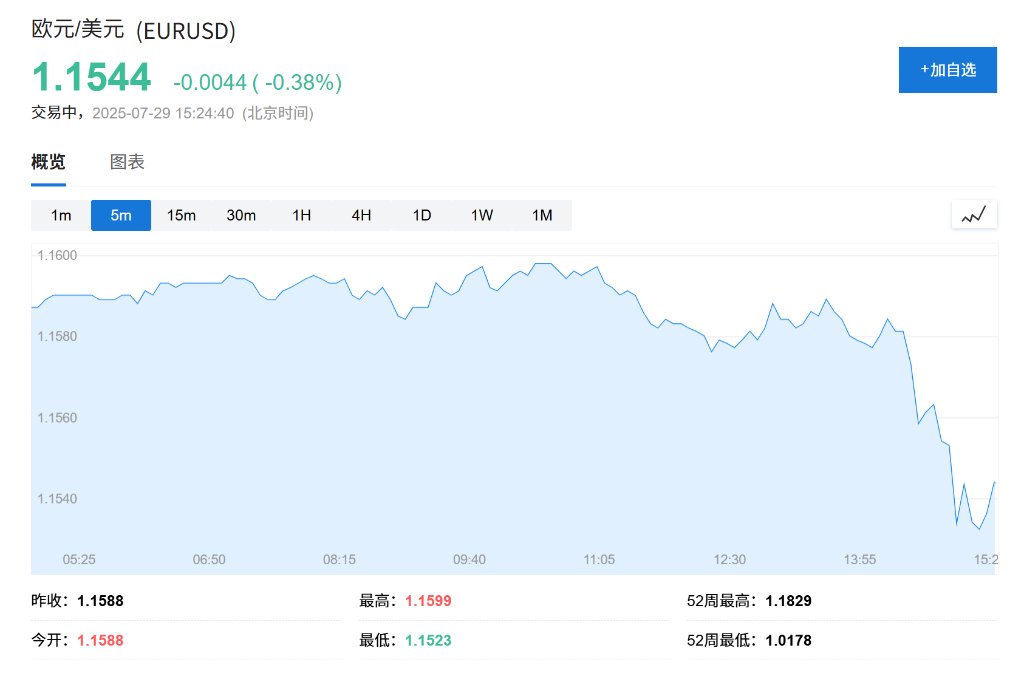
Group 1 - Asian stock markets have declined for the third consecutive day, with Vietnam's VN Index dropping 4% as optimism from recent trade agreements fades [1][5] - The MSCI Asia-Pacific Index fell by 0.8%, while the US dollar index rose by 0.3%, reaching its highest level since late June [1][5] - Investors are shifting focus to key economic indicators as the Federal Reserve is expected to maintain interest rates during its upcoming policy meeting [1][6] Group 2 - The EU-US trade agreement has sparked controversy, with critics arguing it poses risks to the European automotive industry and competitiveness [2] - The euro has depreciated by 0.3% against the dollar, reaching its lowest level in five weeks, reflecting market skepticism about the trade deal [2][5] - Market reactions to the trade agreement have become more rational, with investors prioritizing hard data to assess economic and policy outlooks [2] Group 3 - The Federal Reserve's upcoming interest rate decision is a key focus for the market, with significant economic data expected to be released this week [6] - Analysts predict that the data will indicate a rebound in economic activity for the second quarter, influencing short-term policy decisions [6] - Gold prices are projected to rise significantly, potentially reaching $4,000 per ounce by the end of next year, driven by the Fed's rate cuts and increasing global gold reserves [6]
海外宏观周报:美股业绩表现亮眼-20250729
China Post Securities· 2025-07-29 07:51
Group 1: Macro Economic Insights - As of July 28, 32% of S&P 500 companies have reported Q2 earnings, with 77% exceeding expectations, up from 73% last year[1] - 62% of companies reported both revenue and net profit exceeding expectations, compared to 48% last year[1] - Q2 revenue growth rate was 5.0% year-on-year, while net profit growth rate was 5.5%, better than last year's 3.1% for non-financial companies[1] Group 2: Market Recommendations - It is suggested to buy on dips in the U.S. stock market, as historical trends show seasonal weakness from September to November[2] - The high yield of 10-year U.S. Treasury bonds may lead to a potential pullback in Q3, but a weaker dollar could enhance S&P 500 earnings[2] Group 3: Risks and Economic Data - Risks include trade negotiations falling short of expectations and escalating tariff conflicts[3] - U.S. existing home sales slightly declined to 3.93 million units in June, falling below the 4 million mark[8] - Initial jobless claims show a slow decline, while continuing claims remain high, indicating increased difficulty in the job market[8]
特朗普豪取1.9万亿大单,鲍威尔在议息前被“火力”猛攻
Sou Hu Cai Jing· 2025-07-29 03:57
Core Viewpoint - The article discusses the tension between the Trump administration and Federal Reserve Chairman Jerome Powell regarding interest rates and trade policies, highlighting the potential risks to the global economy and the implications of aggressive trade measures and tariffs [1][3][8]. Group 1: Economic Impact - The U.S. government is under pressure to lower interest rates significantly, with a proposed reduction to 1%, which could save $360 billion annually on interest payments due to the $36 trillion national debt [3]. - Recent data shows a 0.5% contraction in Q1 GDP, marking the worst performance in three years, despite a drop in unemployment to 4.1% [3]. - New tariffs are expected to increase prices on imported goods significantly, with shoes potentially rising by 87% and clothing by 65%, impacting household finances by an estimated $4,900 per family [3]. Group 2: Trade Agreements - The Trump administration has rapidly negotiated trade agreements using tariffs as leverage, with notable deals including a 15% auto tariff on Japan and a commitment for $550 billion in investments, with strict profit-sharing terms favoring the U.S. [5][6]. - The European Union agreed to a 15% auto tariff and pledged to purchase $750 billion in U.S. energy, alongside an additional $600 billion in investments [6]. - The total value of these trade agreements exceeds $1.9 trillion, equating to approximately $5,700 for every American citizen [8]. Group 3: Market Reactions - Following these developments, gold prices surged past $3,400 per ounce, and the U.S. dollar index fell below 98, erasing most of its gains for the year [3]. - The aggressive trade policies and pressure on the Federal Reserve have led to warnings from financial institutions about the potential collapse of dollar hegemony and significant risks to the global economy [3].