资产配置

Search documents
买方投顾转型中的财富规划实践:匡正、李斌、杨辉共探破局之道
Morningstar晨星· 2025-08-14 01:05
Core Viewpoints - The wealth management industry is undergoing a significant transformation from a product-driven model to a service-driven model, necessitating a balance between global standards and local client needs through talent development and technological investment [1][8][9] Group 1: Wealth Management Transformation - The Chinese wealth management industry is shifting from a focus on individual products to a broader emphasis on asset allocation, with investors increasingly sensitive to short-term gains and losses [8] - Institutions are encouraged to invest in technology and talent to enhance their capabilities in global asset allocation, family office services, and retirement planning, thereby establishing long-term competitiveness in the Chinese market [8] - Different financial institutions are exploring unique strategies to navigate the opportunities and challenges presented by the transition from "sell-side sales" to "buy-side advisory" [2][8] Group 2: Unique Advantages of Brokerage Firms - Brokerage firms possess distinct advantages in wealth management, including a client base with a higher tolerance for risk and volatility, allowing for more comprehensive wealth planning strategies [8] - The experience of advisory teams in managing risk and volatility is noted, although there is a need to enhance capabilities in asset allocation [8] - The symbiotic relationships between brokerages and asset managers (public and private) facilitate a deeper understanding of management strategies, enabling better client service [8] Group 3: Internet Platforms and Data Utilization - Internet platforms are leveraging their vast user base and data advantages to provide personalized wealth management services, addressing the challenge of delivering tailored services to a large audience [9] - The implementation of KYC (Know Your Customer) and KYP (Know Your Portfolio) processes is crucial for creating accurate user profiles and reducing decision-making difficulties for investors [9] - The transition from a product-centric sales model to an account-centered asset allocation advisory model is emphasized, with a focus on enhancing the user experience through simplicity, safety, and enjoyment [9] Group 4: System and Team Development - The establishment of a TAMP (Turnkey Asset Management Platform) model is highlighted as a means to integrate research, data analysis, and advisory tools, enhancing the support for financial advisors [11] - The importance of a feedback mechanism between research teams and client needs is stressed to ensure alignment in service delivery and product offerings [11] - The goal for financial advisors is to evolve into long-term financial partners for clients, supported by effective AI tools to enhance service quality [13] Group 5: Focus Areas for Brokerages - Brokerages are advised to focus on three key areas: developing ETF-based intelligent trading and allocation tools, embracing AI technology to improve service efficiency, and evolving account systems to support comprehensive wealth management [13] - The relationship between sales and advisory roles is viewed as a gradual transition, with a structured growth path for professionals to develop from sales to specialized advisory capabilities [13]


从1到N,东方红万里行的十年温度
Mei Ri Jing Ji Xin Wen· 2025-08-13 23:53
Core Insights - The article emphasizes the evolution of investor services in China's asset management industry over the past decade, highlighting the "Dongfanghong Wanli Xing" initiative as a cornerstone for healthy industry development [1][4][14] - The initiative has successfully conducted over 14,400 events, reaching more than 2.09 million investors across over 100 cities, establishing a comprehensive support system for investors [1][4] Group 1: Historical Context and Development - The "Dongfanghong" brand was established in 2005, focusing on value investment and investor education, which has been a fundamental aspect of its operations [5][6] - The initiative was launched in 2015 during a turbulent market period, aiming to help investors understand the relationship between long-term value and short-term volatility [6][9] - The team recognized that excellent performance alone is insufficient; systematic services and support are essential to protect investor returns [6][9] Group 2: Service Evolution and Upgrades - In recent years, the company has upgraded its investor service system, expanding its course offerings from four core modules to eighteen detailed courses, addressing various investor needs [9][10] - A dedicated lecturer team has been established to provide customized services based on client demands, enhancing the educational experience for different investor profiles [10][11] - The initiative has expanded its outreach to include diverse groups such as corporate employees, students, and the elderly, ensuring a broad dissemination of financial knowledge [11][12] Group 3: Future Directions and Goals - The company plans to launch a nationwide tour in 2025, themed "Picking Up Light and Walking Together," to further engage with investors and enhance their understanding of investment and asset management [14][15] - The tour will cover ten key cities, focusing on providing targeted services based on local economic conditions and investor needs [14][15] - The overarching goal is to improve financial literacy and support the high-quality development of China's capital markets, reinforcing the company's commitment to long-term investor relationships [15][16]

普通人想要积累财富,到底该避开哪些容易踩坑的思维误区?
Sou Hu Cai Jing· 2025-08-13 13:12
Core Insights - Wealth accumulation is a journey that involves understanding human nature and avoiding common cognitive biases that lead to financial pitfalls [1] - The article identifies five major cognitive biases that hinder wealth growth and emphasizes the importance of breaking free from the "poor cycle" to achieve financial awakening [1] Cognitive Blind Spots - Salary growth is insufficient to counteract inflation, and relying solely on a single income stream does not lead to significant financial transformation [2] - The lack of understanding of the compounding effect results in missed opportunities for wealth generation [2] Strategies for Breaking the Cycle - Construct an income pyramid: base income from salary, supplemented by side jobs, and topped with asset income (e.g., rent, dividends) to achieve income diversification [3] - Learn the "money-making money" logic through tools like index fund investments and real estate to allow capital to participate in wealth distribution and leverage compounding for wealth multiplication [3] Case Study - Investing 1,000 yuan monthly in an index fund with an average annual return of 10% could yield approximately 480,000 yuan in principal and returns after 20 years, significantly surpassing linear savings [4] Consumption Misconceptions - There is a tendency to equate consumption with happiness, leading to indulgence in luxury goods and immediate gratification, resulting in a cycle of increased income, upgraded consumption, and debt accumulation [5] - Advertising creates false demands, and credit cards amplify consumption desires, squeezing investment capacity [6] Solutions to Consumption Issues - Layer needs: distinguish between survival needs (food, housing), development needs (education, health), and vanity needs (luxury goods), prioritizing investment in the first two [7] - Establish a consumption firewall: save 30% of income before spending, use cash to curb impulsive purchases, and regularly declutter to free up funds for investment [7] Actionable Recommendations - Implement a "cooling-off period" for consumption decisions, especially for large expenditures, by asking if it truly enhances long-term value [8] Behavioral Patterns - Investors often either engage in blind speculation (e.g., P2P, cryptocurrencies) or overly conservative strategies (e.g., keeping all funds in banks) [10] - The alternating dominance of greed and fear leads to a lack of systematic investment knowledge, with greed resulting in high-risk losses and fear causing a decline in purchasing power due to inflation [11] Balancing Investment Approaches - Risk-reward allocation should be based on risk tolerance, with a suggested asset mix of 60% stable (bonds) and 40% growth (stocks, funds) or vice versa [12] - Learning basic financial knowledge is crucial for mastering asset allocation, compounding calculations, and market cycles, while avoiding herd mentality in investment decisions [12] Time Management Insights - Time is often undervalued, with individuals focusing on short-term gains (e.g., part-time income) at the expense of self-improvement and asset appreciation [13] - A proposed time allocation strategy includes dedicating 30% to leisure, 50% to income-generating activities, and 20% to investment learning [14] Evidence of Learning Impact - Research indicates that individuals who invest five hours weekly in learning about investments have three times the average wealth of those who do not over a decade [15] Overcoming Rigid Thinking - Sticking to outdated beliefs (e.g., "buying a house is always profitable") and avoiding new trends (e.g., digital currencies, AI economy) can hinder financial growth [16] - The article contrasts proactive planners with passive executors, highlighting that wealth disparities can reach five times over five years [18] Action Plan for Wealth Accumulation - Maintain an open mindset by reading ten financial books annually, participating in industry forums, and staying updated on policy and technology trends [20] - Create a wealth blueprint with clear short-term, medium-term, and long-term financial goals, breaking them down into actionable daily tasks [20] - Shift from salary-based thinking to asset-based thinking, from consumerism to value investing, and from risk aversion to risk management [20]

一买就跌?一卖就涨?散户最头疼的问题,这篇给你讲透!
雪球· 2025-08-13 13:01
Core Viewpoint - The article emphasizes the importance of asset allocation as a solution to the challenges faced by investors, advocating for a structured approach to investment through the "Snowball Three-Point Method" which focuses on diversification and long-term strategies [3][6]. Group 1: Investment Challenges - Many investors fall into common traps such as believing they can time the market perfectly, leading to poor decision-making and losses [5]. - Data indicates that most investors fail to outperform the funds themselves, not due to poor fund selection, but because they struggle to hold onto their investments [5]. Group 2: Snowball Three-Point Method - The core principle of the Snowball Three-Point Method is summarized in twelve words: "Do not predict, only respond, diversify investments, and win passively" [8]. - The method includes three types of diversification: asset diversification, market diversification, and time diversification [9]. Group 3: Asset Diversification - Different asset classes (stocks, bonds, commodities) have distinct return characteristics and low correlation, which helps in risk hedging [10]. - Historical correlation analysis from 2003 to 2023 shows that stocks, bonds, and commodities have low correlations, indicating the benefits of diversified asset allocation [11]. Group 4: Market Diversification - Global economic conditions lead to varying asset performance across different markets, which can further smooth out portfolio volatility [12]. - Correlation analysis from 2021 to 2024 shows that different global indices exhibit low to negative correlations, reinforcing the need for market diversification [13]. Group 5: Time Diversification - Regular investment through methods like dollar-cost averaging can mitigate the risks associated with market timing [14]. - Time diversification allows investors to achieve an average market cost over time, reducing the impact of volatility [15]. Group 6: Dynamic Adjustment and Rebalancing - Initial asset allocation should not be static; adjustments should be made based on changing asset performance and market conditions [16]. - Dynamic rebalancing helps maintain the original asset allocation ratios, facilitating a buy-low, sell-high strategy [17][18]. Group 7: Practical Implementation of the Three-Point Method - The implementation involves three steps: risk assessment to customize investment plans, selecting funds from a curated pool, and ongoing dynamic rebalancing [20][22][26]. - The article provides examples of asset allocation strategies for different risk profiles, illustrating how to construct a personalized investment portfolio [21]. Group 8: Half-Position Strategy - The half-position strategy balances market exposure and risk, allowing for flexibility in responding to market fluctuations [29]. - This strategy involves maintaining a balanced allocation between equities and fixed income, which helps manage both risk and opportunity [30]. Group 9: Specific Asset Allocation Recommendations - The recommended allocation includes 50% in fixed income (with a focus on domestic bonds), 45% in equities (with a mix of domestic and international), and 5% in commodities, primarily gold [32][34][35]. - The rationale for these allocations is based on current market conditions, expected returns, and risk considerations [33][36].

全球展望及资产配置策略
Haitong Securities International· 2025-08-13 12:35
Global Macro - The report emphasizes the need for a defensive yet growth-oriented global asset allocation strategy over the next three to five years, considering the increasing global economic uncertainty due to U.S. trade policy changes and geopolitical complexities [1][2][3] Economic Outlook - The global economic recovery in the first half of 2025 is primarily supported by export and investment activities, particularly in China, while private consumption remains subdued [2][21] - The IMF forecasts China's real GDP growth at 4.8% for 2025, with continued recovery expected from 2026 to 2030 [21] - The U.S. GDP growth is projected at 1.9% for 2025, with an average annual compound growth rate of 2.02% from 2026 to 2030 [27] - The Eurozone is expected to see GDP growth gradually increase from 0.9% in 2025 to 1.3% by 2027, benefiting from wage and employment growth [2][29] Asset Allocation Trends - Over the past five years, there has been a trend of reducing traditional asset allocations while increasing fixed income and alternative assets [3][40] - The report highlights a shift in investor preferences towards high-quality bonds and growth sectors such as technology and healthcare, while also considering private market investments [45][49] - The report notes that international sovereign funds are increasingly focusing on Chinese assets, particularly in sectors like digital technology and clean energy [40][41] Future Asset Allocation Recommendations - For the period 2025-2027, the report suggests a gradual shift towards a more aggressive asset allocation, emphasizing increased exposure to China and other emerging markets [3][33] - In 2028-2029, it recommends reducing exposure to overvalued assets and reallocating towards value and defensive sectors due to rising recession risks [3][33] Market Participants Analysis - The report indicates that global investors are increasingly diversifying their portfolios, with a notable preference for alternative assets such as private equity and real estate [39][40] - Family offices are shifting their asset allocations towards equities and alternative investments, reflecting a trend towards more aggressive investment strategies [50][51]
银行理财周度跟踪(2025.8.4-2025.8.10):多元资产配置新探索,银行理财收益延续回升-20250813
HWABAO SECURITIES· 2025-08-13 08:41
Investment Rating - The report does not explicitly provide an investment rating for the banking wealth management industry [3]. Core Insights - The banking wealth management market is facing challenges due to a "low interest rate, low growth, and low risk appetite" environment, which is impacting profitability and asset allocation [4][11]. - There is a significant potential for growth in the wealth management market, necessitating a focus on long-term investment philosophies, technological empowerment, and enhanced customer experiences [4][11]. - Recent trends indicate a recovery in bank wealth management product yields, driven by improved sentiment in the bond market [5][14]. Summary by Sections Regulatory and Industry Dynamics - On August 7, 2025, China Merchants Bank hosted a forum highlighting the wealth management market's potential and the structural challenges faced by institutions [4][11]. - The industry is urged to enhance long-term investment strategies, optimize asset allocation, and improve customer experiences [4][11]. Peer Innovation Dynamics - Huibin Wealth Management launched the "Star Huibin+" multi-asset strategy product system, integrating various investment strategies to enhance risk diversification and return optimization [4][12]. - Xingyin Wealth Management successfully completed the first equity subscription registration project in Fujian Province, marking a significant milestone in their service offerings [4][13]. Yield Performance - For the week of August 4-10, 2025, cash management products recorded a 7-day annualized yield of 1.34%, down 2 basis points from the previous week [5][14]. - The bond market exhibited a volatile pattern influenced by various factors, including central bank liquidity support and stock market performance [5][15]. Net Value Tracking - The net value ratio of bank wealth management products decreased to 0.91%, down 1.44 percentage points, indicating a positive trend in credit spreads [5][24]. - The current credit spread remains at a historical low, suggesting limited value for investors [5][24].
金融工程研究培训
GUOTAI HAITONG SECURITIES· 2025-08-13 05:23
- The Black-Litterman model (BL model) is used for asset allocation, combining investor views with market equilibrium[17][20] - The construction process of the BL model involves adjusting the expected returns based on investor views and then optimizing the portfolio using mean-variance optimization[17][20] - The Risk Parity model aims to allocate risk equally across all assets in a portfolio, rather than allocating capital equally[27][30] - The construction process of the Risk Parity model involves calculating the risk contribution of each asset and solving an optimization problem to equalize these contributions[28][29][30] - The Counter-Cyclical Allocation model adjusts asset allocation based on economic cycles, aiming to reduce risk during downturns and increase exposure during upturns[11][43] - The Macro Momentum Timing model uses macroeconomic indicators to time market entries and exits, aiming to capture trends and avoid downturns[11][60] - The Sentiment Timing model uses investor sentiment indicators to time market entries and exits, aiming to capitalize on market overreactions[67] Model Performance Metrics - **Black-Litterman Model**: Annualized return 6.58%, maximum drawdown 3.18%, annualized volatility 2.15%, Sharpe ratio 1.86, Calmar ratio 2.07[22][24] - **Risk Parity Model**: Annualized return 6.07%, maximum drawdown 3.78%, annualized volatility 2.26%, Sharpe ratio 1.58, Calmar ratio 1.61[31] - **Counter-Cyclical Allocation Model**: Annualized return 7.36%, maximum drawdown 8.85%, annualized volatility 6.12%, Sharpe ratio 1.13, Calmar ratio 0.85[43][47] - **Macro Momentum Timing Model**: Annualized return 7.06%, maximum drawdown 6.60%, annualized volatility 6.06%, Sharpe ratio 1.13, Calmar ratio 1.97[60] - **Sentiment Timing Model**: Annualized return 7.74%, maximum drawdown 24.91%, annualized volatility 17.49%, Sharpe ratio 1.01, Calmar ratio 0.62[67][87]
浙商银行,突遭举牌
Zheng Quan Shi Bao· 2025-08-13 00:02
港交所披露易信息显示,8月11日,民生保险在场内增持100万股浙商银行H股股份,耗资约277万港 元。 增持完成后,民生保险以"实益拥有人"身份持有2.96亿股浙商银行H股,占该行H股股本突破5%,触发 举牌。 民生保险是国内首家以民营资本为投资主体的全国性专业人身保险公司,2003年6月成立,总部位于上 海,注册资本60亿元。截至去年底,公司总资产超过1400亿元。 险资举牌不停步! 港交所披露易最新信息显示,民生保险于8月11日增持100万股浙商银行H股股份后,于当日达到该行H 股股本的5%,根据港股市场规则,触发举牌。 截至目前,今年已有7家银行被险资举牌,包括邮储银行、招商银行、农业银行、杭州银行、中信银 行、郑州银行、浙商银行。其中,招商银行是唯一一家被三度举牌的上市银行。 业内人士分析,多重因素作用下,险资对于权益资产尤其是红利资产的配置比例处于上升通道,而银行 股这类发展稳健的高股息股票是非常重要的配置标的。 民生保险举牌 频获险资增持 值得一提的是,除民生保险外,近年来,该行还获多家险资增持。 2020年底,百年人寿在场内增持4100万股浙商银行H股,持股数量达到该行H股总数5%的举牌线。此 ...

今日视点:四大需求促科创债火出圈
Zheng Quan Ri Bao· 2025-08-12 23:26
Core Viewpoint - The issuance of technology innovation bonds (科创债) in China has seen explosive growth, exceeding 800 billion yuan within three months, driven by strong participation from financial institutions [1][2]. Group 1: Macro Demand - The issuance of 科创债 reflects the macro demand for national technology innovation strategies, as China is undergoing a critical economic structural transformation, focusing on upgrading traditional industries and promoting emerging sectors like artificial intelligence and biomedicine [3]. - The government aims to guide financial resources into key technology areas to enhance independent innovation capabilities and strengthen national technological power and competitiveness [3]. Group 2: Financing Needs of Tech Enterprises - Technology companies face urgent financing needs due to long R&D cycles and high uncertainty, often lacking the collateral required for traditional bank loans [4]. - 科创债 provides a new financing channel through medium to long-term direct financing, meeting the funding requirements for technology development and project investment [4]. Group 3: Financial Institutions' Business Expansion - Financial institutions are actively participating in the issuance of 科创债 to capture market share and accumulate service experience, particularly small and medium-sized banks [5][6]. - Policy support has optimized the issuance process, reducing costs and barriers for small banks, allowing them to better serve local technology innovation needs [6]. Group 4: Investor Asset Allocation Needs - In a declining interest rate environment, investors are increasingly seeking diversified asset allocation, with 科创债 attracting attention due to its credit premium and policy support [7]. - The bonds offer competitive interest rates compared to similar short-term assets, and innovative terms set by exchanges enhance their investment value and exit mechanisms [7].
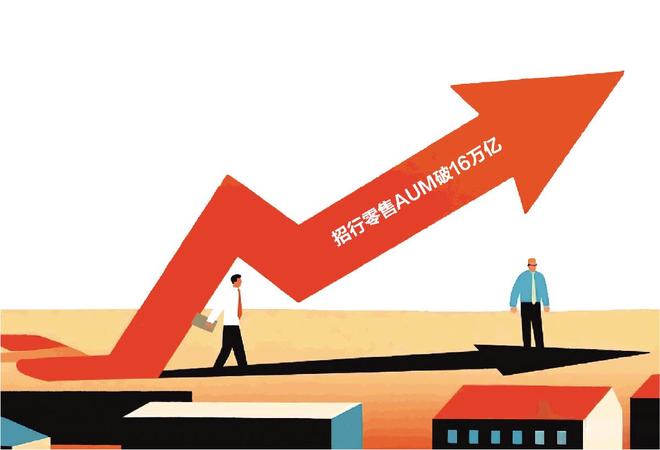
招行零售客户总资产破16万亿
Nan Fang Du Shi Bao· 2025-08-12 23:10
制图:朱林(即梦AI) "当前,招行为超2亿个人客户提供优质服务,管理零售客户总资产(AUM)规模超16万亿元"。招商银行 行长王良在8月7日举办的"财富启新程 湾区共潮生——2025财富合作伙伴论坛"上宣布。据了解,这是 国内首家达成此里程碑的股份制商业银行,"零售之王"招牌再次闪亮。 南都记者注意到,在招商银行2024年度股东大会上,有股东对招商银行近年基金销售"不理想"提出疑 虑,王良既坦诚过去在ETF基金等布局不完整,也介绍了"坚持为客户创造价值,从更合理的资产配置 看待每一只产品销售"的财富管理理念。 在零售AUM突破16万亿之际,王良在论坛上又带来了哪些财富管理新思考?南都记者解锁"零售之王"财 富管理的"变"与"不变",讲述16万亿为何是里程碑也是新起点。 "长坡厚雪" 零售AUM是衡量银行零售业务强弱的关键指标 早在2007年招商银行就在业内率先提出零售AUM的经营理念,并用9年时间达成第一个5万亿。此后, 招商银行走出了财富管理的加速度,第二个5万亿缩短至5年,而此次超越第三个5万亿仅用3年多。 零售AUM包括客户存款、理财、基金等,它反映银行零售业务的综合客户价值和财富管理能力,是衡 量银 ...