资产配置

Search documents
90后成基金投资主力军!京东金融年轻用户占比近六成
Huan Qiu Wang· 2025-08-12 14:22
Core Insights - The A-share market continues to show strength, with all three major indices reaching new highs for the year, indicating increased trading activity [1] - The demographic of young investors is rising, with those aged 25-35 making up 40% and those aged 18-25 accounting for 20%, highlighting the growing influence of Generation Z in fund investments [1] Group 1: Market Performance - The A-share market has shown significant momentum, with all three major indices achieving new annual highs, reflecting a robust trading environment [1] - The trading activity on the market has notably increased, suggesting a positive sentiment among investors [1] Group 2: Investor Demographics - Young investors are becoming a significant force in fund investments, with over 60% of investors aged 25 and under [1] - The platform's user base is characterized by a youthful demographic, indicating a shift in investment behavior towards younger generations [1] Group 3: Investment Preferences - The investment choices of platform users are diverse, with active equity funds and index funds comprising 68% of the portfolio, showcasing investor confidence in structural market trends [2] - Conservative bond funds account for approximately 15%, while "stable income+" products make up 5%, indicating a balanced approach to risk and return among some investors [2] Group 4: Service Enhancements - The fund channel of the platform has undergone a comprehensive upgrade, utilizing AI to capture market trends in real-time and creating four major investment IP matrices [2] - The company aims to enhance its "investor-centric" service philosophy through technology and professional services, focusing on global asset allocation and improving user experience [2]
广东人、江苏人、北京人,最爱买基金!
中国基金报· 2025-08-12 13:35
Core Viewpoint - JD Finance has revealed important investor data, highlighting a significant increase in young investors, particularly those aged 25-35 and 18-25, indicating a shift in the investor demographic towards the "Z generation" [2][5]. Group 1: Investor Demographics - The proportion of investors aged 25-35 is approximately 40%, while those aged 18-25 account for about 20%, together making up over half of the investor base [5]. - The "Z generation" is becoming a key growth force in fund investments [2]. Group 2: Fund Performance and User Engagement - As of July 2025, the number of new users on the JD Finance platform has increased by 58% year-on-year, and the number of fund trading users has grown by 47%, indicating a rise in trading activity [5]. - The platform's fund offerings include various types such as money market funds, bond funds, mixed funds, and equity funds, with a total non-money fund scale of 126.3 billion yuan expected by the end of 2024 [4]. Group 3: Investment Preferences - Investors show a diversified product selection, with active equity funds and index funds making up 68% of the portfolio, reflecting confidence in structural market trends [5]. - Stable bond funds account for about 15%, and "fixed income +" products represent 5%, indicating a balanced approach to risk and return among some investors [5]. Group 4: Geographic Distribution - The top three provinces for fund purchases are Guangdong, Jiangsu, and Beijing, where investors exhibit higher sensitivity to market opportunities [5]. Group 5: Strategic Focus - JD Finance is prioritizing the development of equity funds, aiming to enhance the scale and proportion of equity assets in wealth allocation [6]. - The company plans to deepen its "investor-centric" service philosophy, leveraging technology and professional services to create more value for investors [6].

牛市貌似真的来了,请注意不要在牛市里亏钱…
雪球· 2025-08-12 13:00
曾经幻想暴富,现实变成暴负,投资只能慢慢变富~ 以下文章来源于做配置的小雪 ,作者做配置的小雪 ↑点击上面图片 加雪球核心交流群 ↑ 上周,两融余额突破了2万亿元,创近10年新高。 你觉得牛市来了吗? 牛市,听起来很美好,很振奋人心:06-07年沪指翻了4倍多,19-21年,明星主动基金经理业绩也翻了2倍多。 这是市场的涨幅,那我们个人投资者呢? 据统计,在2015年的牛市中,资产规模低于50万的散户,累计亏损金额达2500亿元,亏损幅度达30%,而这部分投资者占账户总数的85%。 牛市 只让很少的人赚钱,但是让更多人亏损甚至破产,牛市并没有大家想象的那么美好。 一、 牛市 比 熊市 更容易亏钱 我们倾向于认为,牛市遍地都是钱,熊市才会亏钱。但事实是,牛市的剧烈波动、板块的快速轮动,更容易让我们做出错误操作。比如: 1、越涨越 加仓 牛市在质疑声中上涨。 在牛市初期,由于你的谨慎,投入的本金并不多。 但是随着市场上涨,伴随媒体渲染、更多人赚到钱,你也越来越坚信牛市来临,并且逐渐投入越来越多的本金。 但是,风险在上涨中逐步累积。 你在高位投入的资金,所承担的风险要远远大于低位时投入的资金。 这种越涨越买的加仓方 ...

90后成基金投资主力军!京东金融年轻用户占比近六成彰显平台活力
Zhong Jin Zai Xian· 2025-08-12 12:27
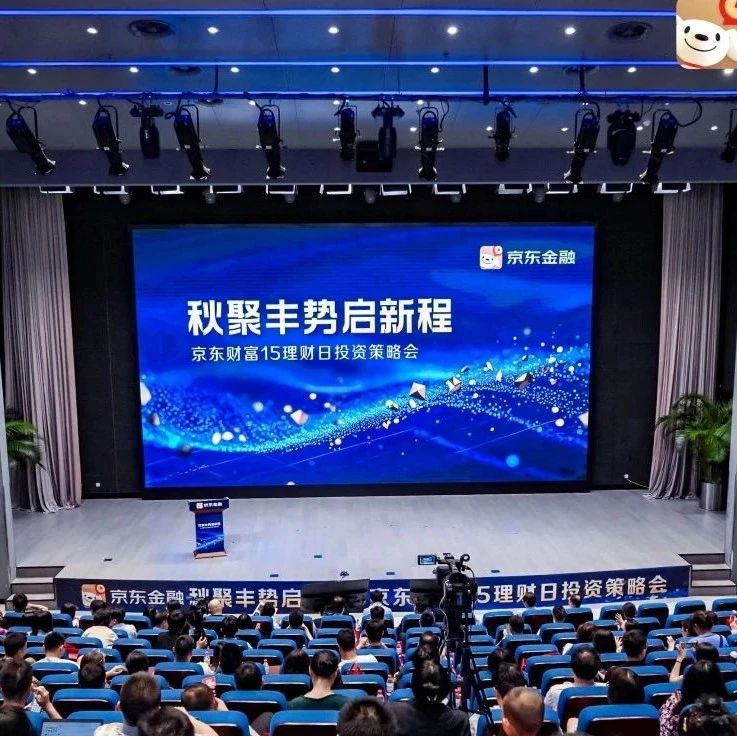
京东金融依托京东肯特瑞基金有限公司,致力于为投资者提供安全、便捷、智能的投资服务。平台汇聚 了市场优质的基金产品,涵盖货币基金、债券基金、混合基金、股票基金等多种类型,满足不同风险偏 好投资者的资产配置需求。 在市场机遇与专业服务的双重推动下,投资者参与基金投资的热情持续升温,京东金融平台基金业务呈 现量质齐升的良好态势。数据显示,截至2025年7月底,京东金融平台基金新增用户数同比增长58%, 基金交易用户数同比增长47%,反映出平台交易活跃度的持续提升。 近日,A股市场延续强势,三大指数均创年内新高,市场交投活跃度显著提升。8月12日,京东金融举 办"秋聚丰势启新程——京东财富15理财日投资策略会",汇聚头部基金公司专家,共同探讨全球资产配 置新机遇与财富管理服务升级路径。京东金融数据显示,平台年轻投资者占比持续攀升,25-35 岁群体 占比40%、18-25 岁群体占比 20%,95后及00后等Z世代成为基金投资增长力量。 投资者热情高涨年轻用户成平台增长主力 深化基金服务转型 构建专业服务生态 京东金融始终坚持"好产品、好服务、好体验"的理念,持续深化基金领域布局,从"基金销售平 台"向"资产配置服务 ...

【资产配置快评】2025年第36期Riders on the Charts:每周大类资产配置图表精粹-20250812
Huachuang Securities· 2025-08-12 11:20
Economic Indicators - The 1-year Federal Reserve Financial Conditions Index (FCI-G Index) dropped to -0.4, the lowest since July of last year, indicating strong monetary policy support for corporate output and employment[9] - The 3-year FCI-G Index fell to -0.7, the lowest since April 2022, suggesting limited necessity for rate cuts compared to last year[9] Market Trends - As of August 8, the S&P 500 Index EPS growth reached 10%, significantly exceeding the expected 4%, reflecting robust U.S. economic growth[10] - Broad dollar speculative positions shifted from short to long, with net long positions reaching 31,000 contracts, the highest since April this year[10] Credit Market Developments - The proportion of banks tightening credit standards for large and medium-sized enterprises decreased from 18.5% to 9.5%, and for small enterprises from 15.9% to 8.2%[21] - The European Central Bank's deposit facility rate was reduced from 2.75% to 2%, yet broad credit expansion remains sluggish, with Eurozone M3 growth dropping to 3.3%, the lowest since September last year[17] Risk Premiums - The equity risk premium (ERP) for the CSI 300 Index is at 5.1%, one standard deviation above the 16-year average, indicating potential for valuation uplift[22] - The 10-year Chinese government bond arbitrage return is at 19 basis points, 49 basis points higher than December 2016 levels, suggesting favorable conditions for leveraged bond market strategies[27] Currency and Commodity Insights - The 3-month USD/JPY basis swap stood at -17.9 basis points, indicating a relaxed offshore dollar financing environment post-tariff adjustments[29] - The copper-to-gold price ratio fell to 2.9, while the offshore RMB exchange rate rose to 7.2, signaling diverging trends in global demand and currency valuation[34]
年轻流量驱动增长:京东金融基金新增用户58% 交易量同比翻倍
Sou Hu Cai Jing· 2025-08-12 10:54
京东金融依托京东肯特瑞基金有限公司,致力于为投资者提供安全、便捷、智能的投资服务。平台汇聚了市场优质的基金产品,涵盖货币基金、债券基金、 混合基金、股票基金等多种类型,满足不同风险偏好投资者的资产配置需求。 在市场机遇与专业服务的双重推动下,投资者参与基金投资的热情持续升温,京东金融平台基金业务呈现量质齐升的良好态势。数据显示,截至2025年7月 底,京东金融平台基金新增用户数同比增长58%,基金交易用户数同比增长47%,反映出平台交易活跃度的持续提升。 从用户结构看,平台基金投资者呈现鲜明的年轻化特征:25-35岁的投资者占比约40%,18-25岁的投资者占比约20%,二者合计占比超半数,成为基金投资 的重要增长力量。 近日,A股市场延续强势,三大指数均创年内新高,市场交投活跃度显著提升。8月12日,京东金融举办"秋聚丰势启新程——京东财富15理财日投资策略 会",汇聚头部基金公司专家,共同探讨全球资产配置新机遇与财富管理服务升级路径。京东金融数据显示,平台年轻投资者占比持续攀升,25-35 岁群体占 比40%、18-25 岁群体占比 20%,95后及00后等Z世代成为基金投资增长力量。 投资者热情高涨年轻 ...


有色金属行业报告(2025.08.04-2025.08.08):关注锂钴等能源金属的投资机遇
China Post Securities· 2025-08-12 09:21
Industry Investment Rating - The industry investment rating is "Outperform the Market" and is maintained [2] Core Views - The report highlights the recent performance of precious metals, with gold rising by 1.24% and silver by 3.79% due to the easing of panic following weaker non-farm data [5] - Copper prices increased by 1.40% this week, benefiting from improved economic sentiment in the US [6] - The lithium market is experiencing a significant price surge due to potential supply constraints, with expectations of prices reaching 65,000 to 90,000 yuan per ton in the near future [7] - Cobalt prices are expected to rise as procurement of high-priced raw materials increases among manufacturers [8] - The rare earth market is showing signs of improvement, with exports increasing by 21.4% year-on-year in July [8] Summary by Sections Section 1: Market Performance - The non-ferrous metal sector saw a weekly increase of 5.24%, ranking third among sectors [17] - The top five stocks in the sector this week included Huaguang New Materials and Ningbo Yunsheng [18] Section 2: Prices - Basic metals saw price increases: LME copper up 1.40%, aluminum up 1.69%, zinc up 3.83%, lead up 1.49%, and tin up 1.17% [20] - Precious metals also saw gains: COMEX gold up 1.24% and silver up 3.79% [20] Section 3: Inventory - Global visible copper inventory increased by 19,482 tons, while aluminum inventory rose by 2,716 tons [33]



《泓湖财富观》第一期:家族信托的“前世今生”
Xin Hua Wang· 2025-08-12 06:15
【纠错】 【责任编辑:刘睿祎】 随着我国经济的快速发展,居民收入持续增加,个人及家庭的财富管理需求迎来爆发式增长。为了 更好保护投资者权益,助力做好财富管理,新华网联合泓湖百世共同打造的投资者教育系列视频访谈节 目《泓湖财富观》上线,节目通过专业、丰富的讲解,为广大投资者普及证券金融、财富管理的专业内 容,并结合市场趋势,对投资者进行资产配置理念、政策法规、投资者权益和责任、风险揭示和防范等 方面的知识普及。 本期泓湖百世全球家族办公室董事长康朝锋分享"信托在家庭理财中的重要作用"话题。 ...
每周大类资产配置图表精粹-20250812
Huachuang Securities· 2025-08-12 05:51
Group 1: Monetary Policy and Economic Indicators - The Federal Reserve's financial pulse growth index (FCI-G Index) for 1-year dropped to -0.4, the lowest since July last year, indicating strong monetary policy support for corporate output and employment[4] - The 3-year FCI-G Index fell to -0.7, the lowest since April 2022, suggesting that the necessity for rate cuts this fall is not as pressing as last year[4] - As of August 8, the S&P 500 index EPS growth reached 10%, significantly exceeding the expected 4%, reflecting robust U.S. economic growth[7] Group 2: Market Positioning and Speculation - Broad dollar speculative net positions shifted from short to long, with net long positions reaching 31,000 contracts, the highest since April this year[7] - The speculative net short positions in S&P 500 mini contracts decreased to 119,000, a two-month low, after a significant increase in July[10] - The overall credit standards of U.S. commercial banks marginally eased, with the percentage of banks tightening credit for large enterprises dropping from 18.5% to 9.5%[15] Group 3: European Economic Conditions - The European Central Bank has cut rates three times this year, yet broad credit and bank lending in the Eurozone have not expanded significantly, with M3 growth dropping to 3.3%, the lowest since September last year[13] - The Eurozone's non-financial corporate credit growth fell to 2.3%, indicating a need for further ECB rate cuts[13] Group 4: Risk Premium and Investment Returns - The equity risk premium (ERP) for the CSI 300 index is at 5.1%, one standard deviation above the 16-year average, suggesting potential for valuation uplift[17] - The forward arbitrage return for China's 10-year government bonds is 19 basis points, 49 basis points higher than December 2016 levels, indicating attractive returns[21] - The total return ratio of domestic stocks to bonds is 25.1, above the 16-year average, enhancing the appeal of equity assets over fixed income[29]
年轻人该如何做好股票投资
Di Yi Cai Jing· 2025-08-12 04:59
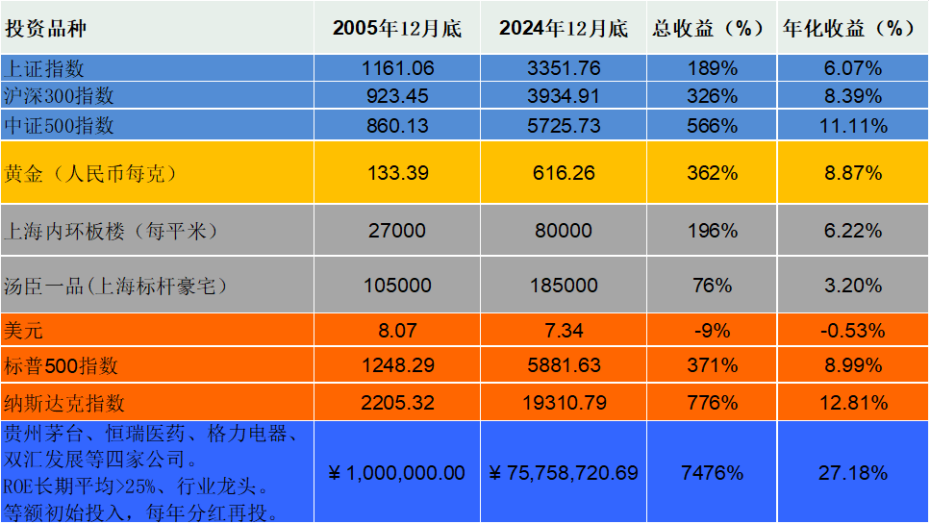
Core Insights - The article emphasizes the importance of selecting good companies, waiting for reasonable prices, and maintaining long-term investments in the stock market [1][9] Investment Returns - Over the past decade, investments in A-shares yielded nearly five times returns, averaging an annualized return of 16%, which is below the target of tenfold returns set ten years ago [1][2] - A 10% annualized return is significantly more beneficial compared to the current bank interest rates of around 2% [2] Investment Approach - The article advocates for a serious approach to stock investment, highlighting that stocks represent ownership in companies rather than mere trading instruments [3][4] - It suggests that understanding financial statements and key performance indicators (KPIs) is crucial for evaluating companies [7] Long-term Investment Strategy - The long-term performance of various investment assets shows that stocks, particularly those of leading companies, provide substantial returns, with some companies achieving an annualized return of 27.18% [6][7] - The article encourages young investors to set clear investment goals and adopt a diversified asset allocation strategy to mitigate risks [8][9] Recommended Investment Practices - Young investors are advised to start with index funds and gradually explore sector-specific ETFs to benefit from different industry growths [9] - The importance of global investment opportunities is highlighted, suggesting that young investors should not limit themselves to domestic markets [9]