关税政策
Search documents
国投期货有色金属日报-20260109
Guo Tou Qi Huo· 2026-01-09 11:36
Report Industry Investment Ratings - Copper: ★★★ [1] - Aluminum: ★★★ [1] - Alumina: ★★★ [1] - Zinc: ★☆☆ [1] - Nickel and Stainless Steel: ☆☆☆ [1] - Tin: ☆☆☆ [1] - Lithium Carbonate: ★★★ [1] - Industrial Silicon: ★★★ [1] - Polysilicon: ★★★ [1] Core Views - The market is concerned about the US Supreme Court's ruling on Trump's reciprocal tariffs, but the impact on copper is limited. The focus is on the US December non - farm employment indicators at night [2]. - Short - term funds are boosting Shanghai Aluminum to hit a record high, with a certain deviation from the fundamentals. Aluminum smelters can consider selling for hedging. Alumina is in significant surplus, and its spot price is under pressure [3]. - Zinc prices have not reached the downstream's psychological price, and the demand may be "not off - season in the off - season" in 2026. Shanghai Zinc is expected to fluctuate in the range of 23,200 - 24,500 yuan/ton [4]. - Shanghai Aluminum is under pressure at 17,800 yuan/ton and is expected to fluctuate in the range of 17,000 - 17,800 yuan/ton [6]. - The stainless steel market is affected by policies, and the social inventory is accelerating to be depleted. The nickel market has entered a shock phase [7]. - Shanghai Tin is in a position of increasing positions and gaming at the 350,000 - yuan mark. It is advisable to hold the 350,000 - yuan short - call option until maturity [8]. - Lithium prices are oscillating at a high level, with strong resilience. The price center is slowly and continuously rising [9]. - Industrial silicon is expected to maintain a weak and oscillating trend, and attention should be paid to the start - up situation in the northwest [10]. - Polysilicon prices are seeking cost support due to policy changes, and participation should be cautious [11]. Summary by Related Catalogs Copper - Shanghai Copper reduced positions and oscillated, recovering losses during the session. The previous option combination strategy can still be held. The domestic copper price is 100,275 yuan, and the Shanghai discount is 45 yuan [2]. Aluminum and Alumina - Shanghai Aluminum increased positions and rose. Spot discounts in some regions narrowed, and the aluminum rod processing fee remained negative. The profit per ton of aluminum soared to around 8,000 yuan. The domestic alumina operating capacity is maintained at around 95 million tons, and it is in significant surplus. The alumina spot price is under pressure, and short - selling on rallies can be considered [3]. Aluminum - SMM 1 aluminum has a discount of 110 yuan/ton to the near - month contract. The import window is still open. The recycled aluminum profit has recovered, and the refined - scrap price difference is 150 yuan/ton. Shanghai Aluminum is expected to fluctuate in the range of 17,000 - 17,800 yuan/ton [6]. Zinc - Zinc prices have not reached the downstream's psychological price, and the spot trading is still light. SMM zinc inventory has risen to 118,500 tons. In 2026, the consumption is expected to be moderately advanced. Shanghai Zinc is expected to fluctuate in the range of 23,200 - 24,500 yuan/ton [4]. Nickel and Stainless Steel - Shanghai Nickel oscillated with active trading. The upstream price has started to rebound. The pure nickel inventory increased by 600 tons to 59,000 tons, the ferro - nickel inventory decreased by 1,000 tons to 29,300 tons, and the stainless steel inventory decreased by 20,000 tons to 873,000 tons. The nickel market has entered a shock phase [7]. Tin - Shanghai Tin increased positions and played around the 350,000 - yuan mark. The spot tin price dropped to 349,750 yuan, with a real - time premium of 2,390 yuan to the delivery month. It is advisable to hold the 350,000 - yuan short - call option until maturity [8]. Lithium Carbonate - Lithium prices are oscillating at a high level with strong resilience. The upstream has a mentality of hoarding goods, and the downstream has a small amount of rigid - demand purchases. The price center is slowly rising, and the market inventory has increased in the first week [9]. Industrial Silicon - The industrial silicon futures opened low and went high, closing slightly down. There is a technical rebound, and there is news of enterprise production cuts. The supply side shows reduced production by large factories in Xinjiang, and low - level operation in Sichuan and Yunnan. The demand side has a decrease in raw material demand from polysilicon and organic silicon. It is expected to maintain a weak and oscillating trend [10]. Polysilicon - Polysilicon futures continued to decline sharply after hitting the daily limit yesterday, with continuous capital outflows. The market expectation has changed, and the price is seeking cost support. Participation should be cautious [11].
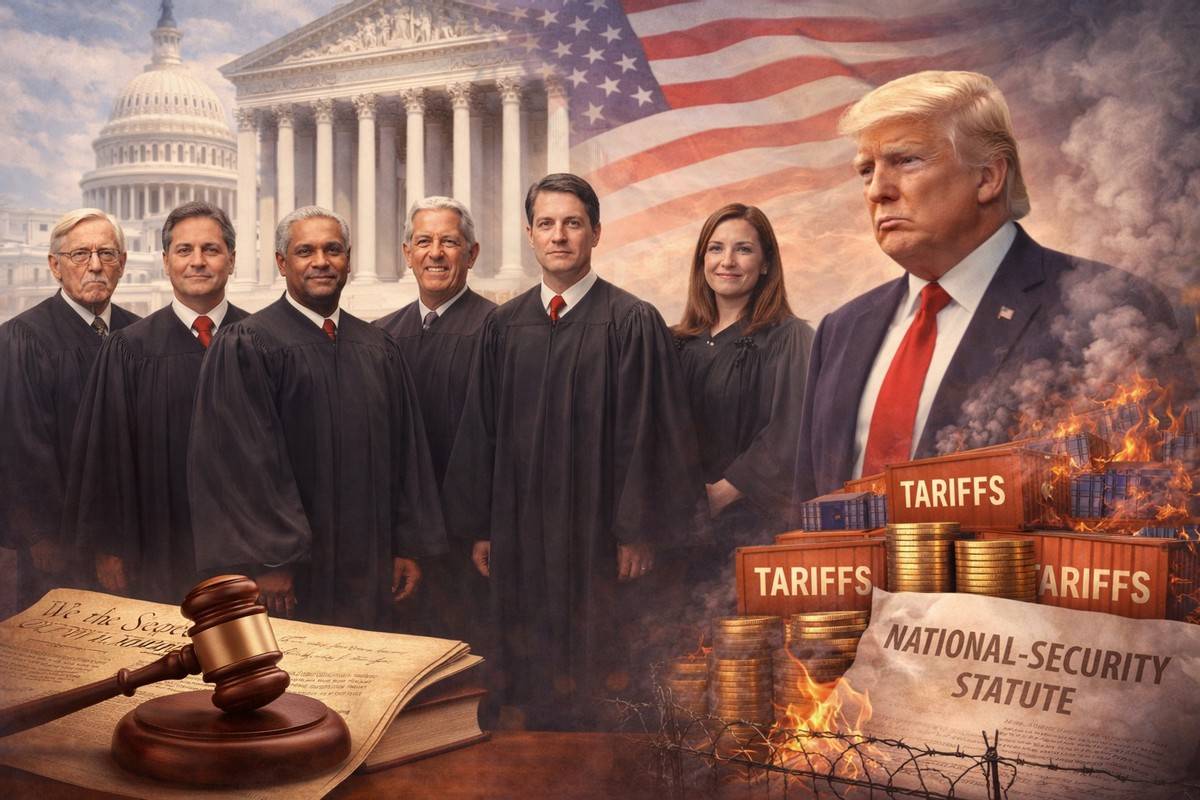
关税裁决交易指南:如果最高法院说“不”,特朗普还有什么牌?
Hua Er Jie Jian Wen· 2026-01-09 11:35
Core Viewpoint - The U.S. Supreme Court is set to make a ruling on tariffs, which is expected to significantly impact market direction, with a focus on potential responses from the White House following the decision [1][3]. Market Reactions - If tariffs are overturned but replaced, the S&P 500 index may initially rise but then decline, while a complete removal of tariffs would benefit consumer and financial stocks but could raise concerns about fiscal deficits, complicating the Federal Reserve's interest rate path [1][3]. - Current market predictions indicate a 24% chance that Trump's tariff policy will be maintained, with analysts expecting a 7:2 or 6:3 majority against the tariffs [1][3]. Sector Analysis - Consumer and retail sectors, particularly companies reliant on imports like Nike and Mattel, are expected to benefit the most if tariffs are lifted [4]. - Financial institutions such as JPMorgan and Goldman Sachs may gain from increased consumer confidence, while transportation stocks could also see positive impacts if tariffs are removed alongside tax cuts [9]. Legal Alternatives - The government has alternative legal avenues to maintain its trade agenda, including the use of various trade laws, although these options may face significant legal challenges [3][7]. - Specific trade laws mentioned include the Trade Expansion Act of 1962 and the Trade Act of 1974, which provide the president with broad powers to impose tariffs but come with limitations and potential legal hurdles [10].
这个周末,大事很多
华尔街见闻· 2026-01-09 09:43
Group 1 - The market is currently facing multiple significant events that could reshape its direction, impacting U.S. stocks, bonds, and precious metals pricing logic [3][4]. - Over 1,000 companies have filed lawsuits against the current tariff policies, seeking refunds totaling up to $100 billion, including major firms like Costco and Goodyear [8][10]. - The U.S. Supreme Court is expected to make a ruling on the legality of the comprehensive tariff plan initiated by former President Trump, with potential implications for corporate profits and government revenue [12][13]. Group 2 - The results of the U.S. "232 clause" investigation regarding key minerals, including silver and platinum, are anticipated to be announced soon, which will directly affect their market dynamics [14]. - If tariffs are imposed, there may be a temporary surge in domestic pricing and futures premiums for these metals, while a lack of tariffs could lead to price corrections as metals flow out of the U.S. [15][18]. - The Bloomberg Commodity Index (BCOM) is undergoing a significant rebalancing, which is expected to exert selling pressure on precious metals, particularly silver, which faces a potential sell-off of up to 9% of total holdings [21][23]. Group 3 - The recent surge in precious metal prices, with gold rising over 70% and silver nearly 150% in 2025, has created a fragile market environment susceptible to liquidity events [29]. - Analysts suggest that the tight inventory situation in London will be a key factor in determining prices, despite the ongoing passive fund rebalancing causing short-term volatility [30].
静待非农和关税裁决!美股期货持平,美元指数冲破99,基本金属铜铝继续攀升
Hua Er Jie Jian Wen· 2026-01-09 08:41
1月9日,亚太股市多数收涨,欧洲股市开盘小幅走高,美股三大股指期货基本持平,投资者静待非农就业数据和美国最高法院的 关税裁决。这将是全球股市自4月关税驱动的下跌后反弹以来面临的最大考验之一。 大宗商品方面,现货黄金徘徊于4470美元关口附近,白银小幅上涨。铜、铝等基本金属周五继续攀升,受到供应担忧与需求乐观 共同推动。 汇市方面,美元兑所有G10货币走强,有望录得自去年11月以来的最佳单周表现。 债市方面,10年期美债收益率上升1个基点至4.18%。美债市场已陷入长达一个月的窄幅震荡,10年期美债收益率在4.1%-4.2%区间 波动,创下2020年以来最窄月度波动区间。 比特币下跌0.2%,至90,994.85美元,以太坊上涨0.1%,至3,120.83美元。 据华尔街见闻文章提及,目前市场共识预期12月新增非农就业约7万人,失业率有望微降至4.5%。货币市场目前预计美联储2026年 将至少降息两次。此外,最高法院最快将于周五就特朗普的大部分关税政策作出裁决。 核心市场走势: 标普500期货、纳斯达克100期货、道琼斯工业平均指数期货几乎持平 MSCI亚太指数上涨0.2%,MSCI新兴市场指数几乎持平; 美元 ...
被中方说准,纸老虎一戳就破,美国传来好消息,特朗普骗了全世界
Sou Hu Cai Jing· 2026-01-09 05:43
Group 1 - The tariff policy promoted by Trump has revealed significant issues, particularly due to severe malfunctions in the U.S. customs system, leading to a halt in the collection of new tariffs [1][3] - The customs system's failure is not an isolated incident but a culmination of long-standing technical problems, exacerbated by budget cuts and staff shortages, which hinder the effective implementation of tariff policies [3][6] - The disconnect between policy design and execution capabilities indicates that Trump's tariff strategy is more of a political stance than a viable policy solution, with the emphasis on rhetoric over practical implementation [6][10] Group 2 - Legal uncertainties surrounding the tariffs, including questions of legality and potential overreach, have emerged, raising concerns for businesses about the stability of the regulatory environment [8][10] - The challenges faced by U.S. customs in managing the influx of small cross-border packages highlight the inadequacies of the current system, which lacks the necessary resources for effective tariff enforcement [13][15] - Despite the escalating rhetoric surrounding tariffs, the actual execution capabilities are diminishing, revealing vulnerabilities in the U.S. administrative system and the limitations of aggressive trade policies [15][17]
美国贸易赤字骤降至16年新低:黄金“回流潮”与进口收缩共塑异常数据
Xin Lang Cai Jing· 2026-01-09 05:35
Core Viewpoint - The U.S. trade deficit significantly narrowed in October 2025, reaching its lowest level in 16 years, primarily due to increased exports and decreased imports [3][7]. Group 1: Trade Deficit Data - The trade deficit decreased from $48.1 billion in September to $29.4 billion in October, a reduction of 39% [3][6]. - October 2025 exports rose by 2.6%, driven by increased shipments of industrial goods and a notable rise in gold exports [7][8]. - The total trade deficit for the first ten months of 2025 reached $782.8 billion, an 8% increase from $726.8 billion in the same period of 2024 [7][8]. Group 2: Import and Export Trends - Imports fell by 3.2% in October, marking the lowest level in nearly two years, with pharmaceuticals showing the largest decline [7][8]. - The reduction in imports is attributed to U.S. companies decreasing purchases after initially increasing them to avoid tariffs [7][8]. - The U.S. has shifted its import sources, reducing imports from China from $363 billion to $266 billion in the first ten months of 2025, compensating by increasing imports from Vietnam, Mexico, Thailand, and European countries [5][8]. Group 3: Economic Implications - If the trend of narrowing trade deficits continues, it could contribute positively to GDP growth in the fourth quarter of 2025 [8]. - However, the decline in imports may also indicate weak consumer demand, which could negatively impact GDP [8]. - Economists suggest that the current trade data does not show significant changes compared to pre-tariff conditions, indicating a need for stabilization [8].
【UNforex财经事件】贸易逆差大幅回落 关税裁决与货币政策变量叠加
Sou Hu Cai Jing· 2026-01-09 04:13
Group 1 - The core point of the article highlights a significant reduction in the U.S. trade deficit in October, dropping to $29.4 billion, which is the lowest level since 2009, deviating from market expectations and adding uncertainty to the macroeconomic environment [1][2][3] - The reduction in trade deficit is attributed to a notable decline in imports and stable exports, indicating a shift in trade flows and corporate behavior following the implementation of tariff policies [1][2] - The improvement in trade data is not comprehensive but concentrated in specific categories, such as increased exports of gold and other metals, while a significant decrease in pharmaceutical imports also contributed to lowering the overall deficit [2] Group 2 - Despite the reduction in trade deficit alleviating some concerns about the "backlash effect" of tariffs, uncertainties regarding trade policies remain, particularly with the U.S. Supreme Court set to rule on the government's authority to impose additional tariffs under the International Emergency Economic Powers Act [2] - Discussions around monetary policy are also sensitive, with U.S. Treasury Secretary Mnuchin indicating that President Trump may finalize the next Federal Reserve Chair selection soon, which could impact market expectations regarding interest rates [2] - Overall, the narrowing trade deficit provides a temporary reference for the effects of tariff policies, but underlying structural changes and policy expectations continue to create uncertainty in the market [3]
【UNforex财经事件】贸易结构短期修复 关税裁决与利率预期再成焦点
Sou Hu Cai Jing· 2026-01-09 04:07
Group 1 - The core point of the article highlights a significant reduction in the U.S. trade deficit in October, dropping to $29.4 billion, which is the lowest level since 2009, providing new insights into macroeconomic conditions amid ongoing tariff discussions [1][2]. - The trade deficit narrowed by nearly 40% compared to the previous month, driven by a notable decline in imports and relatively stable exports, indicating adjustments in trade flows and corporate behaviors following the implementation of tariff policies [2][3]. - The improvement in trade data is not broad-based but concentrated in specific categories, particularly with a significant increase in gold and other metal exports, while pharmaceutical imports decreased, reflecting short-term adjustments in response to high tariffs [3]. Group 2 - Despite the positive trade data, uncertainties regarding tariff policies remain, as the U.S. Supreme Court is set to rule on whether the government can continue imposing tariffs under the International Emergency Economic Powers Act, which could influence future trade policies [4]. - Discussions around monetary policy are also intensifying, with expectations that the next Federal Reserve chair will be announced soon, and current interest rates are perceived to be above neutral levels, indicating potential for policy adjustments [4]. - Overall, while the significant narrowing of the trade deficit provides a temporary validation of tariff effects, the underlying structural changes and policy expectations suggest that market conditions may continue to fluctuate based on these uncertainties [5].
【UNFX财经事件】美国贸易逆差创多年新低 关税效应显现但政策博弈升温
Sou Hu Cai Jing· 2026-01-09 04:07
Group 1 - The core point of the article highlights a significant reduction in the U.S. trade deficit, which fell to $29.4 billion in October, the lowest level since 2009, and a nearly 40% decrease from the previous month, defying market expectations [1][2] - The improvement in the trade deficit is attributed to a notable decline in imports and resilient exports, indicating a rare simultaneous improvement in both areas [1] - The recent trade data reflects adjustments in trade flows due to tariff policies, with companies accelerating the reconfiguration of supply chains and export structures under cost and policy pressures [1][2] Group 2 - The improvement in the trade deficit is not broad-based but concentrated in a few categories, such as a significant increase in gold and other metal exports, while imports of pharmaceutical products decreased, contributing to the lower deficit [2] - Market analysts suggest that the changes observed are more indicative of temporary behavior rather than a fundamental shift in trade trends [2] - The uncertainty surrounding trade policies remains, with the U.S. Supreme Court set to rule on whether the government can impose tariffs under the International Emergency Economic Powers Act, which could impact import pressures [2] Group 3 - In addition to trade factors, monetary policy expectations are also in a sensitive phase, with the U.S. Treasury Secretary indicating that President Trump may finalize the next Federal Reserve Chair selection soon [3] - The current interest rate levels are still significantly above neutral, suggesting an openness to further easing, although most Federal Reserve officials prefer to maintain a wait-and-see approach until more inflation and employment data are available [3] - Overall, the significant narrowing of the trade deficit provides a temporary validation of tariff policy effects, but it is accompanied by structural changes in categories and corporate behavior adjustments, while uncertainties in monetary policy and personnel decisions continue to create market volatility [3]
就在今天!特朗普关税案迎关键裁决,如何影响美国经济及股债?
Feng Huang Wang· 2026-01-09 04:03
Group 1 - The U.S. Supreme Court is expected to rule on the legality of tariffs imposed by President Trump, which could significantly impact trade policy and the U.S. fiscal situation [1] - The ruling will focus on whether the Trump administration had the authority to impose tariffs under the International Emergency Economic Powers Act (IEEPA) and if the government must refund tariffs if deemed illegal [1] - Treasury Secretary Yellen anticipates a compromise ruling, suggesting that the government could still collect tariffs at similar levels even if it loses the case [1] Group 2 - If the tariffs are invalidated, it could negatively affect U.S. industrial repatriation plans and fiscal health, potentially raising interest rates, while benefiting corporate profits by lowering input costs [2] - The probability of the Supreme Court supporting the current tariff policy is only 28%, indicating a strong expectation of a ruling against the tariffs [2] - The Treasury Department projects tariff revenues of approximately $195 billion for FY2025 and $62 billion for FY2026 to date [2] Group 3 - The upcoming ruling is seen as a significant test for U.S. equity and bond markets, with potential long-term uncertainty if tariffs are overturned [3] - Analysts predict that if tariffs are lifted, corporate profit margins may increase, boosting the stock market, while complicating the Federal Reserve's interest rate decisions [3] - A potential economic stimulus from halting tariffs could exacerbate the government's budget deficit, putting pressure on U.S. debt [3] Group 4 - Wells Fargo's chief equity strategist forecasts a 2.4% increase in EBITDA for S&P 500 companies in 2026 if the Supreme Court overturns the tariff policy, likely leading to higher stock prices [4] - Companies heavily reliant on imported goods, such as apparel and toy manufacturers, are expected to benefit the most from tariff removal [5] - Financial institutions may also gain from increased consumer spending, along with industrial manufacturing and transportation sectors benefiting from potential economic boosts [5] Group 5 - Conversely, sectors benefiting from trade protectionism, such as materials and commodities, may underperform if tariffs are lifted [6] - Bond traders are preparing for market volatility, with U.S. Treasury bonds having risen over 6% last year, marking the best performance since 2020 [6] - The removal of tariffs could reignite fiscal concerns, leading to a rise in long-term yields, although the impact is expected to be limited as the Trump administration may seek alternative legal avenues to restore most tariffs [6]