
贸易顺差

Search documents
中国外贸迎来新拐点!5506亿顺差背后,民营企业突围与全球贸易新布局
Sou Hu Cai Jing· 2025-09-20 04:16
Core Insights - China's total import and export value in the first quarter reached 10.3 trillion yuan, a slight increase of 1.3% year-on-year, with exports at 6.13 trillion yuan (up 6.9%) and imports at 4.17 trillion yuan (down 6%) [1][10] Group 1: Private Sector Performance - Private enterprises showed remarkable performance with a 5.8% increase in import and export value, now accounting for 56.8% of the total [3][5] - These enterprises have demonstrated flexibility and rapid response to market changes, allowing them to adapt more quickly than larger, traditional firms [3][5] Group 2: Trade with the United States - The trade surplus with the U.S. reached 550.6 billion yuan (approximately 76.6 billion USD), with exports to the U.S. hitting a record high of 830.4 billion yuan while imports were only 279.8 billion yuan [5][6] - The disparity in trade figures is attributed to the nature of goods traded, with China exporting consumer goods and low to mid-end manufacturing products while importing resource-based and high-tech products from the U.S. [5][6] Group 3: Strategic Shifts in Imports - A strategic shift in import channels has occurred, with a 1.4% decline in imports from the U.S. as China increasingly sources soybeans and natural gas from Brazil and Australia [6][14] - This shift reflects a proactive approach to ensure stable supply and pricing, demonstrating a well-planned response to external pressures [6][15] Group 4: Impact of Tariffs - Despite high tariffs imposed by the U.S., China's exports to the U.S. have not only remained stable but have also increased, highlighting the resilience of consumer demand for Chinese goods [7][8] - The burden of tariffs has largely fallen on American consumers, with estimates suggesting an additional annual cost of 1,800 USD per household due to increased prices [8][20] Group 5: Technological and Resource Resilience - China's advancements in technology, particularly in integrated circuits, and its dominance in rare earth resources are key factors contributing to its economic resilience [9][20] - The interplay between technological innovation and resource management is crucial for maintaining competitive advantages in the global market [9][20] Group 6: Regional Trade Dynamics - Exports to ASEAN countries grew by 8.1% and to the EU by 3.7%, indicating a warming trend in these markets [13][20] - The Regional Comprehensive Economic Partnership (RCEP) has facilitated trade by standardizing rules and reducing costs, benefiting private enterprises that diversify their manufacturing and sourcing strategies [13][20]

马来西亚8月份出口增长放缓
Xin Lang Cai Jing· 2025-09-19 04:35
Core Viewpoint - Malaysia's export growth has slowed in August despite an increase in manufactured and agricultural product exports, raising concerns about future export prospects due to uncertainties related to U.S. semiconductor tariffs and trade measures [1] Export Performance - In August, Malaysia's export value increased by 1.9% year-on-year, reaching 131.6 billion ringgit (approximately 31.36 billion USD), compared to a revised growth of 6.5% in July [1] - The trade surplus for August was 16.13 billion ringgit, an increase from the trade surplus of 14.61 billion ringgit in July [1] Import Trends - Malaysia's imports decreased by 5.9%, amounting to 115.47 billion ringgit [1] Analyst Concerns - Analysts express ongoing concerns regarding Malaysia's export outlook due to the downward risks posed by U.S. semiconductor tariffs and trade measures targeting specific industries [1]
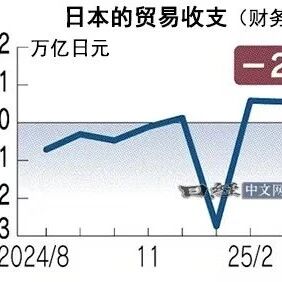
日本8月对美出口额减少13.8%,对华减少0.5%
日经中文网· 2025-09-17 08:00
Core Insights - Japan's trade surplus with the United States decreased by 50.5% in August, reaching 323.9 billion yen, the lowest level since January 2023 [2] - Exports to the U.S. fell by 13.8% year-on-year, marking five consecutive months of decline [2] - The decline in automobile exports to the U.S. is attributed to the ongoing impact of U.S. tariff policies [2] Group 1: Trade Statistics - In August, Japan's automobile exports to the U.S. decreased by 28.4%, amounting to 307.6 billion yen, with export volume dropping by 9.5% to 86,480 vehicles [4] - The average price of exported vehicles fell by 20.9% to 3.55 million yen, remaining below the previous year's level for six consecutive months [4] - Japan's overall trade balance showed a deficit of 242.5 billion yen in August, marking two consecutive months of deficit [4] Group 2: Export Trends - Japan's total exports in August decreased by 0.1% to 8.4251 trillion yen, with exports to China declining by 0.5% to 1.5007 trillion yen, continuing a six-month downward trend [4] - Exports to the European Union increased by 5.5% to 780.4 billion yen, marking the first increase in two months [4] - The increase in exports to the EU was driven by higher demand for engineering and mining machinery, as well as hybrid vehicles [4]
贸易顺差扩大,增速低于市场预期 | 投研报告
Zhong Guo Neng Yuan Wang· 2025-09-17 03:12
Core Insights - In August 2025, China's exports totaled $321.81 billion, a year-on-year increase of 4.40%, which was below market expectations of 5.92% [1][2] - Imports in August reached $219.48 billion, showing a year-on-year growth of 1.30%, down 2.80 percentage points from the previous month, and also below market expectations of 3.26% [1][2] - The trade surplus for August was recorded at $102.33 billion, an increase of 11.77% year-on-year, with the trade surplus for the first eight months of 2025 exceeding 28% year-on-year, surpassing the full-year trade surplus growth of 20.74% in 2024 [1][2] Export Performance - The main driver of export growth in August was the electromechanical products category, contributing 4.51 percentage points to the overall export growth [2] - Key products such as integrated circuits, automobiles and chassis, LCD panels, and ships significantly boosted export growth [2] - Fertilizer and integrated circuits saw both volume and price increases, with fertilizer export volume rising over 21% year-on-year and average prices increasing by 6.6% [3] Market Dynamics - Exports to ASEAN, the EU, and Africa were the top contributors to China's export growth in August, with contributions of 3.40%, 1.58%, and 1.24% respectively [3] - Exports to the U.S. continued to decline for five consecutive months, with a negative contribution of -5.08% to overall exports in August [3] - ASEAN emerged as the largest export destination for China in the first eight months of 2025, with cumulative exports reaching $434.07 billion [3] Economic Context - The overall export growth in August was affected by a combination of domestic economic policies and weakening global demand [4] - The decline in exports to the U.S. was attributed to the expiration of the "rush export effect" from previous tariff delays and ongoing high tariffs imposed by the U.S. [4] - The import demand was also impacted by the slowdown in export growth, reflecting a still unstable recovery in domestic demand [4] Long-term Challenges - The core challenge for China's exports lies in the dual pressures from the U.S., including high tariffs and systematic containment policies that undermine price competitiveness and create supply chain exclusions [5] - The shift from cyclical fluctuations to structural challenges in foreign trade may significantly impact export industries, particularly those heavily reliant on the U.S. market [5]
美国贸易代表:与西班牙讨论了美欧贸易谈判进展
第一财经· 2025-09-16 02:28
Group 1 - The core viewpoint of the article highlights the ongoing discussions between the U.S. and Spain regarding trade relations, particularly in the context of the U.S.-EU trade negotiations, which are seen as stabilizing for both countries [3][4]. - The U.S. Trade Representative, Greer, emphasized the positive trade surplus the U.S. has with Spain, indicating a healthy trade relationship [3][4]. - Spain's Finance Minister, Besent, mentioned the establishment of a trade office in Houston, Texas, as a significant step to strengthen U.S.-Spain relations [3][4]. Group 2 - Since 2022, Spain has shifted to a trade deficit with the U.S., marking a significant change in their trade dynamics [4]. - The article notes that Spain is using the opportunity of U.S.-China trade talks in Madrid to repair its relationship with the U.S., especially after recent tensions regarding Spain's restrictions on Israeli military transport [5][6]. - Spain's Prime Minister, Sanchez, has publicly criticized Israeli military actions and announced measures against Israel, which have led to diplomatic tensions [6].

欧元区7月贸易顺差收窄至124亿欧元 进口增长快于出口
Xin Hua Cai Jing· 2025-09-15 15:18
Core Viewpoint - The latest data from the European Union's statistical office indicates that the Eurozone's trade surplus in July was €12.4 billion, a decrease from €18.5 billion in the same month last year, but slightly above market expectations of €11.7 billion, reflecting ongoing impacts of external demand and changes in the trade environment [1] Trade Surplus and Imports - The Eurozone's trade surplus with the United States decreased from €16 billion to €11.2 billion, influenced by an 11.3% increase in imports and a 4.5% decline in exports [1] - Total imports in the Eurozone rose by 3.1% year-on-year to €239.1 billion, driven by increased purchases in food and beverages (+9.3%), chemicals (+10.6%), and machinery and vehicles (+2.0%) [1] - Imports from China increased by 3.6%, while imports from the UK (+1.0%), Switzerland (+7.3%), and Turkey (+9.0%) also showed upward trends [1] Export Performance - Total exports from the Eurozone saw a slight increase of 0.4% year-on-year, reaching €251.5 billion, supported by growth in food and beverages (+2.8%) and machinery and vehicles (+3.5%) [2] - However, exports of raw materials decreased by 4.7%, while fuel and lubricants exports plummeted by 18.5%, and chemical exports fell by 6.0%, which were significant drag factors on overall export performance [2]
智利锂出口两年来出现首次增长
Shang Wu Bu Wang Zhan· 2025-09-10 15:24
Core Insights - Chile's export value declined again in August, but lithium exports saw their first increase in over two years [1] Export Performance - Total merchandise exports in August amounted to $7.86 billion, a decrease of 1.7% compared to the same month in 2024, marking the lowest level since September of the previous year [1] - Mining exports fell by 1.9% year-on-year to $4.6 billion, with copper exports decreasing by 2.2% to $4.2 billion [1] - Lithium exports increased by 2.4% to $145 million, representing the first growth since March 2023 [1] - Agricultural, forestry, and fishing exports rose by 19.1% to $462 million, while industrial exports declined by 4.2% to $2.8 billion [1] Import and Trade Balance - Total imports grew by 1.6% to $7.48 billion [1] - Chile's trade surplus in August was $906 million, a year-on-year decrease of 24.7% [1]
【环球财经】巴西前8个月出口创新高
Xin Hua Cai Jing· 2025-09-06 01:34
Group 1 - Brazil's total exports in the first eight months reached $227.6 billion, marking a historical high for the same period, with a year-on-year growth of 0.5% [1] - Imports totaled $184.8 billion, leading to a total trade volume of $412.4 billion, which is a 3.2% increase year-on-year, also the highest for the same period in history [1] - In August, Brazil recorded a trade surplus of $6.133 billion, with exports of $29.861 billion (up 3.9% year-on-year) and imports of $23.728 billion (down 2% year-on-year) [1] Group 2 - Exports to China, India, Mexico, and Argentina increased by 31%, 58%, 43.8%, and 40.4% respectively, while exports to the U.S. decreased by 18.5% due to high tariffs imposed during the Trump administration [1] - In August, agricultural and mineral exports grew by 8.3% and 11.3% respectively, while manufacturing exports fell by 0.9% [1] - Cumulative data for the first eight months shows agricultural exports increased by 0.4% to $2.3 billion, manufacturing exports rose by 4.0% to $46.9 billion, while mining exports decreased by 7.2% to $4.01 billion [2]
2025年上半年哥伦比亚与拉美一体会协会成员国实现贸易顺差
Shang Wu Bu Wang Zhan· 2025-09-05 17:28
Core Insights - In the first half of 2025, Colombia achieved a trade surplus of $1.143 billion with members of the Latin American Integration Association (Aladi) despite having a trade deficit with most countries [1] - Panama led the surplus with $1.755 billion, followed by Ecuador and Venezuela [1] - Experts recommend that Colombia should increase exports of non-mineral energy products and leverage the advantages of the Andean Community Free Trade Area and regional industrial chains to further expand its surplus with regional countries [1]
东南亚国别观察2025第5期:出口保持高增长
GUOTAI HAITONG SECURITIES· 2025-09-05 13:13
Economic Trends - Indonesia's exports grew by 11.3% in July, maintaining high growth levels, while imports fell by -5.3%, resulting in a trade surplus of over $4.1 billion[7] - Thailand's retail sales averaged a growth rate of 31.3% over the past five months, despite a slight decline in production in July[12] - Vietnam attracted $11.72 billion in foreign direct investment (FDI) in the first half of the year, marking an 8.1% increase, the highest level for the same period in five years[22] - Malaysia's exports rebounded in July with a growth rate of 6.8%, significantly improving from the previous two months[23] Policy Developments - Indonesia launched the world's largest village-level solar energy project, aiming for a total installed capacity of 100GW over five years[28] - Thailand relaxed electric vehicle policy conditions, leading to a 52% year-on-year increase in new electric vehicle registrations in the first half of 2025[29] - Vietnam abolished its long-standing gold monopoly, allowing commercial banks and qualified enterprises to trade gold freely[31] - Malaysia introduced its first AI processing chip, the MARS1000, to compete in the global AI component market[32] Geopolitical Relations - Thailand's trade promotion department implemented measures to counteract the 19% tariffs imposed by the U.S., including low-interest loans and market expansion initiatives[33] Risk Factors - The report highlights geopolitical risks and economic downturn risks as potential challenges for the Southeast Asian markets[34]