量子计算

Search documents
为全球经济增长带来更多动力(外媒看中国)
Ren Min Ri Bao· 2026-01-26 22:58
Core Viewpoint - In 2025, China's economy demonstrated resilience and growth amid complex domestic and international environments, maintaining its position as the world's second-largest economy and contributing significantly to global economic growth through high-quality development and openness [1][2][3]. Economic Performance - The industrial added value for large-scale industries increased by 5.9% year-on-year, while total goods import and export rose by 3.8% [2]. - Final consumption expenditure contributed over 50% to economic growth, with real per capita disposable income increasing by 5.0%, aligning with economic growth [2]. - China's GDP surpassed 140 trillion yuan for the first time, achieving a year-on-year growth of 5.0% [2][3]. Government Initiatives - The Chinese government implemented various economic stimulus measures, including a trade-in policy for consumer goods, which boosted retail sales of consumer goods [2]. - The government's actions effectively stimulated domestic demand and enhanced national economic confidence [3]. Innovation and Technology - R&D expenditure intensity reached 2.8%, exceeding the OECD average for the first time, indicating a strong focus on innovation [4]. - China made significant advancements in emerging technologies, with notable growth in the production of civilian drones (37.3%), 3D printing equipment (52.5%), industrial robots (28.0%), and new energy vehicles (25.1%) [4]. Global Economic Contribution - China's economic growth is projected to contribute approximately 30% to global economic growth, positioning it as a stable and reliable source of economic momentum [7]. - The country is recognized as a key player in global trade and finance, continuing to enhance its role as a global economic engine [3][7]. Governance and Strategic Planning - The political leadership of the Chinese Communist Party and its long-term planning have created significant advantages for the country's development [7]. - China's governance system emphasizes cohesion, order, and long-term planning, which has been pivotal in its economic success [7].
传IonQ(IONQ.US)豪掷18亿美元收购本土代工巨头SkyWater(SKYT.US) 助力绑定美国防部长期订单
Zhi Tong Cai Jing· 2026-01-26 12:32
由于SkyWater的"美国本土制造"属性,IonQ现在更容易获得美国国防部及安全部门的长期巨额合同。这 种"类国防股"的稳定性是纯技术型公司不具备的。像IonQ这样拥有自有代工厂(通过SkyWater)的公司, 在2026年可能会获得显著的估值溢价。因为它们解决了量子计算商业化最大的瓶颈:供应链自主。 IonQ最近成立了联邦部门(IonQ Federal),收购SkyWater将加强其在支持美国国防部及国家安全项目中的 地位。 IonQ首席执行官Niccolo de Masi表示,这笔交易符合特朗普重振美国芯片制造业的目标。SkyWater自诩 为一家完全位于美国的芯片代工厂,而其同行则大多位于亚洲和欧洲。总部位于马里兰州的IonQ是一 家量子计算硬件和软件公司,是众多希望将这项技术推向主流的公司之一。 SkyWater是美国唯一的纯代工(Pure-play)半导体代工厂。IonQ通过将其收归旗下,获得了受信任的美国 本土生产线,解决了量子芯片(QPU)从设计、原型到大规模量产的供应链风险。 据报道,量子计算公司IonQ Inc.(IONQ.US)已同意收购SkyWater Technology(SKYT. ...


多所高校成果,入选中国十大科技进展
Xin Lang Cai Jing· 2026-01-26 11:15
Core Insights - The 2025 China and World Top Ten Scientific Advances were announced, highlighting significant achievements in various fields of science and technology [2][13]. Group 1: China's Top Ten Scientific Advances - The "artificial sun" EAST achieved a world record of 1 billion degrees Celsius for 1066 seconds, marking a major leap in fusion energy research [14]. - DeepSeek launched a new AI model R1, which matches the performance of OpenAI's models while significantly reducing training costs and being fully open-source [15]. - A thorium-based molten salt reactor was built, achieving thorium-uranium fuel conversion and demonstrating the feasibility of using thorium resources in nuclear energy [15]. - A high-precision AI diagnostic tool for predicting liver cancer recurrence was developed, achieving an accuracy rate of 82.2% and featured on the cover of Nature [16]. - The "North Brain No. 1" wireless brain-computer interface was successfully implanted, enabling patients with speech impairments to communicate effectively [17]. - A novel target for Parkinson's disease was discovered, providing new hope for treatment and drug development [18]. - The "Zu Chongzhi No. 3" superconducting quantum computer was built, outperforming the fastest supercomputers by a factor of 10 trillion [19]. - New hydrogen production technology was developed, eliminating CO2 emissions and achieving high hydrogen yield [20]. - Significant breakthroughs in black soil protection technology were reported, supporting sustainable agricultural practices [21]. - A new ultra-wideband optoelectronic integrated system for 6G communication was developed, enabling high-speed wireless communication across a wide frequency range [22]. Group 2: World Top Ten Scientific Advances - Brain-computer interfaces allow patients to express emotions through speech and song, translating thoughts into language in real-time [23]. - An integrated chip system combining electronics, photonics, and quantum technology was created [23]. - The largest black hole merger event was detected, challenging existing black hole formation models [23]. - The highest energy neutrino ever detected was found, being 20 times more energetic than previous detections [23]. - The first visible "time crystal" was created [23]. - Transgenic pig organ transplants set a new record for survival time [23]. - Ground-based telescopes detected signals from 13 billion years ago [23]. - The largest cosmic map to date was produced [23]. - The most detailed brain map was created, describing numerous neurons and their activities [23]. - "Deep Thinking" announced AI test scores equivalent to gold medal levels in international mathematics competitions [23].


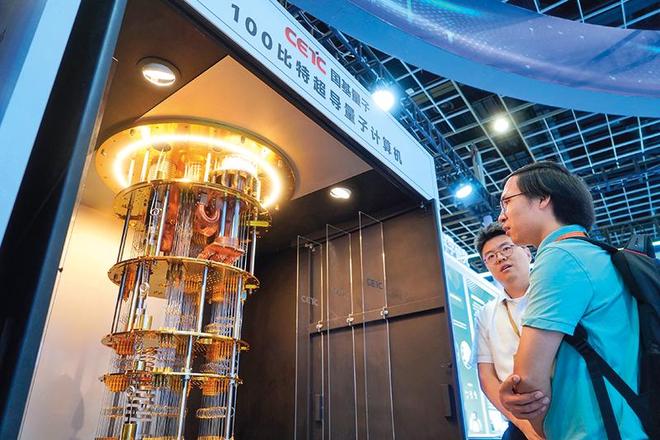
瞭望 | 量子计算突围路线图
Xin Hua She· 2026-01-26 09:44
Core Insights - The global quantum computing competition is intensifying, with countries like the US, EU, and Japan elevating quantum computing to a national strategy, focusing on legislation, substantial investments, and international collaboration [3][4] - China has made significant strides in quantum computing, establishing itself in the first tier of the industry, but faces challenges in technology breakthroughs, supply chain security, and standardization [1][4] - The success of quantum computing depends on building a sustainable, full-stack ecosystem rather than just the parameters of individual machines [1][7] Investment and Strategic Initiatives - The US has invested approximately $6.078 billion over seven years through the National Quantum Initiative Act, while the EU plans to invest around $1.1 billion from 2018 to 2027 under its Quantum Technology Flagship program [3] - Japan has earmarked 1.05 trillion yen for quantum technology, designating 2025 as the "year of quantum industrialization" [3] - South Korea has allocated 198 billion won for quantum technology in 2025, indicating a global trend towards comprehensive breakthroughs in quantum computing [3] Technological Development - The focus is on six core capabilities: quantum chip systems, quantum computing measurement and control systems, quantum computing environmental support systems, quantum operating systems and software, quantum computing cloud platforms, and quantum application software [3][4] - China is advancing its quantum computing capabilities with a focus on "self-controllable" technology, achieving several independent results in the six core capability areas [4][5] Ecosystem and Collaboration - The US and EU are building ecosystems centered around operating systems, with companies like IBM and Google leading the way in standardization and collaboration [4][5] - China's quantum computing cloud platform is rapidly developing, providing low-cost access to quantum computing for various industries, thus promoting application exploration [5][6] Challenges and Barriers - The core technology barriers in quantum computing stem from its high specialization, requiring significant R&D investment and long-term technical accumulation [8][9] - The ecological barriers arise from the interdependence of hardware and software, with leading global companies creating user stickiness and technological moats [9][10] - Standard barriers are critical for industry dominance, with the US and EU actively working on international standards that could dictate future developments [9][10] Future Directions - Experts suggest that China should focus on three essential capabilities: quantum chips, measurement and control systems, and operating systems, to achieve breakthroughs [11][12] - A coordinated national strategy is recommended to foster innovation and industry cultivation, ensuring that China can compete effectively in the global quantum landscape [11][12] - The development of a shared ecosystem between research and industry is crucial for advancing quantum applications in key sectors like biomedicine and finance [12]

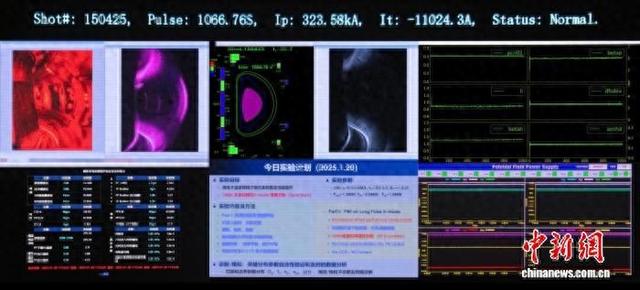
两院院士评出2025中国十大科技进展:“人造太阳”创世界纪录等入选
Xin Lang Cai Jing· 2026-01-26 09:43
Core Insights - The announcement of the 2025 Top Ten Scientific Advances in China highlights significant achievements in various fields, including nuclear fusion, artificial intelligence, and advanced medical technologies [1][9]. Group 1: Nuclear Energy and Fusion - The Chinese "artificial sun" (EAST) achieved a world record by maintaining a temperature of 100 million degrees Celsius for 1066 seconds, marking a significant leap from basic science to engineering practice in fusion energy research [1][3]. - The thorium molten salt reactor, developed by the Shanghai Institute of Applied Physics, successfully converted thorium into uranium fuel, becoming the only operational molten salt reactor utilizing thorium, thus reinforcing China's leadership in this research area [3][5]. Group 2: Artificial Intelligence - DeepSeek, a company established just over a year ago, launched a new generation AI model R1, which matches the performance of OpenAI's models while achieving significantly lower training costs and being fully open-sourced, creating a major impact in the global AI landscape [3]. Group 3: Medical Innovations - A high-precision AI diagnostic tool for predicting liver cancer recurrence, developed by a research team from the University of Science and Technology of China, achieved an accuracy rate of 82.2% and was featured on the cover of Nature, marking a new direction in computational tumor immunology [5][6]. - The "North Brain No. 1" system, a wireless brain-computer interface, successfully helped patients with speech loss due to ALS regain communication abilities, representing a significant advancement in neurotechnology [6]. Group 4: Quantum Computing - The "Zu Chongzhi III" superconducting quantum computing prototype was developed, demonstrating a processing speed that is a trillion times faster than the fastest supercomputers, showcasing significant advancements in quantum computing capabilities [6][8]. Group 5: Hydrogen Production and Environmental Technology - A new hydrogen production method was developed by a team from Peking University, which eliminates carbon dioxide emissions at the source, contributing to zero-carbon hydrogen production [8]. - The "Black Soil Granary" technology campaign achieved breakthroughs in black soil protection, supporting national strategies for sustainable agricultural practices [8]. Group 6: Communication Technology - A joint team from Peking University and City University of Hong Kong developed an ultra-broadband optoelectronic integrated system for 6G communication, enabling high-speed wireless communication across all frequency bands, which will enhance the reliability and intelligence of future wireless networks [8].
太空基建不断加速,持续看好商业航天和卫星产业链
Guotou Securities· 2026-01-26 08:53
Investment Rating - The industry investment rating is "Outperform the Market - A" [4] Core Insights - The importance of aerospace and satellite technology is increasingly recognized, with the acceleration of space infrastructure construction benefiting the related industry chain in the long term [2][12] - The report highlights significant recent developments in the commercial aerospace and satellite industry, including the launch of new satellite networks and rockets, which are expected to enhance the application potential of satellite infrastructure [1][11] - The report suggests focusing on incremental directions in space infrastructure, such as space computing power, 3D printing, terminal direct connection, and inter-satellite connectivity, as well as value-enhancing segments in low Earth orbit satellites [2][12] Summary by Sections Industry Performance - The report indicates that the industry has shown a relative return of 14.7% over the past month, 9.2% over three months, and 23.8% over twelve months, with absolute returns of 16.5%, 11.2%, and 47.4% respectively [6][13] Recent Developments - The report details various recent events, including the launch of the "TeraWave" satellite communication network by Blue Origin, which will consist of 5,408 low Earth orbit satellites, and the successful launch of multiple satellites by different companies [1][11] - It also mentions the approval of policies in Beijing to support the development of commercial satellite remote sensing data resources from 2026 to 2030, indicating a favorable regulatory environment for the industry [1][11] Investment Focus - The report recommends paying attention to companies involved in satellite and space asset management, safety, and applications, as well as those engaged in testing and simulation services [2][12]
eBay禁止AI智能体自动购物丨合规周报(第223期)
2 1 Shi Ji Jing Ji Bao Dao· 2026-01-26 05:31
Group 1: AI Security Discussions - During the Davos World Economic Forum, AI security was highlighted as a core technological risk facing enterprises, with concerns about the rapid proliferation of AI Agents impacting deployment rhythms [2] - EY's Raj Sharma emphasized the need for industrial-grade security systems for AI agents, which currently lack clear identity and tracking mechanisms, contrasting with traditional IT systems [2] - KPMG's Tim Walsh noted that AI has become a central topic in cybersecurity discussions, leading some companies to slow down AI project progress to ensure security systems are robust before data migration [2] Group 2: Meta's AI Role Restrictions - Meta Platforms announced a temporary ban on underage users accessing its AI roles while updating its platform, although they can still use the AI assistant with age-appropriate protections [3] - This decision follows previous measures introduced in October to protect underage users from inappropriate content and sensitive topics [3] Group 3: eBay's Policy on AI Shopping - eBay updated its user agreement to prohibit third-party generative AI from interacting with its platform for automatic shopping without permission, effective February 20, 2026 [4] - This move comes as various AI companies have launched automatic shopping features, highlighting eBay's intent to control AI interactions on its platform [4] Group 4: Douyin's Account Recovery Efforts - Douyin's 2025 governance white paper revealed a 60% increase in the coverage of its "anchor health score" mechanism, with 370,000 accounts being indefinitely recovered for violations [5] - The AI model improved violation handling efficiency by 31%, leading to a 37% reduction in overall violation exposure [5] Group 5: OpenAI's Revenue Growth - OpenAI reported over $1 billion in new annual recurring revenue in the past month, entirely from its API business, marking a significant milestone for the company [6][7] - The growth is attributed to the API team's efforts, indicating a shift from a consumer subscription model to a comprehensive AI service provider [7] Group 6: Apple's Advertising Expansion - Apple confirmed the introduction of more advertising placements in App Store search results starting March 3, 2024, with plans to expand globally by the end of March [8] - This expansion aims to provide advertisers with more opportunities to reach users, as approximately 65% of app downloads occur after a search [8] Group 7: Vivo's AI Glasses Project Cancellation - Vivo has reportedly halted its AI glasses project, which had been in development for six months, due to concerns about differentiation in the current market [9] - Following the cancellation, Vivo will refocus its efforts on mixed reality (MR) technology [9]
【科创之声】3.9万亿元投入厚蓄硬核实力
Sou Hu Cai Jing· 2026-01-25 23:23
39262亿元研发经费、2.8%投入强度,国家统计局近日公布的2025年数据,标注出中国科技发展的新里 程碑——研发经费总量稳居世界第二,研发投入强度首次超越OECD国家平均水平。这3.9万亿元的硬核 投入,展现了中国坚持创新驱动的战略定力,更是中国从科技大国迈向科技强国的坚实底气。 研发投入的持续攀升,是政策引领、市场驱动、主体发力同频共振的必然结果。 要完善成果转化机制。需构建研发成果从高校院所进入产业市场的高效衔接通道,避免技术成果沉睡在 书架上。 创新硬指标不断刷新。我国创新指数跻身全球前十,有效发明专利拥有量突破500万件,PCT国际专利 申请量连续6年领跑全球。 产业升级速度持续提升。2025年,规模以上装备制造业、高技术制造业增加值占规模以上工业增加值的 比重分别达到36.8%和17.1%。智能制造工程扎实推进,智能工厂数量稳步增加,工业互联网融合应用 全面覆盖41个工业大类行业。 新质生产力培育步伐加快。我国在人工智能、量子计算、新能源等领域实现关键突破,部分技术达到国 际领先水平。2025年,人工智能企业数量超过6000家,核心产业规模预计突破1.2万亿元。 尽管成绩斐然,但我国研发经费的投 ...
华尔街见闻早餐FM-Radio | 2026年1月26日
Hua Er Jie Jian Wen· 2026-01-25 23:05
Market Overview - Geopolitical risks are suppressing US stock market gains, with the S&P 500 experiencing its first two-week decline in seven months, while the Dow Jones halted its two-day rise. Goldman Sachs fell nearly 4%, leading the component stocks [2] - The semiconductor index dropped over 1%, with Intel's shares falling 17%, marking its largest decline in 17 months, while Nvidia rose over 1% for three consecutive days. Meta gained over 6% for the week, while Apple fell nearly 3%, marking its longest weekly decline since May 2022 [2] - The US dollar index fell for two consecutive weeks to a five-month low, dropping 1.8% for the week, the largest weekly decline in eight months. The offshore yuan rose over 100 points, breaking 6.95, reaching a two-year high [2] - Precious metals surged, with gold nearing $5,000 and silver surpassing $100 for the first time, both achieving their largest weekly gains since 2020. Copper rebounded over 3%, approaching record highs, while nickel rose over 4% [2] Industry News - The public fund performance benchmark new regulations have been implemented, requiring fund managers to reduce salaries if performance is consistently below benchmarks, with a one-year transition period set [4][17] - The storage market is experiencing significant price increases, with Samsung Electronics reportedly raising NAND prices by over 100% in Q1, following a 70% increase in DRAM prices [11][26] - The commercial aerospace and photovoltaic sectors are witnessing explosive growth, with lithium carbonate surpassing 180,000 yuan per ton, and silver reaching a historical high of 25,000 yuan [3] - The demand for silver is being driven by industrial needs and Chinese buying, as it is increasingly viewed as a critical material rather than a speculative asset [22] Company Updates - Zhongwei Company expects a net profit growth of approximately 28.74% to 34.93% by 2025, driven by a revenue increase of over 36% to 12.385 billion yuan, primarily from etching and thin-film equipment sales [30] - Chip manufacturer Chipone expects a narrowing of annual losses by 25% and a revenue increase of 36%, with AI computing driving a doubling of orders [30] - OpenAI is considering a new revenue-sharing model where it may take a cut from profits generated using its AI technology, which has sparked significant debate [33]

对科技趋势保持敏锐关注深挖阿尔法机会——访宏利成长混合基金经理孙硕
Shang Hai Zheng Quan Bao· 2026-01-25 14:24
Core Insights - The AI computing sector is expected to continue its steady growth until 2026, while the AI application field is still in the technology trigger phase, exploring core technology and application scenario matching [3][9] - Investment focus will shift towards AI applications post-2026 as technology matures and commercial viability becomes a core development theme, but the demand for AI computing will continue to grow alongside application expansion [3][9] - The technology investment landscape is transitioning from a simple beta market to a more complex alpha discovery phase, with significant differentiation in the drivers of corporate earnings and valuation expansion [4][8] Investment Philosophy - The investment strategy emphasizes dynamic adjustments based on market conditions, focusing on high-growth sectors where corporate earnings can exceed expectations, even if stock prices have risen significantly [5] - The observation that high growth often corresponds with low valuations and vice versa is highlighted, suggesting a need to focus on the growth potential rather than merely matching growth with valuation [5] Risk Management - Two key signals are monitored for risk assessment: changes in industry penetration rates and significant shifts in core technology routes, which could lead to industry restructuring and potential risks for certain companies [6] Sector Performance - The A-share technology sector has shown strong performance since 2026, with a notable divergence in the drivers of stock price increases across different sub-sectors [8] - The core driver for AI computing is substantial corporate earnings growth, while sectors like robotics and commercial aerospace rely more on valuation expansion [8] AI Application Development - The AI application sector is still in the early stages, and the expectation for a significant breakthrough in 2026 should be approached with caution, as true disruptive AI applications will represent a new industrial paradigm [9] - Continuous monitoring of specific sub-scenarios is necessary to validate their commercial value as the industry evolves [9] Other Technology Investment Opportunities - Besides AI, other technology sub-sectors such as robotics, autonomous driving, and commercial aerospace are expected to experience significant growth as they reach critical technological and commercial milestones [10] - Emerging fields like quantum computing and brain-machine interfaces are still in the technology trigger phase, requiring long-term investment strategies and close monitoring for clear signals of commercial viability [10]