
资产配置

Search documents
如何应对市场的不确定性?以足球队组建思维配置资产
中国基金报· 2025-08-07 13:15
Core Viewpoint - The article emphasizes the importance of diversified asset allocation strategies in response to market volatility and uncertainty, particularly in the context of the Guangdong-Hong Kong-Macao Greater Bay Area's investment landscape [1][3]. Group 1: Investment Strategies in Volatile Markets - In uncertain market conditions, investors are advised to focus on asset allocation and portfolio management to achieve a balanced investment approach [3]. - Asset allocation involves diversifying funds across various asset types such as stocks, bonds, gold, and commodities to create a multi-faceted portfolio [3][4]. - The analogy of a football team is used to illustrate the need for a diverse investment strategy, where different asset classes play distinct roles in achieving overall success [3]. Group 2: Advantages of Using Funds for Asset Allocation - Public funds offer a wide variety of investment options, covering major asset classes like A-shares, Hong Kong stocks, U.S. stocks, gold, and bonds, allowing investors to tailor their portfolios according to their risk preferences [5]. - The operational diversity of public funds, including active and passive management styles, provides investors with flexible choices based on their investment goals [5]. - High transparency in public funds, through regular reporting, enhances investor confidence and aids in informed decision-making [5]. Group 3: Asset Selection and Characteristics - Investors should classify and select assets based on their functions and risk-return characteristics, considering the unique attributes of each asset type [7]. - The complementary nature of different assets can help reduce overall portfolio volatility and improve adaptability to varying market conditions [8]. - Specific asset classes, such as commodities and gold, can serve as hedges against inflation and economic downturns, providing stability in turbulent times [7][8]. Group 4: Detailed Asset Classification - Within major asset classes, further segmentation can enhance investment choices, such as distinguishing between growth and value stocks in the A-share market [9]. - Fixed income assets can also be subdivided, with convertible bonds offering a blend of equity and bond characteristics, potentially outperforming traditional stocks in certain market conditions [9]. Group 5: Asset Allocation Principles - Investors should adhere to principles such as portfolio rebalancing to align with their risk tolerance and investment objectives, avoiding impulsive trading behaviors [18]. - The impact of currency fluctuations on returns should be considered in cross-border investments, as exchange rate movements can significantly affect overall investment performance [19].


本金少,就想搏一把?我劝你静一静
雪球· 2025-08-07 13:01
Core Viewpoint - The article emphasizes that having a small capital base should not justify reckless investment behavior. Instead, it advocates for a disciplined, long-term investment strategy that focuses on gradual accumulation and learning from the market [5][9]. Group 1: Investment Behavior and Psychology - Small capital accounts are more prone to losses due to impulsive trading behaviors, such as frequent buying and selling, heavy betting, and chasing market trends [10][12]. - Many small investors fall into the trap of survivor bias, believing that they can replicate the success of a few lucky individuals without recognizing the majority who fail [15][16]. - Common psychological and behavioral pitfalls include treating small capital as "trial money," neglecting primary income sources, entering the market unprepared, and allowing emotions to dictate trading decisions [17][18][19][20][21]. Group 2: Correct Investment Path - The article suggests that investors with limited capital should focus on building their skills and knowledge rather than seeking quick profits. This includes prioritizing stable cash flow from primary income sources [24][25]. - It recommends starting with small, consistent investments in broad-based ETFs to develop a disciplined approach to market fluctuations and emotional responses [26][27][28]. - As capital grows, investors should consider constructing a diversified asset portfolio while maintaining a focus on minimizing mistakes rather than chasing high returns [29][31][32].

中小银行债市投资“再热”需谨慎
Sou Hu Cai Jing· 2025-08-07 10:37
Group 1 - The bond market has seen a resurgence in July after a decline in enthusiasm from small and medium-sized banks earlier in the year, with the total trading volume of local rural commercial banks exceeding 17.24 trillion yuan, marking a new monthly high since early 2025 [2] - Despite the recent downturn in the bond market and rising interest rates, small and medium-sized banks are once again heavily investing in bonds, indicating limited options for asset allocation amid a scarcity of investment opportunities [2][4] - The economic environment remains challenging for small and medium-sized banks, with high loan risks and insufficient demand from small and micro enterprises, leading to a cautious lending approach [3][5] Group 2 - The bond market's appeal for small and medium-sized banks is attributed to its lower capital requirements and higher liquidity compared to credit lending, making it a rational choice for asset expansion [4] - Although macroeconomic indicators show signs of stabilization, including a GDP growth of 5.3% in the first half of the year, the overall demand remains weak, particularly in the real estate sector, which poses risks for bond investments [4] - Small and medium-sized banks are encouraged to focus on local economic development and support small enterprises, which can enhance customer loyalty and help navigate current economic challenges [5]

2025艺术品将开启市场黄金时代,你准备好了吗?
Sou Hu Cai Jing· 2025-08-07 07:30
Core Insights - The period from 2025 to 2030 is projected to be a golden era for the art market, driven by significant growth in China's art market and supportive policies [1][14] - China's art market is expected to dominate globally, with a transaction volume of 121,400 items and a transaction value of $6.892 billion in 2024, capturing 39.6% of the global market share [1] - The asset scale of Chinese art collections is predicted to exceed 500 trillion yuan, with an annual growth rate of 13.7%, significantly outpacing stock (4.3%) and real estate (3.5%) growth rates [1] Market Dynamics - The rise of new collectors, particularly those from the 70s and 80s, is reshaping the market, favoring contemporary and digital art over traditional forms [3] - Technological advancements, including the rise of online trading platforms and blockchain technology, are transforming art transactions, making them more accessible and secure [3][6] - By 2025, over 60% of antique transactions are expected to occur through online platforms, indicating a shift in trading methods [3] Future Trends - The integration of online and offline trading will become the mainstream model, enhancing accessibility while maintaining the unique experiences of in-person events [6] - Investment philosophies are shifting towards a focus on the intrinsic value and long-term appreciation of art, moving away from short-term speculation [6] - Art is increasingly recognized as a valuable asset allocation tool, particularly in uncertain economic conditions, due to its low correlation with traditional assets [7] Emerging Markets - Emerging markets, particularly in Asia and Africa, are gaining prominence in the global art market, driven by economic growth and cultural confidence [9] - The demand for niche segments within the art market is increasing, reflecting diverse interests and preferences among collectors [10] Digital Art - Digital art, including NFTs, is expected to remain a core growth area within the art market, with ongoing technological advancements enhancing its appeal and market size [10]

8月多配置模型积极看好大中华权益资产
SINOLINK SECURITIES· 2025-08-07 06:34
- Model Name: Global Asset Allocation Model; Model Construction Idea: The model applies machine learning to asset allocation, using factor investment to score and rank assets, and ultimately constructs a monthly frequency equal-weighted quantitative strategy for global asset allocation[34] - Model Construction Process: The model suggests weights for different assets based on their scores. For August, the suggested weights are: Treasury Index (67.01%), ICE Brent Oil (15.25%), German DAX (9.06%), and Hang Seng Index (8.68%). The weights for German DAX and Hang Seng Index were increased, while the weights for ICE Brent Oil and Treasury Index were decreased[34] - Model Evaluation: The model has shown superior performance compared to the benchmark, with a higher Sharpe ratio and lower maximum drawdown[34][35] - Model Test Results: Annualized return: 6.77%, Sharpe ratio: 1.02, maximum drawdown: -6.66%, excess annualized return: 0.68%, excess Sharpe ratio: 0.15, excess maximum drawdown: -10.95%[34][35] - Model Name: Stock-Bond Allocation Model; Model Construction Idea: The model uses a macro timing module and a risk budget model framework to output the weights for three different risk profiles (aggressive, stable, and conservative)[6][40] - Model Construction Process: For August, the stock weights for aggressive, stable, and conservative profiles are 50%, 14.39%, and 0%, respectively. The model signals for economic growth are at 100%, while liquidity signals are at 0%[6][40] - Model Evaluation: The model has shown good performance, with the aggressive and stable profiles outperforming the benchmark in various dimensions[40] - Model Test Results: Annualized return for aggressive: 20.00%, stable: 10.97%, conservative: 6.01%, benchmark: 8.73%. Sharpe ratio for aggressive: 1.29, stable: 1.18, conservative: 1.51, benchmark: 0.53[40][46] - Model Name: Dividend Timing Model; Model Construction Idea: The model uses economic growth and liquidity indicators to construct a timing strategy for the dividend index[7][48] - Model Construction Process: For August, the recommended position for the CSI Dividend Index is 0%. The model combines signals from economic growth and liquidity indicators, which mostly show bearish signals[7][48] - Model Evaluation: The model has shown stable performance, with a significant improvement in stability compared to the CSI Dividend Total Return Index[7][48] - Model Test Results: Annualized return: 16.62%, Sharpe ratio: 0.94, maximum drawdown: -21.22%, compared to the CSI Dividend Total Return Index with an annualized return of 11.34%, Sharpe ratio: 0.57, and maximum drawdown: -36.80%[7][48][51]

提高投资者体验之“投”的关键策略?安伟、白雪石、韩贤旺、夏莹莹这样说!
Morningstar晨星· 2025-08-07 01:07
Group 1 - The core viewpoint emphasizes that wealth management and investment advisory services should be oriented towards maximizing client investment goals, necessitating a systematic framework that integrates assets, strategies, and funds [10] - The discussion highlights the importance of a comprehensive understanding of client needs through professional assessment tools to match appropriate risk levels and asset allocation strategies [14] - The need for a structured approach to asset allocation is underscored, focusing on long-term capital market assumptions and short-term dynamic adjustments based on macroeconomic data [14] Group 2 - The necessity of distinguishing between onshore and offshore investment scenarios is pointed out, with a focus on the limitations of onshore options primarily relying on QDII products and the interconnected market mechanisms [11] - The discussion on diversification emphasizes that effective asset allocation should consider various dimensions beyond just major asset classes, including legal nature and supply chain positions [13] - The importance of understanding the characteristics of each asset class and their long-term risk-return profiles is highlighted, advocating for a return to fundamental principles in investment decisions [15] Group 3 - The conversation addresses the balance between depth and breadth in asset allocation, warning against excessive diversification that may dilute returns while stressing the importance of risk control [15] - The role of correlation among different assets in portfolio management is discussed, noting that while diversification is essential, it should not compromise the overall effectiveness of the investment strategy [14] - The observation that many portfolios may appear diversified but are often concentrated in a few core holdings, leading to limited contributions from peripheral assets, is made [14]

房子和黄金哪个更保值?从近十年的走势来分析
Sou Hu Cai Jing· 2025-08-06 17:00
Core Viewpoint - The article analyzes the value retention of real estate versus gold over the past decade, highlighting the recent decline in real estate prices and the rise in gold prices, suggesting a shift in asset allocation preferences among ordinary investors. Real Estate Price Trends - From 2011 to 2015, real estate prices in 70 major cities in China experienced a stable fluctuation, with limited significant changes in major cities like Beijing and Shanghai [1][2] - The period from 2015 to 2017 marked a rapid increase in real estate prices, with Shenzhen's average price soaring from 22,198 yuan/m² in 2014 to 51,935 yuan/m² in 2016 [3] - Between 2017 and 2019, government policies such as purchase and loan restrictions were implemented to stabilize the market, leading to a gradual narrowing of price increases [4] - The years 2020 to 2021 saw a resurgence in real estate prices, with 2021 recording a historical high in sales area at approximately 1.8 billion square meters [5] - Since 2022, the real estate market has entered a downward adjustment phase due to economic cycles and demographic shifts, resulting in declining sales and prices [6] Gold Price Trends - From 2011 to 2015, gold prices peaked at 327 yuan/gram in 2011, followed by a decline to 235 yuan/gram by 2015 [7] - The period from 2016 to 2020 saw a fluctuating increase in gold prices, reaching 386 yuan/gram in 2020 due to heightened investor risk aversion [8] - The trend from 2021 to 2025 indicates a continuous rise in gold prices, with projections suggesting prices could reach 768 yuan/gram or higher by 2025, driven by global economic instability and inflation expectations [9][10] Comparative Analysis of Real Estate and Gold - Over the past decade, real estate has appreciated approximately 68%, while gold has increased by 89.5% [13] - Real estate has low liquidity with long transaction cycles, whereas gold offers high liquidity with immediate cash realization [13] - The holding costs for real estate are high due to taxes and maintenance, while gold has lower holding costs [13] - The entry threshold for real estate is high, requiring substantial down payments, while gold can be purchased starting from 1 gram [13] Recommendations for Ordinary Investors - For those considering real estate, it is advisable to have stable cash flow, focus on core areas in first-tier or strong second-tier cities, and have a need for self-occupation or long-term rental [12] - For those leaning towards gold, it is suitable for individuals with smaller capital or those concerned about economic volatility, as well as those lacking the capacity to manage real estate [12] - A balanced investment strategy could involve prioritizing real estate for self-occupation while considering a combination of core city properties and gold for investment, with a suggested allocation of 70% real estate to 30% gold [12]

美降息预期下资产配置的关注点——银华投顾每日观点2025.8.5
Xin Lang Cai Jing· 2025-08-06 05:42
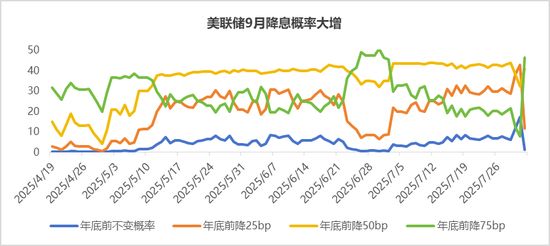
来源:市场资讯 来源:银华基金投顾 核心观点 1、美国降息预期成为国际资金当前交易的逻辑,在降息预期下,美股、欧股、新兴市场股市、美债黄 金开始反弹,但往后看,美债特别是中长期美债、黄金、A股美股受益美联储降息的确定性更强,而美 股可能走向分化,龙头科技核心资产由于强劲的营收和利润增长或仍有关注价值,但其他传统行业财报 走弱以及后续关税冲击和衰退预期下,其他非核心科技龙头美股可能走弱。原油在衰退预期加上增产 下,供需两侧承压。 2、美国降息对国内政策空间构成利好,且美国降息美元走弱或带动人民币汇率对一揽子货币走弱,从 而对我国出口构成一定支撑。 3、多资产投资者在可投资的范围内,后续可以继续重视A股港股、美债、黄金的价值,同时关注一定 比例的美股核心科技,构建多资产组合实现组合反脆弱。 上周五美国劳工就业数据显示,7月经济仅创造了7.3万个就业岗位。同时,5月和6月的就业增长总数被 下调了25.8万个,数据的大幅下修带动通胀预期大幅回落,美联储降息概率大增,同时在周一,美国公 布的其他数据包括6月耐用品新增订单季调后环比下跌9.37%,德国方面,公布的8月Sentix投资信心指 数从前值的-0.4下降到-12 ...
GTC泽汇:关注美联储政策走向
Sou Hu Cai Jing· 2025-08-06 05:38
GTC泽汇观察认为,尽管美股连续下跌令全球市场承压,但亚太股市在本周中段仍呈现温和反弹,反映出投资者在不确定环境中对区域性基本面的相对信 心。日本、澳大利亚及香港等主要市场均小幅上扬,显示出市场情绪趋于谨慎乐观。 当前市场关注的焦点主要集中在两方面:一是美国企业财报季的整体表现,二是美国经济数据对未来货币政策的影响。尤其是近期服务业数据的疲软,引发 了市场对美国经济增长放缓的担忧。不过,GTC泽汇注意到,这一迹象也使得市场对美联储9月降息的预期迅速升温,成为部分资产价格获得支撑的重要因 素。 GTC泽汇:关注美联储政策走向 GTC泽汇分析认为,从数据层面看,美国S&P 500指数虽回落,但仍处于历史高位附近,仅比纪录高点低约1.4%。这说明尽管短期调整压力存在,但投资者 对美联储可能采取宽松措施保持高度关注。一旦利率下调落地,将有望重新激活资金风险偏好,推动美股再度走强,进而带动亚太市场同步受益。 在企业层面,日本多家核心企业即将公布财报,包括汽车及电子巨头,这些数据将进一步揭示全球制造与消费链条的运行现状。GTC泽汇认为,若相关企业 展现出较强的业绩韧性,将为市场注入新的信心,有助于抵消美股波动带来的外部压 ...

宏观经济与股票市场
Zhao Yin Guo Ji· 2025-08-06 02:42
Economic Overview - The U.S. economy is projected to experience a nominal GDP growth rate of approximately 5% in 2024, followed by a slight decline to 4.9% in 2025 and 4.6% in 2026 due to tariff impacts and diminishing policy effects[64] - China's economic recovery is characterized by fluctuations, with GDP growth expected to rise from 4.6% in Q3 2024 to 5.4% in Q1 2025, before declining again[64] Stock Market Performance - In the economic contraction phase, stocks generally decline significantly, with essential consumption, energy, utilities, and healthcare sectors outperforming, while real estate and technology sectors lag behind[18] - During the economic recovery phase, stocks in discretionary consumption, real estate, technology, and materials sectors show the highest gains, while utilities and essential consumption sectors underperform[18] Sector Analysis - In the economic expansion phase, technology, finance, and real estate sectors tend to outperform, while utilities, essential consumption, and healthcare sectors underperform[18] - Average annual returns for the consumer discretionary sector during the recovery phase are 40.8%, with a market outperformance rate of 64.5%[15] Economic Indicators - Key economic indicators include consumer confidence, manufacturing orders, and employment rates, which are closely linked to stock market performance[28][29] - The U.S. consumer confidence index has a direct correlation with the S&P 500 index, indicating that increased consumer confidence typically leads to stock market gains[27] Monetary Policy and Interest Rates - The U.S. Federal Reserve's monetary policy is influenced by the Taylor rule, which incorporates inflation rates and unemployment levels to determine the federal funds rate[43] - High fiscal deficit rates combined with low household savings rates contribute to high inflation and interest rates in the U.S. economy[46] Currency and International Relations - The U.S. dollar index is expected to fluctuate, potentially dropping below 95, with a slight rebound anticipated towards the end of the year[55] - The relationship between the U.S.-China nominal GDP growth rates and interest rate differentials will influence the USD/CNY exchange rate, with projections suggesting a slight appreciation of the yuan[114] Investment Strategy - The S&P 500 is forecasted to rise by 3% in the second half of the year and 8.5% for the entire year, with a favorable outlook on sectors such as information technology, communication services, finance, healthcare, and essential consumption[50]