
价格修复

Search documents
价格阶段性修复,货币政策需保存宽松定力
金融街证券· 2026-01-09 15:26
Inflation Data - December CPI increased to 0.8% year-on-year, the highest in 34 months, up 0.1 percentage points from November[2] - Core CPI remained stable at 1.2% year-on-year, with a slight decrease in the non-gold core CPI to 0.83%[2] Producer Price Index (PPI) Insights - December PPI decreased by 1.9% year-on-year, but the decline narrowed by 0.3 percentage points from November, indicating a substantial improvement[3] - PPI increased by 0.2% month-on-month in December, above the seasonal average of -0.2%[3] - The PPI's tail effect is expected to drop sharply to -1.5 percentage points in January 2026, likely leading to a significant decline in year-on-year PPI data[3] Economic Outlook - The current price recovery is not firmly supported by effective demand, necessitating continued monetary easing and potential policy rate cuts to stimulate investment and consumption[4] - A genuine improvement in prices should stem from enhanced household income expectations and growth in terminal demand, rather than solely relying on low base effects from the previous year[3] Industry Analysis - Downstream industries may face dual pressures from rising raw material costs and stagnant factory prices, risking profit margin erosion, particularly in sectors lacking brand strength[3] - The recovery in PPI for downstream sectors is lagging compared to upstream sectors, indicating a potential risk of downward revisions in profit expectations for Q4[3]
——12月经济数据预测:平稳收官,价格修复或加快
Huachuang Securities· 2026-01-07 10:46
1. Report Industry Investment Rating No information about the industry investment rating is provided in the report. 2. Core Viewpoints of the Report - In December, the economic operation was in the traditional off - season, but factors such as the late Spring Festival and the extended stocking cycle might boost industrial production. The export growth rate might decline slightly but still be better than that in October. The GDP growth rate in the fourth quarter was expected to reach around 4.5%, and the whole - year GDP was likely to achieve 5% and end smoothly [3][6]. - For the bond market, there was little suspense about the economic data in December. The market mainly focused on the verification of the "good start" of the economy at the beginning of the year. With the concentrated implementation of macro - policies to stabilize growth at the end of the year, the "two new" policies were issued one week earlier than in 2025, and the support amount for the early - batch "two important" and central budget - investment plan projects also increased compared with the previous year. January 2026 was expected to be the window for the concentrated effect of the "good start" policies, and high - frequency verification during the data "vacuum period" should be concerned [3]. 3. Summary According to the Directory 3.1 Inflation - CPI: It was expected that the CPI in December would rise to around 0.9% year - on - year. Fruit and vegetable prices supported the food price to rise above the seasonal level, and the non - food item was in line with the seasonality. The CPI was expected to increase by about 0.2% month - on - month [3][6][8]. - PPI: It was predicted that the PPI in December would rise to around - 1.9% year - on - year. The non - ferrous industry faced imported inflation pressure, and the prices of domestic bulk commodities such as steel and PTA improved. The PPI was expected to increase by about 0.2% month - on - month [3][6][14]. 3.2 Export - The export growth rate was expected to be around 5.0% in December. The export momentum in December was not weak, although the year - on - year growth rate of container throughput at ports was lower than that in November but better than that in October. The import was expected to increase by around 1.5% year - on - year, with the price support continuing to expand [3][21]. 3.3 Industrial The industrial growth rate in December was expected to be around 5.1%. The PMI in December returned above the boom - bust line, and the production sub - item further expanded. The late Spring Festival in 2026 extended the stocking cycle, which had a certain driving effect on production [3][6][24]. 3.4 Investment - The cumulative growth rate of fixed - asset investment from January to December was expected to be around - 3.0%. The cumulative year - on - year growth rate of infrastructure investment (excluding electricity) was about - 1.5%, the cumulative year - on - year growth rate of real estate investment was about - 16.7%, and the cumulative year - on - year growth rate of manufacturing investment was about + 1.2% [3][6][33]. 3.5 Social Retail The year - on - year growth rate of social retail in December was expected to be around 1.0%. As the national subsidy funds were approaching the end, the marginal boost to automobile consumption from the subsidy decline weakened. The year - on - year decline in gasoline prices widened, and the drag on social retail from petroleum product consumption continued to increase [3][6][36]. 3.6 Financial Data - In December, the bill interest rate declined against the trend, reflecting the weak credit impulse at the end of the year. The new credit in December was expected to be about 80 billion yuan, slightly lower than the level of 99 billion yuan in the same period of the previous year. The new social financing was about 1.7 trillion yuan, a year - on - year decrease of 58.85 billion yuan [3][6][45]. - The M2 growth rate was expected to remain around 8.0%. The new deposits were close to the seasonal level. From the asset side, the year - on - year growth rate of the credit balance might slightly decline to 6.3%, and the social financing growth rate might decline to around 8.4% affected by the high base of government bonds. From the liability side, the M2 in December might increase by 1.5 trillion yuan [3][48].
国内“反内卷”叠加价格修复下关注航空和快递,海外美联储降息周期下推荐油散及大宗商品供应链
Zhong Guo Neng Yuan Wang· 2026-01-04 01:47
Core Viewpoint - The report from Zhongyin Securities highlights a recovery in domestic CPI and PPI, alongside a continued interest rate cut cycle by the Federal Reserve, suggesting potential investment opportunities in the transportation sector, particularly in aviation and express delivery, as well as in oil and bulk commodity supply chains [1][2][3]. Group 1: Macro and Industry Analysis - Domestic CPI and PPI indices are showing signs of recovery, while the Federal Reserve remains in a rate-cutting cycle [2][3]. - The express delivery industry is experiencing a narrowing of price declines due to ongoing "anti-involution" efforts, with average express delivery prices stabilizing [3][4]. - In aviation, ticket prices have shown significant recovery, with the average domestic ticket price in October 2025 reaching 809 yuan, a year-on-year increase of 7.6% [3][4]. Group 2: Investment Opportunities - Two main investment themes are identified: 1. Opportunities in aviation and express delivery driven by "anti-involution" and price recovery in the domestic market [2][6]. 2. Investment prospects in oil and bulk commodity supply chains during the Federal Reserve's rate-cutting cycle [2][5]. - Recommended companies in the express delivery sector include Jitu Express, Yunda Holdings, and SF Holdings, while in aviation, China National Airlines and China Eastern Airlines are highlighted [6]. Group 3: Bulk Commodity and Shipping Insights - Oil shipping rates have been rising, with OPEC's average crude oil production increasing by 3.4% year-on-year, and significant growth in imports from Brazil [5]. - The bulk shipping sector is benefiting from increased iron ore shipments from Brazil and Australia, with the BDI index showing upward trends [5]. - Major commodity supply chains are entering a replenishment phase, with improvements in the performance of companies like Xiamen Xiangyu [5].
国内“反内卷”叠加价格修复下关注航空和快递,海外美联储降息周期下推荐油散及大宗商品供应链 | 投研报告
Sou Hu Cai Jing· 2026-01-04 01:47
Core Viewpoint - The report from Zhongyin Securities highlights a recovery in domestic CPI and PPI indices, alongside the ongoing interest rate cuts by the Federal Reserve, suggesting potential investment opportunities in the transportation sector, particularly in aviation and express delivery, as well as in oil and bulk commodity supply chains [1][2][3]. Group 1: Macro and Industry Analysis - Domestic CPI and PPI indices are showing signs of recovery, while the Federal Reserve remains in a rate-cutting cycle [2][3]. - The express delivery industry is experiencing a narrowing of price declines due to the ongoing "anti-involution" trend, with a notable improvement in air ticket prices and rising shipping rates in oil and bulk transport [1][2][3]. - The average price of express delivery per ticket in October 2025 was 7.48 yuan, reflecting a year-on-year decline of 3.00%, which is an improvement from the previous month's decline of 4.91% [3][4]. Group 2: Investment Opportunities - Two main investment themes are identified: 1. Opportunities in aviation and express delivery driven by the "anti-involution" trend and price recovery in the domestic market [2][6]. 2. Investment prospects in oil and bulk commodity supply chains during the Federal Reserve's rate-cutting cycle [2][6]. - Recommended companies in the express delivery sector include Jitu Express, Yunda Holdings, and SF Express, while in aviation, China Eastern Airlines and China Southern Airlines are highlighted [6]. Group 3: Sector-Specific Insights - The express delivery sector's growth rate has slowed, with a cumulative year-on-year growth of 16.10% from January to October 2025, and a single-digit growth in October [4]. - The average price of domestic air tickets in October 2025 was 809 yuan, showing a year-on-year increase of 7.6%, marking the best monthly performance of the year [3][4]. - In the oil transport sector, OPEC's average crude oil production from January to November was 27,484 thousand barrels per day, a year-on-year increase of 3.4% [5]. Group 4: Bulk Commodity Supply Chain - The bulk commodity supply chain is entering a replenishment cycle, with significant increases in iron ore shipments from Brazil and Australia, leading to a rise in the BDI freight index [5]. - Major commodity prices are showing signs of recovery, with companies like Xiamen Xiangyu reporting improved performance in the first three quarters [5].
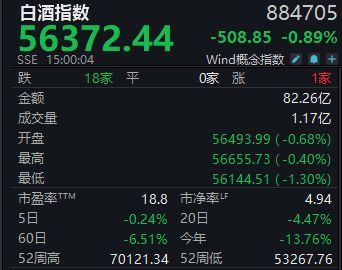
白酒指数周跌0.24%,燕京啤酒年线“翻绿”丨酒市周报
Mei Ri Jing Ji Xin Wen· 2025-12-28 11:29
Group 1 - The core viewpoint of the news highlights the mixed performance of the liquor industry, with the Wind liquor index declining by 0.24% despite a strong rebound from Shui Jing Fang, which saw a weekly increase of 6.87% [1][2] - The beer sector experienced significant declines, with major brands like Yanjing Beer and Huichuan Beer seeing stock price drops exceeding 3% this week, and Yanjing Beer turning from gains to a year-to-date decline of 1.27% [1][4] - The stock performance of liquor companies was varied, with only Shui Jing Fang and Zhen Jiu Li Du showing notable increases, the latter achieving a weekly rise of 10.75% and a year-to-date increase of 34.59% [2][3] Group 2 - Fundamental analysis indicates that leading liquor companies are prioritizing stable operations for 2026, focusing on inventory reduction, price recovery, and demand-driven sales, with upcoming policies for the Spring Festival being key indicators [3] - Yanjing Beer is actively pursuing digital transformation, expanding new retail channels, and enhancing brand marketing to improve its competitive edge, despite recent stock price declines [4][5] - Experts suggest that Yanjing Beer needs to enhance its brand recognition to compete more effectively with Qingdao Beer, as the gap lies in brand awareness rather than product quality [5]




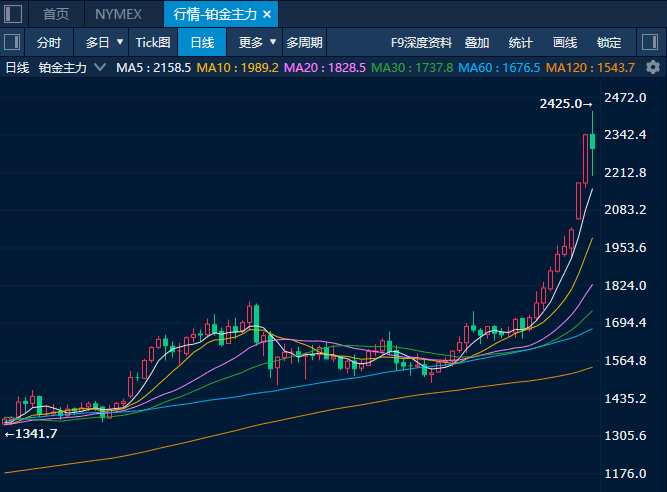
铂钯走势出现分化!铂金低位反弹超15%再创新高 钯金一度触及跌停
Xin Hua Cai Jing· 2025-12-25 10:01
Core Viewpoint - The recent volatility in platinum and palladium futures prices is attributed to regulatory actions, external market pressures, and profit-taking by investors, leading to a significant divergence in their price movements [1][3][10]. Group 1: Market Dynamics - Platinum futures opened significantly lower but rebounded sharply, rising over 15% from intraday lows and closing up more than 4%, while palladium futures experienced a substantial decline, closing down 7.65% [1][2]. - The adjustment in platinum and palladium prices is viewed as a normal price correction after a period of significant increases driven by macroeconomic factors, supply-demand imbalances, and investor sentiment [3][10]. - The liquidity in the market decreased due to the upcoming Christmas holiday, which intensified profit-taking pressures and contributed to the price declines [3]. Group 2: Price Trends and Analysis - Platinum futures reached a new high of 700.9 yuan per gram, while palladium futures fell to a low of 515.65 yuan per gram, indicating a widening price gap between the two metals [6]. - Analysts suggest that the stronger fundamentals and investment attributes of platinum may result in a smaller correction compared to palladium during this downturn [6][10]. - The recent surge in platinum prices has been partially attributed to the significant rise in silver prices, as both metals share similar financial and industrial characteristics [6]. Group 3: Future Outlook - Most institutions predict that platinum and palladium will enter a phase of high volatility and wide fluctuations in the short term, with differing long-term fundamental expectations for each metal [10][13]. - The current domestic prices of platinum and palladium are significantly higher than international prices, particularly with palladium maintaining a high premium, suggesting potential for further adjustments [10]. - In the medium to long term, platinum is expected to have upward potential due to factors such as liquidity easing by the Federal Reserve and a stable demand expansion in both industrial and investment sectors [13]. Conversely, palladium's long-term demand outlook is weaker due to its concentration in automotive applications, which may be affected by the rise of electric vehicles [13].
方正证券:关注2026年白酒企业目标制定 其他烈酒有望出现行业性机会
智通财经网· 2025-12-23 03:57
Group 1 - The core viewpoint is that the liquor industry, particularly the baijiu sector, is undergoing a significant transformation with a focus on inventory reduction and quality improvement, while the beer sector faces challenges due to weak demand recovery [1][2] - The baijiu sector has experienced a three-phase development in 2025, characterized by operational adjustments, deep market corrections, and a trend towards accelerated industry clearing [1][2] - Major liquor companies are prioritizing stable operations for 2026, moving away from aggressive channel growth, and are expected to continue inventory reduction and price recovery as economic conditions improve [2][3] Group 2 - The beer sector has seen a decline in sales volume due to external factors such as weak dining channel performance and restrictions, although average selling prices (ASP) have slightly increased due to cost advantages [2] - The overall revenue growth for the beer sector from Q1 to Q3 of 2025 was low single digits, while profits showed nearly double-digit growth, indicating a disparity between revenue and profit performance [2] - The consumption structure of liquor in China is heavily dominated by baijiu, but there is potential for growth in other liquor categories, particularly whisky and huangjiu, as market dynamics evolve [3]

港股异动 | 中通快递-W(02057)涨超4% 公司单票盈利性领先 机构建议关注快递旺季价格表现
智通财经网· 2025-10-09 07:42
Core Viewpoint - ZTO Express (02057) has seen a significant stock price increase of over 4%, currently trading at 151.4 HKD, with a transaction volume of 421 million HKD, driven by favorable industry developments and policy changes [1] Industry Summary - The "anti-involution" policy has catalyzed positive signals in the express delivery industry, leading to a substantial valuation recovery [1] - In early May, Yiwu's express delivery prices began to show slight recovery, followed by multiple meetings held by the State Post Bureau regarding "anti-involution" in July [1] - Price increases were initiated in early August in South China and in Yiwu by the end of August, with preliminary data indicating a month-on-month price recovery among major e-commerce express companies [1] - Since September, several regions in Central and Northern China have also experienced month-on-month price recovery, suggesting a positive trend as the peak season approaches with Double Eleven [1] Company Summary - Guohai Securities highlighted ZTO Express's significant scale effect and superior single-ticket profitability, which is expected to widen the gap with competitors as product and business structures continue to optimize [1] - The ongoing cost reduction projects across the entire supply chain are anticipated to enhance single-ticket profitability further [1] - In the short term, a strategy focused on balancing volume and price is expected to restore profits and growth, while the long-term outlook remains positive for leading e-commerce express companies due to their strong management capabilities [1]
水牛还是价格修复?
Guoxin Securities· 2025-09-25 05:14
Group 1: Market Dynamics - The core driver of the current rise in equity assets is not due to macro liquidity excess but rather a recovery in risk appetite since the "anti-involution" policy was implemented[5] - The market is primarily driven by internal fund reallocations and leverage rather than large-scale inflows from external funds[5] - The correlation between stocks and bonds has shifted to a "see-saw" effect, indicating that growth factor changes are now dominant, contrasting with the liquidity-driven environment of 2015[13] Group 2: Price Stabilization and PPI Insights - Price stabilization is expected to continue into Q4, supported by significant differentiation in pricing between domestic and external demand[5] - The Producer Price Index (PPI) is influenced by overseas inflation, with a notable divergence between Chinese and U.S. PPI trends[25] - The PPI gap between different industries, such as non-ferrous and ferrous metals, has reached 20%, a historically unprecedented level[25] Group 3: Fund Flows and Market Sentiment - As of September 14, 2025, new equity fund sales reached 42.85 billion units, a significant increase from less than 10 billion units at the beginning of 2024, although still below the peak levels seen in 2015 and 2021[18] - The margin ratio for internal funds reached 294.17% on August 24, 2025, nearing historical peak levels, indicating high leverage in the market[18] Group 4: Future Projections - If capacity utilization rises above 75%, a 1.35% increase is expected, with a corresponding price increase of approximately 1.5% due to the price elasticity of capacity utilization[40] - The stock market's upward trend since September 2024 is compared to the 1999 market rally, suggesting a potential further increase of around 30% if the current trajectory continues[55][58]
多地快递企业涨价
Shang Hai Zheng Quan Bao· 2025-09-23 01:12
Core Insights - The express delivery industry is experiencing a price adjustment, with several companies in regions like Shanghai, Zhejiang, Guangdong, and Fujian announcing price increases starting September 22 [2][4] - Following a meeting by the State Post Bureau in July to address "involution" competition, there is a consensus in the industry to halt price wars, leading to a gradual recovery in per-package pricing [1][2] - Major express companies are leveraging technology such as big data, artificial intelligence, and unmanned vehicles to enhance efficiency and reduce costs [1][5] Price Adjustments - The "Three Links and One Reach" companies (YTO Express, Shentong Express, Zhongtong Express, and Yunda Holdings) along with Jitu Express have initiated price hikes in Shanghai [2] - The price recovery trend has been noted since the second half of the year, with companies like Shunfeng Holdings and YTO Express reporting declines in per-package revenue earlier in the year [2][3] - Specific data shows that in August, Shentong Express's per-package revenue was 2.06 yuan, a 3% year-on-year increase, while YTO Express reported 2.15 yuan, reflecting a 0.07 yuan increase from July [3] Industry Outlook - Experts predict that 2025 will mark a turning point in the express delivery industry's price wars, with expectations of a gradual recovery in prices in the latter half of the year [3] - The shift from a "price for volume" model to a focus on value is becoming evident, as companies report improved revenue figures in August compared to July [3][4] - The upcoming peak shopping seasons are anticipated to further support price recovery and sustainable growth in the industry [1][6] Technological Innovations - Companies are increasingly adopting technological innovations to drive efficiency and reduce costs, with a focus on artificial intelligence and automation [5][6] - Zhongtong Express is implementing AI tools across its operations, enhancing remote management and optimizing delivery routes [5] - Yunda Holdings is utilizing big data for intelligent routing and dynamic scheduling, aiming to lower transportation costs per package [5][6] Future Developments - The integration of unmanned vehicles and drones is expected to transform logistics models in the next 3 to 5 years, enhancing collaboration with delivery personnel [6] - Zhongtong Express has begun commercial testing of unmanned vehicles, deploying over 2,000 units across approximately 700 locations [6] - Yunda Holdings is optimistic about the industry's price adjustments and anticipates a reduction in irrational competition as the peak shopping seasons approach [6]