
去美元化趋势

Search documents
金银价格强势拉涨,相关ETF规模大增,银行“上新”挂钩黄金结构性存款
Xin Lang Cai Jing· 2026-01-13 00:34
Group 1 - The core viewpoint of the article highlights the significant rise in gold and silver prices, with gold reaching a record high of $4,610.68 per ounce and silver increasing over 7% to surpass $85 per ounce, marking historical peaks [1] - Domestic gold ETFs have collectively risen in price, with the largest gold ETF nearing a scale of 100 billion yuan, indicating strong market enthusiasm [1] - Commercial banks are intensifying risk management for gold-related businesses, with several banks launching structured deposits linked to gold [1] Group 2 - Multiple domestic and foreign institutions believe that the long-term performance of gold and silver remains promising due to factors such as the interest rate cut cycle, de-dollarization trends, and industrial demand support [1]
黄金,价格越跌越买?
Sou Hu Cai Jing· 2026-01-02 07:13
Core Insights - The precious metals market is undergoing a structural shift from "financial attributes" to "monetary attributes," with gold and silver price logic being restructured [1] - The issue of U.S. dollar credit is a long-term structural contradiction, exacerbated by the U.S. debt of $38 trillion and high interest payments, undermining the dollar's status as a global reserve currency [1] - Central banks' gold purchasing behavior has shifted from "bottom-line demand" to "active allocation," with 1,037 tons of gold purchased in 2023, accounting for 23.3% of global gold demand [2] Group 1 - The transition in the precious metals market is influenced by the trend of de-dollarization and central bank allocation needs, particularly for gold, which is experiencing a "stepwise upward" price movement [2] - Silver prices have surged over 150% this year, driven by strong demand from the renewable energy sector and declining global inventories [2] - The current gold market does not exhibit a bubble, but prices may experience short-term fluctuations while waiting for new catalysts, such as a clear shift in Federal Reserve monetary policy [3] Group 2 - Investors are advised to view gold as part of asset allocation rather than a short-term speculative tool, with a historical annual compound return of approximately 8% since 1970 [3] - For futures traders, it is recommended to control leverage and extend holding periods to reduce trading costs and avoid excessive pursuit of short-term volatility [3] - The monetary attributes of gold will continue to be highlighted in the context of ongoing credit currency expansion, while silver prices will seek balance between commodity and financial logic [3]
黄金股票ETF(517400)涨超2%,黄金价格或有持续上涨空间
Sou Hu Cai Jing· 2025-12-26 06:31
风险提示:提及个股仅用于行业事件分析,不构成任何个股推荐或投资建议。指数等短期涨跌仅供参 考,不代表其未来表现,亦不构成对基金业绩的承诺或保证。观点可能随市场环境变化而调整,不构成 投资建议或承诺。提及基金风险收益特征各不相同,敬请投资者仔细阅读基金法律文件,充分了解产品 要素、风险等级及收益分配原则,选择与自身风险承受能力匹配的产品,谨慎投资。 12月26日,黄金股票ETF(517400)涨超2%,黄金价格或有持续上涨空间 每日经济新闻 随前期不确定性因素落地,宏观不确定性和避险需求有望支撑黄金价格在高位震荡后重启上行趋势。中 长期"美联储降息周期+海外不确定性加剧+全球去美元化趋势"对于金价依然构成一定支撑。关注直接 投资实物黄金,免征增值税的黄金基金ETF(518800),覆盖黄金全产业链股票的黄金股票ETF (517400)。 申万宏源表示,2026年黄金价格有上涨空间,主要由于美国财政赤字高企和去美元化趋势。战略层面, 黄金供应缺口扩大和需求增加将支撑金价,尤其央行购金量增加。战术层面,需关注美国周期性变化下 的美债利率走势及波动率,预计2026年黄金波动性将提高。定量分析表明,在不同假设下,202 ...
冲破4500美元/盎司!金价创历史新高,地缘风险和美联储降息预期成背后“推手”
Mei Ri Jing Ji Xin Wen· 2025-12-24 12:05
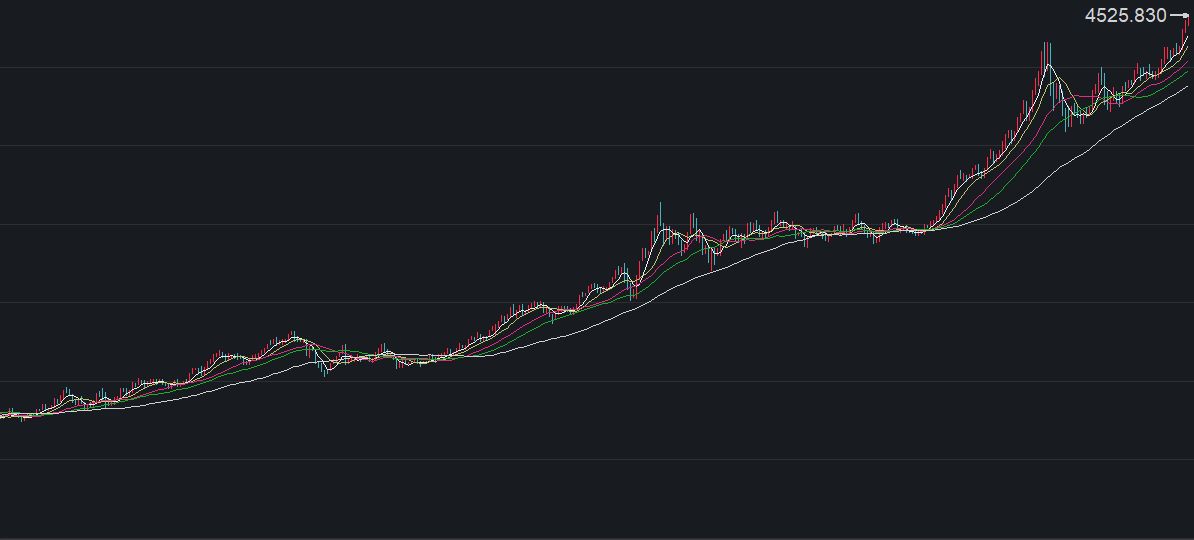
Core Viewpoint - Gold prices have reached new heights, with international gold prices surpassing $4500 per ounce, marking a historical high [1][3]. Group 1: Price Movements - On December 23 and 24, international gold prices broke through $4500 per ounce, with the highest spot price reported at $4525.83 per ounce and COMEX futures reaching $4555.1 per ounce [1]. - Domestic gold T+D also saw a peak at 1016.72 yuan per gram [1]. Group 2: Influencing Factors - The recent rise in gold prices is attributed to geopolitical tensions, particularly the deteriorating situation in Venezuela, which has been a significant driver for the increase [4]. - The U.S. has recently seized oil tankers near Venezuela, contributing to market uncertainty and driving gold prices higher as investors seek safe-haven assets [4]. - The expectation of interest rate cuts by the Federal Reserve, alongside central bank gold purchases and a declining U.S. dollar index, are key factors supporting gold prices [3][5]. Group 3: Economic Context - The U.S. labor market shows signs of cooling, and inflation data has been below expectations, reinforcing signals for potential interest rate cuts by the Federal Reserve in 2026 [4][5]. - The U.S. dollar index has been on a downward trend, falling from around 100 to approximately 98, with a cumulative decline of over 10% this year, which supports gold prices [4][5]. Group 4: Long-term Outlook - The overall environment for precious metals remains favorable due to ongoing expectations of fiscal and monetary easing in the U.S. and other major economies, alongside a sustained trend of central bank gold purchases [6]. - The market's focus has shifted from tariff negotiations to interest rate expectations, with the potential for increased inflation if the independence of the Federal Reserve is compromised [6][7].

金价又创新高,关注黄金基金ETF(518800)
Sou Hu Cai Jing· 2025-12-24 01:25
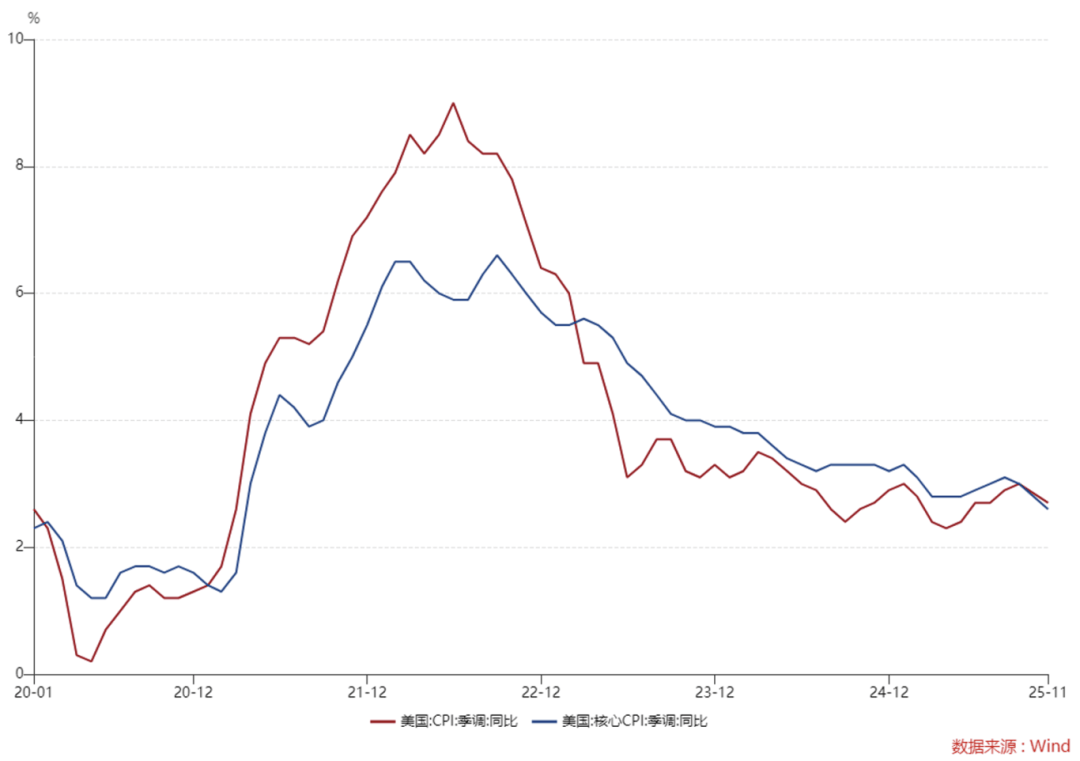
Core Viewpoint - Gold prices have reached new highs, approaching $4,500 per ounce, driven by factors such as liquidity easing, geopolitical tensions, and a trend towards de-dollarization, indicating strong long-term investment potential in gold [1][3] Economic Indicators - The delayed release of the U.S. November CPI showed inflation declining more than expected at 2.7% versus the forecast of 3.1%, with core CPI at 2.6%, significantly below expectations and marking the lowest level since 2021 [1] - The quality of the inflation data is questioned due to the impact of government shutdowns on data collection, with price collection starting only after November 14, missing the full month [1] Market Reactions - Despite concerns about the inflation data's accuracy, the market reacted with cautious optimism, viewing it as a potential catalyst for more interest rate cuts next year, which supports precious metal prices [1] - Recent geopolitical conflicts may increase the premium on gold as a safe-haven asset [3] Central Bank Activity - Global central banks remain strong buyers of gold, ensuring consistent capital inflow into the gold market [3] - As of the end of November, the People's Bank of China held 7.412 million ounces of gold, marking the 13th consecutive month of increased gold reserves [3] - In October, global net gold purchases totaled 53 tons, a 36% increase month-over-month, indicating robust demand [3]
全线大涨!金饰价冲上1403元,白银首破70美元,专家称黄金可能突破5200美元
21世纪经济报道· 2025-12-23 05:32
记者丨 张欣 编辑丨肖嘉 视频丨曾婷芳 见习编辑陈泽锴 延续本周一的上涨热潮,截至12月23日12:43,黄金期货与现货黄金价格双双暴涨并再创历史新高。 其中,COMEX黄金升破4500美元/盎司,年内涨幅超71%;现货黄金升破4485美元/盎司,年内涨幅超70%,两大品种均刷新历史纪录。国内金 价站上千元大关。 | | 你需要屋 | | | | | --- | --- | --- | --- | --- | | 名称 | 现价 | 涨跌 | 涨跌幅 | 年初至今 | | NYMEX铂 | 2211.3d | 121.9 | 5.83% | 142.89% | | NYMEX铝 | 1904.50d | 73.60 | 4.02% | 109.40% | | 现货铂金(美元/盎司) | 2178.90 | 49.20 | 2.31% | 141.03% | | 现货把金(美元/盎司) | 1807.00 | 32.90 | 1.85% | 98.90% | | COMEX自银 | 69.730d | 1.165 | 1.70% | 138.07% | | COMEX黄金 | 4519.2d | 49.8 | ...
黄金重回1000,后市怎么看
2025-12-22 15:47
摘要 央行购金行为是支撑金价的关键因素,类似于大股东回购股票,减少市 场流通量,长期来看,其影响远超地缘政治和美元利率等短期因素。 近期金价上涨可能与特朗普加征关税预期、宽财政和货币政策以及美联 储人事变动等因素有关,但央行购金仍是主导力量,低成本吸纳抛压盘, 使得金价难以下跌。 预计 2026 年一季度美国经济将表现良好,带动风险资产上涨,原因包 括基数较低、美联储降息预期以及疫情数据对计调模型的污染,但央行 购金将继续支撑金价。 虽然美债利率和美元指数走高理论上利空黄金,但自 2024 年以来,这 种关联性减弱,美元强弱不再是主导性变量,央行购金行为将继续支撑 并推高金价。 黄金适合耐心资本,从一年维度看仍处于上涨轨道。最佳策略是买入并 长期持有,不必过多关注短期波动,长期持有最终都会盈利。 即使 2026 年一季度美国经济表现良好、风险资产上涨,也不必过分担 忧,因为央行持续购金行为将继续支撑并推高金价。 黄金重回 1000,后市怎么看 20251222 自 2024 年以来,黄金价格的上涨主要受到中长期因素的推动,其中最核心的 是央行购金和去美元化趋势。央行购金行为自 2022 年第三季度以来成为影响 ...
美联储2026年或放缓降息步伐 黄金、铜等品种仍具备多头配置价值
Qi Huo Ri Bao· 2025-12-16 00:13
Core Viewpoint - The Federal Reserve announced a 25 basis point cut in the benchmark interest rate, aligning with market expectations, bringing the total cuts for the year to 75 basis points, indicating a potential slowdown in rate cuts for the following year [1][2] Interest Rate Decisions - The Federal Reserve's decision to lower the rate to a range of 3.50% to 3.75% marks the third consecutive cut this year, with a total reduction of 175 basis points since September of the previous year [2] - There was a notable dissent among the Federal Reserve officials, with three voting against the rate cut, indicating internal disagreements on the extent of the cuts [2][3] - The updated dot plot suggests a more dovish outlook, with expectations for only one rate cut in 2026 and a long-term rate forecast of 3.0% [4] Economic Outlook - The Federal Reserve's economic projections have become more optimistic, raising GDP growth forecasts for 2025 and 2026 to 1.7% and 2.3% respectively, while slightly lowering inflation expectations [4] - The labor market is showing signs of weakness, with the unemployment rate rising to 4.4%, and private sector job losses reported, particularly among small businesses [7] Inflation Trends - Inflation has remained moderate, with core service inflation decreasing from 4.3% to 3.5% over the first nine months of the year, indicating a potential for continued low inflation levels [8] - The overall inflation trend is influenced by the performance of core services, particularly rent, which lags behind housing prices [8] Future Policy Signals - The Federal Reserve Chairman Powell indicated a pause in rate cuts but left the possibility of a cut in January open, depending on forthcoming economic data [5] - The market is currently pricing in expectations for further rate cuts, with a consensus that the Federal Reserve may lower rates to around 3% in the future [10] Global Monetary Policy Context - The global monetary policy landscape is diverging, with the Federal Reserve in a rate-cutting cycle while other major central banks are on hold or pausing [10][12] - The potential appointment of a new Federal Reserve Chair could influence future monetary policy directions, with current speculation favoring a dovish stance [10][14]
宏观:黄金定价的终极属性是什么?
2025-12-15 01:55
Summary of Key Points from Conference Call Industry Overview - The discussion revolves around the **gold market** and its pricing dynamics, particularly in the context of macroeconomic factors and historical trends. Core Insights and Arguments - **Gold Pricing Attributes**: Gold pricing is influenced by its three attributes: commodity, financial, and monetary, which correspond to inflation, opportunity cost, and credit system risk. The dominant factors vary across different periods [1][2][4] - **Historical Context**: The historical evolution of gold as a safe-haven asset is highlighted, with significant events such as the establishment of the gold standard, the Bretton Woods system, and the subsequent shift to floating exchange rates impacting its valuation [2][3][6] - **Current Market Dynamics**: In the current low-growth, high-debt environment, the risk-free status of the dollar and U.S. Treasuries is being questioned, enhancing gold's appeal as a safe-haven asset [1][7][8] - **Gold Bull Markets**: Three major gold bull markets are identified: - The first (2001-2012) was driven by global risk events and liquidity expansion, with gold prices increasing nearly sixfold [3] - The second (2007-2011) was fueled by the subprime mortgage crisis and subsequent quantitative easing, peaking at $1,900 per ounce [3] - The third (2018-present) is influenced by U.S.-China trade tensions, de-dollarization trends, and geopolitical conflicts, leading to significant increases in central bank gold purchases [3][8] Additional Important Content - **Investment Strategy Shifts**: Post-World War II, non-U.S. economies have shifted their strategies regarding gold and U.S. Treasuries, reflecting a declining trust in the dollar. This suggests a potential return to gold as a universal currency [6] - **Inflation and Gold**: Historical correlations between gold prices and inflation rates are noted, particularly during high inflation periods in the 1970s and 1980s, where gold served as a hedge against inflation [5] - **Future Outlook**: The current geopolitical landscape suggests that gold may be a more favorable investment choice compared to traditional risk-free assets, as the global power dynamics are in transition and technological advancements are still in early stages [7][8]
美元指数震荡迷局 美联储决议将定生死?
Jin Tou Wang· 2025-12-08 02:30
Group 1 - The core focus is on the upcoming Federal Reserve interest rate decision, with the market showing cautious sentiment reflected in the recent fluctuations of the US dollar index [1] - The US dollar index closed at 98.98 on December 5, experiencing a slight decline of 0.07% on that day and a cumulative drop of 0.5% over the past week, marking the second consecutive week of decline [1] - There is significant divergence in market expectations regarding Federal Reserve policy, with a prevailing outlook favoring continued easing; the probability of a 25 basis point rate cut during the December 9-10 meeting is at 87.2% according to the CME FedWatch tool [1] Group 2 - Institutions generally believe the US dollar is overvalued, with Goldman Sachs estimating it to be overvalued by approximately 20%, while Huatai Securities estimates a 15-20% overvaluation [2] - The International Monetary Fund (IMF) indicates that the actual effective exchange rate of the US dollar is overvalued by 10%, influenced by factors such as tariff policies and capital flow reversals [2] - The upcoming global central bank policy announcements are expected to clarify the divergence in monetary policies, with the Bank of Japan's anticipated interest rate hike potentially exerting further pressure on the US dollar [2]