
平价消费

Search documents
算力仍是AI主线!财通基金沈犁:布局成长股,如何追求“年年业绩优”?
Zhong Guo Zheng Quan Bao· 2025-09-21 23:01
Core Insights - The article highlights the investment strategy of Shen Li, a fund manager at Caitong Fund, who has achieved consistent positive returns in the volatile A-share market since taking over the Caitong New Vision Mixed Fund in January 2021, with a return rate exceeding 66% as of September 18, 2023 [1] - Shen Li's investment approach focuses on a balanced strategy that avoids being confined to "growth" or "value" labels, seeking resilient targets in growth and flexible spaces in value [1][2] Investment Strategy - Shen Li categorizes mainstream investment strategies into three types: left-side deep value, right-side thematic trends, and a middle-ground approach focused on cyclical and prosperity research, opting for a non-typical path that leans towards growth within value or vice versa [2] - His strategy emphasizes "dual avoidance," steering clear of excessive pursuit of short-term prosperity and mechanical reliance on static low valuations [2] - A two-layer screening mechanism is employed: a top-down approach requiring industry prosperity to not decline, and a bottom-up focus on key factors such as profitability certainty, growth continuity, and risk-reward ratio [2] Market Outlook - Shen Li perceives the current market as being in a deepening recovery phase, with sentiment indicators returning to normal levels and moving towards optimism, but not yet overheating [5] - He identifies several sectors for potential investment, including AI, which is expected to attract significant capital inflows in the coming years, particularly in hardware [5][6] - The semiconductor industry is seen as entering a second upward cycle, characterized by improved development quality compared to the previous cycle [6] - Companies in the manufacturing sector that have successfully expanded globally are viewed as having undergone a value reassessment, with new competitive barriers established [6] Consumer Sector Insights - Shen Li emphasizes the importance of price-performance ratio in selecting consumer companies, suggesting that the trend of household deleveraging may create structural opportunities for consumption recovery [6] - In the traditional liquor sector, while overall industry pressure exists, leading companies with channel optimization and market share enhancement capabilities are expected to see further valuation recovery post-industry consolidation [6]
「新消费观察」翻台率普遍失守!“海底捞们”遭遇增长瓶颈,集体走在转型路上
Hua Xia Shi Bao· 2025-08-27 08:38
Core Viewpoint - The restaurant industry is facing significant challenges, with major players like Haidilao, Jiumaojiu, and others reporting declines in both revenue and net profit in the first half of 2025, while budget-friendly brands like Xiaocaiyuan and Green Tea Group show stable growth [2][3][4]. Group 1: Financial Performance - Haidilao reported revenue of 20.7 billion yuan, a decrease of 3.7% year-on-year, and a net profit of 1.76 billion yuan, down 13.7% [2]. - Jiumaojiu's revenue was 2.75 billion yuan, a decline of 10.1%, with a net profit of 60.69 million yuan, down 16% [2]. - Other companies like Xianyin and Quanjude also reported declines in revenue and net profit, while Xiaocaiyuan and Green Tea Group saw revenue and net profit growth of over 20% [3][4]. Group 2: Consumer Trends - The consumer environment has shifted towards budget-friendly dining, with average spending per customer decreasing across many brands [3][4]. - Xiaocaiyuan's average customer spending was 57.1 yuan, down 3.3 yuan year-on-year, while Green Tea Group's was 55.5 yuan, down 2.6 yuan [3]. - Haidilao's average customer spending slightly increased to 97.9 yuan, but this is a decline from 104.9 yuan in 2022 [4]. Group 3: Operational Challenges - Key operational metrics like table turnover rates have declined, with Haidilao's dropping from 4.2 to 3.8 times per day [4]. - Same-store sales for major brands, including Haidilao and Jiumaojiu, also showed negative trends, with Xiaocaiyuan's same-store sales declining by 7.2% [4]. Group 4: Strategic Adjustments - Haidilao is adjusting its store strategy by reducing self-operated locations and increasing franchise operations, closing 33 self-operated restaurants while adding 28 franchises [5][6]. - Jiumaojiu has also closed stores, with a reduction in the number of Taier locations by 68, indicating a cautious approach to expansion [6][7]. - Both companies are exploring new growth avenues, with Haidilao launching the "Pomegranate Plan" to develop new restaurant brands [8][9]. Group 5: Future Outlook - The overall restaurant market is experiencing slow growth, with a reported revenue increase of only 4.3% in the first half of 2025 compared to 7.9% in the previous year [7]. - The industry is shifting focus from scale to quality, emphasizing profitability and customer experience over mere expansion [7][9]. - Jiumaojiu's transformation efforts for Taier are still under observation, while Haidilao's new brands face sustainability challenges [9].


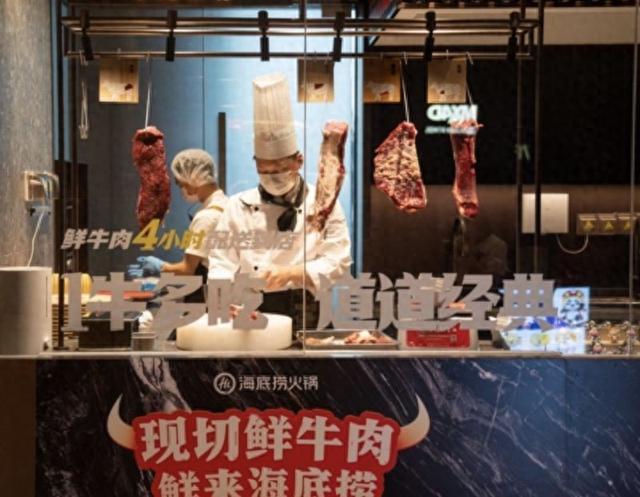
翻台率普遍失守!“海底捞们”遭遇增长瓶颈,集体走在转型路上
Hua Xia Shi Bao· 2025-08-27 08:28
Core Insights - The restaurant industry continues to face significant challenges, with major players like Haidilao, Jiumaojiu, and others reporting declines in both revenue and net profit for the first half of 2025 [2][3][4] - The shift towards affordable dining options has become a mainstream trend, benefiting companies like Xiaocaiyuan and Green Tea Group, which reported revenue and profit growth [3][4] - Key operational metrics such as table turnover rates and same-store sales have declined across many restaurant chains, indicating a tough market environment [4][5] Revenue and Profit Performance - Haidilao reported revenue of 20.7 billion yuan, a decrease of 3.7% year-on-year, and a net profit of 1.76 billion yuan, down 13.7% [2] - Jiumaojiu's revenue fell to 2.75 billion yuan, a 10.1% decline, with net profit dropping to 60.69 million yuan, down 16% [2] - Other companies like Xian Catering and Xiaobai also reported significant losses, with Xian Catering facing over 50 million yuan in losses [2][4] Consumer Trends - The average consumer spending in the restaurant sector has generally decreased, with Xiaocaiyuan's average dining expenditure dropping by 3.3 yuan to 57.1 yuan, and Green Tea Group's by 2.6 yuan to 55.5 yuan [3] - Haidilao's average spending slightly increased by 0.5 yuan to 97.9 yuan, while Jiumaojiu's related brand, Tai Er, saw a 2 yuan increase to 73 yuan, but both are down from 2022 levels [3] Operational Challenges - Table turnover rates have declined, with Haidilao's rate dropping from 4.2 to 3.8 times per day, and Jiumaojiu's Tai Er from 3.8 to 3.1 times [4] - Same-store sales have also decreased across various brands, with Xiaocaiyuan's same-store sales falling from 2.32 billion yuan to 2.16 billion yuan, a 7.2% decline [4] Strategic Adjustments - Haidilao is adjusting its store strategy by reducing self-operated locations while increasing franchise operations, with a total of 1,322 self-operated restaurants, down by 33 [5][6] - Jiumaojiu has closed some of its underperforming stores, with Tai Er's locations decreasing to 566, down by 68 [5][6] - Both companies are exploring new growth avenues, with Haidilao launching the "Pomegranate Plan" to develop new restaurant brands, while Jiumaojiu is upgrading Tai Er's offerings [7][8] Market Outlook - The overall restaurant market is experiencing sluggish growth, with a reported revenue increase of only 4.3% in the first half of 2025 compared to 7.9% in the previous year [6] - Analysts suggest a shift in focus from expansion to quality and profitability, indicating that mere growth in store numbers may not lead to increased profits [6][7]
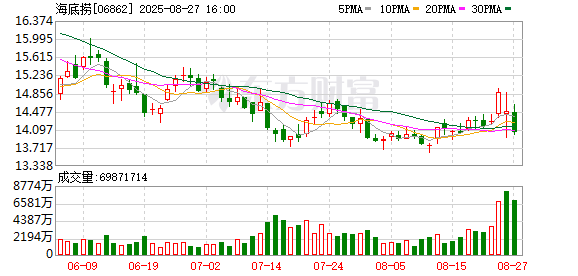
顺势而为但多一分警惕,关注券商和量能两大变量
British Securities· 2025-08-21 01:57
Core Views - The report emphasizes the importance of monitoring two key variables: the performance of the brokerage sector and trading volume, which should remain above 2 trillion to maintain market strength [2][10] - The overall market trend remains positive, supported by macroeconomic recovery and favorable policies, despite potential short-term volatility [4][10] Market Overview - On Wednesday, the market experienced fluctuations, with major indices initially declining before rebounding, leading to a V-shaped recovery, and the Shanghai Composite Index reaching a ten-year high [1][9] - The trading volume exceeded 2 trillion for the sixth consecutive day, indicating strong market activity, although there was a decrease of 300 billion from the peak on Monday [1][9] Sector Performance - The semiconductor sector showed significant gains, with a long-term positive outlook supported by national policy and increasing global demand for AI and high-performance computing [6][7] - Consumer sectors, particularly liquor and food, also saw upward movement, driven by domestic consumption recovery and supportive policies [7][8] Investment Strategy - Investors are advised to adopt a rational and cautious approach, focusing on stocks with strong fundamentals and good technical patterns while being wary of overvalued stocks [2][10] - Attention should be directed towards undervalued sectors with earnings support, maintaining flexibility in trading strategies [10]
在华多地关店!无印良品遭遇十面埋伏,“日系白月光”失色
Hua Xia Shi Bao· 2025-08-20 14:28
Core Insights - MUJI is experiencing a wave of store closures in China, including its Beijing Shimao Gong 3 store, which is set to close by August 31, 2025, amidst a changing consumer landscape that favors affordability over premium pricing [1][2] - The brand, which has been a symbol of quality for middle-class consumers since entering the Chinese market in 2005, is now facing intense competition from local brands and online channels that offer lower prices [1][3] Store Closures - The closure trend is not isolated to the Beijing Shimao Gong 3 store; other locations in cities like Shanghai, Changsha, and Suzhou have also announced closures [2] - MUJI has stated that despite the closures, it has opened 19 new stores in mainland China since 2025, maintaining a net growth strategy [2] Market Performance - As of August 18, 2023, MUJI operates 421 stores in mainland China, making it the second-largest market after Japan [3] - The East Asia division of MUJI reported a revenue increase of 14.1% for the nine months ending May 31, 2025, with profits rising by 27.5% [4] Pricing and Competition - MUJI's pricing strategy in China is perceived as high-end compared to its original positioning in Japan, which has led to a mismatch with current consumer trends favoring lower prices [4][5] - Local competitors like Miniso and Xiaomi have rapidly expanded, with Miniso reaching 7,488 stores globally, further intensifying the competitive landscape [5] Future Strategy - MUJI acknowledges the shift in consumer behavior towards quality and purpose-driven purchases, planning to enhance product quality and service competitiveness [5] - The company aims to open approximately 40 new stores annually, focusing on first, new first, and second-tier cities, while also considering potential in third-tier cities [5]
英大证券晨会纪要-20250811
British Securities· 2025-08-11 02:22
Market Overview - The market is currently experiencing a phase of consolidation, with the Shanghai Composite Index reaching new highs but failing to maintain those gains, indicating a need for time and space to digest recent movements [3][4][5] - The market sentiment is cautious, with a notable divergence between indices, particularly a stronger Shanghai index compared to weaker Shenzhen and ChiNext indices, reflecting internal market discrepancies [4][20] - Trading volume has decreased, with a total turnover of approximately 1.7 trillion, suggesting a lack of enthusiasm for chasing higher prices, which may hinder the ability to initiate a new upward trend [4][20] Sector Performance - Traditional sectors such as cement, engineering machinery, and hydropower have shown strong rebounds, while AI application sectors have collectively declined, negatively impacting market sentiment [3][19] - The military industry has seen significant gains, with a notable increase in stock prices, supported by government policies and geopolitical tensions that may act as catalysts for further growth [11][12] - The robotics sector has also experienced substantial growth, with a 60% increase in related stocks since early January, although a recent pullback suggests caution is warranted [12] - Precious metals have risen due to factors such as the onset of a rate-cutting cycle by the Federal Reserve and increased geopolitical tensions, which have driven demand for gold as a safe-haven asset [14] - The semiconductor sector remains a focal point for investment, with expectations of continued growth driven by government support and rising global demand for AI and high-performance computing [16] Investment Strategy - The report emphasizes the importance of selecting stocks with high certainty in performance and reasonable valuations, particularly those benefiting from policy support or industry trends [5][21] - Investors are advised to focus on sectors with structural opportunities, such as semiconductors, AI, and healthcare, while being cautious of stocks that have risen significantly without strong fundamental backing [5][21] - The outlook for the A-share market suggests a "slow bull" trend, with structural opportunities requiring enhanced stock-picking skills and timing [5][21]
全市场风格猎手,解码鹏华王子建的“三叉戟”投资哲学
Zhong Guo Jing Ji Wang· 2025-08-08 03:18
Core Viewpoint - The A-share market in 2025 is experiencing a divergence between technological growth sectors like artificial intelligence and innovative pharmaceuticals, and traditional economic recovery assets, posing unprecedented challenges for fund managers in terms of industry coverage and strategy flexibility [1] Group 1: Market Performance - As of July 16, 2025, the net value of fund products in the market has doubled, with many funds achieving over 30% returns, primarily driven by concentrated positions in one or two popular sectors [1] - The performance of funds is characterized by a "single bet" approach, which can lead to rapid gains but also quick losses, highlighting the scarcity of diversified market players [1] Group 2: Fund Manager Strategy - Wang Zijian, a fund manager at Penghua Fund, has successfully built a comprehensive market capability by adapting to different market environments, achieving a net value growth rate of 32.18% for Penghua Vision Select A in the first half of 2025 [2] - The fund's net value increased from 0.9575 yuan at the beginning of 2025 to 1.5801 yuan by August 6, 2025, reflecting effective market timing and strategic adjustments [2] Group 3: Investment Philosophy - Wang Zijian emphasizes that investment portfolios should reflect significant global changes, utilizing a flexible strategy based on industry comparisons to capture marginal changes [3] - His approach includes assessing the cyclical position of industries, identifying major marginal changes, and quantifying the upward potential of sectors, particularly those at historical valuation lows [3] Group 4: Portfolio Management - The portfolio of Penghua Vision Select A shows a clear all-market style with a low concentration in the top ten holdings, spanning over five industries, and has recently focused on innovative pharmaceuticals to capitalize on valuation recovery [4] - Wang Zijian prioritizes risk control over generating returns, avoiding stocks with significant financial flaws or governance risks, and emphasizes thorough research before adding stocks to the portfolio [4] Group 5: Future Outlook - Looking ahead, Wang Zijian aims to continue delivering excess returns for investors, focusing on long-term opportunities in innovative pharmaceuticals, robotics, and artificial intelligence, while also monitoring sectors like military trade and nuclear fusion for potential growth [5]
英大证券晨会纪要-20250731
British Securities· 2025-07-31 02:01
Market Overview - The A-share market is currently experiencing a consolidation around the 3600-point level, with structural opportunities remaining abundant despite some divergence in index performance [2][11] - The market showed resilience with a rebound in the afternoon session after a brief drop, indicating strong market support and a lack of panic selling [3][12] Technical Analysis - The Shanghai Composite Index remains above the 3600-point mark, with short-term moving averages in a bullish arrangement, suggesting that the upward trend is still intact [3][12] - The market is expected to face significant resistance at the previous high of 3674 points, which is a psychological and technical barrier with many trapped positions and cautious funds [12] Sector Performance - The shipbuilding sector saw significant gains due to a merger approval that eliminates competition between two listed companies, highlighting China's competitive advantages in shipbuilding [7] - Consumer stocks, particularly in tourism, food and beverage, and dairy, are gaining strength, driven by domestic consumption recovery and supportive policies [8] - Agricultural stocks, including aquaculture and dairy, are also performing well, benefiting from the emphasis on domestic circulation and food security [8] Investment Strategy - Investors are advised to control their positions and avoid chasing high-flying stocks, focusing instead on sectors that are lagging behind [4][11] - Quality growth stocks and blue-chip companies should be considered for accumulation during market pullbacks [4][12] - The market is anticipated to exhibit a "slow bull" pattern in the medium term, driven by favorable tariff negotiations and improved liquidity conditions [4][12]
广东人最捧场的萨利亚,又偷偷涨价了
创业邦· 2025-07-19 10:20
Core Viewpoint - SAIZERIYA, a Japanese Italian restaurant chain, is significantly increasing its investment in the Chinese market, establishing new subsidiaries and expanding its presence in various cities, particularly in Central China [4][5][6]. Group 1: Company Expansion - SAIZERIYA announced the establishment of a wholly-owned subsidiary in Wuhan with a registered capital of 3 billion yen (approximately 147 million yuan) to manage its restaurants in the city [4]. - The company is also setting up a new parent company in China, with a registered capital of about 300 million yen (approximately 15 million yuan), aimed at managing all SAIZERIYA outlets in China [4]. - As of now, SAIZERIYA has nearly 500 stores in China, with a significant concentration in Guangdong, where the Guangzhou branch manages 222 restaurants [6][8]. Group 2: Financial Performance - For the fiscal year 2025, SAIZERIYA reported a sales revenue of 188.34 billion yen (approximately 9.09 billion yuan), a year-on-year increase of 15.4%, with a net profit of 7.78 billion yen (approximately 376 million yuan), up 50.4% [9]. - The Asian segment, primarily driven by the Chinese market, generated sales of 63.06 billion yen (approximately 3.05 billion yuan), reflecting a 10.5% increase and accounting for over 30% of SAIZERIYA's total revenue [9]. Group 3: Market Strategy - SAIZERIYA is aggressively expanding into lower-tier cities, having opened its first stores in places like Zhaoqing and Jiangyin this year, and aims to penetrate the Central China market with the new Wuhan subsidiary [13]. - The company plans to invest approximately 30 million USD (about 215 million yuan) in a new factory in Guangzhou to support its expansion, with the goal of increasing its store count to 1,000 in China [15]. - Despite the expansion, SAIZERIYA has faced challenges in profitability, with a 5.4% decline in operating profit for the Asian segment, indicating that the push for growth may be impacting margins [15]. Group 4: Pricing Strategy - SAIZERIYA has begun to increase menu prices after previously stating it would not do so, with price hikes of 1-2 yuan on various dishes due to rising raw material costs [16]. - Specific price increases include the garlic chicken bacon cheese baked rice, which rose from 18 yuan to 19 yuan, and the truffle chicken cheese baked rice, which increased from 20 yuan to 21 yuan [16].
英大证券晨会纪要-20250521
British Securities· 2025-05-21 03:01
Core Views - The report indicates that the recent 10 basis points reduction in the Loan Prime Rate (LPR) is expected to stimulate consumption and economic recovery, which is favorable for the A-share market [3][9][11] - The market is experiencing a collective rise, driven by consumer policies and the anticipation of the 618 shopping festival, particularly benefiting sectors like beauty care and retail chains [3][9][10] A-share Market Analysis - On May 20, the LPR was lowered for the first time this year, with both the 1-year and 5-year LPR down by 10 basis points, alongside a reduction in deposit rates by major banks, signaling further liquidity easing [3][9][11] - The market showed collective gains on Tuesday, with significant activity in beauty care and retail sectors, reflecting a positive response to consumption policies [3][9][10] - Despite the overall market rise, there is a divergence in high-priced stocks, indicating potential volatility and a continuation of a fluctuating market pattern [4][10] Sector Performance - The beauty care sector saw substantial gains, driven by ongoing government support for consumption upgrades and increasing consumer demand for beauty products [7][9] - Consumer stocks remain active, with food and beverage sectors continuing to perform well, suggesting that domestic consumption will be a key driver for economic recovery in 2025 [7][9] - The cultural media sector is also on the rise, with advancements in AI technology benefiting downstream applications in gaming and media, indicating a positive outlook for these industries [8][9] Investment Strategy - The report advises caution against blindly chasing high-performing stocks and suggests gradually reducing positions in stocks that have seen significant gains [4][5] - It emphasizes focusing on high-quality stocks with stable performance and reasonable valuations, particularly in sectors like technology growth and consumer recovery [4][10] - The report highlights the potential for mergers and acquisitions as a theme for investment, recommending early positioning in stocks with restructuring expectations [4][10]