
成长板块

Search documents
好消息!A股,分钱了!
Sou Hu Cai Jing· 2025-10-23 05:08
Core Viewpoint - The increasing trend of mid-term dividend announcements among A-share companies reflects a shift in the Chinese capital market towards balancing financing and shareholder returns, indicating improved corporate profitability and cash flow [4][5][6]. Group 1: Dividend Announcements - Wens Foodstuff Group plans to distribute a cash dividend of 3 yuan per 10 shares, totaling 1.994 billion yuan [1]. - A total of 13 companies, including Jinning Mining and Yanjing Beer, announced mid-term dividend plans, with a combined payout of 3.338 billion yuan [4]. - As of October 21, 843 A-share companies have released 850 mid-term dividend plans, amounting to a total of 662.026 billion yuan, with 595 already implemented [4][5]. Group 2: Market Trends - The trend of mid-term dividends is characterized by a high number of companies and significant payout amounts, with 52.43% of the 843 companies having a market capitalization exceeding 10 billion yuan [4][5]. - The increase in mid-term dividends is seen as a response to the new "National Nine Articles" policy, reflecting companies' commitment to enhancing shareholder value [5]. - The mid-term dividend amount for this year is approaching last year's total, indicating a recovery in corporate earnings and effective regulatory policies promoting shareholder returns [6]. Group 3: Investment Strategies - With the recent market fluctuations, there is a shift in investor focus towards dividend-paying stocks, particularly in sectors like coal, steel, and utilities, which are seen as safer investments [6][7]. - Analysts suggest a "barbell strategy" for investors, maintaining positions in growth sectors while also increasing allocations to dividend stocks to enhance portfolio stability [7].


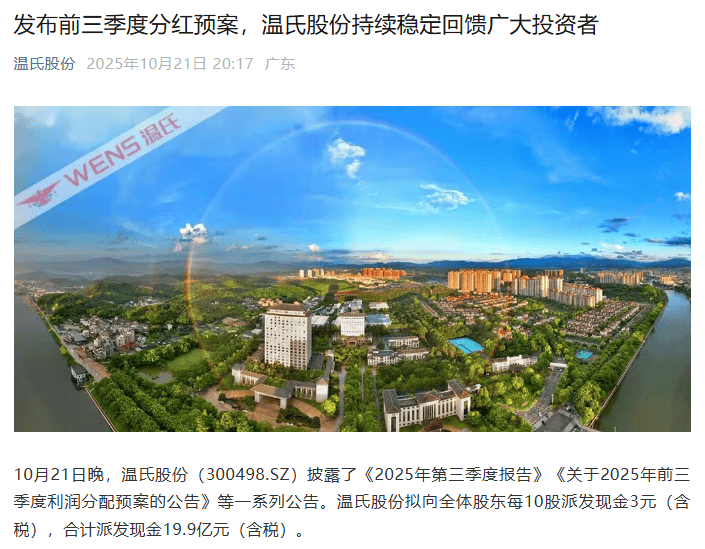
三季度分红预案陆续公布红利板块关注度升温
Zhong Guo Zheng Quan Bao· 2025-10-22 20:16
Core Viewpoint - Multiple A-share listed companies are actively announcing cash dividend plans during the third quarter reporting period, with at least 18 companies planning to distribute over 3.4 billion yuan in total cash dividends, enhancing investor sentiment and interest in dividend-related assets [1][2]. Group 1: Dividend Announcements - Kaisheng New Materials plans to distribute 0.50 yuan per 10 shares, totaling approximately 21.03 million yuan, with a net profit of 116 million yuan for the first three quarters, representing a year-on-year increase of 121.56% [1]. - Wens Foodstuff Group intends to distribute 3 yuan per 10 shares, amounting to approximately 1.994 billion yuan, based on a total share count of 6.646 billion shares after excluding repurchased shares [2]. - Yanjing Beer plans to distribute 1 yuan per 10 shares, totaling approximately 282 million yuan, with a net profit of 1.77 billion yuan for the first three quarters, reflecting a year-on-year growth of 37.45% [2]. Group 2: Market Sentiment and Investment Strategy - The active cash dividend announcements are expected to enhance investor sentiment and interest in dividend-related assets, especially as external factors suppress risk appetite, leading to a high volatility state in the A-share market [2][3]. - Analysts suggest that the dividend sector may serve as a safe haven for funds, with a focus on sectors such as banking, coal, electricity, railways, and ports [2][3]. - The recent pullback in the TMT sector has led to a recommendation for investors to shift their focus towards consumer and dividend sectors, as the dividend sector shows a strong negative correlation with market risk appetite [3].

四中全会和十五五规划,我们要关注什么?
2025-10-21 15:00
Summary of Conference Call Records Industry Overview - The conference call discusses the economic outlook and policy implications related to the upcoming 15th Five-Year Plan and the Fourth Plenary Session of the Central Committee. The focus is on the macroeconomic environment, investment opportunities, and challenges facing the economy. Key Points and Arguments Economic Growth Targets - The 15th Five-Year Plan is expected to set an economic growth target of 4.5% or not lower than 4% despite a 4.8% GDP growth in Q3 2025. The economy has faced three consecutive quarters of decline, with significant challenges in fixed asset investment and consumption [2][4][12]. Short-term Economic Stimulus - There is a low likelihood of short-term stimulus measures due to current economic pressures. The need for innovative financial tools and fiscal support is emphasized to achieve growth targets [1][3][4]. Monetary Policy Outlook - The monetary policy is expected to remain stable during the 15th Five-Year Plan period, with a high probability of easing due to weak fundamentals. Interest rate fluctuations will be influenced by fiscal stimulus, fundamental rebounds, and market behaviors [1][6][12]. Investment Opportunities - The bond market is seen as a favorable investment opportunity, with key factors including total demand, central bank and fiscal policy coordination, and U.S.-China regulatory dynamics. The third quarter's disturbances have been fully digested, suggesting a strong buying opportunity [7][8]. Growth Sector Outlook - The market sentiment is influenced by U.S.-China relations and growth expectations. There is a positive outlook on growth sectors, particularly in AI and technology, despite concerns about potential bubbles. The conditions for a shift from growth to value investing are not yet sufficient [8][9]. Focus on New Industries - The Fourth Plenary Session and the 15th Five-Year Plan will prioritize the development of new productive forces, including AI, semiconductors, and smart robotics. The plan aims to enhance competitiveness through digital and green transformations in manufacturing [10][13][16]. Consumer and Service Sector Development - Transitioning towards consumption-driven growth requires fiscal and monetary support, particularly in service consumption and new consumption areas. The need for a unified national market to avoid inefficiencies and ensure effective support is highlighted [5][11]. Corporate Profitability and Market Trends - Despite strong production data, weak demand has led to a situation where companies are generating revenue without profit growth. The upcoming quarterly reports are expected to show a recovery in corporate profits, which may attract new investments [11][14]. Key Areas of Focus in the 15th Five-Year Plan - The plan will emphasize enhancing manufacturing efficiency, developing emerging industries, promoting domestic consumption, and large-scale infrastructure projects to boost economic momentum [16]. Additional Important Insights - The overall economic environment is characterized by strong production, weak domestic demand, and resilient external demand. The need for new policy measures to stimulate domestic demand and adjust corporate strategies in the global supply chain is critical [12][14].
长期配置价值获认可!红利低波ETF(512890)成交额居同类首位 近20个交易日吸金超35亿
Xin Lang Ji Jin· 2025-10-21 04:40
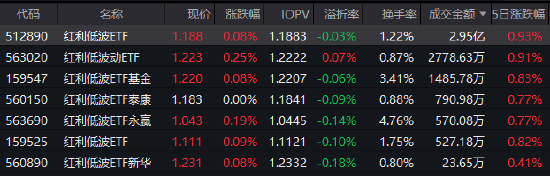
Core Viewpoint - The A-share market shows positive momentum with major indices rising, particularly the Shanghai Composite Index, which has surpassed the 3900-point mark, indicating a recovery in market sentiment [1] Market Performance - The Shanghai Composite Index increased by over 1% in the morning session, reflecting a strong market opening [1] - The Dividend Low Volatility ETF (512890) experienced a slight increase of 0.08%, trading at 1.188 yuan, with a turnover rate of 1.22% and a half-day trading volume of 295 million yuan, leading in trading volume among similar ETFs [1][2] Fund Flow Analysis - The Dividend Low Volatility ETF (512890) has seen consistent net inflows, with 2.382 billion yuan over the last 5 trading days, 3.098 billion yuan over the last 10 days, 3.523 billion yuan over the last 20 days, and 2.447 billion yuan over the last 60 days [2] Investment Strategy Insights - CICC suggests that the current macro environment of liquidity easing supports market sentiment recovery, recommending focus on sectors with significant prior declines and improved valuation-earnings match, as well as monitoring overseas inflation and domestic growth policies [4] - BlackRock's Wang Xiaojing highlights the investment value in sectors such as non-ferrous metals, non-bank financials, technology assets, and dividend assets, noting that dividend assets, particularly in the banking sector, may be reassessed for their stable cash flow amidst market volatility [4] Fund Performance - The Huatai-PineBridge Dividend Low Volatility ETF (512890) has achieved a cumulative return of 137.34% since its inception in December 2018, outperforming its benchmark and ranking 65th among 502 similar products [5] - Experts recommend this ETF as a core component for stable returns in asset allocation, suggesting a dollar-cost averaging approach to mitigate short-term volatility risks [5]
股市表现强势,债市全线收涨
Zhong Xin Qi Huo· 2025-10-10 01:32
Report Industry Investment Rating - Not provided in the given content Core Viewpoints of the Report - The stock market showed strong performance, with the Shanghai Composite Index breaking through 3900 points. The bond market closed higher across the board. For stock index futures, continue to over - allocate IM long positions. For stock index options, maintain a high - level hedging strategy. For treasury bond futures, the market is in a cautious and volatile state, and long - end arbitrage opportunities are recommended [1][2][3] Summary by Relevant Catalogs 1. Market Views Stock Index Futures - The Shanghai Composite Index broke through 3900 points. On the first trading day after the holiday, the equity market was generally positive. Sectors such as non - ferrous metals, semiconductors, and power generation equipment led the gains, and the ChiNext and STAR Market styles continued to outperform. The CSI 500 Index was strong, related to its physical attributes. The trading volume was close to 2.7 trillion, indicating high market activity. After the holiday, continue to focus on growth sectors. The strategy is to continue to over - allocate IM long positions [1][7] Stock Index Options - Options continue with a high - level hedging strategy. The equity index rose strongly, with the Shanghai Composite Index rising 1.32% in a single day. On October 9, the implied volatility of various option varieties decreased by about 4% on average. Although the short - volatility strategy performed well, it is necessary to use option purchases to hedge positions. The trading volume of call and put options of CSI 1000 index options increased, indicating market adoption of the option - purchase hedging strategy. Overall, the option strategy recommends high - level defense [2][7] Treasury Bond Futures - Treasury bond futures closed higher across the board. T, TF, TS, and TL main contracts rose 0.15%, 0.07%, 0.02%, and 0.46% respectively. Although the central bank had a net reverse - repurchase withdrawal of 1.45 trillion, it carried out a 1.1 - trillion 3 - month outright reverse - repurchase, and the overnight funding became looser. In the short term, factors such as fund fee reform and the stock - bond seesaw may continue to affect the bond market. The bond market is in a cautious and volatile state, and it is recommended to pay attention to long - end arbitrage opportunities [3][7][8] 2. Economic Calendar - The economic data released this week include China's September official manufacturing PMI (49.8, with a previous value of 49.4 and a forecast of 50.1), the US September ISM manufacturing PMI (49.1, with a previous value of 48.7), and China's September foreign exchange reserves ($33386.58 billion, with a previous value of $33221.54 billion) [10] 3. Important Information and News Tracking - Domestic Macro: During the 8 - day National Day and Mid - Autumn Festival holiday, the number of domestic tourist trips reached 888 million, an increase of 123 million compared to the 7 - day National Day holiday in 2024. Domestic tourism spending was 809.006 billion yuan, an increase of 108.189 billion yuan. The average daily sales revenue of national consumption - related industries increased by 4.5% year - on - year [10] - Artificial Intelligence: Ant Group released the trillion - parameter general language model Ling - 1T, which achieved SOTA performance in multiple complex reasoning benchmarks and leading results in many high - difficulty benchmark tests [11] - Overseas Macro: The European Automobile Manufacturers Association said that the EU Commission's reduction of steel import quotas would push up prices and exacerbate inflation, and the complexity of applying new origin rules in the automotive industry should be recognized [11] - Market Access: The Ministry of Commerce included foreign entities such as anti - drone technology companies and TechInsights and their branches in the unreliable entity list, banning relevant import and export, investment, and cooperation activities [12] 4. Derivatives Market Monitoring - Not provided in detail in the given content
华泰证券:历史来看节前市场震荡 节后放量回升概率较大
Zheng Quan Shi Bao Wang· 2025-09-28 23:55
Core Insights - The report from Huatai Securities highlights the historical calendar effect on the A-share market during the National Day holiday, indicating a tendency for market adjustments before the holiday and a rebound on the last trading day before the holiday [1] Group 1: Market Performance - A-shares typically face adjustments in the ten days leading up to the holiday, with a slight rebound on the last trading day, but the overall market remains weak [1] - The average increase in the five trading days following the holiday shows a higher average gain and win rate, with small-cap stocks outperforming large-cap stocks [1] Group 2: Trading Volume - Due to overseas uncertainties, investors tend to reduce their positions before the holiday, leading to an average trading volume decrease of 35% in the ten days prior to the holiday [1] - In contrast, the five trading days after the holiday see a significant increase in trading volume, indicating a stronger willingness among investors to enter the market [1] Group 3: Investment Style and Sector Performance - Defensive investment styles are expected to yield excess returns before the holiday due to stable income expectations [1] - Following the holiday, as uncertainties diminish, sectors such as growth and post-cycle real estate (including automotive and home appliances) are anticipated to exhibit higher elasticity [1]

4个月涨超38%!这个板块长期逻辑已变?
券商中国· 2025-08-26 23:33
Core Viewpoint - The military industry sector has experienced significant growth, with the Shenwan Defense and Military Industry Index rising by 38.12% since May, attracting considerable investor interest [1][2]. Group 1: Market Performance - The Aerospace and Defense ETF (159227) has seen a cumulative increase of over 25% since its launch in May, with its scale surpassing 1 billion, marking a 138% growth from its initial size [1]. - The military sector's strong performance has led to heightened market attention, indicating a bullish sentiment among investors [1]. Group 2: Growth Potential - The core logic for the military sector's classification as a growth sector lies in its genuine growth momentum rather than short-term price fluctuations [2]. - The military industry is supported by existing orders, industry catalysts, and the long-term outlook of the 14th Five-Year Plan, suggesting a strong potential for stable high returns in the long run [2]. Group 3: Industry Developments - Recent advancements in low-orbit satellite launches have positioned commercial aerospace as a key driver for the military sector's growth, with multiple successful launches occurring within a short timeframe [4]. - The frequency of satellite launches in China has significantly increased, indicating a rapid development phase for the satellite internet sector [5]. Group 4: Long-term Trends - The military sector is expected to benefit from a surge in global military spending, projected to increase by 9.4% in 2024, the highest since the end of the Cold War [7]. - China's military spending is growing steadily at over 7%, with a clear demand for modernization in military equipment [7]. - The military trade market presents substantial growth opportunities, with China's current global market share at approximately 5.8% [7]. Group 5: Investment Strategy - For existing investors, maintaining positions in the military sector is recommended, as long-term investment strategies tend to yield better results than attempting to time the market [10]. - New investors are advised to monitor the military sector for potential entry points during market corrections [10].

长期逻辑已变?军工基金还能持有吗?
Sou Hu Cai Jing· 2025-08-25 07:22
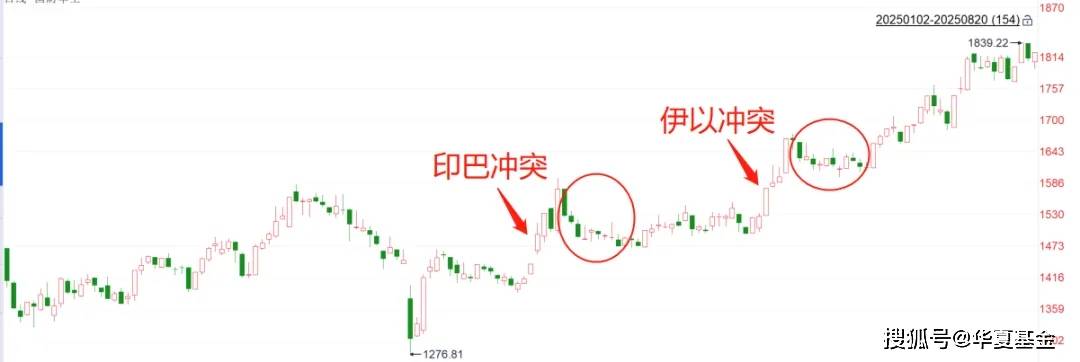
Core Viewpoint - The defense and military industry index has seen a significant increase of 28.91% since May, attracting considerable investor attention [1] Group 1: Market Performance - The military industry stocks have shown remarkable performance, with prices continuously rising [1] - The market's focus on the military sector has intensified due to this strong upward trend [1] Group 2: Long-term Growth Potential - Investors should not be overly concerned about short-term gains of 20%-30%, as the key to assessing the sector's value lies in its genuine growth momentum rather than current price levels [2] - The military industry is supported by a recovering fundamental landscape, existing order backing, and long-term prospects from the "14th Five-Year Plan" [2][3] Group 3: Growth Drivers - The "14th Five-Year Plan" is expected to lead to a surge in orders, with a notable increase in orders for aerospace and missile chain companies [3] - Global military spending is projected to rise by 9.4% in 2024, reaching a post-Cold War high, with China's military expenditure growing at over 7% [3] - The national goal of achieving the centenary military objectives will continue to drive defense investments, providing a clear and long-term demand signal for the military industry [4] - China's military trade currently holds a 5.8% share of the global market, indicating significant room for growth as domestic technology and brand influence improve [4] - Military enterprises are actively exploring new growth avenues in satellite internet, advanced materials, aerospace, and cybersecurity, leveraging their technological advantages [4] Group 4: Short-term Market Dynamics - The military sector has experienced various short-term catalysts since late April, including conflicts that have provided upward momentum [5] - Although a potential short-term pullback may occur, the long-term support remains strong, suggesting that this could be an opportunity for mid-to-long-term positioning [7] - For investors already holding positions, maintaining a long-term perspective and holding onto investments is often a more favorable strategy [7] - New investors are advised to monitor the military sector and consider phased investments during potential pullbacks [8]
外资加速涌入中国股市市场活跃度持续提升
Zhong Guo Zheng Quan Bao· 2025-08-21 20:11
Group 1 - Foreign investment interest in the Chinese stock market has significantly increased this year, with global active funds' allocation to Chinese stocks rising to 6.4% as of July, indicating a potential for further allocation growth [1][2] - Passive funds have also shown strong inflows, with a total of $11 billion entering the Chinese stock market by the end of July, surpassing the entire inflow of $7 billion for 2024 [2] - The inflow of foreign capital has been driven by improved liquidity, a weaker dollar, and ample household savings, leading to increased activity in the Chinese stock market, particularly in growth sectors and high-quality tech stocks [1][3] Group 2 - Korean investors have increased their holdings in Chinese stocks, with a total investment of $3.386 billion as of August 19, marking a nearly 30% increase since the end of 2024 [1] - The trading activity of foreign capital has concentrated on leading industry stocks, with significant trading volumes in companies like CATL and Kweichow Moutai, indicating a preference for established market leaders [2] - The overall market activity has been enhanced by the resonance between foreign inflows and domestic capital, with average daily trading volume in A-shares reaching approximately 1.95 trillion yuan in August, up from 1.63 trillion yuan in July [3] Group 3 - The improvement in liquidity is attributed to a significant accumulation of excess savings by Chinese households, totaling over 7.2 trillion yuan since 2020, and a narrowing gap between M1 and M2 money supply metrics [3] - The investment focus is shifting towards growth-oriented strategies, with expectations that small-cap stocks may outperform large-cap stocks in the short term due to liquidity dynamics [3][4] - Long-term investment themes are emerging, with a focus on high-dividend companies and technology firms that are expected to benefit from AI applications, enhancing overall production efficiency in China [4]





科创50ETF景顺(588950)盘中一度涨超2%,标的指数科创50连创新高!
Xin Lang Cai Jing· 2025-08-21 02:21
Group 1 - The core viewpoint of the news highlights the positive performance of the Science and Technology Innovation 50 ETF, which closely tracks the Shanghai Stock Exchange's STAR Market 50 Index, indicating strong market momentum and investor interest in technology stocks [1][2] - The top three sectors represented in the Science and Technology Innovation 50 ETF are semiconductors (60.6%), medical devices (6.6%), and software development (5.2%), showcasing a high concentration in technology-related industries [1] - The Science and Technology Innovation 50 Index recently broke its previous high, closing at 1148.15, marking a new high since September 24, 2024, which reflects a bullish trend in the market [1][2] Group 2 - Open-source securities maintain an optimistic long-term outlook for the index, suggesting that investors should remain confident and focus on technology-driven growth amidst a rising market [2] - As of July 31, 2025, the top ten weighted stocks in the STAR Market 50 Index account for 54.71% of the index, indicating a significant concentration of investment in a few key companies [2]