用户思维

Search documents
基层培训“鸡同鸭讲” 成长之旅为何变成“打卡任务”
Zhong Guo Qing Nian Bao· 2025-11-28 00:55
Core Insights - The article highlights the emergence of a "substitute economy" in professional training, where participants hire substitutes to attend training sessions on their behalf, undermining the intended purpose of these educational programs [1][2][3] Group 1: Training Practices and Issues - Many professionals, especially in government and enterprises, are required to participate in continuing education, but the training often fails to meet actual needs, leading to a disconnect between content and practical application [2][3] - Training sessions are frequently conducted in a "crash course" manner at the end of the year, conflicting with critical work periods, driven by budget management practices that penalize unspent funds [3] - The lack of genuine engagement in training is evident, with many attendees distracted by their phones or not participating actively, indicating a need for better content and delivery methods [2][3] Group 2: Comparison with Other Training Models - In contrast to professional training, non-academic extracurricular training for students is more effective because it is self-selected, personally funded, and focused on core developmental needs, leading to higher quality and effectiveness [3][4] - The article suggests that valuable training should not rely on attendance tracking or formal titles but should instead foster a genuine desire for personal growth and development [4]
广汽打造启境:制度学习华为,产品对标小米
21世纪经济报道· 2025-11-24 11:29
Core Viewpoint - GAC Group is undergoing significant reforms to enhance its autonomous vehicle segment, aiming for 60% of total sales from self-owned brands by 2027, with Aion as a key player in this strategy [1][12]. Group 1: GAC's Reform and Strategy - GAC has shortened its new car development cycle to 18-21 months and improved market response efficiency by over 600% [1]. - The company aims to increase the number of self-owned brand models by 20% and enhance procurement efficiency by approximately 50% [1]. - The shift from "engineer thinking" to "user thinking" is highlighted as a major transformation within GAC [1]. Group 2: Partnership with Huawei - GAC and Huawei have launched the "Qijing" model, marking a new collaboration approach where GAC retains brand control while leveraging Huawei's technology [2][5]. - The "Qijing" model is a result of deep collaboration across product, technology, and marketing, with significant input from Huawei's R&D teams [7]. - GAC's organizational structure has shifted from a functional model to a matrix structure, focusing on project-based product development [9]. Group 3: Aion's Market Positioning - Aion is transitioning from a B2B focus to a B2C strategy, with the launch of the Aion UT Super, which has already received over 16,000 orders since its launch [12][13]. - The Aion i60 is being marketed with a focus on youth and modernity, aiming to redefine its brand image [13]. - Aion's past performance issues are acknowledged, with a commitment to improve sales and market presence through strategic marketing and product positioning [12][14]. Group 4: Overall Market Challenges - The high-end sedan market, where the "Qijing" is positioned, is competitive, with limited capacity, making it crucial for GAC and Huawei to effectively execute their product and marketing strategies [10]. - GAC's other brands, including Haobo and Trumpchi, are also undergoing rebranding and repositioning to enhance their market competitiveness [14].


广汽“番禺行动”一周年:落地华为“第一境”,埃安战略由B转C
2 1 Shi Ji Jing Ji Bao Dao· 2025-11-24 10:56
Core Insights - GAC's "Panyu Action" has made significant progress in its first year, focusing on transforming from an "engineer mindset" to a "user mindset" [1][2] - The goal is to have GAC's self-owned brands account for over 60% of total sales by 2027, with a target of 2 million units sold [2] - The launch of the "Qijing" model, a collaboration with Huawei, represents a new strategic direction for GAC [3][5] Group 1: GAC's Transformation and Achievements - GAC has reduced new car development cycles to 18-21 months and improved market response efficiency by over 600% [1] - Procurement efficiency has increased by approximately 50%, and the overall model planning has been optimized by about 20% [1] - The leadership change, with He Xianqing as the new general manager, signifies a shift in organizational structure towards a matrix model [8] Group 2: Collaboration with Huawei - The "Qijing" model is a result of deep collaboration between GAC and Huawei, involving over 200 to 800 Huawei R&D personnel [6] - GAC has adopted Huawei's integrated product development (IPD) and integrated product marketing and sales (IPMS) systems to enhance user experience [6][10] - The "Qijing" model aims to create high-performance, aesthetically pleasing, and technologically advanced products targeting a young, fashionable demographic [8] Group 3: Market Positioning and Challenges - GAC's Aion brand is shifting from a B2B to a B2C model, with the Aion UT Super achieving over 16,000 orders since its launch [11] - The Aion i60 is being marketed with a focus on youth and modernity, with a sales target of 10,000 units per month [12] - The positioning of the Aion and Haobo brands is evolving, with Haobo transitioning to a more stable, technology-oriented image [12] Group 4: Future Outlook - The success of the "Qijing" model and GAC's self-owned brands will depend on the ability to learn from Huawei and implement effective marketing strategies [10][13] - GAC aims to maintain a "customer-centric" approach while enhancing the quality and experience of its service and dealership network [10] - The competitive landscape in the 300,000 yuan market segment is challenging, with leading models like the Passat and Xiaomi YU7 setting high sales benchmarks [10]
閤先庆:广汽近两年市场表现差强人意,接下来要转向“用户思维”
Jing Ji Guan Cha Bao· 2025-11-24 08:23
Core Insights - GAC Group acknowledges that while it has strong technology and product functionality, its market performance has been lacking in recent years, attributing this to a need for a shift from an engineering mindset to a user-centric approach [1] - The company has restructured its product development process to enhance efficiency and responsiveness to user needs, achieving a 50% increase in business efficiency and a sixfold improvement in market response speed [2] Group 1: User-Centric Development - GAC Group's transformation focuses on integrating user needs into the entire product development process, establishing a user insights department with a team of 200 to drive this change [2] - The company plans to launch nine new or revamped models by 2026, aiming to better align with user demands [2] Group 2: Brand Differentiation and Market Strategy - GAC is working to differentiate its brands, with Aion focusing on affordability, Trumpchi enhancing its MPV offerings, and Haobo aiming for high-end product development [3] - The company has set a target for its self-owned brands to account for 60% of total sales by 2027, with a goal of selling 2 million units [3] Group 3: Sales and Service Enhancements - GAC recognizes the need to improve its service and dealership experiences to match leading competitors, announcing plans for a new integrated brand experience center to support its future strategies [3][4] Group 4: Strategic Partnerships - GAC has formed a deep partnership with Huawei, leveraging its expertise in smart technology to enhance product offerings, including the launch of the high-end brand "Qijing" [5] - The collaboration with Huawei has involved significant resource sharing, with up to 800 personnel from Huawei contributing to GAC's development efforts [5] Group 5: Market Penetration and Infrastructure - GAC is actively expanding its presence in lower-tier cities, collaborating with JD.com to introduce a battery rental model for electric vehicles priced at 49,900 yuan [6] - The company has established a nationwide network of over 21,000 charging stations and plans to deploy 1,000 battery swap stations across 45 cities [6] Group 6: Future Vision - GAC envisions the future of automobiles as intelligent mobile spaces, emphasizing the importance of ecosystem partnerships to meet customer needs and stay competitive [7]
新官上任,如何带领广汽破局?閤先庆这样说
Nan Fang Du Shi Bao· 2025-11-22 08:35
Core Viewpoint - GAC Group is undergoing significant transformation through the "Panyu Action," focusing on technology, AI, and market-driven development to achieve the goal of reinventing itself as a new GAC [2][3] Group 1: Transformation Strategy - The core of GAC's development is to transition from an engineering mindset to a user-centric approach in product development, integrating user needs into the entire product lifecycle [5] - GAC has adopted Huawei's Integrated Product Development (IPD) model to enhance market insights and product delivery, marking a significant organizational change from a functional to a matrix structure [5] - The dual focus on market and technology is essential for improving GAC's competitiveness and achieving commercial success [5] Group 2: Brand Differentiation - GAC and Huawei's new brands, "Jing" and "Jie," are positioned to avoid homogenization by targeting different market segments and consumer needs [6] - The "Jing" brand aims at a younger, fashion-forward audience with high demands for vehicle performance, encapsulated in the "three highs": high aesthetics, high technology, and high performance [6] Group 3: Product and Service Innovations - GAC's four development engines include new technology, new products, new services, and a new ecosystem, with a focus on electric vehicles and AI integration [8] - GAC has established over 21,000 self-operated charging stations in China, the highest number among domestic automakers, and has partnered with CATL for battery swapping solutions [9] - The company has conducted 45 over-the-air updates this year, enhancing over 300 features across nearly 150,000 vehicles, emphasizing the importance of software and AI services [9] Group 4: Brand Positioning - GAC's brands, including Trumpchi, Aion, and the new partnership with Huawei for the "Qijing" brand, are strategically positioned to cater to different consumer demographics [10] - Trumpchi focuses on traditional fuel vehicles while transitioning to hybrid models, Aion targets young families with electric vehicles, and Qijing aims at high-end intelligent electric vehicles for a younger audience [10]
智能聚力 系统变革——2025中国新媒体大会综述
Ren Min Ri Bao· 2025-11-16 22:19
Core Insights - The 20th Central Committee's Fourth Plenary Session emphasizes the need for systematic reform in mainstream media, integrating news promotion and online public opinion management to enhance the guiding capacity of mainstream discourse [1] - The 2025 China New Media Conference, held from November 12 to 14, focuses on the theme of "Intelligent Power System Reform," addressing the deep logic of media transformation in response to the technological revolution [2][3] Group 1: Technological Integration - The conference highlights the importance of leveraging artificial intelligence and other technological innovations to drive media transformation and create a new landscape for mainstream discourse [1][2] - Media organizations are encouraged to build high-quality information flows and content that resonate with audiences, likening this to constructing "cultural mountains" and "era peaks" [2] Group 2: Content and User Engagement - The shift from "release thinking" to "communication thinking" is crucial for mainstream media to adapt to the internet era, focusing on user-centered approaches and enhancing the quality of content [6] - Successful media strategies involve creating engaging content that resonates emotionally with audiences, as demonstrated by the viral success of the short film "One Night" commemorating the 80th anniversary of the victory in the War of Resistance [6] Group 3: Systematic Reform and Internal Motivation - Mainstream media must act as "actionists and pragmatists" in driving systematic reform, integrating technology deeply into all aspects of media operations [7] - Initiatives like the "Three Become One" plan aim to transform journalists from mere writers to content curators, enhancing the visibility and impact of their work [7] Group 4: Community and Grassroots Engagement - Media organizations are encouraged to connect closely with community users, exemplified by platforms like "Neighbor Communication" that link local residents and businesses [6] - The importance of grassroots storytelling and authentic engagement is emphasized, with examples of media professionals using relatable narratives to connect with their audiences [8]
天猫双11进行时:海尔多榜单第一,热度持续领先
Jin Tou Wang· 2025-11-03 09:04
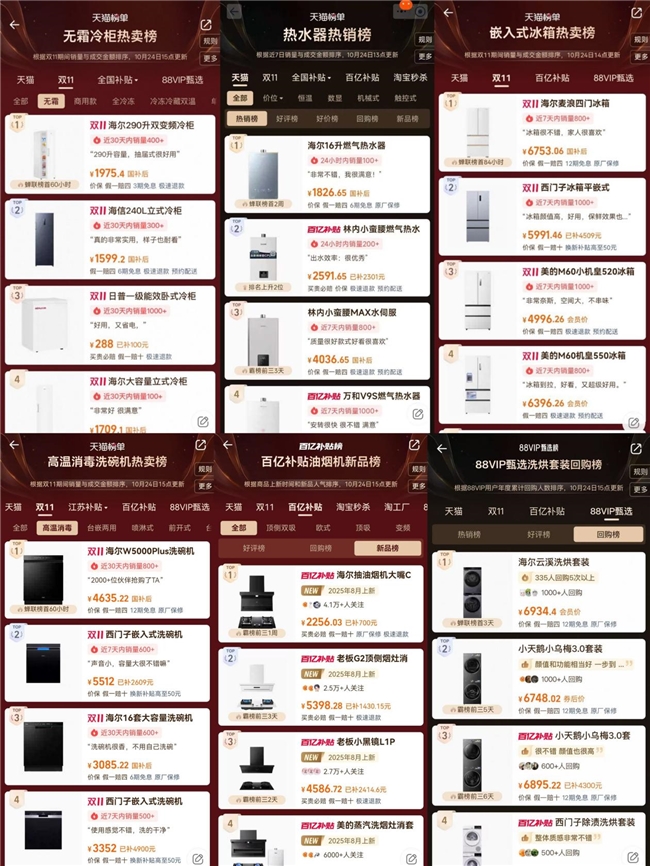
Core Insights - This year's Double 11 shopping festival sees e-commerce platforms adopting "official discounts/single item direct reductions" as the main promotional strategy, simplifying the purchasing process for consumers and allowing them to focus more on product selection [1] - The home appliance industry is increasingly favoring brands with strong product and service capabilities, as evidenced by Haier's leading sales performance across multiple categories during the event [1] - Haier's success is attributed to its long-term commitment to "user thinking," which includes product innovation, interaction optimization, service upgrades, and rights protection, aligning with industry trends and consumer needs [1] Product Highlights - Haier's AI-driven products address consumer pain points, with the Cloud Creek Wash-Dry 4.0 Pro set achieving top sales in the washing machine category due to its efficient cleaning and drying capabilities [3] - The Haier Mairang refrigerator, featuring award-winning preservation technology, ranks first in the high-end refrigerator segment, while the Haier Big Mouth C61 Pro range hood leads the new product rankings in the subsidized category [3] Marketing and User Engagement - Haier focuses on high-quality content to enhance user trust, involving nearly 500 influencers in live demonstrations to showcase product capabilities [4] - Collaborative events like "Challenge New Possibilities" with CCTV allow consumers to witness the performance of Haier's products under extreme conditions, reinforcing the brand's technological strength [4] Service and Customer Experience - Haier has improved service efficiency through digital transformation, ensuring prompt delivery and installation across a wide geographic area, including rural regions [5] - The company has launched promotional campaigns tied to partnerships with major football clubs, offering consumers opportunities to win prizes and enhancing engagement with sports fans [5] Strategic Outlook - The Double 11 event emphasizes the importance of product strength, brand power, marketing innovation, and user engagement for brands to succeed in a competitive landscape [7] - Brands that align closely with consumer needs and preferences are likely to see increased order volumes as a form of consumer endorsement [7]

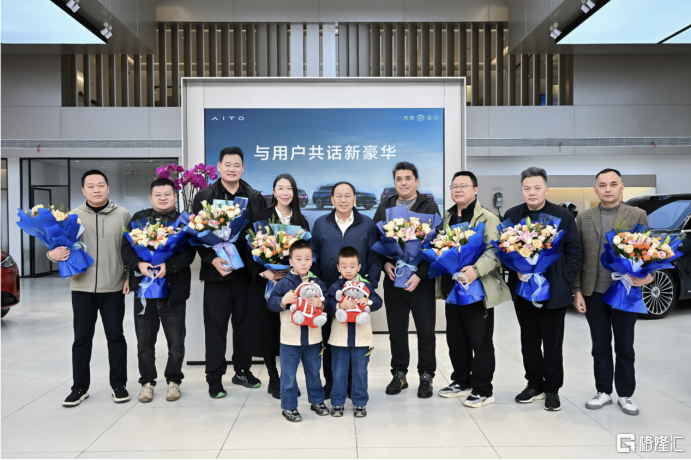
从用户中来到研发中去 张兴海再与用户共话新豪华
Ge Long Hui· 2025-10-29 08:59
Core Insights - The chairman of Seres Group, Zhang Xinghai, emphasizes user engagement and feedback in the development of the AITO brand, aiming to redefine luxury in the Chinese electric vehicle market [1][3][5] - The company has implemented a "recognition before delivery" model, allowing users to participate in the testing of vehicles before they are officially delivered, enhancing user trust and satisfaction [5][7] - AITO has achieved significant market success, with cumulative vehicle deliveries surpassing 800,000 units, and the AITO M9 model leading the luxury vehicle market with over 250,000 units delivered in 21 months [7] User-Centric Approach - Zhang Xinghai frequently interacts with users at various AITO centers, emphasizing the importance of understanding user needs and preferences [1][3] - The company promotes a market-oriented approach where users define the product, ensuring continuous improvement in product quality and user satisfaction [3][5] - AITO's commitment to user feedback is reflected in its product iteration process, which aims to break traditional luxury boundaries and create a new definition of luxury in electric vehicles [5] Market Performance - AITO's rapid growth is evidenced by its delivery milestones, with the M9 model being a significant contributor to its market leadership in the luxury segment [7] - Research indicates that AITO ranks first in the development confidence index from late 2024 to mid-2025, with an ongoing improvement in brand prestige [7] - The company's mission of "serving users wholeheartedly" is a core principle that drives its product evolution and user experience [7]
上汽集团,技术+产品双爆发 深化改革显成效
2 1 Shi Ji Jing Ji Bao Dao· 2025-10-22 23:28
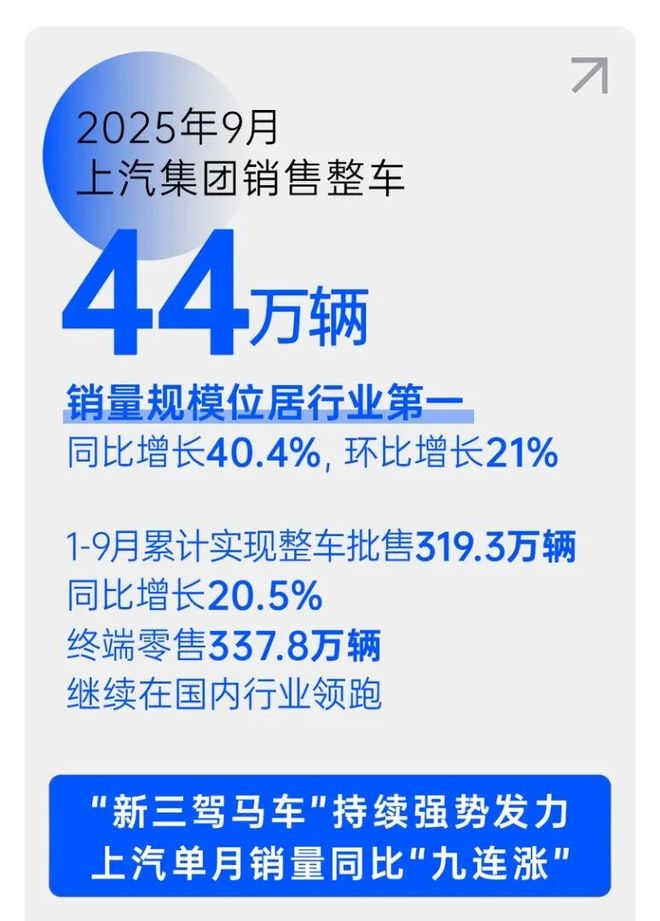
Core Viewpoint - Shanghai's economy shows resilience with a GDP growth of 5.5% in the first three quarters, surpassing the national average by 0.3 percentage points, driven by industrial growth and strong performance from SAIC Motor Corporation [1][3]. Economic Performance - Shanghai's GDP reached 40,721.17 billion yuan, with industrial value-added increasing by 5.2% year-on-year [1]. - The total industrial output value for large-scale industries in Shanghai grew by 5.7%, indicating a slight acceleration compared to the first half of the year [1]. SAIC Motor Corporation's Performance - In the first nine months, SAIC sold 3.193 million vehicles, a year-on-year increase of 20.5%, maintaining its leading position in the domestic automotive industry [3]. - The company's net profit attributable to shareholders, excluding non-recurring items, surged by 432.2%, reflecting significant operational improvements [3][4]. Growth Drivers - SAIC's growth is attributed to the synergistic efforts of its three main pillars: independent brands, new energy vehicles (NEVs), and overseas markets [5]. - Sales of SAIC's independent brands reached 294,000 units in September, a 50.4% increase year-on-year, with a cumulative total of 2.044 million units sold in the first nine months [5]. New Energy Vehicles - In September, SAIC sold nearly 190,000 NEVs, marking a historical high with a year-on-year growth of 46.5% [8]. - Cumulative NEV sales for the first nine months reached 1.083 million units, up 44.8% year-on-year [8][9]. Technological Advancements - SAIC's growth is characterized by a focus on "technology labels," which enhance product competitiveness [10]. - The introduction of innovative technologies, such as the "Star Super Range" and "Lingxi Digital Chassis," has established a competitive edge in the market [12][14]. Global Expansion - SAIC's overseas sales reached 101,000 units in September, a 12.2% increase year-on-year, with the MG brand performing particularly well in Europe [15]. - The company has adapted its products to meet local market demands, enhancing its competitiveness against local brands [18]. Financial Health - SAIC reported a total revenue of 299.59 billion yuan in the first half of the year, a 5.2% increase, with a net profit of 6.02 billion yuan [18]. - The operating cash flow increased by 85.9%, indicating improved financial management and operational efficiency [18]. Product Strategy - SAIC has a clear product strategy with a series of new launches planned for 2025, ensuring coverage across various price segments [19]. - The company emphasizes a balanced product portfolio, catering to both passenger and commercial vehicle markets [19]. Conclusion - SAIC's consistent growth is a result of strategic focus on independent brands, NEVs, and global markets, supported by technological innovation and user-centric approaches [21]. - The company aims to continue optimizing retail, accelerating technology application, and expanding international operations, positioning itself for sustainable growth in the automotive industry [21].

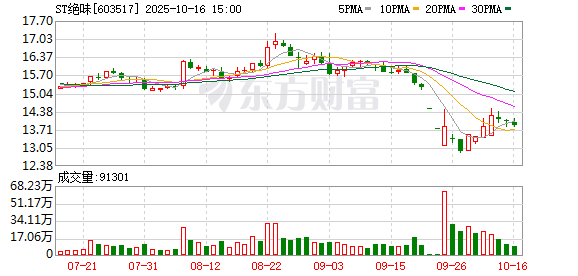
绝味食品:一根鸭脖 “链”动万家灯火
Shang Hai Zheng Quan Bao· 2025-10-16 18:52
Core Insights - The article highlights the growth and expansion of Juewei Foods, a leading player in the Chinese marinated food industry, which started in 2005 and has developed a nationwide network of over ten thousand stores [2][3] - Juewei Foods has shifted its strategy from broad expansion to deep exploration of consumer needs, focusing on enhancing product offerings and operational efficiency to adapt to changing market dynamics [5][6] Group 1: Business Model and Operations - Juewei Foods utilizes a robust supply chain and distribution network, ensuring fresh products reach thousands of stores daily, which is crucial for maintaining product quality [3][4] - The company has established a comprehensive franchise system that connects over 3,000 franchisees, creating job opportunities for nearly 40,000 individuals and supporting local economies [4][6] Group 2: Strategic Focus and Market Trends - The company is responding to the evolving consumer landscape by investing in product development, with a reported R&D expenditure of 24.7 million yuan, a 9.44% increase year-on-year, aimed at creating healthier and regionally customized products [7] - Juewei Foods is committed to social responsibility, engaging in initiatives that support rural revitalization and establishing long-term partnerships with suppliers to stabilize raw material prices [8][9] Group 3: Financial Performance and Shareholder Returns - Since its listing, Juewei Foods has distributed a total of 2.364 billion yuan in cash dividends, demonstrating its commitment to sharing growth with investors [8] - The company plans to distribute nearly 200 million yuan in cash dividends for the 2024 fiscal year, reinforcing its focus on shareholder returns [8]