
美联储宽松周期

Search documents
黄金和泛贵金属估值逻辑生变
2 1 Shi Ji Jing Ji Bao Dao· 2026-01-24 00:52
Core Viewpoint - The new U.S. foreign policy at the beginning of 2026 has significantly impacted global politics and economics, leading to a rise in gold and other precious metal prices, with gold reaching $4,832.1 per ounce and $4,913.4 per ounce for COMEX futures as of January 22, 2026, marking increases of 11% and 13.5% respectively within the first 14 trading days of the year [1]. Group 1: Market Dynamics - The precious metals market experienced significant volatility due to a major adjustment in the Bloomberg Commodity Index, which saw gold's target weight increase from 14.29% to 14.90% and silver's decrease from 4.49% to 3.94%, leading to a potential passive rebalancing fund scale of approximately $58.7 million for gold and $60.8 million for silver [2]. - Following the weight adjustment announcement, a technical sell-off occurred in the precious metals market, particularly in silver, due to profit-taking pressures from institutions and a high number of open futures contracts being liquidated [3]. Group 2: Economic Indicators - The U.S. Federal Reserve remains in a loose monetary policy cycle, with December 2025 non-farm payroll data significantly below market expectations, indicating a slowdown in job growth compared to previous years. Inflation data shows that the U.S. CPI remained stable at 2.7% year-on-year, with core CPI slightly below expectations [4]. - Market expectations suggest a 95% probability that the Federal Reserve will maintain interest rates in January 2026, with potential for a rate cut in June, influenced by the upcoming nomination of a new Fed chair [4]. Group 3: Geopolitical Factors - Geopolitical tensions and U.S. tariff challenges have led some institutional investors in Europe to sell U.S. Treasury bonds, highlighting gold's role as a safe-haven asset. For instance, a Danish pension fund announced plans to sell $100 million in U.S. debt due to concerns over credit risks associated with U.S. policies [5]. - The global diversification of foreign exchange reserves is accelerating, with emerging market central banks increasingly favoring gold as a decentralized reserve asset. Poland's central bank has announced plans to purchase up to 150 tons of gold, further emphasizing gold's growing importance in national reserves [6]. Group 4: Precious Metals Valuation - The valuation of precious metals has changed significantly due to a sustained bull market over the past three years, with silver outperforming gold due to its stronger industrial properties and broader applications in modern industries [7]. - The supply constraints of other precious metals like platinum and palladium, combined with their unique industrial attributes, suggest that demand for these metals may also experience significant price elasticity as industrial applications expand [7].
21评论丨黄金和泛贵金属估值逻辑生变
Sou Hu Cai Jing· 2026-01-23 22:30
Core Viewpoint - The new U.S. foreign policy at the beginning of 2026 has significantly impacted global politics and economics, leading to a rise in precious metal prices, particularly gold and silver [2] Group 1: Market Reactions - As of January 22, 2026, the London spot gold price reached $4,832.1 per ounce, and COMEX gold futures settled at $4,913.4 per ounce, marking an increase of 11% and 13.5% respectively within the first 14 trading days of the year [2] - The Bloomberg Commodity Index adjusted its annual weightings, increasing gold's target weight from 14.29% to 14.90% while decreasing silver's from 4.49% to 3.94%, leading to significant market volatility [3] - The adjustment resulted in a passive rebalancing fund scale of approximately $58.7 million for gold and $60.8 million for silver, indicating a larger adjustment scale for silver [3] Group 2: Economic Indicators - The U.S. labor statistics for December 2025 showed a significant drop in non-farm employment, with a total increase of only 584,000 jobs for the year, down from 2 million in 2024 [4] - Inflation data indicated that the U.S. CPI for December 2025 rose by 2.7% year-on-year, with core CPI at 2.6%, suggesting inflation did not decrease as expected [4] - Market expectations indicate a 95% probability that the Federal Reserve will maintain interest rates in January 2026, with potential rate cuts anticipated in March [4] Group 3: Geopolitical Factors - Geopolitical tensions and U.S. tariff challenges have led European investors to sell U.S. Treasury bonds, highlighting gold's role as a safe-haven asset [5] - The Danish pension fund Akademiker Pension announced plans to sell $100 million in U.S. bonds due to concerns over credit risks associated with U.S. policies [5] Group 4: Central Bank Activities - Emerging economies are increasingly diversifying their foreign exchange reserves, with gold being favored as a decentralized reserve asset [6] - Poland's central bank was the largest official gold buyer in 2025, purchasing 95 tons, and has approved a plan to buy up to 150 tons more, aiming to increase its reserves to 700 tons [6] Group 5: Precious Metals Valuation - The valuation of precious metals has changed significantly due to a three-year bull market, with silver showing greater price elasticity due to its industrial applications [7] - Other precious metals like platinum and palladium are also experiencing supply constraints, which, combined with expanding industrial applications, suggest a significant demand elasticity [7]


黄金牛市还能走多远
2026-01-23 15:35
Summary of Key Points from the Conference Call Industry Overview - The discussion centers around the **gold market** and its dynamics, particularly in the context of the **U.S. economy** and **monetary policy**. Core Insights and Arguments 1. **Drivers of Gold Market Uptrend**: The gold market's rise is driven by three main factors: - The **Federal Reserve's easing cycle**, which is beneficial for gold fundamentals [3] - The **decline in U.S. dollar credibility** due to high deficits and debt expansion [6] - The **increase in geopolitical risks**, which has heightened demand for gold as a safe haven [6] 2. **Current Gold Price Assessment**: - As of January 2026, gold prices have surged to approximately **$4,700 per ounce**, nearly tripling from around **$1,600 per ounce** in Q4 2022 [2] - There are concerns about potential overvaluation, with models suggesting a more reasonable price around **$3,000 per ounce** [8] 3. **Long-term Risks**: - Historical data indicates that gold bear markets can last an average of **4.7 years**, suggesting that investors should be cautious and not overly bullish [5] - The current price levels may indicate a bubble, with increased volatility expected if adverse factors arise [8] 4. **Economic Conditions and Fed Policy**: - The U.S. economy may experience temporary overheating in Q1 2026, which could lead to a slowdown in the Fed's rate cuts, impacting gold demand [10] - The Fed's future policy is crucial; while short-term tightening may occur, long-term support for easing is anticipated [12][14] 5. **Inflation Trends**: - U.S. inflation is expected to rise in the first half of 2026 before declining in the latter half, with potential implications for Fed policy and gold prices [11][13] 6. **Investment Strategy**: - The recommended asset allocation strategy for 2026 includes maintaining an overweight position in **Chinese tech stocks** and **gold**, while increasing commodity exposure to hedge against risks [16] Other Important Considerations - **Geopolitical Factors**: The rise in geopolitical risks since the pandemic and the Russia-Ukraine conflict has significantly increased gold demand [6] - **Market Timing**: Investors are advised to time their investments carefully rather than adopting a blind bullish stance on gold [5] - **Model Predictions**: Previous models predicted gold could reach **$5,000 per ounce** by the end of 2025, a forecast that has largely been realized, albeit faster than expected [9] This summary encapsulates the key points discussed in the conference call regarding the gold market, its drivers, risks, and investment strategies for the upcoming year.
博时宏观观点:市场情绪偏热,注意规避高估值和题材板块
Xin Lang Cai Jing· 2026-01-20 03:58
Group 1: Market Overview - The bond market is expected to have short-term opportunities, while the A-share market sentiment is considered overheated, necessitating caution against high valuation and thematic sectors [1][11] - The Hong Kong stock market's performance is heavily reliant on the PPI trend, with the current phase characterized by weak fundamentals despite benefiting from liquidity [12][13] - Global oil demand remains weak, with ongoing supply releases and inventory accumulation putting pressure on prices, while geopolitical tensions may cause short-term volatility [13] Group 2: Economic Indicators - In December, the US CPI was slightly below expectations, and the rebound post-government shutdown was not strong, indicating that inflation does not pose a threat to the Federal Reserve's easing cycle [1][11] - Domestic exports exceeded expectations in December, driven by external demand, particularly in integrated circuits, consumer electronics, and automobiles [1][11] - The credit structure shows stronger performance on the corporate side compared to the household sector, with a decrease in social financing growth year-on-year due to the pace of bond issuance [1][11] Group 3: Investment Strategy - The recent cooling of the equity market has led to a recovery in the bond market, but the long-end interest rate opportunities are expected to wait for a clear decline in risk appetite [1][11] - The A-share market may experience a "mid-game break" in the spring rally due to regulatory impacts and earnings forecasts, prompting a shift in funds from high valuation sectors to those with solid performance support and reasonable valuations [12] - The outlook for gold remains positive in the long term, despite potential short-term price fluctuations due to reduced uncertainties from US-China trade tensions [13]
原油供应过剩 价格重心恐降
Qi Huo Ri Bao· 2026-01-07 00:57
Group 1 - The overall trend of crude oil prices in 2025 is expected to show a pattern of high prices in the first half followed by a decline in the second half, maintaining low levels due to weak fundamentals [1] - OPEC+ is anticipated to gradually increase production after maintaining a voluntary reduction of 2.2 million barrels per day in the first quarter of 2025, with a pause in production increases expected in early 2026 due to weak demand [2] - Geopolitical risks, particularly in Iran, Ukraine, and Venezuela, may intermittently disrupt oil prices, with potential price increases of around $13 per barrel related to conflicts in Iran and $5 per barrel due to sanctions on Russia [2][3] Group 2 - Venezuela's oil production remains low at 934,000 barrels per day as of November 2025, impacted by long-term sanctions and operational issues, although there are expectations for increased exports due to potential investments from U.S. oil companies [3] - Non-OPEC+ supply growth is primarily expected from Brazil and Guyana, with Brazil's production projected to increase by 260,000 barrels per day to 4.1 million barrels and Guyana's by 180,000 barrels to 890,000 barrels [3] - China's oil demand is forecasted to grow moderately, with IEA, OPEC, and EIA estimating increases of 200,000 barrels per day, reaching around 1.694 million to 1.700 million barrels per day in 2026 [4] Group 3 - U.S. oil demand is expected to remain stable, with slight increases projected by IEA and OPEC, while EIA anticipates a minor decline [5] - European oil demand is forecasted to show slight growth according to OPEC and EIA, while IEA predicts a small decrease [5] - India's oil demand is projected to continue growing, driven by policy support and increased consumer spending, with estimates of growth around 160,000 to 200,000 barrels per day [5] Group 4 - Global crude oil inventories are increasing, indicating an oversupply, while U.S. commercial oil inventories remain low, suggesting a need for replenishment of strategic reserves [7] - The Federal Reserve is expected to enter a monetary easing cycle, with three rate cuts in 2025, which may influence economic conditions and oil demand [8] - The outlook for 2026 suggests continued growth in OPEC+ and non-OPEC+ production, with a prevailing oversupply in the market leading to a downward pressure on prices, projected Brent prices between $50 and $78 per barrel and WTI prices between $45 and $72 per barrel [9]
财经随笔记:突袭事件点燃黄金涨势,今日行情要点分析(2026.1.6)
Sou Hu Cai Jing· 2026-01-06 08:38
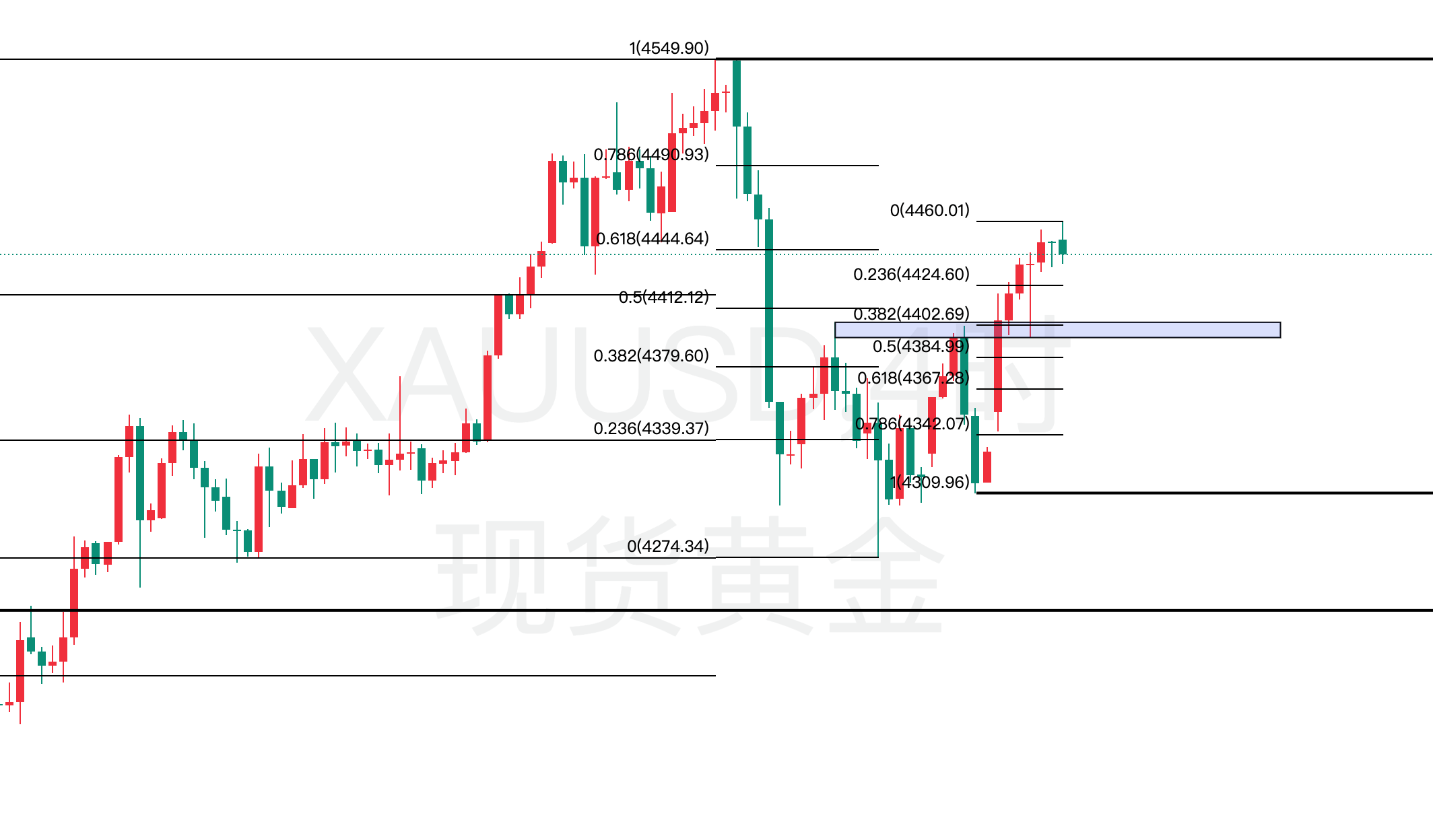
Group 1 - The core event is the U.S. special forces' raid in Venezuela, leading to the arrest of President Maduro and his wife, which has sparked geopolitical tensions and divided international responses [2] - The market anticipates at least two interest rate cuts by the Federal Reserve in 2026, which is expected to lower the opportunity cost of holding gold, alongside a decline in the U.S. dollar index and ongoing central bank gold purchases [3] - Gold prices showed a strong upward trend following geopolitical factors, with a significant increase from a low of 4400 to a high of 4456, indicating a shift from weakness to strength in the short-term outlook [5] Group 2 - Technical analysis indicates that gold prices need to maintain above the 4400 level to continue a strong upward trend, with key support levels identified at 4405-4395 and resistance at 4550 [7][8] - The four-hour chart highlights critical support at 4310/4309, and if gold can break above 4550, it may confirm a fifth wave upward trend; otherwise, a drop below 4310/4309 would suggest continued adjustment [7] - Short-term resistance levels are noted at 4491 and 4526-4531, while support levels are closely monitored at 4405-4395, 4367, and 4342 [8]
商品日报(1月5日):金银反弹铂钯飙升 碳酸锂盘中触及13万元关口
Xin Lang Cai Jing· 2026-01-05 11:48
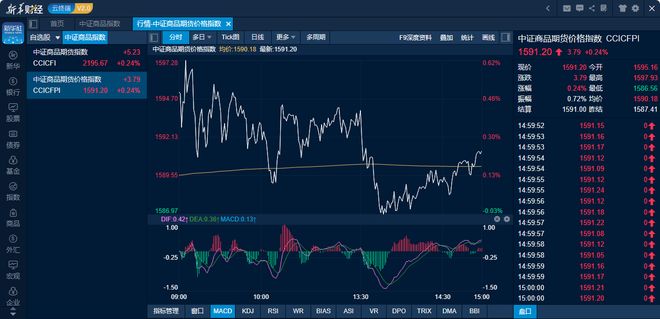
Group 1: Market Overview - On January 5, 2026, the domestic commodity futures market showed strength, driven by the metal sector, with the China Securities Commodity Futures Price Index closing at 1591.20 points, up 3.79 points or 0.24% from the previous trading day [1] - The China Securities Commodity Futures Index closed at 2195.67 points, also up 5.23 points or 0.24% from the previous day [1] Group 2: Metal Sector Performance - The metal sector, particularly energy and precious metals, saw significant gains, with palladium rebounding nearly 9%, leading the commodity market [1] - Lithium carbonate surged over 7%, reaching above 130,000 yuan/ton, while platinum rose over 6% [1][3] - Basic metals such as copper, aluminum, and zinc also strengthened, with Shanghai aluminum hitting a nearly four-year high [3] Group 3: Geopolitical Impact on Precious Metals - Geopolitical tensions, particularly following a U.S. military strike in Venezuela, heightened risk aversion, benefiting the precious metals market [2] - Gold and silver prices rose over 2% and 4% respectively in overseas markets, although domestic gains were limited due to the appreciation of the yuan [2] - Analysts expect the gold market to maintain a "high-level fluctuation and overall stability" pattern throughout January [2] Group 4: Energy Metals and Lithium Market Dynamics - The energy metals market, particularly lithium carbonate, is experiencing bullish sentiment due to favorable policies and strong fundamentals [3] - The National Development and Reform Commission and the Ministry of Finance's announcement regarding large-scale equipment updates and trade-in policies has improved expectations for first-quarter demand in the new energy vehicle sector [3] - Concerns over stricter review requirements for lithium mines and delays in production resumption are also positively influencing the lithium market [3] Group 5: Weakness in Energy and Chemical Sectors - The energy sector unexpectedly weakened, with SC crude oil dropping over 3% due to increasing supply expectations and persistent oversupply pressures [5] - Major chemical products, including ethylene glycol and low-sulfur fuel oil, saw declines of 1% to 2% due to weaker cost support from falling oil prices [5][6] - The caustic soda market faced pressure from anticipated increases in domestic production capacity, leading to a decline of 3.82% in prices [6]
业内看好长牛逻辑黄金T+D上涨
Jin Tou Wang· 2026-01-05 04:01
Core Viewpoint - The gold market is experiencing a bullish trend, with significant price movements and expectations for continued growth in 2026, despite potential volatility and market challenges [1][2]. Group 1: Current Market Analysis - As of January 5, 2026, gold T+D is trading around 988.68 CNY per gram, with a daily increase of 1.45%, reaching a high of 993.76 CNY and a low of 986.01 CNY [1]. - The Shanghai gold T+D opened at 987.26 CNY per gram, closing at 988.70 CNY, reflecting a 1.47% increase, with strong trading volume and a bullish technical outlook [3]. Group 2: Future Outlook - The gold market is expected to maintain upward momentum in 2026, driven by long-term factors such as weakening G7 sovereign currencies and a shift in central bank reserve structures [1]. - Analysts predict increased volatility in gold prices due to the influence of risk assets and differing views on U.S. Treasury and dollar exchange rate trends, with potential impacts from Federal Reserve interest rate discussions [2]. Group 3: Technical Indicators - The technical indicators for gold T+D show a strong bullish trend, with support at 986.00 CNY and initial resistance at 990.00 CNY, while the RSI is around 65, indicating no overbought conditions [3]. - The MACD indicator shows expanding bullish momentum, suggesting that market sentiment is predominantly positive, with recommendations for long positions and caution on stop-loss placements [3].
华西证券:短期贵金属高波动或将持续
Di Yi Cai Jing· 2025-12-31 00:13
Core Viewpoint - Short-term volatility in precious metals is expected to persist, with silver, platinum, and palladium facing larger adjustments due to liquidity and market capacity constraints, while gold and base metals are anticipated to have a more controlled decline and may stabilize first [1] Group 1: Short-term Strategy - A defensive strategy is recommended in the short term, waiting for emotional market reactions to subside and for stabilization to occur [1] Group 2: Long-term Outlook - The macroeconomic logic of a "weak dollar" and the onset of the Federal Reserve's easing cycle remains unchanged, supporting a long-term bullish outlook for precious metals [1] - A significant adjustment, such as a decline of over 10% in gold prices, could present an excellent opportunity for low-cost positioning [1]

金价反弹挑战4520阻力 市场聚焦FOMC纪要寻求方向
Jin Tou Wang· 2025-12-30 10:34
Core Viewpoint - Gold prices experienced a significant drop of 4.5%, marking the largest single-day decline since October, primarily due to the CME raising margin requirements for gold and silver futures, which triggered profit-taking and position adjustments [1][2] Group 1: Market Dynamics - During the European session on December 30, spot gold saw a slight increase, reaching $4,380 per ounce before stabilizing around $4,360 [1] - The previous day's drop was attributed to the CME's increase in margin requirements, leading to widespread profit-taking and portfolio adjustments, which intensified short-term volatility [2] - Analysts suggest that the potential for further declines in gold prices may be limited due to expectations of the Federal Reserve entering a loosening cycle by 2026, which would lower the opportunity cost of holding non-yielding gold [2][3] Group 2: Technical Analysis - Gold trading showed a positive trend, remaining above the critical 100-day exponential moving average (EMA), indicating a sustained bullish outlook [4] - The Relative Strength Index (RSI) is hovering around the midline, suggesting a potential for further consolidation or a brief pullback in the short term [4] - Key resistance is identified at the upper Bollinger Band around $4,520 per ounce, with a successful breakout potentially leading to tests of historical highs at $4,550 and psychological levels at $4,600 [4] - Initial support is concentrated in the $4,305-$4,300 per ounce range, with a failure to hold this level possibly extending the correction towards the December 16 low of $4,271 [4]