软件生态

Search documents
“港股GPU第一股”上市大涨,国产算力竞争升维
21世纪经济报道· 2026-01-02 09:54
Core Viewpoint - The article highlights the rapid growth and market potential of domestic AI chip companies, particularly focusing on Wallen Technology, which has successfully launched its GPU products and is experiencing significant revenue growth due to increasing demand for AI computing power [1][3]. Company Overview - Wallen Technology, known as the "first GPU stock in Hong Kong," debuted on the Hong Kong Stock Exchange on January 2, 2026, with a market capitalization exceeding HKD 100 billion and a subscription rate of over 2300 times during the offering phase [1]. - The company has developed its first-generation GPGPU architecture and two chip models, BR106 and BR110, and is advancing towards its second-generation architecture products [2][8]. Revenue Growth - In 2022, Wallen Technology reported revenue of approximately RMB 500,000, which surged to about RMB 62.03 million in 2023, marking a growth of 443.29% to approximately RMB 337 million in 2024 [2]. - The average transaction amount per customer increased by 113.64% to RMB 940,000, reflecting the company's successful market penetration and product acceptance [2]. Market Potential - The Chinese smart computing chip market is projected to grow from USD 1.7 billion in 2020 to USD 30.1 billion by 2024, with a CAGR of 105%, and is expected to reach USD 201.2 billion by 2029 [3]. - Domestic AI chip manufacturers are anticipated to increase their market share from approximately 20% in 2024 to about 60% by 2029, indicating significant growth opportunities for competitive players [3]. Technological Advancements - Wallen Technology is focusing on enhancing its cluster capabilities and has successfully commercialized its AIDC thousand-card GPU cluster project, collaborating with major telecom operators [6][9]. - The company plans to launch its next-generation flagship data center chip, BR20X, by 2026, which is expected to provide improved single-card computing power and support for various data formats [8]. Industry Collaboration - Wallen Technology is actively participating in industry collaborations, including the establishment of the OISA ecosystem and the development of mixed training solutions to address challenges in heterogeneous computing environments [9][10]. - The company is involved in the formulation of national standards for AI computing, which will facilitate the adoption of domestic GPUs and support the innovation of large models [10]. Future Strategy - The company aims to continue investing in R&D, particularly in core technologies to enhance its autonomous capabilities, while fostering partnerships to improve brand recognition and accelerate solution commercialization [10][11]. - The competitive landscape for domestic GPUs is evolving beyond hardware specifications to encompass reliable deployment, open-source ecosystem development, and forward-looking technical standards [10].


TPU vs GPU:谷歌芯片商业化提速,英伟达护城河能防得住吗?
Hua Er Jie Jian Wen· 2025-12-03 07:21
Core Insights - Google is attempting to sell its self-developed AI chip, TPU (Tensor Processing Unit), to a broader market, posing a significant challenge to Nvidia, the current leader in AI chips [1] - The advanced AI models from Google and Anthropic utilize Google's TPU chips, which has prompted major clients like Meta to consider using TPUs for new model development [1] - Morgan Stanley predicts that Google plans to produce over 3 million TPUs by 2026 and around 5 million by 2027, while Nvidia's current GPU production is approximately three times that of Google's TPUs [1][7] Performance Comparison - Although a single TPU chip is less powerful than Nvidia's strongest GPU, Google's strategy leverages large-scale clusters to enhance performance and cost-effectiveness [2][3] - Thousands of TPUs can be connected to form a "super pod," providing superior performance in training large models compared to Nvidia's GPU systems, which can connect a maximum of about 256 GPUs directly [3] Software Ecosystem - Nvidia's competitive advantage lies in its deeply integrated CUDA software ecosystem, making it more cost-effective for existing users to rent Nvidia chips [4] - TPU's compatibility challenges arise as it primarily works with specific AI software tools like TensorFlow, while most AI researchers prefer PyTorch, which performs better on GPUs [4] Cost Dynamics - The manufacturing costs of TPU and GPU are comparable, with TPU using advanced but more expensive manufacturing technology [5] - Nvidia's hardware business maintains a gross margin of 63%, while Google's cloud services have a margin of only 24%, explaining Nvidia's strong profitability in price competition [6] Capacity Competition - TSMC does not allocate all its production capacity to a single client, allowing space for alternatives like TPU in the market [7] - As Google ramps up TPU production, the gap between TPU and Nvidia's GPU production is narrowing, encouraging clients to explore multiple options [7] Commercialization Challenges - Google faces significant challenges in building a complete supply chain for TPU sales, including partnerships with server manufacturers and distribution networks [8] - Deploying TPUs in client data centers could lead to a loss of cloud service revenue for Google, indicating that TPUs may not follow a low-cost strategy but rather a complex strategic approach [8] - The broader significance of TPU for Google lies in its potential to negotiate with Nvidia and promote its Gemini AI ecosystem, enhancing Google's autonomy in AI infrastructure [8]


谷歌TPU助力OpenAI砍价三成,英伟达的“王座”要易主了?
3 6 Ke· 2025-12-02 08:19
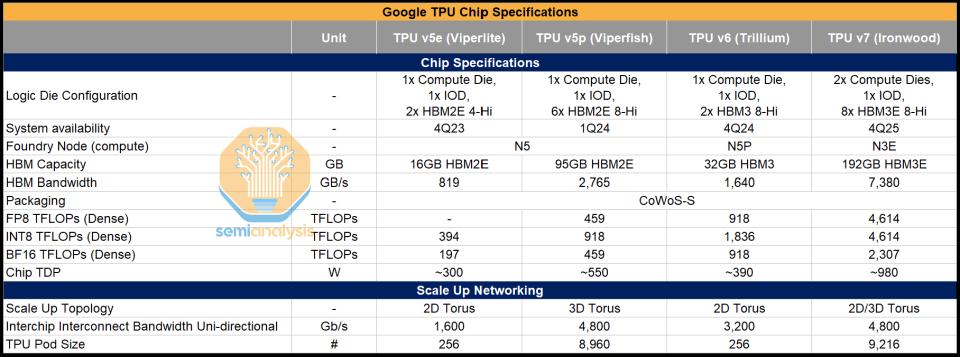
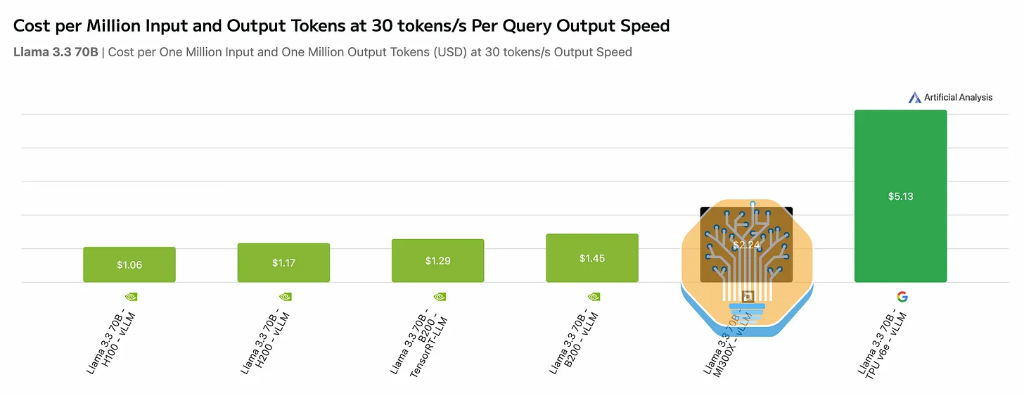
Core Insights - Google is shifting its TPU strategy from primarily serving its own AI models to actively selling chips to third parties, directly competing with Nvidia [1][2] - Anthropic has become one of the first significant customers for Google's TPU, involving a deal for approximately 1 million TPUs, which includes both direct hardware purchases and rentals through Google Cloud Platform (GCP) [1][2][3] - The competitive landscape is changing, with OpenAI negotiating a 30% price discount in discussions with Nvidia by considering alternatives like TPUs [1] Group 1: Partnership with Anthropic - Google has mobilized its resources to provide TPUs to external customers, marking a significant step in its strategy to become a differentiated cloud service provider [2] - The partnership with Anthropic aligns with its goal to reduce reliance on Nvidia, with Google having made early investments in Anthropic while limiting its voting rights [2] - Anthropic will deploy TPUs in its own facilities and also rent additional TPUs through GCP, allowing Google to compete directly with Nvidia [3] Group 2: Financial Implications - The deal with Anthropic includes a direct sale of approximately $10 billion worth of TPU systems, with 400,000 TPUv7 chips, making Anthropic a key customer for Broadcom [3] - Anthropic's rental of an additional 600,000 TPUv7 chips through GCP is expected to generate about $42 billion in contract value, significantly contributing to GCP's order backlog [3] Group 3: Technical Advancements - TPUv7 "Ironwood" is nearing parity with Nvidia's Blackwell architecture in theoretical performance and memory bandwidth, with a competitive edge in pricing [5][12] - The total cost of ownership for each TPU is approximately 44% lower than Nvidia's GB200, and even with a premium for external customers, the cost remains 30%-50% lower than Nvidia systems [6][8] - Google is working to eliminate software compatibility barriers by developing native support for frameworks like PyTorch, aiming to make TPUs a viable alternative without requiring developers to overhaul their toolchains [10][12] Group 4: Competitive Landscape - Nvidia is preparing a counterattack with its next-generation "Vera Rubin" chip, which may reshape the competitive landscape [13] - Google plans to develop TPUv8 in two versions, but analysts note that the designs are conservative and may face delays [13] - The success of Nvidia's upcoming chips could challenge Google's current pricing advantages, emphasizing the need for Nvidia to execute its technology roadmap effectively [13]
SemiAnalysis深度解读TPU--谷歌(GOOG.US,GOOGL.US)冲击“英伟达(NVDA.US)帝国”
智通财经网· 2025-11-29 09:37
Core Insights - Nvidia maintains a leading position in technology and market share with its Blackwell architecture, but Google's TPU commercialization is challenging Nvidia's pricing power [1][2] - OpenAI's leverage in threatening to purchase TPUs has led to a 30% reduction in total cost of ownership (TCO) for Nvidia's ecosystem [1] - Google's transition from a cloud service provider to a commercial chip supplier is exemplified by Anthropic's significant TPU procurement [1][4] Group 1: Competitive Landscape - Google's TPU v7 shows a 44% lower TCO compared to Nvidia's GB200 servers, indicating a substantial cost advantage [7][66] - The first phase of Anthropic's TPU deal involves 400,000 TPUv7 units valued at approximately $10 billion, with the remaining 600,000 units leased through Google Cloud [4][42] - Nvidia's defensive posture is evident as it addresses market concerns regarding its "circular economy" strategy of investing in AI startups [5][31] Group 2: Technological Advancements - Google's TPU v7 architecture has been designed to optimize system performance, achieving competitive efficiency despite slightly lower theoretical peak performance compared to Nvidia [12][53] - The introduction of Google's innovative interconnect technology (ICI) allows for dynamic network reconfiguration, enhancing cluster availability and reducing latency [15][17] - Google's shift towards supporting open-source frameworks like PyTorch indicates a strategic move to dismantle Nvidia's CUDA ecosystem dominance [19][20][22] Group 3: Financial Implications - The financial engineering behind Google's TPU sales, including credit backstop arrangements, facilitates a low-cost infrastructure ecosystem independent of Nvidia [9][47] - The anticipated increase in TPU sales to external clients, including Meta and others, is expected to bolster Google's revenue and market position [43][48] - Nvidia's strategic investments in AI startups are seen as a way to maintain its market position without resorting to price cuts, which could harm its margins [35][36][31]
31省公布出生率数据,保时捷前三季利润暴跌99% | 财经日日评
吴晓波频道· 2025-10-28 02:15
Group 1: US-China Economic Talks - The recent US-China economic talks in Kuala Lumpur led to preliminary consensus on key issues such as maritime logistics, shipbuilding, and agricultural trade, setting the stage for the upcoming leaders' meeting [2][3] - Both sides expressed a willingness to resolve differences through respectful dialogue and cooperation, indicating a potential thaw in trade tensions [2][3] Group 2: Industrial Profit Growth - In the first nine months of the year, China's industrial enterprises achieved a total profit of 53,732 billion yuan, a year-on-year increase of 3.2%, with September alone seeing a profit growth of 21.6% [4][5] - The profit growth was driven by strong export demand and a slight recovery in domestic demand, although the sustainability of this growth remains uncertain [5] Group 3: Birth Rate Statistics - In 2024, China's birth population is projected to be 9.54 million, an increase of 520,000 from the previous year, with a birth rate of 6.77‰, up by 0.38‰ [6][7] - The data indicates that western regions have higher birth rates compared to eastern regions, with Guangdong continuing to lead in total births [6][7] Group 4: New Energy Vehicle Subsidies - A competitive subsidy "war" among car manufacturers has emerged, with companies like Chery and Xiaomi offering to cover the additional purchase tax costs for consumers due to policy changes [8][9] - This trend reflects the intensifying market competition in the new energy vehicle sector, as companies aim to boost sales before the tax reduction policy takes effect [8][9] Group 5: Meituan's Bond Issuance - Meituan plans to launch its largest bond issuance to raise approximately $3 billion, primarily for refinancing existing debts and general operational needs [10][11] - The company faces significant competition in the food delivery sector, prompting the need for financial maneuvers to alleviate cash flow pressures [10][11] Group 6: Porsche's Profit Decline - Porsche reported a staggering 99% drop in profit for the first three quarters, with a loss of 9.66 billion euros in Q3, attributed to declining sales in China and Europe [12][13] - The company is undergoing organizational restructuring and plans to cut jobs as part of its strategy to cope with the challenges posed by the shift towards electric vehicles [12][13] Group 7: SoftBank's Investment in OpenAI - SoftBank has approved an additional $22.5 billion investment in OpenAI, part of a larger commitment to invest $40 billion, aiming to capitalize on OpenAI's potential IPO [14][15] - This investment comes amid SoftBank's ongoing financial challenges and highlights the risks associated with high-stakes investments in the tech sector [14][15] Group 8: Stock Market Performance - The stock market experienced a significant rise, with the Shanghai Composite Index reaching a ten-year high, driven by positive sentiment from US-China trade negotiations [16][17] - Despite the overall market uptrend, there were fluctuations, indicating cautious investor sentiment as the index approached the psychological 4000-point mark [16][17]

大疆和影石终于“华山论剑”,谁会成谁的「垫脚石」?
3 6 Ke· 2025-07-11 03:25
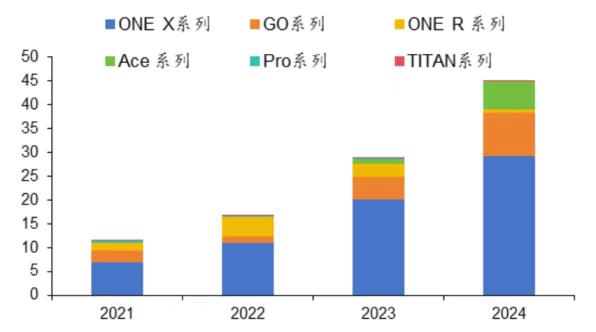
Core Insights - The competition between the companies is intense, with DJI being both a challenge and a motivator for Insta360, as highlighted by the founder's remarks on the dual nature of DJI's presence in the market [1] - Insta360 has established a strong market position in the consumer panoramic camera segment, holding a 67.2% market share, significantly ahead of competitors like Ricoh and GoPro [4] - The company is adjusting its distribution strategy to enhance its dealer system and optimize its CRM, indicating a proactive approach to competition [1][6] Company Overview - Insta360's product line includes a variety of imaging devices such as consumer and professional panoramic cameras, action cameras, and AI stabilizers, with consumer products contributing 86.59% of revenue in 2024 [2] - The ONE X series is the best-selling product line, showcasing the company's strength in the consumer market [2] Market Position - Insta360 leads the global panoramic camera market, selling 8 out of every 10 panoramic cameras worldwide, thanks to its advanced imaging technology and AI algorithms [4] - Despite its dominance in panoramic cameras, Insta360 faces strong competition from GoPro and DJI in the broader action camera market [5] Financial Performance - Insta360's revenue from the Ace series action cameras increased from 0.97 billion in 2023 to 2.76 billion in the first half of 2024, indicating strong growth [5] - The company’s revenue from non-panoramic action cameras is approximately 1.5 billion, ranking third in the market [5] Distribution Strategy - Insta360 employs a hybrid sales model combining online and offline channels, with a near 1:1 ratio in 2024, and a significant portion of sales coming from third-party e-commerce platforms [6][8] - The company collaborates with major retailers and uses a buyout sales model for most distributors, focusing on enhancing customer experience and trust [9] Marketing Strategy - Insta360 has developed a robust marketing strategy centered around KOLs and user-generated content, significantly increasing brand visibility and engagement [10][11] - The company has initiated various marketing campaigns and collaborations with influencers to enhance its brand image and reach [10] Competitive Landscape - DJI is seen as a formidable competitor, particularly in the action camera segment, with its upcoming Osmo 360 product directly competing with Insta360's offerings [14][18] - The competition has led to price wars, with DJI adopting a low-price strategy while maintaining high performance, which poses a challenge for Insta360 [19] Technological Development - Insta360's core competencies lie in its software ecosystem and advanced algorithms, which provide a competitive edge in the market [17][23] - The company is investing heavily in R&D, with over 12% of its revenue allocated to this area, and a significant portion of its workforce dedicated to research [23] Future Outlook - The market dynamics between Insta360 and DJI are expected to drive innovation and technological advancements in the imaging sector, benefiting the overall industry [26]

折叠屏供应链“等待苹果”
Jing Ji Guan Cha Wang· 2025-07-04 07:33
Core Viewpoint - The domestic foldable smartphone market is experiencing a surge, with major brands like Honor, vivo, and Samsung launching new models, while the A-share market for consumer electronics sees significant gains due to anticipation of Apple's entry into the foldable screen segment [2][3]. Market Dynamics - The foldable smartphone market is currently at a bottleneck, with many brands adopting a conservative approach and reducing their product lines due to inherent issues like screen creases, quality, and pricing [4]. - Despite technological advancements, user growth has plateaued, with many consumers returning to traditional smartphones after initial trials [4][5]. - In contrast, the high-end smartphone segment in China is growing, with sales of devices priced above 5000 yuan projected to reach approximately 78.4 million units in 2024, up from 11% in 2020 [5][6]. Apple's Potential Impact - Apple's entry into the foldable market is highly anticipated, with reports indicating that the foldable iPhone is in the prototype development stage and expected to launch in late 2026 [3][8]. - The industry believes that Apple's involvement could redefine market dynamics and product standards, as it typically enters markets only when technology is sufficiently mature [8][11]. - The high technical barriers in the foldable supply chain, particularly in precision manufacturing and new materials, present challenges that need to be addressed before mass production can occur [9][10]. Supply Chain and Technological Challenges - The cost structure of foldable smartphones is heavily influenced by high-value components such as flexible screens and hinge systems, with screen modules priced between 1100 to 2200 yuan and hinge systems ranging from 350 to 1200 yuan [9]. - Despite advancements, there are still weaknesses in the supply chain, particularly in high-end materials and manufacturing processes, which are dominated by a few international leaders [10][11]. Future Outlook - The industry is divided on the future of foldable smartphones, with some analysts optimistic about Apple's potential to lead a technological revolution, while others caution that significant hardware improvements are necessary for mainstream adoption [16][17]. - The evolution of foldable smartphones may include new form factors like triple-fold or rollable designs, but the focus should be on balancing display space and portability rather than merely increasing folding capabilities [17].


鸿蒙电脑带来哪些新突破
Jing Ji Ri Bao· 2025-06-07 22:01
Core Viewpoint - Huawei's launch of two HarmonyOS computers, including the first foldable model, signifies a significant step for China in the computer operating system sector, challenging the dominance of Microsoft Windows and Apple macOS [1][2]. Group 1: Product and Technology - The HarmonyOS PC establishes a self-sufficient system from chips to software, potentially breaking the long-standing commercial monopoly of foreign products like Windows and macOS [1][2]. - The HarmonyOS features system-level AI capabilities, distributed collaborative experiences, and comprehensive security protections, which are highlighted as key technological advantages [2][3]. - Over 150 dedicated PC applications and more than 300 integrated applications have been adapted for HarmonyOS, with expectations to support over 2000 applications by the end of the year [2]. Group 2: Market Impact and Ecosystem - The introduction of HarmonyOS PCs is expected to enhance Huawei's ecosystem, allowing seamless collaboration among devices such as smartphones, computers, tablets, and automotive systems, thereby improving user experience [2]. - The HarmonyOS aims to fill gaps in the domestic professional software sector, reducing reliance on foreign software and fostering the development of self-researched software [2]. - The total number of HarmonyOS devices connected has surpassed 1 billion, indicating a growing ecosystem [2]. Group 3: Challenges and Future Outlook - Despite the growth in application adaptation, the HarmonyOS ecosystem remains relatively weak, particularly in professional software support, which may hinder seamless migration from established ecosystems like Windows and Android [3]. - There are ongoing challenges regarding compatibility with external devices and the need for optimization in user interface usability and system stability [3]. - Future efforts should focus on addressing application and peripheral compatibility issues to enhance user adoption and experience [3].
北京:鼓励外资企业参与本市高级别自动驾驶示范区、机器人百场景、氢能等重点场景应用
news flash· 2025-05-27 03:00
Core Viewpoint - The Beijing Municipal Bureau of Economy and Information Technology has issued the "Beijing Action Plan for Promoting High-Level Opening of High-Precision Industries (2025)", which encourages foreign investment in key application scenarios such as advanced autonomous driving, robotics, and hydrogen energy [1] Group 1 - The action plan supports foreign enterprises in conducting technical testing and demonstration applications based on key scenarios [1] - It promotes the use of various software adaptation and verification platforms developed in the city, facilitating mutual recognition and adaptation of domestic and foreign software products in terms of agreements, interfaces, and standards [1] - The initiative aims to collaboratively form solutions and build a software ecosystem with foreign enterprises [1]

中国对英伟达到底有多重要?
3 6 Ke· 2025-04-21 23:40
Core Viewpoint - Nvidia's CEO Jensen Huang's recent visit to Beijing highlights the urgent challenges the company faces in the Chinese market due to U.S. export restrictions on its H20 chips, which are crucial for its revenue growth in China [1][3][18]. Group 1: Market Impact - Nvidia has received a notification from the U.S. government to indefinitely suspend exports of H20 chips to China without permission, following previous semiconductor export controls [3]. - The H20 chip, a modified version of Nvidia's flagship H100, has generated significant revenue, with sales projected between $12 billion to $15 billion in 2024, contributing to Nvidia's record revenue of $17.108 billion in China for the fiscal year [3]. - The Chinese market has become Nvidia's fourth-largest revenue source globally, with $16 billion in H20 sales in the first quarter of 2025 alone [3]. Group 2: Competitive Landscape - The suspension of exports to China could severely damage Nvidia's business, as the country is a major player in computing power investments, with significant capital expenditure growth from companies like Tencent and Alibaba [4][6]. - Chinese companies are rapidly advancing in the semiconductor space, with Huawei's CloudMatrix 384 super node surpassing Nvidia's NVL72 in performance, achieving a computing power of 300 PFlops, a 67% increase over Nvidia's offering [12][13]. - Huawei's advancements in AI chips and software ecosystems, such as the CANN architecture, position it as a formidable competitor to Nvidia, potentially filling the void if Nvidia withdraws from the Chinese market [14][16][17]. Group 3: Developer Ecosystem - Nvidia's CUDA platform has cultivated a robust developer ecosystem, with approximately 4.3 million developers, 1.5 million of whom are from China, representing over 30% of the total [8][9]. - The potential loss of Chinese developers due to U.S. restrictions could significantly impact Nvidia's competitive edge and market position [9]. Group 4: Strategic Response - Huang's visit to Beijing indicates Nvidia's desire to maintain collaboration with China, recognizing the critical importance of the Chinese market for its future [18][19]. - The ongoing geopolitical tensions and export restrictions pose a significant threat to Nvidia's business model, as the company may struggle to sustain its growth without access to the Chinese market [19].