量价齐升

Search documents
GGII:2025年锂电正极材料出货增长50% 行业迎“量价齐升”
智通财经网· 2026-01-16 11:21
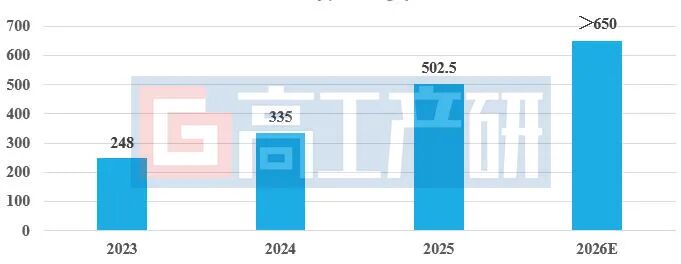
Core Insights - The core viewpoint of the article highlights the significant growth forecast for China's lithium battery cathode materials, with shipments expected to reach 5.025 million tons by 2025, a 50% increase year-on-year, and projected to exceed 6.5 million tons in 2026, driven by rising downstream demand, stabilized upstream raw material prices, and technological advancements [1][3]. Group 1: Market Growth and Trends - The year 2025 is identified as a pivotal year for the lithium battery cathode materials industry, with growth rates leading among various segments of the lithium battery supply chain [3]. - Lithium iron phosphate (LFP) is expected to maintain its dominant position with shipments of 3.87 million tons, a year-on-year increase of 58%, accounting for 77.4% of the market share, primarily due to its cost and safety advantages in power batteries and energy storage [3]. - Nickel-cobalt-manganese (NCM) materials are projected to ship 830,000 tons, reflecting a year-on-year growth of 27.4%, with a notable concentration of customers leading to increased bargaining power for major battery manufacturers [3][4]. Group 2: Emerging Materials - New materials are experiencing explosive growth, with lithium manganese iron phosphate (LMFP) shipments expected to surge from 8,000 tons in 2024 to 30,000 tons in 2025, marking a staggering year-on-year growth of 275% [4]. - Lithium-rich manganese-based (LRM) materials are also gaining traction, with shipments rising to 4,000 tons, benefiting from cobalt price increases and a trend towards lower cobalt content in battery production [4]. Group 3: Raw Material Price Trends - As of early 2026, there has been a significant increase in the prices of key upstream raw materials for lithium battery cathode materials, with cobalt prices soaring from 168,000 yuan/ton to approximately 460,000 yuan/ton, an increase of over 170% [6][7]. - The price of lithium carbonate has risen by nearly 60%, while other materials such as iron sulfate and manganese sulfate have also seen substantial price increases, contributing to a projected 30% rise in the average price of cathode materials in 2026 compared to 2025 [6][7].

中金:中银航空租赁(02588)交付稳步改善 目标价升至87.9港元
智通财经网· 2026-01-15 07:40
Core Viewpoint - The report from CICC indicates that China Aircraft Leasing Group (02588) is expected to enter a growth cycle characterized by simultaneous increases in volume and price, driven by improving deliveries and a Federal Reserve interest rate cut environment, leading to a steady rise in valuation [1] Group 1: Financial Performance and Projections - The target price for the company has been raised by 8% to HKD 87.9, maintaining an "outperform" rating, which corresponds to an upside potential of 8.8% and price-to-book ratios of 1.2x, 1.1x, and 1.0x for 2025 to 2027 [1] - The company has a strong sensitivity to interest rate cuts, with 29% of its floating-rate debt from the first half of this year, benefiting from the current interest rate environment [1] - The company’s earnings forecasts for 2025 and 2026 remain unchanged, with a new earnings forecast for 2027 introduced at USD 931 million [1] Group 2: Debt and Interest Rate Impact - The company issued 5.5-year and 7-year corporate bonds on August 26 last year and January 12 this year, with coupon rates of 4.25% and 4.375% respectively, indicating a strategic approach to managing debt in a declining interest rate environment [1] - The combination of improved deliveries and overseas interest rate cuts is expected to lead to a steady increase in the company's Return on Equity (ROE) [1]

一批港股公司预告2025年业绩 黄金医药等板块报喜
Shang Hai Zheng Quan Bao· 2026-01-12 18:36
Core Viewpoint - Nearly 20 Hong Kong-listed companies have announced their performance forecasts for the year ending December 31, 2025, with 11 companies expecting profit increases, 2 companies anticipating reduced losses, and 1 company projecting a turnaround to profitability [1] Group 1: Gold Mining Sector - Gold mining companies are showing strong performance, driven by rising gold prices and increased production capacity [2] - Lingbao Gold expects a net profit of 1.503 billion to 1.573 billion RMB for 2025, representing a year-on-year growth of 115% to 125%, attributed to optimized production and increased gold output [2] - Zijin Mining International anticipates a net profit of 1.5 billion to 1.6 billion USD for 2025, with a growth of 212% to 233%, driven by higher gold sales prices and profitable acquisitions [2] - Zijin Mining's parent company, Zijin Mining Group, forecasts a net profit of 51 billion to 52 billion RMB for 2025, reflecting a growth of 59% to 62% [3] - Chifeng Jilong Gold expects a net profit of 3 billion to 3.2 billion RMB for 2025, with a growth of 70% to 81%, due to increased gold production and higher sales prices [3] - Multiple gold mining companies are benefiting from a rising gold price cycle, achieving both volume and price increases [4] Group 2: Biopharmaceutical and Consumer Sectors - The biopharmaceutical and consumer sectors also have companies projecting strong performance for 2025 [5] - WuXi AppTec expects an adjusted net profit of 14.957 billion RMB for 2025, a year-on-year increase of approximately 41.33%, driven by its integrated CRDMO business model [5] - Biotech company Baidu Bio expects a non-GAAP net profit of approximately 80.273 million RMB for 2025, reflecting a growth of about 249.50%, supported by strong R&D capabilities and market expansion [5] - Yadea Holdings anticipates a net profit of no less than 2.9 billion RMB for 2025, doubling from 1.27 billion RMB in 2024, due to increased sales of electric two-wheelers [5] Group 3: Operational Efficiency and Growth - Many Hong Kong-listed companies are achieving performance growth through improved operational efficiency and increased product sales [7] - China Shipbuilding Defense expects a net profit of 940 million to 1.12 billion RMB for 2025, with a growth of 149.61% to 196.88%, driven by increased revenue and improved production efficiency [7] - Kinglong Permanent Magnet anticipates a net profit of 660 million to 760 million RMB for 2025, reflecting a growth of 127% to 161%, due to record high production and sales [7] - Sanhua Intelligent Controls expects a net profit of 3.874 billion to 4.649 billion RMB for 2025, with a growth of 25% to 50%, supported by its leading position in the automotive thermal management sector [8]




西锐(02507):更新报告:消费品中稀缺的业绩可见度高+量价齐升品种
ZHESHANG SECURITIES· 2026-01-11 12:00
Investment Rating - The investment rating for the company is "Buy" [6][8] Core Insights - The report highlights the company's high visibility in performance and simultaneous growth in volume and price, making it a rare investment opportunity in the consumer goods sector. The valuation is considered attractive, and there is potential for earnings to exceed expectations in 2026 due to continuous innovation in core models [1][4]. Industry Overview - The private jet industry is experiencing steady growth, with high-end models (jets) growing at a faster rate. Post-pandemic, high-net-worth individuals prefer private travel for privacy, and tariff fluctuations have led to a decline in competitors' market share. The supply side continues to introduce competitive new models, driving order growth [2]. Company Analysis - The company is a leading player in the piston private aircraft sector, rapidly increasing its market share through strong product quality and customer service. The safety and customization of products create significant competitive barriers. The launch of the SR series G7+ in 2025 has led to a rapid increase in orders, and a new model is expected in 2026, which could further boost orders and establish a foundation for high earnings growth [3][4]. Key Expectations - The company has a rich pipeline of new products, with expectations for significant order growth following the 2026 product launch. The current long delivery cycle suggests that order growth could exceed expectations, contributing to higher delivery volumes in 2026-2027. The service business is also showing strong growth, with a revenue increase of 24% in the first half of 2025, indicating a potential for higher profitability and earnings contributions [4][6]. Potential Catalysts - Key catalysts for the company include the anticipated market recovery in March 2026 based on transaction volume and market capitalization, the launch of new products in 2026, and quarterly delivery data released by GAMA [5].
矿企有望享受“量价齐升”,关注矿业ETF(561330)
Mei Ri Jing Ji Xin Wen· 2025-12-30 07:19
Group 1 - The metal market experienced significant volatility on December 29, with silver futures seeing over a 10% increase before turning negative, while copper briefly surpassed 100,000 yuan per ton before narrowing its gains. Platinum and palladium contracts hit their daily limit down in the afternoon [1] - The structural deficit in silver supply and demand has persisted for five years, with silver prices soaring over 150% this year due to industrial demand from photovoltaic silver paste and AI electronics, alongside a high gold-silver ratio. The global silver supply is primarily a byproduct of copper, lead, and zinc mining, and the expected increase in silver supply by 2026 is minimal, failing to cover the projected shortfall of over 100 million ounces [1] - In contrast, copper is transitioning from an anticipated shortage to a real one, with a projected global copper market deficit of 500,000 to 1 million tons by 2026. The decline in existing mine grades and lagging capital expenditures are contributing to supply challenges, while demand from AI and power grids is creating a rigid demand for copper, suggesting that copper prices are likely to rise [1] Group 2 - The recent significant price increases in metals like silver and copper have led to profit-taking, resulting in heightened short-term volatility. Companies with high-quality mining resources are expected to benefit from both volume and price increases, providing a good margin of safety and typically higher stock price elasticity compared to the metals themselves. Investors are advised to keep an eye on mining ETFs (561330) and consider opportunities for low-cost acquisitions [2]
海外模拟芯片吹响涨价号角,国产厂商迎估值业绩修复曙光?
第一财经· 2025-12-25 03:30
Core Viewpoint - The recent surge in the semiconductor sector has shifted focus to analog chips, with leading stocks like Shengbang Co., Jihua Te, and Zhenlei Technology experiencing significant gains, indicating a potential recovery in the industry [3][4]. Group 1: Price Increases and Market Signals - Analog Devices (ADI) announced a price increase for its entire product line, effective February 1, 2026, with military-grade products seeing a rise of up to 30% [3][5]. - Texas Instruments (TI) initiated a price hike in August 2023, affecting over 60,000 models with increases ranging from 10% to 30% [3][5]. - The collective price increases from these industry giants are interpreted as strong signals of a cyclical reversal in the analog chip market, which has struggled with inventory and demand issues over the past two years [3][5][6]. Group 2: Demand Recovery and Market Dynamics - The demand for analog chips is closely tied to macroeconomic conditions, with signs of recovery in smartphone shipments, electric vehicle demand, and industrial automation driven by policy support [5][6]. - The current price increases differ fundamentally from the panic-driven hikes of 2020-2021, as they reflect strategic moves by leading companies to stabilize prices and restore profit margins rather than a response to supply chain disruptions [5][6]. Group 3: Implications for A-share Analog Chip Companies - A-share analog chip companies like Shengbang Co. and Jihua Te are expected to benefit from improved profit margins as a result of the price hikes initiated by global leaders [8][9]. - The average gross margin for the analog chip sector has declined from 42.2% in 2022 to 35.72% in 2024, with a slight recovery to 36.01% by Q3 2023, indicating the pressure faced by domestic manufacturers [9]. - If the price stability and potential increases lead to enhanced demand from downstream customers, A-share companies may experience a "volume-price rise" scenario, particularly in key areas like power management and automotive-grade chips [9].




海外模拟芯片吹响涨价号角,国产厂商迎估值业绩修复曙光?
Di Yi Cai Jing· 2025-12-25 03:13
Core Viewpoint - The recent price hikes by global semiconductor giants Analog Devices (ADI) and Texas Instruments (TI) signal a potential reversal in the semiconductor industry's cycle, particularly for the analog chip sector, which has been underperforming due to inventory digestion and weak demand over the past two years [1][2]. Group 1: Price Increases and Market Reactions - Analog Devices plans to increase prices across its entire product range by up to 30% for military-grade products starting February 1, 2026, following Texas Instruments' earlier price hikes of 10%-30% for over 60,000 models [1][2]. - The collective price increases from industry leaders are interpreted as a strong signal of a cyclical recovery, suggesting that the prolonged downturn may have reached its bottom [1][2][3]. - The market is shifting from a broad price war to a more structured "volume-price game," with high-end and automotive products showing stronger price rigidity compared to low-end general products [3]. Group 2: Demand Recovery and Industry Outlook - The demand for analog chips is closely tied to macroeconomic conditions, with signs of recovery in downstream markets, including a rebound in smartphone shipments and increased demand for electric and smart vehicles [2][4]. - The average gross margin for the analog chip sector has declined from 42.2% in 2022 to 35.72% in 2024, with a slight recovery to 36.01% by the end of Q3 this year, indicating the pressure domestic manufacturers faced during the downturn [4][5]. - The price stabilization initiated by leading companies could create a more favorable pricing environment for domestic firms, potentially aiding in gross margin recovery [5][6]. Group 3: Challenges and Future Prospects - Despite signs of recovery, domestic analog chip manufacturers face challenges, including reliance on international suppliers in consumer electronics and automotive sectors, and a need to observe the recovery strength in various fields [6]. - The potential for a "volume-price rise" scenario hinges on substantial recovery in downstream demand, particularly in key areas like power management and signal chain chips [6].
信达国际:紫金矿业全球多元化矿产布局 利好股价表现
Zhi Tong Cai Jing· 2025-12-12 07:12
Group 1: Company Strategy and Operations - Zijin Mining Group is implementing a globalization strategy, operating multiple mining projects in 17 countries, including the completion of the acquisition of the Akim gold mine in Ghana and the Raygorodok gold mine in Kazakhstan, which directly increases gold reserves and expands its footprint in West Africa and Central Asia [1] - The group has also completed a controlling acquisition of Zangge Mining, increasing its stake in the Julong copper mine and adding strategic potassium resource reserves, further strengthening its copper and lithium resource reserves [1] Group 2: Market Dynamics and Supply Issues - The supply of copper is being impacted by the shutdown of several large mines, leading to multiple downward revisions of global copper production forecasts for 2025 and 2026, alongside expectations of a potential 25% tariff on refined copper imports to the U.S. by mid-2026, which is causing a shift of copper inventories towards the U.S. and exacerbating shortages in other regions [2] Group 3: Demand Drivers and Future Outlook - Copper demand is expected to grow over the next decade, driven by investments in AI, green energy transitions, and defense restructuring, with the International Energy Agency predicting that existing and planned mining capacities will only meet about 70% of global copper demand by 2035 [3] - Zijin Mining has set a five-year plan aiming for a more than 49% increase in copper production and over 47% increase in gold production by 2028, with a 20% year-on-year increase in gold production and a 5% increase in copper production in the first three quarters of this year [4] Group 4: Financial Performance and Projections - The company reported a 10% year-on-year increase in revenue to 254.2 billion RMB and a 55% increase in net profit attributable to shareholders to 37.86 billion RMB in the first three quarters, exceeding market expectations, with a 44% increase in net cash flow from operating activities [4] - If metal prices continue to reach new highs, the earnings forecast for 2026 could be adjusted upwards, with an expected 28% year-on-year increase in earnings per share to 2.475 RMB, suggesting a favorable outlook for stock performance [5]
现在的储能,像极了2019年的光伏
投中网· 2025-12-12 03:00
Core Viewpoint - The global energy storage market is expected to experience significant growth, with predictions of over 50% growth by 2026, and potentially reaching 80% in optimistic scenarios [6]. Group 1: Market Dynamics - In the first half of 2025, the global energy storage market faced overcapacity, but by the second half, production utilization rates surged to full capacity across various segments [8]. - The global lithium battery storage installations reached 170 GWh in the first three quarters of 2025, marking a 68% year-on-year increase, with domestic installations at 82 GWh (up 61%) and overseas at 94 GWh (up 74%) [10]. Group 2: Demand Drivers - The surge in energy storage demand is driven by the increasing pressure to consume renewable energy, as evidenced by the drop in photovoltaic spot prices [11]. - The widening price difference between peak and valley electricity rates has made energy storage economically viable, allowing for "charging during low demand and discharging during high demand" [12]. - The shift from policy-driven to market-driven growth, following the cancellation of mandatory storage requirements, has further stimulated demand [13]. Group 3: Future Projections - By 2026, energy storage is anticipated to achieve a "volume and price increase" year, with a projected doubling of installed capacity by 2027 [19]. - The demand for energy storage is expected to be driven by various provinces, with Inner Mongolia projected to see a doubling of demand in 2026 [20]. Group 4: Industry Winners - Downstream energy storage system integrators are expected to capture a significant share of profits, with leading companies like Sungrow Power and Haibo Technology showing strong financial performance [24]. - Sungrow Power's energy storage revenue reached 28.8 billion yuan in the first three quarters of 2025, a 105% increase year-on-year, while Haibo Technology's revenue grew by 52% [24]. - Upstream lithium mining companies, such as Ganfeng Lithium, are also poised to benefit from increased demand, with predictions of a 30% growth in global lithium carbonate demand by 2026 [26]. Group 5: Industry Outlook - The energy storage industry is entering a golden development period as it transitions from policy support to market demand, with system integrators and material leaders being the core beneficiaries of this growth [28].

量价齐升
第一财经· 2025-12-08 13:24
Market Overview - The Shanghai Composite Index experienced a slight increase, benefiting from the stability of the financial sector, while the growth sector became the core market focus, directly driving the rise of the ChiNext Index and Shenzhen Component Index [4] - A total of 1,863 stocks declined, with the number of rising stocks significantly outpacing those that fell, indicating an overall positive market sentiment and noticeable profit-making effects [4] Trading Volume - The total trading volume of the two markets reached 4 trillion yuan, marking a 17.9% increase, which reflects a "volume-price rise" pattern and indicates a recovery in market sentiment and an increase in risk appetite [5] - The surge in trading volume was primarily concentrated in the technology (CPO, commercial aerospace, semiconductor) and financial (brokerage, insurance) sectors, while traditional cyclical sectors (coal, oil and gas) showed relatively weak performance [5] Fund Flows - There was a net outflow of 6 billion yuan from major funds, while retail investors saw a net inflow [6] - Institutional investors focused on technology and financial sectors, with capital flowing into electronics, semiconductors, and securities, while selling off coal and food and beverage sectors [7] Sector Performance - The brokerage sector was driven by favorable policies, leading to multiple stocks hitting the daily limit; the semiconductor sector benefited from increased demand for AI computing power, resulting in improved earnings expectations [4] - Hardware related to computing power became a market hotspot due to technological iterations and capacity releases, while sectors like coal, food and beverage, and precious metals experienced adjustments [4]