
高市经济学

Search documents
宏观经济点评:一文看懂日本众议院选举与日债、日元波动及影响
KAIYUAN SECURITIES· 2026-02-06 02:25
宏观经济点评 一文看懂日本众议院选举与日债、日元波动及影响 ——宏观经济点评 hening@kysec.cn 何宁(分析师) 潘纬桢(分析师) panweizhen@kysec.cn 证书编号:S0790524040006 高支持率背景下,高市早苗冒险解散众议院 高市早苗支持率在就职后维持高位,此时选择解散众议院,其所在的自民党理 论上来说胜算相当大。目前自民党与日本维新会联合执政,且在参众两院的总体 席位未过半,高市早苗的执政面临多重约束。而高市早苗的支持率就职后基本维 持在 60%以上,未出现明显下滑,是近 3 年以来的最高支持率,因此其冒险选择 解散众议院重新选举,谋求完全执政。但此举风险颇高,首相的支持率并不等于 自民党的支持率,若自民党在选举中表现不佳,高市早苗或只能选择辞职。 扩张财政下,日央行决策面临挑战,日债、日元承压 1. "高市经济学"下,日本财政可持续性成为重要担忧。高市早苗政府表示希望通 过"负责任的积极财政"政策,将日本经济从长期的"通缩与削减成本型"转变为 "增长型经济"。但其所提出的政策主张,将会加大日本财政支出,缺口必然由政 府发行更多国债填补。但 2026 年日本政府的国债余 ...
陶冬:Big MAC成为全球股市新交易主题
Di Yi Cai Jing· 2026-01-19 03:16
中期选举即将来临。 第二个维度是去监管,这也是特朗普竞选时的承诺,目的是为金融机构和科技企业松绑。笔者认为这一 政策对于企业运营和盈利的利好会慢慢显现。另一方面,特朗普又会通过行政指令来讨好民意。他最近 扬言要将信用卡贷款最高利率限制在10%之下,如果成功推行,对依靠信用卡过活的美国人,是一个很 大的帮助。 Big MAC的重大落笔之处,估计在货币政策。特朗普升级了对鲍威尔的打击,意在影响美联储的货币政 策。笔者认为,新主席上任后,美联储会不动声色地放弃通胀目标,迅速将联邦基金利率下调至2.5% 左右的中性水平,为下滑中的就业市场注入动力。若市场有风吹草动,美联储或许会直接重新扩表。当 然,新的美联储需要一个较大的市场动荡,才可以顺理成章地重祭QE法宝。 特朗普政府能不能在2026年推出足够的Big MAC政策?Big MAC会不会让美股继续上涨?笔者估计白宫 会努力推出政策,但是本届政府本色是劫贫济富,所以效果未必理想。估计美股仍然会在此主题下上 涨,不过必须注意风险。历史上拿下白宫并横扫两院的政党,在两年后的中期选举中大多会失去起码一 院的多数席位,美股在中期选举年的下半年表现多数时候也不理想。 上周,美 ...
2026年全球宏观经济政策走向
Jin Rong Shi Bao· 2026-01-19 01:49
2025复盘与2026趋势预判 《金融时报》记者:2025年全球经济在贸易政策、货币政策等多重因素影响下经历了显著波动,尤 其是美国在特朗普总统上任后推出了一系列备受关注的政策。首先请您整体回顾一下2025年,并展望 2026年全球宏观经济发展趋势。 温彬:2025年随着美国新任总统特朗普的上台,其推出的一系列政策显著增加了全球经济的不确定 性和运行风险。"对等关税"的推出一度对全球贸易产生重大影响,特朗普外交政策的转向也令盟友措手 不及。二季度美元资产的大幅波动削弱了"美国经济例外论",也令特朗普的政策趋于妥协和缓和。随着 下半年各国与美国贸易谈判落地,贸易政策不确定性下降,全球资产也由"TACO交易"(特朗普总是临 阵退缩)转向美联储的降息交易。 展望2026年,特朗普的政策将沿着"中选为纲,关税调整,注重民生,财货双松"的路径前行;欧洲 将继续在地缘政治夹缝中寻求独立自主;日本则将面临高市经济学的挑战,整体看政策的不确定性将小 于2025年,风险趋向于收敛。美国、欧洲、日本等国家货币政策将继续向中性利率靠拢,其中美国和英 国仍有数次降息空间,欧元区将保持在较为平衡的利率水平,日本则在通胀压力下保持缓慢加 ...
“高市交易”是误判?野村:提前大选并非强化再通胀,而是转向结构性改革
Hua Er Jie Jian Wen· 2026-01-13 11:53
野村证券最新报告指出,市场将日本可能提前举行的大选单纯解读为将加剧"再通胀"存在误判。该行认 为,其核心政策目标可能并非强化短期通胀,而是为推进更深层次的结构性改革。 据追风交易台,报告表示,提前大选还可能为日本央行带来更大的政策自由度。市场目前定价日本央行 在4月加息的概率为39%,若高市早苗在大选中获胜,可能使日本央行在制定货币政策时拥有更灵活的 空间,减少对密集政治日程的顾虑。 1月13日,据央视新闻,日本首相高市早苗向自民党干部传达了将在23日解散众议院,提前举行大选的 意向。消息后,市场再现"旧版高市交易"模式,日股大涨创新高,而国债与日元则同步承压。分析普遍 认为,更强的民意授权将巩固高市早苗扩张性财政立场及对宽松货币政策的偏好,这虽利好股市,但也 加剧了市场对日本债务可持续性的担忧,从而引发债市与汇市的抛售。 野村警告称,当前围绕大选的猜测将持续影响市场。如果投资者继续押注于"旧版高市经济"的延续,可 能推动日元进一步走软和债市收益率曲线熊市陡峭化。然而,投资者需警惕风险:若大选结果最终成为 政策转向结构性改革的契机,那么当前基于通胀和宽松预期的市场定价可能需要大幅修正。 野村判断:转向结构改革 ...
野村东方国际 _ 日本央行加息的背景、展望及影响
野村· 2025-12-23 02:56
Investment Rating - The report maintains a positive outlook on the Japanese economy, indicating a shift in focus from anti-inflation measures to boosting potential growth rates [14]. Core Insights - The Bank of Japan (BOJ) has raised its policy interest rate from approximately 0.5% to 0.75%, aligning with market expectations and indicating a normalization of monetary policy [10][11]. - The report highlights that the core CPI in Japan is nearing the target of stable 2% inflation, with expectations that it may drop below this level in early 2026 [16][19]. - The fiscal policy under Prime Minister Kishi is described as "active but responsible," aiming to balance economic stimulation with fiscal sustainability [104][113]. Summary by Sections 1. Background and Outlook of BOJ's Monetary Policy - The BOJ's decision to raise interest rates is driven by nearing inflation targets and pressures from yen depreciation [6][17]. - The central bank's stance remains cautious, with no new estimates provided for the neutral interest rate, which is crucial for future rate hikes [10][25]. - The report notes that the BOJ's future rate adjustments will depend on comprehensive assessments of actual rates and loan conditions [10][11]. 2. Yen Carry Trade: Scale Evolution, Trends, and Drivers - The report discusses the evolution of yen carry trades, noting that the scale of foreign banks' yen funding has fluctuated, peaking at 14.4 trillion yen in May before declining [38]. - The attractiveness of yen carry trades has increased due to a decrease in implied volatility of the USD/JPY exchange rate [43]. 3. Fiscal Sustainability in Japan: Impact of Rising Interest Rates on Government Debt - Japan's government debt has been on the rise since the 1990s, with interest payments increasing significantly due to the BOJ's rate hikes [94][101]. - The report expresses concerns about the sustainability of Kishi's expansionary fiscal policies amid rising interest rates [90][93]. - The fiscal stimulus plan, amounting to 21.3 trillion yen, is expected to boost real GDP by approximately 0.3% [112][113].
日本央行与政府对是否加息存在分歧,后续需关注央行态度|国际
清华金融评论· 2025-12-19 09:48
Core Viewpoint - The Bank of Japan (BOJ) raised interest rates by 25 basis points, reaching a 30-year high of 0.75%, amidst a divergence of opinions between the central bank and the government regarding the necessity of further rate hikes [3][2]. Group 1: Interest Rate Decision - On December 19, the BOJ raised rates to 0.75%, marking a significant increase [3]. - BOJ Governor Kazuo Ueda indicated a gradual approach to future rate hikes, contingent on sustained inflation [3]. - There is a notable disagreement with the government, particularly from former BOJ Deputy Governor Masayoshi Takeda, who advocates for a cautious approach to rate increases, emphasizing fiscal policy over monetary tightening [3]. Group 2: Market Reactions - Following the rate hike, the Japanese yen briefly strengthened against the US dollar, driven by investors repatriating funds [5]. - However, due to Japan's high debt levels, the yen may revert to a weaker position in the long term, with UBS predicting the USD/JPY exchange rate could test 160 by 2026 [5]. - The market's reaction to the rate hike was less severe than in 2024, attributed to three factors: high market expectations, reduced short positions in the yen, and a misalignment in monetary policies between the US and Japan [6]. Group 3: Impact on Global Markets - The Japanese stock market showed a mixed response, with financial stocks benefiting from increased net interest margins, while export stocks faced pressure from yen appreciation [6]. - The US and European markets are experiencing a pullback in high-value tech stocks due to capital outflows, although historical data suggests the S&P 500 tends to rise in the months following a BOJ rate hike [6]. - The liquidity in the bond market is tightening, with potential repatriation of Japanese investments in overseas bonds leading to increased yields on US and European bonds [6]. Group 4: Future Outlook - Attention will be on Governor Ueda's future statements, particularly if he signals a hawkish stance regarding further rate hikes in 2026, which could lead to market volatility [9]. - For the A-share market, domestic economic recovery and policy outlook remain crucial, with historical trends indicating limited impact from the BOJ's rate hike [9]. - The current rate hike is viewed as a "ripple" rather than a "tsunami," suggesting that while short-term fluctuations are expected, global markets are likely to remain resilient [9].


高市早苗政府与日本央行矛盾浮现
Di Yi Cai Jing Zi Xun· 2025-12-18 08:47
Core Viewpoint - The article highlights the divergence between the Japanese government, led by Prime Minister Fumio Kishida, and the Bank of Japan regarding interest rate hikes, emphasizing the need for cautious monetary policy adjustments [2][4]. Group 1: Monetary Policy - Masazumi Wakatabe, former Deputy Governor of the Bank of Japan, warns against premature interest rate hikes and advocates for a focus on fiscal policy and growth strategies to raise the neutral interest rate before considering rate increases [4]. - The Bank of Japan has maintained a cautious stance on using the neutral interest rate as a primary guide for future rate hikes, preferring to assess the impact of previous rate increases on economic activities [4]. - Wakatabe expresses a moderate view on inflation, suggesting that as energy and food costs stabilize, inflation may slow down, potentially falling below 2% [4]. Group 2: Fiscal Policy - Prime Minister Kishida emphasizes the need for proactive fiscal policies to enhance Japan's economic capacity rather than overly tightening fiscal measures, proposing a path of fiscal stimulus to improve corporate profits and household incomes [5]. - The Japanese government approved an additional budget of 18.3 trillion yen to support Kishida's economic stimulus plan, with 11.7 trillion yen financed through new bond issuance [5]. - Concerns have arisen regarding Japan's fiscal discipline due to Kishida's expansionary fiscal policies, with warnings about the sustainability of government debt [6]. Group 3: Economic Impact - Oxford Economics' chief economist warns that Japan's fiscal policy will remain loose, potentially leading to limited economic growth impact, estimating a GDP boost of only around 0.4% from the new budget [6]. - Rising expectations for interest rate hikes and concerns over fiscal health have led to increasing yields on Japanese government bonds, with projections for the 10-year bond yield to reach 2.1% by the end of 2026 [6][7]. - The Japanese Finance Ministry anticipates that the interest on government debt will rise significantly, from 7.9 trillion yen last year to 16.1 trillion yen by 2028, raising concerns about the government's fiscal sustainability [7].
高市早苗政府与日本央行矛盾浮现
第一财经· 2025-12-18 08:35
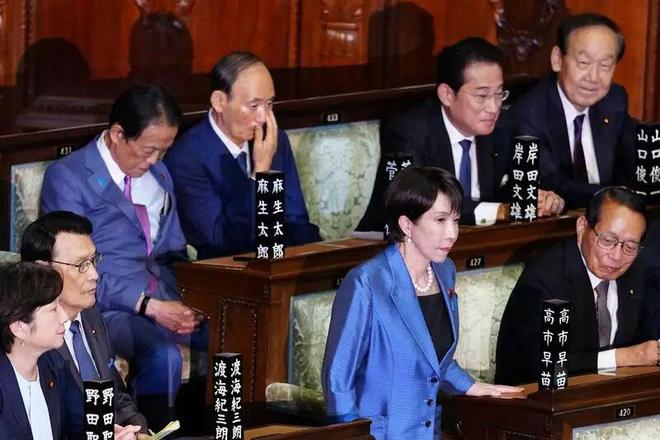
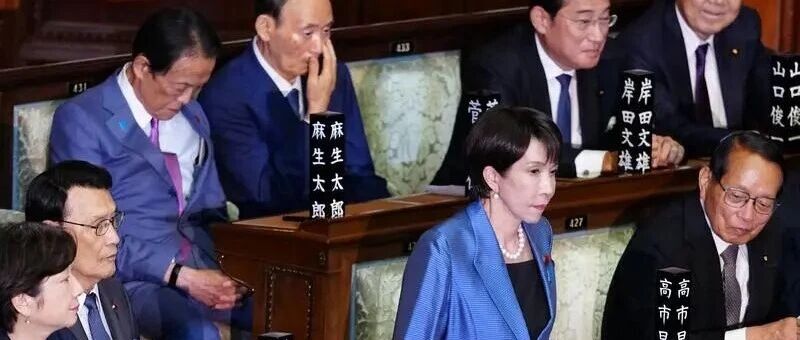
作者 | 第一财经 潘寅茹 题图 | 新华社 在外界屏息静待日本央行年前最后一次议息会议前,高市早苗政府又一次发出了不同声音。 17日,日本央行前副行长、高市早苗政府政策小组委员若田部昌澄(Masazumi Wakatabe)警告称,日本央行应 避免过早加息和过度收紧货币政策。 外界认为,这一表态不仅凸显了高市早苗政府更加强化所谓的"高市经济学",同时又一次使得政府与央行就加息问 题的矛盾浮出水面。 2025.12. 18 本文字数:1953,阅读时长大约3分钟 17日,高市密集阐述了其财政愿景。她强调,日本现在需要做的是通过积极的财政政策来增强自身能力,而不是过 度紧缩财政政策。她勾勒了带有浓厚高市色彩的财政刺激发展路径:刺激经济改善企业利润,进而借由薪资增长提 分歧 18~19日,日本央行将召开年内最后一场货币政策会议。今年年初,日本央行将利率上调至 0.5%,创下2007年2 月以来最大的加息幅度。此后,日本央行一直按兵不动。 日本央行将召开年内最后一场货币政策会议(来源:新华社资料图) 若田部昌澄表示,日本当务之急是通过财政政策和增长战略提高中性利率。他主张,只有在中性利率因政策驱动而 上升后,日本央 ...
日本央行年内最后一次议息会议在即,高市早苗还在施压?
Di Yi Cai Jing· 2025-12-18 06:25
Core Viewpoint - The conflict between the government of Prime Minister Fumio Kishida and the Bank of Japan regarding interest rate hikes has resurfaced, with warnings against premature tightening of monetary policy [1][3] Group 1: Government and Monetary Policy - Masazumi Wakatabe, former Deputy Governor of the Bank of Japan, emphasized the need for fiscal policy and growth strategies to raise the neutral interest rate before considering rate hikes [3] - The Kishida administration is advocating for a fiscal stimulus approach to enhance economic capacity rather than excessive tightening of fiscal policy [5] - The Bank of Japan has previously avoided using "neutral interest rate" as a primary communication tool for future rate hike paths, focusing instead on the impact of past rate increases on economic activities [3][6] Group 2: Economic Forecasts and Concerns - Wakatabe holds a moderate view on inflation, suggesting that inflation may slow down and could even fall below 2% due to easing energy and food costs [3] - The Japanese government approved an additional budget of 18.3 trillion yen to support the economic stimulus plan, with 11.7 trillion yen financed through new bond issuance [5] - Concerns have been raised regarding the sustainability of Japan's fiscal policy, with predictions that the debt-to-GDP ratio could rise from 215% to 230% by around 2030 if deficits remain at 2.5% of GDP [6][7] Group 3: Market Reactions and Future Projections - The yield on 10-year Japanese government bonds is expected to rise to 2.1% by the end of 2026 and 2.3% by the end of 2027, higher than previous forecasts [6] - The Ministry of Finance anticipates that the interest on debt will increase from 7.9 trillion yen last year to 16.1 trillion yen by 2028, raising concerns about whether economic growth can cover the rising interest costs [7] - Kishida responded to concerns about fiscal discipline by stating that the government envisions "strategic fiscal spending" rather than reckless expansion [7]
决议前夕,高市政府政策小组委员:日本央行应避免过早加息
Hua Er Jie Jian Wen· 2025-12-17 07:16
Core Viewpoint - The divergence between the Japanese government and the Bank of Japan (BOJ) regarding monetary policy is becoming apparent, with calls for caution against premature interest rate hikes [1][2]. Group 1: Monetary Policy and Economic Strategy - Former BOJ Deputy Governor Masayoshi Takeda warns against early rate hikes, emphasizing the need to raise the neutral interest rate through fiscal policy and growth strategies first [1][2]. - Takeda's comments reflect a shift towards "Kishida Economics," focusing on strengthening the supply side of the economy, which is a departure from previous policies [2]. - The market anticipates a rate increase to 0.75% at the upcoming BOJ meeting, marking the first hike since January, with all surveyed analysts expecting a rate increase this month [1]. Group 2: Fiscal Policy Emphasis - Prime Minister Fumio Kishida outlines a vision for fiscal policy that prioritizes economic stimulation over austerity, aiming to enhance corporate profits and household incomes through strategic fiscal spending [3]. - Kishida's approach is designed to create a sustainable fiscal policy and social welfare system, countering market concerns about fiscal discipline [3]. - The consensus among economists indicates a 90% probability of a 25 basis point rate hike at the BOJ's December meeting, reflecting strong market expectations [3]. Group 3: Inflation and Economic Outlook - Takeda holds a moderate view on inflation, suggesting that as energy and food costs stabilize, inflation may slow down and potentially fall below 2% [2]. - Concerns about aggressive fiscal expansion leading to market turmoil, similar to the "Truss Shock" in the UK, are dismissed by Takeda, who argues that Japan's fiscal situation is currently sound [2].